Farro (Emmer): Nutrients, What Research Shows and Safety
Farro (emmer wheat) as a food: why it still contains gluten, what reviews say about ancient wheats, wheat allergy, label checks, and why we show no nutrient table.
Content last updated . This page has not been medically reviewed.
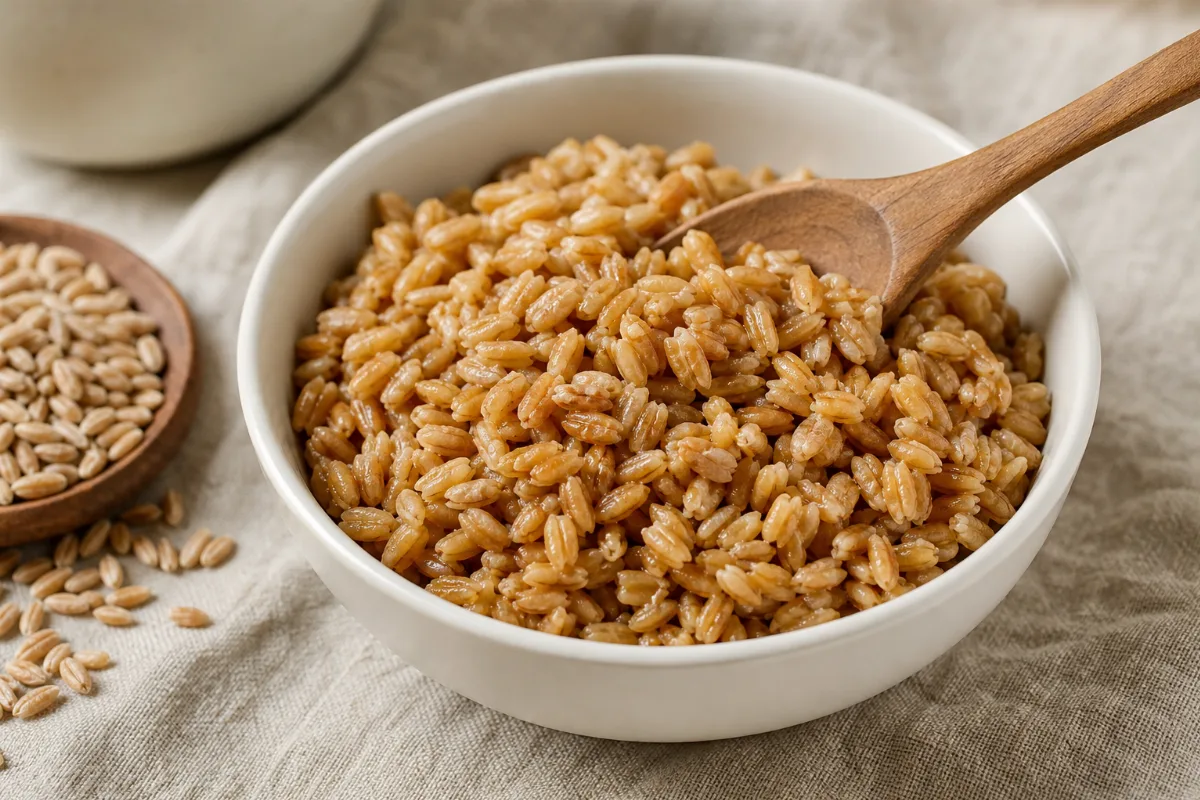
Farro is the Italian name used in shops for hulled, ancient wheats. On this site farro means emmer (Triticum dicoccum, grass family Poaceae), a wheat with a husk that is removed before eating. It cooks into chewy, nutty grains for soups and salads. Labels can also use "farro" for other hulled wheats such as spelt or einkorn; we did not read a source that sets the naming rules, so check the package. Farro is wheat and contains gluten. USDA has no nutrient values for farro, so this page gives no nutrient table rather than invent one.
Read this first
- Farro contains gluten. Emmer is listed by NIDDK among the gluten-containing types of wheat. It is not safe for people with celiac disease. [1]
- "Ancient" does not mean less gluten. A 2022 review found ancient wheats contained more protein and gluten and more celiac-active parts than bread wheat. [2]
- Wheat allergy: wheat is a common allergen; call 911 for trouble breathing or swelling of the face or throat. [3]
- Evidence in one line: reviews say human trials of ancient wheats are too few to conclude they are better for health than modern wheat. [4]
What is in it (no USDA values)
USDA FoodData Central has no farro or emmer entry in the data we used, and we did not find a peer-reviewed table of emmer nutrient values to cite, so we give no per-100 g numbers. What the sources we read do say:
| Topic | What the source found | Source |
|---|---|---|
| Protein and gluten | Ancient wheats (including emmer) contained more protein and gluten than modern bread wheat. | [2] |
| Amino acids | Emmer, Kamut and einkorn had more favorable scores for some essential amino acids than common and durum wheat, but no wheat tested fully met the FAO/WHO reference pattern; lysine and histidine were limiting. | [5] |
| Other nutrients | Not found in the sources we read. | none |
For a rough idea of what a related hulled wheat contains, see the USDA values on the spelt and khorasan wheat pages. They are different grains, so do not treat them as farro numbers.
What research says
| Health goal | What the sources found | Strength of evidence | What was studied |
|---|---|---|---|
| Better than modern wheat | A review of lab, animal and human studies of emmer, einkorn, spelt and khorasan found some support for healthier profiles and benefits on lipid, glucose and inflammation markers in in vivo experiments, but human trials were too few to conclude ancient wheats beat modern wheat. [4] | Insufficient evidence | Mixed ancient wheats |
| Gluten and celiac disease | No single wheat type can be recommended as better for celiac disease. [2] | Established (not suitable) | Lab analyses |
| Gut bacteria | In 20 healthy adults, ancient-wheat pasta and modern-wheat pasta shifted gut bacteria at genus level with different patterns. [6] This trial did not test emmer by itself in what we read. | Mixed / unclear meaning | Semi-whole pasta |
| Whole grains in general | Cohort studies link whole grains with lower heart disease; pooled trials show a small LDL drop. [7] [8] | Promising but limited (not farro-specific) | Mixed whole grains |
Eaten as food vs other forms. Studies concern grains, flours and pasta. We found no emmer supplement trials.
How much is a normal serving
We did not find a USDA household portion or an official serving for farro. We will not invent one. The NHS says to choose wholegrain starchy foods where you can and that starchy foods should make up just over a third of the food you eat. [9] Package directions give the dry weight per serving.Safety, allergy and medicines
- Celiac disease: gluten in wheat triggers an immune attack on the small intestine in people with the disease; about 1% of people worldwide have it and many are undiagnosed. [10] NIDDK lists wheat and its types (durum, emmer, semolina, spelt), barley and rye as gluten sources. [1] In the US a "gluten-free" label means under 20 parts per million of gluten. [1] [11] Do not stop eating gluten before testing, because results may then be inaccurate. [1] Ancient and heritage wheats are not gluten-free: a 2022 review found gluten is present in all wheat grains, and ancient wheats had more gluten proteins and more celiac-active parts than bread wheat, so no single wheat type can be recommended for celiac disease. [2]
- Non-celiac gluten sensitivity and FODMAPs: many people who feel gluten sensitive do not test positive; gas from fermentation of fructans in wheat may be the cause. [2] In a double-blind trial, gluten had a specific effect in only 8% of people with self-reported sensitivity. [12]
- Wheat allergy: wheat is one of the foods that most often cause food allergy. [3] A rarer form, wheat-dependent exercise-induced anaphylaxis, appears when wheat is eaten with exercise, alcohol or anti-inflammatory pain medicines. [13] For trouble breathing or swelling of the face or throat, call 911 (or your local emergency number). [3]
- Cooked grains left out: spores of some food poisoning bacteria survive cooking and make toxins if cooked grains sit at room temperature; reheating does not remove the toxins. Cool within 1 hour and refrigerate. [9]
- Mold toxins: WHO names deoxynivalenol and zearalenone as typical wheat mycotoxins and advises discarding moldy, discolored or shriveled grains. [14]
- Phytates: whole grains contain phytate, which can reduce iron absorption in a single meal; a 2026 review of human bread studies was inconclusive about the real-life effect. [15] See antinutrients in whole grains.
- Medicines, pregnancy, kidneys, diabetes: we did not find a source we could read describing a medicine interaction with farro or pregnancy advice specific to it. Whole grains contain phosphorus and potassium; people with kidney disease should ask a clinician (see kidney disease, potassium and oxalates). People with diabetes should follow their care team's plan.
Choosing, storing and food safety
- Look at the package: "whole farro" keeps the bran; "pearled" or "semi-pearled" farro has had some or all bran removed, which lowers fiber. (We did not read a source that gives the fiber loss.)
- A 2021 lab method was developed to check which hulled wheat (einkorn, emmer or spelt) is in grains, flours and pasta, to guard against mislabeling. [16]
- Store dry; discard moldy grain. [14]
- Cooked farro: cool within 1 hour, refrigerate, eat within 24 hours. [9]
Related pages
Health connections for Farro (Emmer)
What research links to eating or drinking this food, and how strong the evidence is. Many studies are observational or use juice, powder, oil or extracts rather than the food as eaten; each card says which.
Ancient wheats versus modern wheat
Preliminary or mixedHuman trials are too few to conclude ancient wheats such as emmer are better.
Supplements: Evidence insufficient.
Protein quality of emmer
Lab or animal research onlyEmmer scored better on some essential amino acids than common and durum wheat, but lysine and histidine were still limiting.
Supplements: Lab only.
Whole grains and heart disease or LDL (general)
Preliminary or mixedCohort evidence and a small LDL drop in pooled whole-grain trials; not farro-specific.
Supplements: Association.
Gut bacteria and ancient wheat pasta
Preliminary or mixedSmall trial in 20 healthy adults changed gut bacteria at genus level; meaning unclear.
Supplements: Insufficient evidence.
Gluten sensitivity versus FODMAPs
Preliminary or mixedSymptoms attributed to gluten are often driven by FODMAPs.
Supplements: Not farro-specific.
Connected topics
Open a group to see how each topic connects and how strong the evidence is.
Health goals (4)
- Digestive SupportPreliminary or mixed
Farro contains fiber, and trials of cereal fibers in general show they add to stool weight. We did not read a trial of Farro itself. Not farro-specific.
- Blood Sugar BalancePreliminary or mixed
In cohort studies, more whole grain went with a lower risk of type 2 diabetes. This is an association, not proof, and it is about whole grains as a group. Not farro-specific.
- Cholesterol BalancePreliminary or mixed
Pooled trials of whole-grain diets found a small drop in LDL cholesterol. They were not specific to Farro, and oats worked best. Not farro-specific.
- Heart HealthPreliminary or mixed
People who eat more whole grains in large studies have lower rates of heart disease. This is observational and is about whole grains as a group, not proof that this grain causes it. Not farro-specific.
Body systems (6)
- Immune SystemDocumented risk
Wheat is a common food allergen. Wheat allergy is an immune reaction and can be severe. Call 911 for trouble breathing or swelling of the face or throat.
- Digestive SystemPreliminary or mixed
Cereal fiber adds bulk to stool in intervention trials. Wheat-based foods also contain gluten and fructans, which matter for some people. Not farro-specific.
- Blood Sugar SupportPreliminary or mixed
Cohort studies link whole-grain intake with lower type 2 diabetes risk; this is association only. Not farro-specific.
- Cardiovascular SystemPreliminary or mixed
Observational whole-grain studies link higher intake with lower cardiovascular risk; pooled trials show a small LDL drop. Not farro-specific.
- Gut HealthPreliminary or mixed
Fiber from grains adds stool bulk (general cereal fiber evidence). Effects on gut bacteria from wheat types are only in small trials. Not farro-specific.
- Heart & CirculationPreliminary or mixed
Same evidence as the cardiovascular system: association in cohort studies and a small LDL drop in pooled whole-grain trials. Not farro-specific.
Body parts (3)
- Small IntestineDocumented risk
In celiac disease, gluten from wheat damages the lining of the small intestine. A gluten-free diet is needed.
- GutPreliminary or mixed
Grain fiber adds stool bulk (general cereal fiber evidence). Not farro-specific.
- HeartPreliminary or mixed
Observational whole-grain evidence for heart disease; small LDL effect in pooled trials. Not farro-specific.
Functional actions (2)
- Cardiovascular SupportPreliminary or mixed
Cohort evidence for whole grains and heart disease plus a small LDL effect in pooled trials; not specific to this grain. Not farro-specific.
- Digestive SupportPreliminary or mixed
Cereal fiber increases stool weight in intervention trials (general evidence). Not farro-specific.
Root causes (1)
- Autoimmune DysfunctionDocumented risk
Celiac disease is an autoimmune reaction to gluten, a protein in wheat, barley and rye.
Habits (1)
- Balanced NutritionPreliminary or mixed
The NHS advises choosing wholegrain starchy foods where you can, as part of a balanced diet.
Biomarkers (1)
- LDL CholesterolPreliminary or mixed
Whole-grain diets lowered LDL cholesterol a little in pooled randomized trials, not specific to this grain. Not farro-specific.
Conditions & symptoms (4)
- Celiac DiseaseDocumented risk
Farro contains gluten and is not safe for people with celiac disease.
- Wheat HypersensitivityDocumented risk
Wheat is a major food allergen. Wheat allergy can be serious, and a form is triggered by wheat plus exercise or other co-factors.
- Gluten SensitivityPreliminary or mixed
Some people report symptoms after wheat. In one double-blind trial of people with self-reported non-celiac gluten sensitivity, symptoms improved on a low-FODMAP diet and gluten had a specific effect in only 8%.
- Food PoisoningDocumented risk
Cooked grains left at room temperature can grow bacteria whose toxins survive reheating. Raw flour is not treated to kill germs.
Documented risks and interactions (4)
- Gluten and celiac disease in farro. Farro (emmer) is wheat and contains gluten; ancient wheats had more gluten proteins than bread wheat.
- Wheat allergy and farro. Wheat is a major allergen; call 911 for anaphylaxis.
- Label and species mix-ups. Hulled wheats (einkorn, emmer, spelt) are sold interchangeably as grains, flours and pasta; a lab method exists to check which is present.
- Cooked grains, mold. Cooked grains left out can grow toxin-making bacteria; stored grain can grow mold.
Frequently asked questions
Is farro gluten-free?
No. It is wheat and contains gluten. [1] [2]
Is farro the same as spelt?
Not exactly: farro here means emmer, but labels may use the word for other hulled wheats. [16] Check the ingredient list.
Is farro healthier than regular wheat?
Human trials are too few to say so. [4]
How many calories are in farro?
USDA has no farro entry, and we did not find a peer-reviewed value to cite. Use the package label.
Can I eat farro with a wheat allergy?
No, unless an allergist says so; call 911 for anaphylaxis. [3]
References
- NIDDK (US National Institutes of Health). Eating, Diet, & Nutrition for Celiac Disease. Read 2026-10-24.
- Brouns F et al. Do ancient wheats contain less gluten than modern bread wheat, in favour of better health?. 2022. abstract read via Europe PMC. Read 2026-10-24.
- MedlinePlus. Food allergy. Read 2026-10-24.
- Dinu M et al. Ancient wheat species and human health: Biochemical and clinical implications. 2018. abstract read via Europe PMC. Read 2026-10-24.
- Piasecka-Kwiatkowska D et al. Protein Quality and IgE-Binding in Ancient and Modern Wheat: An Analytical Study. 2026. abstract read via Europe PMC. Read 2026-10-24.
- Baldi S et al. Effect of ancient wheat pasta on gut microbiota composition and bacteria-derived metabolites: A randomized controlled trial. 2022. abstract read via Europe PMC. Read 2026-10-24.
- Aune D et al. Whole grain consumption and risk of cardiovascular disease, cancer, and all cause and cause specific mortality: systematic review and dose-response meta-analysis of prospective studies. 2016. BMJ; abstract read via Europe PMC. Read 2026-10-24.
- Hollaender PL, Ross AB, Kristensen M. Whole-grain and blood lipid changes in apparently healthy adults: a systematic review and meta-analysis of randomized controlled studies. 2015. abstract read via Europe PMC. Read 2026-10-24.
- NHS. Starchy foods and carbohydrates. Read 2026-10-24.
- NIDDK (US National Institutes of Health). Definition & Facts for Celiac Disease. Read 2026-10-24.
- US Food and Drug Administration. Food Labeling; Gluten-Free Labeling of Foods (final rule). 2013. Federal Register, 5 August 2013 (first 100,000 characters read). Read 2026-10-24.
- Biesiekierski JR et al. No effects of gluten in patients with self-reported non-celiac gluten sensitivity after dietary reduction of fermentable, poorly absorbed, short-chain carbohydrates. 2013. abstract read via Europe PMC. Read 2026-10-24.
- Santhosh P et al. Unusual Causes of Food-Induced Anaphylaxis - A Review. 2026. abstract read via Europe PMC. Read 2026-10-24.
- WHO. Mycotoxins fact sheet. Read 2026-10-24.
- Nikolaou A et al. Effects of sourdough- or regular-bread fermentation, and phytate reduction on iron bioavailability, absorption, and iron status in humans: a systematic review of intervention studies. 2026. abstract read via Europe PMC. Read 2026-10-24.
- Morcia C et al. A Digital PCR Assay to Quantify the Percentages of Hulled vs. Hulless Wheat in Flours and Flour-Based Products. 2021. abstract read via Europe PMC. Read 2026-10-24.