Corn Masa & Corn Tortillas: Nutrients, What Research Shows and Safety
Corn masa and corn tortillas: how lime-treated corn (nixtamalization) frees niacin, USDA values for masa flour, folic acid fortification, mold toxins and gluten label checks.
Content last updated . This page has not been medically reviewed.
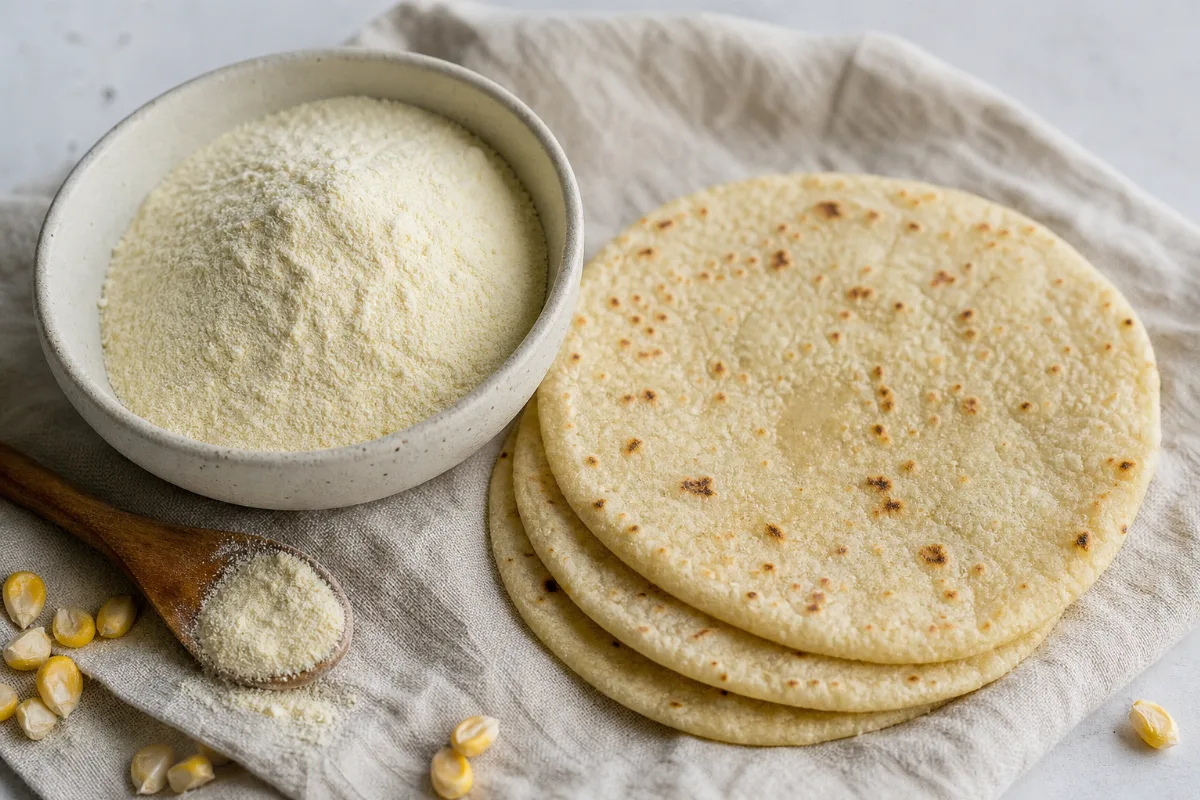
Corn masa is the dough, or the dry flour, made from corn that has been soaked and cooked in limewater (calcium hydroxide), a process called nixtamalization. It is the base of corn tortillas, tamales and many other foods in the Americas. The grain is dried corn (Zea mays, grass family Poaceae). This page covers the masa flour and what is known about corn tortillas made from it. It keeps the food apart from corn chips, sweet corn and supplements. For plain popped corn see popcorn.
Read this first
- The lime step matters for niacin. MedlinePlus says corn is a poor source of tryptophan and its niacin is tightly bound, so people who eat a lot of untreated corn can develop pellagra (niacin deficiency); soaking corn in limewater releases the niacin, and pellagra is rare in Central America where tortillas are made this way. [5]
- Check the label for wheat and for "enriched." Masa flour can be enriched with iron and B vitamins and, in some products, folic acid. USDA lists 256 mcg of folate (DFE) per 100 g in enriched masa and 29 mcg in unenriched masa. [1] [2]
- Mold toxins are the main storage concern for corn. WHO says maize is among the cereals frequently affected by aflatoxins, and it links fumonisins, made by a mold that grows on maize, to esophageal cancer in people. [6]
- Evidence in one line: the niacin point is well established; for chronic disease, we found only a narrative review that calls for better studies. [3]
- Allergy: for trouble breathing or swelling of the face, lips or throat after eating, call 911 (or your local emergency number). [12]
What is in it (USDA values)
The values below are for white masa flour, unenriched (USDA FoodData Central item 169696, SR Legacy). [1] The serving column is the USDA household portion of 1 cup of the dry flour, 114 g. [1] This is dry flour, not a cooked tortilla: our USDA file has no values for prepared tortillas, tamales or fresh masa dough, so we show none.
| Nutrient | Per 100 g | Per 1 cup dry flour (114 g) | % Daily Value per serving |
|---|---|---|---|
| Energy | 363 kcal | 414 kcal | not set |
| Total fat | 3.69 g | 4.21 g | 5% |
| Saturated fat | 0.532 g | 0.606 g | 3% |
| Protein | 8.46 g | 9.64 g | 19% |
| Fiber | 6.4 g | 7.3 g | 26% |
| Sodium | 5 mg | 5.7 mg | 0% |
| Calcium | 138 mg | 157 mg | 12% |
| Iron | 1.47 mg | 1.68 mg | 9% |
| Magnesium | 93 mg | 106 mg | 25% |
| Phosphorus | 231 mg | 263 mg | 21% |
| Zinc | 1.8 mg | 2.05 mg | 19% |
| Manganese | 0.376 mg | 0.429 mg | 19% |
| Copper | 0.209 mg | 0.238 mg | 26% |
| Selenium | 10.5 mcg | 12 mcg | 22% |
| Thiamin (B1) | 0.223 mg | 0.254 mg | 21% |
| Niacin (B3) | 1.63 mg | 1.86 mg | 12% |
| Vitamin B-6 | 0.475 mg | 0.541 mg | 32% |
| Folate (DFE) | 29 mcg | 33.1 mcg | 8% |
% Daily Value uses the FDA 2016 Daily Values; values vary with the corn variety, how much of the bran and germ is kept, and how the flour is made. The serving figures are the 100 g values multiplied by 1.14.
Enriched masa flour (USDA item 169694) has the same fiber, protein and minerals but more of the added nutrients. Per 100 g: iron 8.5 mg, thiamin 1.475 mg, riboflavin 0.805 mg, niacin 9.93 mg and folate 256 mcg DFE. [2] In one cup (114 g) that is 54% of the Daily Value for iron, 140% for thiamin, 71% for riboflavin, 71% for niacin and 73% for folate. The FDA rule for enriched corn meals lists the added amounts per pound: thiamin, riboflavin, niacin, folic acid and iron. [7]
The calcium in the table comes mostly from the lime. A 2026 study of home nixtamalization of maize from Guatemala found calcium rose sharply, with smaller rises in iron, copper and magnesium. [4]
What research says
| Health goal | What the sources found | Strength of evidence | What was studied |
|---|---|---|---|
| Preventing pellagra (niacin deficiency) | Corn's niacin is tightly bound; soaking in limewater releases it, and pellagra is rare where corn is prepared this way. [5] | Established (deficiency and prevention) | Population experience, a nutrition encyclopedia article; not a trial |
| Lowering mold toxins | In a 2026 study of naturally contaminated maize, home nixtamalization conditions cut aflatoxin B1 by 81% overall and by 86% with longer steeping. [4] | Lab or animal only (food chemistry, not a health outcome) | Nine cooking conditions on maize from Guatemala |
| Heart, diabetes or other disease | A 2026 narrative review says epidemiological data support eating whole dry-milled corn, that clinical trials are limited and mixed, and that long-term dose-response studies are needed. [3] It did not look at masa tortillas on their own. | Mixed | Dry-milled corn foods (grits, cornmeal, tortilla chips, cereals) |
| Folic acid fortification and birth defects | Of 50 masa flour bags checked in three states, 25 were fortified with folic acid, but only 2 of 178 corn tortilla products were. [8] A review of 8 studies found voluntary fortification did not significantly raise folic acid intake or lower neural tube defect rates, with low to very low certainty. [9] | Insufficient evidence that voluntary fortification changed outcomes | Store surveys; Hispanic women of reproductive age |
| Blood sugar, weight, "gut health" | Proper evidence not found in the sources we read. | No good evidence of benefit found | Not applicable |
Eaten as food vs taken as a supplement. All of the evidence above is about corn foods. We did not find a trial that used a masa extract or supplement.
How much is a normal serving
The only USDA household portion in our file is 1 cup of dry masa flour (114 g, about 414 kcal), which makes a lot of tortillas, so treat it as a measuring unit, not a portion. [1] The 2025-2030 Dietary Guidelines for Americans set a goal of 2 to 4 servings of whole grains a day. [10] The page we read did not say how many tortillas make a serving, and we did not find a rule saying whether tortillas count as whole grain, which depends on how much of the bran and germ stay in the flour. This is information, not a prescription.
Safety, allergy and medicines
- Gluten and celiac disease: NIDDK says gluten is found in wheat, barley and rye, and that it can reach processed foods through ingredients and cross-contact. [11] Corn is not on that list, but we did not read a source on what is in every tortilla product, so read the ingredient list for wheat and the label for "gluten-free." A "gluten-free" label means fewer than 20 parts per million (FDA rule, as NIDDK describes it). [11]
- Allergy: the MedlinePlus list of the most common food allergens (milk, egg, shellfish, fish, peanuts, sesame, soy, tree nuts and wheat) does not name corn. [12] Tortillas and tamales may contain other allergens such as wheat, milk or soy; read the label. For signs of anaphylaxis (trouble breathing, throat swelling), call 911 and use prescribed epinephrine. [12]
- Mold toxins: WHO links aflatoxins to liver damage and liver cancer and fumonisins in maize to esophageal cancer in people. It advises discarding grain that looks moldy, discolored or shriveled. [6] Nixtamalization lowered aflatoxin in the 2026 study, but a lab result does not make moldy grain safe. [4] [6]
- Pregnancy and folic acid: CDC says the U.S. Public Health Service recommends 400 mcg of folic acid daily for women who could become pregnant. [13] Most corn tortillas in the store survey were not fortified, so a tortilla label should not be assumed to supply folic acid. [8] Ask your clinician about folic acid.
- Kidney disease: masa flour has 231 mg of phosphorus and 262 mg of potassium per 100 g. [1] NIDDK advises people with kidney disease to limit added phosphorus and follow their kidney team's potassium advice. [14] Ask the kidney team about portions.
- Raw dough and flour: FDA says never to eat or taste raw flour, dough or batter, because flour is a raw product that can carry germs such as E. coli and Salmonella. [15] That advice is about flour in general; we did not find masa-specific guidance, so cook masa dough fully.
- High-heat cooking: FDA says acrylamide forms in frying, roasting and baking at high temperature. It names potato products, coffee and grain foods such as breakfast cereal, cookies and toast, and does not name tortillas or tortilla chips. [16]
- Medicines and diabetes: we did not find a medicine interaction for masa in the sources we read. Dry masa flour has 76.6 g of carbohydrate per 100 g. [1] People who count carbohydrate should use the label of the exact product.
Choosing, storing and food safety
- Buy flour and tortillas as fresh as you can and store them dry; WHO says to avoid keeping grain for long periods. [6]
- Throw away flour or grain that smells musty or looks moldy, discolored or shriveled. [6]
- Check the label for "enriched," folic acid, wheat and the ingredient lime (calcium hydroxide, "cal"). [2] [7] [8]
- Keep raw masa and flour away from ready-to-eat foods, wash hands and surfaces after handling, and cook dough fully. [15]
Related pages
Health connections for Corn Masa & Corn Tortillas
What research links to eating or drinking this food, and how strong the evidence is. Many studies are observational or use juice, powder, oil or extracts rather than the food as eaten; each card says which.
Niacin release and pellagra prevention
Deficiency linkCorn niacin is tightly bound. Soaking corn in limewater (nixtamalization) releases it, and pellagra is rare where tortillas are made this way.
Supplements: Applies to the traditional lime step in food, not to supplements.
Calcium and minerals from lime treatment
Preliminary or mixedUSDA lists 138 mg of calcium per 100 g of masa flour. A 2026 study found calcium rose sharply with home nixtamalization, with smaller rises in iron, copper and magnesium.
Supplements: Measured in food analyses, not a trial of health outcomes.
Aflatoxin reduction by nixtamalization
Lab or animal research onlyIn naturally contaminated maize, home nixtamalization conditions cut aflatoxin B1 by 81% overall and 86% with longer steeping in a 2026 lab study.
Supplements: Lab food-chemistry result; WHO still says to discard moldy grain.
Dry-milled corn foods and long-term health
Preliminary or mixedA 2026 narrative review says population studies support whole dry-milled corn, trials are limited and mixed, and long-term studies are needed.
Supplements: No trial of masa tortillas themselves was found.
Folic acid fortification of masa and birth defects
Preliminary or mixedHalf of masa flour bags in a three-state survey were fortified with folic acid, but only 2 of 178 corn tortilla products were. A review found voluntary fortification did not significantly raise intake or lower neural tube defect rates (low to very low certainty).
Supplements: Food fortification, not supplements; effect of voluntary fortification not shown.
Connected topics
Open a group to see how each topic connects and how strong the evidence is.
Health goals (1)
- Preventive WellnessDeficiency link
Lime-treated corn avoids the niacin shortage (pellagra) linked to untreated corn diets.
Body systems (2)
- Digestive SystemDeficiency link
Pellagra includes digestive problems (MedlinePlus); the lime step in corn foods lowers that risk.
- Nervous SystemDeficiency link
Pellagra, caused by niacin deficiency, includes poor mental function (MedlinePlus); lime-treated corn prevents the bound-niacin problem.
Body parts (1)
- SkinDeficiency link
Pellagra includes inflamed skin (MedlinePlus); lime-treated corn avoids the niacin shortage.
Root causes (2)
- Environmental ToxinsDocumented risk
Maize can carry aflatoxins and fumonisins when stored badly (WHO); nixtamalization lowered aflatoxin in a lab study.
- Nutrient DeficiencyDeficiency link
Untreated corn diets can cause niacin deficiency (pellagra); soaking in limewater releases the niacin.
Habits (2)
- Balanced NutritionPreliminary or mixed
Dry-milled corn foods can fit a whole-grain goal if the bran and germ are kept; the review calls for better studies.
- Meal PlanningDocumented risk
Labels differ on enrichment, folic acid and added wheat, so label reading matters.
Conditions & symptoms (2)
- Celiac DiseaseDocumented risk
Corn is not a gluten grain, but tortilla products can contain wheat or cross-contact gluten.
- Food AllergyDocumented risk
Corn is not among the most common food allergens listed by MedlinePlus, but tortilla products can contain wheat, milk or soy.
Documented risks and interactions (3)
- Mold toxins in stored maize. WHO says maize is among cereals frequently affected by aflatoxins and links fumonisins in maize to esophageal cancer. Discard moldy, discolored or shriveled grain.
- Gluten cross-contact and added wheat in corn tortillas. Corn is not a gluten grain, but products can contain wheat flour or pick up gluten. A gluten-free label means under 20 parts per million.
- Raw flour and dough. FDA says never to eat or taste raw flour, dough or batter because flour can carry E. coli and Salmonella.
Frequently asked questions
Why are corn tortillas made with lime?
Soaking corn in limewater releases the niacin that is tightly bound in the grain. MedlinePlus says this is why pellagra is rare in Central America where tortillas are made this way. [5]
Are corn tortillas gluten-free?
Corn itself is not one of the gluten grains NIDDK lists (wheat, barley, rye), but gluten can reach processed foods through ingredients and cross-contact, so read the ingredient list. Look for a "gluten-free" label if you have celiac disease. [11]
Is masa flour fortified with folic acid?
Sometimes. In a three-state store survey, half of masa flour bags were fortified, but only 2 of 178 corn tortilla products were. [8] Check the label.
Does the lime treatment remove mold toxins?
A 2026 study found home nixtamalization cut aflatoxin B1 in contaminated maize by 81% to 86%. [4] WHO still advises discarding moldy grain. [6]
Are corn tortillas healthier than flour tortillas?
We did not find a trial comparing them. The 2026 corn review says evidence favors whole dry-milled corn but that studies of refined products are mixed. [3]
References
- U.S. Department of Agriculture. FoodData Central: Corn flour, masa, unenriched, white (SR Legacy, FDC 169696). April 2018 release. Read 2026-10-24.
- U.S. Department of Agriculture. FoodData Central: Corn flour, masa, enriched, white (SR Legacy, FDC 169694). April 2018 release. Read 2026-10-24.
- Kern M, Hooshmand S. Dry-milled corn and corn products and health: a narrative review. Food Sci Nutr 2026 (abstract read via Europe PMC). Read 2026-10-24.
- Glesener H et al. Local nixtamalization processes reduce aflatoxin B1 concentration and shift metabolome in naturally contaminated maize. J Agric Food Chem 2026 (abstract read via Europe PMC). Read 2026-10-24.
- MedlinePlus. Pellagra. Read 2026-10-24.
- WHO. Mycotoxins fact sheet. 2 October 2023. Read 2026-10-24.
- FDA. 21 CFR 137.260: Enriched corn meals. Read 2026-10-24.
- Bustrak S et al. Availability of folic acid fortified corn masa products in selected areas in the United States. Birth Defects Res 2026 (abstract read via Europe PMC). Read 2026-10-24.
- Villalba N et al. Consumption of folic acid fortified foods among Hispanic women of reproductive age in the US: a systematic review. BMC Public Health 2025 (abstract read via Europe PMC). Read 2026-10-24.
- U.S. Department of Agriculture and U.S. Department of Health and Human Services. Dietary Guidelines for Americans 2025-2030 (realfood.gov). Read 2026-10-24.
- NIDDK. Eating, diet, and nutrition for celiac disease. Reviewed October 2020. Read 2026-10-24.
- MedlinePlus. Food allergy. Read 2026-10-24.
- CDC. About folic acid. Page dated 2026-09-18. Read 2026-10-24.
- NIDDK. Healthy eating for adults with chronic kidney disease. Read 2026-10-24.
- FDA. Handling flour safely: what you need to know. Content current as of 2024-03-05. Read 2026-10-24.
- FDA. Acrylamide and diet, food storage, and food preparation. Read 2026-10-24.