Pumpkin: Nutrients, What Research Shows and Safety
What pumpkin (Cucurbita pepo, C. maxima) offers, beta-carotene and vitamin A, canned pumpkin versus pie filling, fiber and potassium, and the safety facts that matter.
Content last updated . This page has not been medically reviewed.
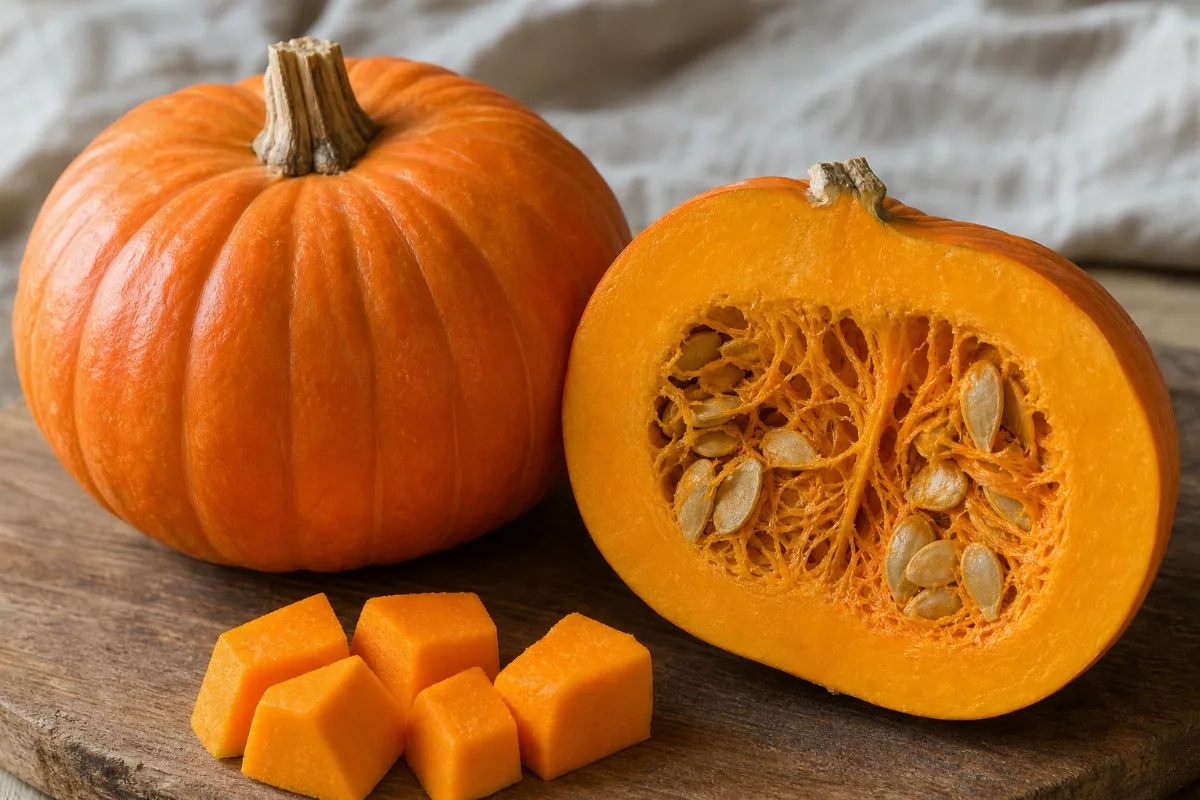
Pumpkin is the fruit of vining plants in the gourd family (Cucurbitaceae), mainly Cucurbita pepo and Cucurbita maxima. The orange flesh is eaten cooked, in soups, purées and baking, and people eat it for its orange color, which comes from carotenoids (plant pigments the body can turn into vitamin A). This page keeps the whole food apart from supplements and hype, and says plainly what research does and does not show. The seeds have their own pages: pumpkin seeds as a food and pumpkin seed as a herb.
Read this first
- Beta-carotene from food is not the same as beta-carotene pills. In large trials, beta-carotene supplements raised lung cancer risk in smokers and in people exposed to asbestos. [4][5][6] Eating pumpkin is a different thing, but smokers should ask a clinician before taking any beta-carotene or vitamin A supplement.
- Pie filling is not pumpkin. A can labeled pumpkin pie filling or mix contains added sugar and spices, while plain canned pumpkin is cooked pumpkin. Check the ingredient list. [14]
- Potassium: pumpkin has a moderate amount (340 mg per 100 g). [1] People with kidney problems, and people taking ACE inhibitors, ARBs or potassium-sparing diuretics, should ask a clinician about potassium-rich foods. [8]
- Allergy: a food allergy is possible with any food. For trouble breathing or swelling of the face or throat, call 911. See food allergy basics and emergency signs.
- Evidence in one line: pumpkin is a good source of provitamin A and a low-calorie vegetable, but we found no good human trials showing it prevents or treats a disease.
What is in it (USDA values)
Raw pumpkin, USDA FoodData Central item 168448 (SR Legacy). [1] USDA household portion: 1 cup of 1-inch cubes = 116 g. This is information about the food, not a prescription.
| Nutrient | Per 100 g | Per typical serving (1 cup cubes, 116 g) | % Daily Value per serving |
|---|---|---|---|
| Energy | 26 kcal | 30.2 kcal | n/a |
| Fiber | 0.5 g | 0.58 g | 2% |
| Total sugars | 2.76 g | 3.2 g | n/a |
| Vitamin A (RAE) | 426 µg | 494 µg | 55% |
| Copper | 0.13 mg | 0.15 mg | 17% |
| Vitamin C | 9.0 mg | 10.4 mg | 12% |
| Potassium | 340 mg | 394 mg | 8% |
| Vitamin E (alpha-tocopherol) | 1.06 mg | 1.23 mg | 8% |
| Folate (DFE) | 16 µg | 18.6 µg | 5% |
| Manganese | 0.12 mg | 0.14 mg | 6% |
| Beta-carotene | 3,100 µg | 3,596 µg | no Daily Value set |
| Lutein + zeaxanthin | 1,500 µg | 1,740 µg | no Daily Value set |
% Daily Value uses the FDA 2016 Daily Values; values vary with variety, ripeness and storage. [1]
The main plant compounds USDA measured in raw pumpkin are carotenoids: beta-carotene, alpha-carotene (4,016 µg per 100 g) and lutein with zeaxanthin. [1] The body can convert some carotenoids, such as beta-carotene, into vitamin A. [2][3] Most of the health claims made for pumpkin compounds come from laboratory and animal work. A 2022 review lists many such properties, but we did not find human trials behind most of them. [16]
What research says
| Health goal | What the sources found | Strength of evidence | What was studied (whole food, juice, powder, extract; who) |
|---|---|---|---|
| Getting enough vitamin A | Vitamin A is needed for vision and skin; too little causes night blindness and, in severe cases, permanent eye damage. Orange produce is a source of provitamin A. [2][3] USDA lists 47% of the Daily Value per 100 g of raw pumpkin. [1] | Established for vitamin A itself; we found no pumpkin-specific trial | Nutrient role; USDA food data |
| Lung cancer risk | Observational studies link eating more fruit and vegetables to lower lung cancer risk (41 studies pooled, RR 0.81 for total fruit and vegetables). [15] This is not proof, and the review is not about pumpkin alone. | Mixed (observational only) | Whole fruit and vegetables, many foods |
| Beta-carotene pills and lung cancer | Supplements raised lung cancer in male smokers (ATBC, 29,133 men, 20 mg a day) and in smokers and asbestos-exposed workers (CARET, 18,314 people, with vitamin A). [4][5] A Cochrane review found vitamin A harmful in smokers and asbestos workers. [6] | Documented harm in these groups | Supplements, not food |
| Blood sugar and type 2 diabetes | A 2026 systematic review of 9 controlled trials (316 people) said pumpkin and its by-products could be useful as an add-on, and called for better and longer trials. [7] | Promising but limited | Pumpkin or pumpkin by-products (some are powders or products, not plain cooked pumpkin) |
| Bowel regularity | Fiber in general helps digestion and prevents constipation. [10] Pumpkin has little fiber (0.5 g per 100 g), so it is a small contributor. [1] | Established for fiber overall; small for pumpkin | Dietary fiber in general |
| Blood pressure | Potassium can offset some of the harm of sodium on blood pressure. [9] We found no trial of pumpkin itself. | Insufficient evidence for pumpkin | Nutrient role only |
| Eyes (for example sight in older age) | Proper evidence not found in the sources we read for pumpkin and eye disease in people. | Insufficient evidence | n/a |
| Immune, anti-inflammatory and antiviral claims | Reviews describe these mainly from constituents studied in the lab. [16] | Lab or animal only | Extracts and isolated compounds |
Eaten as food vs taken as a supplement or extract. Cooked pumpkin gives vitamin A precursors inside a food that also contains other nutrients. Capsules, powders and extracts are different products. Pumpkin-seed products are covered on the pages linked above. Beta-carotene supplements, not food, were the products that raised lung cancer risk in smokers. [4][5][6] Large amounts of beta-carotene from food can turn the skin yellow or orange (carotenemia), which fades when intake falls and is not described as serious. [2]
How much is a normal serving
- USDA household portion: 1 cup of 1-inch cubes of raw pumpkin is 116 g. [1]
- UK (NHS): 80 g of fresh, canned or frozen vegetables counts as one of your 5 A DAY portions. [11] This is an official figure, not a personal prescription.
- WHO: at least 400 g of fruit and vegetables a day for people older than 10 (fact sheet date 26 January 2026). [12]
- Canned or frozen: the NHS advises choosing canned vegetables with no added salt or sugar. [11] See fresh, frozen and canned produce.
- Plain canned pumpkin versus pie filling: plain canned pumpkin is cooked pumpkin purée; pie filling or pie mix has added sugar and spices on top. [14] We could not read an official source on the exact nutrient differences, so check the nutrition label of the product you buy. We did not find a trusted comparison of vitamin A in canned versus fresh pumpkin: Proper evidence not found in the sources we read.
- Cooking effects on nutrients: we did not read a source on this for pumpkin, so we make no claim.
Safety, allergy and medicines
- Beta-carotene and vitamin A supplements: harmful for lung cancer risk in smokers and in people exposed to asbestos in large trials; see above. [4][5][6] This is about pills, not pumpkin.
- Too much preformed vitamin A: this comes from animal sources and supplements, not from the carotenoids in plants. High intake over many years may weaken bones, and large amounts in pregnancy can cause birth defects. [2][3] Pumpkin does not carry that risk in the same way, but ask a clinician about supplements in pregnancy. See foods in pregnancy: what official bodies advise.
- Orange skin (carotenemia): very high beta-carotene intake can turn the skin yellow or orange; it goes away when intake is reduced and is not described as serious. [2]
- Potassium, kidney disease and medicines: poor kidney function can cause too much potassium in the blood. MedlinePlus says ACE inhibitors, ARBs and potassium-sparing diuretics can also raise potassium, and that people with kidney problems, especially on dialysis, should not eat too many potassium-rich foods. [8] See foods, kidney disease, potassium and oxalates.
- Allergy: any food can cause an allergic reaction. We did not find in the sources we read a statement on how common pumpkin flesh allergy is. For trouble breathing or swelling of the face or throat, call 911.
- Added sugar in pie filling and sweetened products: read the label; added sugar is the main difference from plain pumpkin. [14]
- Blood sugar medicines: a 2026 review suggests pumpkin may help blood sugar in some trials. [7] We did not read a source on interactions with diabetes medicines, so people on them should ask their care team, not change doses on their own.
- Pesticide residues, choking and sulphites: no pumpkin-specific sources were read; no claim made.
Choosing, storing and food safety
- Rinse whole produce under running water, scrub firm-skinned items with a clean brush, and do not use soap or produce wash. Wash before cutting, even if you will not eat the skin. [13]
- Cut away damaged or bruised areas. Refrigerate cut or cooked pumpkin and keep perishable produce at 40°F (4°C) or below. [13]
- Keep produce and its cutting board apart from raw meat, poultry and seafood. [13]
- Home canning of pumpkin has its own food-safety rules; we could not read a current official source for them, so follow your local extension service, not a blog.
Related pages
Health connections for Pumpkin
What research links to eating or drinking this food, and how strong the evidence is. Many studies are observational or use juice, powder, oil or extracts rather than the food as eaten; each card says which.
Beta-carotene and vitamin A supply
Established rolePumpkin is an orange vegetable rich in provitamin A carotenoids; raw pumpkin has 426 micrograms RAE per 100 g (47% of the Daily Value).
Supplements: Eating the food supplies the nutrient; we found no pumpkin-specific trial of health outcomes.
Preventing vitamin A deficiency
Deficiency linkToo little vitamin A causes night blindness and, if severe, lasting eye damage; deficiency is very rare in the US.
Supplements: Relevant mainly where intake is low.
Fiber and bowel regularity
Established roleFiber helps digestion and prevents constipation, but pumpkin has little (0.5 g per 100 g), so it is a small contributor.
Supplements: Not a supplement question; pumpkin is a minor fiber source.
Potassium and blood pressure
Preliminary or mixedPotassium can offset some of the harmful effect of sodium on blood pressure; pumpkin has 340 mg per 100 g.
Supplements: No pumpkin-specific evidence found.
Blood sugar and type 2 diabetes
Preliminary or mixedA 2026 systematic review of 9 controlled trials (316 people) said pumpkin and its by-products could be an add-on, and called for better, longer trials.
Supplements: Promising but limited; not a replacement for diabetes treatment.
Fruit and vegetable intake and lung cancer (observational)
Preliminary or mixedA pooled analysis of 41 prospective studies linked more fruit and vegetables to lower lung cancer risk (RR 0.81). It is observational and not about pumpkin alone.
Supplements: Observational association is not proof.
Immune, anti-inflammatory and antiviral claims
Lab or animal research onlyReviews describe such properties of pumpkin constituents, mainly from laboratory and animal work.
Supplements: Lab or animal only; no good human evidence found.
Connected topics
Open a group to see how each topic connects and how strong the evidence is.
Body systems (2)
- Kidney & UrinaryDocumented risk
Poor kidney function can raise blood potassium, so potassium-rich foods need advice from a clinician.
- Integumentary SystemEstablished role
Vitamin A supports skin and its lining tissues; the pumpkin-specific effect has not been tested.
Body parts (3)
- EyesEstablished role
Vitamin A, which the body can make from the carotenoids in pumpkin, is needed for vision; deficiency causes night blindness. No trial of pumpkin and eye disease was found.
- KidneysDocumented risk
Pumpkin has a moderate amount of potassium; people with kidney problems should ask a clinician about potassium-rich foods.
- SkinEstablished role
Vitamin A supports healthy skin; very high beta-carotene intake can turn skin yellow or orange, which is harmless and fades.
Root causes (2)
- Medication Side EffectsDocumented risk
ACE inhibitors, ARBs and potassium-sparing diuretics can raise blood potassium, so potassium-rich foods call for advice from a prescriber.
- Nutrient DeficiencyDeficiency link
Provitamin A from orange vegetables helps meet vitamin A needs; deficiency is rare in the US.
Habits (1)
- Balanced NutritionEstablished role
Pumpkin counts as a vegetable portion; WHO suggests at least 400 g of fruit and vegetables a day for people over 10, NHS counts 80 g as a portion.
Conditions & symptoms (3)
- HyperkalemiaDocumented risk
People with poor kidney function or on ACE inhibitors, ARBs or potassium-sparing diuretics can have high blood potassium and should ask about potassium-rich foods.
- Vitamin A DeficiencyDeficiency link
Pumpkin supplies provitamin A carotenoids; deficiency is very rare in the US and no pumpkin-specific trial was found.
- XerophthalmiaDeficiency link
Severe vitamin A deficiency causes xerophthalmia with lasting corneal damage; provitamin A foods are one source of the vitamin.
Documented risks and interactions (4)
- Beta-carotene supplements and lung cancer in smokers. Beta-carotene pills raised lung cancer risk in smokers and asbestos-exposed workers in large trials; this concerns supplements, not pumpkin.
- Potassium, kidney disease and medicines. Poor kidney function and ACE inhibitors, ARBs and potassium-sparing diuretics can raise blood potassium; people with kidney problems should not eat too many potassium-rich foods.
- Pumpkin pie filling versus plain canned pumpkin. Pie filling or mix has added sugar and spices; plain canned pumpkin is cooked pumpkin purée.
- Food safety for fresh pumpkin. Rinse under running water, scrub firm skins with a brush, no soap, refrigerate cut produce at 40 F or below.
Frequently asked questions
Is canned pumpkin as healthy as fresh?
Plain canned pumpkin is cooked pumpkin purée. [14] We did not find a trusted comparison of its vitamin A with fresh pumpkin, so we cannot say. Check that the can lists only pumpkin and, per the NHS, choose canned vegetables with no added salt or sugar. [11]
Is pumpkin pie filling the same as canned pumpkin?
No. Pie filling has sugar and spices added to the pumpkin, so it is not a plain vegetable. [14] Read the ingredient list and nutrition label.
Does the beta-carotene in pumpkin cause cancer or prevent it?
The harm seen in trials came from beta-carotene pills in smokers and asbestos-exposed workers, not from food. [4][5][6] Observational studies link more fruit and vegetables to lower lung cancer risk, but that does not prove pumpkin prevents cancer. [15]
Is pumpkin high in fiber?
Not very: raw pumpkin has 0.5 g per 100 g, or about 0.6 g in a cup of cubes. [1] The NHS says most adults average about 20 g a day against a 30 g target, so fiber from several foods adds up. [10]
Can I eat pumpkin if I have kidney disease or take a blood pressure medicine?
Pumpkin has a moderate amount of potassium (340 mg per 100 g). [1] MedlinePlus says ACE inhibitors, ARBs and potassium-sparing diuretics can raise blood potassium and that people with kidney problems should not eat too many potassium-rich foods. [8] Ask your clinician what is right for you.
References
- U.S. Department of Agriculture. FoodData Central: Pumpkin, raw (item 168448, SR Legacy). SR Legacy, April 2018 release. Read 2026-10-23.
- MedlinePlus (U.S. National Library of Medicine). Vitamin A. Last reviewed 21 January 2025. Read 2026-10-23.
- NHS (UK). Vitamin A. Last reviewed 3 August 2020. Read 2026-10-23.
- Alpha-Tocopherol, Beta Carotene Cancer Prevention Study Group. The effect of vitamin E and beta carotene on the incidence of lung cancer and other cancers in male smokers. N Engl J Med 1994. PMID 8127329. Abstract read 2026-10-23.
- Omenn GS et al. Effects of a combination of beta carotene and vitamin A on lung cancer and cardiovascular disease. N Engl J Med 1996. PMID 8602180. Abstract read 2026-10-23.
- Cortés-Jofré M et al. Drugs for preventing lung cancer in healthy people. Cochrane Database Syst Rev 2020. PMID 32130738. Abstract read 2026-10-23.
- Ye K et al. Effects of Pumpkin (Cucurbita spp.) on Glycemic and Type 2 Diabetes-Related Metabolic Biomarkers: A Systematic Review of Controlled Clinical Trials. 2026. PMID 41934368. Abstract read 2026-10-23.
- MedlinePlus (U.S. National Library of Medicine). Potassium in diet. Review date 30 April 2026. Read 2026-10-23.
- MedlinePlus (U.S. National Library of Medicine). Potassium. Updated 8 September 2025. Read 2026-10-23.
- NHS (UK). How to get more fiber into your diet. Last reviewed 2 March 2026. Read 2026-10-23.
- NHS (UK). 5 A DAY: what counts. Last reviewed 9 June 2026. Read 2026-10-23.
- World Health Organization. Healthy diet fact sheet. 26 January 2026. Read 2026-10-23.
- U.S. Food and Drug Administration. Selecting and Serving Produce Safely. Current as of 5 March 2024. Read 2026-10-23.
- The Daily Meal. When To Use Canned Pumpkin Vs. Pumpkin Pie Filling. A food-media article, not an official source. Read 2026-10-23.
- Tabatabaei SVA et al. Fruit and Vegetable Intake in Relation to Lung Cancer Risk: A Systematic Review and Dose-response Meta-analysis of Prospective Cohort Studies. 2025. PMID 40621159. Abstract read 2026-10-23.
- Hussain A et al. Utilization of pumpkin, pumpkin powders, extracts, isolates, purified bioactives and pumpkin based functional food products: an updated review. 2022. PMID 38620808. Abstract read 2026-10-23.