Kohlrabi: Nutrients, What Research Shows and Safety
Kohlrabi is rich in vitamin C and fiber. What USDA data and cruciferous vegetable research show, what is not known about kohlrabi itself, and safety notes.
Content last updated . This page has not been medically reviewed.
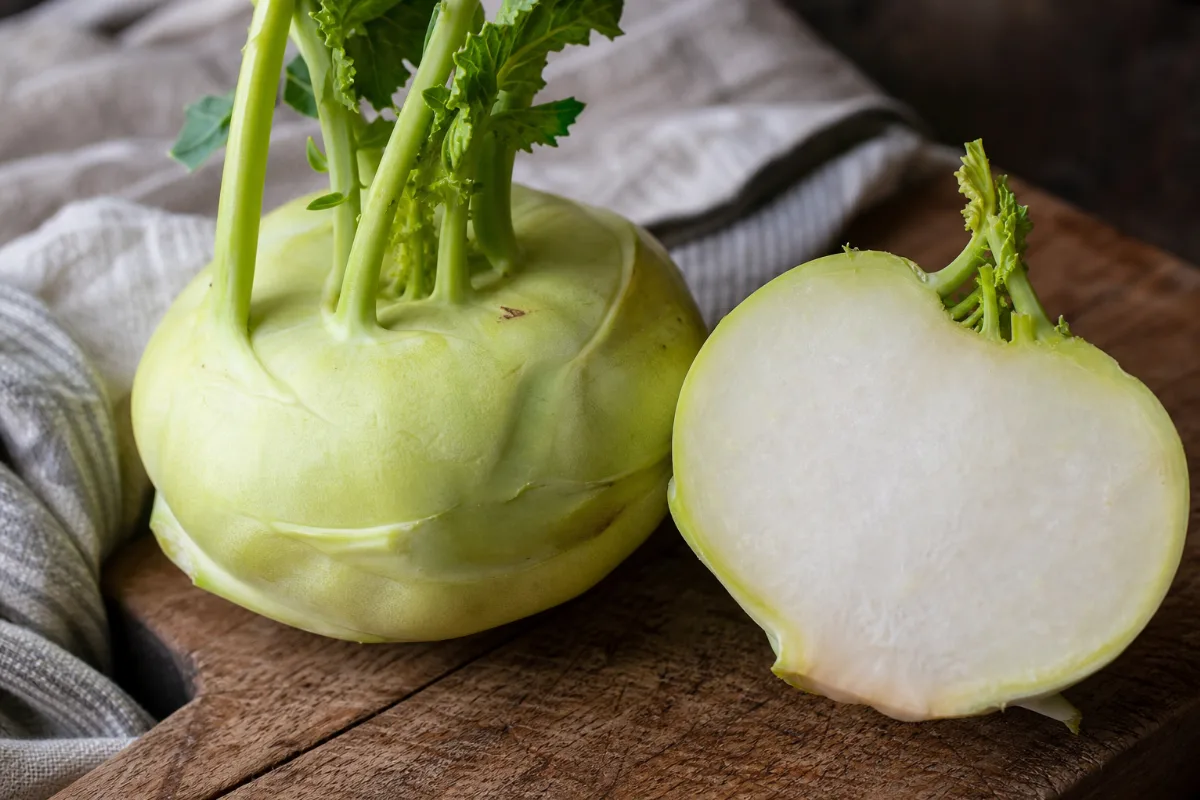
Kohlrabi (Brassica oleracea var. gongylodes) belongs to the cabbage family (Brassicaceae), the same group as broccoli, cabbage and kale. The part usually eaten is the round, swollen lower stem, raw or cooked. People eat it for its vitamin C and fiber and because it is one of the cruciferous vegetables. This page keeps the food apart from supplements and from hype, and it is honest that very little research looks at kohlrabi on its own.
Read this first
- Kohlrabi is an ordinary food. As with any food, an allergic reaction is possible. For trouble breathing or swelling of the face or throat, call 911. We did not find a source we could read that describes allergy to kohlrabi in particular. See food allergy basics and emergency signs.
- One cup of raw kohlrabi (135 g) gives about 84 mg of vitamin C, which USDA data put at 93% of the Daily Value. It also has about 4.9 g of fiber. [1]
- Kohlrabi has about 350 mg of potassium per 100 g. People with chronic kidney disease, or on medicines that raise potassium, should ask their care team about potassium in food. [1][7]
- Honest summary: the nutrient numbers are solid. Claims about cancer or heart protection come from studies of cruciferous vegetables as a group, mostly observational, and we found no human trial of kohlrabi itself. [2][5]
What is in it (USDA values)
| Nutrient | Per 100 g | Per typical serving (1 cup, 135 g) | % Daily Value per serving |
|---|---|---|---|
| Energy | 27 kcal | 36 kcal | not set |
| Fiber | 3.6 g | 4.9 g | 17% |
| Total sugars | 2.6 g | 3.5 g | not set |
| Vitamin C | 62 mg | 84 mg | 93% |
| Potassium | 350 mg | 473 mg | 10% |
| Vitamin B6 | 0.15 mg | 0.20 mg | 12% |
| Copper | 0.13 mg | 0.18 mg | 19% |
| Folate (DFE) | 16 mcg | 22 mcg | 5% |
| Magnesium | 19 mg | 26 mg | 6% |
| Manganese | 0.14 mg | 0.19 mg | 8% |
| Vitamin A (RAE) | 2 mcg | 3 mcg | 0% |
| Vitamin K | 0.1 mcg | 0.1 mcg | 0% |
Source: USDA FoodData Central, "Kohlrabi, raw" (SR Legacy, FDC 168424), with the USDA household portion of 1 cup, 135 g. [1] Per-serving numbers are our arithmetic from the per-100 g values. % Daily Value uses the FDA 2016 Daily Values; values vary with variety, ripeness and storage.
Like other cruciferous vegetables, kohlrabi is listed by the Linus Pauling Institute among vegetables rich in glucosinolates, sulfur-containing plant compounds. When raw vegetables are chopped or chewed, glucosinolates break down into compounds such as isothiocyanates. [2] Most of the work on what these compounds do in the body comes from lab, animal and human studies of other crucifers such as broccoli, not kohlrabi. The one kohlrabi-specific lab paper we saw in the literature search measured isothiocyanate compounds in the vegetable; we did not read its abstract, so we do not describe its results. [5]
What research says
| Health goal | What the sources found | Strength of evidence | What was studied |
|---|---|---|---|
| Preventing vitamin C deficiency (scurvy) | Too little vitamin C causes scurvy, and the body does not store it, so it is needed regularly. [4] Kohlrabi is a rich source by USDA numbers. [1] | Established (for vitamin C itself) | Vitamin C in general; kohlrabi as a food source |
| Cancer risk | Most meta-analyses of observational studies link higher cruciferous vegetable intake to lower risk of several cancers. The link held in case-control studies but not in pooled prospective cohorts, and case-control designs are prone to bias. [2] | Promising but limited (observational) | Cruciferous vegetables as a group; kohlrabi not separated |
| Heart disease and death | A 2017 meta-analysis of prospective studies linked more fruit and vegetables, and cruciferous vegetables, to lower risk of heart disease and death. [6] The Linus Pauling Institute calls the cardiovascular evidence largely inconsistent. [2] | Mixed | Observational cohorts; not kohlrabi specifically |
| Cholesterol | Two short trials used a special high-glucoraphanin broccoli, not kohlrabi. [2] | Insufficient evidence for kohlrabi | Broccoli, 130 people in total |
| Kohlrabi on its own | A search of Europe PMC for "kohlrabi" returned mostly plant science, farming and food-processing papers. [5] | Insufficient evidence. Proper evidence not found in the sources we read | No human trial of kohlrabi found |
| Antioxidant effects | Vitamin C is an antioxidant in the body. [3] Whether eating kohlrabi changes disease risk through this is not shown. | Lab or animal only for most plant compounds | Lab studies and nutrient roles |
Observational studies can show an association but cannot prove that the vegetable caused the result; people who eat more vegetables also differ in other ways. [2]
Eaten as food vs taken as a supplement or extract. The numbers above are for the whole vegetable. We did not find kohlrabi supplements or extracts tested in human trials, so nothing here applies to a pill or powder. The cholesterol trials used a specially bred broccoli, and a result for one crucifer does not automatically hold for another. [2]
How much is a normal serving
- The USDA household portion for kohlrabi is 1 cup, which is 135 g. [1] This is information, not a prescription.
- The NHS counts 80 g of fresh, canned or frozen vegetables as one portion of its 5 A DAY. [11] The World Health Organization advises at least 400 g of fruits and vegetables a day for people older than 10 (fact sheet date shown 26 January 2026). [10]
- Cooking: boiling inactivates myrosinase, the enzyme that starts glucosinolate breakdown, and reduces glucosinolate content more than steaming, microwaving or stir-frying. [2] We did not find a source on cooking losses of vitamin C in kohlrabi specifically.
Safety, allergy and medicines
- Allergy: any food can cause an allergic reaction. For trouble breathing or swelling of the face or throat, call 911. We did not find a source we could read on kohlrabi allergy specifically. See food allergy basics.
- Thyroid ("goitrogens"): very high intakes of cabbage and turnips caused underactive thyroid in animals. The proposed cause is compounds that may compete with iodine uptake. The Linus Pauling Institute says this does not appear to raise risk unless iodine intake is also low, and one human study found no thyroid effects from 150 g a day of cooked Brussels sprouts for four weeks. [2] The NHS lists too little iodine as a rare cause of underactive thyroid in the UK. [8] People with a thyroid condition who eat large amounts of raw crucifers can ask their clinician.
- Potassium and kidneys: with chronic kidney disease the kidneys may not remove extra potassium, and some medicines can also raise potassium; a special diet may be needed. [7] Kohlrabi is not unusually high, but 1 cup gives about 10% of the Daily Value. [1] See kidney disease, potassium and oxalates in foods.
- Blood thinners (vitamin K): USDA lists only 0.1 mcg of vitamin K per 100 g of raw kohlrabi, so it is not a vitamin K source like leafy greens. [1] See foods and medicine interactions.
- Vitamin C from food: the NHS says over 1,000 mg a day from supplements may cause stomach pain, diarrhea or gas. That figure is about supplements; one cup of kohlrabi supplies far less. [4][1]
- Pregnancy and breastfeeding: we did not find a source we could read about kohlrabi in pregnancy. Ask a clinician about any big change in diet. See foods in pregnancy.
- Bloating: some people notice gas from crucifers. We did not find a source we could read that measures this for kohlrabi, so we make no claim.
Choosing, storing and food safety
- Rinse produce under running water before cutting or peeling, even if you will not eat the skin; do not use soap or produce wash. [9]
- Washing reduces bacteria but does not remove them completely. [9]
- Refrigerate cut or packaged produce, and keep fresh produce away from raw meat, poultry and seafood. [9]
- We did not find an official source on how long kohlrabi keeps; trim any bruised or rotten areas. [9]
Related pages
Health connections for Kohlrabi
What research links to eating or drinking this food, and how strong the evidence is. Many studies are observational or use juice, powder, oil or extracts rather than the food as eaten; each card says which.
Vitamin C intake and scurvy prevention
Deficiency linkKohlrabi is a rich vitamin C source: about 62 mg per 100 g, 93% of the Daily Value in a 1-cup (135 g) serving. Too little vitamin C causes scurvy.
Supplements: No supplement is involved; this is about eating the whole vegetable. Most people meet needs through diet.
Fiber and digestion
Established roleOne cup gives about 4.9 g of fiber (17% of the Daily Value) per USDA data.
Supplements: Whole-food fiber; no supplement studied.
Cancer risk and cruciferous vegetables
Preliminary or mixedMost meta-analyses of observational studies link higher cruciferous vegetable intake to lower risk of several cancers, but the link was not seen in pooled prospective cohorts. Kohlrabi was not studied separately.
Supplements: Observational evidence on cruciferous vegetables as a group; no trial of kohlrabi or kohlrabi extract found.
Heart disease and cruciferous vegetables
Preliminary or mixedA meta-analysis of prospective studies linked fruit, vegetable and cruciferous vegetable intake to lower cardiovascular risk; the Linus Pauling Institute calls the evidence largely inconsistent.
Supplements: No kohlrabi-specific trial found.
Glucosinolates and their breakdown products
Lab or animal research onlyKohlrabi is among cruciferous vegetables rich in glucosinolates, which break down to compounds such as isothiocyanates when chopped or chewed.
Supplements: Lab, animal and non-kohlrabi human work only.
Kohlrabi-specific research is thin
Not enough evidenceA Europe PMC search for kohlrabi returned mostly plant science, farming and food-processing papers; we found no human trial of kohlrabi.
Supplements: Proper evidence not found in the sources we read.
Connected topics
Open a group to see how each topic connects and how strong the evidence is.
Body systems (2)
- Digestive SystemEstablished role
Provides dietary fiber (about 4.9 g per cup); we found no kohlrabi trial on digestion.
- Kidney & UrinaryDocumented risk
With chronic kidney disease, extra potassium may not be cleared; kohlrabi gives about 10% of the potassium Daily Value per cup.
Body parts (2)
Root causes (2)
- Nutrient DeficiencyDeficiency link
Kohlrabi is a rich source of vitamin C (93% of the Daily Value per cup), and too little vitamin C causes scurvy.
- Medication Side EffectsDocumented risk
Some medicines raise potassium; potassium-containing foods may matter for those users, so ask a prescriber.
Conditions & symptoms (3)
- ScurvyDeficiency link
Scurvy is caused by too little vitamin C; kohlrabi is a rich food source.
- HyperkalemiaDocumented risk
People with chronic kidney disease may not clear extra potassium; kohlrabi contains potassium.
- Kidney DiseasesDocumented risk
Potassium in food may need limiting in chronic kidney disease.
Documented risks and interactions (4)
- Goitrogens and the thyroid. Very high intakes of some crucifers caused underactive thyroid in animals; the Linus Pauling Institute says this does not appear to raise risk unless iodine intake is also low.
- Potassium, kidney disease and medicines. Kohlrabi has about 350 mg of potassium per 100 g (10% of the Daily Value per cup). With chronic kidney disease, extra potassium may not be removed, and some medicines also raise potassium.
- Vitamin K and blood thinners: low in kohlrabi. USDA lists only 0.1 mcg of vitamin K per 100 g, so kohlrabi is not a vitamin K source like leafy greens.
- Produce food safety. Rinse under running water, no soap or produce wash; washing reduces but does not remove bacteria; refrigerate cut produce.
Frequently asked questions
Is kohlrabi good for you?
It is a low-calorie vegetable with a lot of vitamin C (about 93% of the Daily Value in a cup) and some fiber. [1] Whether it prevents disease is not shown by research on kohlrabi itself. [5]
Can I eat kohlrabi raw?
Yes, it is commonly eaten raw or cooked. Chopping raw crucifers starts the breakdown of glucosinolates, and boiling reduces them more than steaming or stir-frying. [2] Rinse it first. [9]
Does kohlrabi harm the thyroid?
Not in normal food amounts, according to the Linus Pauling Institute, which says the effect appears only with very high intake and low iodine. [2] Ask your clinician if you have a thyroid condition.
Is kohlrabi high in potassium?
It has about 350 mg per 100 g, roughly 10% of the Daily Value per cup. [1] People with kidney disease should follow their care team's advice about potassium. [7]
Does kohlrabi fight cancer?
Studies of cruciferous vegetables in general link them to lower risk of several cancers, but mostly in observational studies that cannot prove cause, and kohlrabi was not studied separately. [2]
References
- U.S. Department of Agriculture. Kohlrabi, raw (FoodData Central, SR Legacy, FDC 168424). April 2018 release. Read 2026-10-23.
- Linus Pauling Institute, Oregon State University. Cruciferous Vegetables. Last reviewed April 2017. Read 2026-10-23.
- MedlinePlus. Vitamin C. Reviewed 21 January 2025. Read 2026-10-23.
- NHS. Vitamin C. Last reviewed 3 August 2020. Read 2026-10-23.
- Europe PMC. Search results for "kohlrabi". Search listing and titles read 2026-10-23.
- Aune D et al. Fruit and vegetable intake and the risk of cardiovascular disease, total cancer and all-cause mortality: a systematic review and dose-response meta-analysis of prospective studies. Int J Epidemiol 2017. PMID 28338764. Abstract read 2026-10-23.
- MedlinePlus. Potassium. Last updated 8 September 2025. Read 2026-10-23.
- NHS. Underactive thyroid (hypothyroidism). Last reviewed 28 April 2025. Read 2026-10-23.
- U.S. Food and Drug Administration. Selecting and Serving Produce Safely. Content current 5 March 2024. Read 2026-10-23.
- World Health Organization. Healthy diet fact sheet. 26 January 2026. Read 2026-10-23.
- NHS. 5 A DAY: what counts. Last reviewed 9 June 2026. Read 2026-10-23.