Kale: Nutrients, What Research Shows and Safety
Kale as a food: USDA nutrient values, what studies found, and the safety notes that matter most, including vitamin K with warfarin and thyroid questions.
Content last updated . This page has not been medically reviewed.
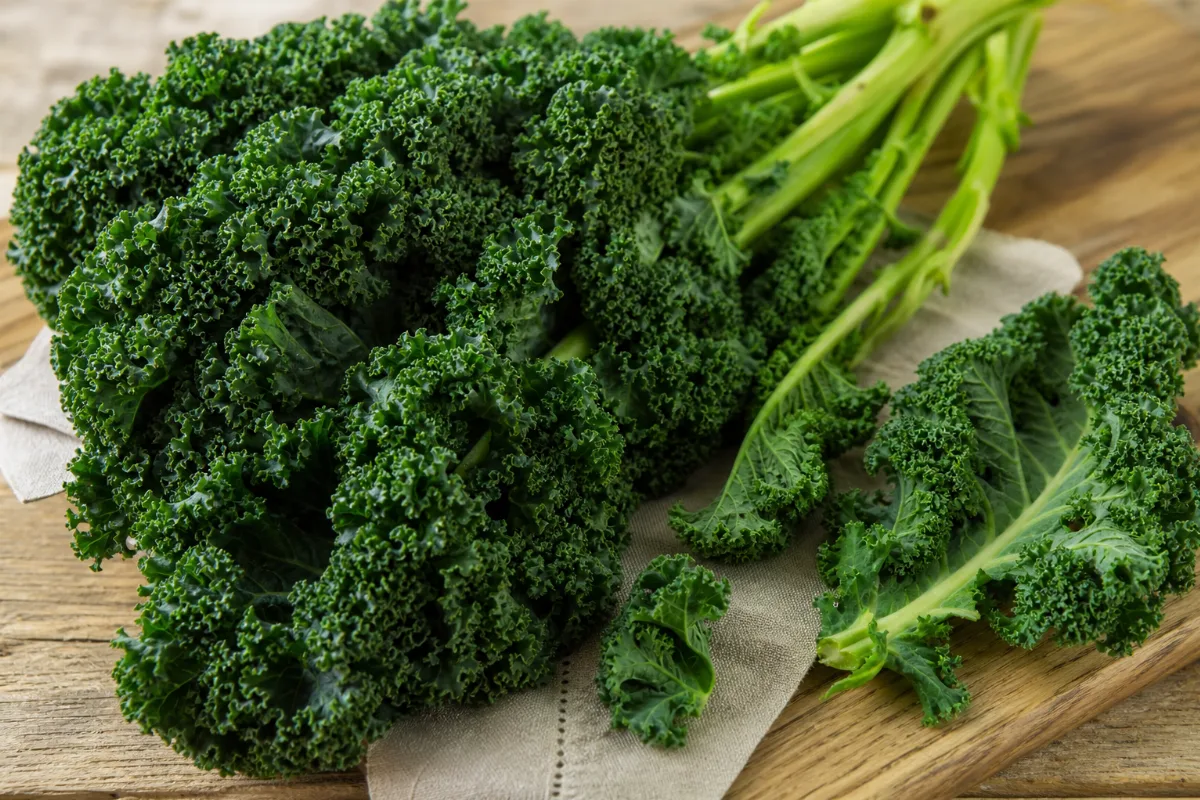
Kale (Brassica oleracea var. sabellica) is a leafy vegetable in the cabbage family (Brassicaceae). The leaves are eaten, raw or cooked. People eat it for its vitamins, fiber and plant pigments. This page keeps kale as a food apart from supplements, powders and extracts, and apart from hype. It is information, not a prescription.
Read this first
- Warfarin (a blood thinner): kale is very high in vitamin K, which affects how warfarin works. The advice from MedlinePlus is to eat a steady amount of vitamin K foods from week to week and to talk to your doctor before changing your diet. [2] Do not start or stop eating kale in large amounts without telling your clinic.
- Thyroid: kale contains goitrogens (compounds that can interfere with the thyroid). The Linus Pauling Institute says these are not of clinical importance unless eaten in large amounts or when iodine is also low. [3]
- Allergy to any food is possible. For trouble breathing or swelling of the face or throat, call 911. We did not find a source we could read on kale allergy specifically.
- Evidence in one line: kale is a nutritious vegetable. Studies of leafy greens as a group link them to lower heart disease risk, but those are observational; trials of kale itself are few and small.
What is in it (USDA values)
| Nutrient | Per 100 g (raw) | Per 1 cup, raw (21 g) | % Daily Value per cup |
|---|---|---|---|
| Energy | 35 kcal | 7 kcal | not set |
| Fiber | 4.1 g | 0.9 g | 3% |
| Total sugars | 0.99 g | 0.2 g | not set |
| Vitamin K | 389.6 µg | 81.8 µg | 68% |
| Vitamin C | 93.4 mg | 19.6 mg | 22% |
| Vitamin A (RAE) | 241 µg | 51 µg | 6% |
| Folate (DFE) | 62 µg | 13 µg | 3% |
| Calcium | 254 mg | 53 mg | 4% |
| Potassium | 348 mg | 73 mg | 2% |
| Manganese | 0.92 mg | 0.19 mg | 8% |
| Iron | 1.6 mg | 0.34 mg | 2% |
Source: USDA FoodData Central, "Kale, raw" (SR Legacy, ID 168421). [1] The per-cup column is our arithmetic from the USDA values and the USDA portion of 1 cup = 21 g. % Daily Value uses the FDA 2016 Daily Values; values vary with variety, ripeness and storage.
USDA also lists lutein plus zeaxanthin (6,261 µg per 100 g) and beta-carotene (2,873 µg per 100 g), plant pigments of the carotenoid family. [1] Kale is also named by the Linus Pauling Institute as a source of glucosinolates (about 67 mg per cup of chopped raw kale), sulfur-containing compounds that are turned into isothiocyanates when the leaf is chopped or chewed. [4] Most of the evidence on these compounds comes from the lab and from animals; the human studies below do not show that they prevent disease.
What research says
| Health goal | What the sources found | Strength of evidence | What was studied |
|---|---|---|---|
| Heart disease risk | A meta-analysis of 17 studies found green leafy vegetables linked to lower cardiovascular disease (pooled relative risk 0.93). [9] An umbrella review linked each 100 g a day of leafy greens to about 25% lower risk of death, coronary heart disease and stroke. [10] Kale was not named in either. | Promising but limited | Observational studies of leafy greens as a group |
| Blood sugar in type 2 diabetes | In a 12-week randomized, placebo-controlled trial of 30 adults, a bar with freeze-dried kale (about 341 g fresh kale a day) lowered HbA1c and insulin resistance versus placebo. Fasting glucose and LDL cholesterol did not change significantly. [5] | Promising but limited (one small trial) | Freeze-dried kale in a bar, a very large amount |
| Hormone balance (estrogen breakdown) | An 8-week randomized trial of 78 women found no effect of a Brussels sprout and kale capsule, or of broccoli or Brussels sprouts, on a urinary hormone ratio. [6] | No good evidence of benefit | Capsule and vegetables, healthy women |
| Iron absorption and oxalate | In 13 women, iron absorption from a kale meal was not changed by added oxalate. The kale meal itself had very little oxalic acid (0.01 g in 150 g) compared with spinach (1.27 g). [8] | Established as a measurement (small study) | Kale in a bread meal, healthy women |
| Cell protection in the lab (DNA damage) | In 22 healthy people, 5 days of cooked Ethiopian kale lowered a lab measure of DNA damage; this is a different species (B. carinata) and a lab marker, not a disease. [7] | Lab or animal only (marker, not outcome) | Cooked and raw leaves, different kale species |
| Preventing eye disease, cancer or other conditions | Proper evidence not found in the sources we read for kale itself. Lutein is linked to lower macular degeneration risk in observational reviews of greens, not shown for kale. [10] | Insufficient evidence | Not applicable |
Eaten as food versus taken as a supplement or extract. The diabetes trial used a freeze-dried kale bar and the hormone trial used capsules. Both are processed products at amounts well beyond a typical serving, so their results do not transfer to eating kale in meals. We did not find a source we could read on kale powders or juices, so we make no claim about them.
How much is a normal serving
- USDA lists 1 cup of raw kale as 21 g. [1] That is a household portion in a nutrient database, not an advised amount.
- The NHS counts 80 g of fresh, canned or frozen vegetables as one portion of its 5 A DAY (reviewed June 2026), and the WHO recommends at least 400 g of fruits and vegetables a day for people older than 10 (fact sheet, January 2026). [11][12] These are public health figures, not advice for you.
- A laboratory comparison of eight vegetables (it did not include kale) found frozen produce comparable to fresh for vitamins overall, with beta-carotene lower in some items. [13] We did not find kale-specific data on cooking losses, so we make no claim.
- USDA values above are for raw kale. Cooked kale is a different food in the database.
Safety, allergy and medicines
- Warfarin and vitamin K: one raw cup supplies about two thirds of the Daily Value for vitamin K (USDA). [1] MedlinePlus says vitamin K foods can change how warfarin works, advises consistent amounts week to week, advises against eating large amounts of leafy green vegetables, and says to talk to your doctor before changing diet. [2] Kale is not named on that page; it is a leafy green. The aim is steadiness and telling your anticoagulation clinic, not necessarily avoiding it. Other blood thinners work differently; ask your pharmacist. See foods and medicine interactions.
- Thyroid (goitrogens): the Linus Pauling Institute lists kale among cruciferous vegetables that contain goitrogens and says they are not of clinical importance unless eaten in large amounts or when iodine deficiency is also present. [3] It gives no amounts. People with a thyroid condition or on thyroid medicine should ask their clinician. See thyroid conditions and iodine.
- Kidney stones (oxalate): the NIDDK avoid-list for calcium oxalate stones names spinach, rhubarb, nuts, peanuts and wheat bran, not kale (page last reviewed May 2017). [15] A small study measured very little oxalic acid in kale. [8] Anyone with a history of stones should still ask a clinician what to eat.
- Large amounts: the trials above gave processed kale. Whether regularly eating very large amounts of kale is harmless was not covered by sources we read. Proper evidence not found.
- Allergy: proper evidence on kale allergy not found in the sources we read. Stop eating it and seek care after any reaction; for breathing trouble or swelling of the face or throat call 911.
- Pesticide residues: we could not read a source (EWG and USDA Pesticide Data Program pages were not reachable), so we make no statement on kale residues. Washing is covered below.
- Pregnancy: proper evidence on kale in pregnancy not found in the sources we read; ask your clinician or midwife.
Choosing, storing and food safety
- Choose leaves that are not bruised or damaged; for bagged greens, pick packs that are refrigerated or on ice. [14]
- Rinse all produce under running water, including bagged greens not labeled pre-washed. Do not use soap, detergent or produce wash. Washing reduces bacteria but does not remove them all. [14]
- Refrigerate pre-cut or packaged produce, at 40°F or below. [14]
- Leafy greens were linked to E. coli contamination in one review; see leafy greens. [10]
Related pages
Health connections for Kale
What research links to eating or drinking this food, and how strong the evidence is. Many studies are observational or use juice, powder, oil or extracts rather than the food as eaten; each card says which.
Heart disease risk and leafy greens
Preliminary or mixedStudies that follow large groups link more leafy greens to lower heart disease risk. They did not single out kale and cannot prove cause.
Supplements: Applies to eating leafy greens; no supplement evidence.
Vitamin K, vitamin C and vitamin A from the diet
Established roleOne raw cup (21 g) gives about 68% of the vitamin K, 22% of the vitamin C and 6% of the vitamin A Daily Value (USDA).
Supplements: Food source of nutrients; no claim that extra intake treats a disease.
Blood sugar in type 2 diabetes
Preliminary or mixedOne small 12-week trial of 30 adults found lower HbA1c and insulin resistance with a freeze-dried kale bar (about 341 g fresh kale a day) versus placebo; fasting glucose did not change significantly.
Supplements: Result is for a freeze-dried bar, not ordinary servings.
Estrogen breakdown (2:16 hydroxyestrone ratio)
Not enough evidenceAn 8-week randomized trial in 78 premenopausal women found no effect of a Brussels sprout and kale capsule or of broccoli or Brussels sprouts on this urinary ratio.
Supplements: No benefit shown in this trial.
Glucosinolates and cell protection
Lab or animal research onlyKale contains glucosinolates (about 67 mg per cup of chopped raw kale), which become isothiocyanates when chopped or chewed. Much of the evidence is lab or animal work; one 5-day trial of cooked Ethiopian kale (another species) lowered a lab DNA-damage marker.
Supplements: Not applicable to supplements here.
Lutein and eye health
Not enough evidenceUSDA lists lutein plus zeaxanthin in kale (6,261 micrograms per 100 g). An umbrella review links lutein intake with lower macular degeneration risk, but did not study kale.
Supplements: No kale-specific evidence found.
Connected topics
Open a group to see how each topic connects and how strong the evidence is.
Health goals (2)
- Heart HealthPreliminary or mixed
Cohort studies of leafy greens link them to lower cardiovascular disease risk; observational only.
- Blood Sugar BalancePreliminary or mixed
One small trial with a kale bar lowered HbA1c in people with type 2 diabetes.
Body systems (4)
- Cardiovascular SystemPreliminary or mixed
Observational studies link more leafy greens to lower cardiovascular disease risk; kale was not singled out and association is not proof.
- Heart & CirculationPreliminary or mixed
Same observational evidence on leafy greens as a group; cannot prove cause.
- Blood Sugar SupportPreliminary or mixed
One small trial of a freeze-dried kale bar lowered HbA1c in type 2 diabetes; the amount was very large and one trial is not enough.
- Endocrine SystemDocumented risk
Kale contains goitrogens that can matter for the thyroid in large amounts or with low iodine.
Body parts (2)
Functional actions (1)
- Blood Sugar RegulationPreliminary or mixed
HbA1c and insulin resistance fell in one small kale-bar trial.
Root causes (1)
- Medication Side EffectsDocumented risk
The high vitamin K content of kale can affect warfarin; keep intake steady and tell the clinic.
Biomarkers (1)
- HbA1cPreliminary or mixed
HbA1c fell in one 12-week trial using a freeze-dried kale bar.
Conditions & symptoms (1)
- Type 2 Diabetes Mellitus Without ComplicationPreliminary or mixed
One small 12-week trial of a freeze-dried kale bar lowered HbA1c versus placebo; not shown for ordinary servings and not a treatment.
Documented risks and interactions (4)
- Vitamin K and warfarin. Kale is very high in vitamin K (about 68% of the Daily Value in one raw cup). MedlinePlus advises steady amounts of vitamin K foods from week to week and a talk with the doctor before diet changes.
- Goitrogens and the thyroid. Kale contains goitrogens. The Linus Pauling Institute says they matter only in large amounts or together with low iodine. People with thyroid disease should ask their clinician.
- Oxalate and kidney stones. The NIDDK stone avoid-list names spinach, not kale. A small study measured very little oxalic acid in kale (0.01 g in 150 g) compared with spinach (1.27 g). Anyone with stones should still ask a clinician.
- Washing and food safety of leafy greens. FDA advises rinsing produce under running water, no soap or produce wash, refrigerating pre-cut or packaged produce; washing reduces but does not remove all bacteria.
Frequently asked questions
Is kale safe to eat if I take warfarin?
It can be, but the key is consistency. MedlinePlus advises steady amounts of vitamin K foods week to week and a talk with your doctor before diet changes. [2] One raw cup has about 68% of the vitamin K Daily Value. [1]
Does kale harm the thyroid?
Kale contains goitrogens, but the Linus Pauling Institute says they are not of clinical importance unless eaten in large amounts or with low iodine. [3] If you have a thyroid condition, ask your clinician.
Does kale lower blood sugar?
One small 12-week trial using a freeze-dried kale bar (about 341 g fresh kale a day) lowered HbA1c in adults with type 2 diabetes. [5] That is one small trial at a very large amount, not proof for normal servings.
Is kale high in oxalate like spinach?
In one iron-absorption study, 150 g of kale had 0.01 g of oxalic acid versus 1.27 g in the same amount of spinach. [8] The NIDDK stone list names spinach, not kale. [15]
Is frozen kale as good as fresh?
We did not find a study of frozen kale. A comparison of eight vegetables found frozen vitamins comparable to fresh overall. [13]
References
- U.S. Department of Agriculture. FoodData Central: Kale, raw (FDC ID 168421, SR Legacy). April 2018 release. Read 2026-10-23.
- MedlinePlus. Warfarin. Last revised 15 March 2026. Read 2026-10-23.
- Linus Pauling Institute, Oregon State University. Iodine. Updated May 2024, reviewed June 2024. Read 2026-10-23.
- Linus Pauling Institute, Oregon State University. Isothiocyanates. Read 2026-10-23.
- Jeppesen PB et al. Beneficial Effects of a Freeze-Dried Kale Bar on Type 2 Diabetes Patients: A Randomized, Double-Blinded, Placebo-Controlled Clinical Trial. Nutrients 2024. PMID 39519473. Abstract read 2026-10-23.
- Davis SJ et al. Urinary 2- to 16alpha-hydroxyestrone ratio did not change with cruciferous vegetable intake in premenopausal women. Int J Vitam Nutr Res 2024. PMID 37335576. Abstract read 2026-10-23.
- Schlotz N et al. Are Raw Brassica Vegetables Healthier Than Cooked Ones? A Randomized, Controlled Crossover Intervention Trial on the Health-Promoting Potential of Ethiopian Kale. Nutrients 2018. PMID 30400138. Abstract read 2026-10-23.
- Bonsmann SS et al. Oxalic acid does not influence nonhaem iron absorption in humans: a comparison of kale and spinach meals. Eur J Clin Nutr 2008. PMID 17440529. Abstract read 2026-10-23.
- Ojagbemi A et al. Dietary intakes of green leafy vegetables and incidence of cardiovascular diseases. Cardiovasc J Afr 2021. PMID 34128951. Abstract read 2026-10-23.
- Li N et al. Green leafy vegetable and lutein intake and multiple health outcomes. Food Chem 2021. PMID 34034049. Abstract read 2026-10-23.
- NHS. 5 A DAY: what counts. Last reviewed 9 June 2026. Read 2026-10-23.
- World Health Organization. Healthy diet fact sheet. 26 January 2026. Read 2026-10-23.
- Bouzari A et al. Vitamin retention in eight fruits and vegetables: a comparison of refrigerated and frozen storage. J Agric Food Chem 2015. PMID 25526594. Abstract read 2026-10-23.
- U.S. Food and Drug Administration. Selecting and Serving Produce Safely. Content current as of 5 March 2024. Read 2026-10-23.
- National Institute of Diabetes and Digestive and Kidney Diseases. Eating, Diet, & Nutrition for Kidney Stones. Last reviewed May 2017. Read 2026-10-23.