Chicory, Endive & Radicchio: Nutrients, What Research Shows and Safety
Chicory, endive and radicchio are bitter leaf vegetables high in vitamin K. What USDA data and research show, plus warfarin, allergy and fiber notes.
Content last updated . This page has not been medically reviewed.
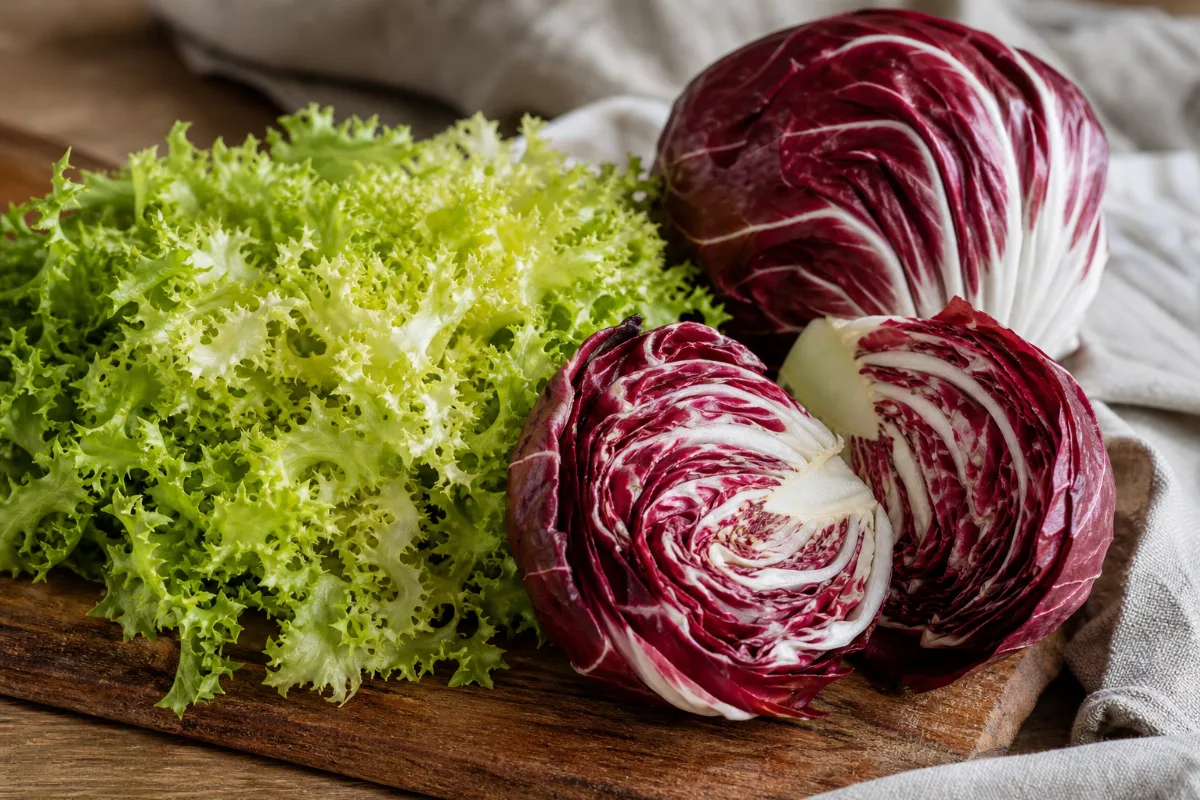
Chicory, endive and radicchio are leaf vegetables from two closely related plants in the daisy family (Asteraceae): chicory (Cichorium intybus, which includes radicchio) and endive (Cichorium endivia, which includes escarole). The leaves are eaten raw in salads or cooked, and they taste bitter. People eat them for their vitamin K, folate and fiber and because they are a leafy green. This page keeps the leaves apart from chicory root, supplements and hype.
Read this first
- Warfarin: both endive and radicchio are very high in vitamin K. MedlinePlus says vitamin K affects how warfarin works and that a steady intake from day to day matters. If you take warfarin, ask your prescriber or clinic before changing how much of these leaves you eat. [1][2][3]
- Allergy: these plants are in the same family as ragweed, mugwort and lettuce. Allergy to chicory has been described in people allergic to birch pollen. For trouble breathing or swelling of the face or throat, call 911. See food allergy basics and emergency signs. [5][6]
- Leaves are not the root: the inulin fiber people read about comes from chicory root, not from salad leaves. See chicory root.
- Honest summary: the nutrient numbers are solid. We found no human trial of endive or radicchio leaves for any disease; claims come from studies of vegetables in general or from lab work. [4][11]
What is in it (USDA values)
| Nutrient | Per 100 g (endive; radicchio) | Per typical serving (endive: 0.5 cup chopped, 25 g; radicchio: 1 cup shredded, 40 g) | % Daily Value per serving (endive; radicchio) |
|---|---|---|---|
| Energy | 17 kcal; 23 kcal | 4 kcal; 9 kcal | not set |
| Fiber | 3.1 g; 0.9 g | 0.8 g; 0.4 g | 3%; 1% |
| Total sugars | 0.25 g; 0.6 g | 0.1 g; 0.2 g | not set |
| Vitamin K | 231 mcg; 255.2 mcg | 58 mcg; 102 mcg | 48%; 85% |
| Folate (DFE) | 142 mcg; 60 mcg | 36 mcg; 24 mcg | 9%; 6% |
| Vitamin A (RAE) | 108 mcg; 1 mcg | 27 mcg; 0.4 mcg | 3%; 0% |
| Vitamin C | 6.5 mg; 8.0 mg | 1.6 mg; 3.2 mg | 2%; 4% |
| Vitamin E | 0.44 mg; 2.26 mg | 0.11 mg; 0.90 mg | 1%; 6% |
| Potassium | 314 mg; 302 mg | 79 mg; 121 mg | 2%; 3% |
| Copper | 0.10 mg; 0.34 mg | 0.03 mg; 0.14 mg | 3%; 15% |
| Manganese | 0.42 mg; 0.14 mg | 0.11 mg; 0.06 mg | 5%; 3% |
| Calcium | 52 mg; 19 mg | 13 mg; 8 mg | 1%; 1% |
Source: USDA FoodData Central, SR Legacy, raw endive (FDC 168412) [1] and raw radicchio (FDC 168564) [2]. % Daily Value uses the FDA 2016 Daily Values; values vary with variety, ripeness and storage.
Plant compounds: USDA lists beta-carotene in raw endive (1,300 mcg per 100 g) and lutein plus zeaxanthin in raw radicchio (8,832 mcg per 100 g). [1][2] A lab study of escarole (a kind of endive) found phenolic compounds, flavonoids and sesquiterpenes in the outer leaves and measured antioxidant activity in test tubes and cells, with no human participants. [11] A review lists sesquiterpene lactones, chicoric acid, chlorogenic acid and flavonoids among the compounds of chicory, mostly for the whole plant and the root. [10] These findings are from the lab, not from people.
What research says
| Health goal | What the sources found | Strength of evidence | What was studied |
|---|---|---|---|
| Heart disease, cancer and early death | A 2017 meta-analysis of 95 prospective studies found that eating more fruit and vegetables in total went with lower risk (for example, heart disease 8% lower per extra 200 g a day). Leafy greens were among the foods linked with lower cardiovascular risk or death. [4] | Promising but limited (observational; shows association, not proof) | Fruit and vegetables as a group; not endive or radicchio alone |
| Vitamin K needs | The leaves give 48% (endive) to 85% (radicchio) of the Daily Value in one USDA serving. [1][2] | Established (as a nutrient source) | USDA food composition |
| Bowel regularity | A 2014 meta-analysis of 5 trials (252 people) found inulin raised stool frequency, but pain and bloating did not improve. [8] The trials tested inulin, not chicory leaves. | Insufficient evidence for the leaves | Inulin, from the root |
| Antioxidant or anti-inflammatory effects | Laboratory results for escarole extracts and chicory compounds. [10][11] | Lab or animal only | Cells and test tubes |
| Blood sugar, weight, liver "cleansing" | Proper evidence not found in the sources we read. | Insufficient evidence | Not applicable |
Eaten as food vs taken as a supplement or extract. Everything above is about eating the leaves. Chicory root, inulin powders and extracts are separate products with their own trials and safety questions, covered on chicory root and prebiotic foods. We did not find a source that measured inulin in endive or radicchio leaves, so we make no claim that they act as a prebiotic.
How much is a normal serving
- USDA household portions: 0.5 cup chopped endive (25 g) and 1 cup shredded radicchio (40 g). [1][2] This is information, not a prescription.
- WHO says at least 400 g of fruits and vegetables a day for people older than 10. [13] The NHS counts 80 g of fresh, canned or frozen vegetables as one portion. [14]
- Cooking effects on nutrients: Proper evidence not found in the sources we read for these leaves. See fresh, frozen and canned produce.
Safety, allergy and medicines
- Warfarin and other vitamin K blood thinners: MedlinePlus says vitamin K affects how warfarin works, that sudden changes in intake can change the medicine's effect, and that leafy greens are the main food source. Steady intake is the aim, and your provider can tell you whether to monitor it. [3] Because these leaves are rich in vitamin K [1][2], the same rule applies. This is not a reason to avoid them; it is a reason to keep intake steady and tell the warfarin clinic. See foods and medicine interactions. We did not read a source about newer blood thinners that do not work through vitamin K.
- Ragweed-family and pollen allergy: chicory belongs to the daisy family (Asteraceae). A 2025 review says Asteraceae plants are known occupational sensitizers, and pollen proteins from ragweed and mugwort drive cross-reactions and pollen-food allergy syndromes. Its abstract does not name chicory. [6] A 2003 study of four people with birch pollen allergy and oral allergy syndrome to chicory found proteins in chicory that bind their antibodies, and the authors say chicory should be listed among foods that cross-react with birch. [5] Typical signs of oral allergy are itching in the mouth and throat after eating raw leaves.
- Severe reactions: a 2025 case report describes anaphylaxis to lettuce in a florist with contact allergy to daisy-family plants; the keywords include chicory and radicchio, but the record had no abstract, so we only know what its title and keywords say. [7] See anaphylaxis and severe allergic reactions.
- Gas and bloating: a review of 103 trials of non-digestible carbohydrates such as inulin lists gas and bloating among tolerance effects, which depend on the fiber and the amount. [9] This applies mainly to concentrated inulin; we did not find data for the leaves.
- Potassium and kidneys: leaves have about 300 mg of potassium per 100 g, a small amount per serving (2-3% of the Daily Value). [1][2] People with kidney disease or on medicines that raise potassium should still follow their care team's advice.
- Pregnancy, medicines other than warfarin, children: not described in the sources we read. Lack of information is not proof of safety; ask a pharmacist or clinician.
Choosing, storing and food safety
- Choose leaves that are not bruised or damaged. For pre-cut or bagged items, buy only those kept refrigerated or on ice. [12]
- Keep leaves at 40°F (4°C) or below and refrigerate cut or packaged produce. [12]
- Rinse under running water, including bagged leaves not labeled as pre-washed; do not use soap or produce wash. Washing can reduce bacteria but will not eliminate them. [12]
Related pages
Health connections for Chicory, Endive & Radicchio
What research links to eating or drinking this food, and how strong the evidence is. Many studies are observational or use juice, powder, oil or extracts rather than the food as eaten; each card says which.
Vitamin K intake
Established roleLeaves give a large share of the Daily Value for vitamin K; this is a nutrient-composition fact.
Supplements: Not a supplement; it describes the food.
Folate and other nutrients
Established roleEndive gives about 9% of the Daily Value for folate in 0.5 cup; radicchio gives 15% of the Daily Value for copper in 1 cup. Amounts per serving are small for most other nutrients.
Supplements: Not a supplement; it describes the food.
Vegetable intake and heart disease or early death
Preliminary or mixedA meta-analysis of 95 prospective studies linked higher fruit and vegetable intake with lower risk of heart disease, stroke, cancer and early death; leafy greens were among the foods linked with lower cardiovascular risk or death. This is observational and not specific to chicory-family leaves.
Supplements: Not about supplements.
Fiber and bowel regularity: inulin from chicory root, not leaves
Not enough evidenceTrials found chicory-type inulin raised stool frequency, but pain and bloating did not improve. Those trials tested inulin, not endive or radicchio leaves, and we found no source measuring inulin in the leaves.
Supplements: Evidence is for inulin; none found for the leaves.
Plant compounds and antioxidant activity (lab)
Lab or animal research onlyLab work on escarole leaves and reviews of chicory describe phenolic compounds, flavonoids and sesquiterpene lactones with antioxidant activity in test tubes and cells. No human trial of the leaves was found.
Supplements: Lab only.
Bitter taste and health
Not enough evidenceChicory-family leaves are known for bitterness. We found no human trial showing health benefit from the bitterness itself.
Supplements: No good evidence of benefit.
Connected topics
Open a group to see how each topic connects and how strong the evidence is.
Body systems (1)
- Immune SystemDocumented risk
Chicory-family plants can cause allergy, including oral allergy in people with birch pollen allergy and cross-reactions with ragweed-family plants.
Functional actions (1)
- AntioxidantLab or animal research only
Lab studies of escarole and chicory compounds show antioxidant activity in test tubes and cells; no human trials of the leaves were found.
Root causes (1)
- Medication Side EffectsDocumented risk
Endive and radicchio are rich in vitamin K, which affects how warfarin works. MedlinePlus advises keeping vitamin K intake steady and asking the provider.
Habits (1)
- Balanced NutritionPreliminary or mixed
Leafy vegetables count toward the daily vegetable intake WHO and the NHS recommend; observational studies link higher vegetable intake with lower disease risk, which is association, not proof.
Conditions & symptoms (2)
- Anticoagulant DisordersDocumented risk
Vitamin K-rich leaves can affect how warfarin works; steady intake and talking to the clinic are advised.
- Food AllergyDocumented risk
Oral allergy to chicory has been described in people with birch pollen allergy; daisy-family plants can cross-react with ragweed and mugwort pollen.
Documented risks and interactions (4)
- Vitamin K content and warfarin. Endive and radicchio are very rich in vitamin K (about 48% and 85% of the Daily Value in one USDA serving). Vitamin K affects how warfarin works, so people on warfarin are advised to keep their intake steady and to tell their clinic.
- Allergy: daisy family, birch and ragweed pollen. Chicory is in the daisy family. Oral allergy to chicory has been described in people with birch pollen allergy, and daisy-family plants can cross-react with ragweed and mugwort pollen.
- Severe allergic reaction to daisy-family salad plants. A 2025 case report describes anaphylaxis to lettuce in a florist allergic to daisy-family plants; keywords include chicory and radicchio. Only the title and keywords were available.
- Gas and bloating from fiber such as inulin. A review of 103 trials lists gas and bloating among tolerance effects of non-digestible carbohydrates. This applies mainly to concentrated inulin; no data for the leaves.
Frequently asked questions
Is endive or radicchio safe with warfarin?
They are very high in vitamin K, and MedlinePlus says sudden changes in vitamin K intake can change how warfarin works. The aim is steady intake, so tell your clinic and ask what suits you. [1][2][3]
Is the inulin in chicory root also in the leaves?
We did not find a source that measured inulin in endive or radicchio leaves. The inulin studies we read used inulin from chicory root. [8]
Can I be allergic to chicory or endive?
Yes. Oral allergy to chicory has been described in people allergic to birch pollen, and daisy-family plants can cross-react with ragweed and mugwort pollen. [5][6] For trouble breathing, call 911.
Why are these leaves bitter, and are they healthier because of it?
They are known for a bitter taste. Lab studies describe sesquiterpene lactones and other compounds in chicory-family plants, but we found no human trial showing health benefit from the bitterness itself. [10][11]
Do they help bowel regularity?
Trials found benefit from inulin, not from the leaves, and pain and bloating did not improve. [8] For the leaves: Proper evidence not found.
References
- U.S. Department of Agriculture. Endive, raw (FDC 168412). FoodData Central, SR Legacy, April 2018. Read 2026-10-23.
- U.S. Department of Agriculture. Radicchio, raw (FDC 168564). FoodData Central, SR Legacy, April 2018. Read 2026-10-23.
- MedlinePlus, U.S. National Library of Medicine. Vitamin K. Read 2026-10-23.
- Aune D et al. Fruit and vegetable intake and the risk of cardiovascular disease, total cancer and all-cause mortality: a systematic review and dose-response meta-analysis of prospective studies. Int J Epidemiol 2017. PMID 28338764. Abstract read 2026-10-23.
- Cadot P, Kochuyt AM, van Ree R, Ceuppens JL. Oral allergy syndrome to chicory associated with birch pollen allergy. Int Arch Allergy Immunol 2003. PMID 12759485. Abstract read 2026-10-23.
- Ključevšek T, Kreft S. Allergic potential of medicinal plants from the Asteraceae family. Health Sci Rep 2025. PMID 39995792. Abstract read 2026-10-23.
- Obermeyer L et al. Lettuce anaphylaxis in a florist with hand dermatitis and contact allergy to the Compositae (Asteraceae) family of plants. Contact Dermatitis 2025. PMID 40739752. Record read 2026-10-23 (no abstract; title and keywords only).
- Collado Yurrita L et al. Effectiveness of inulin intake on indicators of chronic constipation: a meta-analysis of controlled randomized clinical trials. Nutr Hosp 2014. PMID 25208775. Abstract read 2026-10-23.
- Mysonhimer AR, Holscher HD. Gastrointestinal effects and tolerance of nondigestible carbohydrate consumption. Adv Nutr 2022. PMID 36041173. Abstract read 2026-10-23.
- Birsa ML, Sarbu LG. Health benefits of key constituents in Cichorium intybus L.. Nutrients 2023. PMID 36986053. Abstract read 2026-10-23.
- Donadio G et al. Characterization of health beneficial components in discarded leaves of three escarole (Cichorium endivia L.) cultivars and study of their antioxidant and anti-inflammatory activities. Antioxidants 2023. PMID 37507941. Abstract read 2026-10-23.
- U.S. Food and Drug Administration. Selecting and Serving Produce Safely. Content current as of 2024-03-05. Read 2026-10-23.
- World Health Organization. Healthy diet fact sheet. Shown 26 January 2026. Read 2026-10-23.
- NHS. 5 A DAY: what counts. Last reviewed 9 June 2026. Read 2026-10-23.