Shichimi togarashi: What It Is, Flavor, Cooking Use and Health Facts
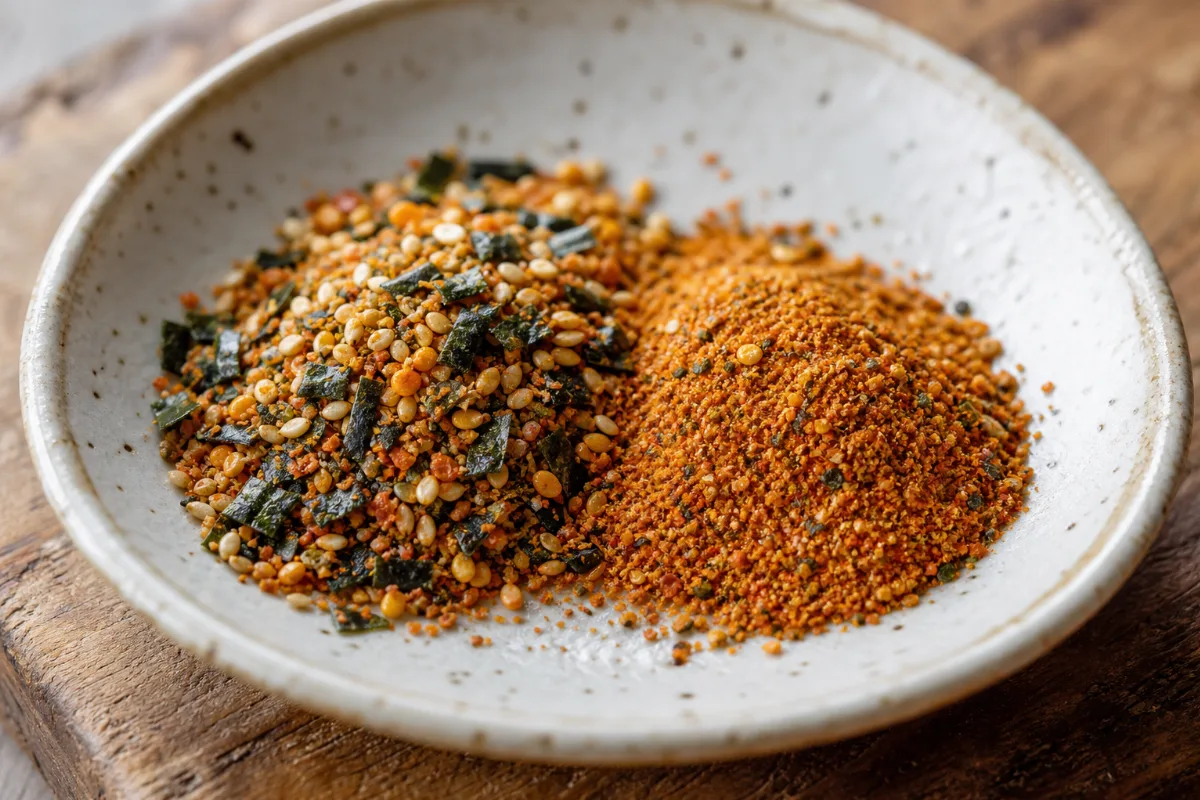
Shichimi togarashi is a Japanese chili blend that is hot, citrusy and nutty, sprinkled on noodles and rice at the table; it has not been studied as a blend, and it can contain sesame and poppy seed.
Content last updated . This page has not been medically reviewed.
In the kitchen at a glance
Flavor:Hot / pungentCitrusyEarthy
Aroma: Chili heat with a bright orange-peel note and a toasted, nutty background.
Used in: soups and stews, rice and grains, grilling and rubs, vegetables
Usual amount in food: No source gives a usual amount; it is a table seasoning shaken on to taste, and USDA has no entry for it.
What it is
Shichimi togarashi means "seven-flavor chili pepper" in Japanese. It is a blend led by ground red chili, and it dates back at least to the 17th century, when herb dealers in Edo (today's Tokyo) made it. [1] In the US it is often sold as nanami togarashi, an easier name to say. [1] A blend of chili alone is called ichimi togarashi, "one-flavor chili." [1]There is no single recipe. The makers differ, and each source lists a slightly different set of parts. The ones named in the sources we read are below, as "typical," not "always." [1][2]
| Typical ingredient | Role in flavor | Link |
|---|---|---|
| Ground red chili | Heat; the main ingredient | More about Ground red chili → |
| Sansho (Japanese pepper) | Tingling, numbing edge, citrus aroma | Sichuan pepper (a close relative) |
| Dried orange or mandarin peel | Citrus note | No page yet |
| Sesame seeds, black or white | Nutty taste and crunch | No page yet |
| Ginger | Warm bite | More about Ginger → |
| Nori or aonori (seaweed) | Savory, sea-like taste | No page yet |
| Poppy seed, hemp seed, yuzu peel, shiso | Sometimes added | No page yet |
Sansho is the Japanese pepper, Zanthoxylum piperitum. Its tingling comes from sanshool compounds, which are also found in Sichuan pepper. [10] Chili in the blend is Capsicum annuum. [1]
Flavor and aroma
Two cooking sources describe it as hot, citrusy and nutty, with a savory depth from the seaweed. [2] The heat comes from the chili. [1] Nanami is sometimes said to be more citrusy, but the encyclopedia page we read says the two names mean essentially the same blend. [1]The sources we read do not say how heat changes the flavor. Because it is used as a finishing seasoning, its aroma is meant to be smelled at the table, not cooked away. [2]
How it is used in cooking
Shichimi is traditionally a finishing spice, sprinkled on at the table. In Japan a shaker is common on restaurant tables. [1]- Noodles and soups: ramen, udon, soba, and other noodle soups. [1][2]
- Rice and meat bowls: gyudon, a beef rice bowl, and other rice dishes. [1][2]
- Grilled foods: yakitori, steak, poultry, seafood, vegetables and tofu. [2]
- Other: hot pot, tonjiru (pork and vegetable soup), popcorn, and rice crackers or rice cakes. [1][2]
- Spicy mayo: stir it into Japanese mayonnaise. [2]
Our sources call it a finishing seasoning, so adding it near the end or at the table fits. [2] They do not say whether to toast it or what to use instead, so we give no rules for that.
Normal food amounts
USDA SR Legacy has no entry for shichimi togarashi, so we give no nutrient numbers for the blend. [11]| Measure | Grams | Source |
|---|---|---|
| 1 teaspoon of the blend | Not listed | No USDA entry [11] |
| Typical recipe amount | Not found | No source states one |
For scale only, USDA lists 1.8 g per teaspoon of ground cayenne, 1.8 g for ground ginger, 2.7 g for chili powder and 2.8 g for poppy seed. [11] A teaspoon of shichimi probably weighs about 2 to 3 g, but that is our guess, not a measurement.
A source we opened does not list salt among the ingredients, and does not say whether the blend contains any. [2] Check the label: USDA's chili powder, a different product that often has salt added, has about 77 mg of sodium per teaspoon, while plain ground cayenne has about 0.5 mg. [11] That shows how much a salted blend can differ, not what shichimi holds.
Buying, storing and preparing
- Forms: a ready-mixed jar or shaker is the usual form today. In the past, shops mixed it to each customer's taste, and a few festival stalls still do. [1]
- Three famous makers: Yagenbori, Shichimiya and Yawataya Isogoro, each near a well-known temple. [1]
- Label: look at the order of ingredients, any salt, fillers, and allergens such as sesame. Poppy seed, hemp seed or shiso may also be present. [1][2][3]
- Storing: keep it away from damp, in a cool place. [2] The page we read gives no shelf life.
- Quality notes: see the contamination point in the safety section.
Health: what research says
Eating a seasoning blend is different from taking concentrated products. We found no study of shichimi as a blend. Evidence belongs to its single spices, summarised in one row each below. We opened a general review of chili only.Food amounts vs supplements
| In normal cooking | In supplements and extracts | |
|---|---|---|
| Typical amount | A shake on a bowl; no usual amount found | Shichimi is not sold as a supplement that we found |
| What studies mostly used | None on the blend | Single spices as extracts or capsules (see each page) |
| What we can say about benefit | No health benefit shown for the blend | Not applicable |
| Main safety limit | Allergy to sesame or other seeds; heat; salt on the label | Not applicable |
What the evidence shows
| Use | What the sources found | Strength of evidence | Form and population |
|---|---|---|---|
| Shichimi as a blend | No study of the blend was found | Insufficient evidence | Food |
| Chili and spicy food, general health | An umbrella review of 11 reviews called the health effect unclear. It found links to lower mortality and heart disease in some analyses, and to higher esophageal, gastric and gallbladder cancer in others. [8] | Mixed | Spicy food and chili, population studies |
| Sesame, ginger, orange peel, nori, poppy seed, sansho | No review of these as used in a blend was opened | Insufficient evidence | See the pages of each spice where they exist |
See also Chili and Ginger for single-spice evidence.
Official statements
- FDA (US): sesame labeling since 2023; a "Contains" line may name sesame inside a spice list. [3]
- EFSA (EU), 2018: a safe level of 10 micrograms morphine-equivalent per kg body weight for opium alkaloids in poppy seeds. [4]
- FDA (US): import testing for Salmonella in spices, as reported in 2013. [6]
Related pages
Health connections for Shichimi togarashi
What research links to this spice, and how strong the evidence is. Most studies use concentrated extracts or doses far above what you eat; each card says which.
Spicy food and chili, general health
Preliminary or mixedAn umbrella review of 11 reviews called the health effect of spicy food unclear: some links to lower mortality and heart disease, some to higher esophageal, gastric and gallbladder cancer. Certainty was limited.
Supplements: Food-intake population studies, not supplements.
Blend not studied for health effects
Not enough evidenceWe found no study that tested shichimi togarashi as a blend for any health outcome. Evidence belongs to its single spices.
Supplements: No supplement form of shichimi found.
Connected topics
Open a group to see how each topic connects and how strong the evidence is.
Root causes (2)
- Heavy Metal ExposureDocumented risk
Lead was found in 28.8 percent of spice samples in one North Carolina study and no US limit for spices exists. Shichimi was not tested.
- Medication Side EffectsDocumented risk
For chili, animal data suggest changed drug absorption and MSK advises avoiding cayenne with cyclosporin. Clinical relevance is unknown and shichimi was not studied.
Conditions & symptoms (3)
- Food AllergyDocumented risk
Sesame, a typical part of shichimi, is a major US allergen and must be declared on packaged foods. Seeds such as poppy may also be present.
- Lead PoisoningDocumented risk
Lead was found in some ground spices in one study; shichimi was not tested.
- Salmonella InfectionsDocumented risk
Salmonella was found in about 6.6 percent of imported spice shipments in FDA testing (news report). Not shown for shichimi.
Documented risks and interactions (5)
- Sesame allergen in many blends. Sesame is a typical ingredient of shichimi. Since 1 January 2023 US packaged foods must declare sesame as a major allergen, and a spice blend can be declared with a 'Contains' line.
- Poppy seed opium alkaloids. EFSA keeps a safe level of 10 micrograms per kg body weight for morphine and codeine combined and says large amounts of unprocessed poppy seed may pass it; washing, heat and grinding may cut alkaloids by 25 to 100 percent.
- Lead found in some ground spices. A North Carolina study found lead at or above 1 mg/kg in 28.8 percent of 386 spice samples; the article says no US permissible lead limit for spices exists.
- Salmonella in imported spices. FDA import testing found Salmonella in about 6.6 percent of spice shipments in fiscal years 2007 to 2009, according to a news report on the FDA draft risk profile.
- Chili: irritation and medicine effects. Memorial Sloan Kettering lists stomach, eye and nose irritation for chili, case reports of rash in nursing infants and of anaphylaxis, and animal data on altered drug absorption of uncertain meaning in people.
Frequently asked questions
Is shichimi togarashi hot?
Yes. The heat comes from ground red chili, the main ingredient. [1] It also has a citrus note and a nutty taste. [2]
How much is normal?
We found no source for a usual amount. It is a table seasoning, shaken on to taste. [1][2]
Does it contain sesame?
Often, yes. Sesame is a typical ingredient, and US packaged foods must declare it. [1][3] Always read the label.
Is it safe in pregnancy?
We found no source on shichimi itself. As a small shake on food it is a modest amount, but ask your midwife or doctor, especially about heat and any poppy seed. [4][7]
Can I take it with medicines?
The sources we read name no interaction for the blend. For concentrated chili, MSK mentions possible drug effects. [7] Ask a pharmacist if unsure.
What is the difference from nanami togarashi?
They are the same blend under two names. [1] Ichimi togarashi is chili only. [1]
More details: evidence, limits and cautions
The details behind this page: cautions, limits of the evidence and where sources disagree. Open any note to read it.
Safety note at a glance
Safety in more detail
- Medicines: the sources we read do not describe interactions for the blend. For chili alone, Memorial Sloan Kettering says animal data suggest changes in how some drugs are absorbed, but it is unclear if this matters in people. It advises avoiding cayenne with cyclosporin. [7]
- Pregnancy: the sources we read do not describe shichimi. For cayenne supplements, MSK advises avoiding them in pregnancy. [7] Ask a midwife or doctor about large amounts.
- Breastfeeding: MSK cites cases of skin rash in nursing infants whose mothers ate red-pepper foods. [7]
- Children: the sources we read do not describe shichimi for children. Heat may bother young children.
- Allergy: sesame has been the ninth major US food allergen since 1 January 2023, so packaged foods must declare it. [3] A review of spice allergy says some spices cause allergic reactions and cross-reactions with pollen, and that mustard can cause severe reactions in small amounts. [9] An MSK source describes one case of anaphylaxis after a chili-pepper meal. [7]
- Liver and kidney: the sources we read do not describe problems at food amounts.
- Surgery: the sources we read do not describe a surgery warning.
- Quality and contamination: a North Carolina study of 386 spice samples found lead at or above 1 mg/kg in 28.8%; the article says no US lead limit for spices exists. Shichimi was not named. [5] FDA import testing found Salmonella in about 6.6% of spice shipments in fiscal years 2007 to 2009. [6]
- Amounts that cause trouble: chili can irritate the stomach, eyes and nose. [7] EFSA says poppy seeds, especially unprocessed ones in large amounts, can pass its safe level for opium alkaloids; washing, heat and grinding may reduce them by 25 to 100%. [4] Poppy is only a minor part of some blends, and we found no case tied to shichimi.
References
- Wikipedia — Shichimi. https://en.wikipedia.org/wiki/Shichimi (accessed 2026-10-24)
- Just One Cookbook — Shichimi Togarashi. https://www.justonecookbook.com/shichimi-togarashi/ (accessed 2026-10-24)
- FDA (US) — FASTER Act: sesame is the ninth major food allergen. https://www.fda.gov/food/food-allergies/faster-act-sesame-ninth-major-food-allergen (accessed 2026-10-24)
- EFSA (EU) — Opium alkaloids in poppy seeds: assessment updated, 2018. https://www.efsa.europa.eu/en/press/news/180516 (accessed 2026-10-24)
- CDC (US) — MMWR 2018;67(46): lead in spices, North Carolina study. https://www.cdc.gov/mmwr/volumes/67/wr/mm6746a2.htm (accessed 2026-10-24)
- CIDRAP — FDA report says 12% of imported spices tainted (news report on FDA 2013 draft risk profile). https://www.cidrap.umn.edu/foodborne-disease/fda-report-says-12-imported-spices-tainted (accessed 2026-10-24)
- Memorial Sloan Kettering Cancer Center — About Herbs: Cayenne. https://www.mskcc.org/cancer-care/integrative-medicine/herbs/cayenne (accessed 2026-10-24)
- Spicy food and chili peppers and multiple health outcomes: umbrella review. Mol Nutr Food Res 2022; abstract read via Europe PMC. https://pubmed.ncbi.nlm.nih.gov/36111960/ (accessed 2026-10-24)
- Allergic reactions to spices: a review of sensitivities to pepper, cumin, oregano, anise, mustard and other spices. Eur Ann Allergy Clin Immunol 2026; abstract read via Europe PMC. https://pubmed.ncbi.nlm.nih.gov/40341008/ (accessed 2026-10-24)
- Wikipedia — Hydroxy-alpha-sanshool. https://en.wikipedia.org/wiki/Hydroxy-%CE%B1-sanshool (accessed 2026-10-24)
- USDA FoodData Central, SR Legacy (April 2018) — Spices, ginger, ground (170926); pepper, red or cayenne (170932); chili powder (171319); poppy seed (171330), from the site's USDA data file. No entry exists for shichimi togarashi.