Jamaican jerk seasoning: What It Is, Flavor, Cooking Use and Health Facts
Jamaican jerk seasoning is hot, warm and sweet, built on allspice and scotch bonnet chili for grilled meat; the blend itself is not studied for health, so check the label for salt and allergens and handle the chilies with care.
Content last updated . This page has not been medically reviewed.
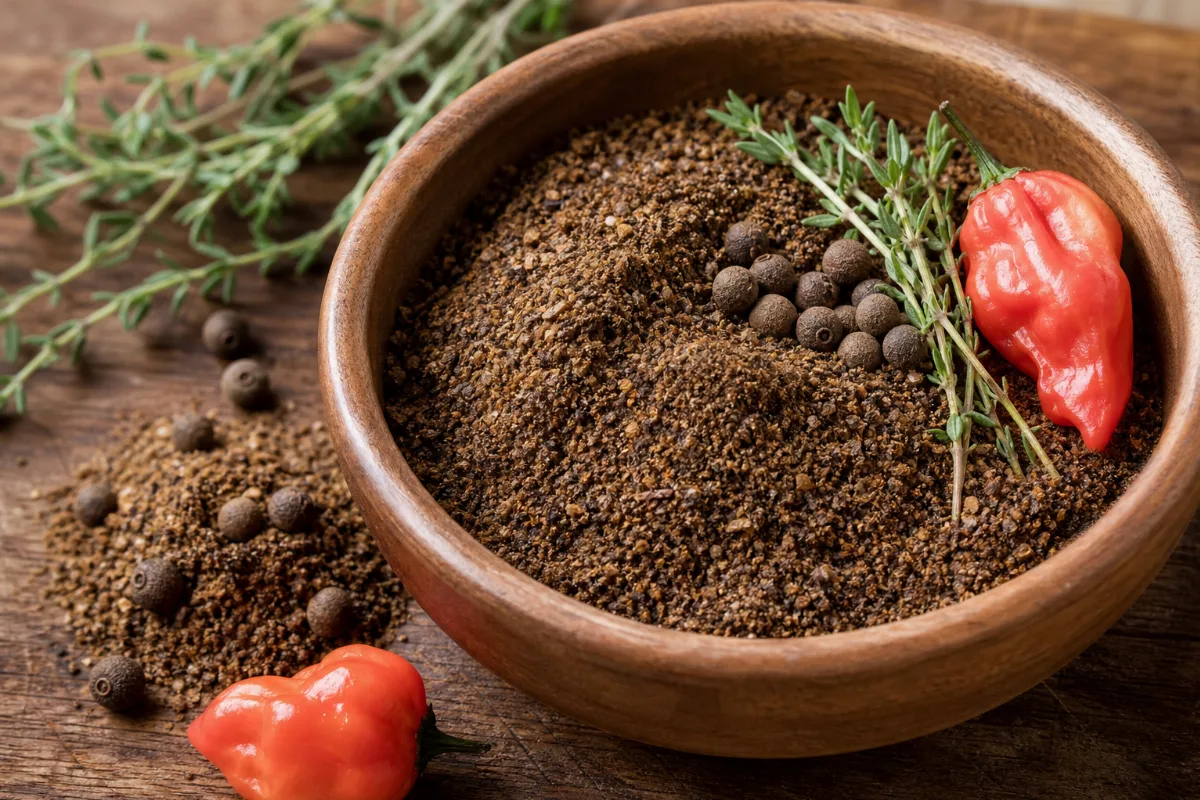
In the kitchen at a glance
Flavor:Hot / pungentWarm / woodySweet
Aroma: Warm and spicy like allspice and thyme, with a fruity chili edge.
Used in: grilling and rubs, vegetables
Usual amount in food: USDA SR Legacy has no entry for jerk seasoning; one retailer's marinade uses 5 tablespoons of its dry blend with oil, soy sauce, lime juice, vinegar and orange juice.
What it is
Jerk is a hot spice blend used on meat, and the word also names the slow, smoky way of cooking with it. [1] It can be a dry rub or a wet marinade. [1] The method is traced to the Taino people of Jamaica, and the Maroons, descendants of freed enslaved Africans, are credited with the sauce used on wild hog cooked over pimento wood. [1] In 2015 Jamaica registered "Jamaica Jerk" as a geographical indication. [1]There is no single recipe. Our source gives no fixed ingredient list or ratios, so the table shows what is often named. [1]
| Typical ingredient | Role in flavor | Link |
|---|---|---|
| Allspice (called pimento in Jamaica) | Warm, sweet base, like cinnamon, nutmeg and clove together | More about Allspice (called pimento in Jamaica) → |
| Scotch bonnet chili | Most of the heat, with a fruity note | More about Scotch bonnet chili → |
| Thyme | Green, herbal depth | More about Thyme → |
| Scallion (green onion) | Fresh onion bite | No page yet |
| Garlic | Savory sharpness | More about Garlic → |
| Cinnamon, nutmeg, cloves | Sweet warmth in some versions | Cinnamon, Nutmeg, Cloves |
| Ginger, brown sugar, soy sauce, vinegar, salt | Added by some cooks | More about Ginger, brown sugar, soy sauce, vinegar, salt → |
The table is drawn from our main source. [1] A dry blend from one retailer lists onion, garlic, salt, cane sugar, thyme, allspice, chiles, green onion, pepper, nutmeg, cinnamon and sage. [4]
Flavor and aroma
Jerk tastes hot first, then warm and a little sweet. Scotch bonnet is rated at roughly 100,000 to 350,000 Scoville heat units, the same range as its relative the habanero, but it tastes milder and sweeter, with fruity or citrus notes. [2] Allspice supplies the warm, clove-like sweetness. [3] One retailer calls its blend spicy, aromatic and warm, and says reviewers found the heat mild. [4] Heat varies by maker.How it is used in cooking
Meat is rubbed or marinated, then smoked or slow-cooked. [1] Traditional cooking uses pimento wood fires. Over time, cooks moved to pit fires, charcoal oil-barrel grills and wood ovens. [1] Allspice is the tree behind the pimento wood. [3]- Classic dishes: jerk pork and jerk chicken. [1]
- Other uses: fish, shrimp, lobster, conch, beef, sausage, lamb, goat, tofu and vegetables. [1]
- Roadside jerk stands in Jamaica serve it with hard dough bread, bammy (cassava flatbread) and fried dumplings. [1]
- Marinating time: one retailer suggests 1 to 8 hours and says the amounts are flexible. [4]
The sources we read give no rule for toasting the blend or for substitutes, so we give none here.
Normal food amounts
USDA SR Legacy has no entry for jerk seasoning, so we give no grams per teaspoon and no nutrient table.| Measure | Amount | Source |
|---|---|---|
| 1 teaspoon | No USDA figure | No entry |
| Example marinade | 5 tablespoons of dry blend, 2 tablespoons each of oil, soy sauce and lime juice, 4 tablespoons each of vinegar and orange juice | One retailer [4] |
| Sodium in one maker's blend | 176 mg per teaspoon | Same retailer [4] |
We found a salt figure for one maker only, so check your own label.
Buying, storing and preparing
- Forms: dry rub, wet marinade or paste, and jerk sauce. [1]
- Label: look at salt, sugar and the full ingredient list. In the US, packaged foods must declare sesame since 2023, and FDA's own label example shows "spices" can include sesame and wheat. [7] In the EU, celery, mustard, sesame, soy and gluten cereals are among 14 allergens that must be declared. [8]
- Handling fresh scotch bonnets: capsaicin burns skin and eyes, and plain water is generally ineffective at removing it. [5] Keep hands away from your face after cutting them.
- Shelf life: we opened no source for jerk seasoning itself. Our buying, storing and grinding guide has general advice.
Health: what research says
Eating a spice mix in cooking is different from taking concentrated products. We found no study we could open that tests jerk seasoning itself for health effects. Any evidence belongs to the single spices in it, so the table below only points to their pages.Food amounts vs supplements
| In normal cooking | In supplements and extracts | |
|---|---|---|
| Typical amount | No USDA figure; no usual recipe amount found [4] | Jerk seasoning is not sold as a supplement |
| What studies mostly used | We found no study of jerk seasoning | Not applicable to the blend |
| What we can say about benefit | Nothing, for the blend as a whole | Nothing, for the blend |
| Main safety limit | Salt, allergens, chili burns, possible lead in ground spices [4][5][6][7] | See the single-spice pages |
What the evidence shows
| Use | What the sources found | Strength of evidence | Form and population |
|---|---|---|---|
| The blend as a whole | No study of jerk seasoning found | Insufficient evidence | Not studied |
| Allspice | Human research is lacking; the main caution is bleeding with large medicinal amounts; see allspice | Insufficient evidence | Medicinal use; no trial described |
| Scotch bonnet and other chilies | Large studies of people who eat spicy food are observational; see cayenne and chili | Mixed | Food; observational |
| Nutmeg | Large amounts can poison; no trial supports a benefit when eaten; see nutmeg | Insufficient evidence | Food and large amounts |
| Cinnamon, cloves, ginger | Each has its own cautions; see cinnamon, cloves, ginger | Mixed | Mostly supplements and oils |
| Thyme and garlic | Covered in the herb guides: thyme, garlic | Mixed | See the herb guides |
| Lead in some ground spices | In North Carolina, 28.8% of 386 samples had at least 1 mg/kg of lead; jerk was not mentioned [6] | Established as a risk in some samples | Samples from home investigations, one state |
Official statements
- CDC (US), 2018: no US permissible limit for lead in spices exists. [6]
- FDA (US), 2023: sesame must be declared on packaged foods. [7]
- EU: celery, mustard, sesame, soy and gluten cereals are among 14 allergens. [8]
Related pages
Health connections for Jamaican jerk seasoning
What research links to this spice, and how strong the evidence is. Most studies use concentrated extracts or doses far above what you eat; each card says which.
Health effects of jerk seasoning as a blend
Not enough evidenceWe found no study we could open that tests jerk seasoning itself for health effects; evidence belongs to the single spices such as allspice, chili, thyme and garlic.
Supplements: No supplement form of the blend; single-spice extracts are on their own pages.
Connected topics
Open a group to see how each topic connects and how strong the evidence is.
Root causes (1)
- Heavy Metal ExposureDocumented risk
The CDC report found lead in some retail spice samples and lists soil, grinding dust and deliberate adulteration as routes; jerk seasoning was not named.
Conditions & symptoms (2)
- Food AllergyDocumented risk
Blends may contain sesame, wheat, soy, celery or mustard, which are listed allergens; read the full label.
- Lead PoisoningDocumented risk
A CDC report found lead in some retail spices and recommends a national limit; it does not name jerk seasoning or say how often spice causes lead poisoning.
Documented risks and interactions (4)
- Allergens in a spice mix. Blends can contain sesame, wheat, soy, celery or mustard depending on the maker. US packaged foods must declare sesame since 2023, and FDA's label example shows 'spices' can include sesame and wheat; the EU lists celery, mustard, sesame, soy and gluten cereals among 14 allergens.
- Chili heat and skin or eye irritation. Capsaicin from hot chilies such as scotch bonnet irritates skin and eyes on contact; plain water is generally ineffective at removing it. Scotch bonnet is rated roughly 100,000 to 350,000 Scoville units.
- Salt in dry jerk blends. One maker's dry blend lists 176 mg of sodium per teaspoon, and recipes often add salt or soy sauce. USDA SR Legacy has no jerk entry, and we found no salt figure for other makers we could open.
- Lead in some ground spices. A CDC report found lead at or above 1 mg/kg in 28.8% of 386 New York City samples, and no US permissible limit for lead in spices exists. The report does not mention jerk seasoning.
Frequently asked questions
Is jerk seasoning hot?
Usually, yes. Scotch bonnet gives most of the heat and is rated about 100,000 to 350,000 Scoville units. [2] Makers differ, and one retailer says its blend tastes mild. [4]
Is it sweet?
A little. Allspice has a warm, sweet note, and some blends add sugar. [3][4]
How much is normal?
USDA has no entry, so there is no standard teaspoon weight. One retailer's marinade uses 5 tablespoons of dry blend with liquids. [4] Follow your recipe.
Does jerk seasoning contain salt?
Many do. One maker lists 176 mg of sodium per teaspoon, and recipes often add salt or soy sauce. [1][4] Check your label.
Is it safe in pregnancy, or with medicines?
We found no source on the blend. Check the single-spice pages, and ask your midwife, doctor or pharmacist.
More details: evidence, limits and cautions
The details behind this page: cautions, limits of the evidence and where sources disagree. Open any note to read it.
Safety note at a glance
Safety in more detail
- Medicines: the sources we read do not describe interactions for jerk seasoning as a blend. See the pages of allspice, garlic, ginger and nutmeg, and spice safety. Ask a pharmacist if you take blood thinners.
- Pregnancy: the sources we read do not describe this for the blend. See the single-spice pages. Ask your midwife or doctor.
- Breastfeeding: the sources we read do not describe this for the blend.
- Children: the sources we read do not describe this for the blend.
- Allergy: blends can include sesame, wheat, soy, celery or mustard depending on the maker, and the label is the only guide. [7][8]
- Liver and kidney: the sources we read do not describe this for the blend.
- Surgery: the sources we read do not describe this for the blend. Allspice and garlic pages mention bleeding cautions for medicinal amounts.
- Quality and contamination: a CDC report lists soil, grinding dust and deliberate color or weight adulteration as routes of lead into spices, and says no US permissible limit for lead in spices exists. [6]
- Amounts that cause trouble: the sources we read give none for the blend. Capsaicin irritates skin and eyes on contact. [5]
References
- Wikipedia — Jamaican jerk spice. https://en.wikipedia.org/wiki/Jamaicanjerkspice (accessed 2026-10-24)
- Wikipedia — Scotch bonnet. https://en.wikipedia.org/wiki/Scotch_bonnet (accessed 2026-10-24)
- Wikipedia — Allspice. https://en.wikipedia.org/wiki/Allspice (accessed 2026-10-24)
- The Spice House (retailer) — Jamaican Jerk Seasoning. https://www.thespicehouse.com/products/jamaican-jerk-seasoning (accessed 2026-10-24)
- Wikipedia — Capsaicin (first part of the article read). https://en.wikipedia.org/wiki/Capsaicin (accessed 2026-10-24)
- CDC (US) — MMWR 2018;67(46): lead in spices, herbal remedies and ceremonial powders, North Carolina. https://www.cdc.gov/mmwr/volumes/67/wr/mm6746a2.htm (accessed 2026-10-24)
- FDA (US) — The FASTER Act: Sesame is the ninth major food allergen. https://www.fda.gov/food/food-allergies/faster-act-sesame-ninth-major-food-allergen (accessed 2026-10-24)
- FSAI (Ireland) — List of 14 allergens (EU rules). https://www.fsai.ie/enforcement-and-legislation/legislation/food-legislation/food-information-fic-(labelling)/list-of-14-allergens (accessed 2026-10-24)