Furikake: Nutrients, What Research Shows and Safety
Furikake is a Japanese rice seasoning with nori, sesame and salt. What is in it, sodium, sugar, allergens and iodine, and what research does not show.
Content last updated . This page has not been medically reviewed.
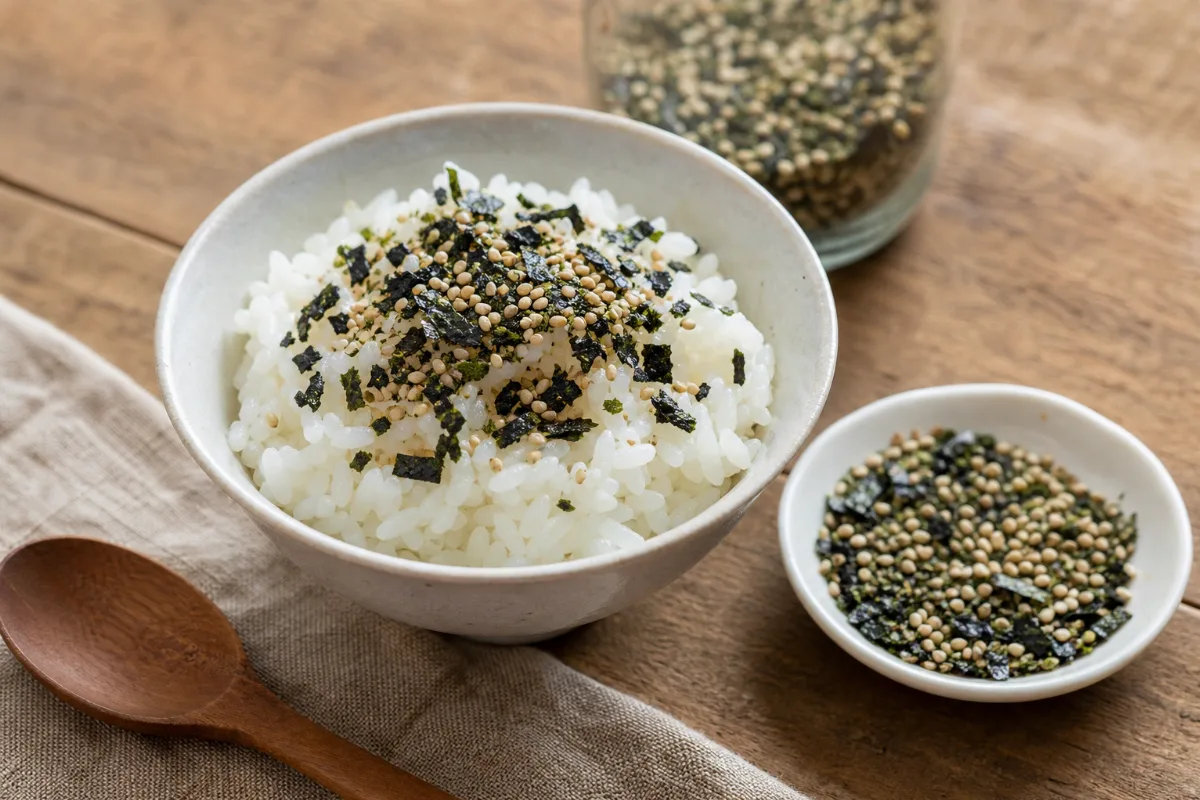
Furikake is a dry Japanese seasoning sprinkled on rice. A common kind mixes toasted sesame seeds, salt, sugar and bits of nori seaweed. This page covers the product as sold, not seaweed supplements, and it is honest that nobody seems to have studied furikake itself.
Read this first
- Sesame is the main ingredient of the label we read, and sesame is a major US allergen. [1] [5] Other blends may add fish, egg, soy or wheat, so read the label.
- It is salty. One label lists 250 mg sodium in a 6 g tablespoon. [1] WHO advises adults to stay under 2,000 mg sodium a day. [2]
- It can contain added sugar: 2 g per 6 g on that label. [1]
- Seaweed is only a small share of the mix, so it is probably not a big iodine source, unless a blend uses kelp. [1] [6]
- We found no study of furikake and health outcomes. Treat it as a flavoring.
What is in it (USDA values)
No USDA entry for this food. USDA FoodData Central has no furikake item, so there is no official table. The only figures we read come from one community-edited Open Food Facts label, so this is an example, not an average. [1]
| Nutrient | Per 100 g (example label) | Per 1 tablespoon (6 g) |
|---|---|---|
| Energy | about 500 kcal | 30 kcal |
| Fat | 25 g | not listed |
| Sugars (all added) | 33 g | 2 g |
| Salt | 10.4 g | 0.63 g |
| Sodium | 4.17 g | 0.25 g |
Ingredients on that label: sesame seed, salt, sugar and seaweed, with shares estimated by the site at 64, 20, 10 and 6 percent. [1] Values differ by brand. We did not find a source on MSG in furikake, so we say nothing about it.
What research says
| Health goal | What the sources found | Strength of evidence | What was studied |
|---|---|---|---|
| Blood pressure | WHO links high sodium to higher blood pressure and cardiovascular disease. [2] No study of furikake. | Established for sodium in general | Sodium intake |
| Iodine and thyroid | Nori had the lowest iodine of 12 seaweeds in a 2004 survey (16 mcg/g). [6] Seaweed products vary a lot. [7] | Mixed | Seaweeds and seaweed products |
| Any benefit from furikake itself | Proper evidence not found in the sources we read. | No good evidence of benefit | Not applicable |
How much is a normal serving
There is no official serving. The label we read uses 1 tablespoon (6 g), with 30 kcal. [1] That is a label example, not a prescription. For scale, NHS advises adults no more than 6 g of salt a day. [3]
Safety, allergy and medicines
- Sesame. FDA lists sesame as the ninth major allergen since January 1, 2023. [5] NHS lists sesame among possible allergens. [4]
- Other allergens. NHS lists eggs and soy among common allergens. [4] Some blends are sold with fish flakes, egg, soy or wheat; we did not verify specific products. Check the label.
- Seaweed and fish allergy. Allergy societies say seafood allergy is caused by proteins in fish and shellfish, not iodine. [8] Seaweed is not fish or shellfish, but a blend may contain fish.
- Sodium and sugar. See above. People watching blood pressure or kidney or heart conditions should ask their clinician.
- Emergency. If lips, tongue or throat swell, or breathing is difficult, use prescribed adrenaline and call 911 or your local emergency number. [4]
- Iodine, pregnancy, children. Proper evidence not found in the sources we read for furikake; one spoon is a small amount of seaweed, but blends differ. [6] [7]
Choosing, storing and food safety
- Read the allergen statement and sodium per serving.
- Compare brands: sodium per 100 g ranged widely in what we saw, but we only fully read one label.
- Keep dry and sealed, following the pack. We did not read a furikake-specific storage source.
Related pages
Health connections for Furikake
What research links to eating or drinking this food, and how strong the evidence is. Many studies are observational or use juice, powder, oil or extracts rather than the food as eaten; each card says which.
Furikake and seafood allergy myths
Not enough evidenceAllergy societies say seafood allergy comes from fish or shellfish proteins, not iodine. Seaweed is not fish or shellfish. Some furikake blends do contain fish flakes, so read labels.
Supplements: Not a supplement question.
Furikake and health benefits
Not enough evidenceWe found no trial or study of furikake itself. Seaweed claims on the web are mostly about whole seaweeds or lab extracts, not this seasoning.
Supplements: Not a supplement question.
Connected topics
Open a group to see how each topic connects and how strong the evidence is.
Body systems (2)
- Cardiovascular SystemDocumented risk
Same sodium point: WHO links excess sodium with raised blood pressure and cardiovascular disease.
- Heart & CirculationDocumented risk
Salty toppings add sodium. WHO links high sodium to higher blood pressure and heart disease. A caution, not a treatment.
Conditions & symptoms (1)
- Essential HypertensionDocumented risk
Furikake is high in sodium per 100 g; high total sodium raises blood pressure. A caution, not a treatment.
Documented risks and interactions (4)
- Furikake and sodium. One furikake label we read lists 0.25 g (250 mg) sodium in a 6 g tablespoon, about 4.2 g sodium per 100 g. WHO advises under 2,000 mg sodium (5 g salt) a day for adults. Products differ.
- Furikake and added sugar. The same label lists 2 g sugar per 6 g serving, all added. Brands differ; read the label.
- Furikake and sesame allergy. Sesame seeds were the main ingredient (about 64 percent, estimated) of the label we read. Sesame is a major US allergen under the FASTER Act, since January 1, 2023.
- Furikake and iodine from nori. The nori in furikake is a small part of the product (about 6 percent by weight on the label we read, estimated). In the Teas 2004 survey nori had the lowest iodine of 12 seaweeds tested, so one spoon is unlikely to be a big iodine source, but kelp-containing blends differ.
Frequently asked questions
Is furikake healthy?
We found no study of furikake itself. It adds flavor, but it also adds salt and sometimes sugar. [1] [2]
Does furikake contain sesame?
The label we read lists sesame seed first, and sesame is a major US allergen. [1] [5] Check each brand.
Does furikake have a lot of iodine?
Seaweed was about 6 percent of the label we read, and nori had the lowest iodine in a 2004 survey. [1] [6] Blends with kelp are different, so check the label.
Can people with fish allergy eat furikake?
Some blends contain fish flakes, so read the label. Seaweed itself is not fish. [8]
References
- Open Food Facts. Nori Komi Furikake rice seasoning. Community-edited. Read 2026-10-24.
- WHO. Sodium reduction fact sheet. Read 2026-10-24.
- NHS. Salt: the facts. Read 2026-10-24.
- NHS. Food allergy. Read 2026-10-24.
- FDA. Food allergies. Read 2026-10-24.
- Teas J, et al. Variability of iodine content in common commercially available edible seaweeds. Thyroid 2004. Read 2026-10-24 (abstract).
- Content, bio-accessibility and intake of iodine from seaweed-containing food products in The Netherlands. 2025. Read 2026-10-24 (abstract).
- AAAAI. Radiocontrast and seafood allergy: the myths and facts. Read 2026-10-24 (via search summary).
- American Thyroid Association. Statement on excess iodine. 2013. Read 2026-10-24.