Lotus Seeds (Makhana relatives): Nutrients, What Research Shows and Safety
Lotus seeds (Nelumbo nucifera) as a food: USDA nutrients, mostly lab research and no good human trials, mold risk, and how they differ from makhana.
Content last updated . This page has not been medically reviewed.
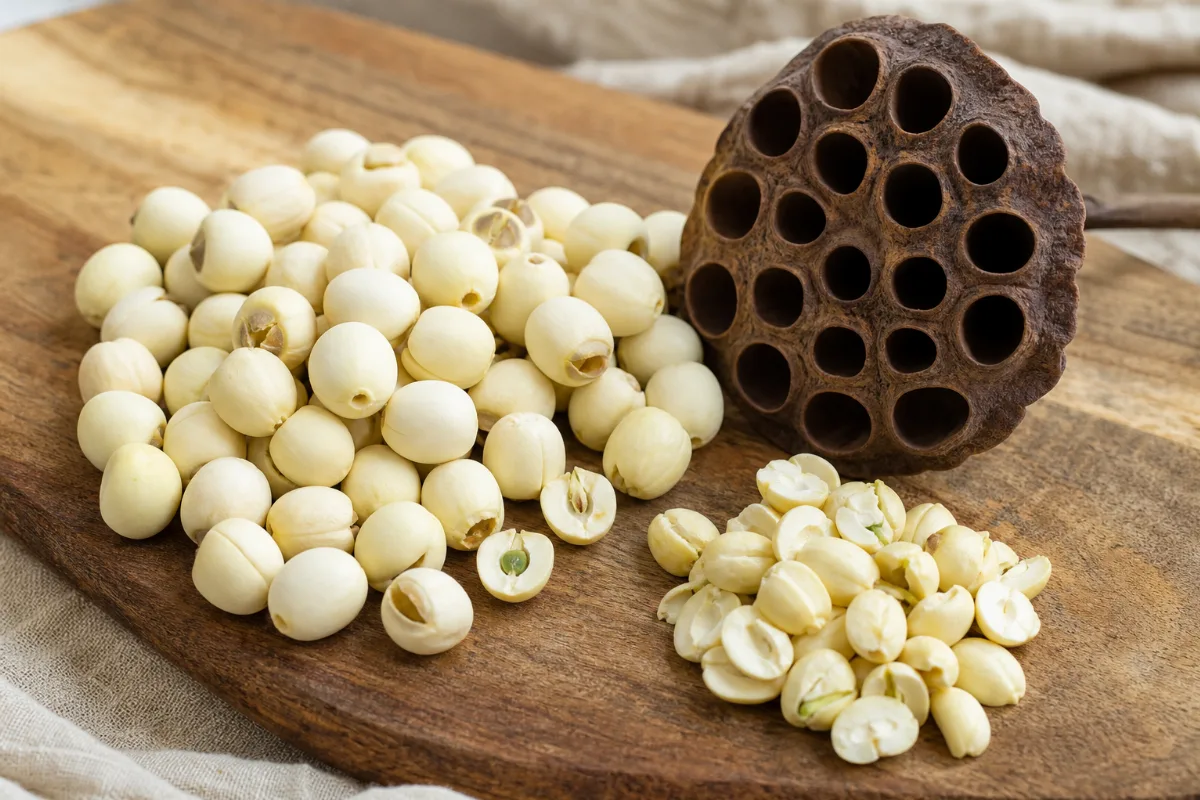
Lotus seeds are the seeds of the sacred lotus (Nelumbo nucifera), an aquatic plant. The part eaten is the kernel from the seed pod, sold dried (whole or split) and used in Asian soups, sweets and pastes. In traditional Chinese medicine they are called Nelumbinis semen. People eat them for protein, minerals and traditional reasons. This page separates lotus seeds as a food from extracts and hype, and says plainly that good human trials are missing.
Read this first
- Not the same as makhana (fox nuts). Makhana, also called fox nut or prickly water lily, is the seed of a different plant, Euryale ferox. [4] It belongs to the water lily family (Nymphaeaceae). [5] A trial or nutrition table for makhana does not apply to lotus seeds. Many shops sell both as "lotus seeds", so check the Latin name on the label.
- Not blue lotus. "Blue lotus" sold as tea or vape is the flower of a water lily, Nymphaea, not Nelumbo; see blue lotus.
- Mold. A 2026 study of 41 natural lotus seed samples found aflatoxins (mold toxins) in 63.4% of them. [3] Throw away seeds that look moldy, discolored or shriveled, as WHO advises for nuts. [11]
- Evidence. Reviews describe many effects of lotus seed extracts in cells and animals. [2][6][7] We found no controlled human trial of eating lotus seeds in the sources we read.
What is in it (USDA values)
USDA data for dried lotus seeds (SR Legacy). USDA household portions are 1 cup (32 g) and 1 ounce (28.35 g, about 42 medium seeds). [1] The serving column below is for 1 ounce (28 g).
| Nutrient | Per 100 g | Per 1 ounce (28 g) | % Daily Value per ounce |
|---|---|---|---|
| Energy | 332 kcal | 94 kcal | not set |
| Protein | 15.41 g | 4.4 g | 9% |
| Total carbohydrate | 64.47 g | 18.3 g | 7% |
| Total fat | 1.97 g | 0.6 g | 1% |
| Manganese | 2.318 mg | 0.66 mg | 29% |
| Thiamin (B1) | 0.64 mg | 0.18 mg | 15% |
| Magnesium | 210 mg | 59 mg | 14% |
| Phosphorus | 626 mg | 177 mg | 14% |
| Copper | 0.35 mg | 0.10 mg | 11% |
| Vitamin B6 | 0.629 mg | 0.18 mg | 10% |
| Potassium | 1,368 mg | 388 mg | 8% |
| Folate (DFE) | 104 µg | 30 µg | 7% |
| Iron | 3.53 mg | 1.0 mg | 6% |
Source: USDA FoodData Central item 170149. [1] % Daily Value uses the FDA 2016 Daily Values; values vary with variety, growing place, drying and storage. USDA lists no fiber, vitamin E or selenium value for this item, and 0 mg vitamin C, so we show none or zero. These are dried seeds, so the values are per dried weight; cooked seeds absorb water and have less per gram.
A 2021 review calls lotus seeds low in calories and a source of many nutrients and bioactive compounds. [2] Reviews and lab papers describe polysaccharides, flavonoids and polyphenols in the seeds, [9] and alkaloids such as liensinine, isoliensinine and neferine in the seed embryo (the green core). [8] These findings come from laboratory and animal research, not from trials of eating lotus seeds.
What research says
| Health goal | What the sources found | Strength of evidence | What was studied |
|---|---|---|---|
| Everyday nutrition (protein, minerals) | USDA lists 15.41 g protein and notable manganese, thiamin, magnesium and phosphorus per 100 g (see table). [1] | Established (for the nutrients' roles) | Food composition data |
| High blood pressure | A 2025 study found lotus seed extract lowered blood pressure in rats made hypertensive with a drug. [6] No human trial was found in what we read. | Lab or animal only | Extract in rats |
| Cancer | A 2024 study found lotus seed extract slowed the growth of ovarian cancer cells in a dish. [7] | Lab or animal only | Extract on cell lines |
| Blood sugar, heart, liver, inflammation, anti-aging | The 2021 review lists many such effects, mainly from extracts and non-human work. [2] | Insufficient evidence | Extracts, cells and animals |
| Sleep, calm, digestion (traditional uses) | Proper evidence not found in the sources we read. Traditional use is not evidence of benefit. | Insufficient evidence | Not applicable |
| Weight loss | Proper evidence not found in the sources we read. | No good evidence of benefit | Not applicable |
Eaten as food vs taken as an extract. The studies above used extracts, isolated compounds or lab animals, at doses and forms that a bowl of lotus seed soup does not match. We did not review lotus seed powders or capsules because we found no trial of them. A 2026 randomized trial of a flatbread made with makhana (Euryale ferox) in people with diabetes is about a different plant and does not count as lotus seed evidence.
How much is a normal serving
The USDA household portion is 1 ounce (28.35 g, about 42 medium seeds), which is 94 kcal, or 1 cup (32 g). [1] This is information, not a prescription. Dried seeds are usually soaked and simmered, which makes them larger and softer; we did not find a source on how cooking changes their nutrients. Candied seeds, pastes and canned desserts often contain added sugar; check the label.Safety, allergy and medicines
- Mold and aflatoxin. WHO says aflatoxins are among the most poisonous mycotoxins and that eating a lot at once can cause life-threatening liver damage; it advises discarding nuts that look moldy, discolored or shriveled. [11] FDA says regularly eating foods with aflatoxins can increase the risk of liver cancer. [12] The 2026 study above found aflatoxins in 63.4% of 41 natural lotus seed samples, and suggests prompt drying after harvest. [3] Buy from sellers who store seeds dry, and keep them in a cool, dry, sealed place. See storing nuts and seeds.
- Allergy. We did not find a source we read on how common lotus seed allergy is. Any food can cause an allergic reaction. FDA lists the nine major US allergens (tree nuts, peanuts and sesame among them), and lotus seed is not on that list. [14] For trouble breathing or swelling of the face or throat, call 911. See food allergy basics and emergency signs.
- Choking. The NHS says whole nuts should not be given to children under 5 because they can choke. [13] The page does not name lotus seeds; whole hard dried seeds are a similar shape, so we suggest the same caution. Ask a pediatrician. See food safety for babies and toddlers.
- Kidney disease. NIDDK says that in chronic kidney disease potassium and phosphorus can build up in the blood, so people should work with a dietitian on limits. [10] Lotus seeds are high in both: 1,368 mg potassium and 626 mg phosphorus per 100 g, which is 29% and 50% of the Daily Value. [1] See foods, kidney disease, potassium and oxalates.
- Kidney stones. NIDDK says people with calcium oxalate stones may be told to limit nuts and nut products. [15] We did not find an oxalate value for lotus seeds in what we read.
- Medicines. Proper evidence not found in the sources we read for interactions between eating lotus seeds and medicines. Lotus seed extract lowered blood pressure in rats [6], but that does not show an effect from eating the seeds; ask a pharmacist if you take blood pressure medicine.
- Pregnancy and breastfeeding. Proper evidence not found in the sources we read.
- Embryo and alkaloids. Reviews describe pharmacological effects of the embryo alkaloids in the lab. [8] We found no source on safe amounts of the embryo, so we make no claim.
Choosing, storing and food safety
- Pick dry, whole, evenly colored seeds; discard any that smell musty or look moldy, discolored or shriveled. [11]
- WHO notes that moulds can grow before and after harvest, and that damaged grain and poor storage raise the risk. [11]
- FDA says mold growth depends on temperature, humidity and rain during growing, harvest and storage. [12] Keep seeds dry.
Related pages
Health connections for Lotus Seeds
What research links to eating or drinking this food, and how strong the evidence is. Many studies are observational or use juice, powder, oil or extracts rather than the food as eaten; each card says which.
Everyday nutrients: protein, manganese, thiamin, magnesium, phosphorus
Established roleUSDA lists 15.41 g protein, 2.318 mg manganese (101% of the Daily Value) and 0.64 mg thiamin (53%) per 100 g of dried lotus seeds. One ounce (28 g) gives 94 kcal, about 29% of the Daily Value for manganese and 14-15% for thiamin, magnesium and phosphorus.
Supplements: Eating lotus seeds is not a treatment for any disease; nutrient content is not proof of a health effect.
Blood pressure (rat studies of extract)
Lab or animal research onlyA 2025 study found lotus seed extract lowered blood pressure in rats made hypertensive with a drug.
Supplements: Extract results in rats do not show that eating seeds lowers blood pressure.
Cancer cells (lab study of extract)
Lab or animal research onlyA 2024 study found lotus seed extract slowed the growth of ovarian cancer cells in a dish and caused cell death.
Supplements: Not evidence that lotus seeds prevent or treat cancer.
Plant compounds: polyphenols, flavonoids, polysaccharides and embryo alkaloids
Lab or animal research onlyPapers describe polysaccharides, flavonoids and polyphenols in the seeds and alkaloids (liensinine, isoliensinine, neferine) in the seed embryo, with many effects in cells and animals.
Supplements: Laboratory findings on extracts or isolated alkaloids do not show a benefit from eating the seeds.
Blood sugar, heart, liver, sleep and other broad claims
Not enough evidenceA 2021 review lists many effects (blood sugar, heart, liver, inflammation) mostly from extracts and non-human work. We found no controlled human trial of eating lotus seeds.
Supplements: Insufficient evidence in people.
Connected topics
Open a group to see how each topic connects and how strong the evidence is.
Health goals (1)
- Blood Pressure SupportLab or animal research only
Lotus seed extract lowered blood pressure in hypertensive rats; no human trial of eating the seeds was found.
Body systems (3)
- Kidney & UrinaryDocumented risk
High potassium and phosphorus: people with chronic kidney disease may need to limit them.
- Cardiovascular SystemLab or animal research only
Rat study of lotus seed extract on hypertension; not shown in people.
- Hepatic / Liver SystemDocumented risk
Aflatoxins found in many lotus seed samples can harm the liver; WHO and FDA describe liver damage and cancer risk.
Body parts (3)
- KidneysDocumented risk
Potassium and phosphorus limits may apply in chronic kidney disease.
- Blood VesselsLab or animal research only
Rat study reports eNOS-related effects of the extract on blood pressure; not shown in people.
- LiverDocumented risk
Aflatoxin contamination in lotus seeds; aflatoxins damage the liver in large doses and raise liver cancer risk with regular intake.
Functional actions (2)
- AntioxidantLab or animal research only
Reviews describe antioxidant activity of lotus seed polyphenols and extracts in the lab.
- Cardiovascular SupportLab or animal research only
Antihypertensive effect of the extract in rats only.
Root causes (1)
- Environmental ToxinsDocumented risk
Mold toxins (aflatoxins) were found in 63.4% of 41 natural lotus seed samples.
Habits (1)
- Balanced NutritionEstablished role
Dried lotus seeds add protein and minerals such as manganese, thiamin, magnesium and phosphorus to a varied diet.
Conditions & symptoms (1)
- Chronic Kidney InsufficiencyDocumented risk
Lotus seeds are high in potassium and phosphorus; people with chronic kidney disease may need to limit them.
Documented risks and interactions (2)
- Mold and aflatoxin contamination. A 2026 study of 41 natural lotus seed samples found aflatoxins in 63.4%; the authors suggest prompt drying after harvest. WHO says aflatoxins are among the most poisonous mycotoxins and advises discarding nuts that look moldy, discolored or shriveled; FDA says regular intake can raise liver cancer risk.
- Potassium and phosphorus in kidney disease. NIDDK says potassium and phosphorus can build up in chronic kidney disease and a dietitian should set limits. Dried lotus seeds have 1,368 mg potassium (29% of the Daily Value) and 626 mg phosphorus (50%) per 100 g.
Frequently asked questions
Are lotus seeds the same as makhana or fox nuts?
No. Makhana is the seed of Euryale ferox, a prickly water lily in the family Nymphaeaceae. [4][5] Lotus seeds come from Nelumbo nucifera. Results for one do not apply to the other.
Do lotus seeds have health benefits?
They give protein and several minerals, such as manganese and magnesium, according to USDA. [1] Claims for blood pressure or cancer come from animal and cell studies of extracts. [6][7] We found no good human trials.
Can lotus seeds be moldy or contain aflatoxin?
Yes. A 2026 study found aflatoxins in 63.4% of 41 natural lotus seed samples. [3] WHO advises discarding nuts that look moldy, discolored or shriveled. [11]
Are lotus seeds safe if I have kidney disease?
Ask your kidney doctor or dietitian. NIDDK says potassium and phosphorus can build up in the blood in chronic kidney disease, [10] and USDA lists 1,368 mg potassium and 626 mg phosphorus per 100 g of dried lotus seeds. [1]
How many calories are in lotus seeds?
USDA lists 332 kcal per 100 g of dried seeds, or 94 kcal in 1 ounce (about 42 medium seeds). [1]
References
- USDA FoodData Central. Seeds, lotus seeds, dried (SR Legacy, FDC 170149). April 2018 release. Read 2026-10-23.
- PubMed. Lotus seeds (Nelumbinis semen) as an emerging therapeutic seed: a comprehensive review. 2021. Read 2026-10-23.
- PubMed. Aflatoxins and their biosynthetic precursors in lotus seeds: simultaneous UPLC-MS/MS determination, contamination profiling, and matrix-specific accumulation during Aspergillus flavus infection. 2026. Read 2026-10-23.
- PubMed. The ethnopharmacological, phytochemical, and pharmacological review of Euryale ferox Salisb.: a Chinese medicine food homology. 2023. Read 2026-10-23.
- PubMed. The adaptive evolution of Euryale ferox to the aquatic environment through paleo-hexaploidization. 2022. Read 2026-10-23.
- PubMed. Antihypertensive effects of lotus seed (Nelumbo nucifera Gaertn.) extract via eNOS upregulation and oxidative stress reduction in L-NAME-induced hypertensive rats. 2025. Read 2026-10-23.
- PubMed. Lotus seed (Nelumbinis semen) extract: anticancer potential and chemoprofiling by in vitro, in silico and GC-MS studies. 2024. Read 2026-10-23.
- PubMed. Pharmacological potential and mechanisms of bisbenzylisoquinoline alkaloids from lotus seed embryos. 2025. Read 2026-10-23.
- PubMed. Preparation and bioactivity of probiotic-fermented lotus seed and lily bulb beverage. 2026. Read 2026-10-23.
- NIDDK (NIH). Healthy eating for adults with chronic kidney disease. Read 2026-10-23.
- WHO. Mycotoxins. Read 2026-10-23.
- FDA. Mycotoxins. Read 2026-10-23.
- NHS. Foods to avoid giving babies and young children. Read 2026-10-23.
- FDA. Food allergies. Read 2026-10-23.
- NIDDK (NIH). Eating, diet, and nutrition for kidney stones. Read 2026-10-23.