Hazelnuts (Filberts): Nutrients, What Research Shows and Safety
Hazelnuts (filberts) as a food: USDA nutrients, what trials found for LDL cholesterol and weight, tree nut and birch-pollen allergy, choking and storage.
Content last updated . This page has not been medically reviewed.
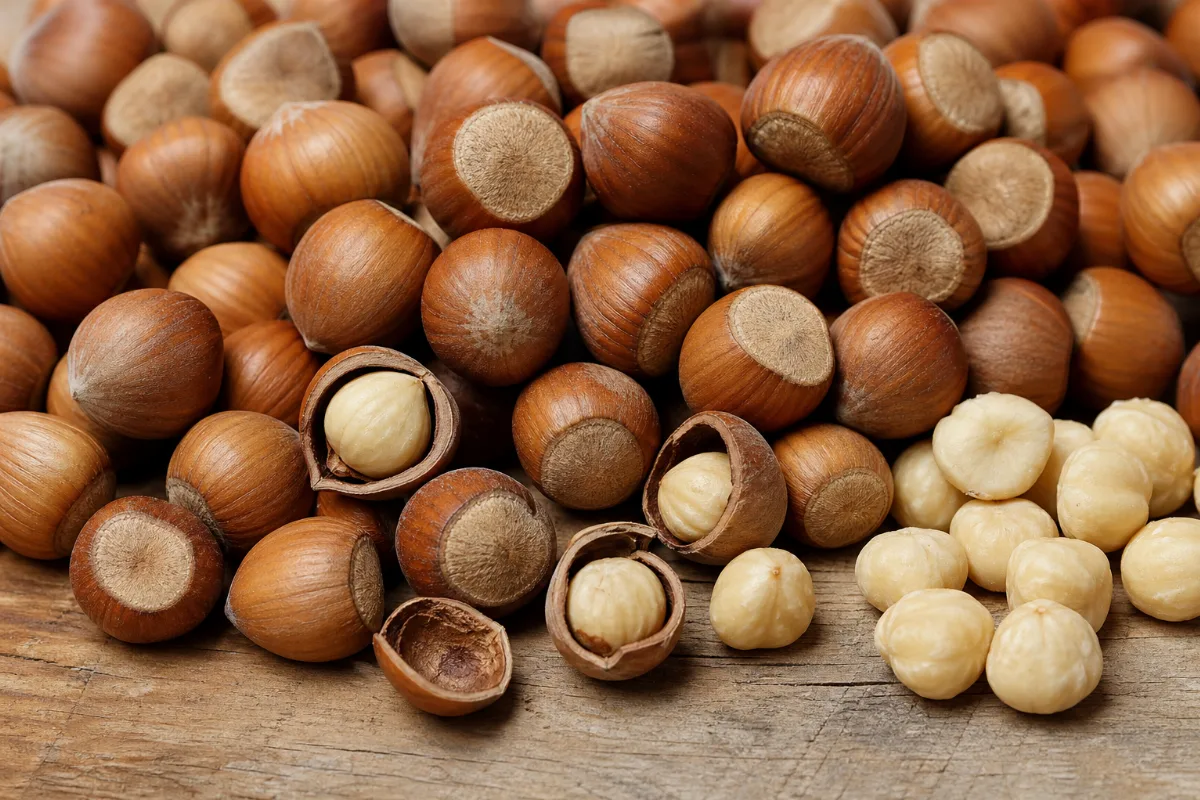
The hazelnut, also called filbert, is the kernel inside the hard shell of the nut of Corylus avellana, a shrub or small tree in the birch family (Betulaceae). People eat the kernel raw, roasted or ground into spreads and baking flour, and many eat it for its fats, fiber, vitamin E and manganese. This page separates hazelnuts as a whole food from oils, extracts and supplements, and from hype, and it says plainly where the evidence is thin.
Read this first
- Hazelnuts are a tree nut, and tree nuts are a common food allergen. For trouble breathing, or swelling of the lips, mouth, throat or tongue, call 911 (999 in the UK). [10][11] See food allergy basics and emergency signs.
- If you have birch pollen hay fever, raw hazelnuts can make the mouth and throat itch. The NHS says this "pollen food syndrome" is usually not serious. [11][6]
- Whole nuts should not be given to children under 5 because they can choke on them. The NHS says crushed or ground nuts can be added to food from about 6 months, and nut butter should be spread thinly, not given on its own. [9]
- Honest summary: pooled trials found that hazelnut-rich diets lower LDL ("bad") cholesterol a little, and nut trials in general do not show weight gain. Claims that hazelnuts prevent disease rest mostly on observational studies, which cannot prove cause. [2][5][7]
What is in it (USDA values)
USDA data for raw hazelnuts (filberts). The USDA household portion is 1 ounce, about 21 whole kernels, which is 28.35 g. [1]
| Nutrient | Per 100 g | Per 1 oz (28.35 g, about 21 kernels) | % Daily Value per serving |
|---|---|---|---|
| Energy | 628 kcal | 178 kcal | no DV |
| Total fat | 60.75 g | 17.2 g | 22% |
| Saturated fat | 4.46 g | 1.3 g | 6% |
| Monounsaturated fat | 45.65 g | 12.9 g | no DV |
| Protein | 14.95 g | 4.2 g | 8% |
| Fiber | 9.7 g | 2.75 g | 10% |
| Vitamin E (alpha-tocopherol) | 15.03 mg | 4.3 mg | 28% |
| Manganese | 6.18 mg | 1.75 mg | 76% |
| Copper | 1.73 mg | 0.49 mg | 54% |
| Thiamin (vitamin B1) | 0.64 mg | 0.18 mg | 15% |
| Magnesium | 163 mg | 46 mg | 11% |
| Phosphorus | 290 mg | 82 mg | 7% |
| Zinc | 2.45 mg | 0.69 mg | 6% |
| Selenium | 2.4 µg | 0.7 µg | 1% |
Source: USDA FoodData Central item 170581 (SR Legacy). [1] The per-serving column is the USDA per-100 g value scaled to 28.35 g. % Daily Value uses the FDA 2016 Daily Values; values vary with variety, growing place, roasting and storage. USDA lists no omega-3 (ALA) value for this item in our file.
Hazelnuts are mostly fat, and most of it is monounsaturated. [1][2] MedlinePlus names hazelnuts among the nuts that are food sources of vitamin E. [8] We did not read a source that measured the plant compounds (such as polyphenols) in hazelnuts in a way we can report, so we make no claim about them beyond the review statement that hazelnuts contain "antioxidant bioactive substances". [2]
What research says
| Health goal | What the sources found | Strength of evidence | What was studied |
|---|---|---|---|
| LDL ("bad") cholesterol | A pooled analysis of 3 randomized studies found LDL about 0.15 mmol/L lower on a hazelnut-enriched diet than on a control diet. Total cholesterol showed a trend down, HDL and triglycerides did not change. [2] A larger review of 61 trials of tree nuts (hazelnuts included) found about 4.8 mg/dL lower LDL per 1-ounce serving a day, with no clear difference between nut types. [5] | Promising but limited for hazelnuts alone; the all-nut result is more solid | Whole hazelnuts, 29 to 69 g a day for 4 to 12 weeks; adults |
| Body weight | Nine hazelnut studies (425 people) found no change in body mass index. [2] A review of 55 nut trials found no change in weight, BMI or waist size. [7] A 2022 review of 22 hazelnut studies said hazelnuts did not adversely affect body weight or body composition. [3] | Mixed (no weight gain found; not a weight-loss food) | Whole hazelnuts and other nuts added to the usual diet |
| Blood pressure, blood sugar, inflammation | The 2022 review found "some improvements" in these markers, but said weak study designs make interpretation problematic. [3] | Insufficient evidence | Mixed hazelnut studies |
| Heart attacks and death | A review of 20 observational studies found people who ate more nuts (all types, per 28 g a day) had lower rates of coronary heart disease (RR 0.71) and death from any cause (RR 0.78). [4] This shows an association, not proof; nut eaters may differ in other ways. | Mixed (observational) | Mostly all nuts, not hazelnuts alone |
| Mediterranean diet with nuts | In the PREDIMED trial, 7,447 people at high heart risk who got a Mediterranean diet with mixed nuts had fewer major heart events than those told to cut fat (hazard ratio 0.72). The first 2013 report was withdrawn after randomization problems were found; the 2018 re-analysis gave similar results. [17] | Promising but limited | Mixed nuts plus a whole diet change, not hazelnuts alone |
| Cancer | The same observational review found a lower rate of total cancer with higher nut intake (RR 0.85). [4] | Mixed (observational) | All nuts |
| Brain health, anti-aging, "detox" | Proper evidence not found in the sources we read. | No good evidence of benefit | Not applicable |
Eaten as food vs taken as oil, extract or supplement. The trials above used whole hazelnuts as food. We did not read trials of hazelnut oil, skin extract or powders in people, so nothing here applies to those products. We did not check who paid for each review; many nut studies are funded by the nut industry, so check the funding statement when you read a study.
How much is a normal serving
The USDA household portions for hazelnuts are 1 ounce (28.35 g, 21 whole kernels), 10 nuts (14 g), and 1 cup whole (135 g). [1] One ounce has about 178 kcal. [1] The FDA's 2003 qualified health claim says "scientific evidence suggests but does not prove" that eating 1.5 ounces a day of most nuts, as part of a diet low in saturated fat and cholesterol, "may reduce the risk of heart disease"; hazelnuts were among the nuts the petition named, and the letter does not exclude them. [12] That is an official wording, not a prescription for you. Hazelnuts are energy dense, but weight-gain trials of nuts in general found no gain. [7]Safety, allergy and medicines
- Allergy. The NHS lists hazelnuts with walnuts, almonds, cashews and Brazil nuts as tree nuts that can cause allergy, and lists peanuts separately. [11] In the US, tree nuts are one of the nine major allergens that must be declared on labels. [10] Call 911 (999 in the UK) for swelling of the lips, mouth, throat or tongue, fast breathing or difficulty breathing, a tight throat, or fainting. [11]
- Hazelnut allergy and birch pollen. In people with birch pollen allergy, immune responses to a hazelnut protein (Cor a 1) were found to cross-react with the main birch pollen protein in a laboratory study. [6] A meta-analysis of children found that blood tests for the hazelnut storage proteins Cor a 9 and Cor a 14 were more specific than tests for Cor a 1 or whole-hazelnut extract. [13] Testing and diagnosis belong to an allergist; we do not give advice on it.
- Cross-reactivity with other nuts. A small Spanish study of 7 people allergic to macadamia found that hazelnut extract blocked IgE binding to a macadamia protein, suggesting cross-reaction between those two nuts. [14] See macadamia nuts.
- Choking. The NHS says whole nuts should not be given to children under 5. [9] See foods for babies and toddlers.
- Mold and aflatoxin. WHO says aflatoxin-producing molds commonly affect tree nuts, and names hazelnuts as regularly contaminated. Aflatoxins can cause liver cancer in humans with long exposure. [15]
- Medicines. Proper evidence on hazelnuts changing how medicines work was not found in the sources we read. MedlinePlus warns about high-dose vitamin E supplements, which are not the same as eating nuts. [8] Ask a pharmacist about your own medicines.
- Kidney disease. We did not read a source on hazelnuts and kidney stones or kidney disease limits. If a clinician limits potassium or phosphorus for you, ask about nuts. See foods, kidney disease, potassium and oxalates.
- Calories. One ounce has about 178 kcal, according to USDA. [1]
Choosing, storing and food safety
- WHO advises inspecting nuts, including hazelnuts, and discarding any that look moldy, discolored or shriveled. [15]
- WHO also advises buying nuts as fresh as possible and storing them dry and not too warm, without keeping them a long time. [15]
- MedlinePlus (FDA information) says buying major brands of nuts and nut butters, and discarding moldy-looking nuts, can reduce aflatoxin intake. [16]
- For rancidity and storage details, see storing nuts and seeds.
Related pages
Health connections for Hazelnuts (Filberts)
What research links to eating or drinking this food, and how strong the evidence is. Many studies are observational or use juice, powder, oil or extracts rather than the food as eaten; each card says which.
Nuts and LDL cholesterol
Clinically supportedA pooled analysis of 3 randomized hazelnut studies found LDL about 0.15 mmol/L lower than on a control diet; a review of 61 tree nut trials found about 4.8 mg/dL lower LDL per ounce a day. These are blood tests, not heart attacks.
Supplements: Whole hazelnuts, 29 to 69 g a day for 4 to 12 weeks; no trial of oil or extract was read.
Vitamin E, manganese and copper from hazelnuts
Established roleUSDA lists one ounce as about 28% of the Daily Value for vitamin E, 76% for manganese and 54% for copper. MedlinePlus names hazelnuts as a vitamin E food source.
Supplements: Food supplies these nutrients; this page does not claim extra benefit when intake is already adequate.
Body weight and energy
Preliminary or mixedHazelnuts are energy dense (about 178 kcal an ounce), but nine hazelnut studies found no change in BMI, and a review of 55 nut trials found no change in weight, BMI or waist size.
Supplements: Applies to the whole nut eaten as food; this page found no trial of oils, extracts or supplements.
Heart disease and early death (observational)
Preliminary or mixedIn 20 observational studies, people who ate more nuts (all types) had lower coronary heart disease (RR 0.71 per 28 g a day) and all-cause death (RR 0.78). Association is not proof.
Supplements: These studies are of nuts as food, mostly not hazelnuts alone.
Mediterranean diet with nuts (PREDIMED)
Preliminary or mixedThe trial of 7,447 high-risk people found fewer major heart events on a Mediterranean diet with mixed nuts than on a reduced-fat diet (HR 0.72). The 2013 report was withdrawn after randomization problems and re-published in 2018 with similar results.
Supplements: Applies to a whole diet pattern, not hazelnuts alone.
Blood pressure, blood sugar and inflammation
Not enough evidenceA 2022 review of 22 hazelnut studies found some improvements but said weak study designs make interpretation problematic.
Supplements: No good evidence of benefit for hazelnuts alone found in the sources read.
Connected topics
Open a group to see how each topic connects and how strong the evidence is.
Health goals (3)
- Cholesterol BalanceClinically supported
Pooled trials found a small LDL cholesterol reduction on hazelnut diets and on tree nuts in general.
- Heart HealthPreliminary or mixed
Observational studies and a mixed-nut diet trial link nuts to fewer heart events; this is not proof for hazelnuts alone.
- Weight ManagementPreliminary or mixed
Hazelnuts are calorie dense, but trials found no weight gain; they are not shown to cause weight loss.
Body systems (4)
- Immune SystemDocumented risk
Tree nut allergy is an immune reaction and can be severe.
- Cardiovascular SystemPreliminary or mixed
LDL cholesterol falls a little in trials; heart event data are observational or from mixed-nut diets.
- Heart & CirculationPreliminary or mixed
LDL cholesterol falls a little in trials; heart event data are observational or from mixed-nut diets.
- Metabolism & WeightPreliminary or mixed
No weight gain found in nut trials, despite high calories.
Body parts (2)
- Immune SystemDocumented risk
Allergic reactions to hazelnut are immune reactions.
- HeartPreliminary or mixed
Small LDL reduction in pooled trials; event data observational.
Functional actions (1)
- Cardiovascular SupportPreliminary or mixed
Lower LDL in pooled trials; clinical event data are not hazelnut-specific.
Habits (1)
- Balanced NutritionPreliminary or mixed
A 2022 review found acceptance of hazelnuts stayed stable over time, so nut guidelines look feasible.
Biomarkers (1)
- LDL CholesterolClinically supported
Pooled hazelnut trials found about 0.15 mmol/L lower LDL; HDL and triglycerides did not change.
Conditions & symptoms (2)
- Food AllergyDocumented risk
Hazelnut is a tree nut allergen; call 911 for trouble breathing or swelling.
- ChokingDocumented risk
Whole nuts are a choking hazard for children under 5.
Documented risks and interactions (4)
- Tree nut allergy. Hazelnuts are a tree nut; tree nuts are one of the nine major US allergens. Call 911 (999 in the UK) for swelling of lips, mouth or throat, or trouble breathing.
- Birch pollen cross-reaction (pollen food syndrome). Hazelnut protein Cor a 1 cross-reacts with the main birch pollen protein in laboratory work; the NHS says pollen food syndrome causes an itchy mouth and throat and is usually not serious.
- Choking in young children. The NHS says whole nuts should not be given to children under 5; crushed or ground nuts can be added to food from about 6 months and nut butter spread thinly.
- Mold and aflatoxin. WHO names hazelnuts among tree nuts regularly contaminated with aflatoxins, which can cause liver cancer in humans; discard moldy, discolored or shriveled nuts.
Frequently asked questions
Do hazelnuts lower cholesterol?
A little, in trials. A pooled analysis of 3 randomized studies found LDL about 0.15 mmol/L lower on a hazelnut diet, and a larger review of tree nuts found about 4.8 mg/dL lower LDL per ounce a day. These are blood tests, not proof of fewer heart attacks. [2][5]
Will eating hazelnuts make me gain weight?
Hazelnuts are energy dense (about 178 kcal per ounce), but a review of 55 nut trials found no change in weight, BMI or waist size, and a hazelnut review found no adverse effect on weight. [1][7][3]
Why do raw hazelnuts make my mouth itch?
If you have birch pollen allergy, proteins in hazelnut can resemble birch pollen proteins. The NHS says pollen food syndrome causes an itchy mouth and throat and is usually not serious. See a doctor for any other symptoms. [11][6]
Is hazelnut allergy the same as peanut allergy?
No. Peanuts are a legume; hazelnuts are a tree nut. The NHS lists them separately, and some people are allergic to more than one. Ask an allergist about testing. [11]
Can young children eat hazelnuts?
Not whole nuts under age 5. The NHS says crushed or ground nuts can be added to food from about 6 months, and nut butter should be spread thinly. Talk to your pediatrician about allergy risk. [9]
References
- U.S. Department of Agriculture. Nuts, hazelnuts or filberts (FDC ID 170581). FoodData Central, SR Legacy, April 2018 release. Read 2026-10-23.
- Perna S et al. Effects of Hazelnut Consumption on Blood Lipids and Body Weight: A Systematic Review and Bayesian Meta-Analysis. Nutrients 2016. PMID 27897978. Abstract read 2026-10-23.
- Brown R, Ware L, Tey SL. Effects of Hazelnut Consumption on Cardiometabolic Risk Factors and Acceptance: A Systematic Review. Int J Environ Res Public Health 2022. PMID 35270573. Abstract read 2026-10-23.
- Aune D et al. Nut consumption and risk of cardiovascular disease, total cancer, all-cause and cause-specific mortality: a systematic review and dose-response meta-analysis of prospective studies. BMC Med 2016. PMID 27916000. Abstract read 2026-10-23.
- Del Gobbo LC et al. Effects of tree nuts on blood lipids, apolipoproteins, and blood pressure: systematic review, meta-analysis, and dose-response of 61 controlled intervention trials. Am J Clin Nutr 2015. PMID 26561616. Abstract read 2026-10-23.
- Hofmann C et al. Cor a 1-reactive T cells and IgE are predominantly cross-reactive to Bet v 1 in patients with birch pollen-associated food allergy to hazelnut. J Allergy Clin Immunol 2013. PMID 23246018. Abstract read 2026-10-23 (laboratory study).
- Intake of Nuts or Nut Products Does Not Lead to Weight Gain, Independent of Dietary Substitution Instructions: A Systematic Review and Meta-Analysis of Randomized Trials. Adv Nutr 2021. PMID 32945861. Abstract read 2026-10-23.
- MedlinePlus (U.S. National Library of Medicine). Vitamin E. Reviewed 2025-01-21. Read 2026-10-23.
- NHS. Foods to avoid giving babies and young children. Last reviewed 2026-02-18. Read 2026-10-23.
- U.S. Food and Drug Administration. Food Allergies. Content current as of 2026-03-11. Read 2026-10-23.
- NHS. Food allergy. Last reviewed 2026-08-20. Read 2026-10-23.
- U.S. Food and Drug Administration. Qualified Health Claims: Letter of Enforcement Discretion - Nuts and Coronary Heart Disease. 2003-07-14 (archived copy). Read 2026-10-23.
- Nilsson C et al. Allergen components in diagnosing childhood hazelnut allergy: Systematic literature review and meta-analysis. Pediatr Allergy Immunol 2020. PMID 31301691. Abstract read 2026-10-23.
- Gutierrez-Diaz G et al. Identification of New Allergens in Macadamia Nut and Cross-Reactivity with Other Tree Nuts in a Spanish Cohort. Nutrients 2024. PMID 38612981. Abstract read 2026-10-23.
- World Health Organization. Mycotoxins. Fact sheet, 2023-10-02. Read 2026-10-23.
- MedlinePlus (U.S. National Library of Medicine). Aflatoxin. Reviewed 2025-01-08. Read 2026-10-23.
- Estruch R et al. Primary Prevention of Cardiovascular Disease with a Mediterranean Diet Supplemented with Extra-Virgin Olive Oil or Nuts. N Engl J Med 2018. PMID 29897866. Abstract read 2026-10-23.