Cacao Nibs: Nutrients, What Research Shows and Safety
What cacao nibs are, nutrients from peer-reviewed analyses (USDA has no nibs entry), what cocoa research shows, and the cadmium, lead and caffeine points to know.
Content last updated . This page has not been medically reviewed.
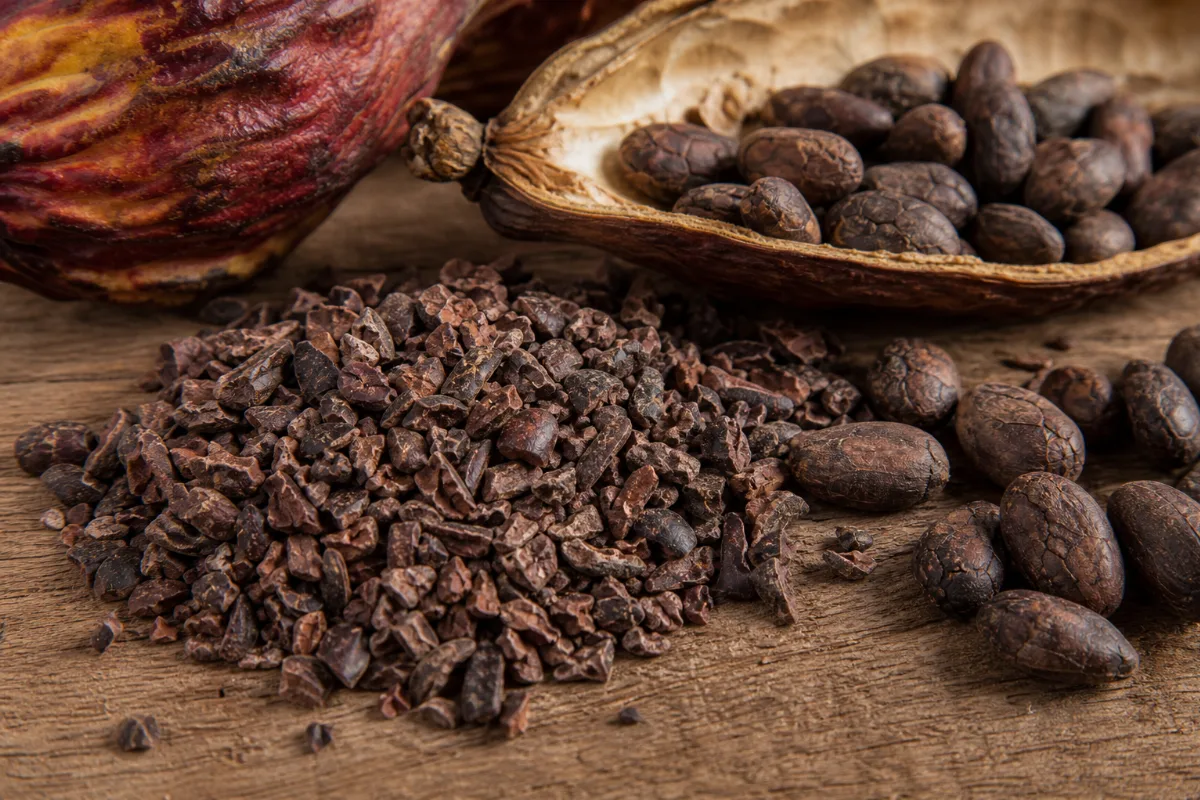
Cacao nibs are crushed pieces of the seeds ("beans") of Theobroma cacao L., the tree that gives us chocolate. The beans are taken from the fruit pod, fermented and dried; the thin shell is removed, and the pieces left are the nibs, often roasted. [1][3] People eat them for their bitter, chocolate taste and for the plant compounds in cocoa. This page keeps the whole food apart from cocoa-extract capsules and from chocolate bars, and it is honest about gaps: most health research tested cocoa products or extracts, not nibs. It is information, not medical advice.
Read this first
- Heavy metals: cocoa products can contain cadmium and lead. In a US test of 72 cocoa products, 43% were above California's lead limit and 35% (of the 37 tested) above its cadmium limit for one serving a day; we found no test of nibs themselves. [9][10]
- Caffeine and theobromine: nibs contain both. EFSA says up to 400 mg of caffeine a day from all sources raises no safety concern for most adults, and 200 mg for pregnant women. [12][13]
- No USDA entry: USDA FoodData Central has no standard entry for cacao nibs. The numbers below come from published laboratory analyses and vary a lot.
- Evidence in one line: trials of cocoa products and flavanol extracts show small changes in blood pressure and cholesterol numbers. No trial shows that eating nibs prevents disease. [5][6][7]
- Allergy: cocoa is not one of the nine major US food allergens, but nibs may be packed with milk, nuts or other allergens. For trouble breathing or swelling of the face or throat, call 911 (or your local emergency number). [15]
What is in it (peer-reviewed analyses, not USDA)
USDA has no nibs entry, and a USDA item for cocoa powder is a different product, so we do not use it here. The closest laboratory analysis we read measured cocoa beans from Ghana that were fermented, dried and milled into liquor (ground nibs). [1] The table shows the fermented, unstored sample.
| Nutrient | Per 100 g | Per 1 ounce (28 g), our arithmetic | % Daily Value per ounce |
|---|---|---|---|
| Energy (our estimate) | about 640 kcal | about 180 kcal | no DV |
| Total fat | 53.4 g | 15.1 g | 19% |
| Protein | 18.8 g | 5.3 g | 11% |
| Carbohydrate (by difference) | 21.0 g | 6.0 g | 2% |
| Magnesium | 364 mg | 103 mg | 25% |
| Potassium | 2,558 mg | 725 mg | 15% |
| Zinc | 10.6 mg | 3.0 mg | 27% |
| Phosphorus | 196 mg | 56 mg | 4% |
| Calcium | 171 mg | 48 mg | 4% |
| Iron | 2.2 mg | 0.6 mg | 3% |
Source: one Ghanaian study, Table 1 and Table 3 (fermented beans, no pod storage). [1] The study did not say whether the figures are on a wet or dry basis. Other samples in the same paper ranged from 17.6 to 21.6% protein and 50.4 to 55.2% fat, and magnesium from 263 to 364 mg per 100 g. [1] Our energy figure uses standard 4-9-4 calorie factors on those numbers; it is an estimate, not a measured value. Another study of dried nibs from seven cacao varieties grown in India found 38 to 47% fat. [2] Fiber: we did not find a peer-reviewed fiber figure for nibs, so we give none. The study also reported copper, but at a level that looks implausibly high and that we could not cross-check, so we leave it out. % Daily Value uses the FDA Daily Values [17]. Nibs vary with variety, fermentation, roasting and place of growing.
Plant compounds. Cocoa is known for flavanols, a group of polyphenols (plant compounds). The Indian study measured total polyphenols of 0.39 to 1.61 g (as gallic acid equivalents) per 100 g of dried nibs in a lab test. [2] A Brazilian study of roasted and unroasted beans found that roasting lowered total phenolics and also lowered the methylxanthines theobromine and caffeine, which it detected in the nibs; its units were unclear, so we quote no amounts. [3] A review says roasting reduces polyphenols and alkalization ("Dutch processing") reduces them further. [4] These are lab measurements. How much flavanol a spoonful of nibs gives, and how much the body absorbs, we did not find in the sources we read.
What research says
| Health goal | What the sources found | Strength of evidence | What was studied |
|---|---|---|---|
| Blood vessel function | EFSA's panel judged that 200 mg of cocoa flavanols a day, as in 2.5 g of high-flavanol cocoa powder or 10 g of high-flavanol dark chocolate, is linked to normal blood vessel widening; this followed an application by a chocolate company. [8] We could not open the opinion itself, only a trade-press report of it. Nibs were not tested. | Promising but limited | High-flavanol cocoa products, healthy adults |
| Blood pressure | A Cochrane review of 35 trials (1,804 mainly healthy adults, 2 to 18 weeks) found a small drop with flavanol-rich cocoa: about 1.8 mmHg for both systolic and diastolic pressure, graded moderate quality. People with high blood pressure had a larger fall (about 4 mmHg systolic); people with normal pressure had no significant change. Excluding trials with industry-employed authors gave a smaller effect. [5] | Promising but limited | Cocoa products, not nibs specifically |
| Cholesterol and blood sugar | A 2024 meta-analysis (31 trials, 1,986 adults) of cocoa extract or dark chocolate with at least 70% cocoa found lower LDL (about 9.5 mg/dL), total cholesterol (about 8.4 mg/dL) and fasting glucose (about 4.9 mg/dL). It found no effect on weight, waist, triglycerides, HDL or HbA1c. [6] | Promising but limited (blood markers, not disease) | Extract or dark chocolate, at least 4 weeks |
| Heart attacks, strokes, deaths | In COSMOS (21,442 older US adults, median 3.6 years), a cocoa-extract capsule with 500 mg flavanols a day did not significantly cut total heart and blood vessel events (hazard ratio 0.90, range 0.78 to 1.02); deaths from these causes were lower (0.73, range 0.54 to 0.98), a secondary result. The trial was publicly funded; a cocoa company is listed among the funders. [7] | Mixed (a capsule, not food) | Cocoa extract capsule |
| Migraine | A 2020 review found 25 studies on chocolate as a trigger and three placebo-controlled tests, none with a significant difference; it concluded there is insufficient evidence that chocolate triggers migraine. [14] | Insufficient evidence | Chocolate, not nibs |
| Digestion (constipation, bloating) | Proper evidence not found in the sources we read for nibs. | Insufficient evidence | None found |
Eaten as food vs taken as extract or supplement. The strongest data are for cocoa extracts and flavanol-rich products with known flavanol amounts. Nibs are a food whose flavanol content varies and was not measured in these trials, so a result for a capsule, a drink or a bar does not automatically apply to a handful of nibs. We also did not find a trial of nibs for any health outcome.
How much is a normal serving
We did not find an official serving size for cacao nibs, and without a USDA entry there is no USDA household portion. The ounce column above is our arithmetic. Read the Nutrition Facts label of the pack you buy: sold nibs may be roasted, flavored or sweetened. Trials used set amounts of cocoa products or flavanols, not a household serving of nibs. [5][7] That is information, not a prescription. Official limits for caffeine are on caffeine in foods and drinks.Safety, allergy and medicines
- Cadmium and lead. In a 2024 analysis of 72 cocoa products bought in the US from 2014 to 2022 (including dark chocolate; nibs are not mentioned), 31 of 72 (43%) were above California's Proposition 65 limit for lead (0.5 µg a day) and 13 of 37 (35%) above its limit for cadmium (4.1 µg a day) at one serving; 70 of 72 were under the FDA's interim lead reference level; median values were under the limits, so a few high products drove the averages; organic products had higher cadmium and lead on average. The authors, three of whom worked for the testing company ConsumerLab, concluded a single serving likely poses little risk for the average person, but some products or several servings a day could exceed the limits. [9] Consumer Reports (December 2022) tested 28 dark chocolate bars and found both metals in all; for 23, an ounce a day would exceed a level it considers possibly harmful for at least one metal. It advises treating dark chocolate as an occasional food and limiting it for children and pregnant people, and it did not test cocoa powder; nibs are not mentioned. [10] The EU sets cadmium limits for chocolate and cocoa powder (0.10 to 0.80 mg/kg depending on the product) and says these products are an important source of exposure for children; the regulation text we read does not mention nibs. [11] One lab study found that fermenting cacao under controlled temperature and acidity moved some cadmium from the nib into the shell, but the effect depended on the cacao type. [16] Proper evidence not found for heavy-metal levels in nibs on sale (searched Europe PMC). See heavy metals and contaminants in foods.
- Caffeine and theobromine. EFSA: habitual caffeine up to 400 mg a day (single doses up to 200 mg) from all sources raises no safety concern for most adults, and up to 200 mg a day for pregnant women. [12] The NHS says to have no more than 200 mg of caffeine a day in pregnancy and lists under 25 mg in a 50 g bar of plain dark chocolate. [13] We could not read a reliable amount of caffeine per serving of nibs. People sensitive to stimulants or with heart rhythm problems should ask a clinician. See foods in pregnancy.
- Allergy and cross-contact. The FDA's nine major allergens do not include cocoa. It notes that undeclared milk in dark chocolate is a concern for people with milk allergy; "may contain" statements are voluntary. [15] Check labels for milk, tree nuts, peanuts and sesame. See food allergy basics.
- Migraine. Evidence that chocolate triggers migraine is weak and mixed. [14] See herbs and foods for headache.
- Medicines. We found no source on interactions between nibs and medicines. A pharmacist can check; see foods and medicine interactions.
- Calories. Nibs are fat-rich: about 180 kcal an ounce by our estimate (not USDA). We did not find a nibs weight study.
- Hard pieces and young children. We did not find a source on nibs and choking. Hard small pieces are a general concern for young children; see foods for babies and toddlers.
Choosing, storing and food safety
- Nibs are mostly fat and can go stale or rancid; see storing nuts and seeds.
- Roasted and raw nibs differ in compounds [3][4]; see raw, roasted, soaked and sprouted.
- If you want to limit cadmium and lead, the Consumer Reports advice for chocolate is to keep it occasional and vary your foods; we have no nibs-specific test. [10]
Related pages
Health connections for Cacao Nibs
What research links to eating or drinking this food, and how strong the evidence is. Many studies are observational or use juice, powder, oil or extracts rather than the food as eaten; each card says which.
Cocoa flavanols and blood vessel function
Preliminary or mixedEFSA's panel linked 200 mg of cocoa flavanols a day (as in 2.5 g of high-flavanol cocoa powder or 10 g of high-flavanol dark chocolate) to normal blood vessel widening, after an application by a chocolate company. The opinion itself could not be opened; a trade-press report was read. Nibs were not tested and their flavanol content varies.
Supplements: Applies to high-flavanol cocoa products with known amounts, not to nibs in general.
Blood pressure
Preliminary or mixedA Cochrane review of 35 trials found a small drop with flavanol-rich cocoa (about 1.8 mmHg systolic and diastolic, moderate quality); larger in people with high blood pressure, none significant in normal pressure. A smaller effect appeared when trials with industry-employed authors were removed.
Supplements: Small effect on a number, not on disease.
Cholesterol and blood sugar markers
Preliminary or mixedA 2024 meta-analysis of 31 trials (1,986 adults) of cocoa extract or dark chocolate with at least 70% cocoa found lower LDL (about 9.5 mg/dL), total cholesterol and fasting glucose, and no change in weight, waist, triglycerides, HDL or HbA1c.
Supplements: Markers, not disease; not nibs.
Heart events with cocoa extract (COSMOS)
Preliminary or mixedIn 21,442 older US adults, a cocoa-extract capsule (500 mg flavanols a day) did not significantly reduce total cardiovascular events (hazard ratio 0.90, 0.78 to 1.02); cardiovascular deaths were lower (0.73, 0.54 to 0.98), a secondary result. A cocoa company is listed among the funders alongside US government agencies.
Supplements: A supplement result does not transfer to nibs.
Minerals in nibs
Established roleOne laboratory analysis of ground nibs from Ghana found magnesium (364 mg), potassium (2,558 mg) and zinc (10.6 mg) per 100 g, about 25%, 15% and 27% of the Daily Value per ounce. USDA has no nibs entry; values vary by sample and the study did not report fiber.
Supplements: Food composition only.
Migraine
Not enough evidenceA 2020 review found 25 studies on chocolate as a migraine trigger and three placebo-controlled tests with no significant difference; it concluded the evidence is insufficient.
Supplements: No claim of cure or trigger.
Roasting and processing
Lab or animal research onlyIn lab measurements roasting lowered total phenolics, theobromine and caffeine in beans/nibs, and alkalization lowers polyphenols further.
Supplements: Lab analysis, not a health claim.
Connected topics
Open a group to see how each topic connects and how strong the evidence is.
Health goals (2)
- Blood Pressure SupportPreliminary or mixed
Flavanol-rich cocoa products lowered blood pressure by a small amount in pooled trials; nibs were not tested.
- Cholesterol BalancePreliminary or mixed
LDL and total cholesterol were lower with cocoa extract or dark chocolate in a 2024 meta-analysis; not tested with nibs.
Body systems (2)
- Cardiovascular SystemPreliminary or mixed
Small improvements in blood pressure and cholesterol numbers with cocoa products; no evidence for nibs or for disease prevention.
- Heart & CirculationPreliminary or mixed
Small improvements in blood pressure and cholesterol numbers with cocoa products; no evidence for nibs or for disease prevention.
Root causes (1)
- Heavy Metal ExposureDocumented risk
Cocoa products can contain cadmium and lead; many of 72 US products exceeded California limits at one serving. Nibs themselves were not tested in the sources we read.
Biomarkers (1)
- LDL CholesterolPreliminary or mixed
About 9.5 mg/dL lower LDL with cocoa extract or dark chocolate (at least 70% cocoa) in a 2024 meta-analysis of 31 trials.
Documented risks and interactions (3)
- Cadmium and lead in cocoa products. A US analysis of 72 cocoa products found 43% above California's lead limit and 35% (of 37) above its cadmium limit at one serving; Consumer Reports found both metals in 28 dark chocolate bars. The EU sets cadmium limits for chocolate and cocoa powder. No test of nibs was found.
- Caffeine and theobromine. Nibs contain caffeine and theobromine (detected in a Brazilian study; amounts not usable). EFSA: up to 400 mg caffeine a day from all sources is not a concern for most adults, 200 mg a day in pregnancy; the NHS gives the same 200 mg limit for pregnancy.
- Allergy and cross-contact. Cocoa is not one of the nine major US food allergens; the FDA notes undeclared milk in dark chocolate is a concern for people with milk allergy. Nibs may be packed with other allergens.
Frequently asked questions
Are cacao nibs healthy?
They supply fat, protein, magnesium, potassium and zinc in the one laboratory analysis we read, and cocoa contains flavanols. [1] Trials of cocoa products show small changes in blood pressure and cholesterol numbers, but none tested nibs for disease prevention. [5][6]
Do cacao nibs contain caffeine?
Yes. A Brazilian study detected caffeine and theobromine in cocoa nibs, though we could not use its units to give an amount. [3] EFSA's limits are 400 mg of caffeine a day for most adults and 200 mg in pregnancy, from all sources. [12]
Do cacao nibs contain lead and cadmium?
Cocoa products often contain both. A US analysis of 72 cocoa products found many above California limits at one serving, and we found no test of nibs themselves. [9] Consumer Reports advises treating dark chocolate as occasional. [10]
Do cacao nibs cause migraine?
A 2020 review found insufficient evidence that chocolate triggers migraine; three placebo-controlled tests found no difference. [14]
Can cacao nibs cause an allergic reaction?
Cocoa is not a major US allergen, but the product may be packed with milk, nuts or sesame. [15] Read the label, and call 911 for trouble breathing or swelling of the face or throat.
References
- Chemical composition and physical quality characteristics of Ghanaian cocoa beans as affected by pulp pre-conditioning (title shortened). J Food Sci Technol 2013. PMID 24426021. Read 2026-10-23. (Not USDA.)
- Evaluation of seven Theobroma cacao clones grown in Terai region of India for nutritional composition and bioactive compounds. Sci Rep 2025. PMID 41093918. Read 2026-10-23.
- Roasted and Unroasted Cocoa Nibs: Bioactive Compounds Analysis and Application in Cereal Bars. Foods 2024. PMID 39517294. Read 2026-10-23.
- From Cocoa to Chocolate: Effect of Processing on Flavanols and Methylxanthines and Their Mechanisms of Action. Int J Mol Sci 2022. PMID 36430843. First 100,000 characters read 2026-10-23.
- Ried K et al. Effect of cocoa on blood pressure (Cochrane review). Cochrane Database Syst Rev 2017. PMID 28439881 (abstract via Europe PMC). Read 2026-10-23.
- Effects of Cocoa Consumption on Cardiometabolic Risk Markers: Meta-Analysis of Randomized Controlled Trials. Nutrients 2024. PMID 38931273 (abstract via Europe PMC; funding not stated there). Read 2026-10-23.
- Sesso HD et al. Effect of cocoa flavanol supplementation for the prevention of cardiovascular disease events: the COSMOS randomized clinical trial. Am J Clin Nutr 2022. PMID 35294962 (abstract and funder list via Europe PMC). Read 2026-10-23.
- Nutritional Outlook. EU Health Claim for Cocoa Flavanols and Blood Flow. 18 July 2012. Trade-press report of the EFSA opinion (EFSA Journal 2012;10(7):2809); the opinion itself could not be opened (HTTP 403). Read 2026-10-23.
- Hands JM et al. A multi-year heavy metal analysis of 72 dark chocolate and cocoa products in the USA. Front Nutr 2024. PMID 39144282. Read 2026-10-23.
- Consumer Reports. Lead and Cadmium Could Be in Your Dark Chocolate. Published 15 December 2022, updated 25 October 2023. Read 2026-10-23.
- European Commission. Commission Regulation (EU) No 488/2014 amending Regulation (EC) No 1881/2006 as regards maximum levels of cadmium in foodstuffs. 12 May 2014. Read 2026-10-23.
- European Food Safety Authority. Caffeine (topic page; Scientific Opinion on the safety of caffeine, 27 May 2015). Read 2026-10-23.
- NHS (UK). Foods to avoid in pregnancy. Read 2026-10-23.
- To Eat or Not to Eat: A Review of the Relationship between Chocolate and Migraines. Nutrients 2020. Read 2026-10-23 (first 100,000 characters).
- U.S. Food and Drug Administration. Food Allergies. Read 2026-10-23.
- High temperature and nib acidification during cacao-controlled fermentation improve cadmium transfer (title shortened). Sci Rep 2024 (abstract via Europe PMC). Read 2026-10-23.
- U.S. Food and Drug Administration. Daily Value on the Nutrition and Supplement Facts Labels. Content current as of 03/05/2024. Read 2026-10-23.