Brazil Nuts: Nutrients, What Research Shows and Safety
Brazil nuts as a food: why their selenium is the main safety point, USDA nutrient values, what trials found on selenium status and cholesterol, allergy, aflatoxin and choking.
Content last updated . This page has not been medically reviewed.
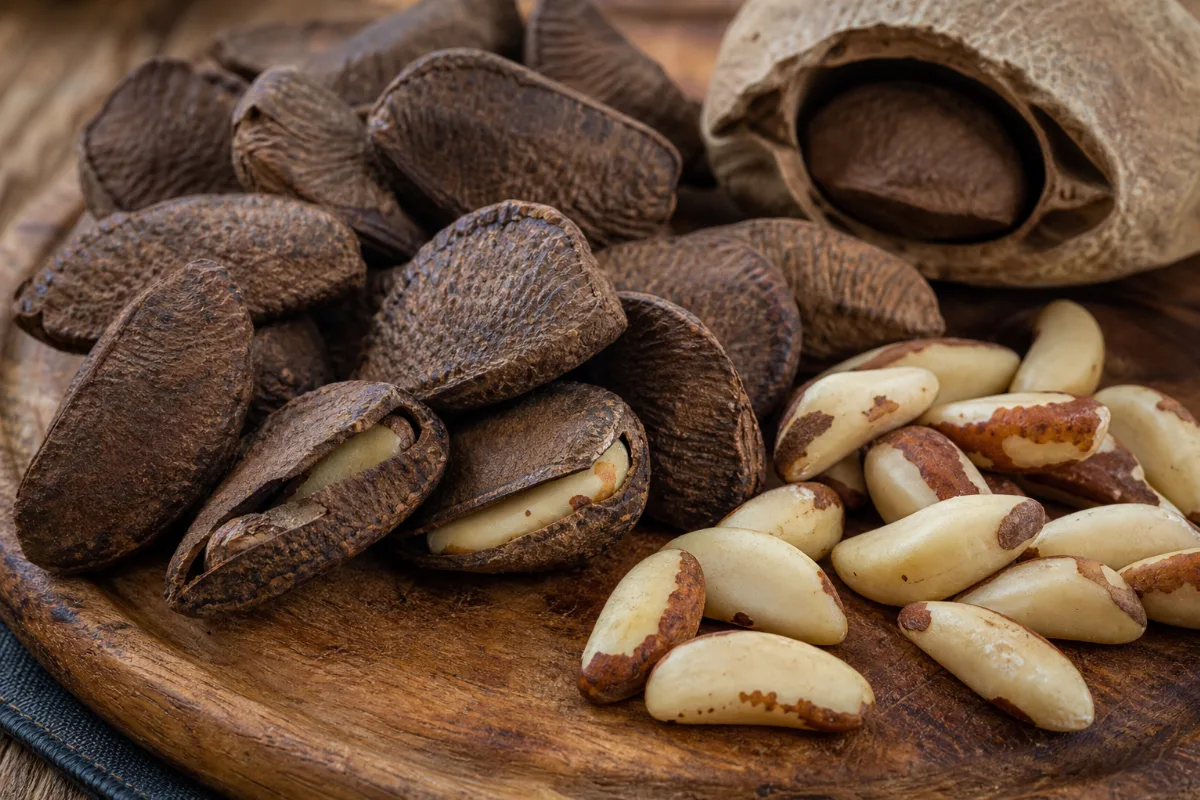
Brazil nuts are the seeds of the Brazil nut tree, Bertholletia excelsa (family Lecythidaceae), which grows wild in the Amazon rainforest. The part eaten is the kernel inside a hard shell, and the nuts are sold in the shell, shelled, blanched, or as butter, flour and oil. [6] People eat them mostly for selenium, an essential trace mineral. This page keeps the food apart from supplements and oils, and apart from hype.
Read this first
- Selenium is the main safety point. USDA lists about 543 micrograms (mcg) of selenium in a 1 ounce (28 g) serving of about 6 kernels. [1] That is more than the US and Canadian upper limit for adults (400 mcg a day) and more than the EU limit (255 mcg a day). [2] [3] The upper limit covers selenium from food and supplements together. It is an official safety ceiling, not a target.
- The selenium in one nut varies a lot. A study of Amazon trees found a single nut could supply from 11% to 288% of a 70 mcg daily requirement, depending on the region. [6] Because you cannot tell how much a given nut holds, this page cannot give a "safe number of nuts." Ask a clinician or pharmacist, especially if you take a selenium supplement.
- Allergy: Brazil nut is a tree nut. Tree nut allergies are often severe and can last a lifetime. For trouble breathing or swelling of the face, lips or throat, call 911 (or your local emergency number). [10] [11]
- Young children: whole and chopped nuts are on the CDC list of choking hazards for young children. [12]
- Evidence in one line: trials show Brazil nuts raise blood selenium. Evidence for any disease benefit is limited or missing.
What is in it (USDA values)
The values below are for dried, unblanched Brazil nuts (USDA FoodData Central item 170569, SR Legacy). [1] The serving column is the USDA household portion of 1 ounce, 28.35 g, about 6 kernels. [1]
| Nutrient | Per 100 g | Per 1 oz (28.35 g, about 6 kernels) | % Daily Value per serving |
|---|---|---|---|
| Energy | 659 kcal | 187 kcal | not set |
| Total fat | 67.1 g | 19.0 g | 24% |
| Saturated fat | 16.1 g | 4.6 g | 23% |
| Protein | 14.3 g | 4.1 g | 8% |
| Fiber | 7.5 g | 2.1 g | 8% |
| Vitamin E (alpha-tocopherol) | 5.65 mg | 1.6 mg | 11% |
| Magnesium | 376 mg | 107 mg | 26% |
| Selenium | 1,917 mcg | 543 mcg | 988% |
| Copper | 1.74 mg | 0.49 mg | 55% |
| Zinc | 4.06 mg | 1.15 mg | 10% |
| Manganese | 1.22 mg | 0.35 mg | 15% |
| Phosphorus | 725 mg | 206 mg | 16% |
| Omega-3 (ALA) | 0.018 g | 0.005 g | no DV |
% Daily Value uses the FDA 2016 Daily Values; values vary with variety, growing place, roasting and storage. The serving figures are the 100 g values multiplied by 0.2835. USDA lists one kernel as 5 g, which is about 96 mcg of selenium by the USDA average. [1] Real nuts differ widely from that average. [6] Brazil nuts are not a notable source of ALA omega-3: the USDA value is very small. [1]
Plant compounds: lab analyses of Brazil nut oil report phenolic compounds (including gallic acid derivatives) and plant sterols such as beta-sitosterol. This is laboratory chemistry, and we did not find a trial showing these compounds act in people when the whole nut is eaten. [16]
What research says
| Health goal | What the sources found | Strength of evidence | What was studied |
|---|---|---|---|
| Raising blood selenium | In a pilot trial, one Brazil nut a day for 6 months raised blood selenium in older adults versus a control group. [7] In a 2025 trial, 55 mcg of selenium a day from Brazil nut butter for two weeks raised serum selenium as well as a supplement did. [8] | Established for raising selenium status (a blood measure, not a disease outcome) | Older adults with mild memory impairment (whole nuts); vegans and omnivores (nut butter) |
| Memory and thinking | In the pilot trial, verbal fluency and one drawing test improved more in the nut group. Only 20 of 31 people finished. [7] | Promising but limited (very small, one trial) | Whole nuts, adults aged about 78 with mild cognitive impairment |
| Blood cholesterol | A pooled analysis of 61 trials of tree nuts, with Brazil nuts among those included, found lower LDL cholesterol with a daily serving of nuts overall. [9] We did not find a Brazil-nut-only pooled result in the sources we read. | Promising but limited for tree nuts as a group; Insufficient evidence for Brazil nuts alone | Healthy adults and people with risk factors; mixed tree nuts |
| Kidney disease | A systematic review found positive effects of Brazil nuts on oxidative stress and inflammation markers in people with chronic kidney disease. All studies were at moderate-to-high risk of bias. [15] | Insufficient evidence | Few small studies, markers not outcomes |
| Thyroid, cancer, heart attacks | We did not read a trial showing Brazil nuts prevent these. | No good evidence of benefit found in the sources we read | Not applicable |
| Antioxidant effect | In the pilot, red cell glutathione peroxidase (a selenium enzyme) activity rose. [7] This is a blood marker. | Lab or animal only for any health claim; marker changed in people | Whole nuts |
Studies of selenium supplements are a separate question. For the large SELECT trial and for the limits, see selenium toxicity, Brazil nuts and upper limits. We did not check funding in every study; abstracts often do not say.
Eaten as food vs taken as oil, extract or supplement. The trials above used whole nuts or nut butter. Brazil nut oil, flour and selenium tablets are different products. Selenium in the food form and in supplements both raise blood selenium, [8] and both count toward the same upper limit. [2]
How much is a normal serving
The USDA household portion is 1 ounce (28.35 g), about 6 kernels, which has about 187 kcal. [1] That is information from the USDA data, not a prescription. For Brazil nuts, the selenium in this portion is above the adult upper limits. [1] [2] [3] The sources we read do not give an official safe count of nuts, because the content varies by origin. [6] NHS says people who eat meat, fish or nuts should get enough selenium from food, and that 350 mcg or less a day from supplements is unlikely to cause harm. [4] Calories matter too: nuts are energy dense, and we did not read a Brazil-nut-specific weight study.
Safety, allergy and medicines
- Too much selenium (selenosis): the mildest signs are hair and nail loss; MedlinePlus also lists nausea, irritability, fatigue and mild nerve damage. [4] [5] EFSA based its adult limit of 255 mcg a day on hair loss seen at 330 mcg a day in the SELECT trial, and said regular Brazil nut eaters are among the adults who may exceed it. [2]
- Official limits: 400 mcg a day for people 14 and over (Health Canada 2025), including pregnancy and breastfeeding; lower for children: 90 mcg ages 1-3, 150 ages 4-8, 280 ages 9-13. [3] EFSA (2023) sets 255 mcg for adults. [2] EFSA also advises caution with selenium supplements for children. [2]
- Recommended intake: 55 mcg a day for adults, 60 in pregnancy and 70 while breastfeeding (MedlinePlus, 2025). [5] The pilot trial's one nut a day was estimated at 288.75 mcg, above the EFSA limit, so do not treat that trial as advice. [7]
- Allergy: tree nut and seed allergies are often severe and may persist through life; prevalence is rising. Overlap between tree nuts exists, with cashew-pistachio and walnut-pecan the best known. [10] Peanut is a legume, not a tree nut, and is a separate allergy. See nut and seed allergy basics. Avoiding the food is the only prevention. Epinephrine treats anaphylaxis, and 911 should be called. [11]
- Medicines and health conditions: we did not find a source we could read describing a direct interaction between Brazil nuts as food and a specific medicine. The sibling selenium page notes the chemotherapy medicine cisplatin can lower selenium levels; ask the care team about all supplements. See selenium toxicity page and supplements and thyroid medicines. People with kidney disease should ask a clinician about nuts, as the available trials are small. [15]
- Choking: the CDC lists whole or chopped nuts, and spoonfuls of nut butter, as choking hazards for young children. [12]
- Mold and aflatoxin: WHO names Brazil nuts among foods frequently affected by aflatoxins, which can cause liver damage and are linked to liver cancer. [13] A 2025 study of Brazil nuts harvested in a severe drought found aflatoxin in every sample and levels above the 10 mcg per kg legal threshold in 10% of them. [14]
Choosing, storing and food safety
- WHO advises inspecting nuts and throwing away any that look moldy, discolored or shriveled. [13]
- Buy nuts as fresh as possible and store them dry, cool and not for long periods. [13]
- We did not read a source with specific advice on Brazil nut rancidity or freezing. See storing nuts and seeds.
Related pages
Health connections for Brazil Nuts
What research links to eating or drinking this food, and how strong the evidence is. Many studies are observational or use juice, powder, oil or extracts rather than the food as eaten; each card says which.
Selenium intake from Brazil nuts
Clinically supportedBrazil nuts are a very rich food source of selenium. USDA lists about 543 micrograms in a 1 ounce serving, and trials show eating them raises blood selenium.
Supplements: This is about raising selenium status (a blood measure), not about preventing any disease. Selenium supplements are a separate question.
Memory and thinking in older adults
Preliminary or mixedOne very small pilot trial (20 of 31 finished) found some memory test gains after one Brazil nut a day for 6 months in older adults with mild cognitive impairment.
Supplements: One pilot trial; the nut selenium dose was estimated above the EFSA upper limit, so it is not advice.
Nuts and LDL cholesterol (tree nuts as a group)
Preliminary or mixedA pooled analysis of 61 trials of tree nuts, Brazil nuts among them, found lower LDL cholesterol with a daily serving of nuts. We did not read a Brazil-nut-only result.
Supplements: Result is for tree nuts as a group; Brazil nuts alone are not shown.
Kidney disease: nut trials
Not enough evidenceA systematic review found positive effects of Brazil nuts on oxidative stress and inflammation markers in chronic kidney disease, but the studies were few and at moderate-to-high risk of bias.
Supplements: People with kidney disease should ask their care team before regular Brazil nuts.
Plant compounds (phenolics, plant sterols)
Lab or animal research onlyLab analyses of Brazil nut oil report phenolic compounds and beta-sitosterol. No human trial in the sources we read shows these act when the whole nut is eaten.
Supplements: Oil analyses do not show a benefit of eating the whole nut.
Energy and nutrients (magnesium, copper, phosphorus, manganese)
Established roleOne ounce gives about 187 kcal, 26% of the Daily Value for magnesium, 55% for copper, 16% for phosphorus and 15% for manganese per USDA.
Supplements: Dietary role only; mineral supplements are not covered.
Connected topics
Open a group to see how each topic connects and how strong the evidence is.
Health goals (1)
- Memory SupportPreliminary or mixed
One very small pilot trial in older adults with mild cognitive impairment saw some test gains. Not enough to say Brazil nuts help memory.
Root causes (1)
- Nutrient DeficiencyClinically supported
Eating Brazil nuts raised blood selenium in trials, including in people with low status. This is a blood measure, not a disease outcome.
Conditions & symptoms (4)
- AnaphylaxisDocumented risk
Anaphylaxis is a medical emergency; call 911 for trouble breathing or swelling of the face or throat.
- Food AllergyDocumented risk
Brazil nut is a tree nut; tree nut allergies are often severe and can last for life.
- AlopeciaDocumented risk
Hair loss is an early sign of too much selenium, the basis of the EFSA upper limit.
- Selenium DeficiencyClinically supported
Brazil nut eating raised blood selenium in trials; this shows a rise in a blood measure, not treatment of a deficiency disease.
Documented risks and interactions (5)
- Selenium upper limit and too much selenium. Official upper limits are 400 micrograms a day for people 14 and over (Health Canada 2025) and 255 for adults in the EU (EFSA 2023). One ounce of Brazil nuts per USDA data is above both. Too much causes selenosis (hair and nail loss, nausea, fatigue, mild nerve damage).
- Selenium content varies by growing place. A study of Amazon trees found a single nut could provide 11% to 288% of a 70 microgram daily requirement, depending on region and soil.
- Tree nut allergy. Brazil nut is a tree nut. Tree nut allergies are often severe and may last through life; cashew-pistachio and walnut-pecan overlap is best known. Call 911 for trouble breathing or swelling of the face or throat.
- Aflatoxin and mold. WHO names Brazil nuts among foods often affected by aflatoxins. A 2025 study of nuts from a severe drought year found aflatoxin in all samples and 10% above the 10 microgram per kg legal limit.
- Choking in young children. The CDC lists whole or chopped nuts and spoonfuls of nut butter as choking hazards for young children.
Frequently asked questions
How many Brazil nuts can I eat?
The sources we read give no safe count, because selenium varies hugely between nuts. [6] USDA data show about 543 mcg selenium in 6 kernels, above the 400 mcg adult upper limit. [1] [3] Ask a clinician or pharmacist.
What happens if I eat too many Brazil nuts?
Too much selenium can cause hair and nail loss, nausea, fatigue and mild nerve damage. [5] EFSA names regular Brazil nut eaters among those who may exceed its upper limit. [2]
Are Brazil nuts good for the thyroid or for memory?
Selenium is an essential mineral, but we did not find a trial showing Brazil nuts help the thyroid. One very small pilot trial in older adults with mild memory impairment saw some test improvements. [7] That is not enough to say Brazil nuts help memory.
Is a Brazil nut allergy the same as a peanut allergy?
No. Brazil nut is a tree nut, and peanut is a legume. They are different allergies, though some people react to both. [10] Call 911 for trouble breathing or swelling of the face or throat. [11]
Are raw Brazil nuts safe?
Nuts can carry aflatoxin mold. WHO advises discarding nuts that look moldy or shriveled and storing them dry. [13]
References
- U.S. Department of Agriculture. FoodData Central: Nuts, brazilnuts, dried, unblanched (SR Legacy, FDC 170569). April 2018 release. Read 2026-10-23.
- EFSA Panel on Nutrition, Novel Foods and Food Allergens. Scientific opinion on the tolerable upper intake level for selenium. EFSA Journal 2023 (abstract read via Europe PMC). Read 2026-10-23.
- Health Canada. Dietary reference intakes tables: reference values for elements. Page dated 2025-11-19. Read 2026-10-23.
- NHS. Vitamins and minerals: Others (selenium). Read 2026-10-23.
- MedlinePlus. Selenium in diet. Review date 2025-01-21. Read 2026-10-23.
- Silva Junior EC et al. Natural variation of selenium in Brazil nuts and soils from the Amazon region. Chemosphere 2017 (abstract read via Europe PMC). Read 2026-10-23.
- Cardoso BR et al. Effects of Brazil nut consumption on selenium status and cognitive performance in older adults with mild cognitive impairment: a randomized controlled pilot trial. Eur J Nutr 2016 (abstract read). Read 2026-10-23.
- Simon R et al. Improving the selenium supply of vegans and omnivores with Brazil nut butter compared to a dietary supplement. Eur J Nutr 2025 (abstract read). Read 2026-10-23.
- Del Gobbo LC et al. Effects of tree nuts on blood lipids, apolipoproteins, and blood pressure: 61 controlled trials. Am J Clin Nutr 2015 (abstract read). Read 2026-10-23.
- Jeong K, Lee S. Update on tree nut and seed allergies: prevalence, clinical characteristics, diagnosis, and management. 2025 (abstract read via Europe PMC). Read 2026-10-23.
- MedlinePlus. Food allergy. Read 2026-10-23.
- CDC. Choking hazards (infant and toddler nutrition). Page dated 2026-03-11. Read 2026-10-23.
- WHO. Mycotoxins fact sheet. 2 October 2023. Read 2026-10-23.
- Kluczkovski AM et al. Climate change and severe drought impact on aflatoxins and fungi in Brazil nuts. 2025 (abstract read via Europe PMC). Read 2026-10-23.
- Lazzarin T et al. Nut consumption in chronic kidney disease: a systematic review. 2025 (abstract read via Europe PMC). Read 2026-10-23.
- Barbosa Abrantes KK et al. Brazil nut semi-defatted flour oil: lipid profile and bioactive compounds. 2024 (abstract read via Europe PMC). Read 2026-10-23.