Tamanu Oil: Evidence and Safety
Tamanu oil (Calophyllum inophyllum) is a thick green-brown Pacific skin oil used for wounds and scars; here is what lab work shows, what people studies lack, and the allergy cautions.
Content last updated . This page has not been medically reviewed.
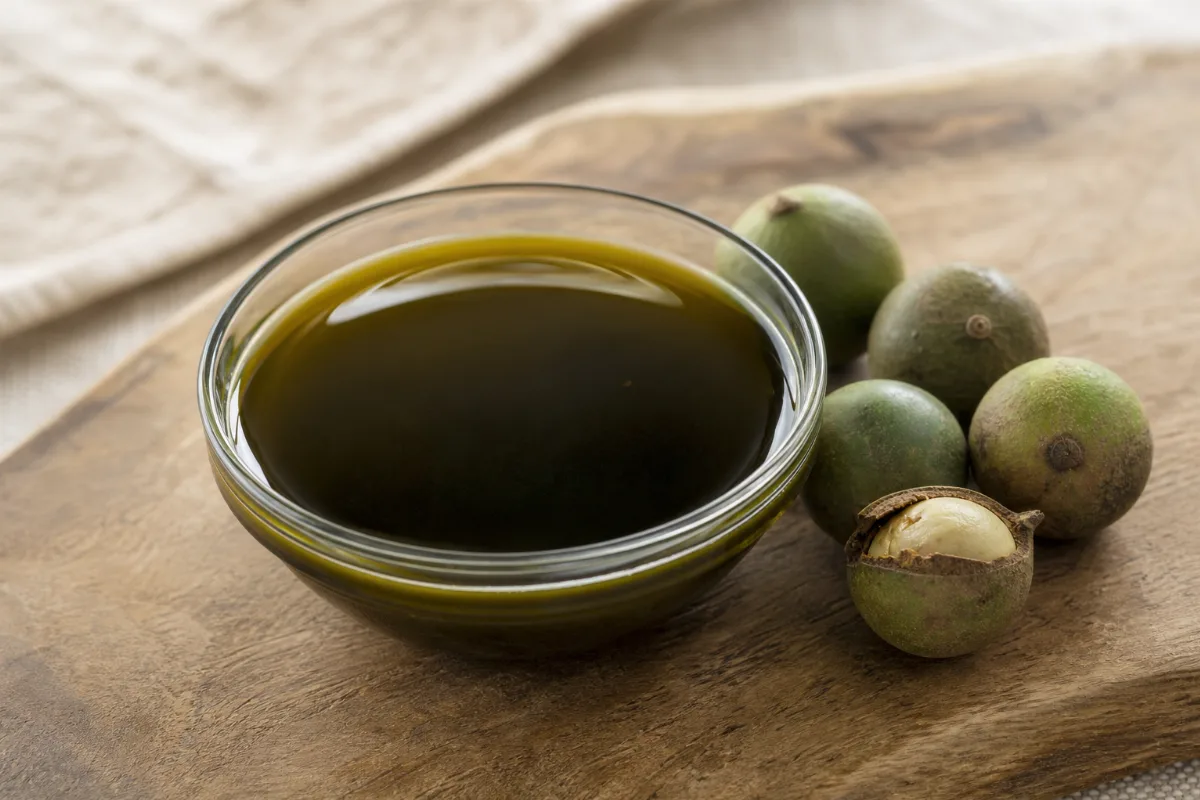
Quick safety points
- Tamanu oil is a skin oil. Allergic contact dermatitis (an itchy, red skin rash after touching something you are allergic to) from tamanu oil has been written up in published case reports, so do a patch test first. [11][12] See patch testing natural oils and butters.
- We found no controlled trial in people for wounds, scars, eczema or any other skin problem. The wound-healing and germ-fighting results come from cells in dishes, mice and rats. [1][2][4][6]
- Do not put it on a deep, dirty or infected wound as a replacement for medical care. The "infected wound" findings are laboratory findings, not treatment advice. [1]
- Swallowing: the sources we read study tamanu oil only on skin or in the lab. We found no safety data for eating or drinking it, so do not swallow it. [1][8]
- Nut allergy, pregnancy, breastfeeding, babies and pets: not described in the sources we read. Ask a doctor, midwife or vet before using it if any of these apply.
What tamanu oil is
Tamanu oil comes from the nuts (seeds) of the tamanu tree, Calophyllum inophyllum, an evergreen that grows along seashores and islands of the Indian and Pacific Oceans, especially Polynesia. [1] It is a fixed (fatty) oil, pressed from the dried nuts. One research paper describes it as a cold-pressed oil, and another describes the oil's make-up as mainly oleic and linoleic acids plus palmitic and stearic acids. [8][9] One lab study found it richer in saturated and monounsaturated fats than in polyunsaturated fats. [9] It also carries a "resin" part (a sticky fraction) that holds many plant compounds, including neoflavonoids and pyranocoumarins (families of plant chemicals). [3][8] The amount and mix of these compounds differ by where the tree grew in the South Pacific. [10] Calophyllolide, one of these compounds, has been isolated and tested on its own in mice. [2]On the skin it is thick (high viscosity), and one paper describes a strong nutty smell. [5] The sources we read do not give a colour range.
How it is used
Tamanu oil is sold for skin care: pure oil, blends, balms and creams. A review describes it applied in tradition to skin and to "mucous membrane lesions" (sores on the moist inner linings of the body), and to scars. [6] Because it is thick and strongly scented, it is often mixed into lighter carrier oils. See carrier oils explained. Researchers who tried to make it more pleasant to use made gels (bigels) and emulsions, because the smell and thickness are the main drawbacks. [5] It is not a cooking oil, and there is no dietary page for it in our Oils & Fats section.Traditional use (not proof)
Papers describe tamanu oil as used for a very wide range of skin problems in the Pacific and Indian Ocean regions: burns, scars, infected wounds, dermatosis (general skin disease), urticaria (hives) and eczema. [1] A French Polynesian paper says different parts of the tree (nuts, leaves, roots, bark, fruits, oil and resin) are used as traditional medicines and cosmetics across the Pacific Islands. [10] The oil is described as applied to skin to prevent infections and reduce the look of scars. [6] A long history of use does not prove it works, and it does not show it is safe for everyone. Some people have had allergic skin reactions to it. [11][12]What research shows
Human studies. We searched Europe PMC for trials of tamanu oil or Calophyllum inophyllum in people. We found no randomized or controlled trial of the oil on wounds, scars, stretch marks, eczema, acne or hair. The human-related papers we found were case reports of allergic reaction. [11][12] A 2021 review on atopic dermatitis (eczema) lists only cell and animal work and concludes the oil is a "candidate" for future study, not a proven treatment. [6] A 2020 review of plant oils in wound healing includes calophyllum oil among in vitro and in vivo (lab and animal) studies. [7]| Kind of study | What was done | What was found | Strength |
|---|---|---|---|
| Controlled trial in people | None found | Proper evidence not found in the sources we read | None |
| Case reports (people) | Two allergic contact dermatitis reports (2004; 2022, two cases) | Allergic skin reaction to the oil. Details not read; only titles available. [11][12] | Safety signal, not a benefit |
Lab and animal findings (not the same as results in people).
- Skin cells in dishes. Five oils from Indonesia, Tahiti, Fiji and New Caledonia sped up closing a "scratch" in human skin cells (keratinocytes) and slowed or stopped some bacteria in culture, mainly gram-positive types such as Staphylococcus aureus, including a drug-resistant strain. The authors reported that useful doses were below doses that harmed the cells. [1] Another dish study found more skin-cell growth and collagen-related production with a tamanu oil emulsion. [3] A third found the resin fractions much stronger than the plain oil in antioxidant and antimicrobial tests. [8] Caseinate emulsions of tamanu oil worked against some gram-positive bacteria but not gram-negative ones. [13] Dish results do not show what happens on real skin.
- Calophyllolide. Isolated calophyllolide reduced inflammatory signals and scar-like fibrous tissue and helped wounds close in mice. [2] That is one compound, not the whole oil.
- Rats. In 21 rats, tamanu oil gave more collagen and granulation tissue early on and less wound shrinking (contraction) than the comparison groups. The authors called scientific data on the oil "limited". [4] A rat study of tamanu-oil gels reported better healing than a commercial oil. [5] A rabbit skin test of those gels showed no irritation. [5]
Claims checked
| Claim | What the sources show |
|---|---|
| "Tamanu oil heals wounds" | Faster closing of scratches in skin cells and better results in some rat studies. No human trial found. [1][4][5] |
| "Tamanu oil fades scars" | Traditional use and animal work only. One rat study found less wound contraction and more collagen, which is not the same as less visible scarring in people. [4][6] |
| "Tamanu oil kills germs on wounds" | Lab tests show activity against some bacteria, mostly gram-positive, in dishes. This is not proof it treats infection in people. [1][13] |
| "Tamanu oil treats eczema" | A review says it is an interesting candidate based on lab and animal work; no trial in eczema was found. [6] |
| "It is natural, so it is safe for everyone" | Allergic contact dermatitis from tamanu oil has been reported. [11][12] |
Forms, grades and why they matter
Sold as a crude (unrefined) cold-pressed oil, as blends in carrier oils, in balms and in creams. Lab papers show that the oil's chemistry varies by origin, and that the resin part holds much of the activity, so two products can differ a lot. [8][10] Studies used oils from named countries, extracts and gels, so results from one do not carry to another. Cosmetic versus food grade matters here: nothing we read tests tamanu oil for eating. See cosmetic grade versus food grade oils.Safety and cautions
- Allergy and the patch test. Case reports describe allergic contact dermatitis from tamanu oil. Patch test a small area first and stop if you get redness, itching or a rash. [11][12]
- European (EU) status. We looked for an opinion from the European Commission's Scientific Committee on Consumer Safety (SCCS) on Calophyllum inophyllum seed oil and found none in the sources we could search. We cannot say what the EU's rules for it are. Check the EU cosmetics database (CosIng) or the product label.
- Swallowing. No source we read studied it by mouth. Do not swallow it.
- Tree-nut and seed allergy. Papers call it "nut oil", but none of the sources we read reports on nut-allergic people. If you have a nut allergy, ask an allergy doctor before trying it.
- Wounds. Lab work does not replace cleaning, dressing and medical care for deep, dirty, burned or infected wounds.
- Babies, pregnancy, breastfeeding, pets, medicines. Not described in the sources we read.
- Strong smell and thickness. Described as drawbacks for use. [5]
Quality and storage
The sources we read give no storage data for tamanu oil. See rancidity, shelf life and storage of natural oils for general advice. Look for a label that names the plant (Calophyllum inophyllum), the country of origin and the pressing method, since the oil's contents vary by origin. [10]Related pages
Uses studied and safety checks for Tamanu Oil
Read the safety checks first. Each card says whether a finding comes from people, from the lab or from tradition, which product and way of use was tested, and how strong the evidence is. A finding for one product or one way of using it does not carry over to another.
Check before you use (3)
- Allergic contact dermatitis from tamanu oil. Published case reports describe allergic contact dermatitis (an itchy rash from an allergy) after skin use of tamanu oil. Patch test first.
- Swallowing tamanu oil (no safety data). The sources read study tamanu oil on skin or in the lab. No safety data for swallowing were found, so it should not be swallowed.
- Safety gaps: nut allergy, pregnancy, babies, pets, medicines. These are not described in the sources read. No EU SCCS opinion was found.
Tamanu oil and wound healing (lab and animals only)
Lab or animal research onlyTamanu oil sped up scratch closing in human skin cells and gave more collagen and granulation tissue in rats. No controlled trial in people was found.
Supplements: None shown for people; lab and animal findings only.
Tamanu oil and scars
Lab or animal research onlyTraditionally used to reduce the look of scars. Only rat studies were found; one reported less wound contraction and more collagen.
Supplements: None shown for people.
Tamanu oil and germs (lab)
Lab or animal research onlyIn lab dishes, tamanu oil and its resin part slowed some bacteria, mostly gram-positive ones. This does not show it treats infection in people.
Supplements: None shown for people.
Tamanu oil and eczema (atopic dermatitis)
Not enough evidenceA review calls tamanu oil an interesting candidate for eczema based on cell and animal work. No trial in people with eczema was found.
Supplements: No verified evidence in people.
Calophyllolide and the resin part
Lab or animal research onlyIsolated calophyllolide reduced inflammatory signals in mice. The resin part holds many plant compounds and was stronger than plain oil in lab tests.
Supplements: None shown for people.
Traditional use of tamanu oil
Not enough evidenceTraditionally used across the Pacific and Indian Ocean regions for burns, scars, infected wounds, dermatosis, hives and eczema. Long use is not evidence of benefit.
Supplements: Traditional use is not evidence of an effect.
Fatty acids, smell and chemistry
Not enough evidenceMainly oleic and linoleic acids with palmitic and stearic acids, richer in saturated and monounsaturated fats; thick with a strong nutty smell. Content varies by origin.
Supplements: Not a benefit claim.
Connected topics
Open a group to see how each topic connects and how strong the evidence is.
Body systems (2)
- Integumentary SystemLab or animal research only
Used on skin in tradition; wound and skin-cell results are from dishes and animals only.
- Skin, Hair & BeautyLab or animal research only
Sold for skin care; no human trial was found, only lab and animal work.
Body parts (1)
- SkinLab or animal research only
Applied to skin; lab and rat studies of wound healing only. Allergic contact dermatitis has been reported.
Conditions & symptoms (1)
- Contact DermatitisDocumented risk
Case reports describe allergic contact dermatitis from tamanu oil.
Frequently asked questions
Does tamanu oil heal wounds or fade scars?
It sped up wound closing in skin cells and in some rat studies, and calophyllolide helped wounds close in mice. We found no trial in people. [1][2][4]
Does tamanu oil kill bacteria?
In lab dishes it slowed some bacteria, mainly gram-positive ones. That is not proof it treats infections on the skin. [1][13]
Can tamanu oil cause an allergic reaction?
Yes. Case reports describe allergic contact dermatitis from it, so patch test first. [11][12]
Is tamanu oil safe to swallow?
We found no safety data for swallowing it. Do not swallow it.
Is tamanu oil approved in the EU?
We found no SCCS opinion on it and cannot state its EU status. Check CosIng and the product label.
References
- Léguillier T et al., PLoS One 2015, The wound healing and antibacterial activity of five ethnomedical Calophyllum inophyllum oils. Read 2026-10-24.
- Nguyen VL et al., PLoS One 2017, Anti-inflammatory and wound healing activities of calophyllolide isolated from Calophyllum inophyllum. Read 2026-10-24.
- Ansel JL et al., Planta Medica 2016, Biological activity of Polynesian Calophyllum inophyllum oil extract on human skin cells. Read 2026-10-24.
- Erdogan SS et al., Journal of Wound Care 2021, Evaluation of the cutaneous wound healing potential of tamanu oil in wounds induced in rats. Read 2026-10-24.
- Krishnappa M et al., Pharmaceuticals 2024, Tamanu oil bigels as anti-scarring agent. Read 2026-10-24.
- Pribowo A et al., Evidence-Based Complementary and Alternative Medicine 2021, Potential of tamanu oil for atopic dermatitis treatment. Read 2026-10-24.
- Poljšak N et al., Phytotherapy Research 2020, Vegetable butters and oils in skin wound healing. Read 2026-10-24.
- Cassien M et al., Antioxidants 2021, Improving the antioxidant properties of Calophyllum inophyllum seed oil from French Polynesia: resinous ethanol-soluble extracts. Read 2026-10-24.
- Fratianni F et al., Antioxidants 2025, Fatty acid profile and some biological aspects of borage, calophyllum and prickly pear seed oils. Read 2026-10-24.
- Ginigini J et al., PeerJ 2019, Chemodiversity of Calophyllum inophyllum oil bioactive components in the South Pacific. Read 2026-10-24.
- Le Coz CJ, Contact Dermatitis 2004, Allergic contact dermatitis from tamanu oil. Title and record read 2026-10-24; abstract not available.
- Amsler E, Soria A, Barbaud A, Contact Dermatitis 2022, Two cases of allergic contact dermatitis to tamanu oil. Title and record read 2026-10-24; abstract not available.
- Urbánková L et al., Polymers 2019, Caseinate-stabilized emulsions of black cumin and tamanu oils: antibacterial activity. Read 2026-10-24.