Candelilla Wax: Evidence and Safety
Candelilla wax (Euphorbia antisyphilitica) is a plant wax from Mexico and Texas used in vegan balms and sweets. Food status, allergy reports and missing research.
Content last updated . This page has not been medically reviewed.
Quick safety points
- Candelilla wax is a firming wax, not a treatment. We found no human trial of it on skin, lips or any health outcome. Proper evidence not found in the sources we read. [14]
- Allergy is possible but looks rare. Case reports describe allergic contact cheilitis (sore, inflamed lips) from candelilla wax in an adult and sensitization to candelilla cera in a toddler. We could read only the titles, not the patch-test details. [7][8]
- As a food additive, regulators have accepted it: the US FDA affirms it as generally recognized as safe for chewing gum and hard candy, and JECFA found no safety concern at predicted intakes. EFSA set no daily limit because long-term toxicity data were lacking. [1][2][3][4]
- Pregnancy, breastfeeding, babies, pets and medicines are not covered in the sources we read. See the safety checklist and do a patch test first.
What candelilla wax is
Candelilla wax comes from a desert shrub, Euphorbia antisyphilitica (sold under the older name Euphorbia cerifera too). It grows wild in northern Mexico and a few counties in West Texas. A Texas history site lists Zacatecas, Nuevo Leon, Durango, Coahuila and Chihuahua in Mexico, and El Paso, Presidio, Brewster and nearby counties in Texas. [6]The wax coats the stems. Traditionally, workers pulled the plants, boiled them in a vat of water with sulfuric acid, and skimmed off the brown foam. It was molded into raw wax called cerote. Yield was about 1.5 to 2.5 percent of the plant's weight. [6] Modern commercial refining was not described in the sources we read.
In plain words, it is a hard, pale-to-brown wax made of a mix: hydrocarbons, wax esters, and smaller amounts of lactones, alcohols and acids. [3][11] Wax esters are long fat-like chains joined together, the same family of molecules that make up many natural waxes. [12] It is a plant product, so it contains no animal ingredients.
How it is used
- Balms and lip products: melted with oils and butters to make them firmer. It is a common plant (vegan) alternative to beeswax. For other balm ingredients see shea butter and carrier oils explained.
- Cosmetics and polish: lip products, candles, polishes and waterproofing. [6]
- Food: a glazing agent and gum-base ingredient on sweets and in chewing gum, labeled E 902 in Europe. [1][2][3]
- Food science: in the lab, it can turn liquid oils into a soft gel (an oleogel). [13][14]
Traditional use (not proof)
The sources we read describe candelilla wax as an industrial and cosmetic material, used for waterproofing military tents and fabric in the world wars and in polishes, gum and lip products. [6] We did not find a source we read on traditional medicine use of the wax. Long use in industry shows it is useful, not that it has a health effect.What research shows
Human studies of candelilla wax on skin, lips or health: none found. The only human-level items are the allergy case reports below.| Who | What | Result | Strength |
|---|---|---|---|
| One adult | Allergic contact cheilitis attributed to candelilla wax (case report) [7] | Reported cause was the wax; details not read | Case report |
| One toddler | Sensitization to candelilla cera and to an emulsifier, sucrose (di)stearate (case report) [8] | Sensitization reported; details not read | Case report |
| Lip-balm users | Severe contact cheilitis from beeswax and other cosmetic fats, oils and waxes in lip balms (case report) [9] | Candelilla appears only as a keyword in the record, so we do not count it as the cause | Case report |
Regulatory and safety reviews are not trials. The Cosmetic Ingredient Review (CIR) assessed candelilla wax together with carnauba wax, Japan wax and beeswax in 1984 and judged them safe for cosmetic use, based on animal and clinical test data. We read only the abstract. [5] EFSA (2012) found available data suggest candelilla wax is not genotoxic and expected low absorption. [3][4]
In the laboratory, candelilla wax oleogels were stable and an olive-oil version took up less oil in fried potato slices than plain oil. This is food-science research and says nothing about human health. [14]
Claims checked
- "A natural, vegan alternative to beeswax." True in origin: it is from a plant. Both are waxes, but they differ (see below). Origin does not make one safer; both have contact-allergy case reports. [7][9][10]
- "Safe to eat because it is in sweets." The FDA, JECFA and EFSA accepted it as a food additive in small amounts used as a glaze or gum base. That is not a statement about swallowing balm or eating it as a food. [1][2][3]
- "Heals or protects lips." Proper evidence not found in the sources we read. It is a texture ingredient.
- "Comedogenic" or "clogs pores". Not described for candelilla in the sources we read. See comedogenic ratings checked.
Candelilla wax compared with beeswax
| Candelilla wax | Beeswax | |
|---|---|---|
| Origin | Desert plant stems | Honeybee comb |
| Main makeup | Hydrocarbons, wax esters, lactones, alcohols, acids [3][11] | Mostly wax esters [12] |
| Vegan | Yes | No |
| Can carry propolis traces | No | Yes; reactions to this appear uncommon, mainly lip-balm cheilitis [10] |
| Allergy reports | Case reports [7][8] | Case reports, mostly lip balms [9][10] |
| Used together | Yes: blends of both have been tested as oil gels [13] |
This table compares origin and makeup only. It makes no claim that one is better for health. See the beeswax page.
Forms, grades and why they matter
- Raw wax (cerote): brown, from boiling the stems; refined before use. [6]
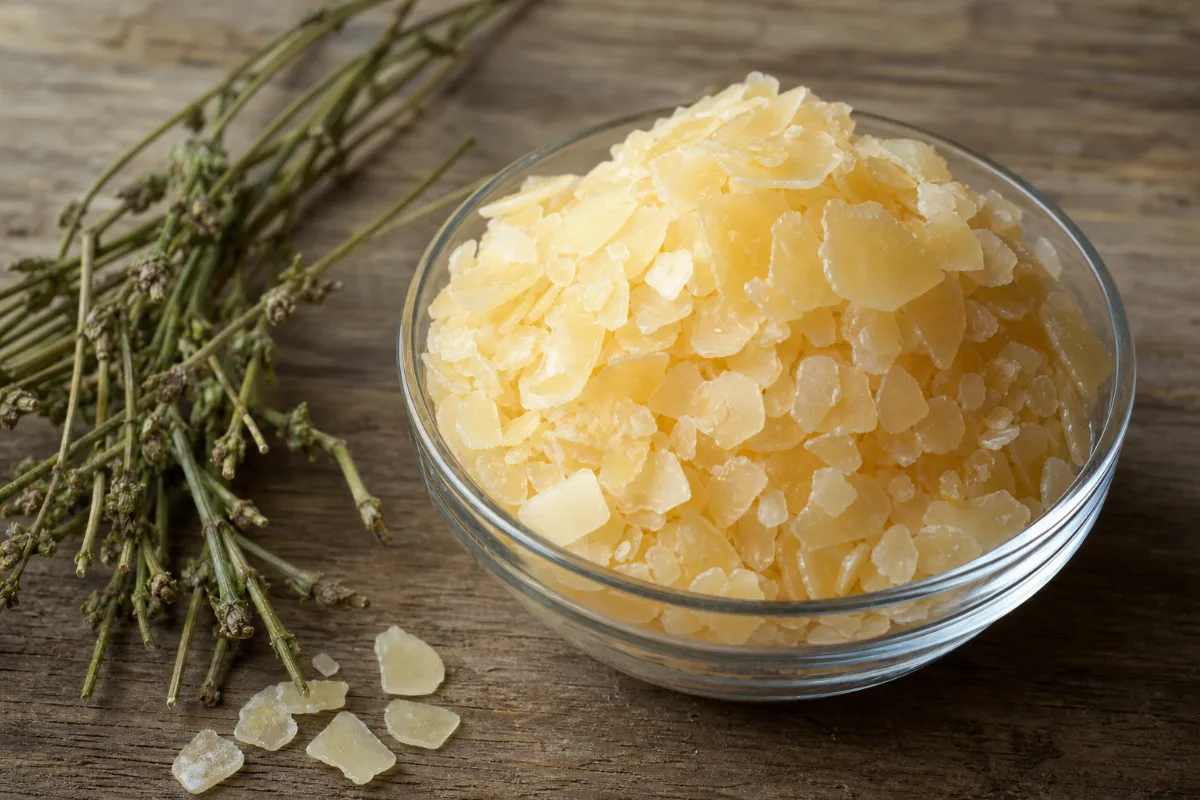
- Refined cosmetic wax: pale pellets or flakes for balms.
- Food-grade (E 902): meets a food-additive specification. EFSA noted limited data comparing the tested material with the specification. [3]
Safety and cautions
- Allergy and patch test: case reports exist for lips and skin. Stop use if lips or skin become red, swollen, sore or itchy, and see a doctor. [7][8]
- Swallowing: acceptance as a food additive covers small glaze or gum-base amounts. EFSA set no daily limit. [3]
- Babies and toddlers: one toddler case report of sensitization; other infant safety was not described in the sources we read. [8]
- Pregnancy, breastfeeding, pets, medicines: not covered by any source we read.
Quality and storage
Wax is stable and does not go rancid on its own, but balm made with oils can. The sources we read on candelilla do not give shelf-life data. See rancidity and storage of natural oils.Related pages
Uses studied and safety checks for Candelilla Wax
Read the safety checks first. Each card says whether a finding comes from people, from the lab or from tradition, which product and way of use was tested, and how strong the evidence is. A finding for one product or one way of using it does not carry over to another.
Check before you use (3)
- EFSA re-evaluation: no ADI set. EFSA judged the wax not genotoxic on available data and expected low absorption, but set no acceptable daily intake because long-term toxicity data were lacking.
- Allergic contact reactions to candelilla wax (case reports). Case reports describe allergic contact cheilitis (lip inflammation) due to candelilla wax in an adult and sensitisation to candelilla cera in a toddler. Such reports look rare; frequency is not known from the sources we read.
- Cosmetic versus food grade and purity. Commercial candelilla wax varies by source and processing; EFSA noted limited data comparing tested material with the food-additive specification. Traditional production boils the stems with sulfuric acid.
Candelilla wax as a vegan balm and lip-product base
Not enough evidenceA hard plant wax from Euphorbia antisyphilitica, used in lip balms, balms and cosmetics to firm up oils. This is a texture job, not a health effect.
Supplements: No human evidence found that the wax itself improves skin or lips; it is a base.
Candelilla wax as a food additive (E 902) and FDA status
Clinically supportedPermitted as a glazing agent in the EU; in the US it is affirmed as generally recognized as safe for chewing gum and hard candy at good manufacturing practice levels. JECFA found no safety concern at predicted intakes.
Supplements: Regulatory acceptance as a food additive is not a health benefit.
Cosmetic safety assessment (CIR, 1984)
Clinically supportedThe Cosmetic Ingredient Review group assessed candelilla wax together with carnauba, Japan wax and beeswax and concluded these waxes were safe for cosmetic use, based on animal and clinical test data (abstract level).
Supplements: Safety conclusion, not a health benefit.
Candelilla wax versus beeswax
Not enough evidenceBoth are waxes made mostly of long-chain esters. Candelilla comes from a desert plant; beeswax comes from honeybees and can carry propolis traces. Both appear in lip balms and both have case reports of contact allergy.
Supplements: No head-to-head human study found.
Candelilla wax and health in people
Not enough evidenceNo human trial of candelilla wax on skin, lips, cholesterol or any health outcome was found. Studies of candelilla oleogels (wax-gelled oils) are laboratory food-science work.
Supplements: None shown for people.
Candelilla wax in food-science oleogels (laboratory)
Lab or animal research onlyIn the lab, candelilla wax can gel edible oils, and an olive oil gel was more stable than plain oil in frying tests. This does not show a human health effect.
Supplements: None shown for people from lab findings.
Connected topics
Open a group to see how each topic connects and how strong the evidence is.
Body systems (1)
- Integumentary SystemDocumented risk
Case reports describe skin and lip allergy to candelilla wax; no trial of benefit was found.
Body parts (1)
- SkinDocumented risk
Case reports describe allergic reactions to candelilla wax on lips and skin; these look rare.
Frequently asked questions
Is candelilla wax vegan?
Yes in origin: it comes from a desert plant, not from animals. [6]
Is candelilla wax safe to eat?
Regulators accept it as a food additive in small amounts as a glaze or gum base. FDA affirms it as GRAS for chewing gum and hard candy. EFSA set no daily limit. [1][3]
Can candelilla wax cause an allergy?
Case reports describe lip inflammation and sensitization, so it can in rare cases. Do a patch test. [7][8]
Is candelilla wax better than beeswax?
We found no head-to-head human study. They differ in origin and makeup, not shown health effect. [10][11]
Does candelilla wax heal lips or skin?
No trial was found. Proper evidence not found in the sources we read.
References
- US FDA, eCFR 21 CFR 184.1976 Candelilla wax (GRAS affirmation, 2024 edition). Read 2026-10-24.
- JECFA / WHO, Candelilla wax evaluation, 2005 (INCHEM). Read 2026-10-24.
- EFSA, Scientific Opinion on the re-evaluation of candelilla wax (E 902) as a food additive, 2012. Abstract content only; full text not read. Read 2026-10-24.
- ConfectioneryNews, No health risk from candelilla wax, says EFSA, 2012. Read 2026-10-24.
- Cosmetic Ingredient Review, Final Report on the Safety Assessment of Candelilla Wax, Carnauba Wax, Japan Wax, and Beeswax, Int J Toxicol 1984 (abstract only). Read 2026-10-24.
- Texas Beyond History, Candelilla wax camps: techniques. Read 2026-10-24.
- Han J, Dermatitis 2023, Allergic contact cheilitis due to candelilla wax (record and title only). Read 2026-10-24.
- Darrigade AS et al., Contact Dermatitis 2020, A peculiar case of sensitization to candelilla cera and sucrose (di)stearate in a toddler (record and title only). Read 2026-10-24.
- Aerts O et al., Contact Dermatitis 2023, Severe contact cheilitis from cera alba and other cosmetic oils, fats and waxes in lip balms (record and title only). Read 2026-10-24.
- de Groot AC, Contact Dermatitis 2026, Propolis and beeswax in cosmetics: market survey and literature review. Read 2026-10-24.
- Food Chemistry 2026, LC-ELSD method to characterize the aliphatic fraction of natural waxes (abstract). Read 2026-10-24.
- Food Science & Nutrition 2014, Determination of natural ester-type gum bases by high-temperature GC/MS (abstract). Read 2026-10-24.
- Food Chemistry 2026, Effect of oil unsaturation on gel strength of binary beeswax-candelilla wax oleogels (abstract). Read 2026-10-24.
- Journal of Food Science 2025, Frying performance, storage stability and in vitro digestion of olive oil-candelilla wax oleogel. Read 2026-10-24.