Poison Fire Coral
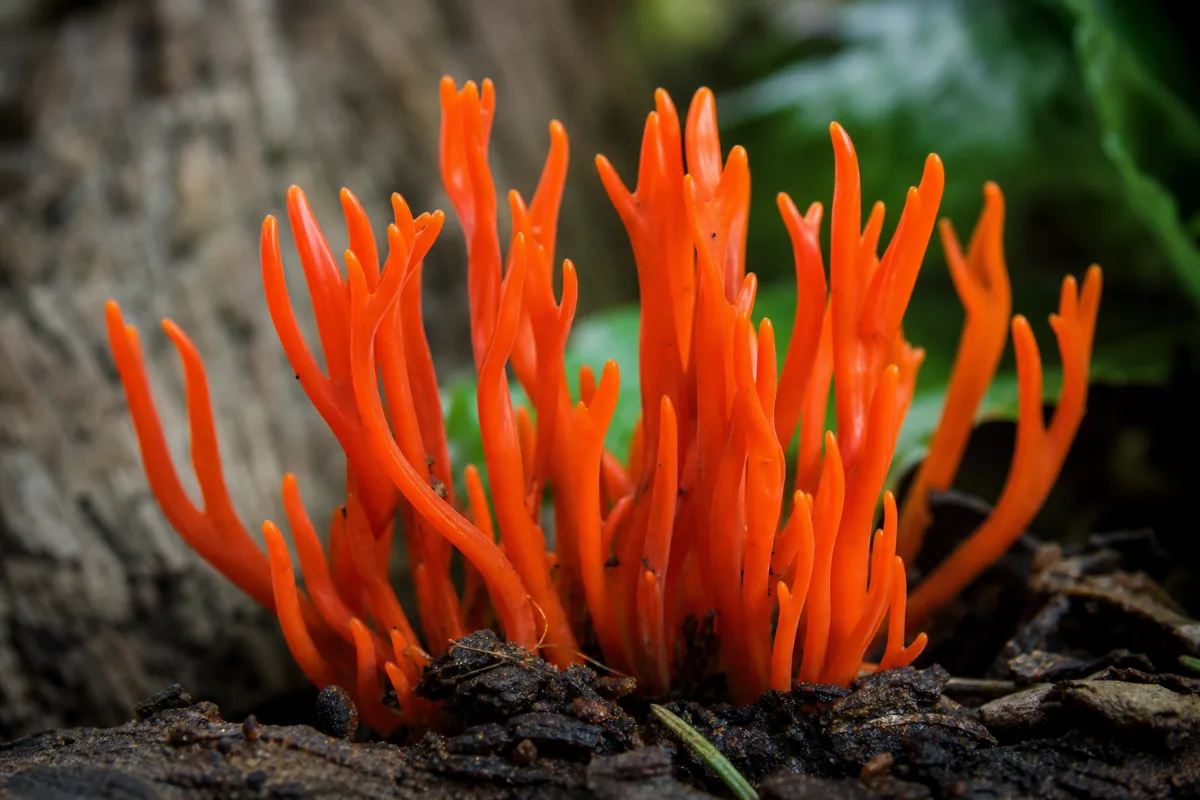
Poison fire coral (Podostroma cornu-damae) is a highly toxic fungus of Japan and Korea that has been mistaken for reishi and cordyceps; this page explains the danger and what to do, and gives no identification help.
Content last updated . This page has not been medically reviewed.
Safety first. Supplements can cause side effects and interact with medicines. Read mushroom safety and interactions before you use any mushroom product.
What is Poison fire coral good for?
What the body uses it for, and how strong the evidence is. A normal job in the body is not proof that extra supplements add benefit; each card says which.
Connected topics
Open a group to see how each topic connects and how strong the evidence is.
Body systems (2)
- Digestive SystemDocumented risk
Nausea, vomiting and diarrhoea were reported early in poisoned patients.
- Kidney & UrinaryDocumented risk
Low urine output and kidney failure were reported in fatal cases.
Body parts (4)
- GutDocumented risk
Nausea, vomiting and diarrhoea were reported early in poisoned patients.
- HairDocumented risk
Hair loss was reported in several patients.
- KidneysDocumented risk
Low urine output and kidney failure needing dialysis were reported in fatal cases.
- SkinDocumented risk
Peeling of palms, soles and scalp was reported in several patients.
Root causes (1)
- Environmental ToxinsDocumented risk
A natural fungal toxin; used as the closest available term.
Biomarkers (1)
- White Blood Cell CountDocumented risk
Very low white cell counts, often with low platelets, were the key lab finding in the case reports.
Conditions & symptoms (6)
- Multiple Organ FailureDocumented risk
Two patients died of multiple organ failure.
- PancytopeniaDocumented risk
Severe pancytopenia was reported in most patients.
- Kidney Failure, AcuteDocumented risk
Acute kidney failure is listed among complications and needed dialysis in a fatal case.
- ThrombocytopeniaDocumented risk
Very low platelets needing transfusion were reported.
- AlopeciaDocumented risk
Hair loss was reported in some patients.
- Disseminated Intravascular CoagulationDocumented risk
Listed among the common complications in one report and in a fatal case.
Documented risks and interactions (9)
- Severe poisoning with blood, skin and organ damage. Case reports describe very low blood counts, skin peeling, hair loss, infection and multiple organ failure after eating the fungus or drinking tea or boiled water made from it; some people died.
- Boiling and other preparation do not make it safe. In Korea a man who ate it boiled died, and a man who drank boiled water for over a month died; Japanese deaths followed fungus soaked in alcohol or fried. No paper tested what heat does to the toxin.
- Trichothecene mycotoxins. Reports quoting 2001 Japanese chemistry name macrocyclic trichothecenes (roridin E, satratoxin H and derivatives) as the toxins; the exact mechanism is described as unknown.
- No curative treatment; supportive care. Cases were managed with fluids, antibiotics, G-CSF, platelet transfusion and, in severe cases, ventilation and dialysis; there is no known antidote.
- Mistaken for reishi and cordyceps. Korean reports say it resembles reishi (Ganoderma lucidum) and cordyceps, and patients made tea or boiled extracts from gathered fungus.
- Poison Help and emergency steps. Poison centres say to call at once and not wait for symptoms; call 911 for collapse, seizure or breathing trouble.
- Do not identify wild fungi from text, photos or apps. A 2026 study found the best of 12 apps still failed in nearly 15% of tests; a poison centre says even experienced gatherers find it hard.
- Delayed and varied course. Symptoms began within 3 hours in one man (with a sudden breathing crisis on day 4) and after days to weeks of tea in others.
- Health claims or use as food or supplement. No source we read describes any food, medicinal or supplement use.
Safety first. Poison fire coral is a poisonous wild fungus. Case reports describe it harming the blood-forming bone marrow, the skin, the gut, the kidneys and other organs, and some people have died. Reports describe symptoms that start within hours in some cases, and after weeks of repeated tea-drinking in others. [3][4][5] If anyone may have eaten a wild or unknown fungus, or drunk a tea made from one, call Poison Help now at 1-800-222-1222 (US), even if there are no symptoms. A poison center says not to wait for symptoms, because they can be delayed and serious damage may occur before they appear. [1] Call 911 if the person collapses, has a seizure, has trouble breathing or cannot be woken. [2] Outside the US, call your local poison centre or emergency number; see poison help by country. This page gives no identification help. See mushroom poisoning: warning signs and urgent help and the mushroom safety quick reference.
The short version. This is not a food, not a medicine and not a supplement. Authors of case reports call it highly toxic and say a very small amount can be fatal. [3][6] Several patients in Korea had boiled it and drunk the water, and one of them died, so boiling did not make it safe. [3][5] There is no known antidote; the cases describe supportive care. [3][6]
What it is
Podostroma cornu-damae is a fungus reported in Japan and Korea, where it has caused poisoning. [3][5] The Wikidata record also lists Podostroma alutaceum as a related species; the lab data file we received lists no compounds for either name. [8] The reports we read describe the poison as trichothecene mycotoxins, a group of fungal toxins. [3][4][6]Do not identify wild fungi from text, photos or apps
Even very experienced gatherers can find it hard to know whether a mushroom is safe, according to a poison control centre. [1] In a 2026 study of 12 phone apps and websites, the best tool still failed to give a correct identification in nearly 15% of tests, and the weakest were wrong in most. The authors concluded that such tools cannot be trusted for life-or-death identification. [7] A Korean report notes that the young fungus can look like the reishi (Ganoderma lucidum) when it is immature, which is how a piece ended up in a household's collection; we repeat this as a warning, not a way to tell them apart. [3] Only buy mushrooms and supplements from a shop, never from a basket you found, and never drink a "tea" made from wild fungus. See cooking edible mushrooms safely.The toxin and how it acts
- Trichothecene mycotoxins. A Korean report summarising earlier Japanese chemistry says that in 2001 researchers isolated several macrocyclic trichothecenes from the fruiting body, including roridin E, satratoxin H and related forms. [3][5] A second report says these were deadly to mice within a day. [5]
- How it acts. The authors of one report say the exact mechanism of toxicity is still unknown. [3] We found no source we could open that explains it, so we do not.
- Cooking. The Korean cases with boiled fungus included a death, so boiling is not a safe preparation. [3][5] Japanese deaths followed fungus soaked in alcohol or fried. [3][5] None of the papers tested what heat does to the toxin.
- Small amounts. The authors of the 2013 Yonsei report say that even a small amount can be fatal. [3]
Symptom timeline
Reports differ, because the cases differ: one large single exposure, or weeks of daily tea.- Within hours, after a meal. A 73-year-old Korean man who ate boiled fungus had nausea, vomiting, diarrhoea, dry mouth and low blood pressure about 3 hours later. He seemed to improve until day 3, then suddenly developed severe breathing failure on day 4, and died on day 13 after lung, kidney, liver and bone marrow failure. [5]
- After days to weeks of daily tea. Two couples in Korea drank water in which the fungus had been boiled, or tea, daily for 12 days to over a month. Reported signs included fever, peeling skin on the palms and soles, hair loss, very low blood counts (all three kinds of blood cells), and infection. [3][4]
- Typical course described by the 2013 authors. Diarrhoea, vomiting and dehydration, then low blood pressure, very little urine and altered consciousness; later low white cells and platelets, skin peeling and hair loss, and often death from multiple organ failure. [3]
Treatment as described by medical sources
- No curative treatment is known. [3]
- Supportive care in the cases we read included fluids, antibiotics, blood-cell growth factor (G-CSF), platelet transfusion and, in severe cases, ventilation and kidney dialysis. [3][4][5][6] Of the six patients in these reports, four recovered and two died. One report mentions a recovery after dialysis-type filtering, plasma exchange, G-CSF and large-volume fluids. [3]
- Do not try home treatments. Follow the poison centre or the clinicians. See what to do first for any poisoning and what to tell Poison Help when you call.
- Tell the doctors exactly what was eaten or drunk, over how long, and who shared it. A poison center suggests saving a piece of the fungus if possible. [1]
What studies report
| Report | What it describes |
|---|---|
| Ahn et al., Korea, 2013 (2 patients) | Husband and wife drank the boiled water of wild fungus daily for over a month. He died on hospital day 6 of multiple organ failure; she recovered after about a month of supportive care. [3] |
| Jang et al., Korea, 2013 (1 patient) | 73-year-old man; eaten boiled; died on day 13 despite ventilation, dialysis and lung surgery. [5] |
| Yu et al., Korea, 2013 (1 patient) | 42-year-old man with severe pancytopenia and infection; recovered with supportive care and G-CSF. [6] |
| Kim et al., Korea, 2016 (2 patients) | Couple aged 62 who drank tea for 12 days; low platelets and white cells; both recovered. [4] |
| Japanese cases quoted in [3] | Five people ate about 1 g soaked in sake in 1999, and one died; a separate report of 13 ingestions from 1983 to 2008 had two deaths. [3] |
These are case reports. They over-represent severe cases and cannot give a death rate; we found no population figure we could open.
Which medicinal fungi it has been mistaken for
This is the history of mistakes, not a way to avoid them. Korean reports say the fungus resembles the reishi (Ganoderma lucidum) and cordyceps, two well-known "health foods", and that patients gathered it from the wild and made tea or boiled extracts. [3][4][6] This site's reishi and cordyceps pages cover those products. Because wild fungi can be mixed up, the site's view is to buy only supplements from makers who publish test results (see mushroom testing and certificates of analysis). Cultivated, tested products are a different thing from gathered fungus. The deadliest edible-looking mix-up on this site is covered on the death cap page, which has a different toxin and a different course.Epidemiology
- The cases we found are from Japan and Korea. [3][5]
- A Korean report in 2013 called its case the first documented case of this poisoning in Korea. [3]
- We found no recent count for any country that we could open. Treat all counts as partial.
Lab data and chemistry
Wikidata (the open knowledge base behind the LOTUS natural-products project) lists no compounds for Podostroma cornu-damae or P. alutaceum in the file we received (Wikidata Q864070 and Q10546466). [8] A listing would mean "reported in at least one study of this species". This section describes a poison. It shows nothing about health benefits.A. What the laboratory literature reports in this fungus
| Compound or group | Class | Where in the fungus / form | Identity | Source |
|---|---|---|---|---|
| Roridin E | Macrocyclic trichothecene toxin | Fruiting body | no Wikidata/ChEBI ID checked | [3][5] |
| Satratoxin H and its acetyl derivatives | Macrocyclic trichothecene toxins | Fruiting body | no Wikidata/ChEBI ID checked | [3][5] |
| Verrucarin J | Macrocyclic trichothecene toxin | Fruiting body | no Wikidata/ChEBI ID checked | [3] |
All three are quoted second-hand from the 2001 isolation work, which we did not open. [3][5]
B. Measured values
| Measure | Value | Basis | Sample | Source |
|---|---|---|---|---|
| Toxin content of the fungus | no open measured value found | not applicable | not applicable | none of [3]-[6] measured toxin in patients or fungus |
| USDA nutrient values | none | not a food | not applicable | no USDA entry exists |
Patient blood counts in the case reports are measurements of people, not of the fungus, so they are not listed as lab values for the fungus.
C. What the numbers do and do not mean
- No amount of this fungus can be called safe; one report says a small amount can be fatal. [3]
- Absence of a measured toxin number is a gap in our reading, not a sign of lower danger.
- None of the tests used in these reports confirmed the toxin in the patient; identification was by the fungus itself. [3][5]
- Nothing here suggests any use as food or a supplement.
Related pages
Frequently asked questions
What should I do if someone ate a wild fungus or drank wild-fungus tea?
Call Poison Help at 1-800-222-1222 (US) now, even without symptoms. Call 911 for collapse, a seizure, trouble breathing or if the person cannot be woken. [1][2]
Does boiling make it safe?
No. A person who ate boiled fungus died, and another man died after drinking boiled water for over a month. [3][5]
Is it related to reishi or cordyceps?
No, it is a different fungus, but Korean reports say it has been mistaken for reishi and cordyceps by people gathering wild fungus. [3][4][6]
Is there an antidote?
No curative treatment is known; care is supportive. [3]
Can an app or photo tell me if a wild fungus is safe?
No. Do not identify wild fungi from text, photos or apps. [1][7]
Does it have any medicinal use?
No source we read describes one. It is a poison.
References
- Kansas Poison Control Center. Poisonous Mushrooms. Read 2026-10-24.
- Poison Control (America's Poison Centers). Need immediate assistance?. Read 2026-10-24.
- Ahn JY, Seok SJ, Song JE, et al. Two Cases of Mushroom Poisoning by Podostroma cornu-damae. Yonsei Med J. 2013;54(1):265-268. PMC3521283. Read 2026-10-24 (summary of the article; the original 2001 isolation paper and the Japanese reports it quotes were not opened).
- Kim HN, Do HH, Seo JS, Kim HY. Two cases of incidental Podostroma cornu-damae poisoning. Clin Exp Emerg Med. 2016;3(3):186-189. Journal page. Read 2026-10-24.
- Jang J, Kim CH, Yoo JJ, et al. An Elderly Man with Fatal Respiratory Failure after Eating a Poisonous Mushroom Podostroma cornu-damae. Tuberc Respir Dis. 2013;75(6):264-268. Journal page. Read 2026-10-24.
- Yu HM, Kim J, Kang S, et al. Mushroom Poisoning by Podostroma cornu-damae: A Case Report and Review of the Literature. J Korean Soc Emerg Med. 2013;24(4):469-472. Journal page. Abstract read 2026-10-24.
- AI-mediated risks and real-life challenges in mushroom foraging. npj Science of Food. 2026. PMC13065802. Read 2026-10-24.
- Wikidata (CC0), compound-in-taxon statements (P703) for Podostroma cornu-damae (Q864070) and P. alutaceum (Q10546466), via the LOTUS project; read from the file
docs/research/mushroom-lab-sources/lotus-poison-fire-coral.json, retrieved 2026-10-23 (no compounds listed).