Brown Roll-Rim
The brown roll-rim or poison pax (Paxillus involutus) can cause a rare, sometimes fatal immune reaction that destroys red blood cells, even in people who have eaten it before without trouble; this page covers the symptoms, what is known and what to do.
Content last updated . This page has not been medically reviewed.
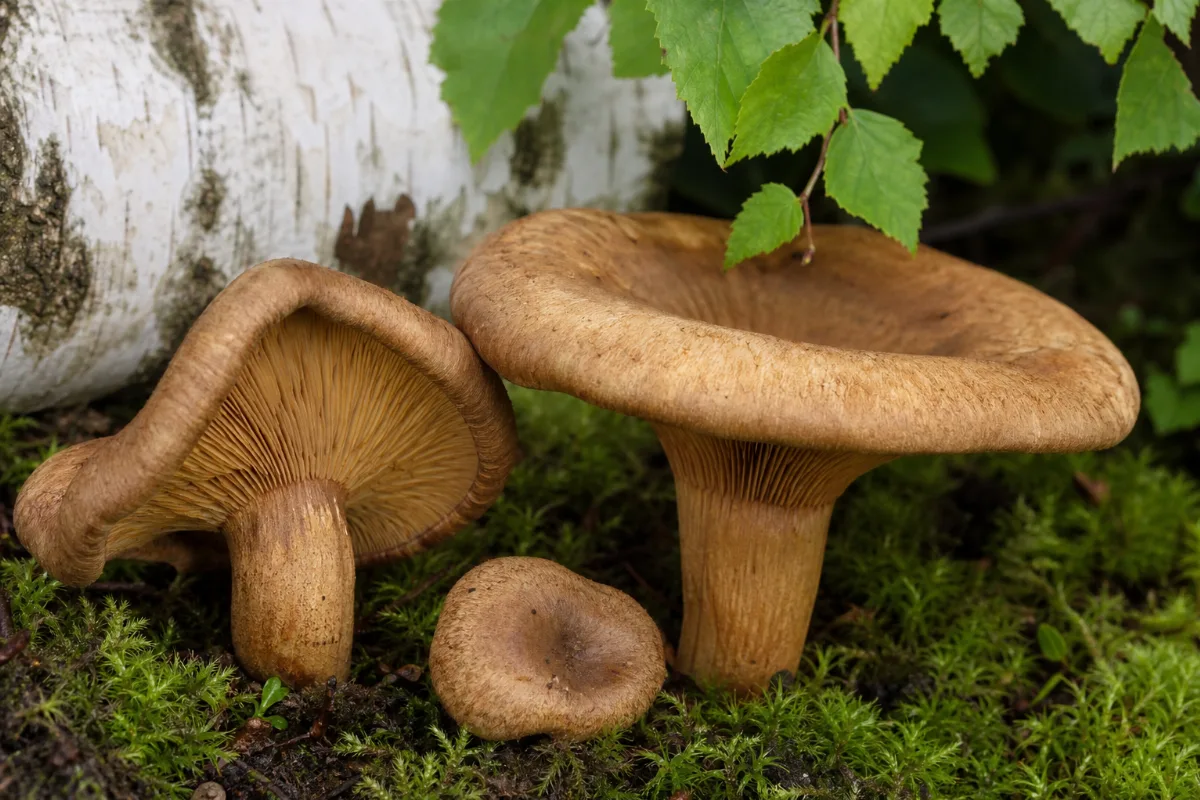
Safety first. Supplements can cause side effects and interact with medicines. Read mushroom safety and interactions before you use any mushroom product.
What is Brown roll-rim good for?
What the body uses it for, and how strong the evidence is. A normal job in the body is not proof that extra supplements add benefit; each card says which.
Connected topics
Open a group to see how each topic connects and how strong the evidence is.
Body systems (4)
- Immune SystemDocumented risk
Immune-complex haemolysis in sensitised people.
- Kidney & UrinaryDocumented risk
Little or no urine and acute kidney failure are described.
- Digestive SystemDocumented risk
Stomach symptoms are the first sign.
- Urinary SystemDocumented risk
Haemoglobin in urine and kidney failure.
Body parts (3)
- Immune SystemDocumented risk
The harm is an immune reaction to the mushroom in sensitised people.
- KidneysDocumented risk
Acute kidney failure from immune-complex injury is described after the Paxillus syndrome.
- GutDocumented risk
Nausea, vomiting, belly pain and diarrhoea begin within hours.
Biomarkers (1)
- HemoglobinDocumented risk
Haemoglobin falls sharply in the immune haemolysis described.
Conditions & symptoms (2)
- Anemia, Hemolytic, AcquiredDocumented risk
Immune haemolytic anaemia is the defining feature of the Paxillus syndrome in case reports.
- Kidney Failure, AcuteDocumented risk
Acute kidney failure is described after the immune haemolysis.
Documented risks and interactions (8)
- Immune haemolysis after eating (Paxillus syndrome). A rare immune reaction in which antibody-antigen complexes destroy red blood cells; it is described as most common after repeated eating of the mushroom.
- Sensitisation: earlier safe meals do not protect. People in the fatal case reports had eaten it for years, and co-diners stayed well.
- Fast onset, often mistaken for other poisoning. Symptoms began about 30 minutes to 3 hours after eating; in one fatal case amatoxin poisoning was first suspected.
- Kidney injury. Haemoglobin in urine, little or no urine and acute kidney failure from immune-complex kidney inflammation are described.
- Multi-organ failure and clotting problems. The 2019 fatal cases showed abnormal clotting, shock, and liver and kidney failure; one patient also had untreated hepatitis C.
- No identified toxin; cooking does not clearly help. No toxin has been identified; both fatal 2019 cases ate it cooked, and similar reactions followed proper heating.
- Stomach upset when raw or undercooked. Other people may get gastrointestinal illness from raw or insufficiently cooked mushrooms.
- Treatment is supportive; plasma exchange used. Sources describe shock treatment, plasmapheresis, dialysis and in one case hydrocortisone; no specific antidote is described.
Safety first. The brown roll-rim (also called the poison pax) can cause a severe immune reaction that breaks down red blood cells and can damage the kidneys and liver. It can kill. If anyone may have eaten it, or any wild or unknown mushroom, call Poison Help now at 1-800-222-1222 (US), or your local poison centre or emergency number, and do not wait for symptoms. [1][2] Unlike the death cap, symptoms in the published cases began fast, within about 30 minutes to 3 hours of eating. [3][4] Call 911 (US) for collapse, a seizure, trouble breathing or if the person cannot be woken. [2] Tell the doctors exactly which mushroom was eaten: in one fatal case the illness was first treated as amatoxin (death cap type) poisoning. [3] This page gives no identification help, on purpose. See mushroom poisoning: warning signs and urgent help and the mushroom safety quick reference.
The short version. Paxillus involutus is a wild fungus with a long history of being eaten in some places. [3] Toxicologists describe a rare, potentially fatal "Paxillus syndrome": an immune reaction that most often follows repeated eating. [4] It is the opposite of what many people expect: someone can eat it for years without a problem and then react badly. [3][4] No toxin has been identified, and the sources we read describe an immune reaction rather than a classic poison. [3] It is not a food we can recommend, not a supplement and not psychoactive.
Do not identify wild mushrooms from text, photos or apps
Even very experienced gatherers can find it hard to tell whether a mushroom is safe, and a photo or an app cannot replace expert help. [1] The site's safety reference describes a study in which popular identification apps were not reliable enough to exclude poisonous mushrooms. Have any wild-picked mushroom examined by a trained mycologist before anyone eats it. On this site, see cooking edible mushrooms safely.What goes wrong, and why it is different
- What happens. The proposed explanation is that a substance in the mushroom acts as an antigen: with repeated eating the body makes antibodies, and at a later meal antibody and antigen form immune complexes that stick to red blood cells and destroy them (immune haemolysis). [3] An American toxicology society summary describes the same picture: immune-complex haemolytic anaemia, haemoglobin in the urine, little or no urine, and acute kidney failure from immune-complex kidney inflammation. [4]
- The suspected trigger. The toxicology summary says an allergic response to a protein shared with a Boletus species, called involutin, may start the process. [4] This is a possibility, not a confirmed cause. A 2019 case series states plainly that no toxin has been identified and the mechanism is not confirmed. [3]
- Why prior safe meals mean nothing. In the published fatal cases, a man had eaten the species regularly for about 10 years, and in both cases the people who shared the meal stayed well. [3] A 1986 case report likewise attributes a fatal case to antibodies against the fungus in sensitised people. [5] A 1995 review concludes that eating it is dangerous because of the risk of sensitisation followed by immune haemolytic anaemia. [6]
- Gut upset is separate. Other people get ordinary stomach illness from raw or poorly cooked mushrooms, and the 2019 authors note that similar reactions have also followed proper heating. [3]
- Rare, but not trivial. The 2019 authors found 14 published cases in English and German with 6 deaths, and added two more fatal cases. [3] Reports are case-level, so no rate of illness can be given.
Symptom timeline
| Phase | When | What happens |
|---|---|---|
| First symptoms | about 30 minutes to 3 hours after eating | Nausea, vomiting, upper-belly pain, diarrhoea; in the 2019 cases also back (loin) pain, light-headedness and sweating. [3][4] |
| Haemolysis | within hours | Red cells break down; urine may turn dark with haemoglobin; blood tests show falling haemoglobin and a rise in unconjugated bilirubin. [3][4] |
| Organ injury | hours to days | Little or no urine, acute kidney failure, shock, abnormal clotting, liver injury and multi-organ failure. [3][4] |
In the two fatal 2019 cases the patients (a 46-year-old man and a 32-year-old woman) died about 3 to 5 days after the meal. The woman also had untreated hepatitis C, which the authors say may have added to her illness. [3]
Treatment (what the sources describe)
Treatment is hospital care and is aimed at shock, clotting problems and organ failure. [3] The 2019 authors say that "adequate anti-shock therapy and plasmapheresis" (filtering the blood plasma to remove the antibody complexes) may be essential, but this rests on two cases. [3] In one patient described in 1986, daily plasma exchange lowered free haemoglobin and immune-complex levels by 60 to 75% per session and kidney failure was treated with dialysis; this is a single case, and we read only the abstract. [5] One 2019 patient also received a hydrocortisone dose. [3] The sources we read describe no specific antidote. Do not try home remedies, and do not make the person vomit; follow the poison centre. The NHS (UK) advises against making someone sick and against giving food or drink. [8]Edible mushrooms it is mixed up with
We found no published poisoning report that names an edible look-alike. In the published cases the mushroom was eaten knowingly as a food, and in one case it was cooked in the same meal as honey fungus and porcini (the authors name Paxillus as the cause). [3] See honey mushroom and porcini. That is naming, not teaching: the safe rule is never to pick wild mushrooms by description.Lab data and chemistry
Wikidata, the open knowledge base behind the LOTUS natural-products project, lists 19 compounds reported in Paxillus involutus (Q518069). None of the statements in our file has a paper attached. [7] A listing means "reported in at least one study of this species". The compound pages themselves were not opened. None of the entries is shown, in anything we read, to cause the illness.A. What the laboratory literature reports in this mushroom
| Compound or group | Class | Where in the mushroom / form | Identity | Source |
|---|---|---|---|---|
| Involutin | Pigment-type compound named in toxicology summaries as a possible trigger | Not stated | Wikidata Q19803769 | [4][7] |
| Involutone | Pigment-type compound | Not stated | Wikidata Q77490909 | [7] |
| Two furanone relatives (C17H12O6) and a cyclopentenedione | Pigment-type compounds | Not stated | Wikidata Q104915346, Q104915347, Q104919253 | [7] |
| Benzofuro-chromenone | Phenolic compound | Not stated | Wikidata Q125613527 | [7] |
| Ergosterol | Fungal sterol | Not stated | ChEBI 16933; Wikidata Q143263 | [7] |
| Linoleic acid | Fatty acid | Not stated | ChEBI 17351; Wikidata Q407426 | [7] |
| Methyl, ethyl and butyl linoleate | Fatty acid esters | Not stated | ChEBI 69080 (methyl) and 31572 (ethyl); butyl: Wikidata Q27283685 | [7] |
| D-mannitol | Sugar alcohol | Not stated | ChEBI 16899; Wikidata Q407646 | [7] |
| Glucose derivatives (O1-methyl-glucose, ethyl and butyl glucosides) | Sugars | Not stated | ChEBI 320055 and 168338; butyl: Wikidata Q27894788 | [7] |
B. Measured values. USDA FoodData Central has no entry for this species, and we found no open measured value for any compound above, so none is given and the lab data file is not created for this page.
C. What the numbers do and do not mean
- A listing in Wikidata shows a compound was reported in the species; it gives no amount and no effect on health.
- No toxin has been identified, so no chemical figure can tell whether a given mushroom is dangerous. [3]
- Wikidata describes involutin as a compound; a toxicology summary calls it a protein. We have not resolved this, so treat the involutin link as unconfirmed. [4][7]
- This species has no supplement or health use.
Related pages
Frequently asked questions
What do I do if someone ate a brown roll-rim or any wild mushroom?
Call Poison Help at 1-800-222-1222 (US), or the local poison centre or emergency number, right away. Do not wait for symptoms. Call 911 for collapse, seizure or breathing trouble. [1][2]
Is it safe if I have eaten it before?
No. The reaction is described as most common after repeated eating, because the body can become sensitised. [3][4]
Does cooking make it safe?
We found no source that says so. Both fatal 2019 cases ate it cooked. [3]
How soon do symptoms begin?
Usually within about 30 minutes to 3 hours. [3][4]
Is there an antidote?
The sources we read describe none. Care is in hospital, and plasmapheresis has been used in some patients. [3][5]
Can I tell it from edible mushrooms with an app or a description?
No. Do not identify wild mushrooms from text, photos or apps. [1]
More details: evidence, limits and cautions
The details behind this page: cautions, limits of the evidence and where sources disagree. Open any note to read it.
Cooking does not remove the risk
Who is most at risk
References
- The University of Kansas Health System Poison Control Center. Poisonous Mushrooms. Cited as read on the site's mushroom-poisoning page; not re-opened for this page.
- Poison Control (America's Poison Centers). Need immediate assistance?. Cited as read on the site's mushroom-poisoning page; not re-opened for this page.
- Stöver A, et al. Fatal immunohaemolysis after the consumption of the poison pax mushroom: a focus on the diagnosis of the Paxillus syndrome with the aid of two case reports. Diagnostics (Basel). 2019;9(4):130. PMC6963215. Read 2026-10-24 (open access; via a page summary).
- American Academy of Clinical Toxicology "Question of the Day" (Oct 11, 2017), citing Diaz J, Crit Care Med 2005;33:427-436. What is the Paxillus involutus immunohemolytic syndrome?. Read 2026-10-24; the original Diaz review was not opened.
- Case report of fatal immune haemolysis after Paxillus involutus (1986). Springer. Abstract seen in search results only; the page could not be opened.
- Pohle review in Czech Mycology (1995). DOI 10.33585/cmy.48105. Conclusion seen in search results only; the page could not be opened.
- Wikidata (CC0), compound-in-taxon statements (P703) for Paxillus involutus, Q518069, via the LOTUS project; read from
docs/research/mushroom-lab-sources/lotus-brown-roll-rim.json, retrieved 2026-10-23. Compound pages were not opened. - NHS (UK). Poisoning. Cited as read on the site's mushroom-poisoning page; not re-opened for this page.