Urad Dal (Black Gram): Nutrients, What Research Shows and Safety
Urad dal (black gram) as a food: composition from peer-reviewed studies since USDA has no item, cooking and fermentation in idli and dosa, raw-bean cautions, and allergy cross-reactivity.
Content last updated . This page has not been medically reviewed.
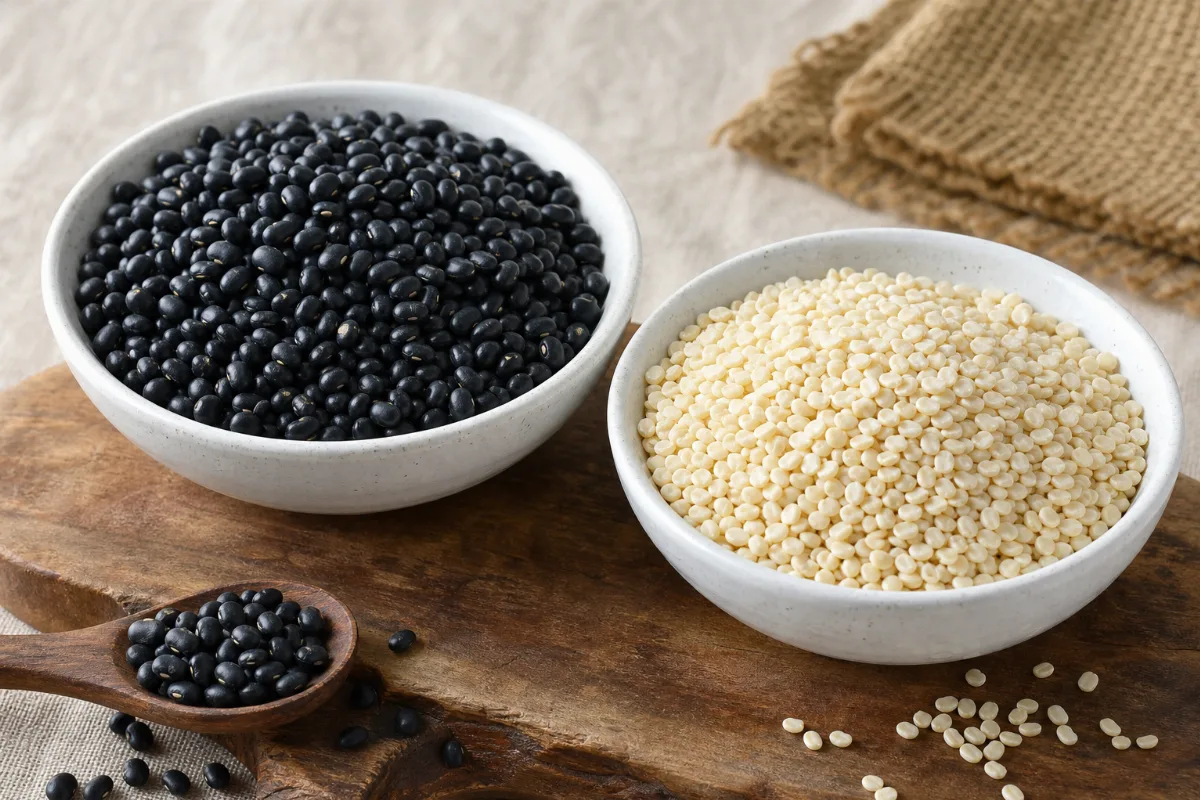
Urad dal is the seed of black gram, Vigna mungo (pea family), a cousin of the mung bean. It is eaten as a dal (a cooked split-pulse dish), ground into batters for idli, dosa and similar foods, and made into fritters and snacks. People eat it mainly for plant protein and fiber. This page covers the food as eaten, puts cooking and safety first, and notes plainly where the research is thin: the USDA database has no item for it, and we found no trials of urad dal in people.
Read this first
- Cook it; do not eat dry black gram raw. Raw legumes in general hold the highest lectin levels, and Harvard says soaking and wet-heat cooking inactivate most lectins. [7] The evidence on black gram itself is mixed: in a 2021 laboratory survey, lectin activity was not detected in raw "urid" (black gram) by the method used, unlike raw black and lima beans. [2] But an idli study reports hemagglutinating activity (the lectin test) and trypsin inhibitor activity in the raw ingredients, reduced by 100% and 58% in the finished idli. [3] We read no report of poisoning from urad dal, and no study that fed people raw black gram.
- Allergy: in a study of 355 asthma and rhinitis patients in India with a history of legume allergy, immune-test cross-reactivity was found among kidney bean, peanut, black gram and pigeon pea. [4] If you have a peanut or legume allergy, ask your allergist. For trouble breathing or swelling of the face or throat, call 911 (or your local emergency number). [11]
- Evidence in one line: pooled trials of pulses as a group show small cholesterol and weight effects; we found no trial of black gram itself. [8] [9]
- USDA has no item for it. Numbers below come from a 2026 lab paper on raw black gram, not from USDA.
What is in it (USDA values)
USDA FoodData Central has no item for urad dal or black gram in the file we used, so there are no USDA values. We use one 2026 peer-reviewed paper that analyzed raw black gram (the abstract and text we read do not say whether it was whole seed or dal) [1]. Values are percent by weight of the raw material, which equals grams per 100 g. We did not convert or invent anything; the paper gives no vitamin or mineral values we could read.
| Component (raw black gram) | Per 100 g [1] | Note |
|---|---|---|
| Protein | 24.13 g | 48% of the FDA Daily Value of 50 g (our calculation) |
| Fat | 1.44 g | |
| Carbohydrate | 55.53 g | |
| Crude fiber | 5.13 g | "Crude fiber" is a different lab measure from the dietary fiber on USDA labels; do not compare them |
| Ash (minerals, total) | 3.28 g | |
| Moisture | 10.49 g | |
| Tannin | 4.45 mg per g | An antinutrient: can bind minerals and slow protein digestion |
| Phytic acid | 6.32 mg per g | An antinutrient: can reduce mineral absorption |
| Protein digestibility (lab test) | 70.86% | A laboratory digestion model, not a human result |
Another 2026 paper compared flours and reported higher tannin (2.55 mg per g) and phytic acid (7.89 mg per g) in black gram than in moth bean; its tannin figure differs from the first paper's, as expected for different samples and methods. [5] Because values vary this much, treat all numbers as approximate. The first paper had no external funding. [1] Plant compounds: tannins and phytic acid are described above; they are measured in the raw seed, and Harvard says the mineral-blocking effects of legume antinutrients are suggested by animal and cell studies, with very limited human research. [7]
What research says
| Health goal | What the sources found | Strength of evidence | What was studied |
|---|---|---|---|
| Cholesterol | Pooled randomized trials of pulses as a group (26 trials, 1,037 people) found LDL fell 0.17 mmol/L at a median of 130 g a day. We read no trial listing black gram. [8] | Promising but limited for pulses; no black gram-specific evidence read | Randomized trials, mixed pulses |
| Body weight | A pooled analysis of 21 trials found 0.34 kg more weight loss with pulse diets over about 6 weeks. [9] | Promising but limited (pulses as a group) | Randomized trials, mixed pulses |
| Blood sugar and diabetes | Harvard reports low glycemic index and high fiber for legumes but says the evidence is mixed and not definitive. [10] | Mixed | Cohort studies and trials, mixed legumes |
| Digestibility and antinutrients after fermentation | In idli, fermentation and steaming cut tannins by 100%, phytic acid by 89%, trypsin inhibitor activity by 58% and hemagglutinating activity by 100% versus the raw ingredients. Total biogenic amines (compounds formed from amino acids during fermentation) rose by 339%. [3] A 2026 review says fermentation of legumes reduced phytates, tannins and saponins by more than 60%. [6] A separate lab test of solid-state fermentation of black gram with a mold (Aspergillus awamori) raised protein digestibility from 70.86% to 82.89%. [1] | Lab only (food-processing measurements, not health outcomes) | Idli batter ingredients and lab fermentations |
| Cooking behavior | In a lab study, untreated black gram seeds took about 50 minutes to cook, and papain treatment cut that to about 39 minutes. [12] | Lab only | Seeds in a laboratory cooking test |
| Cross-reactive allergy | Immune cross-reactivity among kidney bean, peanut, black gram and pigeon pea in a cohort of patients in India. [4] | Documented risk (one cohort; not a statement that most people react) | Skin-prick and lab tests, 355 patients |
| Any disease treatment | Proper evidence not found in the sources we read. | No good evidence of benefit | None |
Eaten as food vs tested in the lab. The pooled trials involved cooked pulses as food. The fermentation work measured chemicals in batters, not health. Observational findings show an association, not proof.
How much is a normal serving
USDA lists no household portion for urad dal. The NHS counts 80 g of beans and pulses as one portion and says they count only once a day toward 5 A DAY, however much you eat. [13] The cholesterol trials used a median of about 130 g of pulses a day. [8] This is information, not a prescription.
Safety, allergy and medicines
- Raw or undercooked. Raw legumes hold the highest lectin amounts and cooking with wet heat inactivates most. [7] Health Canada notes lectins occur in many legumes and that illness has mostly followed undercooked red kidney beans. [14] The FDA says PHA, the lectin of raw or undercooked beans, can cause nausea, severe vomiting and diarrhea; it does not name black gram. [15] The 2021 laboratory survey did not detect lectin in raw black gram, but its authors say the method is not harmonized, there is no agreed toxic threshold, and high activity does not necessarily mean toxicity. [2] Our reading: cook black gram fully, as the sources advise for other beans.
- Antinutrients. Tannins, phytic acid and trypsin inhibitors are measured in raw black gram and reduced by soaking, fermenting and cooking. [1] [3]
- Fermented batters. In idli the same study found biogenic amines rose by 339%. [3] We read no source linking these to symptoms in people; for histamine and fermented foods see idli and dosa.
- Allergy. See legume allergy and cross-reactivity. Peanut is a legume; see peanuts. Food allergy can cause hives, swelling and trouble breathing; anaphylaxis is a medical emergency, call 911. [11]
- Kidney disease, medicines, pregnancy, children: we read no source on these for urad dal and have no USDA mineral values. See foods, kidney disease, potassium and oxalates, food and medicine interactions and foods in pregnancy, and ask a clinician.
- If someone gets sick after eating legumes: see poisoning: what to do first.
Choosing, storing and food safety
- Soaking and cooking: we found no black-gram-specific time from an official body. Health Canada's soak (at least 5 hours) and vigorous boil (at least 10 minutes) is written for dry red kidney beans, and the FDA's 5-hour soak and 30-minute boil for beans; neither names black gram. [14] [15] A lab study took about 50 minutes to cook whole seeds. [12] Cook until fully soft; follow your national authority.
- Slow cookers: Harvard says raw beans simmered at low heat may keep their lectins. [7] Bring to a boil first.
- Mold in stored pulses: a 2026 review says fungal infection generally lowers the quality of pulse seeds; discard moldy seeds. [16]
Related pages
Health connections for Urad Dal (Black Gram)
What research links to eating or drinking this food, and how strong the evidence is. Many studies are observational or use juice, powder, oil or extracts rather than the food as eaten; each card says which.
Black gram as a source of protein
Established roleA 2026 lab paper found 24.13 g protein, 5.13 g crude fiber and 55.53 g carbohydrate per 100 g raw black gram, with lab protein digestibility of 70.86%.
Supplements: Food source only.
Fermenting urad batter for idli and dosa
Lab or animal research onlyIn an idli study, tannins fell 100%, phytic acid 89%, trypsin inhibitor activity 58% and hemagglutinating activity 100% versus the raw ingredients, while total biogenic amines rose 339%. A 2026 review says fermentation reduced phytates, tannins and saponins in legumes by more than 60%. These are chemical measurements, not health results.
Supplements: Not applicable.
urad dal and cholesterol, blood sugar or weight
Not enough evidencePooled randomized trials of pulses as a group found a small LDL drop (0.17 mmol/L), lower fasting glucose and insulin, and 0.34 kg more weight loss. We read no trial that lists urad dal.
Supplements: Not applicable.
Lab fermentation and enzyme treatment of black gram
Lab or animal research onlyA 2026 lab study with a mold (Aspergillus awamori) raised protein digestibility from 70.86% to 82.89%; another lab study found papain shortened cooking time from about 50 to 39 minutes. Neither is a health outcome.
Supplements: Not applicable.
Connected topics
Open a group to see how each topic connects and how strong the evidence is.
Body systems (2)
- Digestive SystemDocumented risk
Raw legumes carry lectins and other antinutrients that cooking reduces, and beans ferment in the gut to cause gas in some people. No black gram poisoning report was read.
- Gut HealthDocumented risk
Raw legumes carry lectins and other antinutrients that cooking reduces, and beans ferment in the gut to cause gas in some people. No black gram poisoning report was read.
Body parts (1)
- GutDocumented risk
Raw legumes carry lectins and other antinutrients that cooking reduces, and beans ferment in the gut to cause gas in some people. No black gram poisoning report was read.
Conditions & symptoms (2)
- FlatulenceDocumented risk
Beans contain carbohydrates that gut bacteria ferment; gas and bloating are common.
- Food AllergyDocumented risk
In 355 patients with asthma or rhinitis in India and a history of legume allergy, black gram showed immune cross-reactivity with kidney bean, peanut and pigeon pea. Anaphylaxis is an emergency: call 911.
Documented risks and interactions (3)
- Raw or undercooked urad and antinutrients. Raw black gram holds tannins, phytic acid and trypsin inhibitors; a 2021 lab survey did not detect lectin in raw black gram by its method, while an idli study found hemagglutinating activity in the raw ingredients. Harvard says wet-heat cooking inactivates most lectins in legumes. No poisoning report was read.
- Legume cross-reactivity (peanut, kidney bean, black gram, pigeon pea). In 355 patients with asthma or rhinitis in India and a history of legume allergy, immune tests showed extensive cross-reactivity among kidney bean, peanut, black gram and pigeon pea.
- Mold on stored pulses. A 2026 review says fungal infection generally lowers the nutritional value of pulse seeds. Check dry seeds for mold.
Frequently asked questions
Is urad dal safe to eat raw?
We do not advise it. Raw legumes have the highest lectin levels, and the sources say to cook beans. [7] One lab survey did not detect lectin in raw black gram, but the authors say that method cannot show a safe level. [2]
Does fermenting urad dal for idli and dosa make it healthier?
It lowers some antinutrients (phytic acid by 89% and trypsin inhibitor activity by 58% in one idli study), which is a lab finding. It also raised biogenic amines by 339%. [3] No health benefit in people was shown.
Is urad dal high in protein?
A 2026 lab analysis found 24.13 g protein per 100 g raw black gram, with a lab digestibility of about 71%. [1] A cooked serving has far less per gram because cooking adds water.
Can I eat it if I am allergic to peanuts?
Ask your allergist. An India cohort found cross-reactivity among peanut, kidney bean, black gram and pigeon pea. [4]
Does urad dal lower cholesterol?
Pooled trials of pulses as a group found a small LDL drop. [8] We read no trial of urad dal itself.
References
- Sadh PK et al. Solid-state fermentation of black gram: improvement of protein digestibility and functional properties for composite flour applications. Foods 2026;15(14):2559. Read 2026-10-24.
- Adamcová A, Laursen KH, Ballin NZ. Lectin activity in commonly consumed plant-based foods: calling for method harmonization and risk assessment. Foods 2021;10(11):2796. Read 2026-10-24.
- Sharma A, Kumari S, Nout MJR, Sarkar PK. Minimization of antinutrients in idli by using response surface process optimization. J Food Process Preserv 2017;41(5) (abstract read via Europe PMC). Read 2026-10-24.
- Kasera R et al. Kidney bean: a major sensitizer among legumes in asthma and rhinitis patients from India. PLoS One 2011;6(11):e27193. Read 2026-10-24.
- Patil N et al. Profiling and comparative evaluation of amino acids, in-vitro digestibility, and functional properties of moth bean, white pea, black gram, and red gram flours. Eur Food Res Technol 2026 (abstract read via Europe PMC; no link opened). Read 2026-10-24.
- Janahar JJ, Balasubramaniam H, Zhang Y. Nutritional and functional attributes of legumes: a review of processing methods and their impacts. J Food Sci 2026 (abstract read via Europe PMC). Read 2026-10-24.
- Harvard T.H. Chan School of Public Health. Lectins (The Nutrition Source). Last reviewed January 2022. Read 2026-10-24.
- Ha V et al. Effect of dietary pulse intake on established therapeutic lipid targets for cardiovascular risk reduction: a systematic review and meta-analysis of randomized controlled trials. CMAJ 2014 (abstract read via Europe PMC). Read 2026-10-24.
- Kim SJ et al. Effects of dietary pulse consumption on body weight: a systematic review and meta-analysis of randomized controlled trials. Am J Clin Nutr 2016 (abstract read via Europe PMC). Read 2026-10-24.
- Harvard T.H. Chan School of Public Health. The Nutrition Source: Legumes. No update date shown on the page. Read 2026-10-24.
- MedlinePlus. Food allergy. Last updated 19 November 2025. Read 2026-10-24.
- Choudhary R, Kaushik R, Manna S. Enzyme-based tenderization of Vigna mungo seeds using papain and papaya leaf powder. Eur Food Res Technol 2026;252(3):144 (abstract read via Europe PMC; no link opened). Read 2026-10-24.
- NHS. 5 A DAY: what counts?. Last reviewed 9 June 2026. Read 2026-10-24.
- Health Canada. Lectins in Dry Legumes. Page details dated 2017-05-04. Read 2026-10-24.
- U.S. Food and Drug Administration. Natural Toxins in Food. Content current as of 2024-09-26. Read 2026-10-24.
- Wyman EM et al. Impacts of fungal infection and mycotoxin contamination on nutritional quality and safety of protein-rich pulses. Food Saf (Tokyo) 2026 (abstract read via Europe PMC). Read 2026-10-24.