Hyacinth Beans (Lablab): Nutrients, What Research Shows and Safety
Hyacinth beans (lablab) as a food: USDA values, why mature seeds must be boiled well (natural cyanide compounds and lectins), what is known, and safety notes.
Content last updated . This page has not been medically reviewed.
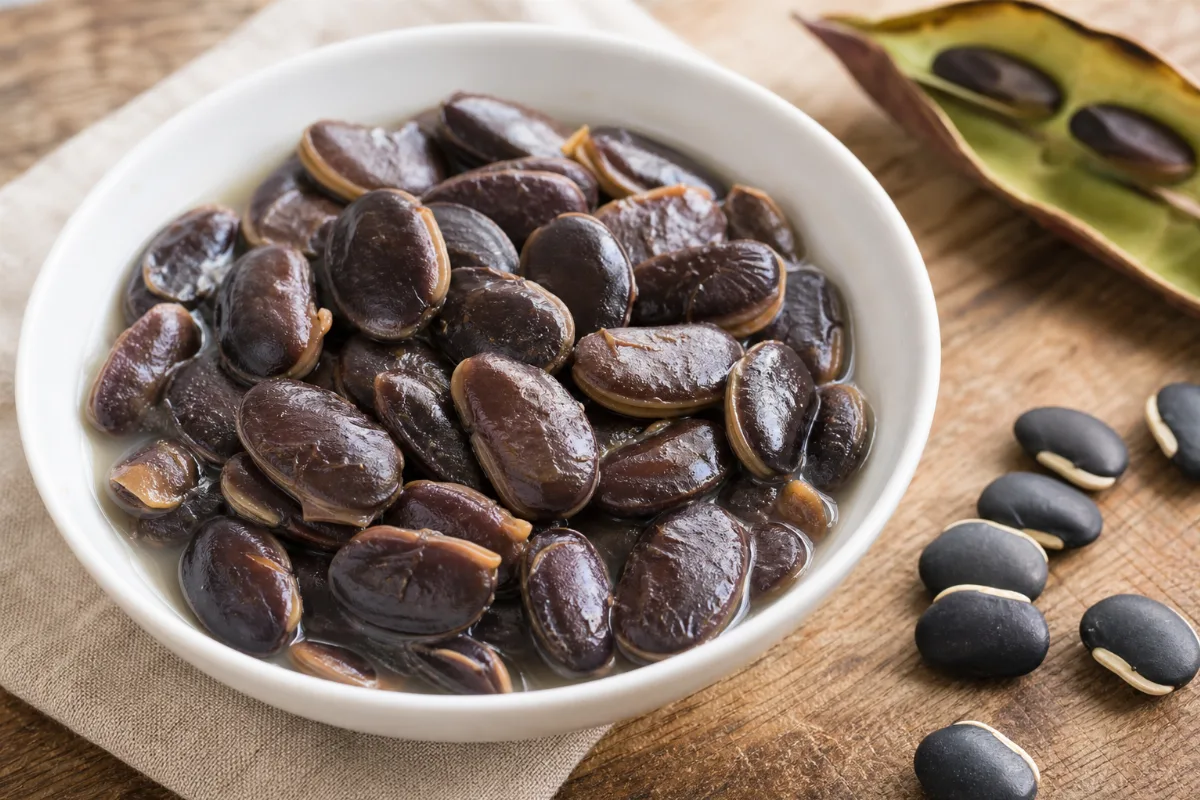
Hyacinth beans, also called lablab or dolichos bean, are the seeds and pods of Lablab purpureus (family Fabaceae, the legume family). People in parts of Africa, Asia and the Caribbean eat the young pods, the immature seeds and, after long cooking, the dry seeds. [3] [5] This page covers the bean as food. Safety comes first, because the mature seeds are one of the legumes that must be prepared with care. It also keeps hype and lab findings apart from what people have been tested on.
Read this first
- Do not eat the mature dry seeds raw or lightly cooked. NC State Extension lists the seeds as a low-severity poison for people because of a cyanogenic glycoside (a natural plant chemical that can release cyanide), and says it is a problem only if large amounts are eaten. For mature dried seeds it lists weakness, vomiting, labored breathing, twitching, stupor and convulsions. [3]
- How the sources say to prepare them: NC State says mature dried seeds are edible if thoroughly boiled, changing the water several times. [3] PROTA, a reference work on African plants, says dry seeds are eaten as a pulse in northern Nigeria and Kenya after prolonged cooking with several changes of water. [5] Neither gives a number of minutes, and we found no official food-safety body (such as the FDA or Health Canada) with a time for this bean.
- Do not copy the kidney-bean times. The FDA (soak at least 5 hours, boil at least 30 minutes) and Health Canada (at least 10 minutes of vigorous boiling) give those times for red kidney beans, a different bean and a different toxin. [6] [8] We found no source that says they are enough for hyacinth beans.
- Young pods and immature seeds are the usual vegetable. NC State says young immature pods can be cooked and eaten. [3] [5]
- Evidence in one line: we found no trial of hyacinth beans in people. Pooled trials of pulses as a group show a small fall in LDL cholesterol. [15]
- Allergy and kidney notes: bean allergy is possible (for trouble breathing or swelling of the face or throat call 911 or your local emergency number). [14] People with a history of calcium oxalate kidney stones are told to ask about the oxalates in beans. [12]
What is in it (USDA values)
The main columns are for hyacinth beans, mature seeds, boiled without salt (USDA FoodData Central item 175211, SR Legacy). [1] The serving is the USDA household portion of 1 cup, 194 g. [1] The last column is the same bean raw and dry (item 175210) per 100 g. [2] Do not compare the raw and cooked columns directly: cooked beans are about 69% water and the dry beans about 9%. [1] [2]
| Nutrient | Per 100 g (cooked) | Per 1 cup cooked (194 g) | % Daily Value per cup | Per 100 g (raw, dry) |
|---|---|---|---|---|
| Energy | 117 kcal | 227 kcal | not set | 344 kcal |
| Protein | 8.14 g | 15.8 g | 32% | 23.9 g |
| Total fat | 0.58 g | 1.13 g | 1% | 1.69 g |
| Saturated fat | 0.099 g | 0.19 g | 1% | 0.288 g |
| Fiber | no USDA value | no USDA value | not available | 25.6 g |
| Potassium | 337 mg | 654 mg | 14% | 1,235 mg |
| Iron | 4.58 mg | 8.9 mg | 49% | 5.1 mg |
| Magnesium | 82 mg | 159 mg | 38% | 283 mg |
| Zinc | 2.85 mg | 5.5 mg | 50% | 9.3 mg |
| Copper | 0.341 mg | 0.66 mg | 74% | 1.335 mg |
| Manganese | 0.482 mg | 0.94 mg | 41% | 1.573 mg |
| Thiamin (B1) | 0.27 mg | 0.52 mg | 44% | 1.13 mg |
| Phosphorus | 120 mg | 233 mg | 19% | 372 mg |
| Folate | 4 mcg DFE | 7.8 mcg DFE | 2% | 23 mcg DFE |
| Sodium | 7 mg | 13.6 mg | 1% | 21 mg |
% Daily Value uses the FDA 2016 Daily Values and is our calculation from the USDA per-100-g figure times the USDA gram weight; values vary with variety, growing place and cooking time. [1] USDA lists no fiber value for the cooked item (the raw item lists 25.6 g per 100 g, a dry-weight figure), and where a row is missing USDA has no value. [1] [2] We did not read USDA values for canned or frozen hyacinth beans or for fresh pods.
Plant compounds: the sources we read name these in the bean: cyanogenic glycosides, trypsin inhibitors, haemagglutinins (lectins), tannins and phytate (all in the dry seed, no amounts given) [5], and tannins and saponins detected, not measured, in green pods of six Bangladeshi cultivars. [9] Recent reviews call the bean rich in phenolics (plant chemicals with antioxidant effects in the lab); their abstracts report antioxidant, antidiabetic and other activities but no human trials, and we did not read the full reviews. [10] [11]
What research says
| Health goal | What the sources found | Strength of evidence | What was studied |
|---|---|---|---|
| Cyanide-releasing compounds in the seed | NC State, Cornell and PROTA all say the seeds contain cyanogenic glycosides that cooking breaks down. [3] [4] [5] None gave an amount of cyanide, a cooking time in minutes, or a poisoning case report. | Established as a food-safety point (not a health benefit) | Plant reference works; no human trial |
| LDL cholesterol ("bad" cholesterol) | A 2026 pooled analysis of 38 randomized trials of whole pulses (median about 130 g a day, median 6 weeks, 2,095 people) found LDL fell by about 0.14 mmol/L; results were similar across pulse types. [15] This is a pulse-group result, not a result for hyacinth beans. | Supported for a small LDL change from pulses as a group (a blood marker, not heart attacks) | Whole pulses of many kinds; adults in randomized trials |
| Blood sugar | A 2009 pooled analysis of 41 trials found pulse-containing diets lowered fasting glucose and long-term blood sugar markers, with high variation between studies. [16] No hyacinth-bean trial was found. | Promising but limited for pulses; insufficient for this bean | Pulses of many kinds |
| Antioxidant, anti-inflammatory and other health claims | Review abstracts describe such activities for lablab compounds. [10] [11] | Lab or animal only as far as we could read; no human trials found | Extracts and compounds, not the cooked bean |
| Gas and bloating | NIDDK lists legumes among foods whose carbohydrates can cause extra gas. [13] | Established as a common effect | Foods in general |
Eaten as food vs taken as extract or supplement. The pulse trials above fed ordinary cooked pulses. We read no trial of hyacinth bean extracts or supplements, and the lab findings in the reviews concern extracts, so do not assume they apply to a bowl of cooked beans. The reviews' abstracts do not state funders, so we cannot say who paid. [10] [11]
How much is a normal serving
The USDA household portion is 1 cup of cooked beans (194 g), about 227 kcal. [1] In the pooled LDL analysis, the trials used a median of about 130 g of pulses a day. [15] These are descriptions of what USDA and the trials used, not a prescription or a target for you. This is information, not advice.
Safety, allergy and medicines
- Natural cyanide compounds in mature seeds: see "Read this first". PROTA says the dry seeds have a high content of toxic cyanogenic glucosides, that heat breaks them down, and that dry seeds need prolonged cooking with several changes of water where they are eaten as a pulse. [5] Cornell says cooking breaks the compounds down. [4] Because the sources give no times, we do not give any.
- Lectins and other raw-bean compounds: PROTA lists haemagglutinins (lectins), trypsin inhibitors, tannins and phytate in the seed. [5] The FDA says the lectin PHA in raw or undercooked red kidney beans can cause nausea, severe vomiting and diarrhea. [6] Harvard says raw legumes in general contain some of the highest lectin levels, that wet high heat such as boiling inactivates most of them, and that simmering raw beans at low heat, as in a slow cooker, will not remove all lectins. [7] So do not cook dry hyacinth beans only in a slow cooker.
- Gas and digestion: beans can cause extra gas. [13]
- Kidney disease: the National Kidney Foundation says the potassium and phosphorus in beans are absorbed less well than from animal foods or additives, and that most people with chronic kidney disease not on dialysis do not need to limit beans for those minerals; people on dialysis should plan beans with a kidney dietitian. It also advises people with a history of calcium oxalate stones to ask about oxalates, since many beans are high in them. [12] We did not read an oxalate value for hyacinth beans.
- Allergy: MedlinePlus lists peanut and soy among the major food allergens and describes hives, swelling, vomiting, wheezing and anaphylaxis, a medical emergency (call 911). [14] We found no source on allergy to hyacinth beans specifically, so we cannot say how common it is or whether it cross-reacts with peanut or soy. Peanut is a legume (see peanuts).
- Pregnancy, breastfeeding and children: we did not find official guidance on hyacinth beans. See what official bodies advise in pregnancy.
- Medicines: we did not find a source we could read describing a direct interaction between cooked hyacinth beans and a medicine. See foods and medicine interactions.
Choosing, storing and food safety
- Treat dry hyacinth beans as a bean that needs long, thorough boiling in plenty of water with the water changed, as the extension and reference sources say. [3] [5]
- Young green pods and immature seeds are eaten cooked as a vegetable. [3] [5]
- We read no official source on storing dried hyacinth beans. For leftovers, see food storage, leftovers and food safety basics.
Related pages
Health connections for Hyacinth Beans (Lablab)
What research links to eating or drinking this food, and how strong the evidence is. Many studies are observational or use juice, powder, oil or extracts rather than the food as eaten; each card says which.
Protein, iron, zinc, copper and thiamin in cooked hyacinth beans
Established roleUSDA lists 8.14 g of protein per 100 g of boiled mature seeds and, per 194 g cup, about 49% of the Daily Value for iron, 50% for zinc, 74% for copper and 44% for thiamin.
Supplements: Applies to the whole cooked bean, not to supplements.
Pulses and LDL cholesterol (shown for pulses as a group)
Not enough evidencePooled trials of whole pulses found LDL fell by about 0.14 mmol/L; results were similar across pulse types. No trial of hyacinth beans was found.
Supplements: Applies to whole pulses as food. No trial of extracts of this bean in people.
Pulses and blood sugar (shown for pulses as a group)
Not enough evidencePulse-containing diets lowered fasting glucose and long-term markers in pooled trials, with high variation. No hyacinth-bean trial was found.
Supplements: Not applicable.
Phenolic compounds and lab findings
Lab or animal research onlyReview abstracts describe antioxidant, antimicrobial, anti-inflammatory and antidiabetic activities for lablab compounds; the abstracts report no human trials.
Supplements: We read no human trial of extracts or supplements.
Connected topics
Open a group to see how each topic connects and how strong the evidence is.
Body systems (3)
- Digestive SystemDocumented risk
Mature dry seeds contain cyanogenic glycosides, lectins and trypsin inhibitors that cooking reduces; beans can also cause extra gas.
- Gut HealthDocumented risk
Mature dry seeds contain cyanogenic glycosides, lectins and trypsin inhibitors that cooking reduces; beans can also cause extra gas.
- Kidney & UrinaryDocumented risk
Potassium and phosphorus in beans are absorbed less well than from animal foods; most people with chronic kidney disease not on dialysis do not need to limit beans, and dialysis patients should plan with a kidney dietitian. People with a history of calcium oxalate stones are told to ask about oxalates in beans.
Body parts (2)
- GutDocumented risk
Mature dry seeds contain cyanogenic glycosides, lectins and trypsin inhibitors that cooking reduces; beans can also cause extra gas.
- KidneysDocumented risk
Potassium and phosphorus in beans are absorbed less well than from animal foods; most people with chronic kidney disease not on dialysis do not need to limit beans, and dialysis patients should plan with a kidney dietitian.
Habits (1)
- Balanced NutritionEstablished role
Cooked beans provide protein, iron, zinc, copper and thiamin per USDA values.
Conditions & symptoms (3)
- Food PoisoningDocumented risk
Mature dried seeds are a low-severity poison if eaten in large amounts without thorough boiling (NC State). The sources give no case reports.
- Chronic Kidney InsufficiencyDocumented risk
Potassium and phosphorus in beans are absorbed less well than from animal foods; most people with chronic kidney disease not on dialysis do not need to limit beans, and dialysis patients should plan with a kidney dietitian.
- FlatulenceDocumented risk
Beans and other legumes can cause extra gas because bacteria in the large intestine break down their carbohydrates.
Documented risks and interactions (5)
- Cyanogenic glycosides in mature seeds: boil thoroughly. NC State Extension lists the seeds as a low-severity poison for people because of a cyanogenic glycoside (a natural chemical that can release cyanide), a problem when large amounts are eaten. Mature dried seeds are edible if thoroughly boiled, changing the water several times.
- Raw or undercooked beans: lectins and trypsin inhibitors. PROTA lists haemagglutinins (lectins), trypsin inhibitors, tannins and phytate in the dry seed. The FDA describes nausea, severe vomiting and diarrhea from the lectin in raw or undercooked red kidney beans, and Harvard says low-heat slow cooking does not remove all lectins.
- Gas and bloating from beans. Beans and other legumes can cause extra gas because bacteria in the large intestine break down their carbohydrates.
- Beans in kidney disease and kidney stones. Potassium and phosphorus in beans are absorbed less well than from animal foods; most people with chronic kidney disease not on dialysis do not need to limit beans, and dialysis patients should plan with a kidney dietitian. The NKF also advises people with a history of calcium oxalate stones to ask about oxalates because many beans are high in them; we read no oxalate value for this bean.
- Legume allergy (no data specific to this bean). MedlinePlus lists peanut and soy among the major food allergens and gives the emergency steps. We found no source on allergy to hyacinth beans.
Frequently asked questions
Are hyacinth beans poisonous?
Mature dry seeds contain cyanogenic glycosides, and NC State Extension lists them as a low-severity poison that is a problem when large amounts are eaten. [3] They are edible if thoroughly boiled with several changes of water. [3]
How long should I boil dried hyacinth beans?
The sources we read give no number of minutes, only "thoroughly" and "prolonged cooking with several changes of water". [3] [5] The kidney-bean times from the FDA and Health Canada were written for kidney beans, so we do not apply them here. [6] [8]
Can I eat the pods and flowers from my garden?
NC State says young immature pods can be cooked and eaten, and PROTA says young pods, immature seeds and young leaves are eaten cooked in tropical Africa. [3] [5] We did not read guidance on the flowers, so we do not advise on them.
Do hyacinth beans lower cholesterol?
Pooled trials of whole pulses, many kinds together, found LDL cholesterol fell by about 0.14 mmol/L. [15] We found no trial of hyacinth beans alone.
Is it safe to cook them in a slow cooker?
Harvard says simmering raw beans at low heat, as in a slow cooker, does not remove all lectins. [7] Boil them first and cook them thoroughly.
References
- USDA. FoodData Central: Hyacinth beans, mature seeds, cooked, boiled, without salt (SR Legacy, FDC 175211). April 2018 release. Read 2026-10-24.
- USDA. FoodData Central: Hyacinth beans, mature seeds, raw (SR Legacy, FDC 175210). April 2018 release. Read 2026-10-24.
- NC State Extension. Lablab purpureus (Plant Toolbox). Poisonous-to-humans and edibility fields. Read 2026-10-24.
- Cornell University, World Crops. Lablab (hyacinth bean). No date shown. Read 2026-10-24.
- PROTA (Plant Resources of Tropical Africa). Lablab purpureus). Web record; its dry-seed values are USDA 2002 figures. Read 2026-10-24.
- FDA. Natural Toxins in Food. Content current as of 26 Sept 2024. Read 2026-10-24.
- Harvard T.H. Chan School of Public Health, The Nutrition Source. Lectins. Last reviewed January 2022. Read 2026-10-24.
- Health Canada. Lectins in Dry Legumes. Page details dated 2017-05-04. Read 2026-10-24.
- Akbar GW et al., Food Sci Nutr. Nutritional, phytochemical, mineral, and morphological variations in hyacinth bean (Lablab purpureus L.) cultivars at different developmental stages. 2026. Green pods of six Bangladeshi cultivars; funded by a university research grant. Read 2026-10-24.
- Morshed MM et al., J Nutr. Beyond the bean: current insights into the nutritional values, bioactive compounds, and health promise of Lablab purpureus. 2026 (abstract read via Europe PMC). Read 2026-10-24.
- Zhou J et al., J Sci Food Agric. An underutilized bean: hyacinth bean (Lablab purpureus (L.) sweet): bioactive compounds, functional activity, and future food prospect and applications. 2025 (abstract read via Europe PMC). Read 2026-10-24.
- National Kidney Foundation. Beans. Last updated 2 Jan 2023. Read 2026-10-24.
- NIDDK. Gas in the digestive tract: eating, diet and nutrition. Read 2026-10-24.
- MedlinePlus. Food allergy. Updated 19 Nov 2025. Read 2026-10-24.
- Back S et al., J Am Heart Assoc. Effect of different types of whole dietary pulses on established therapeutic lipid targets: updated systematic review and dose-response meta-analysis of randomized controlled trials. 2026 (abstract read via Europe PMC). Read 2026-10-24.
- Sievenpiper JL et al., Diabetologia. Effect of non-oil-seed pulses on glycaemic control: systematic review and meta-analysis of randomised controlled experimental trials. 2009 (abstract read via Europe PMC). Read 2026-10-24.