Bean Sprouts (Mung & Lentil Sprouts): Nutrients, What Research Shows and Safety
Mung and lentil sprouts as food: USDA nutrient values, what sprouting changes in the lab, the raw-sprout food poisoning warning, pregnancy, vitamin K and warfarin.
Content last updated . This page has not been medically reviewed.
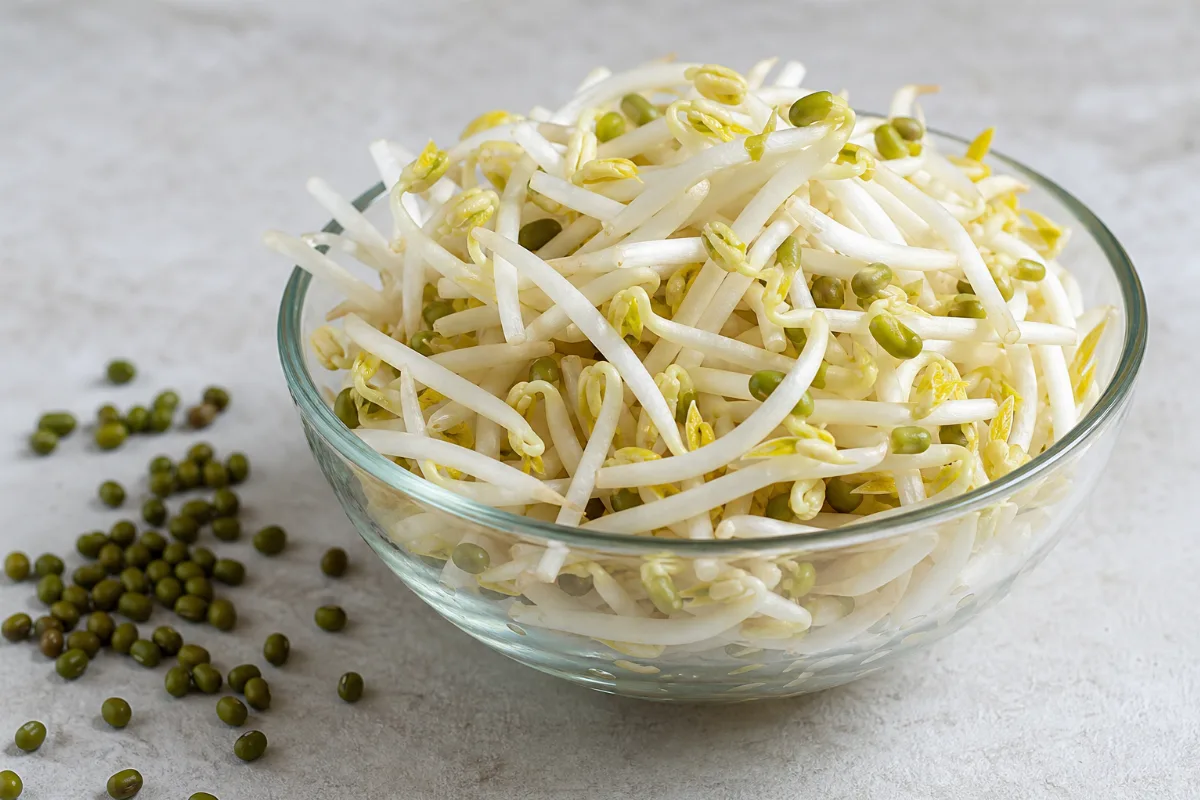
Bean sprouts are young seedlings grown from dried legume seeds. The common ones are mung bean sprouts (Vigna radiata) and lentil sprouts (Lens culinaris), both in the pea family (Fabaceae). The part eaten is the whole seedling: the seed, its first root and a short shoot. People eat them for crunch and for vitamins such as vitamin C and folate. This page keeps the sprout apart from the dried bean it grew from, and apart from hype. Sprouts also carry a food-safety warning that dried beans do not.
Read this first
- Food poisoning is the main safety point. The FDA says sprouts are grown in warm, humid conditions that also suit Salmonella, Listeria and E. coli, and that a few germs on a seed can multiply to high levels while it sprouts, even when sprouts are grown at home under clean conditions. [3]
- Who should avoid raw or lightly cooked sprouts: the FDA names children, older adults, pregnant women and people with weakened immune systems. Its list of foods for higher-risk people includes raw sprouts of any kind, with bean sprouts named. [3] [4]
- Cooking: the FDA says cooking produce thoroughly kills harmful bacteria. [3] We did not read a sprout-specific cooking time, so this page gives none.
- Warfarin: a cup of mung bean sprouts has about 29% of the Daily Value for vitamin K (USDA). [1] MedlinePlus advises people on warfarin to keep vitamin K intake steady week to week. [10]
- Allergy: for trouble breathing or swelling of the face, lips or throat, call 911 (or your local emergency number). [11]
- Evidence in one line: we found no human trial of eating bean sprouts for a health outcome. The heart and blood sugar research is on cooked, mature beans and lentils, not sprouts. [13] [14]
What is in it (USDA values)
The values are for raw sprouts. Mung bean sprouts are USDA FoodData Central item 169957 (SR Legacy); the serving is the USDA portion of 1 cup, 104 g. [1] Per-cup figures are the per-100-g values multiplied by 1.04. Lentil sprouts are a different food with a very different make-up; see the second table. [2]
| Nutrient (raw mung bean sprouts) | Per 100 g | Per 1 cup (104 g) | % Daily Value per cup |
|---|---|---|---|
| Energy | 30 kcal | 31 kcal | not set |
| Protein | 3.04 g | 3.2 g | 6% |
| Carbohydrate | 5.94 g | 6.2 g | 2% |
| Fiber | 1.8 g | 1.9 g | 7% |
| Vitamin K | 33 mcg | 34 mcg | 29% |
| Copper | 0.164 mg | 0.17 mg | 19% |
| Folate (DFE) | 61 mcg | 63 mcg | 16% |
| Vitamin C | 13.2 mg | 13.7 mg | 15% |
| Manganese | 0.188 mg | 0.20 mg | 9% |
| Riboflavin (B2) | 0.124 mg | 0.13 mg | about 10% |
| Potassium | 149 mg | 155 mg | 3% |
| Sodium | 6 mg | 6 mg | 0% |
| Nutrient (raw lentil sprouts) | Per 100 g | Per 1 cup (77 g) | % Daily Value per cup |
|---|---|---|---|
| Energy | 106 kcal | 82 kcal | not set |
| Protein | 8.96 g | 6.9 g | 14% |
| Carbohydrate | 22.14 g | 17.0 g | 6% |
| Iron | 3.21 mg | 2.5 mg | 14% |
| Folate (DFE) | 100 mcg | 77 mcg | 19% |
| Copper | 0.352 mg | 0.27 mg | 30% |
| Manganese | 0.506 mg | 0.39 mg | 17% |
| Thiamin (B1) | 0.228 mg | 0.18 mg | 15% |
| Vitamin C | 16.5 mg | 12.7 mg | 14% |
| Zinc | 1.51 mg | 1.2 mg | 11% |
| Phosphorus | 173 mg | 133 mg | 11% |
| Potassium | 322 mg | 248 mg | 5% |
% Daily Value uses the FDA 2016 Daily Values; values vary with variety, how long the seeds sprouted, and storage. USDA lists no fiber value for lentil sprouts, so none is shown. [2] Mung bean sprouts are mostly water (USDA lists 90.4 g per 100 g), which is why they are low in calories. [1]
Plant compounds: USDA lists 15 mg of phytosterols per 100 g of mung bean sprouts. [1] A 2026 laboratory study of green gram (the same species as mung bean, Vigna radiata) found that short germination raised total phenolic and flavonoid content and antioxidant activity measured in test tubes. [7] That is lab chemistry. We did not find a human trial showing these compounds act in people who eat sprouts.
What research says
| Health goal | What the sources found | Strength of evidence | What was studied |
|---|---|---|---|
| Nutrient content | USDA lists vitamin K, copper, folate and vitamin C at 15% or more of the Daily Value in a cup of mung bean sprouts. [1] | Established (measured food composition, not a health outcome) | Raw sprouts, USDA analysis |
| What sprouting changes | In a 2026 lab study of ten green gram lines, germination for 8 to 12 hours raised protein and fiber, produced vitamin C that was absent in the dry grain, and cut phytic acid and tannins. [7] Longer germination made the sprouts bitter. [7] In five pea varieties, sprouting raised protein digestibility, and thiamine and niacin tended to rise while folate and vitamin B6 fell. [8] | Lab or animal only for any health claim (food-chemistry results) | Short-germinated green gram; germinated peas |
| Phytic acid and minerals | A 2026 review says germination improves protein digestibility and the availability of micronutrients, and that processing choices trade off nutrient loss against antinutrient reduction. [9] | Lab or animal only | Review of legume processing |
| Heart health, cholesterol, blood sugar | Pooled trials show diets built around cooked pulses (beans, chickpeas, lentils, peas) lowered LDL cholesterol a little. [14] These were mature pulses, not sprouts. A scoping review of 30 human studies of pulses named lentils, chickpeas and common beans, not sprouts. [13] | No good evidence of benefit found for sprouts (evidence is for cooked mature pulses) | Mature, cooked pulses |
| Weight, cancer, immunity, "detox" | We did not read any human trial of bean sprouts for these. | Insufficient evidence | Not applicable |
Dried or cooked beans versus sprouts. Benefits seen in trials of cooked beans and lentils should not be assumed for sprouts: a sprout is a different food, usually eaten raw or lightly cooked, with different nutrients and a different safety profile. The lab results above come from controlled sprouting of seeds for a set number of hours. They do not tell you how much vitamin C is in sprouts on a shelf: USDA lists 13.2 mg per 100 g for mung bean sprouts, [1] while the lab study measured 55 to 85 mg per 100 g in its germinated grain, a different product. [7]
How much is a normal serving
The USDA household portions are 1 cup (104 g) of mung bean sprouts, which has about 31 kcal, and 1 cup (77 g) of lentil sprouts, which has about 82 kcal. [1] [2] USDA also lists a 12 ounce package of mung bean sprouts (340 g). [1] This is information from the USDA data, not a prescription. We did not find an official daily amount for sprouts in the sources we read. Lentil sprouts hold much more energy and protein per 100 g than mung bean sprouts, so do not swap one for the other in a nutrient count. [1] [2]
Safety, allergy and medicines
- Food poisoning from raw sprouts. The FDA advises people who are more vulnerable to foodborne illness to avoid raw or lightly cooked sprouts of any kind, naming onion, alfalfa, clover, radish and mung bean sprouts. [3] The FDA's list of higher-risk groups includes pregnant people and their unborn babies, children under 5, older adults, and people with cancer, diabetes, HIV/AIDS, organ transplants or autoimmune diseases. [4]
- Why home sprouting is not a fix. A CDC journal review explains that contamination often starts with the seed, and that bacteria can reach more than 10 million per gram while the sprouts look normal. [5] The same review found chemical seed washes did not reliably cut germs by more than about a thousand-fold, and it advised high-risk groups not to eat raw sprouts. [5] The review is from 1999; we did not read a newer one.
- Mung bean sprouts specifically. The 1999 review records a 1988 Salmonella outbreak in the United Kingdom linked to raw mung bean sprouts and a Thai market survey that found Salmonella in 8.7% of mung bean sprout samples. [5] A 2026 CDC page describes a current multistate E. coli and Salmonella outbreak (76 illnesses, 6 hospitalizations) linked to alfalfa sprouts; that is a different sprout but shows the same pattern. [6]
- Pregnancy and breastfeeding. The FDA lists pregnant women among those who should avoid raw or lightly cooked sprouts. [3] The NHS "foods to avoid in pregnancy" page we read does not mention bean sprouts, so ask your midwife or doctor. [15] We did not read a source on sprouts and breastfeeding.
- Children and older adults. Both are named by the FDA as higher risk. [3] [4] The FDA's general statement is that cooking produce thoroughly kills harmful bacteria. [3]
- Medicines: warfarin. USDA lists 33 mcg of vitamin K per 100 g of mung bean sprouts. [1] MedlinePlus says foods with vitamin K can affect how warfarin works and advises steady week-to-week intake and checking diet changes with a doctor. [10] We did not read a trial of bean sprouts with warfarin.
- Allergy. Legumes can cause allergy. A review ranks the most allergenic legumes as peanut, soybean, lentil, chickpea, pea, mung bean and red gram, in decreasing order. [12] MedlinePlus lists soy and peanuts among the common food allergens. [11] For anaphylaxis (trouble breathing, throat swelling, faintness) MedlinePlus says call 911. [11]
- Kidney disease and diabetes. USDA lists 149 mg of potassium per 100 g of mung bean sprouts and 322 mg per 100 g of lentil sprouts. [1] [2] If you follow a potassium limit, ask your care team. See foods, kidney disease, potassium and oxalates. A cup of mung bean sprouts has about 6 g of carbohydrate (USDA). [1] We did not read blood sugar research on sprouts.
Choosing, storing and food safety
- The FDA's general produce advice is to refrigerate perishable produce at 40 degrees Fahrenheit (4 degrees Celsius) or below. [3] The page does not give sprout-specific storage advice.
- You cannot tell contaminated sprouts by looks. The CDC review says germs can grow to high numbers without visibly changing the sprouts. [5]
- If a sprout product is recalled, CDC advice is not to eat it, to throw it away or return it, and to wash items that touched it with hot soapy water. [6]
- See the sibling food-safety pages below for raw sprouts and for pasteurized foods.
Related pages
Health connections for Bean Sprouts (Mung & Lentil Sprouts)
What research links to eating or drinking this food, and how strong the evidence is. Many studies are observational or use juice, powder, oil or extracts rather than the food as eaten; each card says which.
Folate, vitamin K, vitamin C and copper in sprouts
Established roleUSDA lists a cup (104 g) of raw mung bean sprouts at about 29% of the vitamin K, 19% of the copper, 16% of the folate and 15% of the vitamin C Daily Values, with only about 31 kcal.
Supplements: This describes food content. It does not show that eating sprouts treats any condition.
What sprouting changes in the seed (laboratory findings)
Lab or animal research onlyIn a 2026 lab study of green gram, 8 to 12 hours of germination raised protein and fiber, produced vitamin C and cut phytic acid and tannins. In peas, germination raised protein digestibility while folate and B6 tended to fall.
Supplements: Food-chemistry results; no human health outcome was measured. Short lab germination differs from sprouts on a shelf.
Bean sprouts and heart or blood sugar outcomes
Not enough evidenceTrials showing lower LDL cholesterol are on cooked mature pulses (beans, chickpeas, lentils, peas), not sprouts. A scoping review of 30 human studies of pulses named lentils, chickpeas and common beans, not sprouts.
Supplements: Proper evidence not found in the sources we read for eating bean sprouts for any health outcome.
Connected topics
Open a group to see how each topic connects and how strong the evidence is.
Body systems (2)
- Digestive SystemDocumented risk
Raw or lightly cooked sprouts can carry germs that cause food poisoning (vomiting, diarrhea). The FDA advises vulnerable people to avoid them and says thorough cooking kills the germs.
- Gut HealthDocumented risk
Sprouts are a documented source of foodborne illness outbreaks, including mung bean sprouts in a 1988 UK Salmonella outbreak.
Body parts (1)
- GutDocumented risk
Food poisoning from raw sprouts mainly affects the gut.
Root causes (1)
- Medication Side EffectsDocumented risk
Vitamin K in sprouts can matter for people taking warfarin. Keep intake steady and ask a doctor.
Conditions & symptoms (5)
- Food PoisoningDocumented risk
The FDA names raw sprouts as a food that can carry Salmonella, Listeria and E. coli.
- Salmonella InfectionsDocumented risk
Mung bean sprouts were linked to a 1988 UK Salmonella outbreak, and a Thai survey found Salmonella in 8.7% of mung bean sprout samples.
- Escherichia Coli InfectionsDocumented risk
Sprout outbreaks include E. coli; a 2026 CDC outbreak page describes alfalfa sprouts (a different sprout).
- ListeriosisDocumented risk
The FDA lists Listeria among the germs that suit sprout growing conditions; pregnant people are named as higher risk.
- Food AllergyDocumented risk
Mung bean and lentil are among allergenic legumes in a review; this is a case-based literature.
Documented risks and interactions (4)
- Food poisoning from raw and lightly cooked sprouts. The FDA says sprouts are grown in warm, humid conditions that also favor Salmonella, Listeria and E. coli, and a few germs on a seed can multiply to high levels while it sprouts. Cooking produce thoroughly kills the germs.
- Pregnancy, young children, older adults and weakened immunity. The FDA names children, older adults, pregnant women and people with weakened immune systems as higher risk, and says they should avoid raw or lightly cooked sprouts of any kind. The NHS pregnancy page we read does not mention bean sprouts.
- Vitamin K and warfarin. A cup of mung bean sprouts has about 34 mcg of vitamin K (USDA). MedlinePlus advises people on warfarin to keep vitamin K intake steady week to week and to check diet changes with a doctor.
- Legume allergy. A review ranks legumes by allergenicity as peanut, soybean, lentil, chickpea, pea, mung bean and red gram, in decreasing order. For anaphylaxis (trouble breathing, throat swelling) call 911.
Frequently asked questions
Are bean sprouts safe to eat raw?
The FDA says people who are more vulnerable to foodborne illness should avoid raw or lightly cooked sprouts of any kind. [3] Those groups include children, older adults, pregnant women and people with weakened immune systems. [3] [4]
Can I eat bean sprouts when pregnant?
The FDA lists pregnant women among those who should avoid raw or lightly cooked sprouts, and says cooking produce thoroughly kills harmful bacteria. [3] The NHS page we read does not mention sprouts. [15] Ask your midwife or doctor about cooked sprouts.
Does washing or growing sprouts at home make them safe?
The FDA says germs on a seed can reach high levels during sprouting even when sprouts are grown at home under clean conditions. [3] A CDC journal review found common seed washes did not reliably remove the germs. [5]
Are bean sprouts healthier than cooked beans?
The sources we read do not say so. Sprouts have different nutrients: USDA lists 31 kcal and 3.2 g protein in a cup of mung bean sprouts. [1] Trial benefits on LDL cholesterol are for cooked mature pulses, not sprouts. [14]
I take warfarin. Can I eat bean sprouts?
USDA lists 29% of the vitamin K Daily Value in a cup of mung bean sprouts. [1] MedlinePlus says to keep vitamin K intake consistent and to ask your doctor before diet changes. [10]
References
- U.S. Department of Agriculture. FoodData Central: Mung beans, mature seeds, sprouted, raw (SR Legacy, FDC 169957). April 2018 release. Read 2026-10-24.
- U.S. Department of Agriculture. FoodData Central: Lentils, sprouted, raw (SR Legacy, FDC 168427). April 2018 release. Read 2026-10-24.
- U.S. Food and Drug Administration. Selecting and Serving Produce Safely. Content current as of 5 March 2024. Read 2026-10-24.
- U.S. Food and Drug Administration. People at Risk of Foodborne Illness. Content current as of 16 January 2025. Read 2026-10-24.
- Taormina PJ, Beuchat LR, Slutsker L. Infections associated with eating seed sprouts: an international concern. Emerging Infectious Diseases (CDC) 1999;5(5). Read 2026-10-24.
- CDC. E. coli and Salmonella outbreak linked to alfalfa sprouts. First published 21 August 2026; updated 1 October 2026. Read 2026-10-24.
- Subramani T et al. Effect of optimized germination on nutritional, functional and phytochemical characteristics of green gram. 2026 (abstract read via Europe PMC). Read 2026-10-24.
- Abdollahikhamene H, Pournaki SK, Hall C. Effects of germination on the nutritional profile of five distinct pea varieties. 2025 (abstract read via Europe PMC). Read 2026-10-24.
- Janahar JJ, Balasubramaniam H, Zhang Y. Nutritional and functional attributes of legumes: a review of processing methods and their impacts. J Food Sci 2026 (abstract read via Europe PMC). Read 2026-10-24.
- MedlinePlus. Warfarin: drug information. Last revised 15 March 2026. Read 2026-10-24.
- MedlinePlus. Food allergy. Updated 19 November 2025. Read 2026-10-24.
- Verma AK, Kumar S, Das M, Dwivedi PD. A comprehensive review of legume allergy. Clin Rev Allergy Immunol 2013 (abstract read via Europe PMC). Read 2026-10-24.
- Zhao N, Jiao K, Chiu YH, Wallace TC. Pulse consumption and health outcomes: a scoping review. 2024 (abstract read via Europe PMC). Read 2026-10-24.
- Ha V, Sievenpiper JL et al. Effect of dietary pulse intake on established therapeutic lipid targets for cardiovascular risk reduction: a systematic review and meta-analysis of randomized controlled trials. CMAJ 2014 (abstract read via Europe PMC). Read 2026-10-24.
- NHS. Foods to avoid in pregnancy. Last reviewed 15 June 2026. Read 2026-10-24.