Herbs & Botanicals · Poisonous Chinese nasal herb
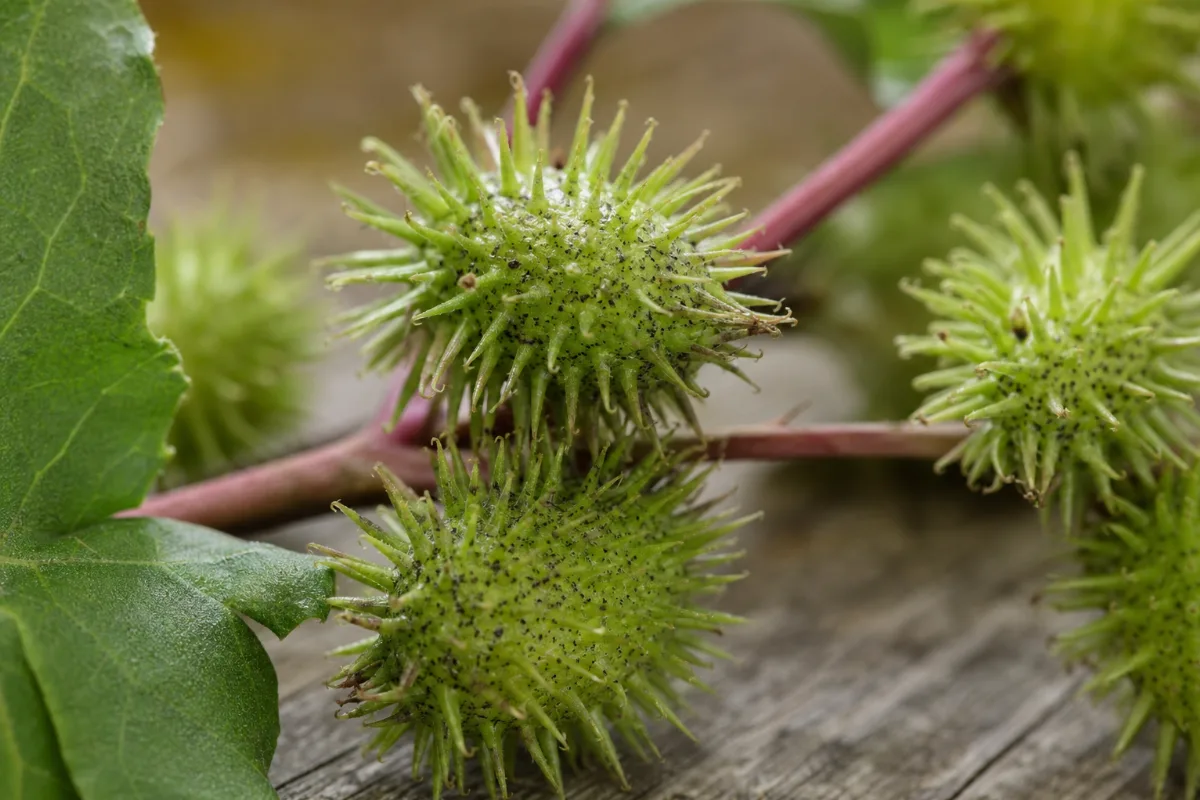
Xanthium
Xanthium strumarium · also called Cocklebur, cang er zi, Siberian cocklebur, Xanthii Fructus
Xanthium is the spiny fruit of the cocklebur plant, used in Chinese medicine for sinus problems, allergic runny nose and headache. Its seeds and unprocessed fruit are poisonous: they have injured the liver and kidneys and caused deaths in people and animals, and processing lowers but does not remove the risk. The only human research is on a multi-herb formula in children, with weak, biased results. Do not use it yourself, and avoid it in pregnancy.
General information, not medical advice. Last substantive update · Not medically reviewed. A named clinician has not signed off on this page. How this page is made
About Xanthium
Xanthium (Xanthium strumarium, also called cocklebur or cang er zi) is a weedy plant whose spiny fruit is used in Chinese medicine for nasal allergy, sinus trouble and headache. The seeds and unprocessed fruit are poisonous. Nine people who ate seeds in Turkey developed liver and kidney damage and three died within 48 hours, and a man who took unprocessed fruit for 2 months for allergic rhinitis died of organ failure. Traditional stir-frying lowers the toxins and mouse liver damage, but a high risk remains with improper use. The only human research on benefit is a 2024 pooled analysis of a multi-herb formula in children, with admitted bias. Avoid it in pregnancy and breastfeeding, and ask a doctor or pharmacist about any Chinese herbal formula that lists it.
What it is
Xanthium strumarium is a spiny-burred weed in the daisy family (Asteraceae). The fruit is sold as Xanthii Fructus or cang er zi. Chinese sources often write Xanthium sibiricum, which GBIF lists as a synonym of the same species.
Do not forage it. The seeds and seedlings are toxic and can contaminate animal feed.
What makes it distinctive
The fruit holds two toxins, carboxyatractyloside and atractyloside. They block how cells make energy and injure the liver and kidneys. Raw fruit has more of them.
Historical and current uses
In Chinese medicine the fruit is used for rhinitis, sinusitis and headache, and it is in the Chinese Pharmacopoeia for nasal disease and headache. A 2019 review also lists rheumatism, urticaria and gastric ulcer.
What the research shows
A 2024 pooled analysis of 15 randomised trials (1,361 children) found the formula Cang-Er-Zi-San had a higher effective rate than other therapies (RR 1.21, 95% CI 1.15 to 1.26). The authors say results were biased and research is limited, and the formula has several herbs.
Everything else is lab or animal work (arthritis in rats, platelets in the lab). We read abstracts only.
At a glance
Traditional uses history, not proof
- Traditional Chinese medicine: fruit (cang er zi) for allergic rhinitis, sinusitis and headache
- Also used traditionally for rheumatism, arthritis, urticaria and gastric ulcer
Studied for research
- Allergic rhinitis in children (multi-herb formula): low certainty
- Sinus problems and headache: insufficient evidence (tradition only)
- Arthritis, platelet clumping and others: lab and animal studies only
Main compounds
- Carboxyatractyloside and atractyloside (toxic kaurene glycosides)
- Caffeoylquinic acids and other phenolics
- More than 170 compounds identified (2019 review)
Common forms
- Raw fruit (linked to a fatal case)
- Stir-fried or sand-fried fruit (traditional processing; lowers toxins in mice)
- Multi-herb formula Cang-Er-Zi-San (studied in children)
- Decoction or tea (toxin content not standardised)
Research links: Fatal poisoning case report (BMC 2023) · Carboxyatractyloside poisoning in humans (2005) · Formula meta-analysis in children (Medicine 2024) · Review (Molecules 2019) · Research Library · Genes & Biomarkers Library
The plant and its history
- Accepted scientific name
- Xanthium strumarium L.
- Naming authority
- L.
- Synonyms
- Xanthium sibiricum Patrin ex Widder
- Common names
- Cocklebur (English); Cang er zi (Chinese (pinyin)); Siberian cocklebur (English); Xanthii Fructus (Latin pharmacopoeial name)
- Botanical family
- Asteraceae (daisy family).
- Classification
- Plantae > not checked > not checked > not checked > Asteraceae > Xanthium > Xanthium strumarium
- Native range
- Not verified from a primary source we read (our earlier summary says China for the medicinal use).
- Habitat
- Not verified; a weedy annual with worldwide distribution (stated in the 2005 abstract).
- What the plant looks like
- Roots: Not verified.; Stems: Not verified.; Leaves: Not verified.; Flowers: Not verified.; Fruit: A spiny burr; this fruit (Xanthii Fructus) is the medicinal part, and the seeds inside are the main toxic part.
- Cultivation
- Not verified.
- Harvest and processing
- Stir-frying (sand-frying) is the traditional way to lower toxicity (p35520491).
- Look-alikes and adulterants
- Name: Other Xanthium species; Note: Not verified in the sources read.
- Sustainability and conservation
- Not assessed.
Traditional use and history history, not clinical proof
| Tradition or era | Documented use | Source |
|---|---|---|
| Traditional Chinese medicine | Fruit used for rhinitis, sinusitis and headache; in the Chinese Pharmacopoeia for nasal disease and headache. | p21699085 |
| Traditional Chinese medicine (review) | Also used for gastric ulcer, urticaria, rheumatism, infections and arthritis. | p30669496 |
Traditional use shows how a plant was used. It does not show that a supplement works or is safe today.
What is inside, and how it may work
What the plant contains and how those compounds act in cells and animals. Laboratory and animal mechanisms are not proven effects in people.
Main compounds
| Compound | Family | Where it is concentrated | Activity studied | Level of evidence |
|---|---|---|---|---|
| Carboxyatractyloside PubChem 20055804 | kaurene (diterpenoid) glycoside | seeds; higher in raw fruit not reported | Toxic to the liver in mice; lowered by stir-frying. Blocks the mitochondrial ADP/ATP carrier (general toxicology; not read here). 9 4 16 | Animal research |
| Atractyloside PubChem 442004 | kaurene (diterpenoid) glycoside | fruit not reported | Liver injury in mice; the processing study reports atractyloside and carboxyatractyloside both fall after processing. 9 4 15 | Animal research |
| Caffeoylquinic acids and other constituents | phenolic acids, sesquiterpenoids and more | not stated not reported | The review counts more than 170 compounds; individual activities are lab-level and not verified here. 3 | In vitro |
Mechanisms, receptors and pathways
| Target or pathway | Gene or receptor | What was found | Level |
|---|---|---|---|
| Cell energy production (ATP) in liver cells | not established in our sources | In mice, raw fruit lowered liver ATP; the isolated toxins caused oxidative stress (higher MDA, lower SOD, catalase, glutathione). 4 9 | Animal research |
| Platelet signalling (MAPK, PI3K/Akt) | MAPK / PI3K-Akt pathways | An extract inhibited platelet activation in the lab and in a mouse clot model. 1 | In vitro and animal |
| Gut bacteria and short-chain fatty acids in arthritis | not established | Stir-baked fruit shifted gut bacteria and fatty acids in arthritic rats. 2 | Animal research |
Absorption, metabolism and elimination
- Absorption
- No human data found in the abstracts read.
- Distribution
- No human data found.
- Metabolism
- No human data found.
- Elimination
- No human data found.
- Bioavailability
- Not established in people.
Isolated compounds versus whole extracts
The two isolated toxins reproduce the liver injury seen with the whole raw fruit in mice, so the toxicity is not only a whole-plant effect. Whether processed whole fruit is safe in people has not been shown.
Nutritional composition
A nutrient table is not meaningful for this medicinal plant.
1 low certainty4 not enough evidence
What is Xanthium good for?
The traditional uses and how strong the human evidence is for each. For Xanthium, "insufficient" means no human trial of the fruit was found, and "low" means pooled trials of a multi-herb formula with admitted bias. Benefit is always weighed against the poisoning risk.
Benefits, one by one
Each card is a research question, not a promise. Tap a goal to filter. Open a card to see the studies, doses and limits.
Allergic rhinitis (blocked, runny, itchy nose) - multi-herb formula
Low certaintyThe main modern research is on a Chinese formula called Cang-Er-Zi-San, which contains the fruit plus other herbs. A 2024 pooled analysis of 15 trials in 1,361 children reported more children improved with the formula than with other treatments. The authors say the results were biased and research is limited. It does not show that the fruit alone helps, and the fruit carries serious poisoning risks.
3 studiesMulti-herb formula (Cang-Er-Zi-San) in children. Amounts are not give…
Studies, doses and limits
What the trials found
Zeng 2024 (p39705439) searched 7 databases and pooled 15 randomised trials (1,361 children) of Cang-Er-Zi-San against other therapies. Effective rate RR 1.21 (95% CI 1.15 to 1.26). The abstract says symptom relief time, recurrence and adverse events were also better in the formula group. The authors state that results were biased and research is limited. The Fan 2019 review (p30669496) lists anti-allergic-rhinitis effects of the plant in lab and animal work.
Results
Higher "effective rate" with the formula in children in China. The abstract does not name the comparison treatments or list the trial sizes.
Effect sizes as reported
Effective rate RR 1.21 (95% CI 1.15 to 1.26). No effect sizes for symptom scores are in the abstract.
Why this rating
Pooled randomised trials, but the authors themselves report biased results and limited research; the formula has several herbs; the comparison treatments vary; no GRADE rating is in the abstract. For the fruit alone there is no trial, so that part is insufficient.
Form and dose studied
Multi-herb formula (Cang-Er-Zi-San) in children. Amounts are not given here; ask a doctor or pharmacist.
Who was studied
Children with allergic rhinitis, in trials from China.
Limits
Abstract only. Formula not single herb. Authors state bias. No long-term safety data. Other trial details not read.
Why researchers looked
Cocklebur fruit (cang er zi) is one of the best-known Chinese herbs for nasal allergy and runny nose.
Traditional use
Listed in the Chinese Pharmacopoeia for nasal disease and headache. The 2023 poisoning case report describes it as the most commonly used active ingredient in formulas for rhinitis.
Proposed mechanism Preliminary mechanism
Lab and animal work reports anti-allergic-rhinitis effects of extracts; not shown in people and not a tested explanation for the trial results.
A proposed mechanism does not show that the effect happens in people.
Do not give children or anyone raw or home-prepared cocklebur fruit. See the Safety tab: a person with allergic rhinitis who took unprocessed fruit for 2 months died of organ failure.
Sinus problems and headache (traditional use)
Not enough evidenceChinese medicine uses the fruit for chronic sinus trouble and headache. We found no trial of the fruit alone for either. The 2019 review lists these uses as traditional, with lab findings, and no human proof.
2 studiesNot applicable. Amounts are not given; ask a doctor or pharmacist.
Studies, doses and limits
What the trials found
No clinical trial of the fruit for sinusitis or headache was found. Fan 2019 (p30669496) lists rhinitis, sinusitis and headache among traditional uses. Wang 2011 (p21699085) states the Pharmacopoeia use, and that clinical use is limited by toxicity.
Results
No human results.
Effect sizes as reported
None.
Why this rating
Tradition and lab work only; no human trial found.
Form and dose studied
Not applicable. Amounts are not given; ask a doctor or pharmacist.
Who was studied
None studied in trials.
Limits
Abstracts only. We did not search for non-English trial reports.
Why researchers looked
These are the classic uses that gave the fruit its place in Chinese medicine.
Traditional use
The Pharmazie 2011 abstract says the fruit is used for nasal diseases and headache according to the Chinese Pharmacopoeia.
Proposed mechanism Preliminary mechanism
Not established in people. The review lists anti-inflammatory and pain-relieving effects of extracts in lab and animal work.
A proposed mechanism does not show that the effect happens in people.
Persistent facial pain, fever or heavy nasal discharge needs a doctor, not a toxic herb.
Joint inflammation and arthritis (rat study only)
Not enough evidenceThe fruit is used traditionally for rheumatism. A 2025 rat study of stir-baked fruit reported less inflammation and less joint damage in induced arthritis. There is no human trial.
2 studiesStir-baked fruit in rats; not a tested human product.
Studies, doses and limits
What the trials found
No human trial was found. Cui 2025 (p40539101) used rats with Freund-adjuvant arthritis; treatment suppressed inflammatory factors and eased pannus and cartilage damage.
Results
Rat results only.
Effect sizes as reported
None for people.
Why this rating
Animal study only.
Form and dose studied
Stir-baked fruit in rats; not a tested human product.
Who was studied
None studied.
Limits
Abstract only. Rat model. The abstract does not report toxicity checks.
Why researchers looked
Rheumatism and arthritis are listed traditional uses.
Traditional use
Listed among traditional uses in the 2019 review.
Proposed mechanism Animal research
In rats the stir-baked fruit shifted gut bacteria and short-chain fatty acids and lowered inflammatory factors (the authors call this a gut-joint axis).
A proposed mechanism does not show that the effect happens in people.
Do not replace prescribed arthritis treatment. The fruit can injure liver and kidneys.
Platelet clumping and clots (lab and mouse only)
Not enough evidenceA 2025 lab study found an extract reduced platelet clumping and, in mice, eased a chemically induced artery clot. This is not a heart-health claim: no person was tested. It also hints at a possible bleeding risk, which matters because a poisoning case had clotting abnormalities.
2 studiesPlant extract in lab dishes and mice.
Studies, doses and limits
What the trials found
No human data. Akram 2025 (p41462935) tested the extract at 25, 50 and 100 ug/mL on platelets and in a mouse clot model; clumping fell and blood flow and survival improved.
Results
Lab and mouse results only.
Effect sizes as reported
None for people.
Why this rating
Lab and mouse work only.
Form and dose studied
Plant extract in lab dishes and mice.
Who was studied
None studied.
Limits
Abstract only. No human bleeding study.
Why researchers looked
Researchers screen plant extracts for antiplatelet activity.
Traditional use
Not a traditional use in the sources read.
Proposed mechanism Preliminary mechanism
In the lab the extract inhibited MAPK and PI3K/Akt signalling in platelets.
A proposed mechanism does not show that the effect happens in people.
If you take blood thinners or aspirin, or have a bleeding problem, ask a doctor or pharmacist before any cocklebur product. This is a precaution from lab data, not a proven interaction.
Other lab and animal findings (tumour cells, microbes, diabetes, lipids, pain)
Not enough evidenceThe 2019 review lists many effects of extracts and compounds in lab and animal work, including against tumour cells, microbes, high blood sugar and blood fats, and pain. None has been shown in people.
1 studiesNot applicable.
Studies, doses and limits
What the trials found
No human trial. Fan 2019 (p30669496) is a review of mostly lab and animal work.
Results
Lab and animal only.
Effect sizes as reported
None for people.
Why this rating
No human data.
Form and dose studied
Not applicable.
Who was studied
None studied.
Limits
Abstract only; a review of lab studies cannot show benefit in people.
Why researchers looked
Over 170 compounds have been isolated, so many activities have been screened.
Traditional use
Traditional uses also include urticaria, gastric ulcer and infections.
Proposed mechanism Preliminary mechanism
Various; all lab or animal.
A proposed mechanism does not show that the effect happens in people.
Not a treatment for infection, cancer or diabetes.
Connections to the rest of health
How Xanthium connects to the rest of our health knowledge graph. Every link says what kind of connection it is. A safety link (for example to the liver) is a warning, not a benefit. A study that merely mentions a topic never creates a benefit link.
Explore every connection: goals, body systems, organs, symptoms, genes
A. Wellness goals
| Connected to | Kind of connection | Evidence status | Context | Studies |
|---|---|---|---|---|
| Seasonal Wellness | Low certainty | Allergic rhinitis (blocked, runny, itchy nose) - multi-herb formula: The main modern research is on a Chinese formula called Cang-Er-Zi-San, which contains the fruit plus other herbs. A 2024 pooled analysis of 15 trials in 1,361 children reported more children improved with the formula than with other treatments. The authors say the results were biased and research is limited. It does not show that the fruit alone helps, and the fruit carries serious poisoning risks. | 10 3 6 | |
| Immune Support | Low certainty | Allergic rhinitis (blocked, runny, itchy nose) - multi-herb formula: The main modern research is on a Chinese formula called Cang-Er-Zi-San, which contains the fruit plus other herbs. A 2024 pooled analysis of 15 trials in 1,361 children reported more children improved with the formula than with other treatments. The authors say the results were biased and research is limited. It does not show that the fruit alone helps, and the fruit carries serious poisoning risks. | 10 3 6 | |
| Seasonal Wellness | Traditional use | Not enough evidence | Sinus problems and headache (traditional use): Chinese medicine uses the fruit for chronic sinus trouble and headache. We found no trial of the fruit alone for either. The 2019 review lists these uses as traditional, with lab findings, and no human proof. | 3 9 |
| Joint Support | Not enough evidence | Joint inflammation and arthritis (rat study only): The fruit is used traditionally for rheumatism. A 2025 rat study of stir-baked fruit reported less inflammation and less joint damage in induced arthritis. There is no human trial. | 2 3 | |
| Inflammation Balance | Not enough evidence | Joint inflammation and arthritis (rat study only): The fruit is used traditionally for rheumatism. A 2025 rat study of stir-baked fruit reported less inflammation and less joint damage in induced arthritis. There is no human trial. | 2 3 | |
| Healthy Circulation | Not enough evidence | Platelet clumping and clots (lab and mouse only): A 2025 lab study found an extract reduced platelet clumping and, in mice, eased a chemically induced artery clot. This is not a heart-health claim: no person was tested. It also hints at a possible bleeding risk, which matters because a poisoning case had clotting abnormalities. | 1 6 |
B. Body systems
| Connected to | Kind of connection | Evidence status | Context | Studies |
|---|---|---|---|---|
| Respiratory System | Biological association | Low certainty | Studied for: Allergic rhinitis (blocked, runny, itchy nose) - multi-herb formula Studied for: Sinus problems and headache (traditional use) | 10 3 6 9 |
| Immune System | Biological association | Low certainty | Studied for: Allergic rhinitis (blocked, runny, itchy nose) - multi-herb formula | 10 3 6 |
| Musculoskeletal System | Biological association | Not enough evidence | Studied for: Joint inflammation and arthritis (rat study only) | 2 3 |
| Cardiovascular System | Biological association | Not enough evidence | Studied for: Platelet clumping and clots (lab and mouse only) | 1 6 |
D. Symptoms
E. Health conditions
| Connected to | Kind of connection | Evidence status | Context | Studies |
|---|---|---|---|---|
| Liver injury | Documented | Fatal poisoning reports; liver injury in mice. Preparation or compound: Raw fruit and seeds (carboxyatractyloside, atractyloside) |
6 8 9 | |
| Kidney injury | Documented | Kidney failure in the 2023 case; tubule damage in the 2005 series. Preparation or compound: Raw fruit and seeds |
6 8 | |
| Allergic rhinitis | Potential benefit | Low certainty | Pooled trials of a multi-herb formula in children; authors report bias. Fruit alone not tested. Preparation or compound: Cang-Er-Zi-San (multi-herb formula) |
10 |
K. Biological pathways
| Connected to | Kind of connection | Evidence status | Context | Studies |
|---|---|---|---|---|
| MAPK and PI3K/Akt signalling | Preliminary mechanism | In vitro | Inhibited in platelets by an extract (lab). | 1 |
L. Active compounds
| Connected to | Kind of connection | Evidence status | Context | Studies |
|---|---|---|---|---|
| Carboxyatractyloside | Biological association | Animal | Toxic to the liver in mice; lowered by stir-frying. Blocks the mitochondrial ADP/ATP carrier (general toxicology; not read here). Preparation or compound: seeds; higher in raw fruit |
9 4 16 |
| Atractyloside | Biological association | Animal | Liver injury in mice; the processing study reports atractyloside and carboxyatractyloside both fall after processing. Preparation or compound: fruit |
9 4 15 |
| Caffeoylquinic acids and other constituents | Biological association | In vitro | The review counts more than 170 compounds; individual activities are lab-level and not verified here. Preparation or compound: not stated |
3 |
Each connection is stored with the ingredient, the connected record, the kind of connection, the evidence status, the supporting studies, the preparation or compound involved, and a review date (last reviewed October 25, 2026).
The evidence
The research centre for Xanthium. Every record here was checked against PubMed or the publisher's page; we never list a study we have not verified.
Evidence by outcome
Bars show how many studies we found for each outcome, not how well it works. People are added up across trials only (reviews are not added, to avoid double counting).
How we rate evidence
High certainty
Several well-run trials or reviews agree; further research is unlikely to change the picture much.
Moderate certainty
Good trials point the same way, but some doubt remains.
Low certainty
Small, short or inconsistent trials. The finding could change with better research.
Very low certainty
Very little or very weak human data. Treat as a possibility only.
Mixed findings
Trials or reviews disagree with each other.
Not enough evidence
Not enough human research to say either way.
Evidence against
Good research found no benefit, or found harm.
We take the reviewers' own risk-of-bias and GRADE statements where they exist, and otherwise judge from study size, design, consistency, directness and whether a product matches what is sold. Many publications do not make evidence high. Method note: We searched PubMed and checked GBIF, PubChem, NCCIH and the NCBI Bookshelf for Xanthium. Most sources were abstracts only. No study is cited that we could not verify.
Study library: every study we checked 16
| Study | Design | People | Product, dose, length | Result |
|---|---|---|---|---|
| Akram 2025 Xanthium strumarium L. Exhibits Potent Antiplatelet and Antithrombotic Effects by Modulating MAPK and PI3K/AKT Signaling Pathways and Inhibiting Ferric Chloride-Induced Thrombosis Biomedicines · PMID 41462935 · DOI |
Animal study animal |
Platelets in the lab and a mouse clot model | Xanthium strumarium extract at 25, 50 or 100 ug/mL plant extract not extracted not extracted · vs see results |
The extract reduced platelet clumping triggered by collagen, ADP, U46619 and thrombin in the lab, and improved blood flow and survival and reduced artery blockage in mice. Concentration-dependent in lab and mouse models. (not applicable) Methods, limits and fundingOutcomes: Platelet clumping, blood flow, survival in mice Limitations: Lab and mouse only. No human bleeding data. Abstract read. Funding and conflicts: Authors declare no competing interests. Read: abstract |
| Cui 2025 Stir-baked Xanthii fructus ameliorates adjuvant arthritis by regulating gut microbiota, short-chain fatty acids and metabolites Front Microbiol · PMID 40539101 · DOI |
Animal study animal |
Rats with adjuvant (Freund) arthritis | Stir-baked Xanthii fructus fruit (stir-baked) not extracted not extracted · vs see results |
27 components found. Treatment suppressed inflammatory factors, eased pannus and cartilage damage and shifted gut bacteria and short-chain fatty acids toward an anti-inflammatory pattern. Rat arthritis model only. (not applicable) Methods, limits and fundingOutcomes: Inflammation, joint damage, gut bacteria, fatty acids, blood metabolites Limitations: Rats only; the abstract does not report toxicity checks. Abstract read. Funding and conflicts: Authors declare no conflict of interest. Read: abstract |
| Fan 2019 Traditional Uses, Botany, Phytochemistry, Pharmacology, Pharmacokinetics and Toxicology of Xanthium strumarium L.: A Review Molecules · PMID 30669496 · DOI |
Systematic review mixed |
Published literature (mostly lab and animal) | Extracts and compounds of Xanthium strumarium whole plant and fruit not extracted not extracted · vs see results |
Lists traditional uses (rhinitis, sinusitis, headache, gastric ulcer, urticaria, rheumatism, infections, arthritis); more than 170 compounds; lab and animal effects against allergic rhinitis, tumour cells, inflammation, pain, microbes, diabetes and lipids. Calls for better quality control and study of detoxification. No effect sizes in the abstract. (not reported in abstract) Methods, limits and fundingOutcomes: Traditional use, chemistry, lab effects Limitations: Reviews mostly lab and animal work, which cannot show benefit in people. Abstract read; our earlier summary says the full text toxicity section was truncated, so it is not used for case counts. Funding and conflicts: Authors declare no conflict of interest. Read: abstract |
| Jiang 2019 A UPLC-MS/MS application for comparisons of the hepatotoxicity of raw and processed Xanthii Fructus by energy metabolites RSC Adv · PMID 35520491 · DOI |
Animal study animal |
Mice given raw or processed fruit by mouth | Raw versus processed Xanthii Fructus fruit (raw vs processed) not extracted not extracted · vs see results |
Mouse livers were damaged between days 20 and 30 of raw fruit and ATP fell. The processed-fruit group did not differ significantly from controls. The authors say toxicity falls after processing, perhaps because atractyloside and carboxyatractyloside fall, but also note a high liver-toxicity risk remains with improper use. Raw group differed significantly from control; processed group did not. (not reported in abstract) Methods, limits and fundingOutcomes: Liver ATP and related energy compounds; atractyloside and carboxyatractyloside in liver Limitations: Mice only; no human data. Abstract read. Funding and conflicts: Authors declare no conflict of interest. Read: abstract |
| Karabiber 2014 Xanthium strumarium poisoning requiring liver transplantation J Pediatr Gastroenterol Nutr · PMID 24385023 · DOI |
Case report |
Not stated (title and journal only; no abstract in PubMed) | Xanthium strumarium poisoning not stated not extracted not extracted · vs see results |
Title only: poisoning with Xanthium strumarium that needed a liver transplant. No further details were read. Not read. (not read) Methods, limits and fundingOutcomes: Not stated Limitations: Only the title, authors and journal could be checked. No abstract exists in PubMed, so no details are used. Funding and conflicts: not read Read: title-only |
| Li 2023 Multiorgan failure caused by Chinese herbal medicine Xanthii Fructus poisoning: a case report BMC Complement Med Ther · PMID 37525199 · DOI |
Case report |
1 55-year-old man with allergic rhinitis for 2.5 years, China |
Unprocessed Xanthii Fructus taken as home treatment fruit (unprocessed) not extracted not extracted · vs see results |
About 2 months of unprocessed fruit led to poor appetite, nausea, abdominal pain, weakness, hiccups, then little or no urine, very high liver enzymes and creatinine, and clotting abnormalities. Despite supportive care and dialysis, multiple organ failure worsened and he died. Single case; no rate. (not applicable) Methods, limits and fundingOutcomes: Clinical course and outcome Limitations: One case. Shows severity, not how often it happens. Abstract read; full text not read. Funding and conflicts: Authors declare no conflict of interest. Read: abstract |
| Sosa 2025 Intoxication of dairy cows in Uruguay by ingestion of cocklebur (Xanthium strumarium) seeds in sorghum silage J Vet Diagn Invest · PMID 39673487 · DOI |
Case series animal |
160 160 dairy cows fed contaminated silage, Uruguay |
Cocklebur seeds/fruits in sorghum silage fruits/seeds not extracted not extracted · vs see results |
Of 160 cows, 30 (19%) became ill and 6 (4%) died 2-12 hours after eating; the liver showed centrilobular haemorrhagic coagulative necrosis. 30/160 ill, 6/160 died. (not applicable) Methods, limits and fundingOutcomes: Illness and deaths; liver autopsy Limitations: Cattle, not people. Abstract read. Funding and conflicts: Authors declare no conflict of interest. Read: abstract |
| Turgut 2005 Carboxyatractyloside poisoning in humans Ann Trop Paediatr · PMID 15949201 · DOI |
Case series |
9 Nine people (clinic in Elazig, Turkey) poisoned after eating cocklebur seeds |
Cocklebur seeds (carboxyatractyloside poisoning) seeds not extracted not extracted · vs see results |
Severe stomach pain, vomiting, drowsiness, fast heartbeat, sweating and breathlessness; three had convulsions, lost consciousness and died within 48 hours. Liver enzymes, urea and creatinine were raised; post-mortem showed liver cell death and kidney tubule damage. No antidote; supportive care only. 3 of 9 died (case series, no comparison group). (not applicable) Methods, limits and fundingOutcomes: Clinical, lab and post-mortem findings Limitations: Small case series; the abstract does not say how many seeds were eaten. Abstract read; full text not read. Funding and conflicts: not read Read: abstract |
| Wang 2011 Hepatotoxicity of kaurene glycosides from Xanthium strumarium L. fruits in mice Pharmazie · PMID 21699085 |
Animal study animal |
Mice | Purified atractyloside (50-200 mg/kg) and carboxyatractyloside (50-150 mg/kg) injected into the abdomen for 5 days isolated toxins from the fruit not extracted not extracted · vs see results |
Both toxins caused extensive liver injury, raised ALT, AST and ALP, raised MDA and lowered SOD, catalase and glutathione in liver. Little visible damage in lung, heart, spleen or brain. Dose-related liver injury in mice. (not applicable) Methods, limits and fundingOutcomes: Liver histology, serum enzymes, oxidative stress markers Limitations: Mice; injected isolated toxins, not whole fruit by mouth; cannot give a human risk level. Abstract read. Funding and conflicts: not read Read: abstract |
| Zeng 2024 Evaluation of the efficacy and safety of Chinese medicine Cang-Er-Zi-San in the treatment of allergic rhinitis in children: A meta-analysis and systematic review Medicine (Baltimore) · PMID 39705439 · DOI |
Meta-analysis |
1361 Children with allergic rhinitis; 15 randomised trials |
Cang-Er-Zi-San (a multi-herb formula that contains the fruit) vs other therapies fruit as one ingredient of a formula not extracted not extracted · vs see results |
Effective rate higher with the formula (RR 1.21). The abstract also says symptom relief time, recurrence and adverse events were better in the formula group. The authors state results were biased and research is limited, and call for high-quality trials. RR 1.21 for effective rate (95% CI 1.15 to 1.26) Methods, limits and fundingOutcomes: Effective rate, symptom relief time, recurrence, adverse events Limitations: A formula, not the fruit alone; comparison therapies varied; authors admit bias risk; no GRADE rating in the abstract; full text and individual trial quality not read. Funding and conflicts: Authors declare no conflicts of interest. Read: abstract |
| s-gbif-sibiricum GBIF Backbone: Xanthium sibiricum Patrin ex Widder (usageKey 6064135) · Source |
Reference database n/a |
Methods, limits and fundingRead: full-text | ||
| s-gbif-strumarium GBIF Backbone: Xanthium strumarium L. (usageKey 3089154) · Source |
Reference database n/a |
Methods, limits and fundingRead: full-text | ||
| s-livertox-none NCBI Bookshelf search for Xanthium with LiverTox · Source |
Regulator lookup n/a |
Methods, limits and fundingRead: not found | ||
| s-nccih-none NIH NCCIH: no Xanthium page · Source |
Regulator lookup n/a |
Methods, limits and fundingRead: not found | ||
| s-pubchem-atr PubChem: atractyloside (CID 442004) · Source |
Reference database n/a |
Methods, limits and fundingRead: full-text | ||
| s-pubchem-catr PubChem: carboxyatractyloside (CID 20055804) · Source |
Reference database n/a |
Methods, limits and fundingRead: full-text |
What we do not know yet
- No trial of the fruit on its own for any use was found.
- Only abstracts were read; the full papers were not.
- No safe amount or safe preparation has been shown in people.
- No pregnancy, breastfeeding or interaction studies.
- NCCIH and LiverTox records were not found; EMA/HMPC, FDA, LactMed and WHO were not checked.
- The 2014 liver transplant report has no abstract in PubMed; only its title was read.
How new research is added
New studies are found by a saved PubMed search and are placed in a review queue. A person reads each one before it changes any evidence rating or safety wording.
Lab markers
What changed in blood or saliva tests during trials. A changed number is not the same as feeling or being healthier, and we give no "normal ranges".
Safety
What studies and official sources say about side effects, medicines and who should check first. Each point shows what kind of evidence it comes from.
Main points to know 4
- The seeds and fruit are poisonous. Cocklebur seeds contain carboxyatractyloside and the fruit also contains atractyloside. These injure the liver and kidneys and block how cells make energy. Nine people poisoned by seeds in Turkey had liver and kidney damage and three died within 48 hours. Animals die from the seeds and seedlings too. Case series 8 9 7
- Fruit sold as medicine has also caused a death. A 55-year-old man with allergic rhinitis took unprocessed Xanthii Fructus for about 2 months and died of multiple organ failure with liver and kidney injury and clotting problems. Another report describes poisoning that needed a liver transplant (title only read). Case report 6 5
- Processing may lower the toxins but does not remove the risk. Traditional stir-frying lowered the two toxins and liver damage in mice, but the authors say a high liver-toxicity risk remains with improper use. No safe amount or safe preparation for home use has been shown in people. Animal study 4
- Do not use for self-treatment. Because the margin between a medicine and a poison is not established, do not make or take cocklebur products yourself. If a Chinese medicine practitioner prescribes a formula, tell your doctor and ask about liver and kidney checks. Expert precaution 6 4
Side effects 6
| Effect | How often | Severity and recovery | Evidence |
|---|---|---|---|
| Nausea, vomiting, stomach pain, loss of appetite First signs in the poisoning reports. | Not established | moderate to severe unknown | Case report 6 8 |
| Drowsiness, convulsions, loss of consciousness After eating seeds. | 3 of 9 in one case series developed convulsions followed by death | life-threatening not reversible in fatal cases | Case series 8 |
| Liver cell death with very high liver enzymes Confirmed at post-mortem in the 2005 series; liver injury in mice with the isolated toxins. | Not established | life-threatening not reversible in fatal cases | Case series 8 6 9 |
| Kidney failure (little or no urine, rising creatinine) Proximal tubule damage at post-mortem in the 2005 series. | Not established | life-threatening needed dialysis in the 2023 case | Case report 6 8 |
| Blood clotting abnormalities and low blood sugar The 2005 authors list coagulation problems and marked low blood sugar as signs of a poor outlook. | Not established | severe unknown | Case series 8 6 |
| Adverse events in the pediatric formula trials The abstract says adverse events were better in the formula group but gives no numbers and the authors admit bias. Not proof the formula is safe. | not reported in the abstract | not stated not stated | Meta-analysis 10 |
Liver
The fruit and seeds cause serious liver injury. In a 2005 series of nine people who ate seeds, liver enzymes were very high and post-mortem showed liver cell death. A 2023 case report links about 2 months of unprocessed fruit to liver and kidney failure and death. A 2014 report describes poisoning that required a liver transplant (title only read). In mice, the isolated toxins raised liver enzymes and caused oxidative damage, and raw fruit damaged mouse liver between days 20 and 30 while processed fruit did not differ significantly from controls. No LiverTox record for Xanthium was found in an NCBI Bookshelf search, so there is no agency severity rating to quote. 8 6 5 9 4 13
How often. Unknown. These are case reports and a small series; no one knows how often harm occurs with correctly processed fruit.
Monitoring. No agency monitoring advice was found. Stop at once and get urgent medical help for yellow skin or eyes, dark urine, severe tiredness, vomiting or very little urine.
This is a safety connection. It is not evidence that Xanthium supports liver health.
Medicines and supplements 3
| With | Why it matters | Importance | Evidence | What to do |
|---|---|---|---|---|
| Other medicines or herbs that can harm the liver or kidneys (for example some painkillers, some Chinese herbs, alcohol) prescription | Not studied together. Both could add load to organs the toxins already injure. | No interaction study. Theoretical, but the baseline hazard is serious. | Expert precaution Not enough evidence 6 9 | Avoid combining. Tell your doctor and pharmacist about any Chinese herbal product you use. |
| Blood thinners, aspirin and other antiplatelet medicines prescription | An extract reduced platelet clumping in the lab and in mice; clotting abnormalities occurred in poisoning cases. | Possible extra bleeding risk. Not tested in people. | Lab Not enough evidence 1 6 | Ask a doctor or pharmacist before any cocklebur product; avoid unsupervised use. |
| Diabetes medicines prescription | Marked low blood sugar was listed among signs in seed poisoning; an effect on blood sugar at medicinal exposure is not studied. | Unknown. | Case series Not enough evidence 8 | Ask a doctor or pharmacist. |
Who should check first 3
| Situation | Advice | Evidence |
|---|---|---|
| Pregnancy, trying to conceive, and breastfeeding | Avoid. We found no pregnancy or breastfeeding study of the fruit, and the toxins injure the liver and kidneys of adults. This is a precaution, not a proven finding. | Expert precaution 6 8 |
| Children | Do not give raw or home-prepared fruit. The children in the formula trials took a multi-herb product under Chinese medical practice, and that does not make home use safe. | Meta-analysis 10 8 |
| Liver or kidney disease, or taking medicines that affect them | Avoid; the toxins target these organs. | Case report 6 9 |
Overdose, product quality and regulators
Summary. The fruit and seeds contain carboxyatractyloside and atractyloside, which are toxic to the liver and kidneys. Deaths are reported in people and in livestock. Processing lowers but does not remove the toxins.
Animal. Mice: the two toxins injected for 5 days caused extensive liver injury with raised ALT, AST and ALP and oxidative damage. Raw fruit by mouth damaged mouse liver around days 20 to 30. Cattle: of 160 dairy cows fed seed-contaminated silage, 30 became ill and 6 died within hours, with liver necrosis.
Human doses studied. Not given here. No safe human amount has been established.
High dose or long term signals. Two months of unprocessed fruit was fatal in one case; the seed series shows death within 48 hours.
Overdose response. No antidote. Care is supportive (the 2005 series), and one patient with dialysis and plasma still died.
Genotoxicity. Not found.
Toxic plant parts. Seeds (and cotyledons or seedlings in livestock) are documented as toxic, as is the fruit/burr. Carboxyatractyloside is highest in raw fruit. We found no ranking of other parts.
Silage and grain can be contaminated by cocklebur seeds. No adulteration report for commercial products was found.
Seed contamination of animal feed. Cocklebur seeds in sorghum silage poisoned dairy cows in Uruguay. 7
Species naming. X. sibiricum, the species named in Chinese pharmacopoeias, is a synonym of X. strumarium in GBIF, so products may use either name. 11 12
| Body | Action | Date |
|---|
When to get medical help
- Vomiting, stomach pain, drowsiness, convulsions or collapse after eating seeds or fruit (call poison control or emergency services at once)
- Very little or no urine, or swelling
- Yellow skin or eyes, or dark urine
- Unusual bruising or bleeding
- Severe weakness, fast heartbeat or breathlessness
Stop the supplement and contact a clinician or emergency service. In the US, Poison Control is 1-800-222-1222.
General information only, not medical advice. Ask a clinician or pharmacist before use, especially with medicines, in pregnancy or with a health condition. See the Natural Remedy Safety guide.
Frequently asked questions
Is Xanthium (cocklebur) poisonous?
Can Xanthium be fatal?
Yes. A man with allergic rhinitis took unprocessed fruit for about 2 months and died of multiple organ failure. This is one case, so it shows how severe harm can be, not how often it happens.
Does stir-frying make it safe?
It makes it safer in mice, but it has not been shown safe in people. Raw fruit damaged mouse livers and processed fruit did not differ significantly from controls, yet the authors say a high risk remains with improper use.
Does cang er zi help allergic rhinitis?
A formula that contains it helped more children than other therapies in pooled trials from China (RR 1.21), but the authors report bias. No trial tests the fruit alone.
Does it help sinus problems or headache?
It is a classic traditional use, but we found no trial of the fruit for either.
What does it do to the liver?
What does it do to the kidneys?
Is Xanthium safe in pregnancy or breastfeeding?
Is it safe for children?
Can it interact with blood thinners?
What are the first signs of poisoning?
Explore by health goal
Seasonal WellnessImmune SupportJoint SupportInflammation BalanceHealthy Circulation
Editorial transparency
- Written by
- AlternativeMed editorial team. Research compiled with AI assistance, then checked against PubMed records.
- Medical review
- None. This page has not been reviewed by a physician or pharmacist.
- First published
- 2026-10-25
- Last substantive update
- 2026-10-25
- How we research
- We searched PubMed and checked GBIF, PubChem, NCCIH and the NCBI Bookshelf for Xanthium. Most sources were abstracts only. No study is cited that we could not verify.
- How we rate evidence
- See "How we rate evidence" in the Evidence tab.
- Independence
- No product is promoted on this page. No affiliate links are shown. If one is added later it will be labelled and kept apart from the evidence.
Sources 16
Each source was opened and checked. Where we read only the abstract, it says so. The small numbers in the text point here.
- Akram AW, Lee GH, Baek SM, Kang J, Koo Y, Oh Y, Seo MS, Saba E, Lee DH, Rhee MH. Xanthium strumarium L. Exhibits Potent Antiplatelet and Antithrombotic Effects by Modulating MAPK and PI3K/AKT Signaling Pathways and Inhibiting Ferric Chloride-Induced Thrombosis. Biomedicines. 2025. PMID 41462935. DOI 10.3390/biomedicines13122924. (abstract)
- Cui X, Ding Z, Ji Y, Liu J, Chang Z, Zhang J, Wang X, Liu K, Liu Y. Stir-baked Xanthii fructus ameliorates adjuvant arthritis by regulating gut microbiota, short-chain fatty acids and metabolites. Front Microbiol. 2025. PMID 40539101. DOI 10.3389/fmicb.2025.1599529. (abstract)
- Fan W, Fan L, Peng C, Zhang Q, Wang L, Li L, Wang J, Zhang D, Peng W, Wu C. Traditional Uses, Botany, Phytochemistry, Pharmacology, Pharmacokinetics and Toxicology of Xanthium strumarium L.: A Review. Molecules. 2019. PMID 30669496. DOI 10.3390/molecules24020359. (abstract)
- Jiang H, Yang L, Xing X, Yan M, Guo X, Hou A, Man W, Yang B, Wang Q, Kuang H. A UPLC-MS/MS application for comparisons of the hepatotoxicity of raw and processed Xanthii Fructus by energy metabolites. RSC Adv. 2019. PMID 35520491. DOI 10.1039/c8ra08272c. (abstract)
- Karabiber H, Almis H, Selimoglu MA, Yakinci C, Yilmaz S. Xanthium strumarium poisoning requiring liver transplantation. J Pediatr Gastroenterol Nutr. 2014. PMID 24385023. DOI 10.1097/MPG.0b013e3182980106. (title-only)
- Li Y, Yu G, Shi L, Zhao L, Wen Z, Kan B, Jian X. Multiorgan failure caused by Chinese herbal medicine Xanthii Fructus poisoning: a case report. BMC Complement Med Ther. 2023. PMID 37525199. DOI 10.1186/s12906-023-04105-6. (abstract)
- Sosa S, Capelli A, Corro AC, Dutra F, Garcia Y Santos C. Intoxication of dairy cows in Uruguay by ingestion of cocklebur (Xanthium strumarium) seeds in sorghum silage. J Vet Diagn Invest. 2025. PMID 39673487. DOI 10.1177/10406387241294206. (abstract)
- Turgut M, Alhan CC, Gurgoze M, Kurt A, Dogan Y, Tekatli M, Akpolat N, Aygun AD. Carboxyatractyloside poisoning in humans. Ann Trop Paediatr. 2005. PMID 15949201. DOI 10.1179/146532805X45728. (abstract)
- Wang Y, Han T, Xue LM, Han P, Zhang QY, Huang BK, Zhang H, Ming QL, Peng W, Qin LP. Hepatotoxicity of kaurene glycosides from Xanthium strumarium L. fruits in mice. Pharmazie. 2011. PMID 21699085. (abstract)
- Zeng Q, Li J, Wu Q, Li X, Yan H, Bi Y, Gao Y, Zhuo Y. Evaluation of the efficacy and safety of Chinese medicine Cang-Er-Zi-San in the treatment of allergic rhinitis in children: A meta-analysis and systematic review. Medicine (Baltimore). 2024. PMID 39705439. DOI 10.1097/MD.0000000000040491. (abstract)
- . GBIF Backbone: Xanthium sibiricum Patrin ex Widder (usageKey 6064135). . . (full-text)
- . GBIF Backbone: Xanthium strumarium L. (usageKey 3089154). . . (full-text)
- . NCBI Bookshelf search for Xanthium with LiverTox. . . (not found)
- . NIH NCCIH: no Xanthium page. . . (not found)
- . PubChem: atractyloside (CID 442004). . . (full-text)
- . PubChem: carboxyatractyloside (CID 20055804). . . (full-text)