Herbs & Botanicals · Kidney-risk root, not true ginger
Wild Ginger
Asarum canadense · also called Canadian wild ginger, Canada snakeroot, Indian ginger, colic root
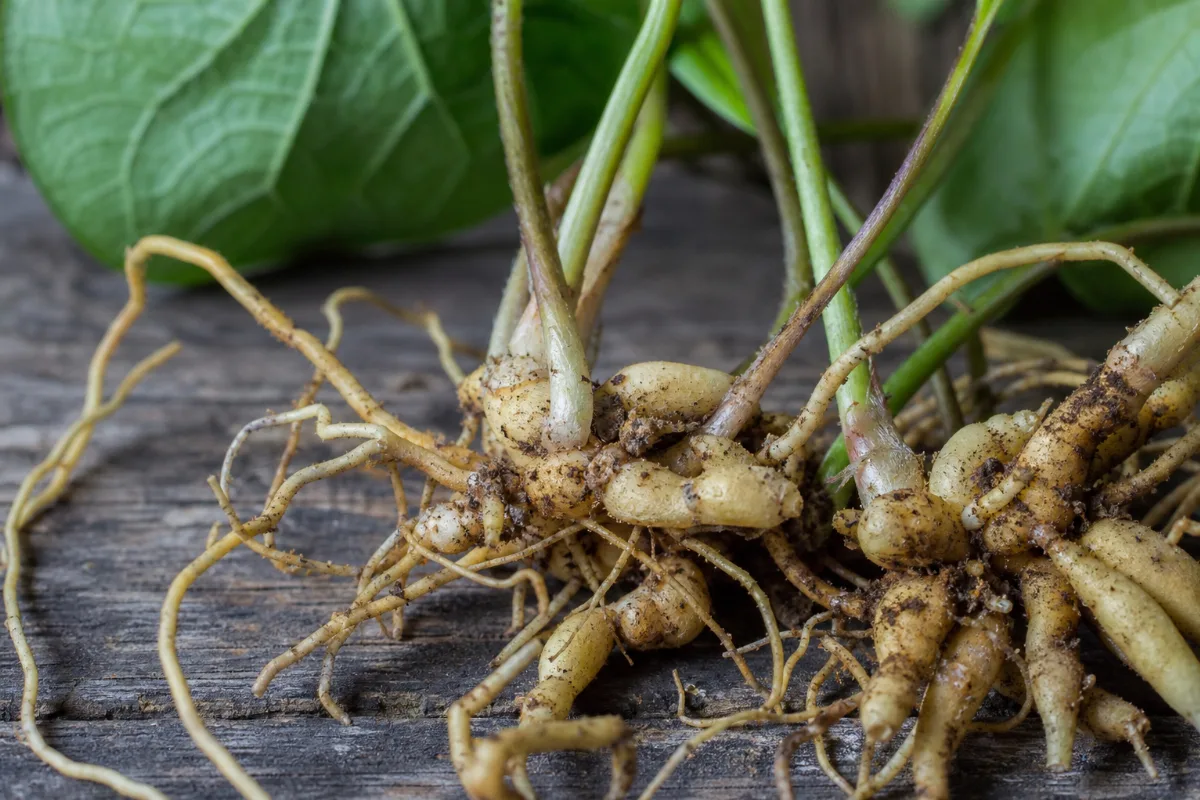
Wild ginger is a North American woodland plant whose root-stem was used by the Cherokee as a worm remedy and its leaf on wounds. It is not the kitchen spice ginger. We found no trial in people showing any benefit. The key caution: it can contain aristolochic acid, which can damage the kidneys for good and cause urinary tract cancer, and the FDA lists it on an import alert.
General information, not medical advice. Last substantive update · Not medically reviewed. A named clinician has not signed off on this page. How this page is made
About Wild Ginger
Wild ginger (Asarum canadense) is a North American woodland plant, not true ginger. It can contain aristolochic acid, a proven cause of kidney damage and urinary tract cancer. No benefit has been shown in people.
The danger first
Aristolochic acid I was found in several samples of wild ginger rhizome, up to 0.037% of dry weight, and the amounts varied widely from sample to sample. One leaf sample had high levels too.
Aristolochic acid causes aristolochic acid nephropathy, a fast scarring of the kidneys. The 2023 review says there is no effective treatment to delay or reverse it, and that cases are probably undercounted. It is also linked to cancers of the upper urinary tract and bladder. A 2025 meta-analysis found more kidney disease, urinary tract cancer and liver cancer with aristolochic acid exposure from any source.
The FDA lists Asarum canadense on an import alert for products that may contain aristolochic acid. The National Cancer Institute advises not using herbal products that contain it.
What is known for wild ginger, and what is not
The big outbreaks of kidney failure came from Aristolochia plants, often mixed up with other herbs. Cases linked to Asarum are fewer: a 2017 paper counted eight in 45 years, but says doctors probably missed the link in others.
So we cannot say how often wild ginger itself causes harm. We can say it is not free of aristolochic acid, and that the amount in any product cannot be told from the label. A cell test of wild ginger leaf did not kill kidney cells, but that does not show safety, because the damage builds up slowly.
Chinese xi xin is a related problem
Xi xin (Asari Radix) is the root of other Asarum species, mainly Asarum heterotropoides and A. sieboldii. A 2017 study found kidney-toxic aristolochic acid analogues in xi xin and other Asarum samples, with aristolochic acid I as a minor compound in the roots. A 2024 study found aristolochic acid I in 60% of 141 Asari products, at low levels (0.03 to 0.79 ppm). Low levels are not proof of safety. The FDA alert lists these species too.
Cancer-causing oil compounds
Our summary of the Cherokee plant literature reports that the rhizome oil is largely methyleugenol in some samples. In US government studies, methyleugenol caused liver and other tumours in rats and mice. Safrole is also a recognised carcinogen, but we found no source confirming safrole in wild ginger.
Pregnancy and children
No study of wild ginger in pregnancy, breastfeeding or children was found. In mice, aristolochic acid I given during pregnancy harmed the offspring's egg-cell development and later fertility. Avoid it.
Not the same as ginger
Wild ginger is not true ginger (Zingiber officinale), the kitchen spice. Do not swap them. The two plants are unrelated.
At a glance
Traditional uses history, not proof
- Worm remedy (root, Cherokee)
- Wound poultice (leaf, Cherokee)
Studied for research
- No benefit has been shown in people
- Studied mainly for safety: aristolochic acid and oil compounds
Main compounds
- Aristolochic acid I, a kidney-damaging, cancer-causing compound
- Aristolactams, related kidney-toxic compounds
- Methyleugenol, an oil compound that caused cancer in rodents
Common forms
- Dried root-stem (rhizome)
- Powder, tincture or capsule
- Essential oil
- Leaf poultice (traditional)
Research links: Aristolochic acid I in North American Asarum (2002) · Asarum species, LC-MS and kidney-cell study (2017) · Aristolochic acid nephropathy overview (2023) · Aristolochic acid meta-analysis (2025) · Asari Radix (xi xin) screening (2024) · FDA Import Alert 54-10 · NCI: Aristolochic acids · Research Library · Genes & Biomarkers Library
The plant and its history
- Accepted scientific name
- Asarum canadense L.
- Naming authority
- L.
- Common names
- Wild ginger (English); Canadian wild ginger (English); Canada snakeroot (English); Indian ginger (English); Colic root (English); Heart snakeroot (English)
- Botanical family
- Aristolochiaceae (birthwort family)
- Classification
- Plantae > Piperales > Aristolochiaceae > Asarum > Asarum canadense
- Native range
- North America (not verified in a source we could read).
- Habitat
- Not described in the sources read.
- What the plant looks like
- Roots: Rhizome (creeping underground stem) is the traditional part.; Stems: Not described.; Leaves: Leaf was used as a Cherokee wound poultice.; Flowers: Not described.; Fruit: Not described.
- Cultivation
- Not verified.
- Harvest and processing
- Not described.
- Look-alikes and adulterants
- Name: Ginger (Zingiber officinale); Note: A different plant from a different family. Wild ginger is not the kitchen spice. See the ginger page.; Name: Chinese xi xin (Asarum heterotropoides, A. sieboldii); Note: Other Asarum species used in Chinese medicine; also on the FDA alert.; Name: Aristolochia species (birthwort, Guan mu tong, Fang ji); Note: Same family; the source of the big kidney-failure outbreaks. Names can be mixed up.; Name: Canada snakeroot / snakeroot names; Note: Shared by unrelated plants such as sarpagandha (Rauvolfia). Check the Latin name.
- Sustainability and conservation
- Not assessed here.
Traditional use and history history, not clinical proof
| Tradition or era | Documented use | Source |
|---|---|---|
| Cherokee and other Native American use | Root as a worm remedy and leaf as a wound poultice. | p30424560 |
| Chinese medicine (other Asarum species) | Xi xin root is used in traditional Chinese medicine. | p28588481 |
Traditional use shows how a plant was used. It does not show that a supplement works or is safe today.
What is inside, and how it may work
What the plant contains and how those compounds act in cells and animals. Laboratory and animal mechanisms are not proven effects in people.
Main compounds
| Compound | Family | Where it is concentrated | Activity studied | Level of evidence |
|---|---|---|---|---|
| Aristolochic acid I PubChem 2236 | nitrophenanthrene carboxylic acid | rhizome and leaf Up to 0.037% of dry weight in rhizome; high in one leaf sample | Kidney-damaging and cancer-causing 9 5 1 | Human data |
| Aristolactams | aristolochic acid relatives | all parts of Asarum plants tested Not stated | Potentially kidney-toxic analogues 5 | Laboratory research |
| Methyleugenol PubChem 7127 | alkenylbenzene | rhizome oil About 36 to 54% of the oil in some samples (summary-only) | Rodent carcinogen 7 10 | Animal research |
| Safrole PubChem 5144 | alkenylbenzene | Not confirmed in wild ginger | Recognised carcinogen; presence in wild ginger not confirmed 3 12 | Animal research |
Mechanisms, receptors and pathways
| Target or pathway | Gene or receptor | What was found | Level |
|---|---|---|---|
| DNA damage by aristolochic acid | DNA adducts | Cell tests cannot rule out DNA damage routes even when extracts are not toxic to cells. 5 | Laboratory research |
| Kidney fibrosis | Not specified | Aristolochic acid nephropathy is fast kidney scarring; exact mechanisms are not fully settled. 13 | Human data |
Absorption, metabolism and elimination
- Absorption
- Not studied for wild ginger.
- Distribution
- Not studied.
- Metabolism
- Methyleugenol is absorbed rapidly and metabolised in the liver in rodents.
- Elimination
- Not studied for wild ginger.
- Bioavailability
- Not established.
Isolated compounds versus whole extracts
Cell tests on whole extracts found no cell toxicity at the doses tested, yet the pure compound is a known cause of kidney damage and cancer. A negative extract test is not evidence of safety.
Nutritional composition
Wild ginger is not a food or a nutrient and is not related to the kitchen spice ginger.
3 not enough evidence
What is Wild Ginger good for?
Nothing here is proven in people, and the safety risk is serious. Read the Safety tab first.
Benefits, one by one
Each card is a research question, not a promise. Tap a goal to filter. Open a card to see the studies, doses and limits.
Intestinal worms (traditional use)
Not enough evidenceThe Cherokee used the root as a worm remedy. We found no trial in people. Because of the kidney and cancer risk, this is not a use to try.
1 studiesTraditional use of the root; no tested product.
Studies, doses and limits
What the trials found
No human trial found. Traditional use is recorded in an ethnobotanical review (plant details from our existing summary).
Results
No human results exist.
Effect sizes as reported
None available.
Why this rating
Tradition only; no trial in people, and a serious safety concern.
Form and dose studied
Traditional use of the root; no tested product.
Who was studied
No data on who might safely use it.
Limits
Review of traditional use only.
Why researchers looked
Researchers have recorded old uses of North American plants to see what they contain.
Traditional use
Recorded as a Cherokee use of the root; long use is not proof that it works or that it is safe.
Proposed mechanism Traditional use
Not established. No study tested whether wild ginger affects worms.
A proposed mechanism does not show that the effect happens in people.
Wild ginger can contain aristolochic acid, which can damage the kidneys and cause cancer. See the Safety tab first.
Wound poultice (traditional use)
Not enough evidenceThe Cherokee put a poultice of the leaves on wounds. No trial exists. Leaf samples have been found to contain aristolochic acid I, so skin or open-wound use is not shown to be safe.
2 studiesTraditional leaf poultice; no tested product.
Studies, doses and limits
What the trials found
No human trial found. A 2017 chemical study found high aristolochic acid I in one A. canadense leaf sample; that study did not test skin use.
Results
No human results exist.
Effect sizes as reported
None available.
Why this rating
Tradition only; no trial.
Form and dose studied
Traditional leaf poultice; no tested product.
Who was studied
No data.
Limits
Whether aristolochic acid passes through skin or open wounds was not studied in the sources read.
Why researchers looked
Recorded in studies of Cherokee plant medicine.
Traditional use
Leaf poultice on wounds, recorded in an ethnobotanical review (plant details from our existing summary).
Proposed mechanism Traditional use
Not established.
A proposed mechanism does not show that the effect happens in people.
Wild ginger can contain aristolochic acid, which can damage the kidneys and cause cancer. See the Safety tab first.
Immune support and 'detox' (claimed; no evidence)
Not enough evidenceWild ginger is sometimes promoted for immunity or detox. We found no study that supports this, and the plant carries a kidney and cancer warning.
1 studiesNone tested.
Studies, doses and limits
What the trials found
No human trial found.
Results
No results exist.
Effect sizes as reported
None available.
Why this rating
No evidence for either claim; a safety concern outweighs any hoped-for benefit.
Form and dose studied
None tested.
Who was studied
Not applicable.
Limits
Our existing summary rated both claims as insufficient.
Why researchers looked
Appears in general herbal claims.
Traditional use
Not documented in the sources read.
Proposed mechanism None
None known.
A proposed mechanism does not show that the effect happens in people.
Wild ginger can contain aristolochic acid, which can damage the kidneys and cause cancer. See the Safety tab first.
Connections to the rest of health
How Wild Ginger connects to the rest of our health knowledge graph. Every link says what kind of connection it is. A safety link (for example to the liver) is a warning, not a benefit. A study that merely mentions a topic never creates a benefit link.
Explore every connection: goals, body systems, organs, symptoms, genes
A. Wellness goals
| Connected to | Kind of connection | Evidence status | Context | Studies |
|---|---|---|---|---|
| Immune Support | Traditional use | Not enough evidence | Intestinal worms (traditional use): The Cherokee used the root as a worm remedy. We found no trial in people. Because of the kidney and cancer risk, this is not a use to try. | 10 |
| Healthy Skin | Traditional use | Not enough evidence | Wound poultice (traditional use): The Cherokee put a poultice of the leaves on wounds. No trial exists. Leaf samples have been found to contain aristolochic acid I, so skin or open-wound use is not shown to be safe. | 10 5 |
| Immune Support | Not enough evidence | Immune support and 'detox' (claimed; no evidence): Wild ginger is sometimes promoted for immunity or detox. We found no study that supports this, and the plant carries a kidney and cancer warning. | 10 | |
| Detoxification Support | Not enough evidence | Immune support and 'detox' (claimed; no evidence): Wild ginger is sometimes promoted for immunity or detox. We found no study that supports this, and the plant carries a kidney and cancer warning. | 10 |
B. Body systems
| Connected to | Kind of connection | Evidence status | Context | Studies |
|---|---|---|---|---|
| Digestive System | Biological association | Not enough evidence | Studied for: Intestinal worms (traditional use) | 10 |
| Skin Hair Beauty | Biological association | Not enough evidence | Studied for: Wound poultice (traditional use) | 10 5 |
| Immune System | Biological association | Not enough evidence | Studied for: Immune support and 'detox' (claimed; no evidence) | 10 |
I. Biomarkers
| Connected to | Kind of connection | Evidence status | Context | Studies |
|---|---|---|---|---|
| Aristolochic acid I in wild ginger rhizome | Biological association | Moderate certainty | Measured in trials: present (varies). A lab change is not the same as a health benefit. | 9 |
| Aristolochic acid I in wild ginger leaf | Biological association | Low certainty | Measured in trials: present (high). A lab change is not the same as a health benefit. | 5 |
| Toxicity to cultured human kidney cells | Biological association | Very low certainty | Measured in trials: no cell toxicity at doses tested. A lab change is not the same as a health benefit. | 5 |
| Methyleugenol in the rhizome oil | Biological association | Low certainty | Measured in trials: present (high in some samples). A lab change is not the same as a health benefit. | 10 7 |
L. Active compounds
| Connected to | Kind of connection | Evidence status | Context | Studies |
|---|---|---|---|---|
| Aristolochic acid I | Adverse effect or risk | Moderate certainty | Found in wild ginger samples; linked to kidney disease and urinary tract cancer. Preparation or compound: rhizome and leaf |
9 1 |
| Methyleugenol | Adverse effect or risk | Low certainty | Rodent carcinogen; reported high in some wild ginger rhizome oil. Preparation or compound: rhizome oil |
7 |
| Aristolochic acid I | Biological association | Human | Kidney-damaging and cancer-causing Preparation or compound: rhizome and leaf |
9 5 1 |
| Aristolactams | Biological association | In vitro | Potentially kidney-toxic analogues Preparation or compound: all parts of Asarum plants tested |
5 |
| Methyleugenol | Biological association | Animal | Rodent carcinogen Preparation or compound: rhizome oil |
7 10 |
| Safrole | Biological association | Animal | Recognised carcinogen; presence in wild ginger not confirmed Preparation or compound: Not confirmed in wild ginger |
3 12 |
Each connection is stored with the ingredient, the connected record, the kind of connection, the evidence status, the supporting studies, the preparation or compound involved, and a review date (last reviewed October 25, 2026).
The evidence
The research centre for Wild Ginger. Every record here was checked against PubMed or the publisher's page; we never list a study we have not verified.
Evidence by outcome
Bars show how many studies we found for each outcome, not how well it works. People are added up across trials only (reviews are not added, to avoid double counting).
How we rate evidence
High certainty
Several well-run trials or reviews agree; further research is unlikely to change the picture much.
Moderate certainty
Good trials point the same way, but some doubt remains.
Low certainty
Small, short or inconsistent trials. The finding could change with better research.
Very low certainty
Very little or very weak human data. Treat as a possibility only.
Mixed findings
Trials or reviews disagree with each other.
Not enough evidence
Not enough human research to say either way.
Evidence against
Good research found no benefit, or found harm.
We take the reviewers' own risk-of-bias and GRADE statements where they exist, and otherwise judge from study size, design, consistency, directness and whether a product matches what is sold. Many publications do not make evidence high. Method note: We built on our existing summary, read PubMed abstracts (one full text for details), and checked FDA, NCI, GBIF and PubChem. Several regulators were not read and the page says so.
Study library: every study we checked 13
| Study | Design | People | Product, dose, length | Result |
|---|---|---|---|---|
| Cui 2025 Clinical and safety outcomes associated with aristolochic acid exposure: a systematic review and meta-analysis. Toxicol Mech Methods · PMID 39844365 · DOI |
Systematic review |
People exposed to aristolochic acid (pooled studies searched to April 2024) | Aristolochic acid exposure (any source) Aristolochia and other plants containing aristolochic acid Not stated in abstract Not applicable · vs None |
Exposure was linked to more kidney disease (OR 1.279), urinary tract cancer (OR 1.842) and liver cancer (OR 1.146). No clear link with brain disease. Higher odds of kidney disease, urinary tract cancer and liver cancer (Kidney disease 1.029-1.590; urinary tract cancer 1.376-2.465; liver cancer 1.040-1.262; brain disease 0.989-1.362 (not significant)) Methods, limits and fundingOutcomes: Kidney disease, urinary tract cancer, liver cancer, brain disease Limitations: Pools mostly observational studies and does not separate wild ginger from other sources; exposure measures vary. Funding and conflicts: Not stated in abstract Read: abstract |
| GBIF 2026 GBIF Backbone Taxonomy species match: Asarum canadense GBIF API · Source |
Database not applicable |
Not applicable | Not applicable Not applicable Not stated in abstract Not applicable · vs None |
Asarum canadense L. is the ACCEPTED name (GBIF key 2873947), family Aristolochiaceae, order Piperales, exact match, confidence 99. Asarum heterotropoides F.Schmidt is also accepted (key 7313559). Asarum canadense L. is the ACCEPTED name (GBIF key 2873947), family Aristolochiaceae, order Piperales, exact match, confidence 99. Asarum heterotropoides F.Schmidt is also accepted (key 7313559). Methods, limits and fundingOutcomes: Asarum canadense L. is the ACCEPTED name (GBIF key 2873947), family Aristolochiaceae, order Piperales, exact match, confidence 99. Asarum heterotropoides F.Schmidt is also accepted (key 7313559). Limitations: Web page or database record; wording paraphrased. Funding and conflicts: Government / public body Read: web page |
| Götz 2023 Occurrence of Alkenylbenzenes in Plants: Flavours and Possibly Toxic Plant Metabolites. Plants (Basel) · PMID 37299054 · DOI |
Narrative review plant |
Review of alkenylbenzenes in essential oils and extracts | Review of safrole, methyleugenol, estragole and related compounds Essential oils and extracts Not stated in abstract Not applicable · vs None |
Some alkenylbenzenes are proven genotoxic carcinogens, among them safrole, methyleugenol and estragole. Good data on how much is in final supplements and foods are lacking. Safrole and methyleugenol named as genotoxic carcinogens Methods, limits and fundingOutcomes: Occurrence and toxicity concern Limitations: The abstract does not mention wild ginger; whether the full review lists it was not checked. Funding and conflicts: Not stated in abstract Read: abstract |
| Hu 2024 Comprehensive HRMS Screening and Risk Assessments of Aristolochic Acid Analogues in Asari Radix et Rhizoma and Related Commercial Health Products. J Agric Food Chem · PMID 38513720 · DOI |
Other observational plant |
91 batches of Asarum heterotropoides root/rhizome and 166 consumer products (141 containing Asari) | Chemical screening of Asari Radix (xi xin) and products Root and rhizome of Asarum heterotropoides Not stated in abstract Not applicable · vs None |
Seventeen aristolochic acid analogues were found in the plant batches and 20 in products. In the 141 Asari-containing products, 60% contained aristolochic acid I, at 0.03 to 0.79 ppm. The authors recommend limiting aristolochic acid I to 3 ppm. Aristolochic acid I present in most Asari products, at low levels Methods, limits and fundingOutcomes: Aristolochic acid analogues and a risk calculation Limitations: Lab survey; risk figures rest on modelling. The 3 ppm limit is the authors' own suggestion, not a legal limit. Funding and conflicts: Not stated in abstract Read: abstract |
| Michl 2017 Medicinally Used Asarum Species: High-Resolution LC-MS Analysis of Aristolochic Acid Analogs and In vitro Toxicity Screening in HK-2 Cells. Front Pharmacol · PMID 28588481 · DOI |
Laboratory research plant |
Asarum plant samples (including Chinese xi xin root/rhizome, and leaf of A. canadense, A. europaeum, A. caudatum) and human kidney (HK-2) cells | Plant extracts (methanol and water) analysed by LC-MS and applied to cultured kidney cells Root/rhizome (xi xin) and leaf (several species) Cell tests only Cell culture · vs Untreated cells |
Most samples contained potentially kidney-toxic aristolochic acid analogues (for example aristolactams), in all plant parts. In the full text, aristolochic acid I was detected in only some samples and in high amounts in the A. canadense leaf sample; in xi xin root samples it was a minor compound. Most extracts were not toxic to the kidney cells at the doses tested, but the authors say DNA damage routes were not tested. Nephrotoxic analogues common in Asarum; AA I high in the A. canadense leaf sample Methods, limits and fundingOutcomes: Content of aristolochic acid analogues; toxicity to kidney cells Limitations: Single leaf sample for A. canadense (not rhizome); cell-culture test cannot show kidney damage or cancer in people. The full text was read through Europe PMC for the details above. Funding and conflicts: Not stated in abstract Read: full-text (Europe PMC) |
| National Cancer Institute 2022 Aristolochic Acids NCI cancer causes page · Source |
Regulatory not applicable |
Not applicable | Not applicable Not applicable Not stated in abstract Not applicable · vs None |
Aristolochic acids occur in Aristolochia and some Asarum (wild ginger). Upper urinary tract and bladder cancers have been reported in people with kidney damage from herbal products containing them. NCI advises not using herbal products that contain aristolochic acids. Aristolochic acids occur in Aristolochia and some Asarum (wild ginger). Upper urinary tract and bladder cancers have been reported in people with kidney damage from herbal products containing them. NCI advises not using herbal products that contain aristolochic acids. Methods, limits and fundingOutcomes: Aristolochic acids occur in Aristolochia and some Asarum (wild ginger). Upper urinary tract and bladder cancers have been reported in people with kidney damage from herbal products containing them. NCI advises not using herbal products that contain aristolochic acids. Limitations: Web page or database record; wording paraphrased. Funding and conflicts: Government / public body Read: web page |
| National Toxicology Program 2000 NTP Toxicology and Carcinogenesis Studies of Methyleugenol (CAS NO. 93-15-2) in F344/N Rats and B6C3F1 Mice (Gavage Studies). Natl Toxicol Program Tech Rep Ser · PMID 12563349 |
Animal research rodent |
Male and female rats and mice, 14 weeks and 2 years | Methyleugenol (about 99% pure) by stomach tube Pure compound (not a plant) Rodent doses (not for people) 14 weeks or 2 years · vs Vehicle only |
There was clear evidence of cancer-causing activity in rats and mice: liver tumours in both, plus stomach neuroendocrine tumours, kidney tumours and others in male rats. Liver and stomach damage also occurred. Clear evidence of carcinogenic activity in rodents Methods, limits and fundingOutcomes: Cancers and tissue damage Limitations: Animal study with a pure compound; not a measure of risk from wild ginger. Funding and conflicts: US government (NTP) Read: abstract |
| Qiqi 2022 Fetal exposure of Aristolochic Acid I undermines ovarian reserve by disturbing primordial folliculogenesis. Ecotoxicol Environ Saf · PMID 35397442 · DOI |
Animal research mouse |
Pregnant mice and their offspring | Aristolochic acid I by mouth, doses without liver or kidney toxicity in the mother Pure compound Not stated in abstract Not applicable · vs None |
Exposure late in pregnancy disturbed egg-cell follicle formation in the offspring and reduced offspring number and ovarian reserve in adulthood. Harm to offspring fertility in mice Methods, limits and fundingOutcomes: Ovary development and fertility of offspring Limitations: Mouse study only; no data in people. Funding and conflicts: Not stated in abstract Read: abstract |
| Schaneberg 2002 Determination of aristolochic acid I and II in North American species of Asarum and Aristolochia. Pharmazie · PMID 12426949 |
Other observational plant |
Rhizomes of North American Aristolochiaceae (wild ginger Asarum canadense, A. caudatum, A. wagneri, Hexastylis, Aristolochia) | Dried rhizome samples analysed by HPLC (no one took anything) Rhizome Not stated in abstract Not applicable · vs None |
Aristolochic acid I and II were present in Aristolochia and Hexastylis. Aristolochic acid I alone was found in several samples of wild ginger (A. canadense) and in A. caudatum, but not in A. wagneri. Amounts in wild ginger varied a lot, up to 0.037% of dry weight. Aristolochic acid I found in wild ginger rhizome; amount very variable Methods, limits and fundingOutcomes: Presence and amount of aristolochic acid I and II Limitations: Chemical survey of plant samples, not a study of people; the number of samples is not given in the abstract. Funding and conflicts: Not stated in abstract Read: abstract |
| Setzer 2018 The Phytochemistry of Cherokee Aromatic Medicinal Plants. Medicines (Basel) · PMID 30424560 · DOI |
Narrative review |
Review of Cherokee medicinal plants (wild ginger is one of many) | Review of traditional use and chemistry Rhizome, root and leaf Not stated in abstract Not applicable · vs None |
The abstract covers Cherokee aromatic plants as a group. The wild ginger details used on this page (worm remedy and wound poultice use; rhizome oil largely methyleugenol, about 36 to 54% in some samples) come from our existing summary and the entry was not re-opened. Traditional use recorded; no trial Methods, limits and fundingOutcomes: Traditional uses, chemistry, biological activity Limitations: Review of traditional use; no trial data. Wild ginger entry not re-read. Funding and conflicts: Not stated in abstract Read: abstract (plant-specific details summary-only) |
| U.S. Food and Drug Administration 2009 Import Alert 54-10: Detention Without Physical Examination of Dietary Supplements and Other Products Containing Aristolochic Acid FDA import alert (page lists first publication 09/18/2009) · Source |
Regulatory not applicable |
Not applicable | Not applicable Not applicable Not stated in abstract Not applicable · vs None |
The alert covers products made from Aristolochia and listed Asarum species, including Asarum canadense, A. heterotropoides and A. sieboldii. It calls aristolochic acid a potent carcinogen and nephrotoxin, and says outbreaks of kidney failure traced to herbal products came from Aristolochia, often through misidentified ingredients. The alert covers products made from Aristolochia and listed Asarum species, including Asarum canadense, A. heterotropoides and A. sieboldii. It calls aristolochic acid a potent carcinogen and nephrotoxin, and says outbreaks of kidney failure traced to herbal products came from Aristolochia, often through misidentified ingredients. Methods, limits and fundingOutcomes: The alert covers products made from Aristolochia and listed Asarum species, including Asarum canadense, A. heterotropoides and A. sieboldii. It calls aristolochic acid a potent carcinogen and nephrotoxin, and says outbreaks of kidney failure traced to herbal products came from Aristolochia, often through misidentified ingredients. Limitations: Web page or database record; wording paraphrased. Funding and conflicts: Government / public body Read: web page |
| Woychik 2021 15th Report on Carcinogens. Rep Carcinog · PMID 39456132 · DOI |
Regulatory not applicable |
Not applicable | Not applicable Not applicable Not stated in abstract Not applicable · vs None |
The 15th Report on Carcinogens lists aristolochic acids, methyleugenol and safrole among its substances. The abstract does not give the category of each; this was not read further. All three compounds are listed Methods, limits and fundingOutcomes: Substances known or reasonably anticipated to cause cancer Limitations: Only the abstract (a list of substances) was read. Funding and conflicts: US government (NTP) Read: abstract |
| Zhou 2023 Overview of aristolochic acid nephropathy: an update. Kidney Res Clin Pract · PMID 37448287 · DOI |
Narrative review |
People with aristolochic acid nephropathy (review) | Aristolochic acid exposure from herbal remedies or the environment Plants containing aristolochic acid Not stated in abstract Not applicable · vs None |
Aristolochic acid nephropathy is a fast-progressing kidney scarring disease. Onset is hidden, so how many people are exposed and affected is unknown and probably underestimated. Regulation has cut cases sharply, but cases still appear. No effective treatment can delay or reverse the kidney damage. No effective treatment known Methods, limits and fundingOutcomes: Disease pattern, mechanisms, treatment Limitations: Narrative review, not a systematic one. Funding and conflicts: Not stated in abstract Read: abstract |
What we do not know yet
- No trial in people for any use.
- No human safety study for wild ginger itself.
- Aristolochic acid measured in few samples; no finished product tested.
- Safrole in wild ginger not confirmed.
- No EMA, WHO, NCCIH, LiverTox or LactMed record was read.
- No data for pregnancy, breastfeeding or children.
How new research is added
New studies are found by a saved PubMed search and are placed in a review queue. A person reads each one before it changes any safety wording.
Lab markers
What changed in blood or saliva tests during trials. A changed number is not the same as feeling or being healthier, and we give no "normal ranges".
Other 4
Aristolochic acid I in wild ginger rhizome
Present (varies) in trials
How much aristolochic acid I is in the dried root-stem, measured in the lab.
Moderate certaintyResults and what it means
Why it was measured
It is the compound behind the kidney and cancer warning.
Statistical vs. clinical meaning
A chemical finding, not a harm measured in people. One survey; amounts differ plant to plant.
Safety implication
Content of any product cannot be assumed from the plant name.
| Study | Result | People | Product |
|---|---|---|---|
| 9 | Aristolochic acid I was found in several samples of A. canadense rhizome, up to 0.037% of dry weight, and varied widely between samples. | Plant samples (no people) | Dried rhizome tested by HPLC |
Aristolochic acid I in wild ginger leaf
Present (high) in trials
How much aristolochic acid I is in the leaf, measured in the lab.
Low certaintyResults and what it means
Why it was measured
Leaf is the part used as a traditional poultice.
Statistical vs. clinical meaning
One sample only.
Safety implication
See above.
| Study | Result | People | Product |
|---|---|---|---|
| 5 | Aristolochic acid I was found in high amounts in the A. canadense leaf sample (full text). | One leaf sample | Leaf extract tested by LC-MS |
Toxicity to cultured human kidney cells
No cell toxicity at doses tested in trials
Whether plant extracts kill kidney cells in a dish.
Very low certaintyResults and what it means
Why it was measured
A first lab screen for kidney toxicity.
Statistical vs. clinical meaning
A negative cell test does NOT show safety: aristolochic acid harms kidneys and DNA slowly, over months to years.
Safety implication
Do not read this as reassurance.
| Study | Result | People | Product |
|---|---|---|---|
| 5 | Most Asarum extracts, including the A. canadense leaf sample, were not toxic to kidney cells at the doses tested. The authors say DNA damage routes were not tested. | HK-2 human kidney cells | Asarum extracts |
Methyleugenol in the rhizome oil
Present (high in some samples) in trials
Share of the essential oil that is methyleugenol.
Low certaintyResults and what it means
Why it was measured
Methyleugenol is a rodent carcinogen.
Statistical vs. clinical meaning
Chemistry only; no study of harm from this plant's oil in people.
Safety implication
Methyleugenol caused liver and other tumours in rodents (see Safety).
| Study | Result | People | Product |
|---|---|---|---|
| 10 | Per our existing summary, the rhizome oil was largely methyleugenol (about 36 to 54% in some samples). Not re-checked in the review itself. | Plant oil samples | Rhizome essential oil |
Safety
What studies and official sources say about side effects, medicines and who should check first. Each point shows what kind of evidence it comes from.
Main points to know 4
- Wild ginger can contain aristolochic acid, which damages kidneys and causes cancer. Aristolochic acid I was found in several samples of wild ginger (Asarum canadense) rhizome, up to 0.037% of dry weight, and in high amounts in one leaf sample. Aristolochic acids cause aristolochic acid nephropathy (fast kidney scarring) and cancers of the upper urinary tract and bladder. There is no effective treatment for the kidney damage. The FDA lists A. canadense on its import alert for products that may contain aristolochic acid. The big outbreaks of kidney failure came from Aristolochia plants, not wild ginger, and only a few Asarum cases are on record, but that count is probably too low. Other observational 9 5 13 11 6
- Chinese xi xin (Asarum heterotropoides, A. sieboldii) is a related but different problem. The Chinese herb xi xin is the root and rhizome of other Asarum species. Studies find aristolochic acid analogues in it. Aristolochic acid I was a minor compound in xi xin roots in one study, yet 60% of 141 Asari products tested contained it, at low levels. Lower levels do not mean safe. The FDA alert lists these species too. Other observational 5 4 11
- Methyleugenol and safrole: cancer-causing oil compounds. Our summary reports wild ginger rhizome oil is largely methyleugenol in some samples. In rodents, methyleugenol caused liver tumours and other cancers (clear evidence in US government studies). Safrole is also a recognised carcinogen. We found no source confirming safrole in wild ginger. Animal research 7 3 12
- Pregnancy: avoid. No study of wild ginger in pregnancy was found. Aristolochic acid I given to pregnant mice harmed the offspring's egg-cell development and later fertility. Treat it as unsafe in pregnancy. Animal research 8
Side effects 4
| Effect | How often | Severity and recovery | Evidence |
|---|---|---|---|
| Kidney damage (aristolochic acid nephropathy) Documented mainly with Aristolochia. Asarum-related cases are rare on record (eight in 45 years, per Michl 2017 citing Kim 2013, not re-opened), but experts think cases are under-recognised. Onset can be silent. | Not established | serious, can be permanent No effective treatment can reverse it | Human case series 13 1 |
| Urinary tract and bladder cancer A 2025 meta-analysis of aristolochic acid exposure (any source) found odds of urinary tract cancer 1.84 times higher (95% CI 1.38 to 2.47). Not specific to wild ginger. | Not established | life-threatening Not applicable | Systematic review 1 6 |
| Liver cancer The same meta-analysis found higher odds of liver cancer with aristolochic acid exposure (OR 1.15, 95% CI 1.04 to 1.26). | Not established | life-threatening Not applicable | Systematic review 1 |
| Tumours from methyleugenol (rodents) Animal data with the pure compound; no human data for wild ginger. | Not established | potentially life-threatening Not applicable | Animal research 7 |
Liver
No human case of liver injury from wild ginger was found, and LiverTox was not read. Methyleugenol caused liver damage and liver tumours in rats and mice. Aristolochic acid exposure was linked to liver cancer in a 2025 meta-analysis. 7 1
How often. Unknown.
Monitoring. No official monitoring advice found. Seek care for yellow skin or eyes, dark urine or pale stools.
This is a safety connection. It is not evidence that Wild Ginger supports liver health.
Medicines and supplements 2
| With | Why it matters | Importance | Evidence | What to do |
|---|---|---|---|---|
| Medicines and supplements that can harm the kidneys (for example many anti-inflammatory pain relievers, some antibiotics, other aristolochic-acid herbs) prescription | Added kidney strain is a reasoned concern only. | Unknown. No study of wild ginger with any drug was found. | Pharmacological theory Not enough evidence 13 | If you have already used wild ginger or xi xin, tell your doctor or pharmacist, and ask about kidney tests before any kidney-affecting medicine. |
| Blood thinners, other prescription medicines, alcohol prescription | Not studied. | No interaction data were found for wild ginger. | None found Not enough evidence | Ask a pharmacist. |
Who should check first 4
| Situation | Advice | Evidence |
|---|---|---|
| Kidney disease, a kidney transplant, or a history of bladder or urinary tract cancer | Avoid. Aristolochic acid directly damages the kidney and the urinary lining. | Human case series 13 6 |
| Pregnancy and breastfeeding | Avoid. No human safety data; animal data show harm to offspring. | Animal research 8 |
| Children | Avoid. No safety data exist. | None found |
| Planned surgery | Tell the surgical team about any use. Kidney function matters for anaesthesia and drugs. | Pharmacological theory |
Overdose, product quality and regulators
Summary. Aristolochic acid is the main concern. It damages kidneys and DNA. Methyleugenol (and possibly safrole) in the oil add a cancer concern.
Animal. Methyleugenol: clear evidence of cancer in rats and mice in 2-year US studies (liver, stomach, kidney and other tumours). Aristolochic acid I harmed the ovaries of mouse offspring after exposure in pregnancy.
Human doses studied. Not given here.
High dose or long term signals. Aristolochic acid nephropathy can follow months of use; no safe level is established. Hu 2024 authors suggest limiting aristolochic acid I to 3 ppm in products; this is a suggestion, not law.
Overdose response. Not described for wild ginger.
Genotoxicity. Aristolochic acid and methyleugenol are classed as cancer-causing; the 15th US Report on Carcinogens lists aristolochic acids, methyleugenol and safrole (category not read).
Toxic plant parts. Aristolochic acid I was found in rhizome and in leaf. Aristolochic acid analogues were found in all parts of the Asarum plants tested. The rhizome is also the source of the oil.
Content varies widely, and mix-ups between Asarum and Aristolochia plants have caused harm.
Wide variation between samples. Aristolochic acid I in A. canadense rhizome ranged up to 0.037% of dry weight and varied widely. 9
Aristolochic acid in commercial Asari products. In 141 Asari-containing products, 60% contained aristolochic acid I (0.03 to 0.79 ppm). 4
Mix-ups. The FDA says outbreaks of kidney failure were traced to Aristolochia that was misidentified or confused through similar Chinese names. 11
| Body | Action | Date |
|---|---|---|
| U.S. Food and Drug Administration (United States) | Import Alert 54-10 allows detention of products made from Aristolochia and listed Asarum species, including A. canadense, A. heterotropoides and A. sieboldii, because of aristolochic acid. source | Page shows first published 09/18/2009 |
| National Cancer Institute (United States) | States aristolochic acids occur in some Asarum (wild ginger) and advises not using products that contain them. source | 2022 |
| National Toxicology Program (United States) | 15th Report on Carcinogens lists aristolochic acids, methyleugenol and safrole. source | 2021 |
When to get medical help
- Less urine, swelling of legs or face, unusual tiredness or nausea after using it (possible kidney damage)
- Blood in the urine or lasting back/flank pain
- Yellow skin or eyes, or dark urine
Stop the supplement and contact a clinician or emergency service. In the US, Poison Control is 1-800-222-1222.
General information only, not medical advice. Ask a clinician or pharmacist before use, especially with medicines, in pregnancy or with a health condition. See the Natural Remedy Safety guide.
Frequently asked questions
What is wild ginger?
Is wild ginger safe?
Does wild ginger contain aristolochic acid?
What does aristolochic acid do?
Has wild ginger itself caused kidney failure?
What is xi xin?
Does wild ginger contain methyleugenol or safrole?
Is it safe in pregnancy or breastfeeding?
Avoid it. No human data exist, and aristolochic acid I harmed offspring in mice.
Is wild ginger a good herbal medicine for worms or wounds?
These are traditional uses with no trials. Given the kidney and cancer risk, they are not a reason to use it.
Is wild ginger the same as ginger?
No. Ginger (Zingiber officinale) is an unrelated spice plant. See the ginger page.
What should I do if I have already used it?
Tell your doctor or pharmacist and ask about kidney tests. Seek care quickly for less urine, swelling or blood in the urine.
Explore by health goal
Editorial transparency
- Written by
- AlternativeMed editorial team. Research compiled with AI assistance, then checked against PubMed records.
- Medical review
- None. This page has not been reviewed by a physician or pharmacist.
- First published
- 2026-10-25
- Last substantive update
- 2026-10-25
- How we research
- We built on our existing summary, read PubMed abstracts (one full text for details), and checked FDA, NCI, GBIF and PubChem. Several regulators were not read and the page says so.
- How we rate evidence
- See "How we rate evidence" in the Evidence tab.
- Independence
- No product is promoted on this page. No affiliate links are shown.
Sources 13
Each source was opened and checked. Where we read only the abstract, it says so. The small numbers in the text point here.
- Cui T, Che S, Yan X, Yang R, et al.. Clinical and safety outcomes associated with aristolochic acid exposure: a systematic review and meta-analysis.. Toxicol Mech Methods. 2025. PMID 39844365. DOI 10.1080/15376516.2025.2457340. (abstract)
- GBIF. GBIF Backbone Taxonomy species match: Asarum canadense. GBIF API. 2026. (web page)
- Götz M, Eisenreich A, Frenzel J, Sachse B, et al.. Occurrence of Alkenylbenzenes in Plants: Flavours and Possibly Toxic Plant Metabolites.. Plants (Basel). 2023. PMID 37299054. DOI 10.3390/plants12112075. (abstract)
- Hu Y, Zhang J, Wei W, Yang H, et al.. Comprehensive HRMS Screening and Risk Assessments of Aristolochic Acid Analogues in Asari Radix et Rhizoma and Related Commercial Health Products.. J Agric Food Chem. 2024. PMID 38513720. DOI 10.1021/acs.jafc.4c00751. (abstract)
- Michl J, Bello O, Kite G, Simmonds M, et al.. Medicinally Used Asarum Species: High-Resolution LC-MS Analysis of Aristolochic Acid Analogs and In vitro Toxicity Screening in HK-2 Cells.. Front Pharmacol. 2017. PMID 28588481. DOI 10.3389/fphar.2017.00215. (full-text (Europe PMC))
- National Cancer Institute. Aristolochic Acids. NCI cancer causes page. 2022. (web page)
- National Toxicology Program. NTP Toxicology and Carcinogenesis Studies of Methyleugenol (CAS NO. 93-15-2) in F344/N Rats and B6C3F1 Mice (Gavage Studies).. Natl Toxicol Program Tech Rep Ser. 2000. PMID 12563349. (abstract)
- Qiqi L, Junlin H, Xuemei C, Yi H, et al.. Fetal exposure of Aristolochic Acid I undermines ovarian reserve by disturbing primordial folliculogenesis.. Ecotoxicol Environ Saf. 2022. PMID 35397442. DOI 10.1016/j.ecoenv.2022.113480. (abstract)
- Schaneberg B, Applequist W, Khan I. Determination of aristolochic acid I and II in North American species of Asarum and Aristolochia.. Pharmazie. 2002. PMID 12426949. (abstract)
- Setzer W. The Phytochemistry of Cherokee Aromatic Medicinal Plants.. Medicines (Basel). 2018. PMID 30424560. DOI 10.3390/medicines5040121. (abstract (plant-specific details summary-only))
- U.S. Food and Drug Administration. Import Alert 54-10: Detention Without Physical Examination of Dietary Supplements and Other Products Containing Aristolochic Acid. FDA import alert (page lists first publication 09/18/2009). 2009. (web page)
- Woychik R, Lunn R, Berridge B, Bucher J, et al.. 15th Report on Carcinogens.. Rep Carcinog. 2021. PMID 39456132. DOI 10.22427/NTP-OTHER-1003. (abstract)
- Zhou Q, Jiang L, Su T, Liu G, et al.. Overview of aristolochic acid nephropathy: an update.. Kidney Res Clin Pract. 2023. PMID 37448287. DOI 10.23876/j.krcp.22.211. (abstract)