
Herbs & Botanicals · Peppery salad leaf, traditional herb
Watercress
Nasturtium officinale (also written Rorippa nasturtium-aquaticum) · also called Watercress, berro (Spanish)
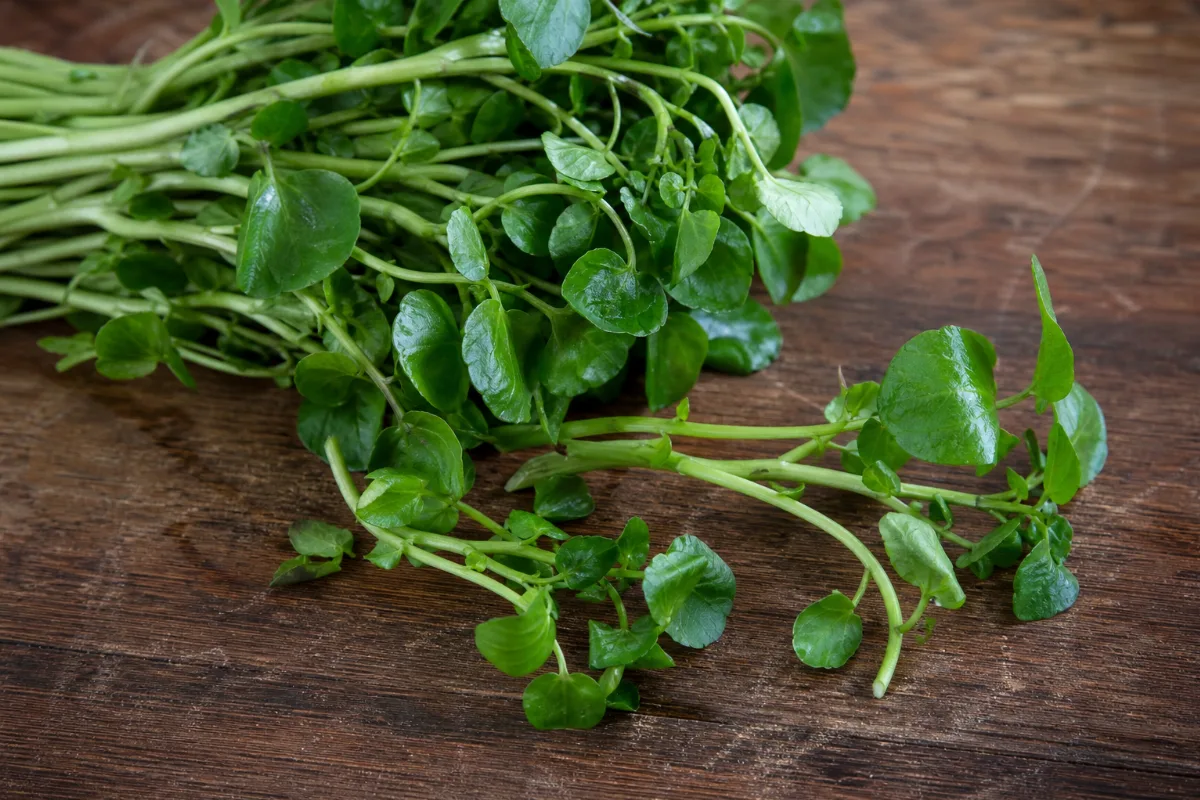
Watercress is a peppery leafy plant that grows in water and is eaten as a salad green and used as a folk herb. When chewed, it releases a plant compound called PEITC. Trials, mostly small and short, show changes in lab markers such as DNA damage and the way smokers clear toxins, but no disease benefit has been shown. The key cautions are liver fluke parasites on wild watercress and its high vitamin K if you take warfarin.
General information, not medical advice. Last substantive update · Not medically reviewed. A named clinician has not signed off on this page. How this page is made
About Watercress
Watercress is a peppery water plant eaten as a salad leaf. Human research is mostly small, short marker studies, so it is best seen as a nutritious food rather than a proven remedy.
What it is
Watercress (Nasturtium officinale) belongs to the cabbage family, with broccoli and horseradish. Leaf and stem are eaten. Chewing releases PEITC from a stored compound called gluconasturtiin.
It is not the garden nasturtium (Tropaeolum majus), which is a different plant despite the similar name.
What the research shows
The strongest human work asks how the body clears toxins. In smokers, purified PEITC modestly lowered activation of a tobacco carcinogen. A 2025 trial of a watercress drink in 188 mostly non-smokers raised urine breakdown products of most toxicants tested.
Antioxidant trials show lower DNA-damage markers in healthy adults and after hard exercise, but they are small. A 19-person study found a mixed inflammation pattern, and a small study found no lower oxygen use during exercise.
None of these trials measured cancer, heart disease or other illness.
PEITC versus the whole food
Many smoker trials gave purified PEITC, not watercress. The 2025 drink trial used freeze-dried watercress. Salad portions have not been tested the same way, so results do not transfer directly.
Amounts
This page gives no amounts to take. Ask a doctor or pharmacist what is right for you, especially if you take medicine.
At a glance
Traditional uses history, not proof
- Eaten as a salad leaf and garnish
- Used in folk medicine for many complaints, including high blood pressure, high blood sugar and arthritis; long use is not proof it works
Studied for research
- Smokers' handling of tobacco carcinogens (urine markers), low certainty
- Handling of everyday pollutants after a watercress drink, low certainty
- Antioxidant and DNA-damage markers, low certainty
- Exercise-related oxidative stress and inflammation, very low certainty
- Cholesterol, very low certainty
Main compounds
- Gluconasturtiin and its breakdown product PEITC (phenethyl isothiocyanate), a glucosinolate-derived compound
- Carotenoids such as lutein and beta-carotene
- Vitamin K
- Nitrate
Common forms
- Fresh leaf and stem as food
- Freeze-dried watercress drink (used in one large trial)
- Dried watercress capsules (used in a small pilot)
- Purified PEITC (used in smoker trials; not the same as watercress)
Research links: CDC: Fascioliasis (liver fluke) · Watercress drink trial (Carcinogenesis, 2025) · Systematic review of antioxidant trials (2025) · Research Library · Genes & Biomarkers Library
The plant and its history
- Accepted scientific name
- Nasturtium officinale
- Naming authority
- R.Br. (GBIF accepted, usageKey 7701037)
- Synonyms
- Rorippa nasturtium-aquaticum (older name used in many papers; the GBIF record seen under that name had authority Schinz & Thell. and showed ACCEPTED status, so the synonymy is NOT verified here)
- Common names
- Watercress (English); Berro (Spanish)
- Botanical family
- Brassicaceae (cabbage or mustard family), with broccoli, kale and horseradish.
- Classification
- Plantae > Tracheophyta > Magnoliopsida > Brassicales > Brassicaceae > Nasturtium > Nasturtium officinale
- Native range
- Not verified from a source read.
- Habitat
- Grows in water; wild plants in streams and ditches are the parasite risk (CDC).
- What the plant looks like
- Roots: Not verified.; Stems: Leaf and stem are eaten (trial products).; Leaves: Peppery leaves eaten raw; chewing releases PEITC.; Flowers: Not verified.; Fruit: Not verified.
- Cultivation
- Not verified from a source read.
- Harvest and processing
- Trials used fresh leaf and stem, freeze-dried drink, or dried capsules.
- Look-alikes and adulterants
- Name: Garden nasturtium (Tropaeolum majus); Note: A different plant in another family (Tropaeolaceae) despite the similar name; its flowers and leaves are also peppery. Do not treat evidence for one as evidence for the other. See the nasturtium page.; Name: Other wild water plants; Note: Wild plants growing beside watercress can be mistaken for it; identification was not researched.
- Sustainability and conservation
- Not assessed.
The plant and the parts used
Traditional use and history history, not clinical proof
| Tradition or era | Documented use | Source |
|---|---|---|
| Traditional food and folk medicine | A 2025 review notes traditional use of watercress for conditions such as high blood pressure, high blood sugar and arthritis; long use is not proof of benefit. | p40488189 |
| Modern research | Interest grew from findings that its PEITC blocked tobacco carcinogen activation in rodents, then tested in smokers from 1995. | p8634661 |
Traditional use shows how a plant was used. It does not show that a supplement works or is safe today.
What is inside, and how it may work
What the plant contains and how those compounds act in cells and animals. Laboratory and animal mechanisms are not proven effects in people.
Main compounds
| Compound | Family | Where it is concentrated | Activity studied | Level of evidence |
|---|---|---|---|---|
| Gluconasturtiin (glucosinolate) and its breakdown product phenethyl isothiocyanate (PEITC) | glucosinolate / isothiocyanate | Leaf and stem; PEITC forms on chopping or chewing Dried capsules in one trial supplied about 195 mg glucosinolates a day; a freeze-dried drink about 40 mg PEITC a day (trial reports) | PEITC inhibits some cytochrome P450 enzymes in rodents and, in smokers, shifted NNK and toxicant breakdown markers. PubChem CID not looked up (NOT verified). 16 17 9 | Human data |
| Carotenoids (lutein, beta-carotene) and tocopherols | antioxidant nutrients | Leaf | Blood lutein rose 100% and beta-carotene 33% in an 8-week trial. 6 5 | Human data |
| Vitamin K | vitamin | Leaf About 250 micrograms per 100 g raw (USDA, quoted second-hand) | Clotting vitamin; relevant to warfarin. 20 | Other |
| Nitrate | inorganic nitrate | Leaf 109.5 mg per 100 g in one treadmill study | Studied for exercise oxygen cost; no benefit seen in a small study. 13 | Human data |
Mechanisms, receptors and pathways
| Target or pathway | Gene or receptor | What was found | Level |
|---|---|---|---|
| Carcinogen-activating cytochrome P450 enzymes | CYP2E1 (and others) | A single large watercress serving inhibited CYP2E1, shown by chlorzoxazone levels rising 56%. 10 | Human data |
| Glutathione detoxification | GSTM1, GSTT1 | PEITC raised urinary mercapturic acids, more so in people lacking both genes. 17 1 | Human data |
| Glucuronidation | UDP-glucuronosyltransferases | Nicotine metabolite glucuronides rose after watercress, suggesting more enzyme activity. 8 | Human data |
| Cancer-cell growth and spread | Not specified | Narrative review reports antiproliferative and pro-apoptotic effects of extracts in cancer models; lab and animal only. 11 | Laboratory research |
Absorption, metabolism and elimination
- Absorption
- Urine PEITC-NAC rose with watercress intake in smokers (minimum PEITC exposure averaged 19 to 38 mg/day in the 1995 study), showing PEITC is absorbed from the food.
- Distribution
- Not found.
- Metabolism
- PEITC is excreted partly as its N-acetylcysteine conjugate (PEITC-NAC).
- Elimination
- Urine markers returned toward baseline after watercress stopped.
- Bioavailability
- Not established.
Isolated compounds versus whole extracts
Many human trials in smokers used purified PEITC in oil, and found modest marker effects. The 2025 drink trial and the 1995 meal study used watercress itself. Whole watercress also supplies carotenoids, vitamin K and other compounds, so results are not interchangeable.
Nutritional composition
Watercress is a low-calorie salad leaf rich in vitamin K and carotenoids. Exact nutrient figures were not read at USDA.
4 low certainty4 very low certainty1 not enough evidence
What is Watercress good for?
The main studied uses and how strong the human evidence is for each. Most results are changes in lab markers, not in health.
Benefits, one by one
Each card is a research question, not a promise. Tap a goal to filter. Open a card to see the studies, doses and limits.
Smokers: how the body activates a tobacco carcinogen (NNK)
Low certaintyIn smokers, purified PEITC (the main active compound released from watercress) lowered by a small amount how much of a tobacco-specific carcinogen was switched into its active form. An earlier small study of whole watercress saw urine changes the researchers read the same way. This is a urine marker, not a drop in cancer.
2 studiesThe 2016 trial used purified PEITC capsules in oil; the 1995 study us…
Studies, doses and limits
What the trials found
A 2016 randomised crossover trial in 82 smokers gave purified PEITC (not watercress) and found the NNK activation ratio fell 7.7% (P = 0.023). In 1995, 11 smokers ate watercress with meals for 3 days; urinary NNAL plus NNAL-glucuronide rose 33.5% (P < 0.01), which the authors read as less NNK activation. That study had no placebo group.
Results
Small marker changes in the expected direction. No lung cancer, or any disease outcome, was measured.
Effect sizes as reported
2016 trial: activation ratio -7.7% (P = 0.023), n = 82. 1995 study: +33.5% NNAL plus NNAL-Gluc, n = 11.
Why this rating
Two small marker studies, one of them uncontrolled, and the better one used the isolated compound rather than the plant.
Form and dose studied
The 2016 trial used purified PEITC capsules in oil; the 1995 study used whole fresh watercress eaten at meals.
Who was studied
Adult smokers.
Limits
Marker only; isolated PEITC is not the same as the vegetable; effect described by the authors as modest.
Why researchers looked
Watercress is the richest common food source of the PEITC precursor, and PEITC protected rodents from tobacco-linked lung tumours.
Traditional use
Watercress has long been eaten as a peppery salad leaf and used as a folk remedy; long use is not proof that it works.
Proposed mechanism Preliminary mechanism
Chewing or chopping watercress lets an enzyme turn its glucosinolate (gluconasturtiin) into phenethyl isothiocyanate (PEITC). Lab and animal work shows PEITC can block some carcinogen-activating enzymes and raise detoxifying ones.
A proposed mechanism does not show that the effect happens in people.
Not a substitute for quitting smoking or for lung-cancer screening.
Smokers: breaking down benzene, acrolein and butadiene
Low certaintyIn smokers, purified PEITC raised the urinary breakdown products of two smoke toxicants (benzene and acrolein). The effect was far larger in people who lack two detox genes (GSTM1 and GSTT1). For butadiene the overall change was not statistically significant.
2 studiesPurified PEITC in oil, taken four times a day for one week per arm.
Studies, doses and limits
What the trials found
Two 2016 and 2020 randomised crossover trials by the same group: benzene product +24.6% and acrolein +15.1% overall (82 smokers); butadiene products +11.1% and +3.7% overall, not significant (79 smokers); in gene-null subgroups the rises were much larger. PEITC did not change the oxidative-stress or inflammation urine markers measured.
Results
More breakdown products excreted for some toxicants, depending on genes. No health outcome.
Effect sizes as reported
Benzene +24.6% (P = 0.002); acrolein +15.1% (P = 0.005); butadiene MHBMA +11.1% (P = 0.17, not significant).
Why this rating
Marker studies from one research group; subgroup findings by gene; isolated compound.
Form and dose studied
Purified PEITC in oil, taken four times a day for one week per arm.
Who was studied
Adult smokers; subgroups by GSTM1 and GSTT1 genes.
Limits
Subgroup analyses may not repeat; urine markers only.
Why researchers looked
These toxicants are in cigarette smoke and other polluted air, and are cleared partly by the glutathione pathway that PEITC is thought to boost.
Traditional use
Watercress has long been eaten as a peppery salad leaf and used as a folk remedy; long use is not proof that it works.
Proposed mechanism Preliminary mechanism
Chewing or chopping watercress lets an enzyme turn its glucosinolate (gluconasturtiin) into phenethyl isothiocyanate (PEITC). Lab and animal work shows PEITC can block some carcinogen-activating enzymes and raise detoxifying ones.
A proposed mechanism does not show that the effect happens in people.
None specific to this finding.
Everyday pollutants: a freeze-dried watercress drink
Low certaintyIn a large 2025 trial, a drink made from freeze-dried watercress raised the urine breakdown products of 6 of 7 monitored air pollutants and food-related toxicants, mostly in non-smokers. It is the best trial of watercress itself in this area, but it measures excretion, not health.
1 studiesFreeze-dried watercress drink with PEITC; the authors report about 40…
Studies, doses and limits
What the trials found
Randomised, single-blind crossover trial (NCT03978117): 240 people recruited, 188 compliant completers (152 non-smokers). Watercress drink versus maltodextrin placebo drink, 2 weeks each. Acrolein products rose 65.6% and benzene 37.3% (both P < 0.001). The authors raise wildfire smoke as a relevant exposure; that use was not tested.
Results
Higher excretion of detox products. No clinical outcome.
Effect sizes as reported
Acrolein +65.6%, benzene +37.3%; 6 of 7 toxicants significant at P <= 0.002.
Why this rating
Largest and best-designed trial, but the outcome is a marker, only compliant completers were analysed, and a concentrated drink is not the same as salad.
Form and dose studied
Freeze-dried watercress drink with PEITC; the authors report about 40 mg PEITC a day in total. This describes the trial only.
Who was studied
Healthy adults, mostly non-smokers.
Limits
Marker study; completer analysis; short.
Why researchers looked
People are exposed to acrolein, benzene and similar chemicals in polluted air, smoke and cooked food; the trial asked whether watercress helps clear them.
Traditional use
Watercress has long been eaten as a peppery salad leaf and used as a folk remedy; long use is not proof that it works.
Proposed mechanism Preliminary mechanism
Chewing or chopping watercress lets an enzyme turn its glucosinolate (gluconasturtiin) into phenethyl isothiocyanate (PEITC). Lab and animal work shows PEITC can block some carcinogen-activating enzymes and raise detoxifying ones.
A proposed mechanism does not show that the effect happens in people.
Not tested in people taking CYP2E1-affected drugs or warfarin.
Nicotine handling in smokers
Very low certaintyEating watercress did not change nicotine or most of its oxidation products in smokers' urine, but raised the glucuronide (conjugated) forms of two nicotine breakdown products. The authors suggest watercress may switch up the glucuronidation clean-up pathway.
1 studiesWhole watercress with meals for 3 days.
Studies, doses and limits
What the trials found
A 1999 reanalysis of 11 smokers' urine from the 1995 study: cotinine glucuronide +25% (P = 0.031) and trans-3'-hydroxycotinine glucuronide +33% (P = 0.043). Levels returned to baseline after watercress stopped.
Results
A change in the pathway, not a clinical benefit or harm.
Effect sizes as reported
Cotinine glucuronide +25%; hydroxycotinine glucuronide +33%.
Why this rating
Same 11 people, no placebo group, a marker of metabolism.
Form and dose studied
Whole watercress with meals for 3 days.
Who was studied
11 adult smokers.
Limits
Tiny uncontrolled sample.
Why researchers looked
The same urine samples as the 1995 watercress study were reused to see whether nicotine metabolism changed.
Traditional use
Watercress has long been eaten as a peppery salad leaf and used as a folk remedy; long use is not proof that it works.
Proposed mechanism Preliminary mechanism
The authors suggest PEITC or another watercress component raises UDP-glucuronosyltransferase activity.
A proposed mechanism does not show that the effect happens in people.
Because watercress can change how some drugs are cleared (see safety), this is a reminder that effects on enzymes are real.
Antioxidant and oxidative-stress markers
Low certaintyAcross short human trials, eating watercress was linked to better antioxidant and lower oxidative-damage markers, for example less DNA damage in white blood cells. These are lab markers and the trials were short and different from one another.
3 studiesFresh, raw or dried watercress in several trial forms.
Studies, doses and limits
What the trials found
A 2025 systematic review of 7 randomised trials (302 people, mean follow-up 39 days) found most antioxidant and inflammation markers improved and called the safety profile strong; it noted short follow-up and mixed products. In the 2007 Ulster trial (60 adults, half smokers; raw watercress daily for 8 weeks), basal DNA damage fell 17% (P = 0.03) and lutein and beta-carotene rose; the effect was larger in smokers. A 2025 Thai study of 45 adults over 7 days saw catalase rise and malondialdehyde fall in all groups.
Results
Most markers moved the favourable way. Not a disease outcome.
Effect sizes as reported
Gill 2007: DNA damage -17% (P = 0.03), -23.9% with oxidative purine damage (P = 0.002); lutein +100%, beta-carotene +33%.
Why this rating
Consistent direction across small trials, but short, mixed designs, some without placebo, and marker-only outcomes.
Form and dose studied
Fresh, raw or dried watercress in several trial forms.
Who was studied
Healthy adults, smokers and non-smokers.
Limits
Short trials; heterogeneous products; no clinical outcomes.
Why researchers looked
Watercress is rich in carotenoids, vitamin C, glucosinolates and flavonoids, so researchers tested oxidative-stress markers.
Traditional use
Watercress has long been eaten as a peppery salad leaf and used as a folk remedy; long use is not proof that it works.
Proposed mechanism Preliminary mechanism
Carotenoids and tocopherols in the blood rose after watercress; PEITC may also raise the body's own antioxidant defences (lab work).
A proposed mechanism does not show that the effect happens in people.
Eating much watercress adds vitamin K (see safety).
Exercise-induced oxidative stress
Very low certaintyIn 10 young men, watercress eaten once or daily for 8 weeks lowered the DNA damage and lipid damage seen after exhausting exercise in blood cells. The study was tiny and had no placebo, and it did not test performance.
2 studiesWatercress eaten before exercise or daily for weeks, as described in …
Studies, doses and limits
What the trials found
Fogarty 2013 (Br J Nutr), 10 healthy men, randomised crossover: after acute or 8-week watercress, DNA damage, lipid peroxidation and hydrogen peroxide were lower after exhaustive exercise than in control (P < 0.05). Separate trials are mixed on exercise itself: a 7-day, 36-person study of 100 g watercress daily found no drop in oxygen use on a treadmill test, and the authors thought extra CO2 output might hurt performance.
Results
Lower damage markers in a very small crossover; no change in oxygen use in a small controlled study; no performance benefit shown.
Effect sizes as reported
Fogarty 2013: lower DNA damage and lipid peroxidation vs control (P < 0.05). Meamarbashi 2014: no reduction in oxygen consumption.
Why this rating
Small, uncontrolled or lightly controlled studies and no performance outcomes.
Form and dose studied
Watercress eaten before exercise or daily for weeks, as described in the studies.
Who was studied
Healthy young adults.
Limits
10 men only; no placebo; marker outcomes; second study did not report blinding.
Why researchers looked
Hard exercise raises oxidative stress, so a vegetable rich in antioxidants was tested.
Traditional use
Watercress has long been eaten as a peppery salad leaf and used as a folk remedy; long use is not proof that it works.
Proposed mechanism Preliminary mechanism
Higher blood tocopherols and xanthophyll after watercress may blunt oxidative damage (human observation, mechanism not proven).
A proposed mechanism does not show that the effect happens in people.
None specific.
Exercise-induced inflammation
Very low certaintyAfter one serving of fresh watercress and a hard 30-minute workout, immune cells in 19 healthy adults made more inflammatory and anti-inflammatory messengers during exercise and then settled down more strongly in recovery. The authors call this a proof-of-concept and say the clinical meaning is unknown.
1 studiesA single serving of fresh self-grown watercress.
Studies, doses and limits
What the trials found
Schulze 2021 (Foods): 19 healthy adults, crossover, one dose of fresh watercress then a hard workout. Watercress alone gave a mild pro-inflammatory response; after exercise the cytokine response was stronger and recovery showed more down-regulation of IL-6 and TNF-a.
Results
A mixed pattern of more response, then more settling.
Effect sizes as reported
IL-1b, IL-6 and TNF-a up with watercress; IL-6 and TNF-a more down-regulated in recovery.
Why this rating
One small proof-of-concept; cells were stimulated in the lab; no symptom outcome.
Form and dose studied
A single serving of fresh self-grown watercress.
Who was studied
19 healthy adults.
Limits
Tiny; single dose; lab-stimulated blood.
Why researchers looked
PEITC has anti-inflammatory effects in lab work, so researchers tested people under exercise stress.
Traditional use
Watercress has long been eaten as a peppery salad leaf and used as a folk remedy; long use is not proof that it works.
Proposed mechanism Laboratory research
Lab studies suggest PEITC can influence inflammatory signalling.
A proposed mechanism does not show that the effect happens in people.
None specific.
Cholesterol and blood lipids
Very low certaintyTwo small recent trials saw LDL (so-called bad) cholesterol fall in some groups, but one saw HDL fall in another group, and the authors call the findings exploratory. The evidence is too thin to say watercress helps cholesterol.
3 studiesFresh watercress for 7 days; dried capsules for 28 days.
Studies, doses and limits
What the trials found
Fakfum 2025: 45 adults, 7 days of fresh watercress; total cholesterol and LDL fell in smokers and second-hand-smoke-exposed non-smokers, HDL fell in the second-hand-smoke group. Maluwa 2026: 26 adults, 28 days of dried watercress capsules versus placebo; LDL fell significantly with no consistent change in other lipids. A 2025 narrative review says lipid improvements are reported but mostly from weaker evidence.
Results
LDL lower in some groups of small trials; HDL lower in one group.
Effect sizes as reported
Direction only in abstracts; no pooled numbers.
Why this rating
Pilot trials with 15 to 26 people per comparison, short follow-up and exploratory analysis.
Form and dose studied
Fresh watercress for 7 days; dried capsules for 28 days.
Who was studied
Adults with different smoke exposure; adults with low-to-moderate cardiovascular risk.
Limits
Small; exploratory; HDL result goes the other way.
Why researchers looked
Cruciferous vegetables and their glucosinolates are linked to lipid changes in lab work.
Traditional use
Watercress has long been eaten as a peppery salad leaf and used as a folk remedy; long use is not proof that it works.
Proposed mechanism Preliminary mechanism
Not established; metabolomics work only suggests changes in amino acid, gut-microbe and other pathways.
A proposed mechanism does not show that the effect happens in people.
Do not use as a replacement for cholesterol medicines.
Broader health claims (cancer, blood sugar)
Not enough evidenceNarrative reviews describe promising lab and animal results for watercress and its compounds in cancer models and blood sugar, but they rest mostly on preclinical work. Human trials of these outcomes are not yet shown.
1 studiesExtracts and whole plant in lab and animal work.
Studies, doses and limits
What the trials found
A 2025 narrative review of 88 sources (2019 to March 2025) concluded watercress has potential as a dietary adjunct and called for clinical research. Lab and animal findings, such as a watercress extract protecting rat liver and kidney, are not human evidence.
Results
No human outcome data for these claims in the sources read.
Why this rating
Reviews are narrative and rely on lab and animal studies.
Form and dose studied
Extracts and whole plant in lab and animal work.
Who was studied
Cells and animals; no human outcome trials read.
Limits
Mostly preclinical.
Why researchers looked
Watercress is traditionally used for many complaints and is a rich source of glucosinolates.
Traditional use
Watercress has long been eaten as a peppery salad leaf and used as a folk remedy; long use is not proof that it works.
Proposed mechanism Laboratory research
Antiproliferative and pro-apoptotic effects of extracts in cancer cell and animal models.
A proposed mechanism does not show that the effect happens in people.
Lab effects do not show benefit or safety in people.
Connections to the rest of health
How Watercress connects to the rest of our health knowledge graph. Every link says what kind of connection it is. A safety link (for example to the liver) is a warning, not a benefit. A study that merely mentions a topic never creates a benefit link.
Explore every connection: goals, body systems, organs, symptoms, genes
A. Wellness goals
| Connected to | Kind of connection | Evidence status | Context | Studies |
|---|---|---|---|---|
| Preventive Wellness | Potential benefit | Low certainty | Smokers: breaking down benzene, acrolein and butadiene: In smokers, purified PEITC raised the urinary breakdown products of two smoke toxicants (benzene and acrolein). The effect was far larger in people who lack two detox genes (GSTM1 and GSTT1). For butadiene the overall change was not statistically significant. Everyday pollutants: a freeze-dried watercress drink: In a large 2025 trial, a drink made from freeze-dried watercress raised the urine breakdown products of 6 of 7 monitored air pollutants and food-related toxicants, mostly in non-smokers. It is the best trial of watercress itself in this area, but it measures excretion, not health. | 17 1 9 15 6 4 |
| Inflammation Balance | Potential benefit | Low certainty | Antioxidant and oxidative-stress markers: Across short human trials, eating watercress was linked to better antioxidant and lower oxidative-damage markers, for example less DNA damage in white blood cells. These are lab markers and the trials were short and different from one another. | 15 6 4 |
| Muscle Recovery | Potential benefit | Very low certainty | Exercise-induced oxidative stress: In 10 young men, watercress eaten once or daily for 8 weeks lowered the DNA damage and lipid damage seen after exhausting exercise in blood cells. The study was tiny and had no placebo, and it did not test performance. | 5 13 |
| Inflammation Balance | Preliminary mechanism | Very low certainty | Exercise-induced inflammation: After one serving of fresh watercress and a hard 30-minute workout, immune cells in 19 healthy adults made more inflammatory and anti-inflammatory messengers during exercise and then settled down more strongly in recovery. The authors call this a proof-of-concept and say the clinical meaning is unknown. | 14 |
| Cholesterol Balance | Potential benefit | Very low certainty | Cholesterol and blood lipids: Two small recent trials saw LDL (so-called bad) cholesterol fall in some groups, but one saw HDL fall in another group, and the authors call the findings exploratory. The evidence is too thin to say watercress helps cholesterol. | 4 12 11 |
| Heart Health | Potential benefit | Very low certainty | Cholesterol and blood lipids: Two small recent trials saw LDL (so-called bad) cholesterol fall in some groups, but one saw HDL fall in another group, and the authors call the findings exploratory. The evidence is too thin to say watercress helps cholesterol. | 4 12 11 |
| Preventive Wellness | Traditional use | Not enough evidence | Broader health claims (cancer, blood sugar): Narrative reviews describe promising lab and animal results for watercress and its compounds in cancer models and blood sugar, but they rest mostly on preclinical work. Human trials of these outcomes are not yet shown. | 11 |
B. Body systems
| Connected to | Kind of connection | Evidence status | Context | Studies |
|---|---|---|---|---|
| Respiratory System | Biological association | Low certainty | Studied for: Smokers: how the body activates a tobacco carcinogen (NNK) Studied for: Smokers: breaking down benzene, acrolein and butadiene | 16 7 17 1 |
| Digestive System | Biological association | Low certainty | Studied for: Everyday pollutants: a freeze-dried watercress drink Studied for: Nicotine handling in smokers | 9 8 |
| Cardiovascular System | Biological association | Low certainty | Studied for: Antioxidant and oxidative-stress markers Studied for: Cholesterol and blood lipids | 15 6 4 12 11 |
| Musculoskeletal System | Biological association | Very low certainty | Studied for: Exercise-induced oxidative stress | 5 13 |
| Immune System | Biological association | Very low certainty | Studied for: Exercise-induced inflammation | 14 |
| Endocrine System | Biological association | Not enough evidence | Studied for: Broader health claims (cancer, blood sugar) | 11 |
C. Body parts and organs
E. Health conditions
| Connected to | Kind of connection | Evidence status | Context | Studies |
|---|---|---|---|---|
| Fascioliasis (liver fluke infection) | Adverse effect or risk | Documented risk | Raw wild or unpackaged watercress can carry the parasite. Preparation or compound: Raw wild watercress |
18 3 |
H. Lifestyle and habits
| Connected to | Kind of connection | Evidence status | Context | Studies |
|---|---|---|---|---|
| Cigarette smoking | Potential benefit | Low certainty | Marker changes in smokers; not a replacement for quitting. Preparation or compound: Purified PEITC and whole watercress |
16 17 |
I. Biomarkers
| Connected to | Kind of connection | Evidence status | Context | Studies |
|---|---|---|---|---|
| NNK metabolic activation ratio (urine) | Biological association | Low certainty | Measured in trials: lowered. A lab change is not the same as a health benefit. | 16 |
| Urinary NNAL plus NNAL-glucuronide | Biological association | Very low certainty | Measured in trials: raised. A lab change is not the same as a health benefit. | 7 |
| Urinary mercapturic acids (benzene, acrolein, butadiene, others) | Biological association | Low certainty | Measured in trials: raised. A lab change is not the same as a health benefit. | 9 17 1 |
| 8-iso-prostaglandin F2-alpha (urine) | Biological association | Low certainty | Measured in trials: no-change. A lab change is not the same as a health benefit. | 17 |
| LDL cholesterol | Biological association | Very low certainty | Measured in trials: lowered. A lab change is not the same as a health benefit. | 12 4 |
| HDL cholesterol | Biological association | Very low certainty | Measured in trials: mixed. A lab change is not the same as a health benefit. | 4 |
| DNA damage in white blood cells (comet assay) | Biological association | Low certainty | Measured in trials: lowered. A lab change is not the same as a health benefit. | 6 5 |
| Malondialdehyde and lipid peroxidation | Biological association | Very low certainty | Measured in trials: lowered. A lab change is not the same as a health benefit. | 4 5 |
| IL-6 and TNF-alpha (stimulated blood cultures) | Biological association | Very low certainty | Measured in trials: mixed. A lab change is not the same as a health benefit. | 14 |
J. Genes, receptors and enzymes
| Connected to | Kind of connection | Evidence status | Context | Studies |
|---|---|---|---|---|
| GSTM1 and GSTT1 | Preliminary mechanism | Human | People lacking both genes had much larger rises in toxicant breakdown products on PEITC. | 17 1 |
| CYP2E1 | Preliminary mechanism | Human | Watercress inhibited this enzyme's activity in a probe-drug study. | 10 |
L. Active compounds
| Connected to | Kind of connection | Evidence status | Context | Studies |
|---|---|---|---|---|
| Gluconasturtiin (glucosinolate) and its breakdown product phenethyl isothiocyanate (PEITC) | Biological association | Human | PEITC inhibits some cytochrome P450 enzymes in rodents and, in smokers, shifted NNK and toxicant breakdown markers. PubChem CID not looked up (NOT verified). Preparation or compound: Leaf and stem; PEITC forms on chopping or chewing |
16 17 9 |
| Carotenoids (lutein, beta-carotene) and tocopherols | Biological association | Human | Blood lutein rose 100% and beta-carotene 33% in an 8-week trial. Preparation or compound: Leaf |
6 5 |
| Vitamin K | Biological association | Other | Clotting vitamin; relevant to warfarin. Preparation or compound: Leaf |
20 |
| Nitrate | Biological association | Human | Studied for exercise oxygen cost; no benefit seen in a small study. Preparation or compound: Leaf |
13 |
Each connection is stored with the ingredient, the connected record, the kind of connection, the evidence status, the supporting studies, the preparation or compound involved, and a review date (last reviewed October 25, 2026).
The evidence
The research centre for Watercress. Every record here was checked against PubMed or the publisher's page; we never list a study we have not verified.
Evidence by outcome
Bars show how many studies we found for each outcome, not how well it works. People are added up across trials only (reviews are not added, to avoid double counting).
How we rate evidence
High certainty
Several well-run trials or reviews agree; further research is unlikely to change the picture much.
Moderate certainty
Good trials point the same way, but some doubt remains.
Low certainty
Small, short or inconsistent trials. The finding could change with better research.
Very low certainty
Very little or very weak human data. Treat as a possibility only.
Mixed findings
Trials or reviews disagree with each other.
Not enough evidence
Not enough human research to say either way.
Evidence against
Good research found no benefit, or found harm.
We take the reviewers' own risk-of-bias and GRADE statements where they exist, and otherwise judge from study size, design, consistency, directness and whether a product matches what is sold. Many publications do not make evidence high. Method note: We started from our existing watercress summary and searched PubMed for human trials, reviews, interaction and case-report evidence, and read the CDC parasite page. Only abstracts were read for trials. Items we could not verify are flagged in the research gaps.
Study library: every study we checked 20
| Study | Design | People | Product, dose, length | Result |
|---|---|---|---|---|
| Boldry 2020 Effects of 2-Phenethyl Isothiocyanate on Metabolism of 1,3-Butadiene in Smokers. Cancer Prev Res (Phila) · PMID 31771940 · DOI |
Controlled trial |
79 Current smokers, randomised crossover phase II trial |
Isolated PEITC in olive oil n/a 10 mg four times a day (trial detail) 1 week per arm, 1-week washout · vs Placebo |
Overall rises of 11.1% (MHBMA) and 3.7% (DHBMA) were not statistically significant. In people lacking both GSTM1 and GSTT1 genes, MHBMA rose 58.7% and 90.0%. Overall: +11.1% and +3.7% (not significant). Gene-null subgroups: +58.7% and +90.0% for MHBMA (Overall P = 0.17 and 0.64; subgroups P = 0.004 and 0.001) Methods, limits and fundingOutcomes: Urinary butadiene mercapturic acids (MHBMA, DHBMA) Limitations: Subgroup finding. Isolated PEITC. Marker study. Funding and conflicts: No conflicts declared Read: abstract |
| Desager 2002 Watercress has no Importance for the elimination of ethanol by CYP2E1 inhibition. Pharmacol Toxicol · PMID 12427108 · DOI |
Controlled trial |
9 9 healthy volunteers, randomised crossover |
Watercress before alcohol leaf and stem Not stated in abstract Single dose, 1 h or 10.5 h before ethanol · vs No watercress |
No major effect on alcohol clearance. Alcohol peak came later when watercress was eaten 1 hour before; acetaldehyde peak was higher; a weak effect on acetaldehyde breakdown is possible. No major effect on ethanol clearance Methods, limits and fundingOutcomes: Ethanol and acetaldehyde levels Limitations: 9 people; one-off doses. Funding and conflicts: Not stated in abstract Read: abstract |
| Duarte 2026 Hepatic Fascioliasis: A Rare Cause of Portal Vein Thrombosis. Cureus · PMID 41822666 · DOI |
Case report |
1 48-year-old man, recent trip to Cape Verde |
Unpackaged watercress eaten (infection source) leaf and stem (raw, unpackaged) n/a n/a · vs n/a |
Fever, right upper abdominal pain, eosinophilia, liver abscess and portal vein thrombosis; Fasciola hepatica confirmed by serology; the abscess shrank after three months of triclabendazole. Single case Methods, limits and fundingOutcomes: Diagnosis and course Limitations: One case; the article calls this complication rare. Funding and conflicts: No conflicts declared Read: abstract |
| Fakfum 2025 Impact of Watercress Consumption on Antioxidant Defense and Oxidative Stress Among Adults with Different Levels of Exposure to Cigarette Smoke in Chiang Mai, Thailand. Antioxidants (Basel) · PMID 41462668 · DOI |
Other |
45 45 adults: 15 non-smokers, 15 non-smokers with second-hand smoke, 15 smokers |
Fresh watercress with meals leaf and stem (fresh) 60 g with three meals a day (trial detail) 7 days · vs Own baseline (no placebo arm described) |
LDL and total cholesterol fell in smokers and second-hand-smoke group; HDL fell in the second-hand-smoke group. Catalase rose and malondialdehyde fell in all groups. BMI and hip circumference fell in non-smokers. Authors suggest further studies. LDL-C and total cholesterol lower in two groups; HDL-C lower in one Methods, limits and fundingOutcomes: Lipids, catalase, malondialdehyde, antioxidant capacity Limitations: Seven days, 15 per group, no placebo group described in abstract. Funding and conflicts: No conflicts declared Read: abstract |
| Fogarty 2013 Acute and chronic watercress supplementation attenuates exercise-induced peripheral mononuclear cell DNA damage and lipid peroxidation. Br J Nutr · PMID 22475430 · DOI |
Controlled trial |
10 10 healthy young men, randomised crossover |
Watercress eaten once (2 h before exercise) or daily leaf and stem Not stated in abstract Single serving; and 8 weeks · vs No watercress control |
Exercise raised DNA damage and lipid peroxidation in control phases; both watercress phases reduced them and reduced hydrogen peroxide accumulation (P < 0.05). Tocopherols and xanthophyll rose. Lower DNA damage and lipid peroxidation vs control (P < 0.05) Methods, limits and fundingOutcomes: DNA damage, lipid peroxidation and hydrogen peroxide after exhaustive exercise; blood antioxidants Limitations: Only 10 men; no placebo; markers of lab stress, not performance or health. Funding and conflicts: Not stated in abstract Read: abstract |
| Gill 2007 Watercress supplementation in diet reduces lymphocyte DNA damage and alters blood antioxidant status in healthy adults. Am J Clin Nutr · PMID 17284750 · DOI |
Controlled trial |
60 30 men and 30 women, half smokers; single-blind randomised crossover |
Raw watercress added to usual diet leaf and stem (raw) 85 g a day (trial detail) 8 weeks per phase · vs Control phase without watercress |
Basal DNA damage fell 17% (P = 0.03) and basal plus oxidative purine damage 23.9% (P = 0.002); the response to a hydrogen peroxide challenge fell 9.4% (P = 0.07, not significant). Changes were larger in smokers. Blood lutein rose 100% and beta-carotene 33%. DNA damage -17% (basal); -23.9% (with oxidative purine damage) (P = 0.03 and 0.002) Methods, limits and fundingOutcomes: Comet-assay DNA damage in white blood cells; antioxidant enzymes; blood antioxidants; lipids Limitations: Marker of DNA damage, not disease. Single-blind. Whole-food amount is large for daily eating. Funding and conflicts: Not stated in abstract Read: abstract |
| Hecht 1995 Effects of watercress consumption on metabolism of a tobacco-specific lung carcinogen in smokers. Cancer Epidemiol Biomarkers Prev · PMID 8634661 |
Other |
11 11 smokers, before-and-after design |
Whole watercress eaten with meals leaf and stem (fresh) 56.8 g at each meal (trial detail) 3 days · vs Own baseline |
Seven of 11 had higher urinary NNAL plus NNAL-Gluc; the overall rise was 33.5% (P < 0.01). The authors read this as PEITC blocking part of NNK's oxidative metabolism. +33.5% urinary NNAL plus NNAL-Gluc (mean 0.924 nmol/24 h) (P < 0.01) Methods, limits and fundingOutcomes: Urinary NNAL plus NNAL-glucuronide (NNK metabolites) Limitations: Tiny, no placebo group, a marker of metabolism rather than disease. Funding and conflicts: Not stated in abstract Read: abstract |
| Hecht 1999 Effects of watercress consumption on urinary metabolites of nicotine in smokers. Cancer Epidemiol Biomarkers Prev · PMID 10548320 |
Other |
11 Smokers; reanalysis of urine from the 1995 study |
Whole watercress with meals leaf and stem (fresh) As in the 1995 study 3 days · vs Own baseline |
No effect on nicotine, cotinine or most oxidation products. Glucuronides of cotinine (+25%) and 3-hydroxycotinine (+33%) rose, suggesting more glucuronidation activity. Levels returned to baseline afterwards. Cotinine glucuronide +25%; hydroxycotinine glucuronide +33% (P = 0.031 and 0.043) Methods, limits and fundingOutcomes: Urinary nicotine and cotinine metabolites Limitations: Same small sample as 1995; marker study. Funding and conflicts: Not stated in abstract Read: abstract |
| Hecht 2025 A watercress drink increases detoxification of common environmental carcinogens such as acrolein and benzene: results of a randomized clinical trial. Carcinogenesis · PMID 41699775 · DOI |
Controlled trial |
188 240 recruited, 188 compliant completers (152 non-smokers); two-site randomised, single-blind crossover |
Drink made from freeze-dried watercress (contains PEITC) versus maltodextrin placebo drink leaf and stem (freeze-dried) Three times a day; about 40 mg PEITC a day in total (trial detail, not advice) 2 weeks per arm, 4-week washout · vs Maltodextrin placebo drink |
6 of 7 monitored toxicant products rose (P <= 0.002); largest for acrolein (+65.6%) and benzene (+37.3%). Acrolein +65.6%, benzene +37.3% (P < 0.001 (both)) Methods, limits and fundingOutcomes: Urinary mercapturic acids of 7 toxicants Limitations: Marker study; no health outcomes. Concentrated drink, not salad. Analysed compliant participants only. Funding and conflicts: Authors declare no competing interests; trial NCT03978117 Read: abstract |
| Leclercq 1998 Inhibition of chlorzoxazone metabolism, a clinical probe for CYP2E1, by a single ingestion of watercress. Clin Pharmacol Ther · PMID 9728894 · DOI |
Other |
10 10 healthy volunteers, before-and-after |
Watercress homogenate, single dose leaf and stem (homogenate) 50 g once (trial detail) Single dose · vs Own baseline; isoniazid used as a reference inhibitor |
Chlorzoxazone exposure (AUC) rose 56% (P < 0.05) and half-life lengthened 53% after watercress; isoniazid raised AUC 135%. Absorption unchanged. AUC +56%; half-life +53% (P < 0.05) Methods, limits and fundingOutcomes: Chlorzoxazone blood levels and half-life Limitations: Single dose, 10 people, one probe drug; shows CYP2E1 inhibition, not an outcome in patients. Funding and conflicts: Not stated in abstract Read: abstract |
| Maluwa 2025 Watercress (Nasturtium officinale) as a Functional Food for Non-Communicable Diseases Prevention and Management: A Narrative Review. Life (Basel) · PMID 40724606 · DOI |
Other |
Narrative review of 88 sources (2019 to March 2025) | Watercress and extracts leaf and stem n/a n/a · vs n/a |
Reports potential benefits, mostly from preclinical work, and calls for more clinical research. Narrative review, no formal certainty rating. Narrative Methods, limits and fundingOutcomes: Lipids, oxidative stress, inflammation, glucose, cancer models Limitations: Not a systematic review; no quality grading; mostly lab and animal evidence. Funding and conflicts: No conflicts declared Read: abstract |
| Maluwa 2026 Untargeted 1H-NMR Metabolomics Identifies Candidate Metabolic Changes Associated with Watercress (Nasturtium officinale R.Br.) Supplementation in Adults with Low-to-Moderate Cardiovascular Risk: A Randomized Placebo-Controlled Trial. Nutrients · PMID 42588182 · DOI |
Controlled trial |
26 26 adults aged 40 to 59 with low-to-moderate cardiovascular risk; single-blind pilot |
Dried watercress capsules leaf and stem (dried) 8 g a day (about 195 mg glucosinolates) (trial detail) 28 days · vs Placebo capsules |
Modest group separation (Q2 = 0.268). LDL cholesterol fell significantly; no consistent change in other lipids. Authors call findings exploratory. LDL cholesterol significantly lower; other lipids no consistent effect Methods, limits and fundingOutcomes: Plasma metabolomics (209 metabolites); conventional lipids Limitations: 26 people, pilot, exploratory; hypothesis-generating. Funding and conflicts: No conflicts declared; trial TCTR20251119004 Read: abstract |
| Meamarbashi 2014 Moderate dose of watercress and red radish does not reduce oxygen consumption during graded exhaustive exercise. Avicenna J Phytomed · PMID 25068141 |
Other |
36 36 people: watercress group (11), red radish (11), control (14) |
Whole watercress (nitrate-rich vegetable) leaf and stem 100 g a day (109.5 mg nitrate) (trial detail) 7 days · vs Control group avoiding high-nitrate foods |
No lower oxygen use. Watercress changed some gas measures (RER, end-tidal O2, carbohydrate use). The authors say higher CO2 output might hurt performance. No reduction in oxygen consumption Methods, limits and fundingOutcomes: Oxygen use and breathing gases during a treadmill test Limitations: Small groups; abstract does not state randomisation; no performance result. Funding and conflicts: Not stated in abstract Read: abstract |
| Schulze 2021 Immunomodulating Effect of the Consumption of Watercress (Nasturtium officinale) on Exercise-Induced Inflammation in Humans. Foods · PMID 34441551 · DOI |
Other |
19 19 healthy adults, crossover proof-of-concept |
Fresh self-grown watercress, single serving leaf and stem (fresh) 85 g once, 2 h before a 30-minute hard workout (trial detail) Single dose · vs Control meal |
Watercress caused a mild pro-inflammatory response by itself and a stronger pro- and anti-inflammatory response after exercise. In recovery IL-6 and TNF-a were pushed down more. Authors say clinical relevance needs testing. Mixed: more cytokine response during exercise, stronger down-regulation in recovery Methods, limits and fundingOutcomes: Cytokines (IL-1b, IL-6, IL-10, TNF-a, MCP-1, MMP-9) in blood stimulated in the lab Limitations: 19 people, one dose, lab-stimulated cells; not a health outcome. Funding and conflicts: No conflicts declared Read: abstract |
| Wen 2025 Evaluating the Anti-Oxidant and Anti-Inflammatory Properties of Watercress Supplementation at Short-Term Follow-Up: A Systematic Review of Randomized Controlled Trials. Food Sci Nutr · PMID 40488189 · DOI |
Systematic review |
302 7 randomised trials, mean age 47 years, mean follow-up 39 days |
Watercress in food, juice or other forms (varied) leaf and stem Varied (85 g a day to 750 mg per kg a day) 21 to 60 days · vs Varied |
Most markers improved and the safety profile was described as strong. Follow-up was short and trials differed in people and products. No pooled estimate in abstract. Most markers improved Methods, limits and fundingOutcomes: Antioxidant, oxidative-stress and inflammation markers Limitations: Short follow-up, mixed products and populations; markers only. Funding and conflicts: No conflicts declared Read: abstract |
| Yuan 2016 Clinical Trial of 2-Phenethyl Isothiocyanate as an Inhibitor of Metabolic Activation of a Tobacco-Specific Lung Carcinogen in Cigarette Smokers. Cancer Prev Res (Phila) · PMID 26951845 · DOI |
Controlled trial |
82 Cigarette smokers (82 completed) in a randomised crossover trial |
Isolated PEITC (purified compound) in olive oil, not watercress n/a (purified compound) 10 mg four times a day (trial detail, not advice) 1 week per arm, 1-week washout · vs Placebo (olive oil) |
The activation ratio fell by 7.7% with PEITC (P = 0.023). The authors call the effect modest. -7.7% in NNK metabolic activation ratio (P = 0.023) Methods, limits and fundingOutcomes: Urinary NNK metabolic activation ratio (hydroxy acid / total NNAL, deuterium-labelled NNK) Limitations: Isolated PEITC, not the vegetable. A urine marker, not cancer. Short. Funding and conflicts: No conflicts declared; abstract says no significant financial support that could have influenced the work Read: abstract |
| Yuan 2016 2-Phenethyl Isothiocyanate, Glutathione S-transferase M1 and T1 Polymorphisms, and Detoxification of Volatile Organic Carcinogens and Toxicants in Tobacco Smoke. Cancer Prev Res (Phila) · PMID 27099270 · DOI |
Controlled trial |
82 Cigarette smokers, randomised crossover phase II trial |
Isolated PEITC in olive oil n/a 10 mg four times a day (trial detail) 1 week per arm · vs Placebo |
Benzene product rose 24.6% (P = 0.002) and acrolein 15.1% (P = 0.005); crotonaldehyde unchanged. Much larger rises in people lacking both GSTM1 and GSTT1 (benzene +95.4%). No effect on the oxidative-stress or inflammation markers. Benzene +24.6%, acrolein +15.1% overall (P = 0.002 and 0.005) Methods, limits and fundingOutcomes: Urinary mercapturic acids of benzene, acrolein, crotonaldehyde; 8-iso-PGF2a (oxidative stress); PGE-M (inflammation) Limitations: Isolated PEITC. Marker study. Effect depended on genes. Funding and conflicts: No conflicts declared; abstract says no significant financial support that could have influenced the work Read: abstract |
| s-cdc-dpdx-fascioliasis CDC DPDx: Fascioliasis · Source |
Authoritative guidance n/a |
Methods, limits and fundingRead: full-text | ||
| s-gbif-nasturtium-officinale GBIF Backbone: Nasturtium officinale R.Br. (usageKey 7701037) · Source |
Reference database n/a |
Methods, limits and fundingRead: full-text | ||
| s-usda-vitamin-k-summary USDA FoodData Central: raw watercress vitamin K (about 250 micrograms per 100 g), as quoted on the alternativemed.com vegetables/watercress page · Source |
Other n/a |
Methods, limits and fundingRead: summary-only |
What we do not know yet
- No trial has tested watercress for cancer, heart disease or other illness outcomes.
- Salad-sized portions are mostly untested for marker effects.
- No watercress data on thyroid, kidney stones, pregnancy or breastfeeding were found.
- No warfarin-and-watercress study was found.
- EU, NCCIH, LiverTox and LactMed entries were not found.
How new research is added
New studies are found by a saved PubMed search and placed in a review queue before the page changes.
Lab markers
What changed in blood or saliva tests during trials. A changed number is not the same as feeling or being healthier, and we give no "normal ranges".
Metabolic 2
LDL cholesterol
Lowered in trials
So-called bad cholesterol carried in the blood.
Very low certaintyResults and what it means
Why it was measured
A common heart-risk marker.
Statistical vs. clinical meaning
Statistically significant in small pilots, but no heart outcomes.
Safety implication
None specific.
HDL cholesterol
Mixed results in trials
So-called good cholesterol.
Very low certaintyResults and what it means
Other 7
NNK metabolic activation ratio (urine)
Lowered in trials
The share of a tobacco-specific carcinogen (NNK) that has been switched into its active form, measured from deuterium-labelled NNK in urine.
Low certaintyResults and what it means
Why it was measured
Used as a stand-in for lung-cancer risk in smokers.
Statistical vs. clinical meaning
A small, statistically significant shift that the authors call modest; it is not known whether it changes cancer risk.
Safety implication
None specific.
| Study | Result | People | Product |
|---|---|---|---|
| 16 | Ratio reduced by 7.7% with PEITC (P = 0.023) | 82 smokers | Purified PEITC |
Urinary NNAL plus NNAL-glucuronide
Raised in trials
Breakdown products of NNK excreted in urine.
Very low certaintyResults and what it means
Why it was measured
A higher total after watercress was read as less NNK activation in 1995.
Statistical vs. clinical meaning
No placebo group and only 11 people.
Safety implication
None specific.
| Study | Result | People | Product |
|---|---|---|---|
| 7 | +33.5% (0.924 nmol/24 h mean rise) on days 2 to 3 of watercress; back near baseline afterwards (P < 0.01) | 11 smokers | Fresh watercress at each meal for 3 days |
Urinary mercapturic acids (benzene, acrolein, butadiene, others)
Raised in trials
Breakdown products formed when the body's glutathione system disarms a toxicant, passed in urine.
Low certaintyResults and what it means
Why it was measured
Higher levels mean more of the toxicant was processed and excreted.
Statistical vs. clinical meaning
More excretion shows the pathway is more active; it does not show that fewer toxicants reach tissues or that health improves.
Safety implication
None specific.
| Study | Result | People | Product |
|---|---|---|---|
| 9 | Acrolein +65.6%, benzene +37.3%; 6 of 7 products up (P <= 0.002) | 188 mostly non-smoking adults | Freeze-dried watercress drink |
| 17 | Benzene +24.6%, acrolein +15.1% overall; larger in GSTM1/GSTT1-null | 82 smokers | Purified PEITC |
| 1 | MHBMA +11.1%, DHBMA +3.7% (not significant overall); MHBMA +58.7% to +90.0% in gene-null subgroups | 79 smokers | Purified PEITC |
8-iso-prostaglandin F2-alpha (urine)
No clear change in trials
A urine marker of oxidative stress.
Low certaintyResults and what it means
DNA damage in white blood cells (comet assay)
Lowered in trials
A lab test of strand breaks and oxidised bases in blood cells.
Low certaintyResults and what it means
Why it was measured
A research marker linked to cancer risk in epidemiology.
Statistical vs. clinical meaning
Marker of damage, not of disease; larger changes in smokers.
Safety implication
None specific.
| Study | Result | People | Product |
|---|---|---|---|
| 6 | Basal DNA damage -17% (P = 0.03); with oxidative purine damage -23.9% (P = 0.002); response to a hydrogen peroxide challenge -9.4% (P = 0.07, not significant) | 60 adults, half smokers | Raw watercress daily for 8 weeks |
| 5 | Lower DNA damage after exhaustive exercise vs control (P < 0.05) | 10 young men | Acute and 8-week watercress |
Malondialdehyde and lipid peroxidation
Lowered in trials
Markers of oxidative damage to fats.
Very low certaintyResults and what it means
Why it was measured
Used to gauge oxidative stress.
Statistical vs. clinical meaning
Small, short studies; one without a placebo group.
Safety implication
None specific.
IL-6 and TNF-alpha (stimulated blood cultures)
Mixed results in trials
Inflammatory messenger proteins measured after immune cells are stimulated in the lab.
Very low certaintyResults and what it means
Why it was measured
Used to study exercise-related inflammation.
Statistical vs. clinical meaning
Not a disease outcome; cells were stimulated in the lab.
Safety implication
None specific.
| Study | Result | People | Product |
|---|---|---|---|
| 14 | Higher with watercress during exercise; stronger down-regulation in recovery | 19 healthy adults | One serving of fresh watercress |
Safety
What studies and official sources say about side effects, medicines and who should check first. Each point shows what kind of evidence it comes from.
Main points to know 5
- Wild watercress can carry a liver parasite. CDC names watercress as an example of a plant that can carry the cysts of the liver fluke (Fasciola). Eaten raw, they can infect the liver and bile ducts. A 2026 case report describes a man with a liver abscess and a blood clot in the liver's portal vein after eating unpackaged watercress abroad. Wild-picked or roadside watercress from water that livestock use is the main concern; the sources read do not give how often this happens. Authoritative guidance 18 3
- If you take warfarin, keep your vitamin K steady. Raw watercress is very high in vitamin K (about 250 micrograms per 100 g according to USDA figures quoted by the live vegetables page; the USDA record itself was not opened). Vitamin K works against warfarin. The usual medical advice is to keep leafy-green intake steady, not to avoid it. Tell your clinic before big changes. No watercress-and-warfarin trial or case report was found. Pharmacological theory 20
- Watercress slowed the breakdown of a test drug in a small study. A single large serving of watercress homogenate raised chlorzoxazone exposure by 56%, showing it can inhibit the liver enzyme CYP2E1 for a time. In another small study, alcohol clearance was not meaningfully changed. Whether this matters for real medicines was not shown. Controlled trial 10 2
- Human trial safety looks good but trials are short. A 2025 systematic review of 7 trials described the safety profile of watercress as strong; follow-up was short (mean 39 days). No serious harms were highlighted in the abstract. Systematic review 15
- Not tested in several groups. No watercress-specific safety information was found for thyroid disease, kidney stones or kidney disease, pregnancy, breastfeeding or children. Absence of reports is not proof of safety. Other
Side effects 3
| Effect | How often | Severity and recovery | Evidence |
|---|---|---|---|
| Liver fluke infection (fascioliasis) from contaminated raw plants Acute phase: fever, abdominal pain, nausea, cough. Chronic phase can involve bile duct inflammation or blockage (CDC). This is caused by the parasite, not by watercress itself. | Not established | moderate to severe Treatable with anti-parasite medicine (the case report used triclabendazole); the CDC page read does not discuss treatment | Case report 18 3 |
| Mild pro-inflammatory blood-cell response after one serving plus exercise A lab-cell measure, not a symptom. | Seen in a 19-person crossover | mild (lab marker) Settled during recovery in the study | Controlled trial 14 |
| HDL cholesterol fell in one small group Exploratory result, possibly chance. | One group of 15 people | unclear Unknown | Other 4 |
Liver
No case of drug-style liver injury from watercress was found in the sources read; LiverTox was not checked for this plant. The liver is mainly relevant because of the Fasciola parasite, which travels through the liver and settles in the bile ducts. 18 3
How often. No frequency was found.
Monitoring. No agency monitoring advice was found. See a doctor for fever with upper right belly pain after eating raw wild aquatic plants.
This is a safety connection. It is not evidence that Watercress supports liver health.
Medicines and supplements 3
| With | Why it matters | Importance | Evidence | What to do |
|---|---|---|---|---|
| Warfarin and other vitamin K antagonists prescription | Vitamin K in the leaves works against these drugs' effect on blood clotting. | No trial or case with watercress was found. The risk is from the food's vitamin K content, mainly if intake changes suddenly. | Pharmacological theory Low certainty 20 | Keep your vitamin K intake steady week to week and tell your anticoagulant clinic before big changes in leafy greens. |
| Chlorzoxazone (muscle relaxant) and other CYP2E1 substrates, such as paracetamol (acetaminophen) prescription | Watercress, probably through PEITC, inhibited CYP2E1 in 10 volunteers: chlorzoxazone AUC +56% and half-life +53% after 50 g homogenate. The 2002 abstract also says watercress is known to inhibit paracetamol metabolism. | One-off test-drug study. No clinical harm was reported. | Controlled trial Low certainty 10 2 | If you take chlorzoxazone or take medicines cleared by CYP2E1 regularly, ask a pharmacist before large or daily amounts. |
| Alcohol other | CYP2E1 helps clear alcohol and acetaldehyde. | In 9 healthy volunteers there was no major effect on alcohol clearance, the alcohol peak was later after watercress, and a weak effect on acetaldehyde breakdown was possible. | Controlled trial Low certainty 2 | No special action is supported by this small study. |
Who should check first 3
| Situation | Advice | Evidence |
|---|---|---|
| Raw wild-picked watercress, or any raw aquatic plant from unknown water | Avoid, because of the liver fluke risk. Prefer commercially grown watercress and wash it well; ask a doctor or public health office about cooking and other food-safety steps. | Authoritative guidance 18 |
| Taking warfarin | Not forbidden, but keep intake consistent and tell your clinic about changes. | Pharmacological theory 20 |
| Pregnancy, breastfeeding, children, thyroid disease, kidney stones or kidney disease | No watercress-specific safety data were found. Eating normal food amounts is common, but concentrated products are untested; ask a doctor or pharmacist. Goitrogens in cruciferous vegetables and oxalate in some greens are general concerns in people with these conditions; neither was checked for watercress in a source read here. | Other |
Overdose, product quality and regulators
Summary. No toxicity data on watercress were read beyond human trial safety statements and the parasite risk.
Animal. Not reviewed (lab and animal studies exist but were not read).
Human doses studied. Trials ranged from a single serving to 8 weeks of daily raw watercress, and 4 weeks of dried capsules (see study records).
High dose or long term signals. No harm signal in the trials; follow-up was short.
Overdose response. Not found.
Genotoxicity. A crude extract was not genotoxic in colon-cell lab work (not read in full; not cited).
Toxic plant parts. No toxic plant part was identified in the sources read. Do not confuse with unrelated water plants.
The documented problem is biological contamination of raw wild or unpackaged aquatic plants with Fasciola cysts.
Fasciola larvae on aquatic plants. CDC lists watercress as an example of contaminated vegetation; a 2026 case followed unpackaged watercress abroad. 18 3
| Body | Action | Date |
|---|---|---|
| CDC (Centers for Disease Control and Prevention) (United States) | Parasite page on fascioliasis names watercress as an example of contaminated vegetation source | 2026 |
When to get medical help
- Fever with pain in the upper right belly, nausea or cough after eating raw wild aquatic plants
- Yellow skin or eyes, or dark urine
- Unusual bruising or bleeding if you take warfarin and your diet has changed a lot
- Swelling of the lips or face, trouble breathing after eating it (allergy)
Stop the supplement and contact a clinician or emergency service. In the US, Poison Control is 1-800-222-1222.
General information only, not medical advice. Ask a clinician or pharmacist before use, especially with medicines, in pregnancy or with a health condition. See the Natural Remedy Safety guide.
Frequently asked questions
What is watercress good for?
Does watercress prevent cancer?
Can watercress help smokers?
Is wild watercress safe?
I take warfarin. Can I eat watercress?
It is very high in vitamin K. Keep your intake steady and tell your anticoagulant clinic about big changes; no watercress-specific trial was found.
Does watercress interact with medicines?
Does watercress affect alcohol?
In 9 volunteers there was no major effect on alcohol clearance, though a weak effect on acetaldehyde breakdown was possible.
Does watercress lower cholesterol?
Does watercress help exercise recovery?
Is watercress the same as nasturtium?
No. Garden nasturtium (Tropaeolum majus) is a different plant. Evidence for one does not apply to the other.
Is it safe in pregnancy, with thyroid disease or kidney stones?
No watercress-specific information was found for these. Ask a doctor, especially for concentrated products.
Explore by health goal
Preventive WellnessInflammation BalanceMuscle RecoveryCholesterol BalanceHeart Health
Editorial transparency
- Written by
- AlternativeMed editorial team. Research compiled with AI assistance, then checked against the sources listed.
- Medical review
- None. This page has not been reviewed by a physician or pharmacist.
- First published
- 2026-10-25
- Last substantive update
- 2026-10-25
- How we research
- We started from our existing watercress summary and searched PubMed for human trials, reviews, interaction and case-report evidence, and read the CDC parasite page. Only abstracts were read for trials. Items we could not verify are flagged in the research gaps.
- How we rate evidence
- See "How we rate evidence" in the Evidence tab.
- Independence
- No product is promoted on this page. No affiliate links are shown.
Sources 20
Each source was opened and checked. Where we read only the abstract, it says so. The small numbers in the text point here.
- Boldry EJ, Yuan JM, Carmella SG, et al.. Effects of 2-Phenethyl Isothiocyanate on Metabolism of 1,3-Butadiene in Smokers.. Cancer Prev Res (Phila). 2020. PMID 31771940. DOI 10.1158/1940-6207.CAPR-19-0296. (abstract)
- Desager JP, Golnez JL, De Buck C, et al.. Watercress has no Importance for the elimination of ethanol by CYP2E1 inhibition.. Pharmacol Toxicol. 2002. PMID 12427108. DOI 10.1034/j.1600-0773.2002.910302.x. (abstract)
- Duarte D, Marques AM, Pintado Maury I, et al.. Hepatic Fascioliasis: A Rare Cause of Portal Vein Thrombosis.. Cureus. 2026. PMID 41822666. DOI 10.7759/cureus.103258. (abstract)
- Fakfum P, Kijkuokool P, Parklak W, et al.. Impact of Watercress Consumption on Antioxidant Defense and Oxidative Stress Among Adults with Different Levels of Exposure to Cigarette Smoke in Chiang Mai, Thailand.. Antioxidants (Basel). 2025. PMID 41462668. DOI 10.3390/antiox14121466. (abstract)
- Fogarty MC, Hughes CM, Burke G, et al.. Acute and chronic watercress supplementation attenuates exercise-induced peripheral mononuclear cell DNA damage and lipid peroxidation.. Br J Nutr. 2013. PMID 22475430. DOI 10.1017/S0007114512000992. (abstract)
- Gill CI, Haldar S, Boyd LA, et al.. Watercress supplementation in diet reduces lymphocyte DNA damage and alters blood antioxidant status in healthy adults.. Am J Clin Nutr. 2007. PMID 17284750. DOI 10.1093/ajcn/85.2.504. (abstract)
- Hecht SS, Chung FL, Richie JP Jr, et al.. Effects of watercress consumption on metabolism of a tobacco-specific lung carcinogen in smokers.. Cancer Epidemiol Biomarkers Prev. 1995. PMID 8634661. (abstract)
- Hecht SS, Carmella SG, Murphy SE. Effects of watercress consumption on urinary metabolites of nicotine in smokers.. Cancer Epidemiol Biomarkers Prev. 1999. PMID 10548320. (abstract)
- Hecht SS, Carmella SG, Basu S, et al.. A watercress drink increases detoxification of common environmental carcinogens such as acrolein and benzene: results of a randomized clinical trial.. Carcinogenesis. 2025. PMID 41699775. DOI 10.1093/carcin/bgag007. (abstract)
- Leclercq I, Desager JP, Horsmans Y. Inhibition of chlorzoxazone metabolism, a clinical probe for CYP2E1, by a single ingestion of watercress.. Clin Pharmacol Ther. 1998. PMID 9728894. DOI 10.1016/S0009-9236(98)90147-3. (abstract)
- Maluwa C, Zinan'dala B, Chuljerm H, et al.. Watercress (Nasturtium officinale) as a Functional Food for Non-Communicable Diseases Prevention and Management: A Narrative Review.. Life (Basel). 2025. PMID 40724606. DOI 10.3390/life15071104. (abstract)
- Maluwa C, Zinan'dala B, Kijkuokool P, et al.. Untargeted 1H-NMR Metabolomics Identifies Candidate Metabolic Changes Associated with Watercress (Nasturtium officinale R.Br.) Supplementation in Adults with Low-to-Moderate Cardiovascular Risk: A Randomized Placebo-Controlled Trial.. Nutrients. 2026. PMID 42588182. DOI 10.3390/nu18152559. (abstract)
- Meamarbashi A, Alipour M. Moderate dose of watercress and red radish does not reduce oxygen consumption during graded exhaustive exercise.. Avicenna J Phytomed. 2014. PMID 25068141. (abstract)
- Schulze H, Hornbacher J, Wasserfurth P, et al.. Immunomodulating Effect of the Consumption of Watercress (Nasturtium officinale) on Exercise-Induced Inflammation in Humans.. Foods. 2021. PMID 34441551. DOI 10.3390/foods10081774. (abstract)
- Wen J, Karabala M, Muttalib Z, et al.. Evaluating the Anti-Oxidant and Anti-Inflammatory Properties of Watercress Supplementation at Short-Term Follow-Up: A Systematic Review of Randomized Controlled Trials.. Food Sci Nutr. 2025. PMID 40488189. DOI 10.1002/fsn3.70407. (abstract)
- Yuan JM, Stepanov I, Murphy SE, et al.. Clinical Trial of 2-Phenethyl Isothiocyanate as an Inhibitor of Metabolic Activation of a Tobacco-Specific Lung Carcinogen in Cigarette Smokers.. Cancer Prev Res (Phila). 2016. PMID 26951845. DOI 10.1158/1940-6207.CAPR-15-0380. (abstract)
- Yuan JM, Murphy SE, Stepanov I, et al.. 2-Phenethyl Isothiocyanate, Glutathione S-transferase M1 and T1 Polymorphisms, and Detoxification of Volatile Organic Carcinogens and Toxicants in Tobacco Smoke.. Cancer Prev Res (Phila). 2016. PMID 27099270. DOI 10.1158/1940-6207.CAPR-16-0032. (abstract)
- . CDC DPDx: Fascioliasis. . . (full-text)
- . GBIF Backbone: Nasturtium officinale R.Br. (usageKey 7701037). . . (full-text)
- . USDA FoodData Central: raw watercress vitamin K (about 250 micrograms per 100 g), as quoted on the alternativemed.com vegetables/watercress page. . . (summary-only)