Slippery Elm (Ulmus rubra): Uses, Evidence and Safety
Slippery elm (Ulmus rubra) inner bark: traditional use for sore throat and gut upset, what little human evidence exists, safety notes, and why the tree is a conservation concern.
Content last updated . This page has not been medically reviewed.
Safety first. Natural products can cause side effects and interact with medicines. Read herb safety and interactions before you use anything on this page.
What is Slippery elm good for?
What the body uses it for, and how strong the evidence is. A normal job in the body is not proof that extra supplements add benefit; each card says which.
Soothing sore throat and cough (traditional)
Not enough evidenceThe bark has long been used for sore throat and cough. Human data are lacking, so this is traditional use rather than shown benefit.
Supplements: No trial of the bark alone for throat or cough was found in sources read; MSKCC says human data are lacking.
Gentle bulk and gut transit (proposed)
Lab or animal research onlyThe fibre in the bark may shorten gut transit and act as a bulk-forming laxative. This is described as a possible action, not a proven benefit.
Supplements: Not shown in trials of the bark alone.
Constipation-type irritable bowel syndrome
Preliminary or mixedOne small pilot study of a multi-ingredient formula containing slippery elm reported better bowel habits and symptoms. The result belongs to the whole formula, not slippery elm alone.
Supplements: Small, uncontrolled pilot of a combination product; cannot be credited to slippery elm.
Skin sores and irritation (topical, traditional)
Not enough evidenceThe mucilage is thought to be soothing on skin, but human data are lacking.
Supplements: Human data lacking per MSKCC.
Diarrhea
Not enough evidenceUsed traditionally, but MSKCC says evidence is lacking.
Supplements: Evidence lacking.
Antioxidant and anti-inflammatory properties (laboratory)
Lab or animal research onlyLaboratory work, including on ulcerative colitis biopsies, showed reduced free radicals. This has not been shown to help people.
Supplements: Laboratory findings only.
Cancer treatment claims
Lab or animal research onlyMSKCC says there is no evidence it can treat infections, cancer or other serious conditions. It is one ingredient of the Essiac formula sold as an alternative cancer treatment.
Supplements: No evidence of benefit in people.
Connected topics
Open a group to see how each topic connects and how strong the evidence is.
Health goals (1)
- Digestive SupportPreliminary or mixed
Traditionally used for stomach and bowel upset; the only human data is a small pilot of a multi-ingredient formula, so slippery elm itself is unproven.
Body systems (2)
- Digestive SystemPreliminary or mixed
Used traditionally for gut disorders; human evidence is limited to a small formula pilot.
- Gut HealthPreliminary or mixed
Same traditional gut use; evidence is thin and from a combination product.
Body parts (2)
Functional actions (2)
- Anti-InflammatoryLab or animal research only
Anti-inflammatory properties are described from laboratory work only.
- Digestive SupportPreliminary or mixed
Traditional gut remedy; a combination formula improved IBS-C symptoms in a small pilot.
Conditions & symptoms (1)
- Irritable Bowel SyndromePreliminary or mixed
A small pilot of a formula containing slippery elm improved constipation-type IBS symptoms; the effect cannot be credited to slippery elm alone.
Plain summary: slippery elm is a North American tree whose inner bark has long been used for sore throat, cough and stomach upset. Human evidence is thin: Memorial Sloan Kettering says human data are lacking for cough and throat irritation. [1] The US liver database LiverTox finds no evidence it causes liver injury. [2] The tree is also under pressure from disease and bark harvesting. [3]
Overview
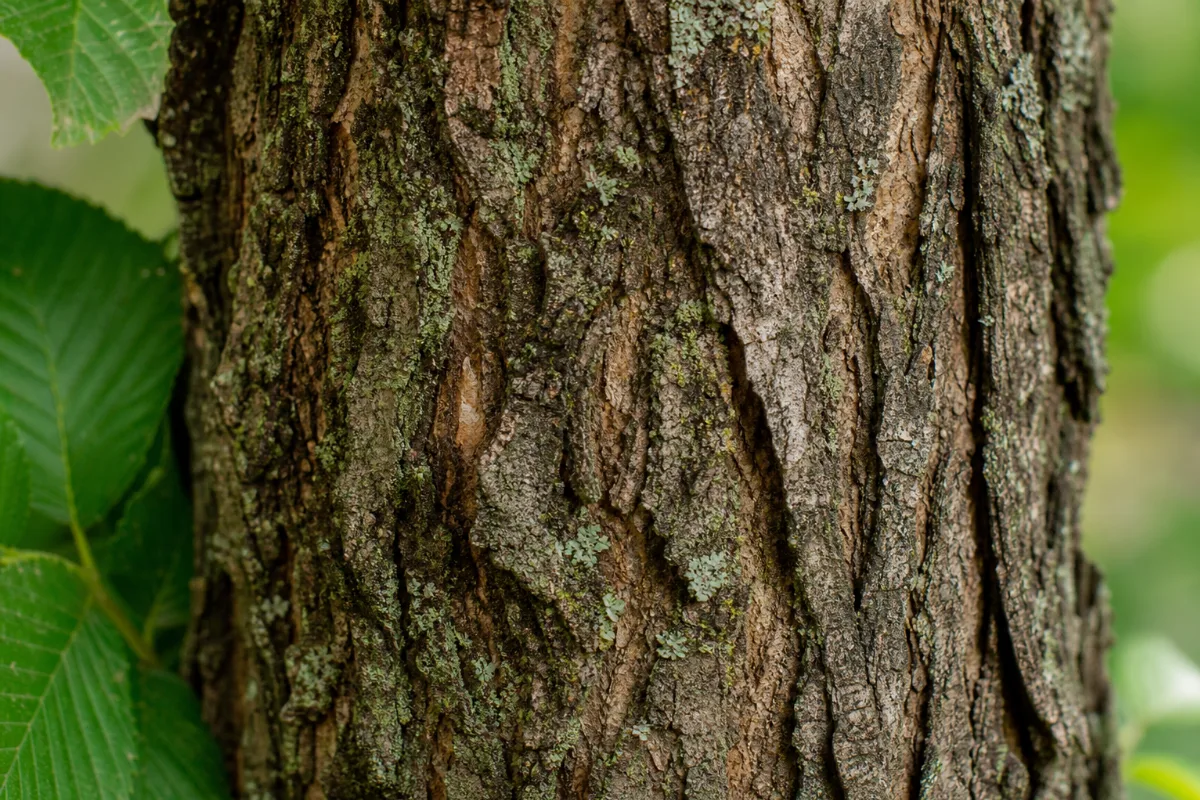
Slippery elm is a broad-leaved deciduous tree native to the eastern and central United States and Canada. [2] The part used is the inner bark. [2] The name refers to the slippery feel of the moistened inner bark, which contains mucilage (a viscous plant substance). [3] Other common names include red elm, gray elm and Indian elm. [1] This page is about the bark as a herb. For tea-style products, see demulcent teas.Names, plant part and family
The accepted name is Ulmus rubra Muhl., in the elm family (Ulmaceae). [4] Several elm species exist, and a product made from another elm is not the same herb. Please do not use this page to identify a tree; for wild plants, use local botanists or extension services.Traditional use (not proof)
Memorial Sloan Kettering says the bark is used for gastrointestinal disorders, sore throat, cough and skin ulcers. [1] LiverTox describes the inner bark used orally for sore throat and gastrointestinal upset and topically for rash and irritation. [2] A conservation article notes that Native Americans used a variety of tree barks as medicine, and that European settlers accepted slippery elm among a few of them. [3]What research shows
| Use | What the source found | Strength of evidence | Form and population |
|---|---|---|---|
| Cough and throat irritation | The mucilage is thought to relieve them, but human data are lacking. [1] Proper evidence not found: we searched PubMed for slippery elm and Ulmus rubra and found no trial of the bark alone for throat or cough. | Traditional use only | Bark preparations |
| Irritable bowel syndrome (constipation type) | In a small study, a formula containing slippery elm improved bowel habits and symptoms. [1] The result belongs to the whole formula, so it cannot be credited to slippery elm. | Insufficient evidence | Multi-ingredient formula |
| Digestive symptoms in a 43-person study | A 16-week before-and-after study tested a formula with seven ingredients including slippery elm; there was no comparison group. [5] | Insufficient evidence | Multi-ingredient powder, adults |
| Skin sores (topical) | The mucilage is thought to be soothing, but human data are lacking. [1] | Traditional use only | Topical |
| Cancer, diarrhea | Memorial Sloan Kettering says evidence is lacking for these claims. [1] | No good evidence of benefit | Various |
Memorial Sloan Kettering also says there is no evidence that slippery elm can treat infections, cancer or other serious medical conditions. [1] Be cautious of claims for formulas sold as cancer treatments. See herbs and cancer treatment.
Forms and why the form matters
The benefit claimed is a coating effect of mucilage, so the form could matter, but the sources we read do not compare forms such as bark powder, lozenge, capsule or tea. Results from a multi-herb formula do not transfer to the bark alone. See herb forms and preparations.Safety
- General safety. LiverTox says slippery elm preparations are generally recognized as safe and there is no evidence that it can cause liver enzyme elevations or clinically apparent liver injury. [2]
- Medicines. Not described in the sources we read, including whether the mucilage could slow the absorption of other medicines. Because absorption delay is documented for marshmallow root (another mucilage herb), ask a pharmacist about timing with your own medicines. [6] See how interactions work.
- Pregnancy, breastfeeding and children. Not described in the sources we read. Lack of information is not proof of safety. See pregnancy and breastfeeding and children and teens.
- Kidney, bleeding, surgery, allergy. Not described in the sources we read. Tell the surgical team about any herb: herbs before and after surgery. Stop and get care for hives, swelling or trouble breathing (911 in the US).
- A cough that lingers. A cough with fever, breathlessness or lasting more than a few weeks needs a clinician. See colds, flu and respiratory infections.
Conservation and sourcing
United Plant Savers keeps slippery elm on its "At-Risk" list because of the herb trade's dependence on wild-harvested bark. [3] The same article says the species is considered "secure" or "un-ranked" within its native range, but that Dutch elm disease and elm yellows are so widespread that slippery elm seldom reaches commercial size. [3] It also notes that attempts to cultivate trees for bark have been sporadic, and that cultivated material is a small part of the trade. [3] If the sourcing matters to you, ask the maker where the bark comes from. See at-risk medicinal plants and organic, wildcrafted and sustainably harvested herbs.Quality
Supplements may differ from their labels and results from one product may not apply to others. See quality testing and certifications.Official statements
No European herbal monograph for slippery elm was found in the pages we read. The US National Library of Medicine's LiverTox entry is the main official source we read. [2]Frequently asked questions
Does slippery elm help a sore throat?
It is traditionally used for this and thought to coat the throat, but human data are lacking. [1] Proper evidence not found for bark alone in our PubMed search.
Is slippery elm safe for the liver?
LiverTox found no evidence that it causes liver enzyme elevations or clinically apparent liver injury. [2]
Does slippery elm interact with medicines?
Not described in the sources we read. Ask a pharmacist, especially about timing with other medicines.
Is slippery elm endangered?
United Plant Savers lists it as "At-Risk" because of wild harvest and tree diseases, while noting it is considered secure in its native range. [3]
Is slippery elm good for IBS?
One small study of a formula containing slippery elm reported better bowel habits, but the effect cannot be credited to slippery elm alone. [1]
References
- Memorial Sloan Kettering Cancer Center, Slippery Elm (About Herbs). Last updated 30 June 2022. Read 2026-10-23.
- National Library of Medicine, LiverTox: Slippery Elm. Read via the PubMed Bookshelf record (PMID 38289993). Read 2026-10-23.
- Burkhart EP. Slippery Elm in the Herbal Marketplace: Past, Present & Future. United Plant Savers. Read 2026-10-23.
- GBIF Backbone Taxonomy, Ulmus rubra Muhl.. Read 2026-10-23.
- Nutr Res 2020, Herbal formula improves upper and lower gastrointestinal symptoms and gut health in Australian adults with digestive disorders. Nutr Res. 2020. Read 2026-10-23.
- European Medicines Agency, HMPC, European Union herbal monograph on Althaea officinalis L., radix (EMA/HMPC/436679/2015; revised 12 July 2016). Read 2026-10-23.