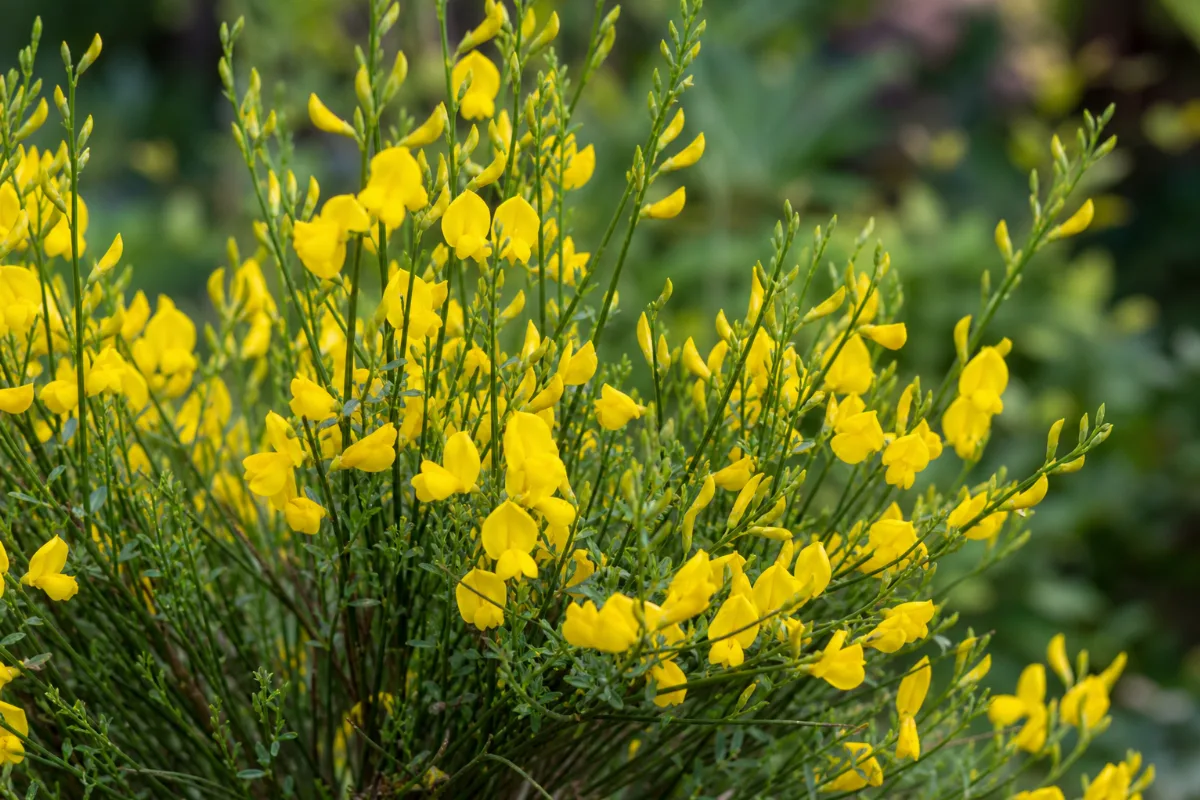
Herbs & Botanicals · Traditional heart herb, rated unsafe
Scotch broom
Cytisus scoparius · also called Common broom, English broom, broom tops, escoba negra (Spanish), genet a balais (French), Besenginster (German)
Scotch broom is a yellow-flowered shrub whose flowering tops were once used as a folk remedy for heart rhythm and fluid retention. No modern human trial supports those uses. Its main alkaloid, sparteine, affects the heartbeat and makes the womb contract, and poisoning has been reported. Do not take it, and never during pregnancy.
General information, not medical advice. Last substantive update · Not medically reviewed. A named clinician has not signed off on this page. How this page is made
About Scotch broom
Scotch broom (Cytisus scoparius) is a shrub of the pea family. Its flowering tops were used for the heart and as a water pill. Safety comes first: the alkaloid sparteine affects heart rhythm and the womb, the herb is rated likely unsafe, and poisoning has been reported.
Safety first
Do not take Scotch broom. A consumer reference rates it likely unsafe by mouth, saying it can cause heart and circulation problems, nausea and diarrhoea, and that poisoning can cause dizziness, headache, heartbeat changes, leg weakness, sweating, sleepiness and wide pupils.
Sparteine, the main alkaloid, is the reason. A European food regulator names changes in the heart's electrical conduction and anticholinergic effects as the critical harms from a single dose of sparteine (this was a lupin-food assessment, not about broom). In the 1960s sparteine was used to stimulate the womb; a paper called it potent and unpredictable.
Seeds and pods are widely described as poisonous. We did not find a source that confirms this, so treat it as a caution. Children and pets can be at risk from the pods.
What it is
Scotch broom is a yellow-flowered shrub, accepted name Cytisus scoparius, in the pea family (Fabaceae). It grows on heath and roadsides in Europe and is an invasive weed in other regions.
Do not confuse it with butcher's broom, an unrelated plant.
What is in it
The best-known compounds are quinolizidine alkaloids (sparteine, lupanine and others), flavonoids such as scoparin, and isoflavones. A consumer reference also says the plant contains tyramine; we could not confirm this in a primary source.
Alkaloid strength was not measured in any source we read, which is another reason no amount can be called safe.
What the research shows
No trial of the herb in people was found. The research is a consumer reference, a regulator's assessment of sparteine, an old paper on purified sparteine, a poisoning paper (title only) and lab work on antioxidant and nerve-cell effects.
The cell work used isolated minor alkaloids and says nothing about the safety or benefit of the herb.
Medicines to watch
The consumer reference lists major interactions with MAOI antidepressants (through tyramine, which could cause dangerously high blood pressure), haloperidol and quinidine (which slow the breakdown of broom's compounds), and a moderate one with lithium.
Sparteine is broken down by the CYP2D6 enzyme, and about 8 in 100 of 194 volunteers were slow breakers. That fits the drug interactions but was not tested with broom.
At a glance
Traditional uses history, not proof
- European folk use of the flowering tops as a heart remedy for fast or irregular heartbeat
- Used as a water pill for fluid retention and swelling
- Used for low blood pressure, heavy periods and bleeding after childbirth (a consumer reference says there is insufficient evidence to rate any of these)
Studied for research
- Heart rhythm: no human trial of the herb; the alkaloid sparteine was studied as a drug, and shows heart-conduction effects as a harm
- Fluid retention and blood pressure: no trial found
- Antioxidant and nerve-cell protection: lab and cell work only
Main compounds
- Sparteine, the main quinolizidine alkaloid (affects heart rhythm and the womb)
- Lupanine and 17-oxo-sparteine, minor alkaloids studied in nerve cells
- Flavonoids such as scoparin, and isoflavones (not verified in a source we read)
- Tyramine, reported by one reference but not verified
Common forms
- Dried flowering tops and tea, tinctures and extracts have been used traditionally
- Purified sparteine was a drug and is not the same as the herb
- No product is recommended; alkaloid strength varies and was not measured in any source we read
Research links: EFSA opinion on quinolizidine alkaloids (sparteine as reference compound), 2019 · Scotch Broom consumer reference (RxList) · Research Library · Genes & Biomarkers Library
The plant and its history
- Accepted scientific name
- Cytisus scoparius
- Naming authority
- (L.) Link
- Synonyms
- Sarothamnus scoparius; Spartium scoparium
- Common names
- Scotch broom (en); common broom (en); English broom (en); escoba negra (es); genet a balais (fr); Besenginster (de)
- Botanical family
- Fabaceae (pea family)
- Classification
- Plantae > Tracheophyta > Magnoliopsida > Fabales > Fabaceae > Cytisus > Cytisus scoparius
- Native range
- Western and central Europe; widely spread as an invasive weed elsewhere (see the 2024 expansion paper, title only).
- Habitat
- Heath, roadsides, disturbed ground.
- What the plant looks like
- Roots: Not covered in sources read.; Stems: Green, ridged, upright shrub stems.; Leaves: Small, few.; Flowers: Bright yellow pea-type flowers.; Fruit: Flattened pods holding hard seeds.
- Cultivation
- Not covered.
- Harvest and processing
- Flowering tops are the traditional part; no standard for alkaloid content found.
- Look-alikes and adulterants
- Name: Spanish broom (Spartium junceum); Note: Related yellow-flowered shrub with similar alkaloids; not verified in a source read.; Name: Gorse (Ulex europaeus); Note: Spiny yellow-flowered legume; also a phytotoxic weed (title read only).; Name: Butcher's broom (Ruscus aculeatus); Note: Unrelated plant with a similar common name; a different herb on this site.
- Sustainability and conservation
- Invasive weed in many regions.
Traditional use and history history, not clinical proof
| Tradition or era | Documented use | Source |
|---|---|---|
| European folk medicine | Heart complaints, fluid retention, low blood pressure; also heavy periods and bleeding after childbirth. | s-rxlist-scotch-broom |
| 1960s obstetrics | Purified sparteine sulfate used and studied as a uterus-stimulating drug. | p5900660 |
Traditional use shows how a plant was used. It does not show that a supplement works or is safe today.
What is inside, and how it may work
What the plant contains and how those compounds act in cells and animals. Laboratory and animal mechanisms are not proven effects in people.
Main compounds
| Compound | Family | Where it is concentrated | Activity studied | Level of evidence |
|---|---|---|---|---|
| Sparteine PubChem 644020 | Quinolizidine alkaloid | Aerial parts (content not measured in sources read) | Heart conduction changes, anticholinergic effects, uterine stimulation. 2 6 9 | Human (sparteine reference compound) + historical |
| Lupanine and 17-oxo-sparteine | Quinolizidine alkaloids | Plant (isolated) | Protected cultured nerve cells from amyloid-beta toxicity. 4 | Lab (cells) |
| Scoparin PubChem 20055255 | Flavonoid C-glycoside | Flowering tops (from general knowledge; not verified in a source read) | Often named as a traditional diuretic compound; not verified here. | Unverified |
| Isoflavones (for example genistein) PubChem 5280961 | Isoflavone | Fabaceae species including Cytisus (a 2025 isoflavone paper, title only) | Cell studies only. | Lab |
| Tyramine PubChem 5610 | Biogenic amine | Reported by consumer reference | Can raise blood pressure, especially with MAOIs. 7 | Secondary reference, NOT verified |
| Polyphenols | Phenolics | Flowers | Lab antioxidant activity. 3 8 | Lab |
Mechanisms, receptors and pathways
| Target or pathway | Gene or receptor | What was found | Level |
|---|---|---|---|
| Heart electrical conduction | Sodium channels (alkaloid family) | EFSA lists conduction changes as a critical effect of sparteine; a 2023 review lists anti-arrhythmia among the family's activities. 2 9 | Human (sparteine) + review |
| Nicotinic receptors | nAChR | Neuroprotection of cultured cells by lupanine and 17-oxo-sparteine was blocked by alpha-bungarotoxin. 4 | Lab (cells) |
| Uterine muscle | Not stated | Sparteine sulfate described as a potent oxytocic (title only). 6 | Human, title only |
Absorption, metabolism and elimination
- Absorption
- Not covered for the herb.
- Distribution
- Not covered.
- Metabolism
- Sparteine is broken down by the CYP2D6 enzyme; in 194 volunteers 7.7% were poor metabolisers, with genes outweighing smoking, coffee or the pill.
- Elimination
- Not covered.
- Bioavailability
- Not covered.
Isolated compounds versus whole extracts
Purified sparteine was a drug; whole broom tops contain a variable mix of alkaloids and flavonoids. Findings on the isolated alkaloid (heart, uterus) cannot be turned into doses for the herb, but they are the reason for the cautions.
Nutritional composition
Not a food. Not a source of any nutrient to rely on. Flowers have been explored as a food-ingredient source in lab reviews only.
6 not enough evidence
What is Scotch broom good for?
Every use listed here is traditional or lab-only, and each is rated insufficient. These rows are not recommendations; safety comes first on this page.
Benefits, one by one
Each card is a research question, not a promise. Tap a goal to filter. Open a card to see the studies, doses and limits.
Heart rhythm (traditional use and sparteine drug history)
Not enough evidenceScotch broom tops were traditionally used for fast or irregular heartbeat. The plant's main alkaloid, sparteine, was studied as a heart-rhythm drug. We found no modern trial of the herb for heart rhythm, and what the sources do show is that the same alkaloid can disturb the heartbeat.
3 studiesNot given. No amount is considered safe or tested here.
Studies, doses and limits
What the trials found
No clinical trial of Scotch broom for heart rhythm was found. The only human information is EFSA's use of sparteine as a reference compound (heart conduction changes), and a consumer reference advising people with heart disease not to use the plant.
Results
No benefit shown in people. The sources point to risk, not help.
Effect sizes as reported
None available.
Why this rating
No human trials of the herb; only secondary references, a regulator's food assessment and an alkaloid-family review.
Form and dose studied
Not given. No amount is considered safe or tested here.
Who was studied
Not tested in any defined group.
Limits
Alkaloid content of broom products varies and was not measured in any source read.
Why researchers looked
Sparteine is a quinolizidine alkaloid with reported anti-arrhythmia activity in lab work.
Traditional use
European folk use of broom tops for heart complaints, fast and irregular heartbeat. A consumer reference lists these uses and says there is insufficient evidence to rate them.
Proposed mechanism Lab and regulator risk assessment (lupin foods)
Sparteine-type alkaloids are reported to act on the heart's electrical signalling (sodium channels). EFSA names changes in heart electrical conduction as a critical effect of sparteine in people.
A proposed mechanism does not show that the effect happens in people.
Sparteine can alter heart conduction. Do not use for any heart problem; see your doctor for heart rhythm symptoms.
Fluid retention and water loss (diuretic use)
Not enough evidenceThe plant is traditionally used as a water pill. A consumer reference says it contains chemicals that might raise urine output, but rates the evidence as insufficient. No trial was found.
1 studiesNot given.
Studies, doses and limits
What the trials found
None found. A consumer reference lists fluid retention as a use with insufficient evidence to rate.
Results
No results.
Effect sizes as reported
None.
Why this rating
No human or animal study of diuretic effect was read.
Form and dose studied
Not given.
Who was studied
None.
Limits
No primary research read.
Why researchers looked
Traditional use for swelling and fluid retention; the flavonoid scoparin is often named as part of the traditional diuretic action, but we did not read a study that shows this.
Traditional use
Broom tops were used as a diuretic in European folk medicine.
Proposed mechanism Traditional / secondary reference
Said to increase urine output; mechanism not established in any source read.
A proposed mechanism does not show that the effect happens in people.
A diuretic effect is also the reason the reference warns about lithium: less lithium may be cleared and levels may rise. Safer, tested options exist for fluid retention; ask a doctor.
Blood pressure (low pressure, traditional use)
Not enough evidenceBroom was traditionally used for low blood pressure. The same reference warns it might narrow blood vessels and push blood pressure up, so it could worsen high blood pressure. No trial was found.
1 studiesNot given.
Studies, doses and limits
What the trials found
None found.
Results
No results.
Effect sizes as reported
None.
Why this rating
Single secondary source.
Form and dose studied
Not given.
Who was studied
None.
Limits
Tyramine content not verified in a primary source.
Why researchers looked
Traditional use; plausible pressure-raising action from the plant's chemicals.
Traditional use
Used for low blood pressure and poor circulation.
Proposed mechanism Secondary reference
Stated in one reference as a possible narrowing of blood vessels; not tested in any source read. Tyramine (reported by the same reference, not verified) can raise blood pressure, especially with MAOI antidepressants.
A proposed mechanism does not show that the effect happens in people.
People with high blood pressure are told to avoid it.
Heavy periods and bleeding after childbirth (traditional use) and uterus stimulation
Not enough evidenceBroom was traditionally used for heavy periods and bleeding after childbirth. Purified sparteine was a strong but unpredictable uterus-stimulating drug in the 1960s. This is a risk, not a benefit: the herb is rated likely unsafe in pregnancy.
2 studiesNot given.
Studies, doses and limits
What the trials found
A 1966 obstetrics paper on purified sparteine (title only read). No trial of the herb.
Results
No benefit shown; the signal is of harm in pregnancy.
Effect sizes as reported
None.
Why this rating
Uses are not rated; the only research points to uterine stimulation, a pregnancy risk.
Form and dose studied
Not given.
Who was studied
Pregnant people are the group at risk.
Limits
Abstract not available; secondary reference only.
Why researchers looked
Sparteine stimulates uterine contractions.
Traditional use
Used for heavy menstrual periods and bleeding after childbirth.
Proposed mechanism Historical clinical report, title only
The 1966 report's title calls sparteine sulfate a potent but 'capricious' oxytocic (a drug that makes the uterus contract). Details were not read.
A proposed mechanism does not show that the effect happens in people.
Rated likely unsafe by mouth in pregnancy (may cause miscarriage). Never use in pregnancy.
Antioxidant activity (lab only)
Not enough evidenceExtracts and flower polyphenols of broom plants mop up free radicals in the lab. This does not show a benefit in people.
2 studiesNot applicable.
Studies, doses and limits
What the trials found
None.
Results
Lab antioxidant activity reported; a 2024 review of Cytisus polyphenols calls for more research.
Effect sizes as reported
None meaningful.
Why this rating
Laboratory only.
Form and dose studied
Not applicable.
Who was studied
None.
Limits
Test-tube antioxidant tests rarely translate to benefits in people; the 2006 paper's abstract was not available.
Why researchers looked
The plant is rich in polyphenols and isoflavones.
Traditional use
None specific.
Proposed mechanism Lab
Free-radical scavenging in test tubes and in a rat liver preparation.
A proposed mechanism does not show that the effect happens in people.
Antioxidant claims do not outweigh the heart, pregnancy and poisoning cautions.
Nerve-cell protection (cells only)
Not enough evidenceTwo minor alkaloids from the plant protected cultured nerve cells from amyloid-beta toxicity. This is cell work on isolated compounds, far from any use in people.
1 studiesNot applicable.
Studies, doses and limits
What the trials found
None.
Results
About half to two-thirds less toxicity in cells at very low concentrations (one study).
Effect sizes as reported
Percent protection in cells; not meaningful for people.
Why this rating
One cell study of isolated compounds.
Form and dose studied
Not applicable.
Who was studied
None.
Limits
No animal or human data; the herb itself was not tested.
Why researchers looked
Lupanine and 17-oxo-sparteine act on nicotinic receptors.
Traditional use
None.
Proposed mechanism Lab (cells)
Activation of nicotinic receptors and Akt signalling in rat cells.
A proposed mechanism does not show that the effect happens in people.
The herb is not a treatment for memory problems and carries serious cautions.
Connections to the rest of health
How Scotch broom connects to the rest of our health knowledge graph. Every link says what kind of connection it is. A safety link (for example to the liver) is a warning, not a benefit. A study that merely mentions a topic never creates a benefit link.
Explore every connection: goals, body systems, organs, symptoms, genes
A. Wellness goals
| Connected to | Kind of connection | Evidence status | Context | Studies |
|---|---|---|---|---|
| Heart Health | Not enough evidence | Heart rhythm (traditional use and sparteine drug history): Scotch broom tops were traditionally used for fast or irregular heartbeat. The plant's main alkaloid, sparteine, was studied as a heart-rhythm drug. We found no modern trial of the herb for heart rhythm, and what the sources do show is that the same alkaloid can disturb the heartbeat. | 7 2 9 | |
| Healthy Circulation | Not enough evidence | Fluid retention and water loss (diuretic use): The plant is traditionally used as a water pill. A consumer reference says it contains chemicals that might raise urine output, but rates the evidence as insufficient. No trial was found. | 7 | |
| Blood Pressure Support | Not enough evidence | Blood pressure (low pressure, traditional use): Broom was traditionally used for low blood pressure. The same reference warns it might narrow blood vessels and push blood pressure up, so it could worsen high blood pressure. No trial was found. | 7 | |
| Womens Wellness | Not enough evidence | Heavy periods and bleeding after childbirth (traditional use) and uterus stimulation: Broom was traditionally used for heavy periods and bleeding after childbirth. Purified sparteine was a strong but unpredictable uterus-stimulating drug in the 1960s. This is a risk, not a benefit: the herb is rated likely unsafe in pregnancy. | 6 7 | |
| Cellular Protection | Not enough evidence | Antioxidant activity (lab only): Extracts and flower polyphenols of broom plants mop up free radicals in the lab. This does not show a benefit in people. | 8 3 | |
| Brain Health | Not enough evidence | Nerve-cell protection (cells only): Two minor alkaloids from the plant protected cultured nerve cells from amyloid-beta toxicity. This is cell work on isolated compounds, far from any use in people. | 4 |
B. Body systems
| Connected to | Kind of connection | Evidence status | Context | Studies |
|---|---|---|---|---|
| Heart & Circulation | Documented risk | Heartbeat and blood pressure effects. Preparation or compound: Whole herb / sparteine |
7 2 | |
| Reproductive Health | Documented risk | Uterine stimulation; pregnancy unsafe. Preparation or compound: Whole herb / sparteine |
6 7 | |
| Heart Circulation | Biological association | Not enough evidence | Studied for: Heart rhythm (traditional use and sparteine drug history) Studied for: Blood pressure (low pressure, traditional use) | 7 2 9 |
| Kidney Urinary | Biological association | Not enough evidence | Studied for: Fluid retention and water loss (diuretic use) | 7 |
| Reproductive Health | Biological association | Not enough evidence | Studied for: Heavy periods and bleeding after childbirth (traditional use) and uterus stimulation | 6 7 |
| Nervous System | Biological association | Not enough evidence | Studied for: Nerve-cell protection (cells only) | 4 |
J. Genes, receptors and enzymes
| Connected to | Kind of connection | Evidence status | Context | Studies |
|---|---|---|---|---|
| CYP2D6 | Preliminary mechanism | Human | Breaks down sparteine; slow-metaboliser status in about 8% of 194 volunteers. | 1 |
L. Active compounds
| Connected to | Kind of connection | Evidence status | Context | Studies |
|---|---|---|---|---|
| Sparteine | Reference only | Main alkaloid; acts on heart conduction and the uterus. Preparation or compound: Quinolizidine alkaloid |
2 6 | |
| Sparteine | Biological association | Human (sparteine reference compound) + historical | Heart conduction changes, anticholinergic effects, uterine stimulation. Preparation or compound: Aerial parts (content not measured in sources read) |
2 6 9 |
| Lupanine and 17-oxo-sparteine | Biological association | Lab (cells) | Protected cultured nerve cells from amyloid-beta toxicity. Preparation or compound: Plant (isolated) |
4 |
| Scoparin | Biological association | Unverified | Often named as a traditional diuretic compound; not verified here. Preparation or compound: Flowering tops (from general knowledge; not verified in a source read) |
|
| Isoflavones (for example genistein) | Biological association | Lab | Cell studies only. Preparation or compound: Fabaceae species including Cytisus (a 2025 isoflavone paper, title only) |
|
| Tyramine | Biological association | Secondary reference, NOT verified | Can raise blood pressure, especially with MAOIs. Preparation or compound: Reported by consumer reference |
7 |
| Polyphenols | Biological association | Lab | Lab antioxidant activity. Preparation or compound: Flowers |
3 8 |
Each connection is stored with the ingredient, the connected record, the kind of connection, the evidence status, the supporting studies, the preparation or compound involved, and a review date (last reviewed October 25, 2026).
The evidence
The research centre for Scotch broom. Every record here was checked against PubMed or the publisher's page; we never list a study we have not verified.
Evidence by outcome
Bars show how many studies we found for each outcome, not how well it works. People are added up across trials only (reviews are not added, to avoid double counting).
How we rate evidence
High certainty
Several well-run trials or reviews agree; further research is unlikely to change the picture much.
Moderate certainty
Good trials point the same way, but some doubt remains.
Low certainty
Small, short or inconsistent trials. The finding could change with better research.
Very low certainty
Very little or very weak human data. Treat as a possibility only.
Mixed findings
Trials or reviews disagree with each other.
Not enough evidence
Not enough human research to say either way.
Evidence against
Good research found no benefit, or found harm.
We take the reviewers' own risk-of-bias and GRADE statements where they exist, and otherwise judge from study size, design, consistency, directness and whether a product matches what is sold. Many publications do not make evidence high. Method note: We searched PubMed, PubChem, GBIF and NCBI Taxonomy, and read a consumer natural-medicines reference. Items for which only a title was available are marked as such.
Study library: every study we checked 12
| Study | Design | People | Product, dose, length | Result |
|---|---|---|---|---|
| Bock 1994 The influence of environmental and genetic factors on CYP2D6, CYP1A2 and UDP-glucuronosyltransferases in man using sparteine, caffeine, and paracetamol as probes. Pharmacogenetics · PMID 7987405 · DOI |
Human metabolism study |
194 194 volunteers |
Sparteine (probe) n/a |
In 194 volunteers, how fast people broke down sparteine split into groups; 7.7% were 'poor metabolisers' of sparteine through the CYP2D6 enzyme. Genes mattered more than smoking, coffee, the pill or sex. Methods, limits and fundingLimitations: Sparteine was given as a test probe, not as a herb; says nothing about broom products. Applies to the alkaloid, so only a clue to what could happen with the herb. Funding and conflicts: Not stated in the record read. Read: abstract read |
| EFSA Panel on Contaminants in the Food Chain (CONTAM) 2019 Scientific opinion on the risks for animal and human health related to the presence of quinolizidine alkaloids in feed and food, in particular in lupins and lupin-derived products. EFSA Journal · PMID 32626161 · DOI |
Regulatory risk assessment human and animal (lupin food; sparteine as reference compound) |
Quinolizidine alkaloids (sparteine as reference) Lupin seeds (not broom) |
After a single dose of sparteine (the reference compound), anticholinergic effects and changes in the heart's electrical conduction are the critical effects for people. EFSA used a lowest single oral effective dose of 0.16 mg sparteine per kg body weight as its reference point. Information on toxicity in animals and humans is limited and no reference point could be set for long-term exposure. Methods, limits and fundingLimitations: About lupin seeds and lupin foods, not Scotch broom. The sparteine finding is used here only as a guide to what the alkaloid can do. The plant's own sparteine content was not measured in any source read. Funding and conflicts: Not stated in the record read. Read: abstract read | |
| Ferreira-Sousa 2024 Exploration of Polyphenols Extracted from Cytisus Plants and Their Potential Applications: A Review. Antioxidants (Basel) · PMID 38397790 · DOI |
Narrative review lab / plant chemistry (genus Cytisus) |
Cytisus polyphenols Mostly flowers |
Reviews Cytisus plants as an inexpensive source of polyphenols for food, packaging and cosmetic uses, and notes possible anticancer and antibacterial uses. The authors say more research is needed. Methods, limits and fundingLimitations: Narrative review of the genus, mostly lab work; says nothing about safety or benefit in people. Its focus is food and industry uses. Funding and conflicts: Not stated in the record read. Read: abstract read | |
| Gavilan 2019 17 Oxo Sparteine and Lupanine, Obtained from Cytisus scoparius, Exert a Neuroprotection against Soluble Oligomers of Amyloid-beta Toxicity by Nicotinic Acetylcholine Receptors. J Alzheimers Dis · PMID 30584148 · DOI |
Cell culture study lab (rat PC12 cells and rat hippocampal neurons) |
Lupanine and 17-oxo-sparteine (isolated) Plant (not specified in abstract) |
Two alkaloids isolated from the plant (lupanine and 17-oxo-sparteine, not sparteine itself) lowered amyloid-beta toxicity in cultured cells by about half to two-thirds (for example 64% for lupanine and 57% for 17-oxo-sparteine in PC12 cells). The effects were blocked by alpha-bungarotoxin, pointing to nicotinic receptors. Methods, limits and fundingLimitations: Cells only; isolated compounds, not the herb; no animal or human data; says nothing about safety of the herb. Funding and conflicts: Not stated in the record read. Read: abstract read | |
| Herranz Perez 2013 [Scotch broom poisoning]. (Spanish-language clinical paper) Rev Clin Esp (Barc) · PMID 23384577 · DOI |
Clinical report (details not read) |
Scotch broom (presumed) Not stated |
The title shows that poisoning with Scotch broom has been reported in a clinical journal. No case details were read. Methods, limits and fundingLimitations: No abstract available; only the title is cited. We cannot say how many people were affected, what they took, or how they recovered. Funding and conflicts: Not stated in the record read. Read: Title and bibliographic record only; PubMed holds no abstract, so case details were NOT read | |
| Newton 1966 Sparteine sulfate: a potent, capricious oxytocic. Am J Obstet Gynecol · PMID 5900660 · DOI |
Historical clinical report (design not stated in the record) |
Sparteine sulfate (purified alkaloid) n/a |
The title describes purified sparteine sulfate as a strong but unpredictable ('capricious') uterus-stimulating drug. No numbers were read. Methods, limits and fundingLimitations: No abstract available; only the title is cited. About purified sparteine, not the herb. Funding and conflicts: Not stated in the record read. Read: Title and bibliographic record only; PubMed holds no abstract, so results were NOT read | |
| RxList 2026 Scotch Broom (consumer natural-medicines reference) RxList · Source |
Secondary consumer reference (monograph) human (reference summary) |
Scotch broom (flowering tops / aerial parts) Flowers and above-ground parts |
Rates oral use LIKELY UNSAFE; heart and circulation problems, nausea and diarrhoea; poisoning symptoms listed; pregnancy and breastfeeding LIKELY UNSAFE (may cause miscarriage); advises people with heart disease not to use it; may raise blood pressure; major interaction ratings for haloperidol, MAOI antidepressants (tyramine) and quinidine; moderate for lithium; uses listed as 'insufficient evidence to rate'. Methods, limits and fundingLimitations: Secondary source; does not cite primary studies in the text read; tyramine content and interaction mechanisms not checked in a primary source. Amount figures in the source are deliberately not repeated here. Funding and conflicts: Not stated in the record read. Read: read in full on 2026-10-25 | |
| Sundararajan 2006 Cytisus scoparius link--a natural antioxidant. BMC Complement Altern Med · PMID 16542432 |
Laboratory study (test tube and rat liver preparation) lab (test tube / rat tissue) |
Extract of aerial parts Aerial parts |
An extract of the aerial parts was reported to mop up free radicals in lab tests. No numbers were read. Methods, limits and fundingLimitations: Lab only; no abstract read. Does not show any benefit in people. Funding and conflicts: Not stated in the record read. Read: Title and bibliographic record only; PubMed holds no abstract. The one-line description comes from our earlier summary, not re-opened | |
| Zhang 2023 The biological activities of quinolizidine alkaloids. Alkaloids Chem Biol · PMID 36731966 · DOI |
Book chapter review lab / chemistry (alkaloid family) |
Quinolizidine alkaloids Various |
Groups quinolizidine alkaloids (lupinine-, matrine- and sparteine-type) and lists reported activities including anti-arrhythmia, anticancer, antibacterial and anti-inflammatory. The authors call for more targeted research. Methods, limits and fundingLimitations: General review of the alkaloid family, not of Scotch broom. Reported activities are mostly from lab work. Funding and conflicts: Not stated in the record read. Read: abstract read | |
| s-gbif-cytisus-scoparius GBIF Backbone Taxonomy: Cytisus scoparius (L.) Link · Source |
Taxonomic database record n/a |
Methods, limits and fundingRead: record read via API 2026-10-25 | ||
| s-ncbi-taxonomy-3835 NCBI Taxonomy: Cytisus scoparius · Source |
Taxonomic database record n/a |
Methods, limits and fundingRead: ID found via esearch 2026-10-25 (record page not opened) | ||
| s-pubchem-sparteine PubChem: sparteine (CID 644020), scoparin (CID 20055255), tyramine (CID 5610), genistein (CID 5280961) · Source |
Chemical database record n/a |
Methods, limits and fundingRead: CIDs and formulas read via API 2026-10-25 |
What we do not know yet
- What the evidence supports: nothing for benefit. Sources support caution on heart rhythm, pregnancy, blood pressure and poisoning.
- What is uncertain: sparteine content of products, tyramine content, and the details of the 2013 poisoning paper (title only).
- What we did not check: EMA/HMPC, NCCIH, LiverTox and LactMed records for Scotch broom.
How new research is added
New studies are found by a saved PubMed search and are placed in a review queue. A person reads each one before it changes any evidence rating or safety wording.
Lab markers
What changed in blood or saliva tests during trials. A changed number is not the same as feeling or being healthier, and we give no "normal ranges".
Safety
What studies and official sources say about side effects, medicines and who should check first. Each point shows what kind of evidence it comes from.
Main points to know 5
- Not safe for self-use. Scotch broom is rated likely unsafe by mouth in a consumer reference, and we found no source that supports a safe way to take it. The main danger is the alkaloid sparteine, which acts on the heart's rhythm and on the uterus. Secondary reference + regulator assessment of sparteine 7 2
- Heart rhythm. After a single dose of sparteine, EFSA treats changes in the heart's electrical conduction and anticholinergic effects as the critical harms. The reference advises anyone with heart disease not to use broom. Regulator (lupin food, sparteine as reference) + reference 2 7
- Pregnancy. Sparteine was used as a drug to stimulate the womb in the 1960s, described in its title as potent and unpredictable. The herb is rated likely unsafe in pregnancy and may cause miscarriage. Do not use it if pregnant or trying to become pregnant. Historical report (title only) + reference 6 7
- Blood pressure and MAOI antidepressants. The reference says the plant might narrow blood vessels and raise blood pressure, and that it contains tyramine, which can cause dangerously high blood pressure with MAOI antidepressants. We could not confirm the tyramine content in a primary source. Secondary reference only 7
- Poisoning has been reported. A clinical journal has published a paper titled 'Scotch broom poisoning' (details not read). The reference lists dizziness, headache, heartbeat changes, leg weakness, sweating, sleepiness and wide pupils as poisoning signs. Seeds and pods are widely described as poisonous (NOT verified in a source we read). Case report (title only) + reference 5 7
Side effects 5
| Effect | How often | Severity and recovery | Evidence |
|---|---|---|---|
| Heart rhythm changes, slow or irregular heartbeat Frequency unknown. | Not established | potentially serious unknown | Secondary reference + regulator (sparteine) 7 2 |
| Nausea and diarrhoea | Not established | mild to moderate unknown | Secondary reference 7 |
| Dizziness, headache, leg weakness, sweating, sleepiness, widened pupils (poisoning picture) The 2013 case paper's details were not read. | Not established | moderate to serious unknown | Secondary reference 7 |
| Anticholinergic effects (such as dry mouth, wide pupils, fast pulse) Described for sparteine after a single dose, in lupin food assessment. | Not established | moderate unknown | Regulator (sparteine reference compound) 2 |
| Raised blood pressure Stated as a possibility. | Not established | moderate to serious unknown | Secondary reference 7 |
Liver
No liver injury reports for Scotch broom were found in the sources read, and LiverTox was not checked for a Scotch broom entry (not found / not verified). Absence of evidence is not evidence of safety.
How often. Unknown.
Monitoring. No monitoring advice exists because use is not advised.
This is a safety connection. It is not evidence that Scotch broom supports liver health.
Medicines and supplements 5
| With | Why it matters | Importance | Evidence | What to do |
|---|---|---|---|---|
| MAOI antidepressants (for example phenelzine, tranylcypromine) drug | Reference says the plant contains tyramine, which MAOIs stop the body from clearing; tyramine content NOT verified in a primary source. | Rated Major in the reference: dangerously high blood pressure. | Secondary reference Low certainty 7 | Do not combine. |
| Haloperidol drug | Reference says haloperidol slows the breakdown of broom's compounds, so effects may build up. Sparteine is broken down by CYP2D6 (7.7% of 194 volunteers were slow breakers), which fits a metabolism-based interaction, but this was not tested with broom. | Rated Major in the reference. | Secondary reference + human metabolism study of sparteine Low certainty 7 1 | Do not combine. |
| Quinidine drug | As above: quinidine said to slow breakdown of broom's compounds. Quinidine is itself a heart-rhythm drug. | Rated Major in the reference. | Secondary reference Low certainty 7 | Do not combine. |
| Lithium drug | A water-pill effect may reduce lithium clearance and raise lithium levels. | Rated Moderate in the reference. | Secondary reference (theoretical) Very low certainty 7 | Talk to your prescriber; best avoided. |
| Heart-rhythm and blood-pressure medicines in general drug class | Overlapping effects on heart conduction and blood pressure; no studies read. | Unknown but plausible. | Theoretical Not enough evidence 2 7 | Ask a doctor or pharmacist before any use. |
Who should check first 7
| Situation | Advice | Evidence |
|---|---|---|
| Pregnancy and trying to conceive | Do not use; may cause miscarriage and sparteine stimulates the uterus. | Reference + historical report 7 6 |
| Breastfeeding | Rated likely unsafe; do not use. LactMed was not checked (not verified). | Secondary reference 7 |
| Any heart disease or rhythm problem | Do not use. | Reference + regulator (sparteine) 7 2 |
| High blood pressure | Avoid; may raise pressure. | Secondary reference 7 |
| Kidney disease | Avoid; the reference says some chemicals may worsen it. | Secondary reference 7 |
| Taking an MAOI, haloperidol, quinidine or lithium | Do not use. | Secondary reference 7 |
| Children | No safety data read; do not give. Children are also at risk from seed pods in the garden. | No data |
Overdose, product quality and regulators
Summary. Sparteine, the main alkaloid, causes anticholinergic effects and heart-conduction changes in people. EFSA used 0.16 mg of sparteine per kg body weight as the lowest single oral effective dose in its lupin assessment. The reference describes poisoning with a mix of nerve and heart signs.
Animal. Sparteine is studied in rat brain and seizure models (not read in detail for this page); lab work shows sparteine acts on the nervous system.
Human doses studied. None safely established; no trial found.
High dose or long term signals. No reference point could be set for long-term exposure.
Overdose response. Get urgent medical help; seek poison-control advice. Poisoning signs are listed in the reference.
Genotoxicity. Not assessed in sources read.
Toxic plant parts. Seeds and pods are widely described as poisonous; NOT verified in a source we read. Alkaloid content varies by plant part, season and site, and was not measured in any source read.
No contamination or adulteration reports for broom products were found. Alkaloid content is likely to vary from batch to batch.
Strength varies. No source gave sparteine content for broom products; because the dose-response of sparteine is narrow, product variation is a risk (inference, not a finding from a study). 2
Look-alikes. Other yellow-flowered pea-family shrubs (gorse, Spanish broom, other Cytisus and Genista species) contain related alkaloids; the plant is easy to mix up.
| Body | Action | Date |
|---|---|---|
| EFSA CONTAM Panel (EU) | Opinion on quinolizidine alkaloids in lupin foods that uses sparteine as reference compound; not about broom. source | 2019 |
When to get medical help
- Slow, fast or irregular heartbeat, fainting, chest pain or tightness after taking broom
- Severe headache or pounding head with very high blood pressure (especially with an MAOI)
- Dizziness, sweating, leg weakness, heavy sleepiness or unusually wide pupils
- Cramping or bleeding in pregnancy
- Any suspected poisoning, including a child who has eaten seed pods: call poison control or emergency services at once
Stop the supplement and contact a clinician or emergency service. In the US, Poison Control is 1-800-222-1222.
General information only, not medical advice. Ask a clinician or pharmacist before use, especially with medicines, in pregnancy or with a health condition. See the Natural Remedy Safety guide.
Frequently asked questions
Is Scotch broom safe to take?
Can Scotch broom be used in pregnancy?
Does Scotch broom help the heart?
What is sparteine?
Is Scotch broom a diuretic?
It is traditionally used as a water pill, but evidence is insufficient and it may affect lithium levels.
Can it raise or lower blood pressure?
The reference says it might raise blood pressure and worsen high blood pressure; it was also used for low blood pressure. No trial settles it.
Which medicines does it clash with?
Are the seeds and pods poisonous?
They are widely described as poisonous, but we did not find a source that states it. Keep children and pets away.
Has poisoning been reported?
Is it the same as cytisine or wild indigo?
No. They are different plants with related alkaloid types, with their own cautions. See the wild indigo page.
What are the signs to get urgent help?
Explore by health goal
Heart HealthHealthy CirculationBlood Pressure SupportWomens WellnessCellular ProtectionBrain Health
Editorial transparency
- Written by
- AlternativeMed editorial team. Research compiled with AI assistance, then checked against PubMed records.
- Medical review
- None. This page has not been reviewed by a physician or pharmacist.
- First published
- 2026-10-25
- Last substantive update
- 2026-10-25
- How we research
- We searched PubMed, PubChem, GBIF and NCBI Taxonomy, and read a consumer natural-medicines reference. Items for which only a title was available are marked as such.
- How we rate evidence
- See "How we rate evidence" in the Evidence tab.
- Independence
- No product is promoted on this page. No affiliate links are shown. If one is added later it will be labelled and kept apart from the evidence.
Sources 12
Each source was opened and checked. Where we read only the abstract, it says so. The small numbers in the text point here.
- Bock KW, Schrenk D, Forster A, et al.. The influence of environmental and genetic factors on CYP2D6, CYP1A2 and UDP-glucuronosyltransferases in man using sparteine, caffeine, and paracetamol as probes.. Pharmacogenetics. 1994. PMID 7987405. DOI 10.1097/00008571-199408000-00005. (abstract read)
- EFSA Panel on Contaminants in the Food Chain (CONTAM). Scientific opinion on the risks for animal and human health related to the presence of quinolizidine alkaloids in feed and food, in particular in lupins and lupin-derived products.. EFSA Journal. 2019. PMID 32626161. DOI 10.2903/j.efsa.2019.5860. (abstract read)
- Ferreira-Sousa D, Genisheva Z, Rodriguez-Yoldi MJ, Gullon B, et al.. Exploration of Polyphenols Extracted from Cytisus Plants and Their Potential Applications: A Review.. Antioxidants (Basel). 2024. PMID 38397790. DOI 10.3390/antiox13020192. (abstract read)
- Gavilan J, Mennickent D, Ramirez-Molina O, et al.. 17 Oxo Sparteine and Lupanine, Obtained from Cytisus scoparius, Exert a Neuroprotection against Soluble Oligomers of Amyloid-beta Toxicity by Nicotinic Acetylcholine Receptors.. J Alzheimers Dis. 2019. PMID 30584148. DOI 10.3233/JAD-180945. (abstract read)
- Herranz Perez X, Sanchez Sitjes L, Malo Barres A, Garcia Cors M. [Scotch broom poisoning]. (Spanish-language clinical paper). Rev Clin Esp (Barc). 2013. PMID 23384577. DOI 10.1016/j.rce.2012.07.001. (Title and bibliographic record only; PubMed holds no abstract, so case details were NOT read)
- Newton BW, Benson RC, McCorriston CC. Sparteine sulfate: a potent, capricious oxytocic.. Am J Obstet Gynecol. 1966. PMID 5900660. DOI 10.1016/0002-9378(66)90469-8. (Title and bibliographic record only; PubMed holds no abstract, so results were NOT read)
- RxList. Scotch Broom (consumer natural-medicines reference). RxList. 2026. (read in full on 2026-10-25)
- Sundararajan R, et al.. Cytisus scoparius link--a natural antioxidant.. BMC Complement Altern Med. 2006. PMID 16542432. (Title and bibliographic record only; PubMed holds no abstract. The one-line description comes from our earlier summary, not re-opened)
- Zhang J, Liu Y, Fang X, et al.. The biological activities of quinolizidine alkaloids.. Alkaloids Chem Biol. 2023. PMID 36731966. DOI 10.1016/bs.alkal.2022.06.001. (abstract read)
- . GBIF Backbone Taxonomy: Cytisus scoparius (L.) Link. . . (record read via API 2026-10-25)
- . NCBI Taxonomy: Cytisus scoparius. . . (ID found via esearch 2026-10-25 (record page not opened))
- . PubChem: sparteine (CID 644020), scoparin (CID 20055255), tyramine (CID 5610), genistein (CID 5280961). . . (CIDs and formulas read via API 2026-10-25)