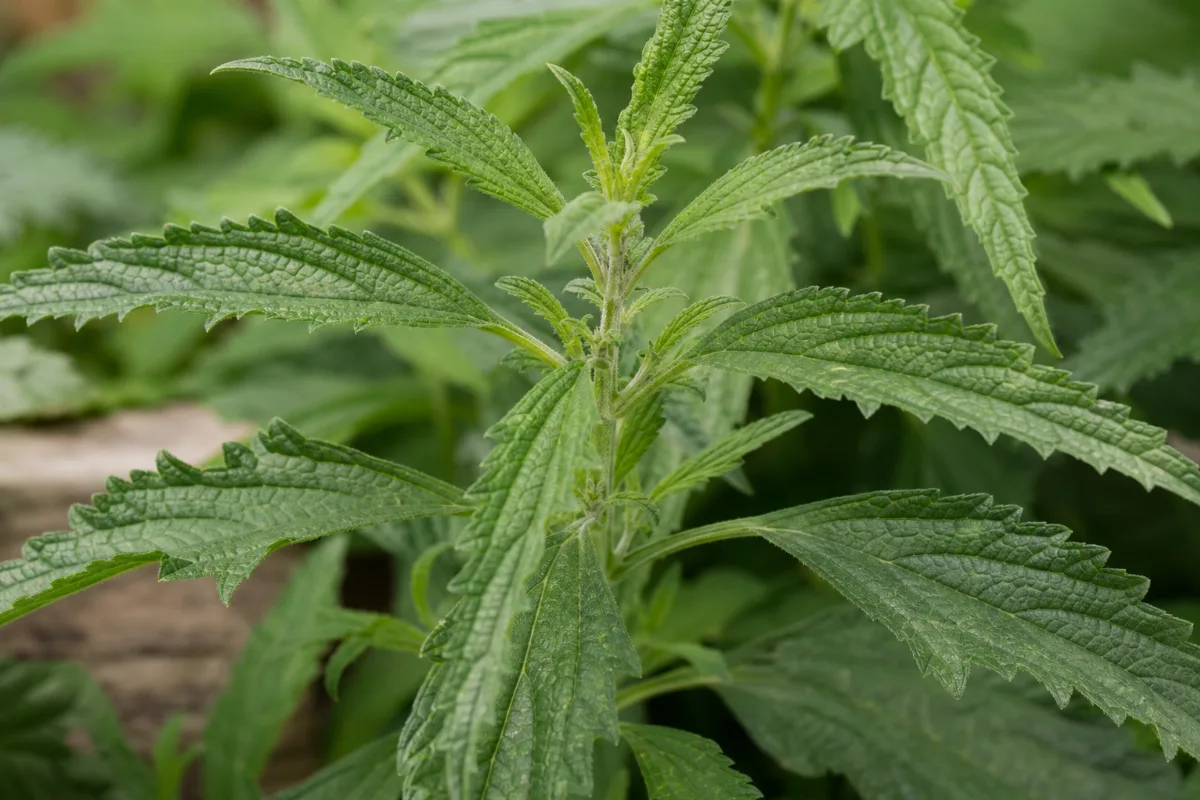
Herbs & Botanicals · South African calming herb
Lion's tail
Leonotis leonurus · also called Wild dagga, lion's ear, wilde dagga
Lion's tail, also called wild dagga, is a South African herb whose leaves and flowers are smoked or brewed for calm and for epilepsy. We found no human trial of it for any use. The only brain tests are in zebrafish larvae, and the best-known animal studies suggest water extracts may not be safe. It is not cannabis, but it is reported to have a mild mind-altering effect, so check with a doctor or pharmacist first, especially if you take sedatives or other medicines.
General information, not medical advice. Last substantive update · Not medically reviewed. A named clinician has not signed off on this page. How this page is made
About Lion's tail
Lion's tail (Leonotis leonurus), called wild dagga or wild cannabis in South Africa, is a shrub whose leaves and flowers are smoked or brewed for calm, epilepsy and many skin and chest complaints. Despite the nickname it is not cannabis; it belongs to the mint family. Research is sparse: no human trial, fish-larvae tests of its smoke, rat and cell studies of its main compound marrubiin, and rat safety studies that warn against oral use of water extracts. It may also be sold in blends that have had synthetic drugs added. Ask a doctor or pharmacist before using it, especially if you are pregnant, take sedatives, seizure, heart, blood pressure or diabetes medicines, or have liver or kidney disease.
What it is
Lion's tail is a South African plant of the mint family (Lamiaceae). Its Latin name is Leonotis leonurus. The leaves and flowers are used.
It is not cannabis. The names 'wild dagga' and 'wild cannabis' come from a reported mild psychoactive effect when it is smoked, not from a botanical link.
What makes it distinctive
The main chemicals are labdane diterpenes, especially marrubiin. More than 50 compounds have been found. Leonurine, often named online as its active alkaloid, was not detected in a lab test of one sample.
Historical and current uses
Traditional healers use a decoction for skin, cramps, headache and chest complaints, and smoke the leaves and flowers for epilepsy. A 2024 overview lists it among psychoactive plants used in southern Africa whose commercial use is growing fast.
What the research shows
There is no human trial. Smoke compounds suppressed drug-triggered seizure-like movement and showed possible anxiety-lowering effects in zebrafish larvae. In obese rats, marrubiin improved insulin and cholesterol markers. A computer study predicted mood-related targets. All of this is early lab work.
At a glance
Traditional uses history, not proof
- Leaves and flowers smoked for epilepsy and a mild euphoric lift
- Decoction (boiled tea) taken by mouth or put on the skin for piles, eczema, rashes, boils, cramps, headache, chest infections and constipation
- Used in the Eastern Cape for nerve-related ailments
Studied for research
- Calming and anxiety: fish-larvae test only
- Seizures: fish-larvae test only
- Blood sugar and cholesterol: rat and cell studies
- Heart, blood pressure and womb: no study
- Low mood: computer prediction only
Main compounds
- Marrubiin and other labdane diterpenes
- Leoleorin A and B (found in smoke)
- Phenolics and a small amount of stachydrine
Common forms
- Dried leaf, smoked
- Dried flower, smoked
- Leaf or shoot tea (decoction)
- Solvent extracts used in labs
- Commercial smoking blends (quality varies)
Research links: Review: traditional use and chemistry (2015) · Smoke compounds in zebrafish larvae (2024) · Rat safety study, shoots (2008) · Rat safety study, leaves (2010) · Research Library · Genes & Biomarkers Library
The plant and its history
- Accepted scientific name
- Leonotis leonurus (L.) R.Br.
- Naming authority
- (L.) R.Br.
- Common names
- Lion's tail (English); Wild dagga (English); Lion's ear (English); Wilde dagga (Afrikaans)
- Botanical family
- Lamiaceae (the mint family).
- Classification
- Plantae > Tracheophyta > Magnoliopsida > Lamiales > Lamiaceae > Leonotis > Leonotis leonurus
- Native range
- Described as endemic to South Africa in one abstract (p33172494); not verified from a primary source.
- Habitat
- Not verified here.
- What the plant looks like
- Roots: Roots are used in traditional medicine (p26292023); structure not verified.; Stems: Not verified.; Leaves: Leaves are used (p26292023); structure not verified.; Flowers: Flowers are used (p26292023); colour and form not verified here.; Fruit: Not verified.
- Cultivation
- Not verified.
- Harvest and processing
- Leaves and flowers are dried and smoked, or boiled as a decoction (p26292023).
- Look-alikes and adulterants
- Name: Motherwort (Leonurus cardiaca) and Chinese motherwort (Leonurus japonicus); Note: Different genus in the same subfamily; similar names. Leonurine was found in L. japonicus but not in the Leonotis leonurus sample tested (p23346757). Motherwort has its own page on this site.; Name: Cannabis (Cannabis sativa); Note: Unrelated plant family. 'Wild dagga' and 'wild cannabis' refer to a reported mild psychoactive effect, not to botanical relationship (p26292023). Cannabis family not looked up in this build.
- Sustainability and conservation
- Not assessed.
Traditional use and history history, not clinical proof
| Tradition or era | Documented use | Source |
|---|---|---|
| South African traditional medicine | Decoction by mouth and on skin for many complaints; leaves and flowers smoked for epilepsy and mild euphoria (p26292023). | p26292023 |
| Eastern Cape folk use | Used for neurological disorders (title of p32206490); details not in the abstract. | p32206490 |
| Modern use | Commercial growth as a psychoactive and herbal plant in southern Africa (p38855756). Pharmacopoeia/EMA monograph NOT found. | p38855756 |
Traditional use shows how a plant was used. It does not show that a supplement works or is safe today.
What is inside, and how it may work
What the plant contains and how those compounds act in cells and animals. Laboratory and animal mechanisms are not proven effects in people.
Main compounds
| Compound | Family | Where it is concentrated | Activity studied | Level of evidence |
|---|---|---|---|---|
| Marrubiin PubChem 73401 | labdane diterpene lactone | leaf (major diterpene reported) not reported | Main diterpene reported in the plant (p26292023). Raised insulin secretion and improved cholesterol markers in obese rats (p22326550). Lab/animal only. 10 7 9 | Animal research |
| Leoleorin A and B | labdane diterpenoids | smoke of aerial parts not reported | Main smoke compounds; reduced seizure-like behaviour in zebrafish larvae (p38688356). PubChem CID not looked up. 11 | Animal research |
| Leonurine | guanidine alkaloid | not detected in the Leonotis leonurus sample not detected | Often named in popular writing as the mild psychoactive alkaloid of lion's tail, but a scientific analysis did not detect it in one sample (p23346757) and the review says it has never been reported by scientific analysis (p26292023). CID not looked up. 3 10 | Theory |
| Stachydrine | betaine | aerial parts 0.3% (w/w) in aerial parts, per one analysis | Reported heart and blood-pressure effects in a few papers on other plants (p23923634). CID not looked up. 4 | Laboratory research |
| Possible fatty amide (tentatively adrenoyl-ethanolamine) | fatty acid amide | flower not reported | Tentative identification; cannabis-like candidate. No activity tested in the abstract (p33172494). 2 | Laboratory research |
| Phenolics (rutoside, hyperoside, isoquercitrin, chlorogenic, caffeic and cichoric acids, lavandulifolioside) | phenolic acids and flavonoids | aerial parts not extracted | Quality-control fingerprint compounds (p30725575). Antioxidant activity in tubes (p32206490). 5 15 | Laboratory research |
Mechanisms, receptors and pathways
| Target or pathway | Gene or receptor | What was found | Level |
|---|---|---|---|
| Seizure-like activity and anxiety-like behaviour | not established | Smoke extract and leoleorin A/B reduced drug-induced seizure-like movement in zebrafish larvae and changed anxiety-like behaviour. 11 | Animal research |
| Insulin secretion and fat-tissue gene activity | PPAR gamma, glucokinase, FAS, UCP2, insulin, GLUT2 | Extract and marrubiin raised these in cells and fat tissue of obese rats. 7 13 | Animal research |
| Serotonin transporter and MAO (predicted) | SLC6A4, MAOA, MAOB | Computer prediction only; no experiment. 8 | In silico |
Absorption, metabolism and elimination
- Absorption
- No data in people or animals found for lion's tail compounds in the abstracts read.
- Distribution
- Not studied.
- Metabolism
- Not studied.
- Elimination
- Not studied.
- Bioavailability
- Not established.
Isolated compounds versus whole extracts
Most animal findings use isolated marrubiin or organic-solvent extract; safety studies use water extract; the smoke study used smoke compounds. These are not the same as each other or as the smoked or brewed plant.
Nutritional composition
Not a food. No nutrient content was found in the sources read.
8 not enough evidence
What is Lion's tail good for?
What lion's tail is used for and how strong the evidence is. Here "insufficient" means no human trial was found, so we cannot say whether it works. Nothing on this page is advice to use it.
Benefits, one by one
Each card is a research question, not a promise. Tap a goal to filter. Open a card to see the studies, doses and limits.
Calming and anxiety
Not enough evidenceIn South Africa lion's tail is smoked or brewed to calm the mind. The only test so far is on young zebrafish, where smoke compounds changed anxiety-like behaviour. No person has been tested.
2 studiesSmoke from burning aerial parts in a lab apparatus. This is not the s…
Studies, doses and limits
What the trials found
No human trial of lion's tail was found. The best evidence is from zebrafish larvae.
Results
Smoke extract and the two isolated compounds showed possible anxiolytic activity at some concentrations in zebrafish larvae (p38688356). The authors say this matches traditional use.
Effect sizes as reported
No numbers in the abstract.
Why this rating
Only larval fish and traditional use; no person, mouse or rat anxiety study was found.
Form and dose studied
Smoke from burning aerial parts in a lab apparatus. This is not the same as a person smoking, and nothing tells us what is safe or useful to inhale.
Who was studied
Zebrafish larvae.
Limits
Abstract only. A fish behaviour test is a long way from human anxiety.
Why researchers looked
Folk use for calming has led researchers to test smoke from the plant.
Traditional use
Dried leaves and flowers are smoked and a leaf tea is also drunk in traditional South African medicine (review, p26292023). The review reports a mild euphoric effect from smoking.
Proposed mechanism Animal research
Smoke contained two labdane diterpenoids (leoleorin A and B). In larvae they changed light/dark movement in a way the authors read as possible anxiety-lowering. How this works in the brain is not known.
A proposed mechanism does not show that the effect happens in people.
Do not use it in place of treatment for anxiety. See the Safety tab, especially sedative medicines.
Seizures (epilepsy)
Not enough evidenceTraditional healers smoke lion's tail for epilepsy. In a fish-larvae test, smoke compounds reduced drug-triggered seizure-like movement. No person has been tested, and it must not replace seizure medicine.
2 studiesSmoke extract and two isolated compounds; not the whole plant eaten o…
Studies, doses and limits
What the trials found
No human trial of lion's tail was found.
Results
Smoke extract, leoleorin A and leoleorin B suppressed PTZ-induced seizure-like behaviour in zebrafish larvae (p38688356).
Effect sizes as reported
No numbers in the abstract.
Why this rating
One larval fish study plus traditional use; no human or mammal data found.
Form and dose studied
Smoke extract and two isolated compounds; not the whole plant eaten or brewed.
Who was studied
Zebrafish larvae.
Limits
Abstract only. Larval seizure models often do not predict human results.
Why researchers looked
Epilepsy is the most often named traditional use of the smoked plant.
Traditional use
Leaves and flowers are smoked 'to relieve epilepsy' in traditional practice (p26292023).
Proposed mechanism Animal research
Both isolated compounds and the smoke extract suppressed seizure-like behaviour set off by pentylenetetrazole (PTZ) in larvae. The brain pathway is not known.
A proposed mechanism does not show that the effect happens in people.
Seizures are dangerous. Never stop or change seizure medicine because of any herb; ask the prescribing doctor.
Mild euphoria (psychoactive effect)
Not enough evidencePeople who smoke the leaves and flowers report a mild, cannabis-like lift, weaker than cannabis. Scientists have not confirmed which compound causes it. The plant is not cannabis.
4 studiesSmoked leaf or flower in traditional use.
Studies, doses and limits
What the trials found
No human trial of lion's tail was found. The effect is a report, not a measured result.
Results
The review says psychoactive effects of the crude extract have been reported but the compounds are not confirmed (p26292023). The flower study's candidate is tentative (p33172494).
Effect sizes as reported
Not measured.
Why this rating
Reports and tentative lab chemistry only.
Form and dose studied
Smoked leaf or flower in traditional use.
Who was studied
Not stated.
Limits
The tentative flower compound was identified from one lab separation; no activity was tested.
Why researchers looked
The nickname 'wild dagga' (wild cannabis) comes from this reported effect.
Traditional use
The review says the leaves and flowers are reported to give a mild euphoric effect, said to be like cannabis but less strong (p26292023). A 2024 overview lists lion's tail among psychoactive plants used or abused in southern Africa (p38855756).
Proposed mechanism Laboratory research
The compounds responsible are not confirmed. Leonurine is named in popular writing, but a lab test of one sample did not detect it (p23346757). A flower study tentatively found one fatty amide that resembles cannabis-type compounds (p33172494).
A proposed mechanism does not show that the effect happens in people.
A mild psychoactive effect can impair driving and judgement. Some products have been reported to contain added synthetic cannabinoids (see Safety).
Low mood and depression
Not enough evidenceA 2026 computer study predicts lion's tail compounds might act on mood-related targets. It is a computer prediction only, with no animal or human test.
1 studiesCompounds from an LC-MS profile; no real-world test.
Studies, doses and limits
What the trials found
No human trial of lion's tail was found.
Results
The authors say findings are computational and need experimental validation (p42453925).
Effect sizes as reported
Not applicable.
Why this rating
Computer prediction only.
Form and dose studied
Compounds from an LC-MS profile; no real-world test.
Who was studied
None.
Limits
Abstract only. A docking score does not show a drug-like effect.
Why researchers looked
Traditional use for the nerves led to a computer search for mood-related targets.
Traditional use
The plant is used in the Eastern Cape for nerve-related ailments (p32206490, p38688356).
Proposed mechanism Preliminary mechanism
Network pharmacology and docking predicted links to the serotonin transporter, MAO-A and MAO-B. These are predictions only.
A proposed mechanism does not show that the effect happens in people.
Do not use it for depression. If you take antidepressants, ask a pharmacist (see Safety).
Blood sugar and cholesterol
Not enough evidenceIn obese rats and in cell cultures, a lion's tail extract and its main compound marrubiin improved blood sugar and cholesterol markers. No person has been tested, so it cannot be used for diabetes.
3 studiesOrganic-solvent extract and isolated marrubiin, not tea or smoke.
Studies, doses and limits
What the trials found
No human trial of lion's tail was found.
Results
Marrubiin raised insulin secretion and HDL-cholesterol and normalised total cholesterol, LDL, IL-1 beta and IL-6 in obese rats (p22326550). The extract changed gene activity in fat, liver and muscle in the same kind of rat (p33242621).
Effect sizes as reported
No numbers in the abstracts.
Why this rating
Rat and cell studies from one research group; no human data.
Form and dose studied
Organic-solvent extract and isolated marrubiin, not tea or smoke.
Who was studied
Obese rats and cultured cells.
Limits
Abstracts only. Same research group. Cell and gene markers do not prove blood sugar control.
Why researchers looked
South African researchers tested the plant's main compound because of folk use and its marrubiin content.
Traditional use
Not described as a diabetes remedy in the traditional-use list of the review, which covers skin, cramps, headache, chest and gut uses (p26292023).
Proposed mechanism Animal research
Gene activity changed in fat, liver and muscle, mostly in fat tissue; marrubiin raised insulin secretion in cells (rat studies p22326550, p33242621).
A proposed mechanism does not show that the effect happens in people.
Could lower blood sugar further if combined with diabetes medicine; this is a theory, not a tested interaction. Do not replace diabetes treatment.
Skin, pain, chest and gut folk uses
Not enough evidenceLion's tail is traditionally used as a wash or drink for piles, eczema, rashes, boils, itching, cramps, headache, chest infections, constipation and bites. We found no study testing these uses.
1 studiesDecoction (boiled tea), by mouth and on the skin.
Studies, doses and limits
What the trials found
No human trial of lion's tail was found.
Results
None tested; list comes from the review of traditional use (p26292023).
Effect sizes as reported
Not applicable.
Why this rating
Traditional use only.
Form and dose studied
Decoction (boiled tea), by mouth and on the skin.
Who was studied
Traditional users in southern Africa.
Limits
The review is a summary of reports, not a test.
Why researchers looked
These are the plant's long-standing folk uses.
Traditional use
Decoctions, taken by mouth or put on the skin, for haemorrhoids, eczema, skin rashes, boils, itching, muscular cramps, headache, chest infections, constipation and spider and snake bites (p26292023).
Proposed mechanism Traditional use
No mechanism has been shown for these uses.
A proposed mechanism does not show that the effect happens in people.
Rat studies of water extracts raised safety concerns (see Safety tab).
Heart, blood pressure and womb (motherwort-style claims)
Not enough evidenceSome websites say lion's tail acts like motherwort on the heart or womb. We found no study of this. The compound behind motherwort's effects was not detected in a lion's tail sample.
3 studiesAerial parts, laboratory analysis.
Studies, doses and limits
What the trials found
No human trial of lion's tail was found. No animal study of lion's tail on blood pressure or the womb was found.
Results
No effect has been tested; only compounds were measured (p23346757, p23923634, p30725575).
Effect sizes as reported
Not applicable.
Why this rating
Chemistry only. No effect on heart, pressure or womb has been shown for lion's tail.
Form and dose studied
Aerial parts, laboratory analysis.
Who was studied
None.
Limits
One lion's tail sample for leonurine; abstracts only. Absence in one sample does not prove absence in all products.
Why researchers looked
The name and look-alike genus Leonurus (motherwort) lead to claims about leonurine.
Traditional use
Not a traditional use in the review's list (p26292023).
Proposed mechanism Laboratory research
Leonurine, which is described as having blood-pressure-lowering and womb-stimulating effects, was not detected in one lion's tail sample (p23346757). Stachydrine, a betaine with reported heart effects, was found at about 0.3% in lion's tail aerial parts (p23923634).
A proposed mechanism does not show that the effect happens in people.
Because effects on blood pressure, heart rate and the womb have not been studied, a precaution is sensible (see Safety tab).
Antioxidant activity (test tube)
Not enough evidenceLion's tail extracts neutralised free radicals in test tubes and were also toxic to cancer cells in a dish. This does not show any benefit in people.
1 studiesChloroform, ethanol and acetone extracts of leaves and flowers.
Studies, doses and limits
What the trials found
No human trial of lion's tail was found.
Results
Extracts scavenged free radicals in tubes and were toxic to HeLa cells (p32206490).
Effect sizes as reported
Not applicable.
Why this rating
Test-tube and cell data only.
Form and dose studied
Chloroform, ethanol and acetone extracts of leaves and flowers.
Who was studied
HeLa cells.
Limits
Abstract only. Antioxidant tube results rarely carry over to people.
Why researchers looked
Researchers screen folk plants for antioxidant and cell-toxic activity.
Traditional use
Used in the Eastern Cape for nerve-related conditions (p32206490).
Proposed mechanism Laboratory research
Phenolics, flavonoids and alkaloids were present; radical-scavenging was dose-dependent in tubes.
A proposed mechanism does not show that the effect happens in people.
Toxicity to cells in a dish is a reminder that effects are not always beneficial.
Connections to the rest of health
How Lion's tail connects to the rest of our health knowledge graph. Every link says what kind of connection it is. A safety link (for example to the liver) is a warning, not a benefit. A study that merely mentions a topic never creates a benefit link.
Explore every connection: goals, body systems, organs, symptoms, genes
A. Wellness goals
| Connected to | Kind of connection | Evidence status | Context | Studies |
|---|---|---|---|---|
| Calm Relaxation | Not enough evidence | Calming and anxiety: In South Africa lion's tail is smoked or brewed to calm the mind. The only test so far is on young zebrafish, where smoke compounds changed anxiety-like behaviour. No person has been tested. | 10 11 | |
| Anxiety Support | Not enough evidence | Calming and anxiety: In South Africa lion's tail is smoked or brewed to calm the mind. The only test so far is on young zebrafish, where smoke compounds changed anxiety-like behaviour. No person has been tested. | 10 11 | |
| Brain Health | Not enough evidence | Seizures (epilepsy): Traditional healers smoke lion's tail for epilepsy. In a fish-larvae test, smoke compounds reduced drug-triggered seizure-like movement. No person has been tested, and it must not replace seizure medicine. | 10 11 | |
| Mood Balance | Traditional use | Not enough evidence | Mild euphoria (psychoactive effect): People who smoke the leaves and flowers report a mild, cannabis-like lift, weaker than cannabis. Scientists have not confirmed which compound causes it. The plant is not cannabis. | 10 2 12 3 |
| Mood Balance | Preliminary mechanism | Not enough evidence | Low mood and depression: A 2026 computer study predicts lion's tail compounds might act on mood-related targets. It is a computer prediction only, with no animal or human test. | 8 |
| Blood Sugar Balance | Not enough evidence | Blood sugar and cholesterol: In obese rats and in cell cultures, a lion's tail extract and its main compound marrubiin improved blood sugar and cholesterol markers. No person has been tested, so it cannot be used for diabetes. | 7 13 10 | |
| Cholesterol Balance | Not enough evidence | Blood sugar and cholesterol: In obese rats and in cell cultures, a lion's tail extract and its main compound marrubiin improved blood sugar and cholesterol markers. No person has been tested, so it cannot be used for diabetes. | 7 13 10 | |
| Healthy Skin | Traditional use | Not enough evidence | Skin, pain, chest and gut folk uses: Lion's tail is traditionally used as a wash or drink for piles, eczema, rashes, boils, itching, cramps, headache, chest infections, constipation and bites. We found no study testing these uses. | 10 |
| Digestive Support | Traditional use | Not enough evidence | Skin, pain, chest and gut folk uses: Lion's tail is traditionally used as a wash or drink for piles, eczema, rashes, boils, itching, cramps, headache, chest infections, constipation and bites. We found no study testing these uses. | 10 |
| Heart Health | Not enough evidence | Heart, blood pressure and womb (motherwort-style claims): Some websites say lion's tail acts like motherwort on the heart or womb. We found no study of this. The compound behind motherwort's effects was not detected in a lion's tail sample. | 3 4 5 | |
| Blood Pressure Support | Not enough evidence | Heart, blood pressure and womb (motherwort-style claims): Some websites say lion's tail acts like motherwort on the heart or womb. We found no study of this. The compound behind motherwort's effects was not detected in a lion's tail sample. | 3 4 5 | |
| Cellular Protection | Not enough evidence | Antioxidant activity (test tube): Lion's tail extracts neutralised free radicals in test tubes and were also toxic to cancer cells in a dish. This does not show any benefit in people. | 15 |
B. Body systems
| Connected to | Kind of connection | Evidence status | Context | Studies |
|---|---|---|---|---|
| Nervous System | Biological association | Not enough evidence | Studied for: Calming and anxiety Studied for: Seizures (epilepsy) | 10 11 2 12 3 8 |
| Endocrine System | Biological association | Not enough evidence | Studied for: Blood sugar and cholesterol | 7 13 10 |
| Integumentary System | Biological association | Not enough evidence | Studied for: Skin, pain, chest and gut folk uses | 10 |
| Digestive System | Biological association | Not enough evidence | Studied for: Skin, pain, chest and gut folk uses | 10 |
| Cardiovascular System | Biological association | Not enough evidence | Studied for: Heart, blood pressure and womb (motherwort-style claims) | 3 4 5 |
| Reproductive System | Biological association | Not enough evidence | Studied for: Heart, blood pressure and womb (motherwort-style claims) | 3 4 5 |
| Whole Body | Biological association | Not enough evidence | Studied for: Antioxidant activity (test tube) | 15 |
E. Health conditions
| Connected to | Kind of connection | Evidence status | Context | Studies |
|---|---|---|---|---|
| Epilepsy | Traditional use | Not enough evidence | Traditional use; larval fish test only. Traditional use; fish-larvae test only. Preparation or compound: Smoked leaf and flower; smoke compounds leoleorin A and B |
10 11 |
| Anxiety | Not enough evidence | Possible anxiety-like behaviour change in fish larvae. Preparation or compound: Smoke extract |
11 | |
| Diabetes | Not enough evidence | Rat and cell findings only. Preparation or compound: Marrubiin; organic extract |
7 13 |
I. Biomarkers
| Connected to | Kind of connection | Evidence status | Context | Studies |
|---|---|---|---|---|
| Seizure-like movement (zebrafish larvae) | Biological association | Very low certainty | Measured in trials: reduced by smoke extract and isolated compounds. A lab change is not the same as a health benefit. | |
| Anxiety-like behaviour (zebrafish larvae) | Biological association | Very low certainty | Measured in trials: possible reduction at some concentrations. A lab change is not the same as a health benefit. | |
| Insulin secretion (cells and obese rats) | Biological association | Very low certainty | Measured in trials: raised with marrubiin and extract. A lab change is not the same as a health benefit. | |
| Cholesterol (LDL, HDL, total) in obese rats | Biological association | Very low certainty | Measured in trials: HDL up; LDL and total cholesterol toward normal with marrubiin. A lab change is not the same as a health benefit. | |
| Fat-tissue signals and gene activity (rats) | Biological association | Very low certainty | Measured in trials: changed, depending on tissue. A lab change is not the same as a health benefit. |
J. Genes, receptors and enzymes
L. Active compounds
| Connected to | Kind of connection | Evidence status | Context | Studies |
|---|---|---|---|---|
| Marrubiin | Biological association | Animal | Main diterpene reported in the plant (p26292023). Raised insulin secretion and improved cholesterol markers in obese rats (p22326550). Lab/animal only. Preparation or compound: leaf (major diterpene reported) |
10 7 9 |
| Leoleorin A and B | Biological association | Animal | Main smoke compounds; reduced seizure-like behaviour in zebrafish larvae (p38688356). PubChem CID not looked up. Preparation or compound: smoke of aerial parts |
11 |
| Leonurine | Biological association | Theory | Often named in popular writing as the mild psychoactive alkaloid of lion's tail, but a scientific analysis did not detect it in one sample (p23346757) and the review says it has never been reported by scientific analysis (p26292023). CID not looked up. Preparation or compound: not detected in the Leonotis leonurus sample |
3 10 |
| Stachydrine | Biological association | In vitro | Reported heart and blood-pressure effects in a few papers on other plants (p23923634). CID not looked up. Preparation or compound: aerial parts |
4 |
| Possible fatty amide (tentatively adrenoyl-ethanolamine) | Biological association | In vitro | Tentative identification; cannabis-like candidate. No activity tested in the abstract (p33172494). Preparation or compound: flower |
2 |
| Phenolics (rutoside, hyperoside, isoquercitrin, chlorogenic, caffeic and cichoric acids, lavandulifolioside) | Biological association | In vitro | Quality-control fingerprint compounds (p30725575). Antioxidant activity in tubes (p32206490). Preparation or compound: aerial parts |
5 15 |
Each connection is stored with the ingredient, the connected record, the kind of connection, the evidence status, the supporting studies, the preparation or compound involved, and a review date (last reviewed October 25, 2026).
The evidence
The research centre for Lion's tail. Every record here was checked against PubMed or the publisher's page; we never list a study we have not verified.
Evidence by outcome
Bars show how many studies we found for each outcome, not how well it works. People are added up across trials only (reviews are not added, to avoid double counting).
How we rate evidence
High certainty
Several well-run trials or reviews agree; further research is unlikely to change the picture much.
Moderate certainty
Good trials point the same way, but some doubt remains.
Low certainty
Small, short or inconsistent trials. The finding could change with better research.
Very low certainty
Very little or very weak human data. Treat as a possibility only.
Mixed findings
Trials or reviews disagree with each other.
Not enough evidence
Not enough human research to say either way.
Evidence against
Good research found no benefit, or found harm.
We take the reviewers' own risk-of-bias and GRADE statements where they exist, and otherwise judge from study size, design, consistency, directness and whether a product matches what is sold. Many publications do not make evidence high. Method note: We searched PubMed and checked GBIF and PubChem for lion's tail. All papers were read as abstracts. No study is cited that we could not verify.
Study library: every study we checked 15
| Study | Design | People | Product, dose, length | Result |
|---|---|---|---|---|
| GBIF Secretariat 2026 GBIF species match: Leonotis leonurus (L.) R.Br. GBIF API · Source |
Database record not applicable |
not applicable | Leonotis leonurus (L.) R.Br. is ACCEPTED (key 2926906); kingdom Plantae, order Lamiales, family Lamiaceae, genus Leonotis (key 2926904). Methods, limits and fundingOutcomes: Accepted name and family Read: database record | |
| Hunter 2020 Toward the identification of a phytocannabinoid-like compound in the flowers of a South African medicinal plant (Leonotis leonurus). BMC Res Notes · PMID 33172494 · DOI |
Other plant |
Plant material (lab chemistry) | Flower extracts of Leonotis leonurus flower not applicable not applicable · vs not applicable |
One cannabis-like candidate was separated and grouped as a fatty amide, tentatively named adrenoyl-ethanolamine (7,10,13,16-docosatetraenoylethanolamine). The identification is tentative. not applicable (not applicable) Methods, limits and fundingOutcomes: Search for cannabis-like compounds in flowers Limitations: Abstract only. Tentative identification from one compound; no activity tested in this abstract. Funding and conflicts: Not stated in the abstract. Read: abstract |
| Kuchta 2012 Leonurus japonicus, Leonurus cardiaca, Leonotis leonurus: a novel HPLC study on the occurrence and content of the pharmacologically active guanidino derivative leonurine. Pharmazie · PMID 23346757 |
Other plant |
1 One sample of Leonotis leonurus aerial parts (plus Leonurus samples) |
Aerial parts, HPLC analysis aerial parts not applicable not applicable · vs Leonurus species |
Leonurine (described as having heart, blood-pressure-lowering, uterus-stimulating and nerve-protecting effects) was not detected in the Leonotis leonurus sample, nor in any Leonurus cardiaca (motherwort) sample; it was found only in Leonurus japonicus aerial parts. n = 1 Leonotis sample (not applicable) Methods, limits and fundingOutcomes: Presence of leonurine Limitations: Abstract only. A single Leonotis leonurus sample, so absence cannot be generalised to every plant or preparation. Funding and conflicts: Not stated in the abstract. Read: abstract |
| Kuchta 2013 Stachydrine in Leonurus cardiaca, Leonurus japonicus, Leonotis leonurus: detection and quantification by instrumental HPTLC and 1H-qNMR analyses. Pharmazie · PMID 23923634 |
Other plant |
Plant samples (12 drug samples across species) | Aerial parts, HPTLC and NMR analysis aerial parts not applicable not applicable · vs Leonurus species |
Stachydrine, a betaine the authors link to heart and blood-pressure effects in a few pharmacology papers, was found in Leonotis leonurus aerial parts at 0.3% (w/w), lower than in Leonurus cardiaca (0.6-1.5%). First report of stachydrine in Leonotis leonurus. 0.3% w/w in Leonotis leonurus aerial parts (not applicable) Methods, limits and fundingOutcomes: Stachydrine content Limitations: Abstract only. Sample number for Leonotis not clear in abstract. Content does not show any effect in people. Funding and conflicts: Not stated in the abstract. Read: abstract |
| Kuchta 2016 Identification of Cardioactive Leonurus and Leonotis Drugs by Quantitative HPLC Determination and HPTLC Detection of Phenolic Marker Constituents. Nat Prod Commun · PMID 30725575 |
Other plant |
18 18 herb and fruit samples of three species |
Aerial parts, HPLC analysis of 12 phenolic compounds aerial parts not applicable not applicable · vs Leonurus species |
Found in Leonotis leonurus: lavandulifolioside (first report), hyperoside, isoquercitrin, chlorogenic, caffeic and cichoric acids and rutoside. The study is about quality control fingerprints, not effects. not applicable (not applicable) Methods, limits and fundingOutcomes: Phenolic marker compounds Limitations: Abstract only. Chemistry for identification; no health effect tested. Funding and conflicts: Not stated in the abstract. Read: abstract |
| Maphosa 2008 Safety evaluation of the aqueous extract of Leonotis leonurus shoots in rats. Hum Exp Toxicol · PMID 19244291 · DOI |
Animal research rat |
Female rats | Water extract of shoots (acute, sub-acute and chronic tests) shoots not extracted here acute to chronic · vs untreated rats |
Some rats died at the highest acute dose tested (3200 mg/kg). Blood cell counts changed at 1600 mg/kg (sub-acute) and at as little as 200 mg/kg (chronic). Urea, creatinine, bilirubin, total protein, albumin, globulin, GGT and ALT fell in chronic dosing; organs showed tissue changes; rough coat and breathing difficulty were seen. Authors say farmers should be cautious using the plant medicinally. dose-linked changes (see results) (not applicable) Methods, limits and fundingOutcomes: Deaths; blood counts; blood chemistry; organ tissue changes Limitations: Abstract only. Rat doses cannot be translated to people. Water extract of shoots. Funding and conflicts: Not stated in the abstract. Read: abstract |
| Mnonopi 2012 Marrubiin, a constituent of Leonotis leonurus, alleviates diabetic symptoms. Phytomedicine · PMID 22326550 · DOI |
Animal research rat/cells |
Rat pancreatic (INS-1) cells; obese rats | Organic-solvent extract of L. leonurus and isolated marrubiin not stated in abstract not extracted not stated in abstract · vs untreated high-sugar cells / obese control rats |
In cells grown in high sugar, extract and marrubiin raised insulin-secretion measures and insulin and glucose transporter-2 gene activity. In obese rats, marrubiin raised insulin secretion and HDL-cholesterol and brought total cholesterol, LDL-cholesterol, IL-1 beta and IL-6 toward normal. Authors conclude marrubiin alleviates diabetic symptoms (in this model). no numbers in abstract (not applicable) Methods, limits and fundingOutcomes: Insulin secretion, cholesterol, inflammatory markers Limitations: Abstract only. Cells and rats; isolated marrubiin or solvent extract, not tea or smoke. Funding and conflicts: Not stated in the abstract. Read: abstract |
| Mooki 2026 Therapeutic potential of Leonotis leonurus and Mentha longifolia in depression: insights from network pharmacology and molecular dynamics stimulation-based study. In Silico Pharmacol · PMID 42453925 · DOI |
Other in-silico |
Computer models only | LC-MS profile of L. leonurus (20 compounds) with computer prediction not stated in abstract not applicable not applicable · vs fluoxetine (docking comparison) |
Computer prediction linked 16 depression-related targets to L. leonurus compounds (e.g. serotonin transporter, MAO-A, MAO-B). The authors state the findings are computational and need experimental validation. not applicable (not applicable) Methods, limits and fundingOutcomes: Predicted depression-related targets Limitations: Abstract only. Prediction by computer; no animal or human test. Says nothing about benefit. Funding and conflicts: Not stated in the abstract. Read: abstract |
| NCBI PubChem 2026 PubChem name lookup: marrubiin PubChem PUG REST · Source |
Database record not applicable |
not applicable | Marrubiin = CID 73401, formula C20H28O4 (a labdane diterpene lactone). Methods, limits and fundingOutcomes: Compound identifier Read: database record | |
| Nsuala 2015 "Wild cannabis": A review of the traditional use and phytochemistry of Leonotis leonurus. J Ethnopharmacol · PMID 26292023 · DOI |
Narrative review review |
Not applicable (literature 1900-2015) | Leonotis leonurus (lion's tail, wild dagga), decoction, smoked leaf and flower leaf, flower, aerial parts, roots not extracted not applicable · vs not applicable |
Lists traditional uses (skin, cramps, headache, epilepsy, chest infections, constipation, bites); leaves and flowers smoked for epilepsy and reported to give a mild euphoric effect said to resemble, but be weaker than, cannabis. More than 50 compounds isolated, mainly labdane diterpenes, chiefly marrubiin. Leonurine is named only in popular literature and has never been reported by scientific analysis. Deliberate adulteration with synthetic cannabinoids has been reported. The authors call for definitive research. narrative; no pooled effect (not applicable) Methods, limits and fundingOutcomes: Traditional uses, chemistry, biological activity, toxicity, commercial aspects Limitations: Abstract only. Adulteration and psychoactive statements are the authors' summary; we did not read the primary reports. Funding and conflicts: Not stated in the abstract. Read: abstract |
| Nsuala 2024 Chemical profiling, anticonvulsant and anxiolytic effects of the smoke constituents isolated from Leonotis leonurus (L.) R.Br. J Ethnopharmacol · PMID 38688356 · DOI |
Animal research zebrafish |
Zebrafish larvae (5 and 6 days old) | Smoke extract from burning aerial parts, plus two isolated labdane diterpenoids (leoleorin A and B) aerial parts (smoke) not extracted 30-minute assays · vs untreated larvae / seizure-inducing drug alone |
Smoke extract and both compounds suppressed drug-induced (PTZ) seizure-like behaviour and showed possible anxiolytic activity at some concentrations. The authors say this fits the traditional use. no effect sizes in abstract (not applicable) Methods, limits and fundingOutcomes: Seizure-like movement (drug-induced); anxiety-like behaviour (light/dark and reverse-thigmotaxis tests) Limitations: Abstract only. Larval fish, not people; smoke generated in a custom apparatus, not by a person smoking. No numbers in abstract. Funding and conflicts: Not stated in the abstract. Read: abstract |
| Nyazema 2024 The use and potential abuse of psychoactive plants in southern Africa: an overview of evidence and future potential. Front Pharmacol · PMID 38855756 · DOI |
Narrative review review |
Not applicable (review of socio-pharmacological studies) | Psychoactive plants including Leonotis leonurus not stated in abstract not extracted not applicable · vs not applicable |
Names Leonotis leonurus among psychoactive plants commonly used or abused in southern Africa and says its commercialization is growing fast. Reports little is known about abuse and that research on results, risks and benefits do not align. narrative; no pooled effect (not applicable) Methods, limits and fundingOutcomes: Use and abuse of psychoactive plants in southern Africa Limitations: Abstract only. Broad overview; lion's tail is one of six plants named. Funding and conflicts: Not stated in the abstract. Read: abstract |
| Odei-Addo 2021 Leonotis Leonurus improves the crosstalk between peripheral tissues both in vivo and in vitro. J Ethnopharmacol · PMID 33242621 · DOI |
Animal research rat/cells |
Obese Wistar rats (cafeteria diet 8 weeks); co-cultured fat, liver, muscle and pancreatic cells | Organic extract of L. leonurus and marrubiin (versus a sulfonylurea drug and aspirin) not stated in abstract not extracted 2 weeks of treatment · vs obese control rats |
Extract raised PPAR-gamma, glucokinase, FAS and UCP2 gene activity in fat tissue and did the opposite in liver; FAS rose in muscle. Extract and marrubiin improved the adipokine profile. Effects depended on tissue type and sugar level in cell models. Authors call them anti-diabetic, mainly via fat tissue. no numbers in abstract (not applicable) Methods, limits and fundingOutcomes: Gene activity in fat, liver and muscle; adipokine profile Limitations: Abstract only. Gene-activity markers in rats and cells, not diabetes outcomes in people. Funding and conflicts: Not stated in the abstract. Read: abstract |
| Oyedemi 2010 Effect of aqueous extract of Leonotis leonurus (L.) R. Br. leaves in male Wistar rats. Hum Exp Toxicol · PMID 20194574 · DOI |
Animal research rat |
Male Wistar rats | Water extract of leaves, daily for 21 days (three dose levels) leaf not extracted here 21 days · vs untreated rats |
No clear overall pattern, but several changes: ALT, AST, bilirubin and liver and kidney weight ratios rose; urea, creatinine and potassium rose at the lowest dose; cholesterol fell at the highest dose; some white-cell types changed. Authors conclude the leaf extract may not be safe as an oral remedy in male rats. mixed, dose-selective changes (not applicable) Methods, limits and fundingOutcomes: Blood counts, liver and kidney markers, fats Limitations: Abstract only. Rat study; direction of change varies by marker and dose. Funding and conflicts: Not stated in the abstract. Read: abstract |
| Tonisi 2020 Chemical constituents, antioxidant and cytotoxicity properties of Leonotis leonurus used in the folklore management of neurological disorders in the Eastern Cape, South Africa. 3 Biotech · PMID 32206490 · DOI |
Laboratory research in-vitro |
Test-tube chemistry; HeLa cervical cancer cells | Chloroform, ethanol and acetone extracts of leaves and flowers leaf, flower not extracted not applicable · vs not applicable |
Extracts contained phenolics, flavonoids and alkaloids, showed dose-dependent free-radical scavenging in tubes, and were toxic to HeLa cells. The authors call them prospective sources of antioxidant and anticancer agents. not applicable (not applicable) Methods, limits and fundingOutcomes: Antioxidant activity; toxicity to HeLa cells Limitations: Abstract only. Test tube and cell line only; toxicity to cells is a safety signal as much as a benefit. Funding and conflicts: Not stated in the abstract. Read: abstract |
What we do not know yet
- No human trial or human safety study of lion's tail for any use.
- Smoked use has been tested only in fish larvae.
- The compound behind the reported mild psychoactive effect is not confirmed.
- Heart, blood pressure and womb effects have not been tested.
- Legal status by country and the EMA, NCCIH, FDA, LactMed and LiverTox pages were not read.
- Only abstracts were read; the full papers were not.
How new research is added
New studies are found by a saved PubMed search and are placed in a review queue. A person reads each one before it changes any evidence rating or safety wording.
Lab markers
What changed in blood or saliva tests during trials. A changed number is not the same as feeling or being healthier, and we give no "normal ranges".
Metabolic 1
Cholesterol (LDL, HDL, total) in obese rats
HDL up; LDL and total cholesterol toward normal with marrubiin in trials
Blood fat markers.
Very low certaintyResults and what it means
Why it was measured
Common metabolic marker.
Statistical vs. clinical meaning
Rat data. Water extract in a different rat study moved cholesterol and fats in varied directions (p20194574 is in the safety file).
| Study | Result | People | Product |
|---|---|---|---|
| 7 | Marrubiin raised HDL and normalised total and LDL cholesterol in obese rats; numbers not in the abstract. | Obese rats | Isolated marrubiin |
Other 4
Seizure-like movement (zebrafish larvae)
Reduced by smoke extract and isolated compounds in trials
A fish-larvae test of drug-triggered over-activity used to screen for anti-seizure effects.
Very low certaintyResults and what it means
Why it was measured
Quick screening test for anti-seizure activity.
Statistical vs. clinical meaning
A lab screen in larvae; does not show benefit in people.
| Study | Result | People | Product |
|---|---|---|---|
| 11 | Suppressed pentylenetetrazole-induced seizure-like behaviour; numbers not in the abstract. | Zebrafish larvae, 6 days old | Smoke extract of lion's tail aerial parts; leoleorin A and B |
Anxiety-like behaviour (zebrafish larvae)
Possible reduction at some concentrations in trials
Movement in light and dark and staying near the middle of the dish, used as signs of lower anxiety in fish.
Very low certaintyResults and what it means
Why it was measured
Screening for anxiety-lowering activity.
Statistical vs. clinical meaning
Animal behaviour test only.
| Study | Result | People | Product |
|---|---|---|---|
| 11 | Smoke extract and compounds showed possible anxiolytic activity at different concentrations; numbers not in the abstract. | Zebrafish larvae, 5 days old | Smoke extract and isolated compounds |
Insulin secretion (cells and obese rats)
Raised with marrubiin and extract in trials
How much insulin pancreatic cells or animals release.
Very low certaintyResults and what it means
Why it was measured
A marker used in diabetes research.
Statistical vs. clinical meaning
Animal and cell data only.
| Study | Result | People | Product |
|---|---|---|---|
| 7 | Insulin secretion and insulin gene activity increased under high-sugar conditions; numbers not in the abstract. | INS-1 rat cells; obese rats | Organic extract and isolated marrubiin |
Fat-tissue signals and gene activity (rats)
Changed, depending on tissue in trials
Hormone-like signals from fat tissue and the genes that control fat and sugar handling.
Very low certaintyResults and what it means
Why it was measured
Shows how an extract changes metabolism at tissue level.
Statistical vs. clinical meaning
Gene activity is a mechanism marker, not a clinical outcome.
| Study | Result | People | Product |
|---|---|---|---|
| 13 | PPAR-gamma, glucokinase, FAS and UCP2 gene activity rose in fat, opposite in liver; adipokine profile improved. | Obese Wistar rats | Organic extract and marrubiin |
Safety
What studies and official sources say about side effects, medicines and who should check first. Each point shows what kind of evidence it comes from.
Main points to know 5
- Not tested in people. We found no human trial and no human safety study of lion's tail. Safe amounts are not known. The only safety data are from rats. Gap 10
- Rat studies raised concern about water extracts. Water extracts of leaves and shoots changed blood counts and liver and kidney markers in rats, and some rats died at the highest short-term dose. The authors of both studies said the extract may not be safe as an oral remedy. Animal research 6 14
- It is not cannabis, but it may still affect the mind. Lion's tail ('wild dagga', 'wild cannabis') belongs to the mint family. Cannabis is a different plant. People report a mild psychoactive effect when it is smoked, so judgement and driving may be affected. Traditional use 10 1
- Products may be adulterated. A review reports that synthetic cannabinoids have been deliberately added to lion's tail products. A smoking blend may contain drugs not on the label. Narrative review 10
- Smoked use and legal status. Smoking any plant material irritates the airways. Legal status of lion's tail differs between countries and we did not verify it from an official source; check local law before buying or travelling. Expert precaution 10 12
Side effects 4
| Effect | How often | Severity and recovery | Evidence |
|---|---|---|---|
| Changes in blood cell counts (rats) Water extract of shoots and leaves; rats, not people. | Not established | unknown Not stated. | Animal research 6 14 |
| Liver and kidney marker changes (rats) ALT, AST, bilirubin, urea and creatinine moved in different directions depending on the dose and the study. | Not established | unknown Not stated. | Animal research 14 6 |
| Deaths at the highest short-term dose, rough coat and breathing difficulty (rats) Dose far above anything used by people; shows the extract is not harmless. | Not established | serious Not applicable. | Animal research 6 |
| Mild euphoria, possible drowsiness or impaired judgement when smoked Reported effect, not measured in a trial. Drowsiness is a precaution, not a documented finding. | Not established | mild Not stated. | Traditional use 10 |
Liver
No human liver injury report for lion's tail was found, and a LiverTox entry was not found in our search (the LiverTox page itself was not opened). In rats, liver markers (ALT, AST, bilirubin) changed after a 21-day leaf extract, and in a second study they fell. So the animal signal is unclear rather than reassuring. 14 6
How often. Unknown.
Monitoring. No agency monitoring advice was found.
This is a safety connection. It is not evidence that Lion's tail supports liver health.
Medicines and supplements 5
| With | Why it matters | Importance | Evidence | What to do |
|---|---|---|---|---|
| Sedatives and other drugs that slow the brain: sleeping pills, benzodiazepines, opioids, alcohol, some anti-seizure and anti-anxiety medicines prescription | Smoked lion's tail is used for calming and gives a mild psychoactive effect, so added drowsiness is plausible. | Could be important, but no interaction study exists. | Pharmacological theory Very low certainty 10 11 | Ask a pharmacist before combining it with sedating medicines or alcohol. |
| Anti-seizure medicines prescription | Used traditionally for epilepsy and active in a fish-larvae seizure test; effect on drug levels or seizure control in people is unknown. | A seizure change would be serious. | Pharmacological theory Very low certainty 10 11 | Never replace or add to seizure medicine without the prescribing doctor. |
| Antidepressants (SSRIs, MAO inhibitors) and other mood medicines prescription | A computer study predicted lion's tail compounds might bind the serotonin transporter and MAO enzymes. This is only a prediction. | Unknown. | Preliminary mechanism Very low certainty 8 | Ask a pharmacist before combining. |
| Blood pressure and heart-rate medicines prescription | No study tested lion's tail on blood pressure or heart rate. Compounds reported in motherwort (leonurine) were not detected in a lion's tail sample; stachydrine was present at low levels. | Unknown; a precaution only. | Pharmacological theory Very low certainty 3 4 | If you take heart or blood pressure medicine, ask your doctor or pharmacist first. |
| Diabetes medicines (insulin, sulfonylureas, metformin) prescription | Extract and marrubiin changed insulin secretion and metabolic gene activity in rats and cells; an added blood-sugar-lowering effect is theoretical. | Unknown. | Animal research Very low certainty 7 13 | If you use diabetes medicine, ask your doctor before using it and keep checking blood sugar. |
Who should check first 7
| Situation | Advice | Evidence |
|---|---|---|
| Pregnancy | Best avoided. No pregnancy study exists. Some related plants (motherwort) are described as stimulating the womb, but leonurine was not detected in one lion's tail sample, so the effect is unknown. This is a precaution. | Expert precaution 3 |
| Breastfeeding | Best avoided: no data. A smoked product may expose a baby to smoke, and compounds in milk are unknown. We did not find a LactMed entry. | Gap 10 |
| Children | No safety data; avoid. | Gap 10 |
| Epilepsy or taking seizure medicine | Do not use as a replacement for seizure medicine. | Expert precaution 11 |
| Liver or kidney disease | Ask your doctor first; rat studies showed liver and kidney marker changes. | Animal research 14 6 |
| Lung disease, asthma, or smoking in general | Smoking plant material can irritate the airways. This is a general precaution, not tested for lion's tail. | Expert precaution |
| Before surgery or when taking sedatives | Tell your doctor or anaesthetist. This is a precaution; no study exists. | Pharmacological theory 10 |
Overdose, product quality and regulators
Summary. Toxicity has been studied only in rats. Water extracts changed blood and organ markers and caused deaths at the highest short-term dose.
Animal. Female rats given water extract of shoots: deaths at the highest acute dose tested (3200 mg/kg), blood count changes at lower doses, organ tissue changes (p19244291). Male rats given water extract of leaves for 21 days: dose-dependent changes in liver, kidney and blood markers (p20194574).
Human doses studied. None. No human study.
High dose or long term signals. The chronic rat study showed blood changes at as low as 200 mg/kg (p19244291). Rat doses cannot be turned into human amounts.
Overdose response. Not described in people. Seek medical help for severe drowsiness, confusion, fast heartbeat or breathing trouble after using it.
Genotoxicity. Not found in the abstracts read.
Toxic plant parts. Shoots and leaves were toxic in rat tests; roots are used traditionally (p26292023) but were not tested for safety in our sources.
Quality control is a concern: the plant is sold as a smoking blend and synthetic drugs have been reported as added.
Synthetic cannabinoids added to the plant. A 2015 review states deliberate adulteration with synthetic cannabinoids has been reported recently. We did not read the primary reports. 10
Mix-ups with other plants. Motherwort (Leonurus cardiaca) and Chinese motherwort (Leonurus japonicus) have similar names but different chemistry; leonurine was found only in L. japonicus in one study. 3
| Body | Action | Date |
|---|
When to get medical help
- Seizure, collapse, or severe confusion after using it (call emergency services)
- Very slow or difficult breathing, or extreme drowsiness, especially with sedatives or alcohol
- Fast or irregular heartbeat, chest pain or fainting
- Vomiting blood, black stools, or yellow skin or eyes (could be liver trouble)
- Cough, wheeze or breathlessness after smoking it
Stop the supplement and contact a clinician or emergency service. In the US, Poison Control is 1-800-222-1222.
General information only, not medical advice. Ask a clinician or pharmacist before use, especially with medicines, in pregnancy or with a health condition. See the Natural Remedy Safety guide.
Frequently asked questions
What is lion's tail?
Is lion's tail the same as cannabis?
Does lion's tail help with anxiety or calm?
Can it treat epilepsy?
Is it safe?
Does it interact with medicines?
Is it safe in pregnancy or while breastfeeding?
There are no studies, so it is best avoided. Related plants such as motherwort are described as acting on the womb, but this was not shown for lion's tail.
Does it lower blood sugar?
Does it affect blood pressure or the heart?
Is smoking it legal?
It depends on the country, and we did not confirm it from an official source. Check local law before buying, selling or travelling with it.
Could a product contain other drugs?
It is possible. A review reports that synthetic cannabinoids have been deliberately added to the plant. Unlabelled blends carry that risk.
Explore by health goal
Mood BalanceCalm RelaxationAnxiety SupportBrain HealthBlood Sugar BalanceCholesterol BalanceHealthy SkinDigestive SupportHeart HealthBlood Pressure SupportCellular Protection
Editorial transparency
- Written by
- AlternativeMed editorial team. Research compiled with AI assistance, then checked against PubMed records.
- Medical review
- None. This page has not been reviewed by a physician or pharmacist.
- First published
- 2026-10-25
- Last substantive update
- 2026-10-25
- How we research
- We searched PubMed and checked GBIF and PubChem for lion's tail. All papers were read as abstracts. No study is cited that we could not verify.
- How we rate evidence
- See "How we rate evidence" in the Evidence tab.
- Independence
- No product is promoted on this page. No affiliate links are shown. If one is added later it will be labelled and kept apart from the evidence.
Sources 15
Each source was opened and checked. Where we read only the abstract, it says so. The small numbers in the text point here.
- GBIF Secretariat. GBIF species match: Leonotis leonurus (L.) R.Br.. GBIF API. 2026. (database record)
- Hunter E, Stander M, Kossmann J, Chakraborty S, Prince S, Peters S, Loedolff B. Toward the identification of a phytocannabinoid-like compound in the flowers of a South African medicinal plant (Leonotis leonurus).. BMC Res Notes. 2020. PMID 33172494. DOI 10.1186/s13104-020-05372-z. (abstract)
- Kuchta K, Ortwein J, Rauwald HW. Leonurus japonicus, Leonurus cardiaca, Leonotis leonurus: a novel HPLC study on the occurrence and content of the pharmacologically active guanidino derivative leonurine.. Pharmazie. 2012. PMID 23346757. (abstract)
- Kuchta K, Volk RB, Rauwald HW. Stachydrine in Leonurus cardiaca, Leonurus japonicus, Leonotis leonurus: detection and quantification by instrumental HPTLC and 1H-qNMR analyses.. Pharmazie. 2013. PMID 23923634. (abstract)
- Kuchta H, Ortweint J, Calis I, Volk RB, Rauwald HW. Identification of Cardioactive Leonurus and Leonotis Drugs by Quantitative HPLC Determination and HPTLC Detection of Phenolic Marker Constituents.. Nat Prod Commun. 2016. PMID 30725575. (abstract)
- Maphosa V, Masika P, Adedapo A. Safety evaluation of the aqueous extract of Leonotis leonurus shoots in rats.. Hum Exp Toxicol. 2008. PMID 19244291. DOI 10.1177/0960327108099533. (abstract)
- Mnonopi N, Levendal RA, Mzilikazi N, Frost CL. Marrubiin, a constituent of Leonotis leonurus, alleviates diabetic symptoms.. Phytomedicine. 2012. PMID 22326550. DOI 10.1016/j.phymed.2011.12.008. (abstract)
- Mooki C, Ayodele OM, Sabiu S, Aremu AO, Lekhooa M. Therapeutic potential of Leonotis leonurus and Mentha longifolia in depression: insights from network pharmacology and molecular dynamics stimulation-based study.. In Silico Pharmacol. 2026. PMID 42453925. DOI 10.1007/s40203-026-00689-2. (abstract)
- NCBI PubChem. PubChem name lookup: marrubiin. PubChem PUG REST. 2026. (database record)
- Nsuala BN, Enslin G, Viljoen A. "Wild cannabis": A review of the traditional use and phytochemistry of Leonotis leonurus.. J Ethnopharmacol. 2015. PMID 26292023. DOI 10.1016/j.jep.2015.08.013. (abstract)
- Nsuala BN, Enslin G, Chen W, Veale C, Viljoen A. Chemical profiling, anticonvulsant and anxiolytic effects of the smoke constituents isolated from Leonotis leonurus (L.) R.Br.. J Ethnopharmacol. 2024. PMID 38688356. DOI 10.1016/j.jep.2024.118271. (abstract)
- Nyazema NZ, Chanyandura JT, Egan B. The use and potential abuse of psychoactive plants in southern Africa: an overview of evidence and future potential.. Front Pharmacol. 2024. PMID 38855756. DOI 10.3389/fphar.2024.1269247. (abstract)
- Odei-Addo F, Ramlugon S, Levendal RA, Frost CL. Leonotis Leonurus improves the crosstalk between peripheral tissues both in vivo and in vitro.. J Ethnopharmacol. 2021. PMID 33242621. DOI 10.1016/j.jep.2020.113609. (abstract)
- Oyedemi SO, Yakubu MT, Afolayan AJ. Effect of aqueous extract of Leonotis leonurus (L.) R. Br. leaves in male Wistar rats.. Hum Exp Toxicol. 2010. PMID 20194574. DOI 10.1177/0960327110363864. (abstract)
- Tonisi S, Okaiyeto K, Hoppe H, Mabinya LV, Nwodo UU, Okoh AI. Chemical constituents, antioxidant and cytotoxicity properties of Leonotis leonurus used in the folklore management of neurological disorders in the Eastern Cape, South Africa.. 3 Biotech. 2020. PMID 32206490. DOI 10.1007/s13205-020-2126-5. (abstract)