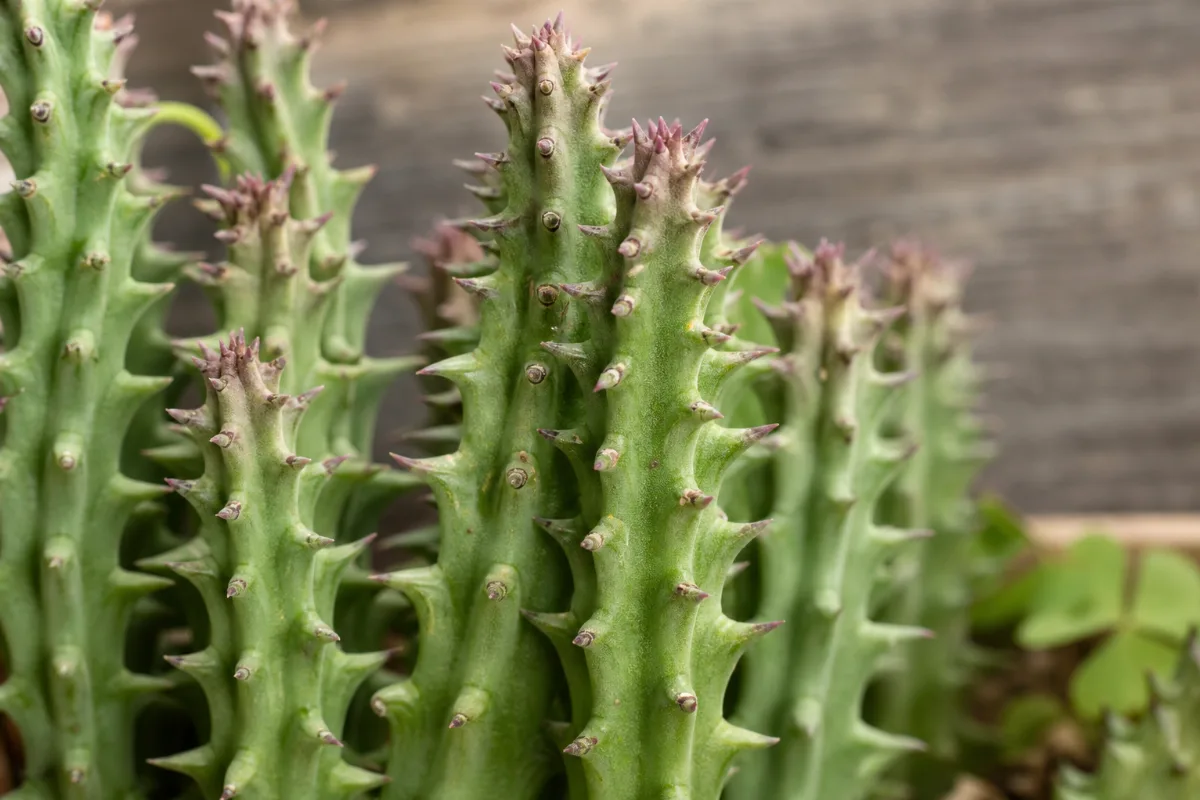
Herbs & Botanicals · Appetite-suppressant desert succulent
Hoodia
Hoodia gordonii (family Apocynaceae) · also called Kalahari cactus, slimming cactus, P57 (a compound from the plant)
Hoodia is a spiny desert succulent from southern Africa. It is sold as a pill to curb hunger and help weight loss. The only human trial, in 49 women over 15 days, found no effect on eating or weight, and the extract raised blood pressure and heart rate and caused nausea. Many products may not contain real hoodia, and the plant is protected under CITES, so caution matters more than hope here.
General information, not medical advice. Last substantive update · Not medically reviewed. A named clinician has not signed off on this page. How this page is made
About Hoodia
Hoodia is a desert plant traditionally used to ease hunger, and now a popular weight-loss supplement. Science has not backed that up. The one human trial found no benefit and some harm signals. Counterfeit products, conservation rules and no safety data for pregnancy add to the caution.
What it is
Hoodia gordonii is a leafless, spiny succulent from the Kalahari region of Namibia, Botswana and South Africa. GBIF lists it as an accepted species in the family Apocynaceae (the milkweed family), and NCBI Taxonomy lists it as ID 197266. It is often called a cactus, but it is not one.
The San peoples traditionally used it on long hunts to curb hunger and thirst.
How it may work
The compound P57 is thought to reduce appetite, but NCCIH says this is unconfirmed. In cell work a different compound, gordonoside F, switched on a receptor called GPR119. A lab study suggested a hoodia product acts partly through beta-adrenergic receptors, which could help explain the faster pulse and higher blood pressure. None of this has been shown to lower weight in people.
What the one human trial found
49 healthy overweight women lived in a clinic. Half took a purified hoodia extract in a yogurt drink for 15 days and half took placebo. Food eaten and body weight did not differ. The extract was less well tolerated, with nausea, vomiting and unusual skin sensations, and blood pressure, pulse, heart rate, bilirubin and alkaline phosphatase rose significantly.
The trial authors worked for the company that was developing hoodia. No other human trial was found.
What happened to P57 as a drug
A 2011 review says several prominent pharmaceutical companies involved in development withdrew their interest. Safety and clinical efficacy studies were described as insufficient or absent. No approved P57 medicine exists.
At a glance
Traditional uses history, not proof
- San peoples of the Kalahari ate the plant on long hunts to stave off hunger and thirst
- Today sold as an appetite suppressant and weight-loss supplement
Studied for research
- Appetite suppression and weight loss: insufficient (one 15-day trial, no benefit)
- P57 as a drug lead: insufficient (development stopped by pharmaceutical companies per a 2011 review)
- Blood sugar receptor effect: lab only
Main compounds
- P57 (P57AS3), PubChem CID 9962786
- Gordonoside F
- Other pregnane glycosides
Common forms
- Capsules and tablets
- Powder
- Purified extract (used in the one human trial)
- Weight-loss blends with other ingredients
Research links: Blom 2011: hoodia extract, 15-day trial (PubMed) · Vermaak 2011: Hoodia gordonii review (PubMed) · Vanhee 2026: detecting hoodia in supplements (PubMed) · NCCIH: Hoodia · MSK: Hoodia · Research Library · Genes & Biomarkers Library
The plant and its history
- Accepted scientific name
- Hoodia gordonii
- Naming authority
- GBIF shows Sweet, 1830. The longer form in the request, (Masson) Sweet ex Decne., was not checked.
- Common names
- Hoodia (English); Kalahari cactus (English); Slimming cactus (English)
- Botanical family
- Apocynaceae (dogbane or milkweed family)
- Classification
- Plantae > Tracheophyta > Magnoliopsida > Gentianales > Apocynaceae > Hoodia > Hoodia gordonii
- Native range
- Southern Africa; NCCIH names the Kalahari Desert in Namibia, Botswana and South Africa.
- Habitat
- Desert (Kalahari), per NCCIH.
- What the plant looks like
- Roots: Not described in sources read.; Stems: Fleshy, spiny leafless succulent (NCCIH: leafless succulent; Vermaak: spiny succulent).; Leaves: Leafless (NCCIH).; Flowers: Not described in sources read.; Fruit: Not described in sources read.
- Cultivation
- A permit is needed to cultivate or export material, and the plant matures slowly (Vermaak 2011).
- Harvest and processing
- Not covered in the sources read.
- Look-alikes and adulterants
- Name: Other Hoodia species and related stapeliad plants; Note: Related Apocynaceae are used to test whether products really contain Hoodia (Vanhee 2026; Gathier 2013). Products may contain these or other plants instead.
- Sustainability and conservation
- CITES Appendix II (read in abstracts); overharvesting and supply shortages noted by Fraiture 2026. Annotation details not verified.
Traditional use and history history, not clinical proof
| Tradition or era | Documented use | Source |
|---|---|---|
| Khoi-San / San peoples of southern Africa | Eaten on long hunting trips to stave off hunger and thirst. | p21259185 |
| Commercial development, 2000s | Developed as a weight-loss ingredient; several prominent pharmaceutical companies involved later withdrew their interest, and commercialisation was controversial over intellectual property and benefit sharing. | p21259185 |
| 2004 | MSK relays that the FDA warned a manufacturer and distributors about unsubstantiated weight-loss claims. Not verified from the FDA. | s-msk-hoodia |
Traditional use shows how a plant was used. It does not show that a supplement works or is safe today.
What is inside, and how it may work
What the plant contains and how those compounds act in cells and animals. Laboratory and animal mechanisms are not proven effects in people.
Main compounds
| Compound | Family | Where it is concentrated | Activity studied | Level of evidence |
|---|---|---|---|---|
| P57 (P57AS3), an oxypregnane steroidal glycoside PubChem 9962786 | Pregnane glycoside | Not stated Used as the marker compound for raw material and product quality (Vermaak 2011). Detectable at 8 micrograms per gram of powder by LC-HRMS/MS (Vanhee 2026). | Thought to reduce appetite; NCCIH calls this unconfirmed. In a test tube, weak CYP3A4 inhibition. 13 18 9 12 | Lab |
| Gordonoside F | Steroid glycoside | Not stated | Activated the GPR119 receptor in cells; P57 did not. 19 | Lab |
| Other pregnane glycosides (43 identified in H. gordonii samples) | Pregnane glycosides | Not stated | Used as a chemical fingerprint for quality control. 2 | Lab |
Mechanisms, receptors and pathways
| Target or pathway | Gene or receptor | What was found | Level |
|---|---|---|---|
| Hypothalamic appetite pathway (ATP) | Not specified | MSK describes a hypothesis involving ATP in the hypothalamus. NCCIH says P57's appetite effect is thought but not confirmed. 10 12 | Lab |
| GPR119 receptor | GPR119 | Gordonoside F, not P57, activated GPR119 in cells. 19 | Lab |
| Beta-adrenergic receptors | Beta-adrenergic receptors | A hoodia product relaxed rat uterine rings partly through beta-adrenergic receptors; proposed as an explanation for raised blood pressure and pulse. 15 | Lab |
| CYP3A4 and drug pumps (P-gp, MRP) | CYP3A4; ABCB1 (P-gp); MRP1/2 | P57 weakly inhibited CYP3A4 and was moved by P-gp and MRP in gut cells. 9 | Lab |
| Human trial of appetite | Not applicable | No effect on food eaten or weight in 15 days. 3 | Human data |
Absorption, metabolism and elimination
- Absorption
- No human data found. Gut-cell tests show P57 is pumped back out by P-gp and MRP transporters.
- Distribution
- Not found.
- Metabolism
- P57 was metabolically stable in human liver microsomes (test tube).
- Elimination
- Not found.
- Bioavailability
- Not found in the sources read; Vermaak 2011 says in vivo biopharmaceutics data are insufficient.
Isolated compounds versus whole extracts
Three different things carry the name: the raw plant, a purified extract (used in the one human trial), and the single compound P57. The trial tested a purified extract only. P57 alone and the raw plant have no human trial. Many marketed products may not contain real hoodia.
Nutritional composition
Not a food in the usual sense; the San ate the plant for hunger and thirst on hunting trips (Vermaak 2011).
5 not enough evidence
What is Hoodia good for?
The studied uses and how strong the human evidence is. For hoodia that is very weak: one small trial that did not show a benefit.
Benefits, one by one
Each card is a research question, not a promise. Tap a goal to filter. Open a card to see the studies, doses and limits.
Appetite suppression and weight loss (purified extract, one 15-day trial)
Not enough evidenceHoodia is sold to cut hunger. Only one human trial exists. In 49 overweight women, a purified extract for 15 days did not change how much they ate or their weight compared with placebo, and it caused more side effects.
4 studiesPurified extract in a yogurt drink (trial only). Commercial products …
Studies, doses and limits
What the trials found
Blom 2011: 49 healthy overweight women (25 hoodia, 24 placebo) lived in a clinic. They took a purified Hoodia gordonii extract in a yogurt drink twice a day for 15 days and ate freely from set menus. Energy intake and body weight did not differ significantly from placebo.
Results
No significant effect on food eaten or body weight versus placebo (P>0.05). More nausea, vomiting and skin-sensation problems on the extract.
Effect sizes as reported
Not given in the abstract (full text not read).
Why this rating
One small, short trial, and it was null. No other human trial was found. The reviewers of the field call efficacy and safety data insufficient or absent. The trial was run by the company that was developing hoodia.
Form and dose studied
Purified extract in a yogurt drink (trial only). Commercial products vary and many may not contain real hoodia.
Who was studied
Healthy overweight women.
Limits
Tiny sample, women only, 15 days only, one extract; no long-term weight or safety data.
Why researchers looked
The Khoi-San of southern Africa traditionally used the plant to stave off hunger and thirst on long hunting trips, and animal work suggested extracts cut food intake.
Traditional use
Traditional hunger and thirst suppression on hunting trips (Vermaak 2011 review; NCCIH).
Proposed mechanism Preliminary mechanism
The compound P57 is thought to reduce appetite, but NCCIH describes this as unconfirmed and MSK says the mechanism is unclear.
A proposed mechanism does not show that the effect happens in people.
Blood pressure, pulse, heart rate, bilirubin and alkaline phosphatase rose significantly on the extract in the trial. See the Safety tab.
P57 as a weight-loss drug (development stopped)
Not enough evidenceP57 is the plant compound once thought to be the active ingredient. Large drug companies that were developing it withdrew their interest, according to a 2011 review. No approved P57 drug exists.
2 studiesNot applicable.
Studies, doses and limits
What the trials found
No human trial of pure P57 was found. The only human trial used a purified whole extract.
Results
Vermaak 2011 says several prominent pharmaceutical companies involved in development withdrew their interest. The reasons are not given in the abstract.
Effect sizes as reported
Not applicable.
Why this rating
No human data on purified P57 were found; the status comes from a review abstract.
Form and dose studied
Not applicable.
Who was studied
Not applicable.
Limits
The 2011 review abstract does not name the companies or the reasons; later developments were not searched.
Why researchers looked
P57 was proposed as a lead for an appetite-suppressing drug.
Traditional use
Not applicable.
Proposed mechanism Preliminary mechanism
P57 is described as the marker compound used to judge raw material quality. Whether it suppresses appetite in people has not been shown.
A proposed mechanism does not show that the effect happens in people.
Not applicable.
Reduced food intake in animals
Not enough evidenceMSK reports one rat study in which a hoodia compound reduced appetite. This is animal work only and has not been repeated in people with a positive result.
2 studiesNot applicable.
Studies, doses and limits
What the trials found
None positive. The human trial did not show less eating.
Results
Animal result only; the human trial was null.
Effect sizes as reported
Not applicable.
Why this rating
Animal data and theory only; the one human trial did not confirm it.
Form and dose studied
Not applicable.
Who was studied
Rats (as relayed by MSK).
Limits
The rat study itself was not read; MSK's summary only.
Why researchers looked
Animal feeding studies led to the idea of a hoodia weight-loss supplement.
Traditional use
Not applicable.
Proposed mechanism Animal research
MSK mentions a theory that hoodia acts on an ATP pathway in the hypothalamus (the brain's appetite centre). This is a theory, not a human finding.
A proposed mechanism does not show that the effect happens in people.
Not applicable.
Traditional use: staving off hunger and thirst
Not enough evidenceThe San (Khoi-San) peoples have traditionally eaten the plant on long hunts to curb hunger and thirst. This is tradition, not clinical proof.
2 studiesTraditional use was of the fresh plant, not of today's extracts.
Studies, doses and limits
What the trials found
None as a controlled trial. A paper on indigenous use exists (Lee 2007) but was not read.
Results
Tradition only.
Effect sizes as reported
Not applicable.
Why this rating
Traditional use is not evidence of effect or safety, and the trial did not support an appetite effect.
Form and dose studied
Traditional use was of the fresh plant, not of today's extracts.
Who was studied
Traditional hunters of southern Africa.
Limits
No measurements; the modern extract may differ from what was eaten.
Why researchers looked
Reports of traditional use started the commercial interest.
Traditional use
San peoples of the Kalahari (NCCIH); Khoi-San of South Africa and Namibia (Vermaak 2011).
Proposed mechanism Pharmacological theory
Not established.
A proposed mechanism does not show that the effect happens in people.
Traditional use does not show that modern extracts are safe.
Blood sugar receptor activity (lab only)
Not enough evidenceIn cell experiments a different hoodia compound, gordonoside F (not P57), switched on a receptor called GPR119 that helps release insulin. This has not been tested in people.
1 studiesNot applicable.
Studies, doses and limits
What the trials found
None.
Results
Lab and cell result only.
Effect sizes as reported
Not applicable.
Why this rating
Cell work on one compound; no animal or human outcome shown in the abstract read.
Form and dose studied
Not applicable.
Who was studied
Cells.
Limits
Lab only. This does not show that hoodia lowers blood sugar.
Why researchers looked
Researchers looked for how hoodia might act in the body.
Traditional use
Not applicable.
Proposed mechanism Laboratory research
Gordonoside F, but not P57, specifically activated GPR119 in cells.
A proposed mechanism does not show that the effect happens in people.
Not applicable.
Connections to the rest of health
How Hoodia connects to the rest of our health knowledge graph. Every link says what kind of connection it is. A safety link (for example to the liver) is a warning, not a benefit. A study that merely mentions a topic never creates a benefit link.
Explore every connection: goals, body systems, organs, symptoms, genes
A. Wellness goals
| Connected to | Kind of connection | Evidence status | Context | Studies |
|---|---|---|---|---|
| Weight Management | Potential benefit | Not enough evidence | Appetite suppression and weight loss (purified extract, one 15-day trial): Hoodia is sold to cut hunger. Only one human trial exists. In 49 overweight women, a purified extract for 15 days did not change how much they ate or their weight compared with placebo, and it caused more side effects. | 3 12 10 18 |
| Metabolic Health | Potential benefit | Not enough evidence | Appetite suppression and weight loss (purified extract, one 15-day trial): Hoodia is sold to cut hunger. Only one human trial exists. In 49 overweight women, a purified extract for 15 days did not change how much they ate or their weight compared with placebo, and it caused more side effects. | 3 12 10 18 |
| Weight Management | Preliminary mechanism | Not enough evidence | P57 as a weight-loss drug (development stopped): P57 is the plant compound once thought to be the active ingredient. Large drug companies that were developing it withdrew their interest, according to a 2011 review. No approved P57 drug exists. Reduced food intake in animals: MSK reports one rat study in which a hoodia compound reduced appetite. This is animal work only and has not been repeated in people with a positive result. | 18 12 10 3 |
| Weight Management | Traditional use | Not enough evidence | Traditional use: staving off hunger and thirst: The San (Khoi-San) peoples have traditionally eaten the plant on long hunts to curb hunger and thirst. This is tradition, not clinical proof. | 12 18 |
| Metabolic Health | Preliminary mechanism | Not enough evidence | Blood sugar receptor activity (lab only): In cell experiments a different hoodia compound, gordonoside F (not P57), switched on a receptor called GPR119 that helps release insulin. This has not been tested in people. | 19 |
B. Body systems
| Connected to | Kind of connection | Evidence status | Context | Studies |
|---|---|---|---|---|
| Metabolism Weight | Biological association | Not enough evidence | Studied for: Appetite suppression and weight loss (purified extract, one 15-day trial) Studied for: P57 as a weight-loss drug (development stopped) | 3 12 10 18 19 |
| Endocrine System | Biological association | Not enough evidence | Studied for: Blood sugar receptor activity (lab only) | 19 |
E. Health conditions
| Connected to | Kind of connection | Evidence status | Context | Studies |
|---|---|---|---|---|
| High blood pressure | Adverse effect or risk | Low certainty | Blood pressure and pulse rose in a 15-day trial. Preparation or compound: Hoodia gordonii purified extract |
3 15 |
| Obesity | Potential benefit | Not enough evidence | One 15-day trial found no effect on food eaten or weight. Preparation or compound: Hoodia gordonii purified extract |
3 |
I. Biomarkers
| Connected to | Kind of connection | Evidence status | Context | Studies |
|---|---|---|---|---|
| Food energy eaten (ad libitum energy intake) | Biological association | Not enough evidence | Measured in trials: no-change. A lab change is not the same as a health benefit. | 3 |
| Body weight | Biological association | Not enough evidence | Measured in trials: no-change. A lab change is not the same as a health benefit. | 3 |
| Blood pressure, pulse and heart rate | Biological association | Low certainty | Measured in trials: raised. A lab change is not the same as a health benefit. | 3 15 |
| Bilirubin | Biological association | Low certainty | Measured in trials: raised. A lab change is not the same as a health benefit. | 3 |
| Alkaline phosphatase (ALP) | Biological association | Low certainty | Measured in trials: raised. A lab change is not the same as a health benefit. | 3 |
J. Genes, receptors and enzymes
L. Active compounds
| Connected to | Kind of connection | Evidence status | Context | Studies |
|---|---|---|---|---|
| P57 (P57AS3), an oxypregnane steroidal glycoside | Biological association | Lab | Thought to reduce appetite; NCCIH calls this unconfirmed. In a test tube, weak CYP3A4 inhibition. Preparation or compound: Not stated |
13 18 9 12 |
| Gordonoside F | Biological association | Lab | Activated the GPR119 receptor in cells; P57 did not. Preparation or compound: Not stated |
19 |
| Other pregnane glycosides (43 identified in H. gordonii samples) | Biological association | Lab | Used as a chemical fingerprint for quality control. Preparation or compound: Not stated |
2 |
Each connection is stored with the ingredient, the connected record, the kind of connection, the evidence status, the supporting studies, the preparation or compound involved, and a review date (last reviewed October 25, 2026).
Evidence at a glance: what changed in 5 lab markers
Tap a number to show only those markers. Counts are markers, not people.
The evidence
The research centre for Hoodia. Every record here was checked against PubMed or the publisher's page; we never list a study we have not verified.
Evidence by outcome
Bars show how many studies we found for each outcome, not how well it works. People are added up across trials only (reviews are not added, to avoid double counting).
How we rate evidence
High certainty
Several well-run trials or reviews agree; further research is unlikely to change the picture much.
Moderate certainty
Good trials point the same way, but some doubt remains.
Low certainty
Small, short or inconsistent trials. The finding could change with better research.
Very low certainty
Very little or very weak human data. Treat as a possibility only.
Mixed findings
Trials or reviews disagree with each other.
Not enough evidence
Not enough human research to say either way.
Evidence against
Good research found no benefit, or found harm.
We take the reviewers' own risk-of-bias and GRADE statements where they exist, and otherwise judge from study size, design, consistency, directness and whether a product matches what is sold. Many publications do not make evidence high. Method note: We started from our existing hoodia summary, read the abstract of every PubMed study cited, read the NCCIH and MSK pages, and checked the plant name in GBIF and NCBI Taxonomy and the compound in PubChem. EMA, LiverTox, LactMed and CITES pages could not be read or were not found.
Study library: every study we checked 19
| Study | Design | People | Product, dose, length | Result |
|---|---|---|---|---|
| Avula 2008 A rapid method for chemical fingerprint analysis of Hoodia species, related genera, and dietary supplements using UPLC-UV-MS. Journal of Pharmaceutical and Biomedical Analysis · PMID 18718731 · DOI |
Other lab |
35 Four Hoodia species, 23 related genera and 35 dietary supplements that claim to contain H. gordonii |
Hoodia species and supplements unspecified Not applicable Not applicable · vs Not applicable |
The method was applied to 35 supplements that claim to contain H. gordonii. The abstract does not report how many contained P57. Method paper Methods, limits and fundingOutcomes: Quantifying P57 in plants and supplements Limitations: Abstract only; no per-product results given. Funding and conflicts: Not stated in abstract Read: abstract |
| Avula 2017 Metabolic Profiling of Hoodia, Chamomile, Terminalia Species and Evaluation of Commercial Preparations Using UHPLC-QToF-MS. Planta Medica · PMID 28454188 · DOI |
Other lab |
Hoodia gordonii samples and commercial preparations | Hoodia gordonii and commercial products unspecified Not applicable Not applicable · vs Not applicable |
43 pregnane glycosides were identified from Hoodia gordonii samples, and the fingerprint method could distinguish botanicals and their commercial products. The abstract gives no failure rate. Quality-control method Methods, limits and fundingOutcomes: Chemical fingerprints for quality control Limitations: Abstract only. Funding and conflicts: No conflict of interest declared Read: abstract |
| Blom 2011 Effects of 15-d repeated consumption of Hoodia gordonii purified extract on safety, ad libitum energy intake, and body weight in healthy, overweight women: a randomized controlled trial American Journal of Clinical Nutrition · PMID 21993434 · DOI |
Controlled trial |
49 Healthy overweight women, stratified by body fat; clinic residence for a 4-day run-in and the 15-day treatment |
Hoodia gordonii purified extract (HgPE) in a yogurt drink unspecified (purified extract) 1110 mg per serving, 2 servings a day, 1 hour before breakfast and dinner 15 days · vs Matched placebo yogurt drink |
No serious adverse events, but the extract was less well tolerated than placebo: nausea, vomiting and disturbed skin sensation. Blood pressure, pulse, heart rate, bilirubin and alkaline phosphatase rose significantly (P<0.05) in the hoodia group. Energy intake and body weight did not differ significantly from placebo (P>0.05). No benefit on food eaten or weight; adverse changes in vital signs and some lab tests Methods, limits and fundingOutcomes: Safety, vital signs, blood tests, food eaten at will (ad libitum energy intake), body weight Limitations: Only 49 women (25 vs 24), 15 days, women only, one purified extract. Exact size of the changes was not in the abstract (full text not read). Long-term effects unknown. Funding and conflicts: Authors are from Unilever Research & Development (the company that was developing hoodia as a food ingredient); registered NCT01306422. Read: abstract |
| CITES 2026 CITES listing of Hoodia (Appendix II) CITES · Source |
Authoritative guidance n/a |
unspecified |
Appendix II status of Hoodia is stated in the read abstracts of Gathier 2013 and Fraiture 2026. The CITES website blocked the page request (HTTP 403), so annotation wording, listing year and the controlled-harvesting label were NOT verified from CITES itself. A web search snippet (not opened) described annotation #9 and a permit requirement. Methods, limits and fundingLimitations: CITES documents could not be opened; details beyond 'Appendix II' are not verified. Funding and conflicts: Not applicable Read: not-read | |
| EMA 2026 EMA/HMPC, LiverTox, LactMed, FDA checks for hoodia EMA, NIH LiverTox, LactMed, FDA · Source |
Authoritative guidance n/a |
unspecified |
EMA site returned a security check page and no hoodia herbal monograph was found. The LiverTox page request was blocked by a CAPTCHA, so no LiverTox hoodia entry was read. LactMed was not found. NCCIH has a hoodia page (read). Absence of a result here does not prove nothing exists. Methods, limits and fundingLimitations: Checks were limited by blocked pages. Funding and conflicts: Not applicable Read: not-found | |
| Fraiture 2026 Real-time PCR to target Hoodia in herbal supplements: a tool for conservation and trade regulation. Food Chemistry (Oxford) · PMID 41685176 · DOI |
Other lab |
Commercial herbal dietary supplements | Hoodia-labelled supplements unspecified Not applicable Not applicable · vs Not applicable |
Rising demand and overharvesting have led to supply shortages, adulteration and CITES-regulated trade. The authors built and validated a genus-specific DNA test for enforcement laboratories. Method paper Methods, limits and fundingOutcomes: Development of a Hoodia genus-specific DNA test Limitations: Abstract only; no product failure rate is given in the abstract. Funding and conflicts: Authors declare no competing interests Read: abstract |
| GBIF 2026 GBIF species match: Hoodia gordonii GBIF · Source |
Database record n/a |
unspecified |
Read 2026-10-25 via API. Match: Hoodia gordonii Sweet, 1830; status ACCEPTED; exact match, confidence 97; family Apocynaceae; order Gentianales; usageKey 7956185. Methods, limits and fundingLimitations: The authority shown by GBIF (Sweet) differs from the longer form in the request ((Masson) Sweet ex Decne.); not resolved. Funding and conflicts: Not applicable Read: page | |
| Gathier 2013 Forensic identification of CITES protected slimming cactus (Hoodia) using DNA barcoding. Journal of Forensic Sciences · PMID 23865560 · DOI |
Other lab |
26 plant accessions and herbal products | Hoodia and related plants unspecified Not applicable Not applicable · vs Not applicable |
Hoodia extracts are sought after worldwide despite their CITES Appendix II status. Conventional chemical profiling led to inaccurate detection; DNA barcoding identified Hoodia and its presence in herbal products. Method paper Methods, limits and fundingOutcomes: Identification of Hoodia Limitations: Abstract only; no count of genuine versus fake products given. Funding and conflicts: Not stated in abstract Read: abstract |
| Madgula 2008 In vitro metabolic stability and intestinal transport of P57AS3 (P57) from Hoodia gordonii and its interaction with drug metabolizing enzymes. Planta Medica · PMID 18612942 · DOI |
Laboratory research in-vitro |
Human liver microsomes and Caco-2 gut-cell model | Purified P57AS3 not applicable Not applicable Not applicable · vs Not applicable |
P57 was stable in human liver microsomes and weakly inhibited CYP3A4 (IC50 45 micromolar); it did not inhibit CYP1A2, 2C9 or 2D6. Gut-cell transport was mediated by P-gp and MRP pumps. Weak CYP3A4 inhibition in the test tube Methods, limits and fundingOutcomes: Metabolic stability, CYP enzyme inhibition, gut transport Limitations: Lab test of one purified compound; not shown in people. Funding and conflicts: Not stated in abstract Read: abstract |
| Memorial Sloan Kettering Cancer Center 2023 Hoodia (Memorial Sloan Kettering patient information) Memorial Sloan Kettering Cancer Center · Source |
Authoritative guidance n/a |
unspecified |
Read 2026-10-25 (page last updated 13 March 2023). Evidence limited: one rat study of reduced appetite and a 15-day trial where hoodia extract did not affect body weight. Side effects listed: headache, dizziness, giddiness, disturbed skin sensation, nausea. Says hoodia may interact with drugs that are substrates of CYP3A4 and advises not taking them together (clinical relevance not determined). Pregnancy not addressed. Notes an FDA warning (2004) to a manufacturer and distributors about unsubstantiated and misleading weight-loss claims. Methods, limits and fundingLimitations: Fetched through a page-summarising tool, not the raw page. The FDA letter itself was not read. Funding and conflicts: Not applicable Read: page | |
| NCBI Taxonomy 2026 NCBI Taxonomy: Hoodia gordonii NCBI Taxonomy · Source |
Database record n/a |
unspecified |
Entrez search 2026-10-25 returned one record: taxonomy ID 197266 for Hoodia gordonii. Methods, limits and fundingLimitations: Only the ID was read, not the full record. Funding and conflicts: Not applicable Read: page | |
| NCCIH (NIH) 2025 Hoodia (NCCIH health page) NCCIH (NIH) · Source |
Authoritative guidance n/a |
unspecified |
Read 2026-10-25 (page updated April 2025). Says little is known; cites one small study of 49 overweight women where 15 days of hoodia did not give more weight loss than placebo; participants on hoodia reported more nausea, vomiting, dizziness and unusual skin sensations; raised concerns about blood pressure and heart measures; little known about pregnancy or breastfeeding; P57 thought to be responsible for appetite effect. No CITES, interaction or FDA-specific statement on the page. Methods, limits and fundingLimitations: Fetched through a page-summarising tool, not the raw page. Funding and conflicts: Not applicable Read: page | |
| PubChem 2026 PubChem compound CID 9962786 (p-57As3 / P57) PubChem · Source |
Database record n/a |
unspecified |
Read 2026-10-25 via API: title p-57As3, molecular formula C47H74O15, a steroid glycoside. Methods, limits and fundingLimitations: Name search for P57AS3 returned this CID; no second CID checked. Funding and conflicts: Not applicable Read: page | |
| Ranjan 2025 Prevalence of regulated plants in plant food supplements aiming for weight loss from the Belgian market. Food Additives & Contaminants Part A · PMID 41218163 · DOI |
Other lab |
Weight-loss plant food supplements on the legal and illegal Belgian market | Plant food supplements unspecified Not applicable Not applicable · vs Not applicable |
The study looked for four regulated plants including Hoodia gordonii. It reports that two other plants (Ilex paraguariensis and Garcinia cambogia) dominated, and that the prohibited plant Aristolochia fangchi was found in some samples. The abstract gives no finding for hoodia itself. No hoodia-specific result in the abstract Methods, limits and fundingOutcomes: Presence of four regulated plants, including Hoodia gordonii Limitations: Abstract only. Shows that weight-loss supplements can contain regulated or prohibited plants; says nothing specific about hoodia products. Funding and conflicts: Not stated in abstract Read: abstract |
| Roza 2013 Sympathomimetic activity of a Hoodia gordonii product: a possible mechanism of cardiovascular side effects. BioMed Research International · PMID 24307991 · DOI |
Laboratory research in-vitro |
Isolated rat uterine rings (organ bath) | A commercial product containing Hoodia gordonii extract unspecified Not stated in abstract Not applicable · vs None stated |
The product relaxed rat uterine smooth muscle, in part through beta-adrenergic receptors. The authors suggest this may be linked to the raised blood pressure and pulse reported with hoodia products. Possible mechanism only; not tested in people Methods, limits and fundingOutcomes: Muscle-relaxing effect through beta-adrenergic receptors Limitations: Lab test on rat tissue using one commercial product. Does not show what happens in people. Funding and conflicts: Not stated in abstract Read: abstract |
| Rumalla 2008 Chemical fingerprint of Hoodia species, dietary supplements, and related genera by using HPTLC. Journal of Separation Science · PMID 19065611 · DOI |
Other lab |
13 Four Hoodia species, 24 related genera and 13 dietary supplements that claim to contain H. gordonii |
Hoodia species and supplements unspecified Not applicable Not applicable · vs Not applicable |
A fingerprint method was built to authenticate H. gordonii against 11 reference compounds including P57 and applied to 13 supplements. The abstract does not say how many contained hoodia. Method paper Methods, limits and fundingOutcomes: Authentication by chemical fingerprint including P57 Limitations: Abstract only; result for each supplement not given. Funding and conflicts: Not stated in abstract Read: abstract |
| Vanhee 2026 Detection of CITES-listed hoodia species and extracts thereof in herbal supplements using LC-HRMS/MS: validation study and qPCR method comparison. Food Additives & Contaminants Part A · PMID 41926684 · DOI |
Other lab |
20 20 commercial herbal supplements that claimed or were reported to contain Hoodia, often from rogue internet pharmacies |
Supplements sold as hoodia unspecified Not applicable Not applicable · vs Not applicable |
A validated chemical test for the marker compound P57AS3 (limit of detection 8 micrograms per gram of powder, 0% false positives) was compared with a DNA test on the 20 products. The abstract does not say how many products actually contained hoodia. Method paper; the share of genuine products is not in the abstract Methods, limits and fundingOutcomes: Detection of P57AS3 by chemical analysis, compared with qPCR Limitations: Abstract only; the proportion of products containing hoodia was not stated. Funding and conflicts: Public authority laboratories; no conflict stated in the abstract Read: abstract |
| Vermaak 2011 Hoodia gordonii: an up-to-date review of a commercially important anti-obesity plant. Planta Medica · PMID 21259185 · DOI |
Systematic review review |
Literature on Hoodia gordonii | Hoodia gordonii (plant, extracts, P57) unspecified Not applicable Not applicable · vs Not applicable |
The plant was used by the Khoi-San to suppress hunger and thirst on hunting trips. Several prominent pharmaceutical companies involved in its development withdrew their interest. Supply is limited, a permit is needed to cultivate or export, and demand contributes to adulteration of a large amount of products. Studies of clinical efficacy and especially safety were insufficient or absent. Narrative review Methods, limits and fundingOutcomes: Traditional use, chemistry, quality, safety and clinical efficacy Limitations: Review from 2011; newer data are not included. The abstract does not give a percentage of adulterated products. Funding and conflicts: Not stated in abstract Read: abstract |
| Zhang 2014 Molecular matchmaking between the popular weight-loss herb Hoodia gordonii and GPR119, a potential drug target for metabolic disorder. Proceedings of the National Academy of Sciences · PMID 25246581 · DOI |
Laboratory research in-vitro |
Cell and lab experiments | Gordonoside F (a steroid glycoside from Hoodia gordonii) unspecified Not applicable Not applicable · vs Not applicable |
Gordonoside F, but not P57, specifically activated the GPR119 receptor, which helps glucose-stimulated insulin release. This is a lab finding about one compound. Mechanism only Methods, limits and fundingOutcomes: Activation of the GPR119 receptor Limitations: Only the abstract's first part was read; lab study, no human data. Funding and conflicts: Not stated in abstract Read: abstract |
What we do not know yet
- Only one human trial (15 days, 49 women, by the developer).
- No long-term efficacy or safety data.
- No human trial of pure P57 or a finished commercial supplement.
- No pregnancy, breastfeeding or children data.
- The share of counterfeit products is not given in the sources read.
- EMA, LiverTox, LactMed and CITES documents could not be opened.
How new research is added
New studies are found by a saved PubMed search and placed in a review queue. A person reads each one before it changes any rating or safety wording.
Lab markers
What changed in blood or saliva tests during trials. A changed number is not the same as feeling or being healthier, and we give no "normal ranges".
Metabolic 1
Body weight
No clear change in trials
Weight of the person measured during the trial.
Not enough evidenceResults and what it means
Why it was measured
The product is sold for weight loss.
Statistical vs. clinical meaning
Fifteen days is too short to say anything about long-term weight; still, no early effect was seen.
Safety implication
None for this measure.
| Study | Result | People | Product |
|---|---|---|---|
| 3 | No significant difference from placebo (P>0.05) | 49 healthy overweight women | Hoodia gordonii purified extract, 15 days |
Organ function 1
Bilirubin
Raised in trials
A yellow substance made when old red blood cells break down and cleared by the liver.
Low certaintyResults and what it means
Why it was measured
A liver and blood safety check.
Statistical vs. clinical meaning
A lab-value change in one small trial; the abstract does not say whether values left the normal range.
Safety implication
Possible liver strain. No case of liver injury from hoodia was found in the sources read.
| Study | Result | People | Product |
|---|---|---|---|
| 3 | Significant increase (P<0.05) in the hoodia group | 49 healthy overweight women | Hoodia gordonii purified extract, 15 days |
Other 3
Food energy eaten (ad libitum energy intake)
No clear change in trials
How much energy (calories) people ate when allowed to eat freely from set menus.
Not enough evidenceResults and what it means
Why it was measured
If hoodia cuts appetite, people should eat less.
Statistical vs. clinical meaning
A null result in one small trial; the size of the difference was not in the abstract.
Safety implication
None for this measure.
| Study | Result | People | Product |
|---|---|---|---|
| 3 | No significant difference from placebo (P>0.05) | 49 healthy overweight women | Hoodia gordonii purified extract, 15 days |
Blood pressure, pulse and heart rate
Raised in trials
The force of blood on artery walls, and how fast the heart beats.
Low certaintyResults and what it means
Why it was measured
Safety check in the trial.
Statistical vs. clinical meaning
A statistically significant rise in one small trial. Whether it matters for health over longer use is unknown. A lab study suggests a possible mechanism through beta-adrenergic receptors.
Safety implication
People with high blood pressure, heart rhythm problems or heart disease should be especially cautious.
| Study | Result | People | Product |
|---|---|---|---|
| 3 | Blood pressure, pulse and heart rate showed significant increases (P<0.05) in the hoodia group versus placebo; sizes not in the abstract | 49 healthy overweight women | Hoodia gordonii purified extract, 15 days |
Alkaline phosphatase (ALP)
Raised in trials
An enzyme found in liver and bone; raised levels can signal liver or bile-duct stress.
Low certaintyResults and what it means
Why it was measured
A liver safety check.
Statistical vs. clinical meaning
A lab-value change in one small trial; exact sizes not read.
Safety implication
Together with raised bilirubin this is a signal that needs follow-up in larger studies.
| Study | Result | People | Product |
|---|---|---|---|
| 3 | Significant increase (P<0.05) in the hoodia group | 49 healthy overweight women | Hoodia gordonii purified extract, 15 days |
Safety
What studies and official sources say about side effects, medicines and who should check first. Each point shows what kind of evidence it comes from.
Main points to know 6
- Raised blood pressure and heart rate in the only human trial. In the 15-day trial blood pressure, pulse and heart rate rose significantly on the hoodia extract versus placebo. NCCIH notes concerns about blood pressure and heart measures. A lab study found the product acted partly through beta-adrenergic receptors, a possible reason. Controlled trial 3 12 15
- Liver blood tests rose. Bilirubin and alkaline phosphatase, two liver-related blood tests, rose significantly in the hoodia group. No liver injury case report was found, and the LiverTox page could not be read. Controlled trial 3 5
- Nausea, vomiting, dizziness and odd skin sensations. The trial found hoodia less well tolerated than placebo because of nausea, vomiting and disturbed skin sensation. NCCIH also lists dizziness; MSK lists headache, dizziness, giddiness and skin-sensation changes. Controlled trial 3 12 10
- You may not get what the label says. Reviewers describe the limited supply of hoodia as contributing to adulteration of a large amount of products, and testing laboratories have built DNA and chemical tests because of fake or mislabelled hoodia. No source read gives the exact share of fake products, so the claim that most contain no hoodia is not proven here. Systematic review 18 6 17 8
- A protected plant. Hoodia is listed in CITES Appendix II because of over-harvesting and trade. Products sold without permits may be illegal to import in many countries. Authoritative guidance 8 6 4
- Pregnancy and breastfeeding: no safety data. NCCIH says little is known about hoodia in pregnancy or breastfeeding. Avoid it. Authoritative guidance 12
Side effects 5
| Effect | How often | Severity and recovery | Evidence |
|---|---|---|---|
| Nausea and vomiting More common on hoodia than on placebo in 49 women over 15 days; counts are not in the abstract. | Not established | Not stated in abstract Not stated | Controlled trial 3 12 |
| Disturbed skin sensation (unusual feelings on the skin) Reported in the trial and in MSK's list. | Not established | Not stated in abstract Not stated | Controlled trial 3 10 |
| Dizziness, giddiness, headache Listed by NCCIH and MSK; the sources do not give how often. | Not established | Not stated Not stated | Authoritative guidance 12 10 |
| Raised blood pressure, pulse and heart rate Significant rise (P<0.05) versus placebo. | Not established | Not stated; statistically significant Not stated | Controlled trial 3 15 |
| Raised bilirubin and alkaline phosphatase (blood tests) Significant rise (P<0.05). Meaning for long-term liver health is unknown. | Not established | Not stated Not stated | Controlled trial 3 |
Liver
Two liver-related blood tests (bilirubin and alkaline phosphatase) rose significantly in the one human trial. No case report of hoodia liver injury was found. The NIH LiverTox page was blocked and could not be read, so its rating is unknown. 3 5
How often. No frequency of liver problems is available.
Monitoring. No monitoring advice was found. Stop and seek care for yellow eyes or skin, dark urine, pale stools or severe stomach pain.
This is a safety connection. It is not evidence that Hoodia supports liver health.
Medicines and supplements 4
| With | Why it matters | Importance | Evidence | What to do |
|---|---|---|---|---|
| Medicines broken down by CYP3A4 (many common drugs; ask a pharmacist) prescription | In a test tube, P57 weakly blocked CYP3A4 (IC50 45 micromolar) and did not block CYP1A2, 2C9 or 2D6. MSK says hoodia may interact with CYP3A4 substrates. | Unknown. MSK says clinical relevance has not been determined. | Laboratory research Not enough evidence 9 10 | Check with a pharmacist before combining with any prescription medicine. |
| Blood pressure medicines and heart medicines prescription | Hoodia raised blood pressure and pulse in the trial; a lab study suggests beta-adrenergic activity. | Could work against blood pressure treatment. No interaction study in people exists. | Pharmacological theory Not enough evidence 3 15 | Do not use without your doctor's agreement. |
| Stimulants (caffeine, bitter orange, yohimbe and similar weight-loss ingredients) supplement | Possible added effect on heart rate and blood pressure, by theory only. | Not studied. | Pharmacological theory Not enough evidence 3 15 | Avoid stacking weight-loss products; hoodia is often sold in blends. |
| Diabetes medicines prescription | A lab finding of a receptor effect on insulin release (gordonoside F). No human finding. | Unknown; no source read documents an interaction. | Laboratory research Not enough evidence 19 | Ask your prescriber; no interaction is documented in the sources read. |
Who should check first 5
| Situation | Advice | Evidence |
|---|---|---|
| High blood pressure, heart disease or fast heart rhythm | Avoid; blood pressure and pulse rose in the trial. | Controlled trial 3 12 |
| Liver disease or abnormal liver tests | Avoid; liver blood tests rose in the trial. | Controlled trial 3 |
| Pregnancy and breastfeeding | Avoid; no safety data (NCCIH). | Authoritative guidance 12 |
| Children | No data found; avoid. | Authoritative guidance 12 |
| People taking CYP3A4 drugs | Do not combine without asking the prescriber (MSK). | Authoritative guidance 10 9 |
Overdose, product quality and regulators
Summary. There is no formal toxicity study in the sources read. Safety data come from one 15-day trial in 49 women.
Animal. Not found in the sources read.
Human doses studied. One purified extract for 15 days in healthy overweight women.
High dose or long term signals. No long-term human safety data exist.
Overdose response. Not found.
Genotoxicity. Not found in the sources read (a genotoxicity paper on a different species, Hoodia parviflora, appeared in searches but was not read).
Toxic plant parts. Not named in the sources read.
Hoodia is hard to source and heavily marketed, so fake and diluted products are a known problem. The exact share is not given in the abstracts read.
Adulteration. Vermaak 2011 says limited supply, slow plant growth, permit rules and high demand contribute to adulteration of a large amount of products. 18
Testing products. Authorities built DNA and chemical tests to find hoodia in supplements, including 20 products from rogue internet pharmacies. The abstract does not state how many contained hoodia. 17 6 8
Other regulated plants in weight-loss products. A Belgian study looked for four regulated plants including hoodia in weight-loss supplements and found Aristolochia fangchi (a prohibited plant) in some samples. No hoodia-specific result is given in the abstract. 14
Chemical fingerprints. Chemical fingerprint methods exist to tell real Hoodia gordonii from related plants and to check 13 to 35 supplements, but the abstracts do not report how many were genuine. 16 1 2
When to get medical help
- Chest pain, fast or pounding heartbeat, fainting or severe headache.
- Yellow eyes or skin, dark urine, pale stools or severe upper stomach pain.
- Repeated vomiting or severe dizziness.
- Any reaction after using a hoodia product you cannot identify.
Stop the supplement and contact a clinician or emergency service. In the US, Poison Control is 1-800-222-1222.
General information only, not medical advice. Ask a clinician or pharmacist before use, especially with medicines, in pregnancy or with a health condition. See the Natural Remedy Safety guide.
Frequently asked questions
Does hoodia help you lose weight?
Does hoodia suppress appetite?
What are the side effects of hoodia?
Can hoodia raise blood pressure?
Is hoodia bad for the liver?
Do hoodia products contain real hoodia?
Is hoodia legal to buy?
Is hoodia safe in pregnancy or breastfeeding?
No safety data exist. NCCIH says little is known. Avoid it.
Does hoodia interact with medicines?
What happened to the hoodia weight-loss drug?
A 2011 review says several prominent drug companies involved in development withdrew their interest. No approved P57 drug exists.
Has any health agency approved hoodia?
Explore by health goal
Editorial transparency
- Written by
- AlternativeMed editorial team. Research compiled with AI assistance, then checked against PubMed records.
- Medical review
- None. This page has not been reviewed by a physician or pharmacist.
- First published
- 2026-10-25
- Last substantive update
- 2026-10-25
- How we research
- We started from our existing hoodia summary, read the abstract of every PubMed study cited, read the NCCIH and MSK pages, and checked the plant name in GBIF and NCBI Taxonomy and the compound in PubChem. EMA, LiverTox, LactMed and CITES pages could not be read or were not found.
- How we rate evidence
- See "How we rate evidence" in the Evidence tab.
- Independence
- No product is promoted on this page. The one human trial was run by the company developing hoodia, and this is flagged in the study record.
Sources 19
Each source was opened and checked. Where we read only the abstract, it says so. The small numbers in the text point here.
- Avula B, Wang YH, Pawar RS, et al.. A rapid method for chemical fingerprint analysis of Hoodia species, related genera, and dietary supplements using UPLC-UV-MS.. Journal of Pharmaceutical and Biomedical Analysis. 2008. PMID 18718731. DOI 10.1016/j.jpba.2008.07.005. (abstract)
- Avula B, Wang YH, Isaac G, et al.. Metabolic Profiling of Hoodia, Chamomile, Terminalia Species and Evaluation of Commercial Preparations Using UHPLC-QToF-MS.. Planta Medica. 2017. PMID 28454188. DOI 10.1055/s-0043-109239. (abstract)
- Blom WA, Abrahamse SL, Bradford R, et al.. Effects of 15-d repeated consumption of Hoodia gordonii purified extract on safety, ad libitum energy intake, and body weight in healthy, overweight women: a randomized controlled trial. American Journal of Clinical Nutrition. 2011. PMID 21993434. DOI 10.3945/ajcn.111.020321. (abstract)
- CITES. CITES listing of Hoodia (Appendix II). CITES. 2026. (not-read)
- EMA, NIH LiverTox, LactMed, FDA. EMA/HMPC, LiverTox, LactMed, FDA checks for hoodia. EMA, NIH LiverTox, LactMed, FDA. 2026. (not-found)
- Fraiture MA, Gobbo A, Philipp P, et al.. Real-time PCR to target Hoodia in herbal supplements: a tool for conservation and trade regulation.. Food Chemistry (Oxford). 2026. PMID 41685176. DOI 10.1016/j.fochms.2026.100367. (abstract)
- GBIF. GBIF species match: Hoodia gordonii. GBIF. 2026. (page)
- Gathier G, van der Niet T, Peelen T, et al.. Forensic identification of CITES protected slimming cactus (Hoodia) using DNA barcoding.. Journal of Forensic Sciences. 2013. PMID 23865560. DOI 10.1111/1556-4029.12184. (abstract)
- Madgula VL, Avula B, Pawar RS, et al.. In vitro metabolic stability and intestinal transport of P57AS3 (P57) from Hoodia gordonii and its interaction with drug metabolizing enzymes.. Planta Medica. 2008. PMID 18612942. DOI 10.1055/s-2008-1074580. (abstract)
- Memorial Sloan Kettering Cancer Center. Hoodia (Memorial Sloan Kettering patient information). Memorial Sloan Kettering Cancer Center. 2023. (page)
- NCBI Taxonomy. NCBI Taxonomy: Hoodia gordonii. NCBI Taxonomy. 2026. (page)
- NCCIH (NIH). Hoodia (NCCIH health page). NCCIH (NIH). 2025. (page)
- PubChem. PubChem compound CID 9962786 (p-57As3 / P57). PubChem. 2026. (page)
- Ranjan S, Van Mulders T, De Cremer K, et al.. Prevalence of regulated plants in plant food supplements aiming for weight loss from the Belgian market.. Food Additives & Contaminants Part A. 2025. PMID 41218163. DOI 10.1080/19440049.2025.2579112. (abstract)
- Roza O, Lovasz N, Zupko I, et al.. Sympathomimetic activity of a Hoodia gordonii product: a possible mechanism of cardiovascular side effects.. BioMed Research International. 2013. PMID 24307991. DOI 10.1155/2013/171059. (abstract)
- Rumalla CS, Avula B, Shukla YJ, et al.. Chemical fingerprint of Hoodia species, dietary supplements, and related genera by using HPTLC.. Journal of Separation Science. 2008. PMID 19065611. DOI 10.1002/jssc.200800441. (abstract)
- Vanhee C, Gobbo A, Guinot P, et al.. Detection of CITES-listed hoodia species and extracts thereof in herbal supplements using LC-HRMS/MS: validation study and qPCR method comparison.. Food Additives & Contaminants Part A. 2026. PMID 41926684. DOI 10.1080/19440049.2026.2645431. (abstract)
- Vermaak I, Hamman JH, Viljoen AM.. Hoodia gordonii: an up-to-date review of a commercially important anti-obesity plant.. Planta Medica. 2011. PMID 21259185. DOI 10.1055/s-0030-1250643. (abstract)
- Zhang S, Ma Y, Li J, et al.. Molecular matchmaking between the popular weight-loss herb Hoodia gordonii and GPR119, a potential drug target for metabolic disorder.. Proceedings of the National Academy of Sciences. 2014. PMID 25246581. DOI 10.1073/pnas.1324130111. (abstract)