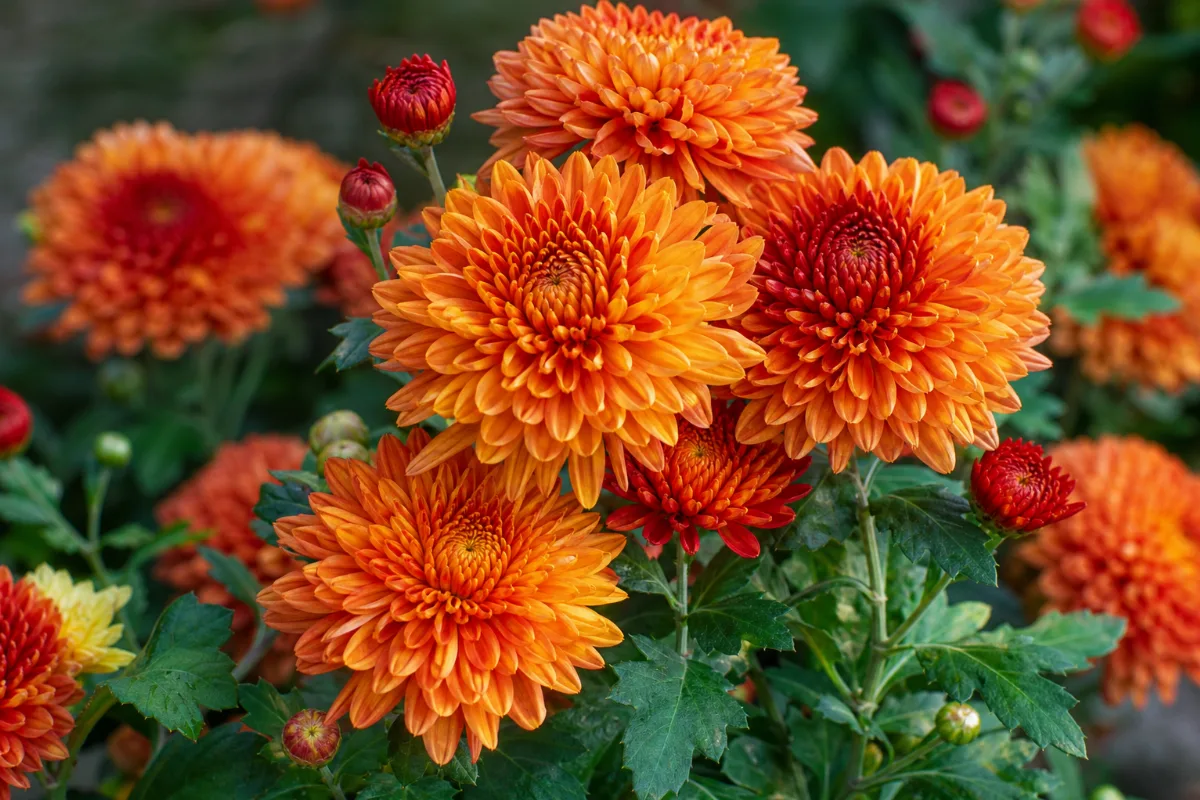
Herbs & Botanicals · Traditional flower tea
Chrysanthemum
Chrysanthemum morifolium · also called Ju hua, juhua, chrysanthemum flower tea, wild chrysanthemum (C. indicum, ye ju hua)
Chrysanthemum is a flower tea used in Chinese food and medicine for colds, tired eyes and the heart. Most support is tradition and lab work; the few human trials tested combined products, not plain tea. The biggest caution is allergy if you react to daisy-family plants such as ragweed, mugwort or chamomile.
General information, not medical advice. Last substantive update · Not medically reviewed. A named clinician has not signed off on this page. How this page is made
About Chrysanthemum
Chrysanthemum is a long-used flower tea and traditional Chinese remedy. Modern research is thin: a few small trials of mixed products, with the clearest signals in eye comfort and uric acid, and most other claims resting on tradition and lab work. Safety is mostly about allergy for people sensitive to daisy-family plants, and about the quality of the flowers you buy.
What it is
Two species matter. Chrysanthemum morifolium (ju hua) is the usual tea and herbal flower. Chrysanthemum indicum (ye ju hua, wild chrysanthemum) is a related plant used in some eye and uric-acid products. Both are daisy-family (Asteraceae) plants, and GBIF lists both names as accepted.
This is not chamomile, not the pyrethrum daisy used for insecticide, and not the multi-herb formula Sang Ju Yin. We say which plant each study used.
How it may work
The flowers hold flavones such as luteolin and apigenin and acids such as chlorogenic acid. In cells and animals these calm inflammation and neutralise free radicals. In a small meal study an extract lowered one-hour glucose and improved antioxidant markers, but how it works in people was not tested.
Many products share one name
Results do not carry over. The eye trial used a five-ingredient chewable formula, the dry-eye trial a compound eye mask, the uric-acid trial a mix with cassia, the lung trial a multi-herb granule and the meal study an extract. No trial tested plain tea.
At a glance
Traditional uses history, not proof
- Flower head (ju hua) used for centuries as tea and Chinese dietary herbal medicine
- Colds and respiratory complaints (stated in two reviews)
- Heart and circulation complaints (stated in two reviews)
- Use for headache, dizziness and sore eyes is often claimed but NOT verified in our sources
Studied for research
- Eye strain and dry eye (formula and eye-mask trials), low
- Lung function in polluted air (as one formula ingredient), very low
- Blood sugar and antioxidant markers after a fatty meal, very low
- High uric acid (two-ingredient product), low
- Blood pressure, colds: traditional use only, insufficient
- Antioxidant, anti-inflammatory, heart and nerve protection: lab and animal only, insufficient
Main compounds
- Luteolin (CID 5280445) and apigenin (CID 5280443), flavones
- Chlorogenic acid (CID 1794427) and other caffeoylquinic acids
- Cynaroside (CID 5280637) and linarin (CID 5317025), flavone glycosides
Common forms
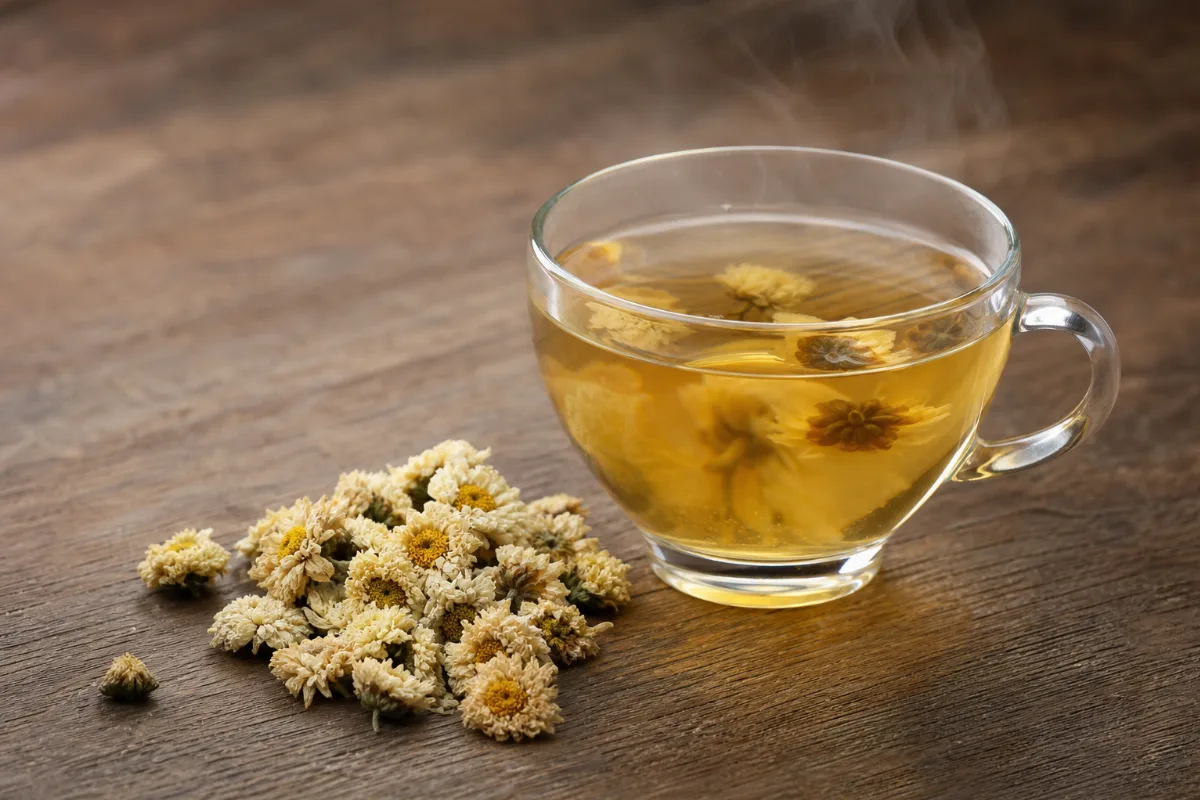
- Dried flower heads as tea
- Extracts (used in a small meal study)
- Combined products: eye formula with lutein, uric-acid mix with cassia, compound eye mask, Qiju multi-herb granules
- Multi-herb Chinese formulas (such as Sang Ju Yin) are separate products
Research links: Yuan 2020: juhua as Chinese dietary herbal medicine, review (PubMed) · Kan 2020: botanical formula for eye fatigue, randomized trial (PubMed) · Chen 2023: chrysanthemum extract and after-meal glucose (PubMed) · Ključevšek 2025: allergic potential of daisy-family herbs (PubMed) · Wang 2025: pesticides in chrysanthemum from garden to cup (PubMed) · Research Library · Genes & Biomarkers Library
The plant and its history
- Accepted scientific name
- Chrysanthemum x morifolium Ramat. ex Hemsl. (C. morifolium); also C. indicum L.
- Naming authority
- Ramat. ex Hemsl. (C. morifolium); L. (C. indicum)
- Common names
- Chrysanthemum (English); Ju hua (Chinese (pinyin)); Ye ju hua (wild chrysanthemum, C. indicum) (Chinese (pinyin)); Juhua (Chinese (pinyin))
- Botanical family
- Asteraceae (daisy family, also called Compositae)
- Classification
- Plantae > Tracheophyta > Magnoliopsida > Asterales > Asteraceae > Chrysanthemum > Chrysanthemum morifolium
- Native range
- A 2024 review says C. morifolium originated in China and went from food and tea to medicine over more than 3000 years.
- Habitat
- Cultivated; many cultivars worldwide (reviews).
- What the plant looks like
- Roots: Not described in sources read.; Stems: Not described in sources read.; Leaves: Not described in sources read.; Flowers: The flower head is the medicinal and tea part. Flower colour varies by cultivar and relates to flavonoid content (Chen 2021).; Fruit: Not described in sources read.; Seeds: Not described in sources read.
- Cultivation
- Not covered in the sources read beyond cultivar breeding and pesticide use.
- Harvest and processing
- Sun drying, or sulphur fumigation widely used in some cultivars such as Hang-ju (Ma 2021); drying concentrates pesticide residues (Wang 2025).
- Look-alikes and adulterants
- Name: Pyrethrum daisy (Chrysanthemum cinerariifolium, now Tanacetum cinerariifolium); Note: A different plant whose flowers make pyrethrin insecticide; GBIF lists the Chrysanthemum name as a synonym of Tanacetum cinerariifolium. Not a tea plant.; Name: Chamomile (Matricaria chamomilla); Note: Another daisy-family flower tea; separate herb on this site. Allergy cautions overlap.; Name: Ornamental florists' chrysanthemums and marguerite daisies; Note: Garden plants; documented skin sensitizers; not for tea.; Name: Sang Ju Yin (Mulberry Leaf and Chrysanthemum Formula); Note: A multi-herb Chinese formula that contains chrysanthemum; a different product, not covered here.
- Sustainability and conservation
- Not covered in the sources read.
The plant and the parts used
Traditional use and history history, not clinical proof
| Tradition or era | Documented use | Source |
|---|---|---|
| Chinese dietary herbal medicine | A 2020 review describes juhua as the most representative flower-derived dietary herbal medicine in China, mainly used for respiratory and cardiovascular diseases; a 2024 review says use as food, tea and medicine goes back more than 3000 years and names colds, inflammation and cardiovascular disease. | p32593689 |
| Traditional use for headache, dizziness and sore or red eyes | Often stated for ju hua, but none of the abstracts we read states it. | s-regulators-not-found-chrysanthemum |
| Pharmacopoeia and regulatory status | A 2020 review says it summarised the flower medicines recorded in the Chinese Pharmacopoeia. EMA/HMPC and NCCIH documents were not found. | p32593689 |
Traditional use shows how a plant was used. It does not show that a supplement works or is safe today.
What is inside, and how it may work
What the plant contains and how those compounds act in cells and animals. Laboratory and animal mechanisms are not proven effects in people.
Main compounds
| Compound | Family | Where it is concentrated | Activity studied | Level of evidence |
|---|---|---|---|---|
| Luteolin PubChem 5280445 | Flavone | Flower | Identified in a selenium-enriched C. morifolium extract that was antioxidant in fruit flies. 9 4 | Lab |
| Apigenin PubChem 5280443 | Flavone | Flower | Identified in the same extract; other effects were not read. 9 4 | Lab |
| Chlorogenic acid (and other caffeoylquinic acids) PubChem 1794427 | Phenolic acid | Flower In hot-water tea most flavonoids and caffeoylquinic acids dissolved by 30 minutes (20.977 and 8.958 mg/g GW as printed; which is which is not clear). | Treated as a key functional component in a process study; seven caffeoylquinic acids were measured across 27 cultivars. 22 6 4 | Lab |
| Cynaroside (luteolin 7-O-glucoside) PubChem 5280637 | Flavone glycoside | Flower (extract) Over 30% of the flavonoid-rich IC-P extract in one study. | The extract showed free-radical scavenging in the lab. 7 9 4 | Lab |
| Linarin (buddleoside) PubChem 5317025 | Flavone glycoside | Flower | Identified in the fruit-fly study extract. 9 4 | Lab |
Mechanisms, receptors and pathways
| Target or pathway | Gene or receptor | What was found | Level |
|---|---|---|---|
| After-meal glucose and antioxidant status | Not specified in sources read | Extract with a high-fat meal gave lower glucose at 1 hour and better antioxidant markers in 37 healthy adults; digestive-enzyme blocking was described from earlier lab work. 7 | Human data |
| Inflammation, PI3K-Akt, NF-kB and renin-angiotensin pathways | Not specified in sources read | Two chrysanthemum species acted through partly different pathways in a hypertension model; the abstract does not name the model. 21 | Animal research |
| Antioxidant enzymes (SOD, catalase) and lifespan | SOD and catalase genes | Selenium-enriched extract raised antioxidant enzymes and extended fruit-fly lifespan. 9 | Animal research |
| Lipids and oxidative damage | Not specified | Unfumigated Hang-ju lowered fats and oxidative markers in rats and protected vein cells better than fumigated flower. 14 | Animal research |
Absorption, metabolism and elimination
- Absorption
- Not found in the sources read.
- Distribution
- Not found.
- Metabolism
- Not found.
- Elimination
- Not found.
- Bioavailability
- Not given in the abstracts.
Isolated compounds versus whole extracts
Products differ a lot: tea of whole dried flower heads, a 'Imperial Chrysanthemum' extract (healthy-adult meal study), a formula with lutein and other herbs (eye trial), a C. indicum plus cassia mix (uric acid), a compound eye mask and a Chinese multi-herb granule (lung study). Results do not carry across, and no trial tested plain tea. Cultivar and species (C. morifolium vs C. indicum) change the flavonoid profile.
Nutritional composition
Chrysanthemum flowers are mainly taken as tea. The sources read give no vitamin or mineral values; a selenium-enriched cultivar exists, which has more selenium than ordinary C. morifolium (fruit-fly paper).
3 low certainty2 very low certainty4 not enough evidence
What is Chrysanthemum good for?
The studied uses and how strong the human evidence is for each. Several trials tested products that mix chrysanthemum with other ingredients, so their results cannot be credited to chrysanthemum alone.
Benefits, one by one
Each card is a research question, not a promise. Tap a goal to filter. Open a card to see the studies, doses and limits.
Eye strain and dry eye (swallowed formula that includes chrysanthemum)
Low certaintyOne 90-day trial in 360 adults with tired eyes tested a chewable tablet that combined lutein ester, zeaxanthin and extracts of blackcurrant, chrysanthemum and goji. It beat placebo on an eye-strain symptom score and on some tear tests. Chrysanthemum was only one of five ingredients, so the result cannot be credited to it.
1 studiesA chewable tablet with lutein ester, zeaxanthin and blackcurrant, chr…
Studies, doses and limits
What the trials found
Kan 2020: 360 adults with eye fatigue were randomized to placebo or the formula at three strengths for 90 days. At all three strengths the total symptom score fell and visual persistence time rose versus placebo at day 45 and day 90. Tear secretion (Schirmer) improved at day 90 in the two higher groups; tear break-up times and tear meniscus height rose; macular pigment density rose. Retinal thickness did not change.
Results
Better symptom score and tear tests than placebo for the five-ingredient formula.
Effect sizes as reported
Numbers are not given in the abstract read.
Why this rating
One randomized, double-blind, placebo-controlled, registered trial with 360 people, but it tested a five-ingredient product with no chrysanthemum-only group, effect sizes were not in the abstract and funding was not stated.
Form and dose studied
A chewable tablet with lutein ester, zeaxanthin and blackcurrant, chrysanthemum and goji extracts. Not a tea. The abstract does not say how much chrysanthemum it held.
Who was studied
Adults with eye fatigue.
Limits
Cannot separate chrysanthemum from lutein and the other ingredients; abstract only; possible industry link.
Why researchers looked
Chrysanthemum flowers are a traditional Chinese tea, and eyes are one of the areas the plant is associated with; the trial tested a combined nutrition product for screen-related eye strain.
Traditional use
Traditional use of ju hua for sore, tired or red eyes is often stated, but none of the abstracts we read states it, so it is NOT verified here.
Proposed mechanism Preliminary mechanism
Lutein and zeaxanthin are pigments found in the eye. Chrysanthemum flavonoids are antioxidant in the lab. How the combined tablet works was not tested.
A proposed mechanism does not show that the effect happens in people.
The authors report no serious side effects. See the Safety tab for daisy-family allergy.
Dry eye (compound wild chrysanthemum eye masks, used on the eyes)
Low certaintyIn a two-week trial of 112 people with mild to moderate dry eye, a warming eye mask made with wild chrysanthemum lowered dry-eye symptom scores more than a dummy mask. Tests of tears were less clear. This is a topical product, not tea, and its other ingredients were not listed in the abstract.
1 studiesTopical eye mask, not swallowed.
Studies, doses and limits
What the trials found
Wu 2021: 120 patients were randomized at six hospitals; 112 were analysed (56 per group). The median symptom score fell from 14.50 to 7.00 at 2 weeks with the eye mask and from 14.00 to 10.00 with the dummy mask, and was lower with the eye mask (P<0.05). Tear break-up time rose from 5.06 to 5.71 seconds at 1 week only with the eye mask. The abstract is inconsistent on whether tear break-up time, Schirmer test and staining differed between the groups. Five mild adverse events (2 eye mask, 3 dummy).
Results
Symptoms improved more than with a dummy mask; tear signs mixed.
Effect sizes as reported
Median symptom score 7.00 vs 10.00 at 2 weeks (eye mask vs dummy); no confidence intervals in the abstract.
Why this rating
A multicenter, double-masked, placebo-controlled trial, but only 2 weeks, a compound product with unknown ingredients, partly inconsistent abstract and funding not stated.
Form and dose studied
Topical eye mask, not swallowed.
Who was studied
Middle-aged and older adults (41-75 years) with mild to moderate dry eye in China.
Limits
Chinese-language article; abstract read; short follow-up; the result may not apply to tea.
Why researchers looked
Wild chrysanthemum (C. indicum, ye ju hua) is used in Chinese eye-care products; the trial tested a compound mask as an add-on for dry eye.
Traditional use
Not stated in the abstract read.
Proposed mechanism Pharmacological theory
Not described in the abstract. Warmth from the mask itself may play a part; the dummy mask was meant to control for that.
A proposed mechanism does not show that the effect happens in people.
Mild adverse events in both groups; not applicable to drinking the tea.
High blood pressure (traditional use; no human trial found)
Not enough evidenceChrysanthemum tea is traditionally used for the heart and blood pressure, but we found no human trial of chrysanthemum tea or extract for blood pressure. The only blood-pressure findings were from lab and computer-model work. This is a plain gap, not a result.
4 studiesTea, extracts and formulas; no human data for any form.
Studies, doses and limits
What the trials found
No human trial of chrysanthemum for blood pressure was found. The Qiju formula trial recorded blood pressure, but the abstract gives no blood-pressure result.
Results
No human result.
Effect sizes as reported
None.
Why this rating
Traditional use and preclinical work only; no human blood-pressure study.
Form and dose studied
Tea, extracts and formulas; no human data for any form.
Who was studied
None studied.
Limits
Reviews do not separate human from lab findings.
Why researchers looked
Reviews say juhua is mainly used in China for respiratory and cardiovascular conditions, and a 2022 paper compared two chrysanthemum species in a 'liver-fire hyperactivity' hypertension model.
Traditional use
Reviews describe use of juhua for cardiovascular disease in Chinese dietary medicine (Yuan 2020; Liu 2024).
Proposed mechanism Animal research
The 2022 paper reports that C. morifolium and C. indicum flowers lowered blood pressure in a hypertension model through partly different pathways (inflammation, PI3K-Akt, NF-kB and the renin-angiotensin system). The abstract does not name the model.
A proposed mechanism does not show that the effect happens in people.
Do not replace blood-pressure medicine with tea. Possible added effect with blood-pressure medicines is theory only.
Colds and breathing (traditional use)
Not enough evidenceChrysanthemum is traditionally used in China for colds and respiratory complaints. We found no controlled trial of the tea for colds or cough. This use rests on long tradition and lab findings.
2 studiesTea and multi-herb formulas.
Studies, doses and limits
What the trials found
No controlled trial of chrysanthemum tea or extract for colds or cough was found.
Results
No human result.
Effect sizes as reported
None.
Why this rating
Traditional use only.
Form and dose studied
Tea and multi-herb formulas.
Who was studied
None studied.
Limits
Reviews mix lab, animal and traditional claims.
Why researchers looked
Two reviews list colds and respiratory disease among the main traditional uses.
Traditional use
Chinese dietary herbal medicine, with food and tea use traced back more than 3000 years by one review (Liu 2024).
Proposed mechanism Laboratory research
Reviews report anti-inflammatory and antimicrobial activity in cells and animals. Whether this matters in people was not shown.
A proposed mechanism does not show that the effect happens in people.
Colds that bring high fever, trouble breathing or last long need a doctor.
Lung function in polluted air (as one ingredient of the Qiju formula)
Very low certaintyIn a small 4-week trial of healthy students, a Chinese formula containing chrysanthemum, lycium and rehmannia was linked to a weaker drop in lung function on high-pollution days. The result cannot be credited to chrysanthemum.
1 studiesMulti-herb granules (chrysanthemum, lycium, rehmannia).
Studies, doses and limits
What the trials found
Chen 2024: 47 healthy college students in Hangzhou were randomized to Qiju granules or placebo for 4 weeks; 40 finished. In the placebo group, higher PM2.5 was linked to lower FEV1, PEF and other flow measures. In the Qiju group the links were much weaker and not statistically significant.
Results
Weaker pollution-lung function link in the formula group.
Effect sizes as reported
No between-group effect size or confidence interval in the abstract.
Why this rating
Small trial in healthy students, the conclusion rests on a within-group association rather than a direct group comparison, and chrysanthemum was one of several ingredients.
Form and dose studied
Multi-herb granules (chrysanthemum, lycium, rehmannia).
Who was studied
Healthy young adults.
Limits
40 completers; 4 weeks; abstract only; healthy people.
Why researchers looked
Qiju granules come from the Qi-Ju-Di-Huang-Wan formula, traditionally used for cough with phlegm, dry mouth and throat and 'liver heat'.
Traditional use
Described in the trial introduction.
Proposed mechanism Preliminary mechanism
The authors say the formula is thought to act on inflammation, oxidative stress and scarring responses; this was not tested in this trial.
A proposed mechanism does not show that the effect happens in people.
No safety result was given in the abstract.
Blood sugar and antioxidant markers after a fatty meal (extract, healthy adults)
Very low certaintyIn one small study of 37 healthy young adults, an extract of a chrysanthemum cultivar eaten with a high-fat meal was linked to lower blood sugar at one hour. The overall blood-sugar response did not differ. Markers of antioxidant status moved in the extract group's favour. This is not shown to help anyone with diabetes or high cholesterol.
1 studiesExtract of an 'Imperial Chrysanthemum' cultivar; two extract types we…
Studies, doses and limits
What the trials found
Chen 2023: 37 healthy adults (average age 25.2) had a high-fat meal with or without 'Imperial Chrysanthemum' extract and were sampled for 8 hours. Glucose was significantly lower in the extract group at 1 hour; the incremental area under the curve did not differ. Total antioxidant capacity, SOD and GSH were higher and MDA lower in the extract group; the abstract says triglycerides also differed in maximal change but not in which direction.
Results
Lower glucose at one hour only; antioxidant markers better; overall glucose response unchanged.
Effect sizes as reported
Numbers not given in the abstract.
Why this rating
One small trial in young healthy people, a single meal, an extract rather than tea, details such as amount and blinding not given in the abstract, and several outcomes tested.
Form and dose studied
Extract of an 'Imperial Chrysanthemum' cultivar; two extract types were analysed.
Who was studied
Healthy adults, mean age 25.
Limits
Not people with diabetes or high blood fats; no long-term data; abstract only.
Why researchers looked
Lab work suggests chrysanthemum extract may block carbohydrate- and fat-digesting enzymes and has antioxidant activity; the authors say no human evidence existed.
Traditional use
Not stated.
Proposed mechanism Laboratory research
Enzyme-blocking and antioxidant activity of chrysanthemum flavonoids (such as cynaroside) in the lab. Not tested in people in this study.
A proposed mechanism does not show that the effect happens in people.
Could in theory add to blood-sugar medicines; not tested.
High uric acid (C. indicum flower extract plus cinnamon extract)
Low certaintyA 12-week trial in 80 adults with high uric acid but no symptoms tested a mix of wild chrysanthemum (C. indicum) flower extract and cinnamon (cassia) extract. After 12 weeks uric acid had fallen by 0.58 mg/dL on the mix and 0.02 mg/dL on placebo. Levels were still above normal. This is a two-ingredient product.
1 studiesDKB114: C. indicum flower extract plus Cinnamomum cassia extract.
Studies, doses and limits
What the trials found
Park 2020: 80 adults with serum uric acid of 7.0 to 9.0 mg/dL were randomized (40 per group). No difference at 6 weeks. At 12 weeks uric acid was 7.37 mg/dL on DKB114 and 7.67 on placebo; the fall was 0.58 vs 0.02 mg/dL (p = 0.0229). CRP rose less than on placebo (between-group p = 0.0443) and apolipoprotein B fell vs rose on placebo (p = 0.0189). No clinically significant safety differences.
Results
A modest fall in uric acid at 12 weeks only.
Effect sizes as reported
Fall 0.58 +/- 0.86 vs 0.02 +/- 0.93 mg/dL; p = 0.0229. No confidence interval in the abstract.
Why this rating
Randomized, double-blind, registered trial, but only 40 per group, a two-ingredient product, benefit only at the last visit and several secondary outcomes.
Form and dose studied
DKB114: C. indicum flower extract plus Cinnamomum cassia extract.
Who was studied
Adults with asymptomatic high uric acid in Korea.
Limits
No gout attacks measured; levels stayed high; branded product; abstract only.
Why researchers looked
Chrysanthemum indicum flower and cassia extracts were tested together as a possible food ingredient for high uric acid.
Traditional use
Not stated.
Proposed mechanism Preliminary mechanism
Not tested in the abstract.
A proposed mechanism does not show that the effect happens in people.
Safety tests showed no clinically significant difference from placebo.
Antioxidant and anti-inflammatory activity (lab and animal findings only)
Not enough evidenceReviews report that chrysanthemum flavonoids and acids (luteolin, apigenin, chlorogenic acid and others) calm inflammation and neutralise free radicals in cells and animals. This has not been shown to help people drinking the tea.
4 studiesExtracts and tea in lab work.
Studies, doses and limits
What the trials found
No human outcome trial. The only human antioxidant data are the after-meal markers in the 37-person extract study.
Results
Lab and animal only.
Effect sizes as reported
None.
Why this rating
Preclinical evidence does not show a human benefit.
Form and dose studied
Extracts and tea in lab work.
Who was studied
Cells, animals, fruit flies.
Limits
Reviews do not rate the quality of the lab studies.
Why researchers looked
The flowers are rich in flavonoids and caffeoylquinic acids.
Traditional use
Traditional tea and herbal medicine.
Proposed mechanism Laboratory research
Radical scavenging and lower inflammatory signals in cells and animals. In fruit flies a selenium-enriched flower extract raised antioxidant enzymes and extended lifespan.
A proposed mechanism does not show that the effect happens in people.
None.
Blood fats, heart and nerve protection (animal and cell findings only)
Not enough evidenceReviews describe nerve-protective and cardiovascular effects in cells and animals. In rats fed a fatty diet, a water extract of unfumigated Hang-ju lowered triglycerides and cholesterol and worked better than the sulphur-fumigated flower. No human evidence was found.
3 studiesWater extracts of Hang-ju in rats and cells.
Studies, doses and limits
What the trials found
None.
Results
Animal and cell findings.
Effect sizes as reported
Not given in the abstract.
Why this rating
Animal and cell studies only.
Form and dose studied
Water extracts of Hang-ju in rats and cells.
Who was studied
Rats and human vein cells.
Limits
Rats given high-fat diet; not people.
Why researchers looked
Reviews list cardiovascular and neuroprotective activity.
Traditional use
Cardiovascular use is described in reviews.
Proposed mechanism Animal research
Lower blood fats and lipid peroxidation, higher antioxidant enzymes and less cell damage in rats and vein cells.
A proposed mechanism does not show that the effect happens in people.
The fumigation result matters for quality; see the Safety tab.
Connections to the rest of health
How Chrysanthemum connects to the rest of our health knowledge graph. Every link says what kind of connection it is. A safety link (for example to the liver) is a warning, not a benefit. A study that merely mentions a topic never creates a benefit link.
Explore every connection: goals, body systems, organs, symptoms, genes
A. Wellness goals
| Connected to | Kind of connection | Evidence status | Context | Studies |
|---|---|---|---|---|
| Blood Pressure Support | Traditional use | Not enough evidence | High blood pressure (traditional use; no human trial found): Chrysanthemum tea is traditionally used for the heart and blood pressure, but we found no human trial of chrysanthemum tea or extract for blood pressure. The only blood-pressure findings were from lab and computer-model work. This is a plain gap, not a result. | 25 13 21 8 |
| Heart Health | Traditional use | Not enough evidence | High blood pressure (traditional use; no human trial found): Chrysanthemum tea is traditionally used for the heart and blood pressure, but we found no human trial of chrysanthemum tea or extract for blood pressure. The only blood-pressure findings were from lab and computer-model work. This is a plain gap, not a result. | 25 13 21 8 |
| Immune Support | Traditional use | Not enough evidence | Colds and breathing (traditional use): Chrysanthemum is traditionally used in China for colds and respiratory complaints. We found no controlled trial of the tea for colds or cough. This use rests on long tradition and lab findings. | 25 13 |
| Lung Support | Potential benefit | Very low certainty | Lung function in polluted air (as one ingredient of the Qiju formula): In a small 4-week trial of healthy students, a Chinese formula containing chrysanthemum, lycium and rehmannia was linked to a weaker drop in lung function on high-pollution days. The result cannot be credited to chrysanthemum. | 8 |
| Blood Sugar Balance | Potential benefit | Very low certainty | Blood sugar and antioxidant markers after a fatty meal (extract, healthy adults): In one small study of 37 healthy young adults, an extract of a chrysanthemum cultivar eaten with a high-fat meal was linked to lower blood sugar at one hour. The overall blood-sugar response did not differ. Markers of antioxidant status moved in the extract group's favour. This is not shown to help anyone with diabetes or high cholesterol. | 7 |
| Metabolic Health | Potential benefit | Very low certainty | Blood sugar and antioxidant markers after a fatty meal (extract, healthy adults): In one small study of 37 healthy young adults, an extract of a chrysanthemum cultivar eaten with a high-fat meal was linked to lower blood sugar at one hour. The overall blood-sugar response did not differ. Markers of antioxidant status moved in the extract group's favour. This is not shown to help anyone with diabetes or high cholesterol. | 7 |
| Inflammation Balance | Preliminary mechanism | Not enough evidence | Antioxidant and anti-inflammatory activity (lab and animal findings only): Reviews report that chrysanthemum flavonoids and acids (luteolin, apigenin, chlorogenic acid and others) calm inflammation and neutralise free radicals in cells and animals. This has not been shown to help people drinking the tea. | 25 13 9 6 |
| Cholesterol Balance | Preliminary mechanism | Not enough evidence | Blood fats, heart and nerve protection (animal and cell findings only): Reviews describe nerve-protective and cardiovascular effects in cells and animals. In rats fed a fatty diet, a water extract of unfumigated Hang-ju lowered triglycerides and cholesterol and worked better than the sulphur-fumigated flower. No human evidence was found. | 14 25 13 |
| Heart Health | Preliminary mechanism | Not enough evidence | Blood fats, heart and nerve protection (animal and cell findings only): Reviews describe nerve-protective and cardiovascular effects in cells and animals. In rats fed a fatty diet, a water extract of unfumigated Hang-ju lowered triglycerides and cholesterol and worked better than the sulphur-fumigated flower. No human evidence was found. | 14 25 13 |
B. Body systems
| Connected to | Kind of connection | Evidence status | Context | Studies |
|---|---|---|---|---|
| Nervous System | Biological association | Low certainty | Studied for: Eye strain and dry eye (swallowed formula that includes chrysanthemum) Studied for: Dry eye (compound wild chrysanthemum eye masks, used on the eyes) | 11 24 14 25 13 |
| Cardiovascular System | Biological association | Not enough evidence | Studied for: High blood pressure (traditional use; no human trial found) Studied for: Blood fats, heart and nerve protection (animal and cell findings only) | 25 13 21 8 14 |
| Respiratory System | Biological association | Not enough evidence | Studied for: Colds and breathing (traditional use) Studied for: Lung function in polluted air (as one ingredient of the Qiju formula) | 25 13 8 |
| Immune System | Biological association | Not enough evidence | Studied for: Colds and breathing (traditional use) Studied for: Antioxidant and anti-inflammatory activity (lab and animal findings only) | 25 13 9 6 |
| Endocrine System | Biological association | Very low certainty | Studied for: Blood sugar and antioxidant markers after a fatty meal (extract, healthy adults) | 7 |
| Metabolism Weight | Biological association | Very low certainty | Studied for: Blood sugar and antioxidant markers after a fatty meal (extract, healthy adults) Studied for: High uric acid (C. indicum flower extract plus cinnamon extract) | 7 16 |
E. Health conditions
| Connected to | Kind of connection | Evidence status | Context | Studies |
|---|---|---|---|---|
| Daisy-family (Asteraceae) allergy | Contraindication | Case series | Cross-reaction with ragweed and mugwort pollen allergy and with other daisy-family herbs; patch-test positives in sensitized patients. Preparation or compound: Chrysanthemum flower, pollen and plant extract |
19 18 10 |
| Allergic contact dermatitis | Adverse effect or risk | Case report | Hand eczema from occupational contact; cleared on avoidance. Preparation or compound: Florists' chrysanthemum plant contact |
1 18 |
| Dry eye and eye strain | Potential benefit | Low certainty | Two trials of combined products; chrysanthemum alone not tested. Preparation or compound: Formula with chrysanthemum; compound wild chrysanthemum eye mask |
11 24 |
| High blood pressure | Traditional use | Not enough evidence | Traditional use; no human trial found. Preparation or compound: Chrysanthemum tea |
25 21 |
| High uric acid | Potential benefit | Low certainty | One 12-week trial of a two-ingredient product. Preparation or compound: C. indicum flower plus cassia extract (DKB114) |
16 |
I. Biomarkers
| Connected to | Kind of connection | Evidence status | Context | Studies |
|---|---|---|---|---|
| Eye symptom score | Biological association | Low certainty | Measured in trials: lowered. A lab change is not the same as a health benefit. | 11 24 |
| Tear break-up time | Biological association | Low certainty | Measured in trials: mixed. A lab change is not the same as a health benefit. | 11 24 |
| Tear secretion (Schirmer test) | Biological association | Low certainty | Measured in trials: mixed. A lab change is not the same as a health benefit. | 11 24 |
| Lung function (FEV1, PEF and related flow measures) | Biological association | Very low certainty | Measured in trials: mixed. A lab change is not the same as a health benefit. | 8 |
| After-meal blood glucose | Biological association | Very low certainty | Measured in trials: mixed. A lab change is not the same as a health benefit. | 7 |
| Blood antioxidant markers (T-AOC, SOD, GSH) and MDA | Biological association | Very low certainty | Measured in trials: mixed. A lab change is not the same as a health benefit. | 7 |
| Serum uric acid | Biological association | Low certainty | Measured in trials: lowered. A lab change is not the same as a health benefit. | 16 |
| CRP and apolipoprotein B (secondary outcomes) | Biological association | Very low certainty | Measured in trials: mixed. A lab change is not the same as a health benefit. | 16 |
J. Genes, receptors and enzymes
K. Biological pathways
| Connected to | Kind of connection | Evidence status | Context | Studies |
|---|---|---|---|---|
| NF-kB, PI3K-Akt and renin-angiotensin signalling | Preliminary mechanism | Animal | Reported as regulated by C. morifolium and C. indicum in a hypertension model (model not named). | 21 |
L. Active compounds
| Connected to | Kind of connection | Evidence status | Context | Studies |
|---|---|---|---|---|
| Luteolin | Biological association | Lab | Identified in a selenium-enriched C. morifolium extract that was antioxidant in fruit flies. Preparation or compound: Flower |
9 4 |
| Apigenin | Biological association | Lab | Identified in the same extract; other effects were not read. Preparation or compound: Flower |
9 4 |
| Chlorogenic acid (and other caffeoylquinic acids) | Biological association | Lab | Treated as a key functional component in a process study; seven caffeoylquinic acids were measured across 27 cultivars. Preparation or compound: Flower |
22 6 4 |
| Cynaroside (luteolin 7-O-glucoside) | Biological association | Lab | The extract showed free-radical scavenging in the lab. Preparation or compound: Flower (extract) |
7 9 4 |
| Linarin (buddleoside) | Biological association | Lab | Identified in the fruit-fly study extract. Preparation or compound: Flower |
9 4 |
Each connection is stored with the ingredient, the connected record, the kind of connection, the evidence status, the supporting studies, the preparation or compound involved, and a review date (last reviewed October 25, 2026).
Evidence at a glance: what changed in 8 lab markers
Tap a number to show only those markers. Counts are markers, not people.
The evidence
The research centre for Chrysanthemum. Every record here was checked against PubMed or the publisher's page; we never list a study we have not verified.
Evidence by outcome
Bars show how many studies we found for each outcome, not how well it works. People are added up across trials only (reviews are not added, to avoid double counting).
How we rate evidence
High certainty
Several well-run trials or reviews agree; further research is unlikely to change the picture much.
Moderate certainty
Good trials point the same way, but some doubt remains.
Low certainty
Small, short or inconsistent trials. The finding could change with better research.
Very low certainty
Very little or very weak human data. Treat as a possibility only.
Mixed findings
Trials or reviews disagree with each other.
Not enough evidence
Not enough human research to say either way.
Evidence against
Good research found no benefit, or found harm.
We take the reviewers' own risk-of-bias and GRADE statements where they exist, and otherwise judge from study size, design, consistency, directness and whether a product matches what is sold. Many publications do not make evidence high. Method note: We started from our existing chrysanthemum summary, re-checked its PubMed items, searched PubMed for eye, blood-pressure, allergy, quality and safety papers, and read the abstract of every PubMed study cited. We checked the plant names in GBIF and compound IDs in PubChem. NCCIH, EMA, LiverTox and LactMed were checked quickly and nothing was found; the Chinese Pharmacopoeia was not read.
Study library: every study we checked 25
| Study | Design | People | Product, dose, length | Result |
|---|---|---|---|---|
| Aberer 1987 [Chrysanthemum allergy] (German) Wiener Klinische Wochenschrift · PMID 2957858 |
Case report |
1 60-year-old woman who had grown chrysanthemums in a nursery for decades |
Skin contact with chrysanthemums plant (contact) Not applicable Several years of worsening hand eczema · vs n/a |
Hand eczema worsened season by season and became generalized. Patch testing gave a strong reaction to chrysanthemum and cross-reactions to several Compositae species. Avoiding all contact with flowers cleared the skin. Single case Methods, limits and fundingOutcomes: Hand eczema, skin testing Limitations: One case from 1987; occupational contact, not tea. Funding and conflicts: Not applicable. Read: abstract |
| AlternativeMed research check 2026 GBIF species matches: Chrysanthemum morifolium, C. indicum and C. cinerariifolium GBIF API · Source |
Database record plant |
n/a | n/a n/a n/a n/a · vs n/a |
On 2026-10-25: Chrysanthemum x morifolium Ramat. ex Hemsl. returned ACCEPTED, exact, confidence 97, family Asteraceae, usage key 3150767. Chrysanthemum indicum L. returned ACCEPTED, exact, confidence 97, key 3150814. Chrysanthemum cinerariifolium (Trevis.) Vis. returned SYNONYM (exact, confidence 98); the accepted name is in genus Tanacetum (accepted key 3118284). Not applicable Methods, limits and fundingOutcomes: Record check Limitations: A name database, not evidence about health. Funding and conflicts: Not applicable Read: api |
| AlternativeMed research check 2026 Regulator and reference pages checked for chrysanthemum (not found) NCCIH, EMA/HMPC, LiverTox, LactMed |
Not found document |
n/a | n/a n/a n/a n/a · vs n/a |
On 2026-10-25 the NCCIH chrysanthemum page (guessed address) returned 404; the guessed EMA herbal address for chrysanthemi flos returned 404 and the EMA site search was blocked (401); a search of NCBI Books returned no LiverTox or LactMed chrysanthemum entry. Nothing was found, which is not proof that nothing exists. The Chinese Pharmacopoeia, FDA, Commission E and WHO monographs were not checked. Not applicable Methods, limits and fundingOutcomes: Record check Limitations: Checks used guessed web addresses and one database search; a document under another name could exist. Funding and conflicts: Not applicable Read: not-found |
| AlternativeMed research check 2026 PubChem compound IDs for luteolin, apigenin, chlorogenic acid, cynaroside and linarin PubChem PUG REST · Source |
Database record compound |
n/a | n/a n/a n/a n/a · vs n/a |
Name lookups on 2026-10-25 returned CIDs: luteolin 5280445, apigenin 5280443, chlorogenic acid 1794427, cynaroside (luteolin 7-O-glucoside) 5280637, linarin 5317025. Not applicable Methods, limits and fundingOutcomes: Record check Limitations: Identity check only; says nothing about amounts in the plant. Funding and conflicts: Not applicable Read: api |
| AlternativeMed research check 2026 NCBI Taxonomy search: Chrysanthemum morifolium NCBI Taxonomy · Source |
Database record plant |
n/a | n/a n/a n/a n/a · vs n/a |
A search for Chrysanthemum morifolium returned one record, taxonomy ID 41568 (only the ID was read, not the record). Not applicable Methods, limits and fundingOutcomes: Record check Limitations: Only the ID was read. Funding and conflicts: Not applicable Read: api |
| Chen 2021 Flavonoids and caffeoylquinic acids in Chrysanthemum morifolium Ramat flowers: A potentially rich source of bioactive compounds Food Chemistry · PMID 33280963 · DOI |
Laboratory analysis lab |
27 cultivars and representative teas of C. morifolium | C. morifolium flowers and hot-water tea flower Not applicable Hot-water extraction timed to 30 min · vs n/a |
The study measured 7 caffeoylquinic acids, 21 flavones and flavonols, 4 carotenoids and 13 other compounds. In hot-water tea most flavonoids and caffeoylquinic acids had dissolved by 30 minutes; the abstract gives 20.977 and 8.958 mg/g GW (units as printed; which figure is which is not clear in the abstract). Not applicable Methods, limits and fundingOutcomes: Chemical makeup Limitations: Chemistry only; says nothing about health effects. Funding and conflicts: Not stated in the abstract. Read: abstract |
| Chen 2023 Analysis of Chemical Constituents of Chrysanthemum morifolium Extract and Its Effect on Postprandial Lipid Metabolism in Healthy Adults Molecules · PMID 36677639 · DOI |
Randomized trial |
37 37 healthy adults, age 25.2 +/- 2.6 years, BMI 20.9 +/- 1.5 |
'Imperial Chrysanthemum' (C. morifolium cultivar) extract with a high-fat meal flower (extract) Not stated in the abstract Single high-fat meal, blood sampled for 8 hours · vs High-fat meal without extract |
Two kinds of extract (IC-P, IC-E) were analysed; the IC-P extract had more flavonoids and over 30% cynaroside. Blood glucose was significantly lower in the extract group at 1 hour. The incremental area under the curve did not differ between groups. Antioxidant markers (T-AOC, SOD, GSH) were higher and MDA lower in the extract group. The abstract also says maximal changes in glucose, triglycerides, T-AOC and MDA differed between groups. Glucose lower at 1 h; no difference in glucose iAUC; antioxidant markers improved Methods, limits and fundingOutcomes: After-meal blood glucose, triglycerides, antioxidant status Limitations: Small, young, healthy volunteers; one meal; extract not tea; which of the two extracts was eaten, the amount and blinding are not stated in the abstract; many outcomes tested. Funding and conflicts: The authors declare no conflict of interest. Read: abstract |
| Chen 2024 Lung function benefits of traditional Chinese medicine Qiju granules against fine particulate air pollution exposure: a randomized controlled trial Frontiers in Medicine · PMID 38741765 · DOI |
Randomized trial |
47 47 healthy college students in Hangzhou randomized; 40 completed |
Qiju granules (from the Lycium, Chrysanthemum and Rehmannia formula Qi-Ju-Di-Huang-Wan) multi-herb formula Not stated in the abstract 4 weeks, follow-up every 2 weeks · vs Placebo (control group) |
Average PM2.5 was 64.72 ug/m3. In the control group, higher PM2.5 was linked to lower FEV1, PEF, MMEF and flow measures with a one-week lag. In the Qiju group these links were much weaker and not statistically significant. Weaker PM2.5-lung function association in the Qiju group; no between-group effect size given in the abstract Methods, limits and fundingOutcomes: Lung function (FEV1, PEF, MMEF, FEF75/50/25) in relation to personal PM2.5 exposure Limitations: Healthy young students, 4 weeks, 40 completers. The result is about the strength of an association within each group, not a direct test of group against group. Chrysanthemum was one of several ingredients. Funding and conflicts: The authors declare no commercial or financial conflict. Registration: ChiCTR1900021235 Read: abstract |
| Feng 2022 Effects of Se-enriched Chrysanthemum morifolium on lifespan and antioxidant defense-related gene expression of Drosophila melanogaster model Journal of Food Biochemistry · PMID 36331088 · DOI |
Animal research animal |
Fruit flies (Drosophila melanogaster) | Selenium-enriched C. morifolium extract flower Not stated Lifespan study · vs n/a |
Eight phenols were identified in the extract: luteolin-7-O-glucoside, linarin, luteolin, apigenin, diosmetin, acacetin, 3-caffeoylquinic acid and 4,5-dicaffeoylquinic acid. In flies, the selenium-enriched flower lowered MDA, raised antioxidant enzymes and extended lifespan more than ordinary C. morifolium. Not applicable to people Methods, limits and fundingOutcomes: Phenol identification; antioxidant enzymes; lifespan in flies Limitations: Fruit flies; selenium-enriched variety; no human data. Funding and conflicts: Not stated in the abstract. Read: abstract |
| Groenewoud 2002 Prevalence of occupational allergy to Chrysanthemum pollen in greenhouses in the Netherlands Allergy · PMID 12169182 · DOI |
Cross sectional |
104 104 chrysanthemum greenhouse employees in the Netherlands |
Workplace exposure to chrysanthemum pollen (inhaled) pollen Not applicable Cross-sectional · vs n/a |
Work-related symptoms were reported by 56.7%, mainly rhinitis. Sensitization to chrysanthemum pollen was found in 20.2% of employees. Inhalant atopy and sensitization to common pollen including mugwort were closely linked to chrysanthemum sensitization, which the authors say may suggest cross-sensitization. 56.7% work-related symptoms; 20.2% sensitized Methods, limits and fundingOutcomes: Work-related symptoms; skin prick and IgE tests Limitations: Greenhouse workers breathing pollen, not people drinking tea; invited employees (selection possible). Funding and conflicts: Not stated in the abstract. Read: abstract |
| Kan 2020 A novel botanical formula improves eye fatigue and dry eye: a randomized, double-blind, placebo-controlled study American Journal of Clinical Nutrition · PMID 32542334 · DOI |
Randomized trial |
360 360 adults with eye fatigue |
Chewable tablet: lutein ester, zeaxanthin and extracts of blackcurrant, chrysanthemum and goji berry extract combination Once daily; three lutein levels (6, 10, 14 mg) vs placebo; chrysanthemum amount not stated in the abstract 90 days (visits at baseline, day 45, day 90) · vs Placebo |
All three doses lowered the total eye-fatigue symptom score and raised visual persistence time versus placebo at day 45 and 90. Schirmer tear secretion improved at day 90 in the two higher lutein groups. Tear break-up times and tear meniscus height rose. Macular pigment optical density rose at day 45 and 90. Retinal thickness and volume did not change. Improvements vs placebo on symptom score, tear tests and macular pigment; numbers not given in the abstract Methods, limits and fundingOutcomes: Eye-fatigue symptom score, visual persistence time, tear tests (Schirmer, tear break-up time, meniscus height), macular pigment density, retinal thickness Limitations: Five-ingredient product with no chrysanthemum-only group, so chrysanthemum's own part is unknown; effect sizes not in the abstract; funding not stated in the abstract. Funding and conflicts: Funding and conflicts not stated in the abstract; branded formula, so an industry link is possible. Registration: ChiCTR1800018987 Read: abstract |
| Ključevšek 2025 Allergic Potential of Medicinal Plants From the Asteraceae Family Health Science Reports · PMID 39995792 · DOI |
Narrative review review |
Literature to January 2024 | Asteraceae medicinal plants various Not applicable Not applicable · vs n/a |
The abstract says Asteraceae are important sensitizers, with immediate and delayed reactions. Pollen panallergens (mainly from ragweed and mugwort) cause cross-reactivity, including pollen-medicine allergy. Sesquiterpene lactones can irritate skin and may cause systemic reactions after ingestion in sensitized people. Many uncertainties remain. Not applicable Methods, limits and fundingOutcomes: Allergic risk (pollen panallergens, sesquiterpene lactones) Limitations: Narrative review; the abstract does not name chrysanthemum; English-language papers only. Funding and conflicts: The authors declare no conflicts of interest. Read: abstract |
| Liu 2024 Chrysanthemum morifolium as a traditional herb: A review of historical development, classification, phytochemistry, pharmacology and application Journal of Ethnopharmacology · PMID 38621465 · DOI |
Narrative review review |
Review of literature published in the last ten years | C. morifolium flower (tea, food and medicine) flower Not applicable Not applicable · vs n/a |
The abstract says C. morifolium came from China, went from food and tea to medicine over more than 3000 years, contains flavonoids, phenolic acids, volatile oils and terpenes, and shows anti-inflammatory and antioxidant activity. It names colds, inflammation and cardiovascular disease among its uses. Not applicable Methods, limits and fundingOutcomes: History, chemistry, pharmacology, uses Limitations: Narrative review; does not rate the quality of human evidence; full text not read. Funding and conflicts: No conflict of interest reported. Read: abstract |
| Ma 2021 Comparison of the antioxidant activities of nonfumigated and sulphur-fumigated Chrysanthemum morifolium cv. Hang-ju induced by oxidative stress Pharmaceutical Biology · PMID 33399496 · DOI |
Animal and cell animal |
Sprague-Dawley rats on a high-fat diet (n = 6 per group) and human vein cells | Water extracts of non-fumigated and sulphur-fumigated Hang-ju (C. morifolium) flower 1, 2 or 4 g crude drug/kg/day in rats; 50-200 ug/mL in cells 8 weeks (rats) · vs Control and fenofibrate |
The abstract says sun drying of Hang-ju is widely replaced by sulphur fumigation. The non-fumigated flower was more effective than the fumigated one at lowering triglycerides, total and LDL cholesterol and MDA and at raising HDL and SOD in rats at high doses, and at protecting vein cells. The authors concluded that sulphur fumigation causes oxidative damage and is not recommended for processing Hang-ju. Not given in the abstract Methods, limits and fundingOutcomes: Blood fats, antioxidant enzymes, cell damage Limitations: Rats and cells only; not a human study. Funding and conflicts: The authors report no conflict of interest. Read: abstract |
| Mak 2007 Lower incidence of sesquiterpene lactone sensitivity in a population in Asia versus a population in Europe: an effect of chrysanthemum tea? Contact Dermatitis · PMID 17680864 · DOI |
Letter |
Not given in the abstract | Chrysanthemum tea (hypothesis) flower Not applicable Not applicable · vs n/a |
Only the first lines of the abstract were available. They say sesquiterpene lactones are an important cause of allergic plant contact dermatitis but are uncommon in the Far East. The title poses the idea that chrysanthemum tea might explain this; no data are in the abstract read. No conclusion drawn Methods, limits and fundingOutcomes: Sesquiterpene lactone sensitivity in Asia vs Europe Limitations: Title poses a question only; abstract fragment; used here as a caveat, not as evidence. Funding and conflicts: Not stated. Read: abstract |
| Park 2020 A 12-Week, Multicenter, Randomized, Double-Blind, Placebo-Controlled Clinical Trial for Evaluation of the Efficacy and Safety of DKB114 on Reduction of Uric Acid in Serum Nutrients · PMID 33322063 · DOI |
Randomized trial |
80 80 adults with asymptomatic high uric acid (7.0-9.0 mg/dL) |
DKB114: mixture of Chrysanthemum indicum flower extract and Cinnamomum cassia extract flower extract + cinnamon extract Not stated in the abstract 12 weeks · vs Placebo |
No difference in uric acid after 6 weeks. After 12 weeks uric acid fell 0.58 +/- 0.86 mg/dL (to 7.37 +/- 0.92) with DKB114 and 0.02 +/- 0.93 mg/dL (to 7.67 +/- 0.89) with placebo (p = 0.0229). CRP rose 0.05 +/- 0.27 mg/dL with DKB114 (p = 0.3187) and 0.10 +/- 0.21 with placebo (p = 0.0324); between groups p = 0.0443. ApoB fell 4.75 +/- 16.69 mg/dL with DKB114 and rose 3.13 +/- 12.64 with placebo (between groups p = 0.0189). No clinically significant safety differences. Uric acid fell 0.58 vs 0.02 mg/dL (DKB114 vs placebo) at 12 weeks; p = 0.0229 Methods, limits and fundingOutcomes: Serum uric acid (main), CRP, apolipoprotein B, safety tests Limitations: Two-ingredient product (cinnamon too); 40 per group; benefit appeared only at week 12; several secondary outcomes; uric acid stayed in the high range. Funding and conflicts: The authors declare no conflicts of interest. Registration: KCT0002840 Read: abstract |
| Paulsen 2002 Contact sensitization from Compositae-containing herbal remedies and cosmetics Contact Dermatitis · PMID 12492516 · DOI |
Narrative review review |
Literature review | Compositae herbal remedies and cosmetics (arnica, chamomile, calendula, echinacea, elecampane and others) various Not applicable Not applicable · vs n/a |
The abstract says Compositae plants are an important cause of allergic plant contact dermatitis in Europe; at least 15 species have been suspected; epidemiological data exist for only two (arnica and German chamomile); sesquiterpene lactones are the main allergens. Chrysanthemum is not on the list in the abstract. Not applicable Methods, limits and fundingOutcomes: Allergic plant contact dermatitis Limitations: Old review; evidence mostly anecdotal; the risk when sensitized people use such products is described as largely unknown. Funding and conflicts: Not stated in the abstract. Read: abstract |
| Paulsen 2020 Contact sensitization to florists' chrysanthemums and marguerite daisies in Denmark: A 21-year experience Contact Dermatitis · PMID 31483868 · DOI |
Case series |
191 Danish patients with Compositae sensitization, patch tested to chrysanthemum extract (191) and marguerite daisy (179) |
Patch testing with chrysanthemum extract (3% in petrolatum) of florists' chrysanthemum cultivars plant extract (skin test) Not applicable 21 years of clinic data · vs n/a |
111 of 191 patients (58%) tested positive to chrysanthemum extract and 104 of 179 (58%) to marguerite daisy. Most were exposed recreationally and most reactions were judged relevant. Feverfew extract, Compositae mix or parthenolide may cross-react with chrysanthemum. 58% positive to chrysanthemum extract (111/191) Methods, limits and fundingOutcomes: Positive patch tests Limitations: Patients already known to be Compositae-sensitized; skin patch testing with ornamental plant extract, not tea; no frequency in the general population. Funding and conflicts: Not stated in the abstract. Read: abstract |
| Preda 2024 Diagnostic Workup in IgE-Mediated Allergy to Asteraceae Weed Pollen and Herbal Medicine Products in Europe Medicina (Kaunas) · PMID 39336535 · DOI |
Narrative review review |
People allergic to ragweed and mugwort pollen | Asteraceae herbal products (chamomile, marigold, purple coneflower named) various Not applicable Not applicable · vs n/a |
The abstract says some people with respiratory allergy to weed pollen may react to herbal medicines from cross-reactive Compositae plants such as chamomile, marigold and purple coneflower, and points to the EMA herbal committee's suggestions. Chrysanthemum is not named in the abstract. Not applicable Methods, limits and fundingOutcomes: Allergy cross-reactivity and diagnosis Limitations: Abstract does not name chrysanthemum; applied here by plant-family reasoning. Full text not read. Funding and conflicts: The authors declare no conflicts of interest. Read: abstract |
| Proudfoot 2005 Poisoning due to pyrethrins Toxicological Reviews · PMID 16180930 · DOI |
Narrative review review |
Review of pyrethrin poisoning | Pyrethrins (insecticide made from dried flower heads of the pyrethrum daisy) flower head (insecticide extract) Not applicable Not applicable · vs n/a |
The abstract says pyrethrins come from dried chrysanthemum-type flower heads with pesticidal activity, are generally of low acute toxicity, but convulsions may occur if substantial amounts are swallowed. Hypersensitivity (possibly fatal when the airways are involved) has been debated; two deaths from acute asthma have been attributed to pyrethrins; dermatitis and corneal erosions are reported. Care is supportive. Not applicable Methods, limits and fundingOutcomes: Toxicity of pyrethrins Limitations: About insecticide products, not tea; shown here to separate the two. Funding and conflicts: Not stated in the abstract. Read: abstract |
| Wang 2022 Comparison of the Chemical Components, Efficacy and Mechanisms of Action of Chrysanthemum morifolium Flower and Its Wild Relative Chrysanthemum indicum Flower against Liver-Fire Hyperactivity Syndrome of Hypertension via Integrative Analyses International Journal of Molecular Sciences · PMID 36430265 · DOI |
Preclinical animal |
Computer prediction and laboratory tests; model not named in the abstract | C. morifolium flower (CMF) vs C. indicum flower (CIF) flower Not stated Not stated · vs n/a |
The two flowers had different flavonoid profiles. The abstract says CMF and CIF showed similar effects in lowering blood pressure, protecting tissues and organs and improving blood fats, through partly different pathways (inflammation, PI3K-Akt, NF-kB, renin-angiotensin). Not given in the abstract Methods, limits and fundingOutcomes: Chemical makeup; blood pressure, tissue damage and blood fats in a hypertension model Limitations: Preclinical; the abstract does not state which model or animals; not a human study. Funding and conflicts: The authors declare no conflict of interest. Read: abstract |
| Wang 2022 Multi-Response Optimization of Pyrrolizidine Alkaloids Removal from Chrysanthemum morifolium by High-Pressure Extraction Foods · PMID 36496634 · DOI |
Laboratory method lab |
C. morifolium flower material (process study) | C. morifolium flower; high-pressure extraction flower Not applicable Not applicable · vs n/a |
The abstract describes pyrrolizidine alkaloids (PAs) as hepatotoxic secondary metabolites in the Chrysanthemum family and tests a high-pressure process to remove them while keeping the useful compounds. It does not give PA amounts found in flowers or tea. Not applicable Methods, limits and fundingOutcomes: Removal of pyrrolizidine alkaloids while keeping chlorogenic acid, luteolin-7-glucoside, 3,5-dicaffeoylquinic acid and total flavonoids Limitations: Process study; amounts of PAs in ordinary tea are not stated in the abstract. Funding and conflicts: The authors declare no conflict of interest. Read: abstract |
| Wang 2025 Occurrence, fate and dietary risk assessment of pesticides in chrysanthemum from garden to cup Journal of Hazardous Materials · PMID 40286658 · DOI |
Laboratory survey lab |
111 market chrysanthemum products from China | Dried chrysanthemum products and their infusions flower Not applicable Field and brewing experiments · vs n/a |
Pesticide residues were found in the market products tested (how many of the 111 had them is not stated). Drying concentrated the residues. Brewing moved 0.5% to 112.3% of each pesticide from the dried flowers into the infusion, depending mainly on water solubility. The combined risk assessment indicated an acceptable health risk from consumption. Brewing transfer 0.5-112.3% of residue Methods, limits and fundingOutcomes: Pesticide residues, transfer to the cup, dietary risk Limitations: Chinese market products only; risk assessment is a model; pesticide names and levels not given in the abstract. Funding and conflicts: The authors declare no competing financial interests. Read: abstract |
| Wu 2021 A multicenter, randomized, double-masked, placebo-controlled trial of compound wild chrysanthemum eye masks for mild and moderate dry eye (Chinese-language article) Zhonghua Yan Ke Za Zhi (Chinese Journal of Ophthalmology) · PMID 34344121 · DOI |
Randomized trial |
120 120 enrolled at six Chinese hospitals; 112 analysed (56 per group), age 54.26 +/- 7.44; mild to moderate dry eye |
Compound wild chrysanthemum eye mask (topical; wild chrysanthemum is C. indicum; other ingredients not stated in the abstract) flower (compound product) Not stated in the abstract 2 weeks (checks at 1 and 2 weeks) · vs Simulated (placebo) eye mask |
Median total symptom score fell from 14.50 to 9.00 (1 week) and 7.00 (2 weeks) with the eye mask, and from 14.00 to 12.00 and 10.00 with placebo; the eye mask group scored lower than placebo (P<0.05). Tear break-up time rose from 5.06 to 5.71 s after 1 week in the eye mask group only. Tear secretion rose to 6.88 mm at 1 week in the eye mask group. The abstract is inconsistent on whether break-up time, Schirmer and staining differed between groups. Five mild adverse events (2 eye mask, 3 placebo). Symptom score lower than placebo; sign measures mixed Methods, limits and fundingOutcomes: Dry-eye symptom score, tear break-up time, Schirmer I test, corneal staining, adverse events Limitations: Topical product, not tea; 2 weeks; the abstract (partly garbled) is inconsistent on signs; ingredient list and funding not in the abstract. Funding and conflicts: Not stated in the abstract. Read: abstract |
| Yuan 2020 The flower head of Chrysanthemum morifolium Ramat. (Juhua): A paradigm of flowers serving as Chinese dietary herbal medicine Journal of Ethnopharmacology · PMID 32593689 · DOI |
Narrative review review |
Review of literature, not a patient study | Juhua (C. morifolium flower head) as tea and herbal medicine flower head Not applicable Not applicable · vs n/a |
The abstract says juhua is mainly used in China for respiratory and cardiovascular diseases and lists antimicrobial, anti-inflammatory, anticancer, nerve-protective and cardiovascular activities. It states that analytical methods to tell cultivars apart and confirm authenticity are lacking, and that more safety evaluation is needed. Not applicable (no pooled effect) Methods, limits and fundingOutcomes: Traditional uses, cultivars, chemistry, quality control, pharmacology, safety Limitations: Narrative review; the abstract does not separate human from lab findings; full text not read. Funding and conflicts: No competing-interest statement in the abstract. Read: abstract |
What we do not know yet
- No human trial of plain chrysanthemum tea for any use.
- No human blood-pressure trial of any chrysanthemum product.
- Eye trials used mixed products with no chrysanthemum-only group.
- No safety study for pregnancy, breastfeeding or children, and no human interaction study.
- No NCCIH, EMA/HMPC, LiverTox or LactMed document found; Chinese Pharmacopoeia not read.
- Traditional use for headache and dizziness is NOT verified in the sources read.
How new research is added
New studies are found by a saved PubMed search and placed in a review queue. A person reads each one before it changes any rating or safety wording.
Lab markers
What changed in blood or saliva tests during trials. A changed number is not the same as feeling or being healthier, and we give no "normal ranges".
Inflammatory 1
CRP and apolipoprotein B (secondary outcomes)
Mixed results in trials
CRP is a blood marker of inflammation; ApoB reflects cholesterol-carrying particles.
Very low certaintyResults and what it means
Why it was measured
Secondary outcomes in the uric acid trial.
Statistical vs. clinical meaning
Secondary outcomes from one small trial with many comparisons; treat as a hint only.
Safety implication
None.
| Study | Result | People | Product |
|---|---|---|---|
| 16 | CRP rose 0.05 mg/dL (DKB114, p = 0.3187) vs 0.10 (placebo, p = 0.0324); between groups p = 0.0443. ApoB fell 4.75 mg/dL vs rose 3.13 on placebo; between groups p = 0.0189. | 80 adults with high uric acid | C. indicum flower extract plus cassia extract, 12 weeks |
Other 7
Eye symptom score
Lowered in trials
A questionnaire total of symptoms such as soreness, blurred vision, dryness, foreign-body feeling and tearing.
Low certaintyResults and what it means
Why it was measured
It shows how bothersome the eyes feel.
Statistical vs. clinical meaning
Symptom scores are self-reported and can be moved by expectation; both trials had placebo groups.
Safety implication
None reported beyond mild events.
| Study | Result | People | Product |
|---|---|---|---|
| 11 | Total eye-fatigue symptom score lower than placebo at day 45 and day 90 at all three formula strengths; numbers not in the abstract. | 360 adults with eye fatigue | Five-ingredient chewable formula, 90 days |
| 24 | Median total dry-eye score 14.50 to 9.00 to 7.00 (eye mask) vs 14.00 to 12.00 to 10.00 (dummy); lower with the eye mask (P<0.05). | 112 people with mild to moderate dry eye | Compound wild chrysanthemum eye mask, 2 weeks |
Tear break-up time
Mixed results in trials
How many seconds the tear film stays intact after a blink.
Low certaintyResults and what it means
Why it was measured
Shorter times go with dry eye.
Statistical vs. clinical meaning
A clinic measure; small changes in seconds may not be felt by patients.
Safety implication
None.
| Study | Result | People | Product |
|---|---|---|---|
| 11 | First and average tear break-up times rose after the formula; numbers not in the abstract. | 360 adults with eye fatigue | Five-ingredient chewable formula |
| 24 | Eye mask group 5.06 s before and 5.71 s at 1 week (rise); dummy group no change at 1 week. The abstract is inconsistent on the between-group difference at 2 weeks. | 112 people with dry eye | Compound wild chrysanthemum eye mask |
Tear secretion (Schirmer test)
Mixed results in trials
Millimetres of a paper strip wetted by tears in a set time.
Low certaintyResults and what it means
Why it was measured
Low values go with dry eye.
Statistical vs. clinical meaning
Mixed across the two trials.
Safety implication
None.
| Study | Result | People | Product |
|---|---|---|---|
| 11 | Improved vs placebo at day 90 in the two higher-strength formula groups only. | 360 adults with eye fatigue | Five-ingredient chewable formula |
| 24 | Eye mask group 6.88 mm at 1 week and 7.43 mm at 2 weeks; dummy 7.29 mm at 2 weeks; the abstract says differences between groups were not significant. | 112 people with dry eye | Compound wild chrysanthemum eye mask |
Lung function (FEV1, PEF and related flow measures)
Mixed results in trials
How much air, and how fast, you can blow out; measured with a spirometer.
Very low certaintyResults and what it means
Why it was measured
Falls in these values were linked to polluted air.
Statistical vs. clinical meaning
Healthy people, short study; not a measure of lung disease.
Safety implication
None reported in the abstract.
| Study | Result | People | Product |
|---|---|---|---|
| 8 | Placebo group: significant declines linked to PM2.5 (1-week lag). Qiju group: much weaker links, not significant. No between-group numbers in the abstract. | 40 healthy students who finished | Qiju granules (chrysanthemum, lycium, rehmannia), 4 weeks |
After-meal blood glucose
Mixed results in trials
Blood sugar measured at set times after a meal.
Very low certaintyResults and what it means
Why it was measured
Shows how sharply a meal raises blood sugar.
Statistical vs. clinical meaning
A one-hour difference without a change in overall response is not proof of benefit.
Safety implication
Possible added effect with diabetes medicines (theory).
| Study | Result | People | Product |
|---|---|---|---|
| 7 | Significantly lower at 1 hour in the extract group; incremental area under the curve not different. | 37 healthy adults | Chrysanthemum extract with a high-fat meal |
Blood antioxidant markers (T-AOC, SOD, GSH) and MDA
Mixed results in trials
T-AOC, SOD and GSH reflect antioxidant defences; MDA is a by-product of fat oxidation.
Very low certaintyResults and what it means
Why it was measured
Used as signs of oxidative stress after a fatty meal.
Statistical vs. clinical meaning
Surrogate markers; they do not show better health.
Safety implication
None.
| Study | Result | People | Product |
|---|---|---|---|
| 7 | T-AOC, SOD and GSH higher and MDA lower in the extract group; numbers not in the abstract. | 37 healthy adults | Chrysanthemum extract with a high-fat meal |
Serum uric acid
Lowered in trials
Uric acid in blood; high levels can lead to gout.
Low certaintyResults and what it means
Why it was measured
Main outcome of the DKB114 trial.
Statistical vs. clinical meaning
Statistically significant; levels remained above the 7.0 mg/dL entry level; no gout outcome.
Safety implication
No clinically significant safety difference reported.
| Study | Result | People | Product |
|---|---|---|---|
| 16 | No difference at 6 weeks. At 12 weeks 7.37 +/- 0.92 mg/dL (fall 0.58 +/- 0.86) vs 7.67 +/- 0.89 (fall 0.02 +/- 0.93) on placebo; p = 0.0229. | 80 adults with asymptomatic high uric acid | C. indicum flower extract plus cassia extract, 12 weeks |
Safety
What studies and official sources say about side effects, medicines and who should check first. Each point shows what kind of evidence it comes from.
Main points to know 6
- Daisy-family allergy: skin, nose and (in sensitized people) swallowed reactions. Chrysanthemum belongs to the daisy family (Asteraceae). Reviews say people allergic to ragweed or mugwort pollen can react to herbs from related plants, and that sesquiterpene lactones in the family can cause skin allergy and, in sensitized people, reactions after swallowing. In Denmark, 111 of 191 people already sensitized to daisy-family plants (58%) had a positive skin patch test to florists' chrysanthemum extract. Among 104 Dutch chrysanthemum greenhouse workers, 20.2% were sensitized to the pollen. None of these studies tested tea, so the risk from drinking it is not measured. If you have a daisy-family allergy (ragweed, mugwort, chamomile, marigold, feverfew, echinacea), be cautious or avoid it. Case series 19 12 18 10 17
- Contact dermatitis from handling the plant. Florists' and nursery workers can develop allergic hand eczema from chrysanthemums, including one case in which avoiding all flower contact cleared the skin. Most of the Danish patients were exposed recreationally (for example garden or bouquet plants). Compresses made from the flowers are not covered by any study we read. A 2007 letter asked whether drinking chrysanthemum tea might explain the low rate of this allergy in Asia, but it gave no data in the part of the abstract we could read. Case report 1 18 15
- Different species with the same family name: do not swap in insecticide or garden flowers. Tea flowers (C. morifolium, C. indicum) are not the same as the pyrethrum daisy used for insecticide (Chrysanthemum cinerariifolium, now classed as Tanacetum cinerariifolium). Pyrethrin insecticides are of low acute toxicity but can cause convulsions if a large amount is swallowed, and dermatitis and eye damage are reported. Only use flowers sold for tea or herbal use; do not use ornamental or sprayed garden flowers. Authoritative guidance 20 2
- Quality: pesticide residues and sulphur fumigation. A 2025 study of 111 Chinese market chrysanthemum products found pesticide residues. Drying concentrated them, and brewing moved between 0.5% and 112.3% of each pesticide into the cup depending on how well it dissolves in water. The authors judged the combined risk acceptable. Separately, a rat and cell study reported that sulphur-fumigated Hang-ju lost antioxidant effect and the authors advise against fumigation. Sulphite sensitivity (for example in asthma) is a general concern with sulphur-treated foods, but it was not tested for chrysanthemum in the sources read. Laboratory research 23 14
- Blood pressure and blood sugar medicines: theory only. We found no human interaction study. Because the flower is traditionally used for the heart and one small extract study saw lower glucose at one hour in healthy adults, an added effect with blood-pressure or diabetes medicines is possible in theory but not shown. Do not stop or change medicines because of tea. Pharmacological theory 7 21
- Pregnancy and breastfeeding: no safety data found. No pregnancy, breastfeeding or children study of chrysanthemum was found, and no regulator monograph. Ask your doctor or midwife before using more than ordinary tea, and avoid concentrated extracts and formulas. Authoritative guidance 3
Side effects 3
| Effect | How often | Severity and recovery | Evidence |
|---|---|---|---|
| Allergic rhinitis and sensitization to pollen (greenhouse workers) Workers breathing pollen daily, not tea drinkers. | 56.7% reported work-related symptoms and 20.2% were sensitized to chrysanthemum pollen among 104 workers | mild to moderate Not stated | Case series 10 |
| Allergic contact dermatitis (hand eczema, positive patch tests) The group was selected; this is not the rate in the general population. | 58% of 191 already Compositae-sensitized patients tested positive to chrysanthemum extract | mild to moderate Cleared after avoiding flower contact in one case | Case series 18 1 |
| No specific side effects reported in the product trials The formula trial reported no serious side effects (numbers not in the abstract); the eye-mask trial had 5 mild events (2 eye mask, 3 dummy); the uric-acid trial found no clinically significant safety differences. No trial tested plain tea. | Not established | not specified Not stated | Controlled trial 11 24 16 |
Liver
No LiverTox entry for chrysanthemum was found, and no human case report of liver injury from chrysanthemum tea turned up in our searches. One 2022 process paper says pyrrolizidine alkaloids, which can damage the liver, are present in plants of the Chrysanthemum family and tested a way to remove them from C. morifolium; the abstract does not say how much is in ordinary tea. The uric-acid trial of a C. indicum mix reported no clinically significant safety differences from placebo over 12 weeks. 22 16 3
How often. No frequency of liver injury is available.
Monitoring. No monitoring advice was found. If you notice yellow eyes or skin, dark urine, pale stools or strong upper-right belly pain, stop and seek care.
- .
- .
- .
This is a safety connection. It is not evidence that Chrysanthemum supports liver health.
Medicines and supplements 4
| With | Why it matters | Importance | Evidence | What to do |
|---|---|---|---|---|
| Blood-pressure medicines (for example ACE inhibitors, calcium-channel blockers, diuretics) prescription | Possible added blood-pressure lowering, based on traditional use and preclinical findings. | Not studied in people. | Pharmacological theory Not enough evidence 21 25 | Tell your prescriber or pharmacist and keep taking your medicine; check blood pressure as advised. |
| Diabetes medicines (metformin, sulfonylureas, insulin) prescription | Possible added blood-sugar lowering; one small extract study saw lower glucose at one hour in healthy adults. | Not studied in people with diabetes. | Pharmacological theory Not enough evidence 7 | Tell your prescriber or pharmacist; check blood sugar as advised. |
| Other daisy-family herbs (chamomile, feverfew, echinacea, calendula, arnica) herb-supplement | Shared allergens (sesquiterpene lactones, pollen panallergens) can add up in sensitized people. | Cross-reaction described in reviews and one patch-test series (feverfew extract and parthenolide may cross-react with chrysanthemum). | Case series Low certainty 18 12 17 | If you react to one, avoid the others. |
| Liver-enzyme (CYP) or blood-thinning medicines prescription | No human or reliable lab data were read. | Unknown. | Gap Not enough evidence 3 | Ask a pharmacist if you take narrow-range medicines such as warfarin. |
Who should check first 5
| Situation | Advice | Evidence |
|---|---|---|
| Allergy to daisy-family plants (ragweed, mugwort, chamomile, marigold, feverfew, echinacea) or past reaction to chrysanthemum | Avoid, or try only under medical advice. | Case series 19 18 |
| Pregnancy and breastfeeding (beyond ordinary food use) | No safety data found. Ask your clinician. | Authoritative guidance 3 |
| Children | No safety data found. Ask a paediatrician. | Authoritative guidance 3 |
| Taking blood-pressure or diabetes medicines | Discuss with your prescriber or pharmacist; theory only. | Pharmacological theory 7 21 |
| Ornamental, garden or insecticide chrysanthemum material | Do not use as tea or on the skin. | Authoritative guidance 20 |
Overdose, product quality and regulators
Summary. No human toxicity study of chrysanthemum tea was found, and a 2020 review calls for more safety evaluation. The documented harms are allergy and contact dermatitis, plus quality issues (pesticides, sulphur fumigation).
Animal. No animal toxicity study was read; the animal papers we read tested benefits.
Human doses studied. Trials lasted 2 weeks (eye mask), 4 weeks (Qiju formula), 12 weeks (uric-acid mix) and 90 days (eye formula) with no serious problems reported in the abstracts.
High dose or long term signals. Not found.
Overdose response. Not found.
Genotoxicity. Not found in the sources read.
Toxic plant parts. No toxic part of the tea flower is described in the sources read. Pyrrolizidine alkaloids are described as liver-toxic compounds in the family; the pyrethrum daisy (a different plant) is the source of pyrethrin insecticides.
Quality matters: residues from pesticides and sulphur fumigation are documented for Chinese products, and authenticity is hard to confirm.
Pesticide residues. Pesticide residues were found in the Chinese market products tested (111 products; how many had them and which pesticides is not in the abstract); drying concentrated them and brewing moved 0.5% to 112.3% into the infusion. The authors judged the combined risk acceptable. 23
Sulphur fumigation. Sun drying of Hang-ju is widely replaced by sulphur fumigation; in rats and cells fumigated flower was less antioxidant and the authors do not recommend it. 14
Authenticity and cultivar mix-ups. A 2020 review says there is a lack of methods to tell cultivars apart and confirm authenticity. 25
Pyrrolizidine alkaloids. Described as liver-toxic compounds in the family; a process paper tests removing them from C. morifolium. Amounts in tea are not given. 22
| Body | Action | Date |
|---|
When to get medical help
- Swelling of lips, tongue or face, wheeze, or trouble breathing after tea or contact: emergency care now (possible allergic reaction).
- Spreading itchy rash, blisters or swollen eyelids after handling or using the flowers: stop and see a clinician.
- Seizures after swallowing any insecticide or garden-spray product: emergency care (pyrethrin poisoning is a different plant product).
- Yellow eyes or skin, dark urine, pale stools or strong upper-right belly pain.
- Fainting or very low blood-pressure readings if you also take blood-pressure medicines (theory; not reported).
Stop the supplement and contact a clinician or emergency service. In the US, Poison Control is 1-800-222-1222.
General information only, not medical advice. Ask a clinician or pharmacist before use, especially with medicines, in pregnancy or with a health condition. See the Natural Remedy Safety guide.
Frequently asked questions
What is chrysanthemum tea?
Does chrysanthemum tea help tired or dry eyes?
Possibly, but not shown for tea. A 90-day trial of 360 adults found a five-ingredient chewable formula with chrysanthemum improved eye-strain symptoms versus placebo, and a 2-week trial of 112 people found a wild chrysanthemum eye mask lowered dry-eye symptoms. Chrysanthemum cannot be credited alone, and evidence is low.
Does chrysanthemum tea lower blood pressure?
Is it good for colds?
Does it affect blood sugar or uric acid?
A small extract study in 37 healthy adults saw lower glucose at one hour after a fatty meal, with no difference in overall response. An 80-person trial of a wild chrysanthemum plus cinnamon extract mix lowered uric acid by 0.58 versus 0.02 mg/dL over 12 weeks. Neither tested tea or people with diabetes or gout.
Who should avoid chrysanthemum?
Can it cause skin reactions?
Is it safe in pregnancy or breastfeeding?
No safety data were found, and no regulator monograph. Ask your doctor or midwife before using more than ordinary food amounts.
Does it interact with medicines?
Are there quality concerns with chrysanthemum flowers?
Yes. A 2025 study of 111 Chinese market products found pesticide residues, and brewing moved part of them into the cup (the authors judged the risk acceptable). Sulphur fumigation is used for some cultivars and was linked to lower antioxidant activity in rats. Authenticity of cultivars is hard to confirm.
Is chrysanthemum the same as pyrethrum or chamomile?
Explore by health goal
Heart HealthBlood Pressure SupportImmune SupportLung SupportBlood Sugar BalanceMetabolic HealthInflammation BalanceCholesterol Balance
Editorial transparency
- Written by
- AlternativeMed editorial team. Research compiled with AI assistance, then checked against PubMed records.
- Medical review
- None. This page has not been reviewed by a physician or pharmacist.
- First published
- 2026-10-25
- Last substantive update
- 2026-10-25
- How we research
- We started from our existing chrysanthemum summary, re-checked its PubMed items, searched PubMed for eye, blood-pressure, allergy, quality and safety papers, and read the abstract of every PubMed study cited. We checked the plant names in GBIF and compound IDs in PubChem. NCCIH, EMA, LiverTox and LactMed were checked quickly and nothing was found; the Chinese Pharmacopoeia was not read.
- How we rate evidence
- See "How we rate evidence" in the Evidence tab.
- Independence
- No product is promoted on this page. No affiliate links are shown. Branded products in the trials are flagged where funding was not stated.
Sources 25
Each source was opened and checked. Where we read only the abstract, it says so. The small numbers in the text point here.
- Aberer W, Jarisch R. [Chrysanthemum allergy] (German). Wiener Klinische Wochenschrift. 1987. PMID 2957858. (abstract)
- AlternativeMed research check. GBIF species matches: Chrysanthemum morifolium, C. indicum and C. cinerariifolium. GBIF API. 2026. (api)
- AlternativeMed research check. Regulator and reference pages checked for chrysanthemum (not found). NCCIH, EMA/HMPC, LiverTox, LactMed. 2026. (not-found)
- AlternativeMed research check. PubChem compound IDs for luteolin, apigenin, chlorogenic acid, cynaroside and linarin. PubChem PUG REST. 2026. (api)
- AlternativeMed research check. NCBI Taxonomy search: Chrysanthemum morifolium. NCBI Taxonomy. 2026. (api)
- Chen S, Liu J, Dong G, et al.. Flavonoids and caffeoylquinic acids in Chrysanthemum morifolium Ramat flowers: A potentially rich source of bioactive compounds. Food Chemistry. 2021. PMID 33280963. DOI 10.1016/j.foodchem.2020.128733. (abstract)
- Chen L, Sun J, Pan Z, et al.. Analysis of Chemical Constituents of Chrysanthemum morifolium Extract and Its Effect on Postprandial Lipid Metabolism in Healthy Adults. Molecules. 2023. PMID 36677639. DOI 10.3390/molecules28020579. (abstract)
- Chen R, Zhang L, Gu W, et al.. Lung function benefits of traditional Chinese medicine Qiju granules against fine particulate air pollution exposure: a randomized controlled trial. Frontiers in Medicine. 2024. PMID 38741765. DOI 10.3389/fmed.2024.1370657. (abstract)
- Feng J, Li X, Xiao Y, et al.. Effects of Se-enriched Chrysanthemum morifolium on lifespan and antioxidant defense-related gene expression of Drosophila melanogaster model. Journal of Food Biochemistry. 2022. PMID 36331088. DOI 10.1111/jfbc.14503. (abstract)
- Groenewoud GC, de Jong NW, Burdorf A, et al.. Prevalence of occupational allergy to Chrysanthemum pollen in greenhouses in the Netherlands. Allergy. 2002. PMID 12169182. DOI 10.1034/j.1398-9995.2002.23725.x. (abstract)
- Kan J, Wang M, Liu Y, et al.. A novel botanical formula improves eye fatigue and dry eye: a randomized, double-blind, placebo-controlled study. American Journal of Clinical Nutrition. 2020. PMID 32542334. DOI 10.1093/ajcn/nqaa139. (abstract)
- Ključevšek T, Kreft S. Allergic Potential of Medicinal Plants From the Asteraceae Family. Health Science Reports. 2025. PMID 39995792. DOI 10.1002/hsr2.70398. (abstract)
- Liu Y, Lu C, Zhou J, et al.. Chrysanthemum morifolium as a traditional herb: A review of historical development, classification, phytochemistry, pharmacology and application. Journal of Ethnopharmacology. 2024. PMID 38621465. DOI 10.1016/j.jep.2024.118198. (abstract)
- Ma H, Liu S, Qu W, et al.. Comparison of the antioxidant activities of nonfumigated and sulphur-fumigated Chrysanthemum morifolium cv. Hang-ju induced by oxidative stress. Pharmaceutical Biology. 2021. PMID 33399496. DOI 10.1080/13880209.2020.1865409. (abstract)
- Mak RK, White IR, White JM, et al.. Lower incidence of sesquiterpene lactone sensitivity in a population in Asia versus a population in Europe: an effect of chrysanthemum tea?. Contact Dermatitis. 2007. PMID 17680864. DOI 10.1111/j.1600-0536.2007.01117.x. (abstract)
- Park YH, Kim DH, Lee JS, et al.. A 12-Week, Multicenter, Randomized, Double-Blind, Placebo-Controlled Clinical Trial for Evaluation of the Efficacy and Safety of DKB114 on Reduction of Uric Acid in Serum. Nutrients. 2020. PMID 33322063. DOI 10.3390/nu12123794. (abstract)
- Paulsen E. Contact sensitization from Compositae-containing herbal remedies and cosmetics. Contact Dermatitis. 2002. PMID 12492516. DOI 10.1034/j.1600-0536.2002.470401.x. (abstract)
- Paulsen E, Andersen KE. Contact sensitization to florists' chrysanthemums and marguerite daisies in Denmark: A 21-year experience. Contact Dermatitis. 2020. PMID 31483868. DOI 10.1111/cod.13395. (abstract)
- Preda M, Smolinska S, Popescu FD. Diagnostic Workup in IgE-Mediated Allergy to Asteraceae Weed Pollen and Herbal Medicine Products in Europe. Medicina (Kaunas). 2024. PMID 39336535. DOI 10.3390/medicina60091494. (abstract)
- Proudfoot AT. Poisoning due to pyrethrins. Toxicological Reviews. 2005. PMID 16180930. DOI 10.2165/00139709-200524020-00004. (abstract)
- Wang Y, Li Y, Guo W, et al.. Comparison of the Chemical Components, Efficacy and Mechanisms of Action of Chrysanthemum morifolium Flower and Its Wild Relative Chrysanthemum indicum Flower against Liver-Fire Hyperactivity Syndrome of Hypertension via Integrative Analyses. International Journal of Molecular Sciences. 2022. PMID 36430265. DOI 10.3390/ijms232213767. (abstract)
- Wang H, Wang Q, Lai A, et al.. Multi-Response Optimization of Pyrrolizidine Alkaloids Removal from Chrysanthemum morifolium by High-Pressure Extraction. Foods. 2022. PMID 36496634. DOI 10.3390/foods11233827. (abstract)
- Wang X, Fan W, Zha C, et al.. Occurrence, fate and dietary risk assessment of pesticides in chrysanthemum from garden to cup. Journal of Hazardous Materials. 2025. PMID 40286658. DOI 10.1016/j.jhazmat.2025.138363. (abstract)
- Wu JL, Liu ZG, Jin M, et al.. A multicenter, randomized, double-masked, placebo-controlled trial of compound wild chrysanthemum eye masks for mild and moderate dry eye (Chinese-language article). Zhonghua Yan Ke Za Zhi (Chinese Journal of Ophthalmology). 2021. PMID 34344121. DOI 10.3760/cma.j.cn112142-20210413-00173. (abstract)
- Yuan H, Jiang S, Liu Y, et al.. The flower head of Chrysanthemum morifolium Ramat. (Juhua): A paradigm of flowers serving as Chinese dietary herbal medicine. Journal of Ethnopharmacology. 2020. PMID 32593689. DOI 10.1016/j.jep.2020.113043. (abstract)