Herbs & Botanicals · Traditional skin and lymph herb
Blue flag
Iris versicolor · also called Northern blue flag, harlequin blueflag, large blue iris, water flag, wild iris
Blue flag is a North American wetland iris. Its root has long been used in old herbal remedies for skin, lymph glands and the liver. We found no human study showing it works for any of these. The root irritates the mouth and stomach and can cause vomiting and diarrhoea, so people who are pregnant, breastfeeding or have gut or liver problems should avoid it, and anyone else should ask a doctor first.
General information, not medical advice. Last substantive update · Not medically reviewed. A named clinician has not signed off on this page. How this page is made
About Blue flag
Blue flag (Iris versicolor) is a wetland iris from eastern North America. Its rhizome was used in 19th century herbal medicine as a laxative, emetic, skin remedy and 'blood cleanser'. We found no clinical study of it for any use, and one reference says it has undergone no meaningful scientific study. The rhizome irritates the digestive tract and skin, and reference pages call it unsafe, especially in pregnancy, breastfeeding, young children and bowel disease. Ask a doctor or pharmacist before using it, particularly if you take digoxin, warfarin or water pills.
What it is
Blue flag is a perennial iris with sword-shaped leaves and blue to violet flowers, growing in marshes and pond edges. The accepted name is Iris versicolor L., in the iris family (Iridaceae).
The rhizome is the underground stem. Several garden irises look alike, and 'sweet flag' (a different plant, Acorus calamus) is sometimes used as a name on listings, so the label does not always tell you what is inside.
What makes it distinctive
The rhizome contains a resinous mix (oleoresin), triterpenoids, iridin, salicylic acid and tannins, according to a university monograph and a plant database. Which of these causes the irritation is not known.
Historical and current uses
Native American groups used it as an emetic, laxative and diuretic and as a poultice for ulcers. Eclectic physicians in the 19th century used it for digestion, jaundice, skin disease, goitre and glands, and it was in the US Pharmacopoeia from 1820 to 1895, according to the monograph. Today it is sold as a skin, lymph and liver herb.
What the research shows
There are no clinical studies. A 2020 lab study found that iris extracts, including blue flag, reduced mouth-bacteria biofilm formation, but another species worked better. Two old rat studies tested plant mixtures that included blue flag for fat breakdown. A children's migraine study lists diluted homeopathic Iris versicolor as one of many medicines, without a controlled comparison.
At a glance
Traditional uses history, not proof
- Emetic, laxative and diuretic among Native American groups
- Skin disease, jaundice, enlarged glands and goitre in 19th century eclectic medicine
- A root salve for impetigo
Studied for research
- Skin conditions: no human study
- Lymph, liver and bile: no human study
- Laxative and fluid retention: no human study
- Fat breakdown: rat studies only, with plant mixtures
- Mouth bacteria: test tube only
Main compounds
- Iridin
- Salicylic acid
- Oleoresin
- Triterpenoids
- Tannins
Common forms
- Dried rhizome
- Tincture
- Capsule
Research links: Iris versicolor plant entry (NC State) · Blue flag reference (RxList) · Blue flag therapeutic uses (EBSCO) · Southern Cross University monograph · Iris extracts and mouth bacteria (lab study, 2020) · Research Library · Genes & Biomarkers Library
The plant and its history
- Accepted scientific name
- Iris versicolor L.
- Naming authority
- L.
- Common names
- Blue flag (English); Northern blue flag (English); Harlequin blueflag (English); Large blue iris (English); Larger blue flag iris (English); Water flag (English); Wild iris (English); Lirio azul (Spanish)
- Botanical family
- Iridaceae (the iris family).
- Classification
- Plantae > Tracheophyta > Liliopsida > Asparagales > Iridaceae > Iris > Iris versicolor
- Native range
- Wetlands of eastern and central North America, from Nova Scotia south into the middle and north-eastern United States to Virginia (NC State; Southern Cross). Not checked against Plants of the World Online.
- Habitat
- Wet meadows, marshes and pond margins; tolerates up to about 10 cm of standing water (NC State).
- What the plant looks like
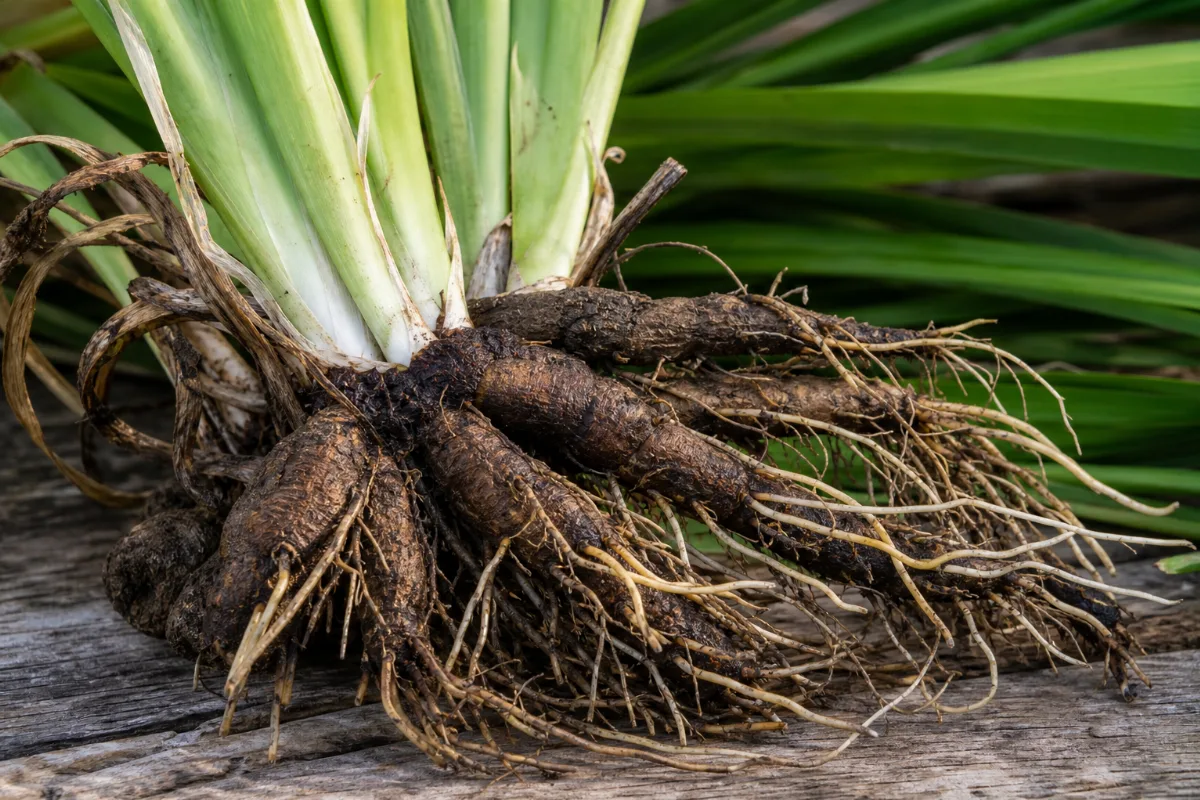
- Roots: Thick creeping rhizome (the medicinal part). Dried rhizome is cylindrical or flattened, greyish outside and reddish-brown inside, with ring-shaped leaf scars (Southern Cross).; Stems: Erect flowering stems up to about 1 m.; Leaves: Sword-shaped blue-green leaves, 2 to 2.5 feet tall (NC State).; Flowers: Blue to violet flowers with yellow and white markings on the sepals; 2 to 3 per stem.; Fruit: Capsule; the plant spreads best by dividing rhizomes.
- Cultivation
- Grown as a pond and water-garden ornamental (NC State).
- Harvest and processing
- The rhizome is dried for tinctures, decoctions and capsules; the monograph says only the heavy, resinous rhizome was held effective and the fresh rhizome vomit-inducing. Not verified beyond that.
- Look-alikes and adulterants
- Name: Other irises: Iris pseudacorus, I. tridentata, I. virginica; Note: NC State says blue flag is often confused with these. RxList also lists I. virginica and I. caroliniana as alternate names, so products may not name the exact species.; Name: Sweet flag / calamus (Acorus calamus); Note: Unrelated plant sometimes sold under 'sweet flag'; it has its own safety problems and its own page on this site. A mix-up between the two is NOT documented in a source we read.; Name: Edible root plants; Note: The brief for this page asked about confusion with edible plants. No source we read documents such a confusion for blue flag, so we make no specific claim. Do not eat any wild root you cannot identify.
- Sustainability and conservation
- Not assessed here.
Traditional use and history history, not clinical proof
| Tradition or era | Documented use | Source |
|---|---|---|
| Native American medicine | Used as an emetic, cathartic and diuretic; a crushed-root poultice for leg ulcers and wounds; decoctions for colds and lung complaints. | s-scu-iris |
| Eclectic and colonial American medicine, 19th century | Used for digestive problems, jaundice, skin disease, enlarged glands and goitre, and as a 'blood cleanser'. | s-scu-iris |
| EBSCO summary | Native peoples used it for digestive problems; Eclectic physicians for digestion, thyroid swelling, immunity, liver stimulation and 'detoxifying'; a salve for impetigo. | s-ebsco-blueflag |
| United States Pharmacopoeia | Listed 1820 to 1895 (second-hand statement; not checked in the pharmacopoeia itself). | s-scu-iris |
Traditional use shows how a plant was used. It does not show that a supplement works or is safe today.
What is inside, and how it may work
What the plant contains and how those compounds act in cells and animals. Laboratory and animal mechanisms are not proven effects in people.
Main compounds
| Compound | Family | Where it is concentrated | Activity studied | Level of evidence |
|---|---|---|---|---|
| Iridin PubChem 5281777 | isoflavone glucoside | rhizome not reported | Listed by NC State among toxic principles and by the monograph among constituents. No activity data read. 7 9 11 | Insufficient |
| Salicylic acid PubChem 338 | phenolic acid | rhizome (per monograph) not reported | Listed as a rhizome constituent by the monograph; the amount and role are not stated. Not known to explain any effect of blue flag. 8 11 | Insufficient |
| Oleoresin | resin mixture | rhizome not reported | Old texts describe the oleoresin as the active, liver and bowel-acting part; not tested here. 11 | Traditional |
| Triterpenoids (iridals, zeorin, missourin, missouriensin) | triterpenoid | rhizome not reported | NC State lists these as toxic principles; no study of their effect was read. 9 11 | Insufficient |
| Isophthalic acid, tannins, alkaloids, small amount of furfural oil | mixed | rhizome volatile oil about 0.025 percent (monograph) | Listed constituents; no activity data read. 11 4 | Insufficient |
| (Iso)flavonoids | flavonoid | rhizome and other parts dominant class among 180 compounds across 5 Iris species | A 2020 chemical study profiled Iris versicolor and other species. 6 | In vitro |
Mechanisms, receptors and pathways
| Target or pathway | Gene or receptor | What was found | Level |
|---|---|---|---|
| Mouth bacterial biofilm formation and quorum sensing | not established in the abstract | Extracts of three iris species including I. versicolor reduced adhesion and quorum sensing in lab cultures. 6 | In vitro |
| Fat-cell lipolysis | not established | Rat fat-cell and oral rat studies of preparations that included blue flag reported fat mobilisation. 1 2 | Animal research |
| Gut irritation and purging | not established | RxList describes a stimulant-laxative type of action; NC State lists vomiting and diarrhoea after ingestion. The exact cause is not established. 10 9 | Reference statement only |
Absorption, metabolism and elimination
- Absorption
- No data found.
- Distribution
- No data found.
- Metabolism
- No data found.
- Elimination
- No data found.
- Bioavailability
- Not studied.
Isolated compounds versus whole extracts
No study compares isolated compounds with the whole rhizome. Which compound causes the irritant effect (iridin, a terpenoid or the oleoresin) is not established. Homeopathic 'Iris versicolor' is a highly diluted preparation and is not comparable to the herb.
Nutritional composition
Not a food or nutrient source. The rhizome should not be eaten as food.
7 not enough evidence
What is Blue flag good for?
The uses blue flag is sold for, and how strong the human evidence is for each. Here "insufficient" means no human study was found.
Benefits, one by one
Each card is a research question, not a promise. Tap a goal to filter. Open a card to see the studies, doses and limits.
Skin conditions (eczema, psoriasis, acne, impetigo)
Not enough evidenceBlue flag root was used by mouth and as a salve for skin problems. We found no human study of it for any skin condition. Reference pages describe the idea as resting on tradition and animal work, and the fresh root itself can irritate the skin.
4 studiesHistoric uses were a root salve and by-mouth preparations. Because th…
Studies, doses and limits
What the trials found
None found. RxList rates skin rashes 'insufficient evidence'. EBSCO says its theories rest on anecdote, traditional medicine and animal studies. The Southern Cross monograph states there are no clinical studies.
Results
No human results exist to report.
Effect sizes as reported
None.
Why this rating
No human study of any kind; only tradition and reference-page statements.
Form and dose studied
Historic uses were a root salve and by-mouth preparations. Because the fresh root irritates skin, ask a doctor or pharmacist before putting any iris preparation on skin.
Who was studied
None studied.
Limits
Reference pages only; they repeat tradition rather than test it.
Why researchers looked
Skin use is one of the longest traditional uses of the rhizome.
Traditional use
Nineteenth-century Eclectic physicians used it for skin disease, and a root salve was used for impetigo (EBSCO). Native American groups made a crushed-root poultice for leg ulcers (Southern Cross monograph, citing old herbals).
Proposed mechanism Traditional
Not established. RxList says there is not enough information to know how blue flag works. Some have suggested anti-inflammatory action; no study we read tests that.
A proposed mechanism does not show that the effect happens in people.
The sap, seeds and rootstock can cause contact dermatitis (NC State). Not suitable for broken or sensitive skin without medical advice.
Swollen lymph glands, goitre and 'blood cleansing'
Not enough evidenceBlue flag was an old remedy for enlarged lymph glands and goitre and as a 'blood cleanser' or 'alterative'. These are traditional ideas. No modern study tests them, and the root is irritating enough to cause vomiting.
2 studiesHistorically root tinctures and decoctions. Ask a doctor or pharmacis…
Studies, doses and limits
What the trials found
None found. The Southern Cross monograph says there are no clinical studies. EBSCO lists immune support only as an 'other proposed use'.
Results
No human results exist.
Effect sizes as reported
None.
Why this rating
Traditional use only; no trial and no animal or lab test aimed at lymph or immune function was found.
Form and dose studied
Historically root tinctures and decoctions. Ask a doctor or pharmacist about amounts; do not treat a lump or thyroid swelling with an herb instead of seeing a doctor.
Who was studied
None studied.
Limits
Old herbal texts are the only source. The monograph's historical quotes are second-hand.
Why researchers looked
Herbalists have long linked it to the lymph system and to thyroid swelling.
Traditional use
Eclectic and colonial herbalists used it with other roots (yellow dock, sarsaparilla, poke) as a lymph cleanser, and for soft lymph swelling and goitre (Southern Cross monograph, drawing on Felter, Ellingwood and others).
Proposed mechanism Traditional
No mechanism has been shown for lymph or immune effects.
A proposed mechanism does not show that the effect happens in people.
Goitre and swollen glands need a medical check; delay can be harmful.
Liver, bile flow and jaundice
Not enough evidenceBlue flag was traditionally used to 'stimulate the liver' and bile and for jaundice. No human study supports this. Because related irises are toxic and there are no liver-safety studies, it is not a good herb to use for the liver.
2 studiesHistoric tinctures and decoctions. Ask a doctor or pharmacist before …
Studies, doses and limits
What the trials found
None found. RxList rates liver problems and increasing bile flow 'insufficient evidence'. A 2014 study found liver-protecting effects of a different species, Iris spuria, in animals; that is not blue flag and is not used as evidence here.
Results
No human results exist.
Effect sizes as reported
None.
Why this rating
Only tradition and reference-page statements.
Form and dose studied
Historic tinctures and decoctions. Ask a doctor or pharmacist before use. Yellow skin or eyes, dark urine or pale stools need medical care, not an herb.
Who was studied
None studied.
Limits
No liver-safety data for blue flag exists either, so absence of liver reports is not reassurance.
Why researchers looked
Eclectic texts called it a cholagogue (bile-moving) and liver remedy.
Traditional use
Used for jaundice, pale stools and 'torpid liver' by 19th and early 20th century eclectic physicians (Southern Cross monograph).
Proposed mechanism Traditional
Not shown. The oleoresin and bitter-type constituents were thought to stimulate secretions; this is an old idea with no test we found.
A proposed mechanism does not show that the effect happens in people.
See the liver section of the safety file.
Laxative and fluid retention
Not enough evidenceBlue flag was used as a strong laxative and a water pill. Reference pages call the evidence insufficient. The same action that moves the bowels is what causes vomiting and diarrhoea.
2 studiesAsk a doctor or pharmacist; gentler, better-studied options exist for…
Studies, doses and limits
What the trials found
None found. RxList rates constipation and fluid retention 'insufficient evidence'.
Results
No human results exist.
Effect sizes as reported
None.
Why this rating
No trial; reasons for use are historical.
Form and dose studied
Ask a doctor or pharmacist; gentler, better-studied options exist for constipation.
Who was studied
None studied.
Limits
Reference-page statements only.
Why researchers looked
The rhizome has a purging action that old texts used for constipation and 'dropsy' (swelling).
Traditional use
Used as a cathartic and diuretic by Native American groups and in Eclectic medicine (Southern Cross monograph).
Proposed mechanism Traditional
Described as a stimulant-type laxative by RxList. That is a description, not a tested mechanism.
A proposed mechanism does not show that the effect happens in people.
Can cause vomiting, diarrhoea and low potassium (see safety file).
Fat breakdown and weight (rat studies)
Not enough evidenceTwo old rat studies tested blue flag in mixtures with other plants and reported fat breakdown and weight loss. Nothing was tested in people, and the effect cannot be credited to blue flag alone.
2 studiesNot applicable to people.
Studies, doses and limits
What the trials found
None. Lab and animal only.
Results
The 1988 report found fat-mobilising action in rat fat cells and in orally dosed rats; the 1993 report found a three-plant mixture cut weight and body fat in obese rats compared with food-restricted rats.
Effect sizes as reported
No numbers in the abstracts.
Why this rating
Animal only, tiny old abstracts, combined plants, no replication found.
Form and dose studied
Not applicable to people.
Who was studied
Rats.
Limits
The preparations were mixtures, plant parts are not stated, and no human follow-up was found.
Why researchers looked
An Indian research group tested plants for fat mobilisation in the 1980s and 1990s.
Traditional use
In Ayurveda-related literature the plant is called Haimavati in the 1988 abstract; we did not verify that name from another source.
Proposed mechanism Animal research
Reported lipolysis (fat breakdown) in rat fat cells and raised energy expenditure in rats. Lab and animal only.
A proposed mechanism does not show that the effect happens in people.
Do not use blue flag for weight loss on the strength of this.
Headache and migraine (homeopathic Iris versicolor)
Not enough evidenceHomeopaths use extremely diluted Iris versicolor for migraine. One uncontrolled children's study listed it as one of several medicines used. It does not show that it works, and it is not the herb.
1 studiesHomeopathic 9C dilutions in the study, which are not herbal amounts.
Studies, doses and limits
What the trials found
Danno 2013 followed 168 children whose doctors chose individual homeopathic medicines. Migraines improved over 3 months (p<0.001 for frequency, severity and duration), but Iris versicolor was only one of many medicines (about 10 percent of attacks treated with homeopathy alone) and there was no placebo group.
Results
Overall improvement was seen in the whole group; nothing specific to Iris versicolor.
Effect sizes as reported
School absence 5.5 to 2.0 days across the whole group; not attributable to Iris versicolor.
Why this rating
Uncontrolled, mixed treatments, homeopathic dilutions, no result for this remedy alone.
Form and dose studied
Homeopathic 9C dilutions in the study, which are not herbal amounts.
Who was studied
Children aged 5-15 with migraine.
Limits
Open study, natural improvement over time, many other medicines used.
Why researchers looked
Iris versicolor is a classic homeopathic remedy for headache with nausea.
Traditional use
Homeopaths used it in low potency for gut, liver and migraine complaints (Southern Cross monograph).
Proposed mechanism Traditional
None is proposed beyond homeopathic belief; homeopathic dilutions contain almost none of the plant.
A proposed mechanism does not show that the effect happens in people.
Children with recurring headache should be seen by a doctor.
Mouth bacteria (test-tube study)
Not enough evidenceIn a lab study, an Iris versicolor extract reduced how well mouth bacteria stuck together, but another iris did better. It says nothing about using blue flag in the mouth.
1 studiesMethanol lab extracts, not products.
Studies, doses and limits
What the trials found
None.
Results
I. versicolor was among three species that blocked biofilm formation in a dose-dependent way; I. pallida was most effective. Extracts were not toxic to human fibroblast cells in the lab.
Effect sizes as reported
Not in the abstract.
Why this rating
Test-tube study only.
Form and dose studied
Methanol lab extracts, not products.
Who was studied
Bacterial cultures.
Limits
Lab only. Cell results do not predict safety or benefit in people.
Why researchers looked
Researchers screened iris extracts for mouthwash ingredients.
Traditional use
Not a traditional use.
Proposed mechanism Laboratory research
Extracts reduced bacterial quorum sensing and adhesion in cultures; less effect on mature biofilms.
A proposed mechanism does not show that the effect happens in people.
Do not use iris preparations as a mouthwash.
Connections to the rest of health
How Blue flag connects to the rest of our health knowledge graph. Every link says what kind of connection it is. A safety link (for example to the liver) is a warning, not a benefit. A study that merely mentions a topic never creates a benefit link.
Explore every connection: goals, body systems, organs, symptoms, genes
A. Wellness goals
| Connected to | Kind of connection | Evidence status | Context | Studies |
|---|---|---|---|---|
| Healthy Skin | Traditional use | Not enough evidence | Skin conditions (eczema, psoriasis, acne, impetigo): Blue flag root was used by mouth and as a salve for skin problems. We found no human study of it for any skin condition. Reference pages describe the idea as resting on tradition and animal work, and the fresh root itself can irritate the skin. | 4 10 11 9 |
| Inflammation Balance | Traditional use | Not enough evidence | Skin conditions (eczema, psoriasis, acne, impetigo): Blue flag root was used by mouth and as a salve for skin problems. We found no human study of it for any skin condition. Reference pages describe the idea as resting on tradition and animal work, and the fresh root itself can irritate the skin. | 4 10 11 9 |
| Immune Support | Traditional use | Not enough evidence | Swollen lymph glands, goitre and 'blood cleansing': Blue flag was an old remedy for enlarged lymph glands and goitre and as a 'blood cleanser' or 'alterative'. These are traditional ideas. No modern study tests them, and the root is irritating enough to cause vomiting. | 11 4 |
| Detoxification Support | Traditional use | Not enough evidence | Swollen lymph glands, goitre and 'blood cleansing': Blue flag was an old remedy for enlarged lymph glands and goitre and as a 'blood cleanser' or 'alterative'. These are traditional ideas. No modern study tests them, and the root is irritating enough to cause vomiting. | 11 4 |
| Liver Support | Traditional use | Not enough evidence | Liver, bile flow and jaundice: Blue flag was traditionally used to 'stimulate the liver' and bile and for jaundice. No human study supports this. Because related irises are toxic and there are no liver-safety studies, it is not a good herb to use for the liver. | 11 10 |
| Digestive Support | Traditional use | Not enough evidence | Liver, bile flow and jaundice: Blue flag was traditionally used to 'stimulate the liver' and bile and for jaundice. No human study supports this. Because related irises are toxic and there are no liver-safety studies, it is not a good herb to use for the liver. Laxative and fluid retention: Blue flag was used as a strong laxative and a water pill. Reference pages call the evidence insufficient. The same action that moves the bowels is what causes vomiting and diarrhoea. | 11 10 |
| Weight Management | Not enough evidence | Fat breakdown and weight (rat studies): Two old rat studies tested blue flag in mixtures with other plants and reported fat breakdown and weight loss. Nothing was tested in people, and the effect cannot be credited to blue flag alone. | 1 2 | |
| Better Sleep | Traditional use | Not enough evidence | Headache and migraine (homeopathic Iris versicolor): Homeopaths use extremely diluted Iris versicolor for migraine. One uncontrolled children's study listed it as one of several medicines used. It does not show that it works, and it is not the herb. | 3 |
| Immune Support | Not enough evidence | Mouth bacteria (test-tube study): In a lab study, an Iris versicolor extract reduced how well mouth bacteria stuck together, but another iris did better. It says nothing about using blue flag in the mouth. | 6 |
B. Body systems
| Connected to | Kind of connection | Evidence status | Context | Studies |
|---|---|---|---|---|
| Skin Hair Beauty | Biological association | Not enough evidence | Studied for: Skin conditions (eczema, psoriasis, acne, impetigo) | 4 10 11 9 |
| Immune Support | Biological association | Not enough evidence | Studied for: Swollen lymph glands, goitre and 'blood cleansing' Studied for: Mouth bacteria (test-tube study) | 11 4 6 |
| Liver Detox | Biological association | Not enough evidence | Studied for: Liver, bile flow and jaundice | 11 10 |
| Digestive System | Biological association | Not enough evidence | Studied for: Liver, bile flow and jaundice Studied for: Laxative and fluid retention | 11 10 |
| Metabolism Weight | Biological association | Not enough evidence | Studied for: Fat breakdown and weight (rat studies) | 1 2 |
| Pain Inflammation | Biological association | Not enough evidence | Studied for: Headache and migraine (homeopathic Iris versicolor) | 3 |
E. Health conditions
| Connected to | Kind of connection | Evidence status | Context | Studies |
|---|---|---|---|---|
| Plant poisoning (iris) | Adverse effect or risk | Documented | Reference databases list vomiting, diarrhoea and stomach pain after eating the rhizome. Preparation or compound: Rhizome |
9 10 |
| Contact dermatitis | Adverse effect or risk | Documented | Marked as causing contact dermatitis by NC State. Preparation or compound: Sap, seeds, rootstock |
9 |
I. Biomarkers
| Connected to | Kind of connection | Evidence status | Context | Studies |
|---|---|---|---|---|
| Blood free fatty acids and glycerol | Biological association | Not enough evidence | Measured in trials: raised in rats (per a monograph). A lab change is not the same as a health benefit. | |
| Migraine attack frequency | Biological association | Not enough evidence | Measured in trials: fell across the whole group. A lab change is not the same as a health benefit. |
K. Biological pathways
| Connected to | Kind of connection | Evidence status | Context | Studies |
|---|---|---|---|---|
| Bacterial quorum sensing in oral biofilms | Preliminary mechanism | In vitro | Reduced by iris extracts in a lab study. | 6 |
L. Active compounds
| Connected to | Kind of connection | Evidence status | Context | Studies |
|---|---|---|---|---|
| Iridin | Biological association | Not enough evidence | Listed by NC State among toxic principles and by the monograph among constituents. No activity data read. Preparation or compound: rhizome |
7 9 11 |
| Salicylic acid | Biological association | Not enough evidence | Listed as a rhizome constituent by the monograph; the amount and role are not stated. Not known to explain any effect of blue flag. Preparation or compound: rhizome (per monograph) |
8 11 |
| Oleoresin | Biological association | Traditional | Old texts describe the oleoresin as the active, liver and bowel-acting part; not tested here. Preparation or compound: rhizome |
11 |
| Triterpenoids (iridals, zeorin, missourin, missouriensin) | Biological association | Not enough evidence | NC State lists these as toxic principles; no study of their effect was read. Preparation or compound: rhizome |
9 11 |
| Isophthalic acid, tannins, alkaloids, small amount of furfural oil | Biological association | Not enough evidence | Listed constituents; no activity data read. Preparation or compound: rhizome |
11 4 |
| (Iso)flavonoids | Biological association | In vitro | A 2020 chemical study profiled Iris versicolor and other species. Preparation or compound: rhizome and other parts |
6 |
Each connection is stored with the ingredient, the connected record, the kind of connection, the evidence status, the supporting studies, the preparation or compound involved, and a review date (last reviewed October 25, 2026).
The evidence
The research centre for Blue flag. Every record here was checked against PubMed or the publisher's page; we never list a study we have not verified.
Evidence by outcome
Bars show how many studies we found for each outcome, not how well it works. People are added up across trials only (reviews are not added, to avoid double counting).
How we rate evidence
High certainty
Several well-run trials or reviews agree; further research is unlikely to change the picture much.
Moderate certainty
Good trials point the same way, but some doubt remains.
Low certainty
Small, short or inconsistent trials. The finding could change with better research.
Very low certainty
Very little or very weak human data. Treat as a possibility only.
Mixed findings
Trials or reviews disagree with each other.
Not enough evidence
Not enough human research to say either way.
Evidence against
Good research found no benefit, or found harm.
We take the reviewers' own risk-of-bias and GRADE statements where they exist, and otherwise judge from study size, design, consistency, directness and whether a product matches what is sold. Many publications do not make evidence high. Method note: We searched PubMed for Iris versicolor and checked GBIF and PubChem. Most sources are abstracts or web reference pages. No study is cited that we could not verify.
Study library: every study we checked 11
| Study | Design | People | Product, dose, length | Result |
|---|---|---|---|---|
| Bambhole 1988 Effect of some medicinal plant preparations of adipose tissue metabolism. Anc Sci Life · PMID 22557642 |
Animal research animal |
Rat fat-cell suspensions and rats | Powder suspension, water and alcohol extracts of Cyperus rotundus, Iris versicolor and Holoptelea integrifolia plant parts not stated in the abstract not extracted not stated · vs not stated |
The preparations showed fat-mobilising (lipolytic) action in rat fat cells and after oral dosing, which the author reads as helping reduce obesity. not applicable (not applicable) Methods, limits and fundingOutcomes: Fat breakdown (lipolysis) in fat tissue Limitations: Rats and cells only. Three plants tested together or in parallel, so the effect cannot be pinned on blue flag. Very old, brief abstract with no numbers. Funding and conflicts: Not stated. Read: abstract |
| Bambhole 1993 Reduction of diet-induced obesity in rats with a herbal formulation. Anc Sci Life · PMID 22556633 |
Animal research animal |
Obese rats | Mixture of Cyperus rotundus, Iris versicolor and Holoptelea integrifolia plant parts not stated in the abstract not extracted not stated · vs food-restricted obese rats |
Rats given the three-plant mixture lost weight and body fat and had higher energy expenditure and metabolic rate than food-restricted obese rats. not applicable (not applicable) Methods, limits and fundingOutcomes: Body weight, body fat, energy expenditure Limitations: Rats only, a three-plant mixture, no numbers in the abstract. Does not show an effect of blue flag alone or in people. Funding and conflicts: Not stated. Read: abstract |
| Danno 2013 Homeopathic treatment of migraine in children: results of a prospective, multicenter, observational study. J Altern Complement Med · PMID 22978244 · DOI |
Observational uncontrolled |
168 168 children aged 5-15 with migraine, 59 physicians, 12 countries |
Individualised homeopathic medicines; Iris versicolor (mostly 9C) was one of many used for attacks homeopathic dilution (not a herbal dose) individualised by physician 3-month follow-up · vs none (before-and-after) |
Migraine attacks fell in frequency, severity and duration over 3 months (all p<0.001) and school absence fell from 5.5 to 2.0 days. Iris versicolor was named only as one of the medicines used to treat attacks, in about 10 percent of cases that used homeopathy alone; the study did not test it on its own. not applicable (not applicable) Methods, limits and fundingOutcomes: Migraine frequency, severity and duration; school absence Limitations: Open, uncontrolled, no placebo group, every child got a mix of medicines, and migraine often improves on its own. Cannot show Iris versicolor did anything. Homeopathic dilutions contain almost none of the plant. Funding and conflicts: Funding not read in the abstract. Read: abstract |
| EBSCO Research Starters (consumer health) 2024 Blue flag's therapeutic uses EBSCO Research Starters · Source |
Consumer reference not applicable |
General readers (reference page) | Blue flag rhizome not reported not reported · vs none |
States blue flag 'has undergone no meaningful scientific study'. Proposed uses (impetigo, laxative and diuretic, skin conditions, liver and digestive health, immune support) rest on anecdote, tradition and animal studies. High amounts are known to cause severe stomach and bowel upset (nausea, vomiting, diarrhoea); related species are known to be toxic; fresh herb irritates mouth and stomach. Considers it unsafe in pregnancy, breastfeeding and young children. Concludes the herb is not recommended given no documented benefit and no toxicity studies. not applicable (not applicable) Methods, limits and fundingOutcomes: Proposed uses, safety Limitations: A short reference summary; its own sources are an herbal-reference book, a consumer site and a 1922 textbook. Funding and conflicts: Commercial database publisher; no product promoted. Read: page text |
| GBIF Secretariat 2026 GBIF species match: Iris versicolor L. GBIF API · Source |
Database record not applicable |
not applicable | Iris versicolor not applicable not reported not reported · vs none |
Iris versicolor L. is ACCEPTED (key 5298019), family Iridaceae, order Asparagales, genus Iris. Match confidence 99, exact. not applicable (not applicable) Methods, limits and fundingOutcomes: Accepted name and family Limitations: Taxonomy only. NCBI Taxonomy was not checked. Funding and conflicts: Public database. Read: database record |
| Hoang 2020 Phytochemical Composition and In Vitro Biological Activity of Iris spp. (Iridaceae): A New Source of Bioactive Constituents for the Inhibition of Oral Bacterial Biofilms. Antibiotics (Basel) · PMID 32664528 · DOI |
Laboratory research in vitro |
Lab cultures of oral bacteria; human fibroblast cells for toxicity | Methanolic extracts of 15 Iris preparations, including Iris versicolor L. rhizome, root and leaf extracts (varies by species) concentration-dependent (values not extracted) lab exposure · vs untreated cultures |
I. pallida, I. versicolor and I. germanica extracts inhibited quorum sensing and bacterial adhesion during biofilm formation in a concentration-dependent way, but were less active against mature biofilms. I. pallida was the most effective species, and its leaf extract was strongest. Cytotoxicity was excluded in human fibroblasts. 180 compounds were identified across the species, mostly (iso)flavonoids. not applicable (not applicable) Methods, limits and fundingOutcomes: Biofilm formation, quorum sensing, adhesion, cytotoxicity Limitations: Test-tube study only. I. versicolor was not the best performer. Says nothing about swallowing or applying blue flag in people. Abstract only. Funding and conflicts: Funding not read in the abstract. Read: abstract |
| NCBI PubChem 2026 PubChem record: Iridin (CID 5281777) PubChem PUG REST · Source |
Database record not applicable |
not applicable | Iridin not applicable not reported not reported · vs none |
CID 5281777, formula C24H26O13, title 'Iridin' (an isoflavone glucoside). A name search for 'iridin' returned this CID. not applicable (not applicable) Methods, limits and fundingOutcomes: Compound identifier Limitations: Identity only; no activity data read. Funding and conflicts: Public database. Read: database record |
| NCBI PubChem 2026 PubChem record: Salicylic acid (CID 338) PubChem PUG REST · Source |
Database record not applicable |
not applicable | Salicylic acid not applicable not reported not reported · vs none |
CID 338, title 'Salicylic Acid'. Listed by the Southern Cross monograph as a constituent of the rhizome; PubChem does not show how much the rhizome contains. not applicable (not applicable) Methods, limits and fundingOutcomes: Compound identifier Limitations: Identity only; amount in the plant is not given. Funding and conflicts: Public database. Read: database record |
| North Carolina State University Extension Gardener Plant Toolbox 2026 Iris versicolor (Harlequin Blueflag, Large Blue Iris, Northern Blue Flag), plant database entry NC State Extension Plant Toolbox · Source |
Database record not applicable |
People and animals eating or touching the plant (database statement) | Iris versicolor plant roots (rhizome), sap, seeds not reported not reported · vs none |
Rates the plant as low-severity poisonous to humans. Lists nausea, salivation, vomiting, abdominal pain, lethargy, diarrhoea and raised temperature after eating it, and skin irritation from seeds, rootstock or sap. Highest concentration in the rhizomes. Toxic principles listed: pentacyclic terpenoids (zeorin, missourin, missouriensin), irisin, iridin. Marked as causing contact dermatitis, and a problem for cats, dogs and horses. Says it is often confused with Iris pseudacorus, I. tridentata and I. virginica. not applicable (not applicable) Methods, limits and fundingOutcomes: Poison severity, symptoms, toxic principles Limitations: A garden-plant database, not a clinical source. Original references for the poison fields are not shown. 'Low severity' is its rating, not a statement that harm cannot happen. Funding and conflicts: Public university extension service; no industry link. Read: page text |
| RxList (consumer drug reference) 2026 Blue Flag: Health Benefits, Side Effects, Uses, Dose and Precautions RxList · Source |
Consumer reference not applicable |
General readers (reference page) | Blue flag rhizome not reported not reported · vs none |
Calls blue flag UNSAFE. Says the fresh root can irritate the mouth, throat, digestive tract and skin, and it can cause nausea, vomiting, headache and swollen, watery eyes. Says not to use in pregnancy or breastfeeding, and warns people with stomach or bowel problems (infections, ulcerative colitis, Crohn's disease). Rates all listed uses (constipation, fluid retention, bile flow, liver problems, vomiting, skin rashes) as 'insufficient evidence'. Lists a major interaction with digoxin and moderate ones with warfarin and water pills, explained by a laxative effect on potassium and stool. Says there is not enough information to know how it works. not applicable (not applicable) Methods, limits and fundingOutcomes: Uses, side effects, precautions, interactions Limitations: A consumer reference, not a clinical study; it does not cite the sources for its interaction statements on the page text we read. Interactions are reasoning, not reports of harm. Funding and conflicts: Commercial publisher (advertising-supported); no product promoted on this page. Read: page text |
| Southern Cross University 2026 Iris versicolor, medicinal plant monograph Southern Cross University Medicinal Plant Monographs · Source |
University monograph not applicable |
General readers (monograph) | Iris versicolor dried rhizome not reported not reported · vs none |
Says traditional data is the main source of information and that 'there are no clinical studies on Iris versicolor'. Historical texts used it for skin, liver, bile, lymph gland and goitre complaints and as a laxative, diuretic and (in large amounts) an emetic; Felter is quoted as warning it can cause violent vomiting, watery purging and even fatal gastro-enteritis in high amounts. Lists constituents: triterpenes (iridin, iridals), oleoresin, salicylic acid, isophthalic acid, alkaloids, tannins, a little volatile oil (furfural). Notes it was in the US Pharmacopoeia 1820 to 1895. Lists one animal fat-mobilisation finding. Cautions section says 'none known' and reports pregnancy and breastfeeding as compatible, citing a herbal safety handbook; it also says the plant can irritate the gut and cause vomiting in large amounts. not applicable (not applicable) Methods, limits and fundingOutcomes: Botany, history, constituents, traditional uses, cautions Limitations: A university student-garden monograph that relies on old herbal texts. Its pregnancy and breastfeeding statements disagree with RxList and EBSCO and are not backed by studies we could see. Dose ranges on the page are not repeated here. Funding and conflicts: University laboratory; no industry link. Read: page text |
What we do not know yet
- No clinical study of blue flag for any use was found.
- Only abstracts and web reference pages were read; full papers were not.
- No EMA/HMPC, NCCIH, Commission E, WHO or LiverTox record was found.
- No poisoning case series, liver report or pregnancy study was found.
- The original paper behind the 'fat mobilisation' statement in the university monograph was not identified.
How new research is added
New studies are found by a saved PubMed search and are placed in a review queue. A person reads each one before it changes any evidence rating or safety wording.
Lab markers
What changed in blood or saliva tests during trials. A changed number is not the same as feeling or being healthier, and we give no "normal ranges".
Other 2
Blood free fatty acids and glycerol
Raised in rats (per a monograph) in trials
Fat released from stores into the blood when fat tissue is broken down.
Not enough evidenceResults and what it means
Why it was measured
Used in animal work as a sign of fat mobilisation.
Statistical vs. clinical meaning
Animal only. It does not show a weight-loss effect in people.
| Study | Result | People | Product |
|---|---|---|---|
| 11 | The Southern Cross monograph says plasma free fatty acid and glycerol rose after an oral dose in an experimental model; the original paper is not named and was not found. | experimental animals | Iris versicolor, oral |
| 1 | Fat-mobilising (lipolytic) action in rat fat cells and orally dosed rats; no numbers in the abstract. | rats | Blue flag preparations alongside two other plants |
Migraine attack frequency
Fell across the whole group in trials
How often migraine attacks occur over a period.
Not enough evidenceResults and what it means
Why it was measured
Main outcome in the one children's study that mentions the remedy.
Statistical vs. clinical meaning
Cannot be credited to Iris versicolor; uncontrolled.
| Study | Result | People | Product |
|---|---|---|---|
| 3 | Frequency, severity and duration fell over 3 months (all p<0.001) among 168 children; Iris versicolor was one of many medicines. | 168 children aged 5-15 | Individualised homeopathic medicines (Iris versicolor 9C was one) |
Safety
What studies and official sources say about side effects, medicines and who should check first. Each point shows what kind of evidence it comes from.
Main points to know 4
- The rhizome is an irritant and a poison in larger amounts. Eating the rhizome can cause nausea, drooling, vomiting, stomach pain, diarrhoea and fever (NC State). RxList calls blue flag 'unsafe' and warns of headache and swollen, watery eyes as well. An old textbook quoted by Southern Cross University warns that large amounts can cause violent vomiting, watery purging and even fatal gastro-enteritis. We did not find a published poisoning case series, so how often or how badly people are hurt is not known. Reference database 9 10 11
- Skin and eye irritation on contact. Sap, seeds and rootstock can irritate the skin (contact dermatitis), and NC State rates the skin effect as minor and short-lived. RxList also lists swollen, watery eyes. Wear gloves and wash hands if you handle fresh iris roots. Reference database 9 10
- Avoid in pregnancy, breastfeeding and young children. RxList and EBSCO advise against it in pregnancy and breastfeeding, and EBSCO also in young children. One university monograph disagrees and lists no known contraindications, but it relies on old herbal handbooks. With no studies in pregnancy at all, avoiding it is the careful reading. Consumer reference 10 4 11
- Poisonous look-alike confusion. Garden irises are easy to mistake for other water-edge plants, and iris roots have been confused with edible roots. Our sources do not document that mix-up for blue flag itself. They do say it is often confused with other irises (NC State), and that 'sweet flag' (Acorus calamus, a different plant with its own safety problems) is listed among blue flag's trade names on RxList. Never eat a wild root you cannot identify with certainty, and never forage iris rhizomes. Reference database 9 10
Side effects 5
| Effect | How often | Severity and recovery | Evidence |
|---|---|---|---|
| Nausea, drooling, vomiting, stomach pain, diarrhoea, raised temperature Highest level of irritating substances is in the rhizome. | Not established | mild to moderate (NC State rates poisoning severity 'low'); high amounts reported by an old text to be severe Expected to settle after the plant is no longer eaten; not documented | Reference database 9 10 4 |
| Severe stomach and bowel upset, possibly fatal gastro-enteritis, in high amounts From Felter (1922) as quoted by the university monograph, and from EBSCO's statement that high amounts cause severe upset. No modern case report was found. | Not established | potentially severe not documented | Historical text 11 4 |
| Skin irritation (contact dermatitis) From sap, seeds and rootstock. | Not established | mild, short-lived per NC State Settles after contact stops | Reference database 9 10 |
| Headache, swollen and watery eyes RxList statement; no source shown. | Not established | not rated not documented | Consumer reference 10 |
| Mouth, throat and digestive tract irritation from fresh root Fresh root is the main concern. | Not established | not rated not documented | Consumer reference 10 4 |
Liver
We found no case report of liver injury from blue flag and no LiverTox record (the NIH database page for it was not available to us). The absence of reports is not proof of safety: blue flag has never been studied for liver safety, and its main traditional use is as a 'liver herb'. A related-species animal study (Iris spuria) found liver protection, but that is a different plant and is not evidence for blue flag. 10 11
How often. Unknown.
Monitoring. No agency monitoring advice was found.
This is a safety connection. It is not evidence that Blue flag supports liver health.
Medicines and supplements 4
| With | Why it matters | Importance | Evidence | What to do |
|---|---|---|---|---|
| Digoxin (Lanoxin) prescription | RxList says blue flag acts like a stimulant laxative, which can lower potassium; low potassium raises the risk of digoxin side effects. | RxList rates it major. This is reasoning, not a reported case. | Consumer reference Very low certainty 10 | Do not combine without your doctor's say-so. |
| Warfarin (Coumadin) prescription | RxList says diarrhoea from blue flag could increase warfarin's effect and bleeding risk. | RxList rates it moderate. No case was found. | Consumer reference Very low certainty 10 | Tell your doctor or pharmacist before use. |
| Water pills (diuretics) prescription | Both can lower potassium, so together they might lower it too far (RxList). | RxList rates it moderate; no case was found. | Consumer reference Very low certainty 10 | Tell your doctor or pharmacist before use. |
| Other laxatives and herbs that purge herb-supplement | Added purging effect; follows from RxList's laxative description. | Not reported as a case. | Pharmacological theory Very low certainty 10 | Avoid stacking purging products; ask a pharmacist. |
Who should check first 5
| Situation | Advice | Evidence |
|---|---|---|
| Pregnancy and breastfeeding | Avoid (RxList, EBSCO). One monograph disagrees; no study exists. | Consumer reference 10 4 11 |
| Children, especially young children | Avoid (EBSCO). | Consumer reference 4 |
| Stomach or bowel disease (infections, ulcerative colitis, Crohn's disease) | RxList says it should not be used; it irritates the gut. | Consumer reference 10 |
| Taking digoxin, warfarin or water pills | Ask your doctor first (see interactions). | Consumer reference 10 |
| Liver disease | No data. Ask a doctor first; do not self-treat liver problems with this herb. | Gap |
Overdose, product quality and regulators
Summary. Eating the rhizome irritates the digestive tract and can cause vomiting and diarrhoea. NC State rates poisoning in people as low severity; older texts warn that large amounts can be severe. Toxicity studies of blue flag are absent (EBSCO).
Animal. NC State flags the plant as a problem for cats, dogs and horses. We found no animal toxicity study.
Human doses studied. None. No safe amount has been established.
High dose or long term signals. Felter (1922, via the Southern Cross monograph) warns of violent vomiting, watery purging and possible fatal gastro-enteritis. Long-term use has not been studied.
Overdose response. If someone has eaten iris roots and has vomiting, severe stomach pain or diarrhoea, contact a poison control centre or doctor. In the US call 1-800-222-1222.
Genotoxicity. Not found.
Toxic plant parts. Rhizome (highest), roots, sap and seeds (NC State). Toxic principles listed: pentacyclic terpenoids (zeorin, missourin, missouriensin), irisin and iridin. Reference pages also list oleoresin and salicylic acid as rhizome constituents; whether these cause the effects is not established.
We found no testing of blue flag products for contamination or adulteration.
Species mix-up. RxList lists Iris caroliniana, I. virginica and 'sweet flag' among alternate names, and NC State lists other irises as look-alikes. Products may not say which iris is inside. Whether commercial products are actually mixed was not studied. 9 10
Heavy metals, pesticides, microbes. No testing found for blue flag products.
| Body | Action | Date |
|---|
When to get medical help
- Repeated vomiting, severe stomach pain or bloody diarrhoea after eating any part of an iris plant
- Signs of dehydration (very dry mouth, little urine, dizziness) after vomiting or diarrhoea
- Irregular heartbeat or muscle weakness if you take digoxin or water pills and have diarrhoea or vomiting
- Swelling of the face or lips, or trouble breathing
- A child or pet that has chewed iris roots
Stop the supplement and contact a clinician or emergency service. In the US, Poison Control is 1-800-222-1222.
General information only, not medical advice. Ask a clinician or pharmacist before use, especially with medicines, in pregnancy or with a health condition. See the Natural Remedy Safety guide.
Frequently asked questions
What is blue flag?
Is blue flag safe to take?
What are the poisoning symptoms?
Does blue flag help eczema, psoriasis or acne?
Is it good for the liver?
Is blue flag safe in pregnancy or breastfeeding?
Does it interact with medicines?
RxList lists digoxin (major), and warfarin and water pills (moderate), through laxative effects. These come from one reference, not case reports. Ask a doctor or pharmacist.
Can it harm the skin or eyes?
Is blue flag the same as sweet flag or calamus?
Has blue flag been tested in people?
Explore by health goal
Immune SupportDigestive SupportHealthy SkinInflammation BalanceDetoxification SupportLiver SupportWeight ManagementBetter Sleep
Editorial transparency
- Written by
- AlternativeMed editorial team. Research compiled with AI assistance, then checked against PubMed records and the reference pages named.
- Medical review
- None. This page has not been reviewed by a physician or pharmacist.
- First published
- 2026-10-25
- Last substantive update
- 2026-10-25
- How we research
- We searched PubMed for Iris versicolor and checked GBIF and PubChem. Most sources are abstracts or web reference pages. No study is cited that we could not verify.
- How we rate evidence
- See "How we rate evidence" in the Evidence tab.
- Independence
- No product is promoted on this page. No affiliate links are shown. If one is added later it will be labelled and kept apart from the evidence.
Sources 11
Each source was opened and checked. Where we read only the abstract, it says so. The small numbers in the text point here.
- Bambhole VD. Effect of some medicinal plant preparations of adipose tissue metabolism.. Anc Sci Life. 1988. PMID 22557642. (abstract)
- Bambhole VD, Kamalakar PL. Reduction of diet-induced obesity in rats with a herbal formulation.. Anc Sci Life. 1993. PMID 22556633. (abstract)
- Danno K, Colas A, Masson JL, Bordet MF. Homeopathic treatment of migraine in children: results of a prospective, multicenter, observational study.. J Altern Complement Med. 2013. PMID 22978244. DOI 10.1089/acm.2011.0821. (abstract)
- EBSCO Research Starters (consumer health). Blue flag's therapeutic uses. EBSCO Research Starters. 2024. (page text)
- GBIF Secretariat. GBIF species match: Iris versicolor L.. GBIF API. 2026. (database record)
- Hoang L, Beneš F, Fenclová M, Kronusová O, Švarcová V, Řehořová K, Švecová EB, Vosátka M, Hajšlová J, Kaštánek P, Viktorová J, Ruml T. Phytochemical Composition and In Vitro Biological Activity of Iris spp. (Iridaceae): A New Source of Bioactive Constituents for the Inhibition of Oral Bacterial Biofilms.. Antibiotics (Basel). 2020. PMID 32664528. DOI 10.3390/antibiotics9070403. (abstract)
- NCBI PubChem. PubChem record: Iridin (CID 5281777). PubChem PUG REST. 2026. (database record)
- NCBI PubChem. PubChem record: Salicylic acid (CID 338). PubChem PUG REST. 2026. (database record)
- North Carolina State University Extension Gardener Plant Toolbox. Iris versicolor (Harlequin Blueflag, Large Blue Iris, Northern Blue Flag), plant database entry. NC State Extension Plant Toolbox. 2026. (page text)
- RxList (consumer drug reference). Blue Flag: Health Benefits, Side Effects, Uses, Dose and Precautions. RxList. 2026. (page text)
- Southern Cross University, Analytical Research Laboratory. Iris versicolor, medicinal plant monograph. Southern Cross University Medicinal Plant Monographs. 2026. (page text)