Mineral & Sparkling Water: Nutrients, What Research Shows and Safety
Mineral and sparkling water as drinks: what the labels mean, USDA values, teeth and acidity, small trials on bowels and bones, sodium in club soda, and what is not proven.
Content last updated . This page has not been medically reviewed.
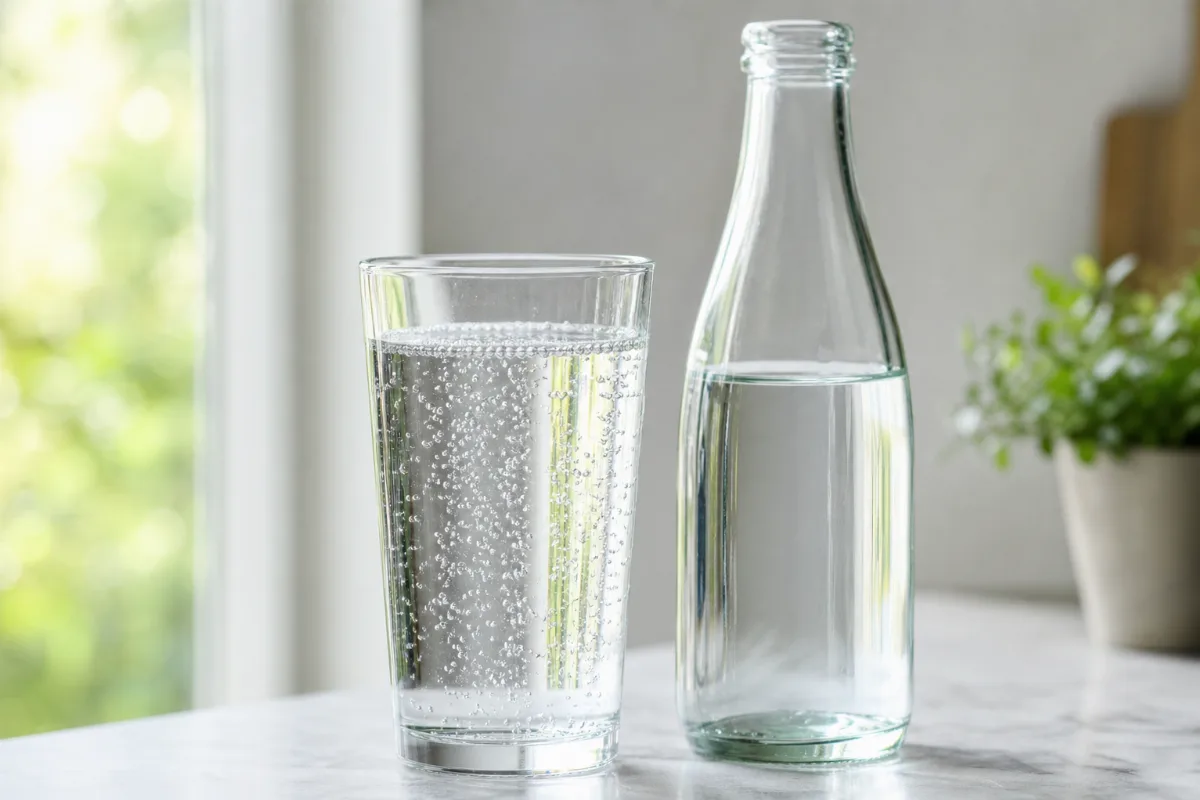
Sparkling water is water with carbon dioxide gas added or kept in. Mineral water comes from a protected underground source and carries dissolved minerals such as calcium and magnesium. Some people choose them for the bubbles, as a swap for sugary soda, or for the minerals. This page covers plain carbonated and mineral waters as drinks. It keeps them apart from flavored or sweetened sparkling drinks, and it says what research does and does not show. [1] [2] [3]
Read this first
- Plain sparkling water has no calories or sugar in the USDA data. A carbonated mineral water and club soda both list 0 kcal and 0 g sugar. [1] [2]
- Flavored sparkling waters are a different product. In a 2007 lab study they were as acidic as orange juice or more, so they were treated as potentially erosive to teeth. [6]
- Club soda can contain sodium. USDA lists 21 mg per 100 g, about 75 mg in a 12 fl oz can, or about 3% of the Daily Value. [2] Check labels if you limit sodium.
- Mineral content varies a lot. In US rules, "mineral water" means at least 250 ppm total dissolved solids from a protected underground source with no minerals added. [3]
- Evidence in one line: a few small trials found bowel or bone-related benefits from specific mineral waters, but they are short, use a named water, and one was paid for by the water's maker. Everyday sparkling water has no proven health benefit beyond hydration.
What is in it (USDA values)
The first table is for a bottled carbonated mineral water (USDA FoodData Central item 173233, SR Legacy; USDA lists it by brand name). [1] The serving column is the USDA household portion of 1 cup (8 fl oz, 237 g). [1]
| Nutrient | Per 100 g | Per 8 fl oz (237 g) | % Daily Value per serving |
|---|---|---|---|
| Energy | 0 kcal | 0 kcal | not set |
| Sodium | 1 mg | 2.4 mg | under 1% |
| Calcium | 14 mg | 33 mg | 3% |
| Magnesium | 0 mg | 0 mg | 0% |
| Sugars and carbohydrate | 0 g | 0 g | 0% |
The second table is for club soda (FDC 174842, SR Legacy), with the USDA portion of 1 can or bottle, 12 fl oz (355 g). [2]
| Nutrient | Per 100 g | Per 12 fl oz (355 g) | % Daily Value per serving |
|---|---|---|---|
| Energy | 0 kcal | 0 kcal | not set |
| Sodium | 21 mg | 74.6 mg | 3% |
| Potassium | 2 mg | 7.1 mg | under 1% |
| Calcium | 5 mg | 17.8 mg | 1% |
| Magnesium | 1 mg | 3.6 mg | under 1% |
| Zinc | 0.1 mg | 0.36 mg | 3% |
| Sugars | 0 g | 0 g | no DV |
% Daily Value uses the FDA 2016 Daily Values; values vary by brand, water source and treatment. The serving figures are the 100 g values multiplied by the serving weight. The USDA mineral water value for calcium (14 mg per 100 g) is one example; USDA lists no bicarbonate or sulfate values for it, and other mineral waters can differ widely. [1] [3]
What research says
| Health goal | What the sources found | Strength of evidence | What was studied |
|---|---|---|---|
| Hydration | Sparkling and still water are both water. We did not read a trial comparing them for hydration in healthy adults. | Insufficient evidence for any difference | Not applicable |
| Teeth and enamel | Older lab studies found carbonated mineral water caused much less erosion of enamel than cola or orange drinks and was grouped with milk products and coffee. [4] [5] A 2022 survey of 32 carbonated bottled waters found 20 had a mean pH below 5.5; it measured acidity only, not erosion. [8] | Lab only (human data not found in the sources we read) | Extracted or bovine teeth; pH testing |
| Flavored sparkling water and teeth | Flavored sparkling waters had pH 2.74 to 3.34 and erosive potential similar to or greater than orange juice in a 2007 study. [6] A 2023 study found a flavored sparkling water softened enamel less than an energy drink or kombucha, but was still acidic. [7] | Lab or animal only; acidic | Extracted teeth |
| Constipation and stool form | A randomized, double-blind trial gave adults with chronic constipation 1 liter a day of sulfate- and magnesium-rich water or a low-mineral water for 3 weeks. Bowel movements rose more with the mineral water at 2 weeks, but the difference was not significant at the 3-week primary endpoint. [9] A trial in 40 healthy adults found a magnesium-rich water improved stool consistency over 2 weeks. [10] | Promising but limited | Specific named waters, 1 liter a day, 2 to 3 weeks |
| Bones, muscle and falls | A 12-month trial in 98 adults aged 50 or older found fewer falls at 6 months with a calcium- and magnesium-rich water, but not at 12 months. The record lists the water's maker as funder. [11] | Insufficient evidence (single trial, industry funding, mixed results) | One calcium- and magnesium-rich mineral water |
| Heart disease and drinking-water magnesium | A Danish registry study of over 4 million adults linked the lowest drinking-water magnesium to higher heart attack mortality but lower stroke and overall cardiovascular mortality than the highest. [12] | Mixed; observational, cannot show cause | Registry data on tap water supplies |
| Weight loss | A brief 2025 report said the carbon dioxide in carbonated water is likely too small to produce meaningful weight loss. [15] A 2026 trial of 46 adults found fewer snacks and less alcohol with daily carbonated water; the authors said the analyses were exploratory. [14] | Insufficient evidence | Carbonated water vs usual drinks |
Plain sparkling vs. other products. The trials above used specific waters, so they do not tell you about all mineral or sparkling waters. Flavored waters often add acids or sweeteners. WHO (2023) conditionally recommends against using non-sugar sweeteners for weight control; check labels. [13]
How much is a normal serving
The USDA household portions are 1 cup (8 fl oz, 237 g) for the mineral water and 12 fl oz (355 g) for club soda. [1] [2] That is information, not a prescription. We did not read an official figure for how much sparkling or mineral water to drink. Plain water is the baseline; see water.
Safety, allergy and medicines
- Teeth: plain carbonated mineral water had low erosive potential in older lab studies, but flavored sparkling waters were acidic and erosive, and bottled carbonated waters vary in acidity. [4] [6] [8]
- Sodium: club soda has about 75 mg per can in the USDA item, and sodium in mineral water varies by source. If you limit sodium, check the label. [2] [3]
- Magnesium and sulfate waters: the constipation trials used 1 liter a day of specific waters and reported no safety concerns. We did not read data on kidney disease. [9] [10] People with kidney disease or on laxatives or diuretics should ask a clinician before using a mineral-rich water daily. We did not find a source we read that addresses this directly.
- Fluoride: FDA rules cap fluoride in bottled water: water packaged in the US with no added fluoride may hold up to 1.4 to 2.4 mg/L depending on the temperature where it is sold, imported water with none added up to 1.4 mg/L, and water with added fluoride up to 0.7 mg/L. [3]
- Medicines and allergy: we did not find a source linking plain sparkling or mineral water to a medicine interaction or allergy. As a general rule, call 911 (or your local emergency number) for swelling of the face or throat or trouble breathing after any food or drink.
- Sweeteners: flavored sparkling drinks may contain non-sugar sweeteners; see WHO's 2023 guideline. [13]
- Pregnancy and children: we did not read an official statement specific to sparkling or mineral water.
Choosing, storing and food safety
- Read the label: "sparkling" water keeps the carbon dioxide it had at the source in US rules, and mineral water under 500 ppm must say "low mineral content" and over 1,500 ppm "high mineral content." [3]
- Look at the ingredient list for added sugar, acids and sweeteners if you want a plain drink. [6] [13]
- We did not read a source on how long opened bottles keep their bubbles or on plastic bottles.
Related pages
Health connections for Mineral & Sparkling Water
What research links to eating or drinking this food, and how strong the evidence is. Many studies are observational or use juice, powder, oil or extracts rather than the food as eaten; each card says which.
Calories, sugar and sodium in plain sparkling water
Established roleUSDA lists 0 kcal and 0 g sugars for a carbonated mineral water and for club soda. Club soda has 21 mg sodium per 100 g, about 75 mg per 12 fl oz can.
Supplements: Dietary information only.
Plain carbonated water and tooth enamel
Lab or animal research onlyOlder lab studies found carbonated mineral water caused much less erosion of enamel than cola or orange drinks. A 2022 survey of 32 carbonated bottled waters found 20 had a mean pH below 5.5 (acidity only, not erosion).
Supplements: Lab and pH studies; human data not found in the sources we read.
Mineral water and constipation
Preliminary or mixedIn a randomized double-blind trial, 1 liter a day of sulfate- and magnesium-rich water raised bowel movements more than a low-mineral water at 2 weeks but not significantly at the 3-week main endpoint. A trial in 40 healthy adults found a magnesium-rich water improved stool consistency.
Supplements: Specific named waters, 2 to 3 weeks; results do not apply to all mineral waters.
Calcium- and magnesium-rich mineral water for bones, muscle and falls
Not enough evidenceA 12-month trial in 98 adults aged 50 or older found fewer falls at 6 months with a calcium- and magnesium-rich water, but not at 12 months. The record lists the water's maker as funder.
Supplements: Single industry-funded trial with mixed results.
Drinking-water magnesium and heart deaths
Preliminary or mixedA Danish registry study of over 4 million adults linked the lowest drinking-water magnesium with higher heart attack mortality but lower stroke and overall cardiovascular mortality than the highest.
Supplements: Observational; cannot show cause; about tap water supplies, not bottled sparkling water.
Sparkling water, snacking and weight
Not enough evidenceA 2026 trial of 46 adults found fewer snacks and less alcohol with daily carbonated water; the authors called the analyses exploratory. A 2025 brief report said the carbon dioxide is likely too small to produce meaningful weight loss.
Supplements: No proven weight benefit.
Connected topics
Open a group to see how each topic connects and how strong the evidence is.
Health goals (1)
- Digestive SupportPreliminary or mixed
Two small randomized trials of specific magnesium-rich or sulfate- and magnesium-rich waters improved bowel measures.
Body systems (1)
- Digestive SystemPreliminary or mixed
Two small randomized trials of specific mineral waters improved stool measures.
Conditions & symptoms (1)
- ConstipationPreliminary or mixed
Two small randomized trials of specific mineral waters improved bowel movement measures.
Documented risks and interactions (3)
- Flavored sparkling waters and enamel. Flavored sparkling waters had pH 2.74 to 3.34 and erosive potential similar to or greater than orange juice in a 2007 lab study; a 2023 study found one softened enamel less than an energy drink or kombucha but was still acidic.
- Sweeteners in flavored sparkling drinks. WHO (2023) conditionally recommends against using non-sugar sweeteners to control body weight; flavored sparkling waters may contain them.
- Sodium and fluoride limits in bottled water. US rules require 'low mineral content' or 'high mineral content' on mineral waters below 500 or above 1,500 ppm, and cap fluoride content of bottled water.
Frequently asked questions
Is sparkling water bad for your teeth?
Plain carbonated mineral water caused much less enamel erosion than cola or orange drinks in older lab studies. [4] [5] Flavored sparkling waters were acidic and erosive in a 2007 study. [6]
Is sparkling water as hydrating as still water?
Both are water, and we did not read a trial that found a difference in healthy adults.
Does mineral water help constipation?
Two small randomized trials of 1 liter a day of magnesium-rich or sulfate- and magnesium-rich water found some benefit, though one missed its 3-week main target. [9] [10] The results apply to the waters tested.
Does sparkling water have sodium?
Plain carbonated mineral water in the USDA data had 1 mg per 100 g, and club soda had 21 mg per 100 g. [1] [2] Brands differ, so check the label.
Can sparkling water help me lose weight?
The sources we read do not show that. A brief report says the carbon dioxide is too small to matter, and a small trial's results were exploratory. [14] [15]
References
- U.S. Department of Agriculture. FoodData Central: bottled carbonated mineral water, brand-name item (SR Legacy, FDC 173233). April 2018 release. Read 2026-10-24.
- U.S. Department of Agriculture. FoodData Central: Beverages, carbonated, club soda (SR Legacy, FDC 174842). April 2018 release. Read 2026-10-24.
- U.S. Code of Federal Regulations. 21 CFR 165.110 Bottled water. Read 2026-10-24.
- Rytömaa I et al. In vitro erosion of bovine enamel caused by acidic drinks and other foodstuffs. Scand J Dent Res 1988 (abstract read via Europe PMC). Read 2026-10-24.
- Rytömaa I et al. Oral hygiene products may cause dental erosion. Proc Finn Dent Soc 1989 (abstract read via Europe PMC). Read 2026-10-24.
- Brown CJ et al. The erosive potential of flavoured sparkling water drinks. Int J Paediatr Dent 2007 (abstract read via Europe PMC). Read 2026-10-24.
- Pierce S et al. Millennial drinks: acidity, fluoride content, and enamel softening. Gen Dent 2023 (abstract read via Europe PMC). Read 2026-10-24.
- Morgado M et al. pH analysis of still and carbonated bottled water: potential influence on dental erosion. Clin Exp Dent Res 2022 (abstract read via Europe PMC). Read 2026-10-24.
- Mansouri K et al. Daily consumption of sulfate- and magnesium-rich mineral water enhances bowel function in adults with chronic constipation: a randomized double-blind real-world trial. Front Nutr 2026 (abstract read via Europe PMC). Read 2026-10-24.
- Yoneda H et al. Magnesium-rich mineral water improves stool consistency and bowel habits in healthy subjects: a randomized controlled trial. Neurogastroenterol Motil 2026 (abstract read via Europe PMC). Read 2026-10-24.
- Moretti A et al. Efficacy of a naturally calcium and magnesium-rich mineral water on musculoskeletal fragility: a randomized, double-blind controlled trial. Nutrients 2026 (abstract read via Europe PMC). Read 2026-10-24.
- Theisen CF et al. Drinking water magnesium and cardiovascular mortality: a cohort study in Denmark, 2005-2016. Environ Int 2022 (abstract read via Europe PMC). Read 2026-10-24.
- WHO. WHO advises not to use non-sugar sweeteners for weight control in newly released guideline. 15 May 2023. Read 2026-10-24.
- Hashimoto H et al. Randomized trial of carbonated water consumption on snacking behavior, alcohol intake, and health indices in healthy Japanese adults. Sci Rep 2026 (abstract read via Europe PMC). Read 2026-10-24.
- Takahashi A. Can carbonated water support weight loss? BMJ Nutr Prev Health 2025 (abstract read via Europe PMC). Read 2026-10-24.