Peaches: Nutrients, What Research Shows and Safety
What is in a peach (USDA values), what research does and does not show for eating peaches, and the main safety points: allergy, pits and washing.
Content last updated . This page has not been medically reviewed.
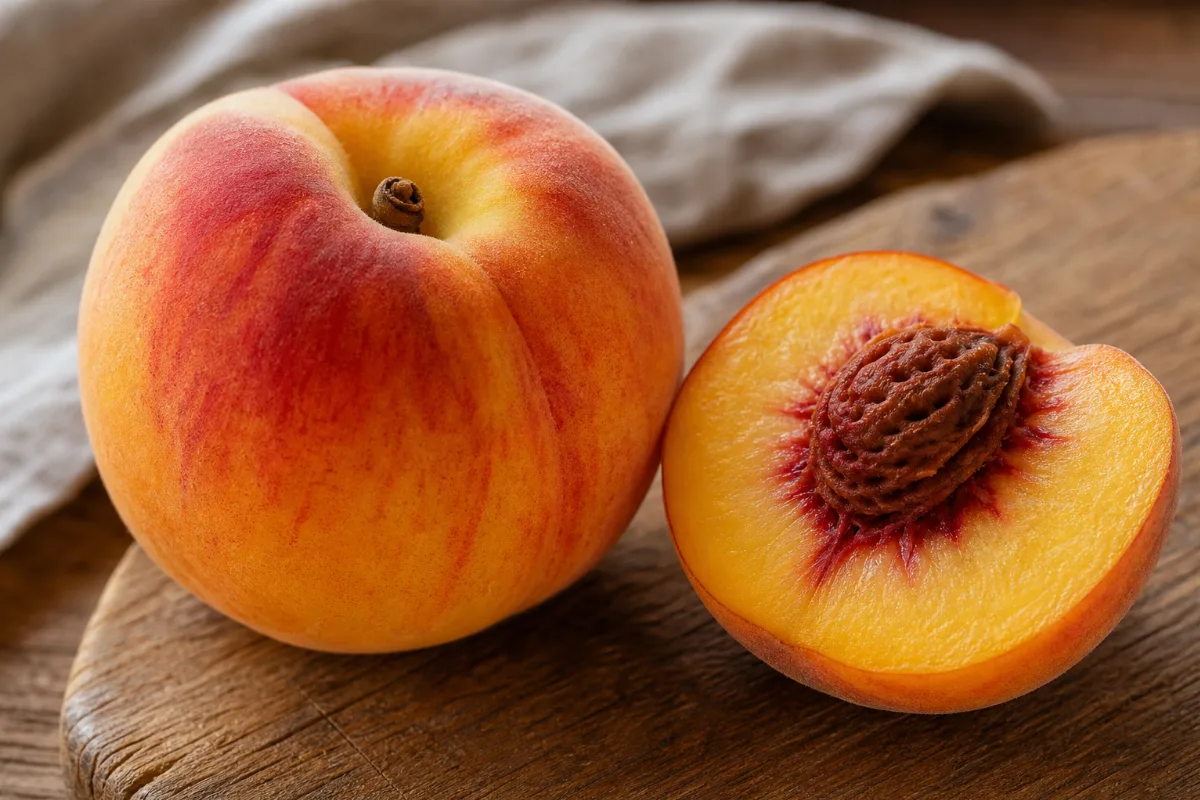
The peach (Prunus persica) is a stone fruit in the rose family (Rosaceae). The soft, juicy flesh around a single hard pit is what we eat. People enjoy peaches for sweetness, fiber and a little vitamin C. This page keeps the whole fruit apart from supplements and extracts, and tells you how strong the evidence really is. It is information only, not a plan for what to eat.
Read this first
- Peach allergy is real. It ranges from an itchy mouth to, rarely, a severe whole-body reaction. For trouble breathing or swelling of the face or throat, call 911. See food allergy basics and emergency signs. [4][6]
- Many people with hay fever (pollen allergy) get an itchy mouth from raw peach. This is called pollen-food allergy syndrome. [7]
- Never eat the hard pit or the kernel inside it. We found a review of seed-related poisonings for bitter apricot seed, not for peach, so we cannot say more about peach kernels. [9]
- Honest summary: peaches are a useful, low-calorie fruit. Large studies link eating more fruit and vegetables overall with better health, but they do not show that peaches in particular prevent or treat any disease. [3]
What is in it (USDA values)
| Nutrient | Per 100 g | Per 1 medium peach (150 g) | % Daily Value per serving |
|---|---|---|---|
| Energy | 39 kcal | 59 kcal | n/a |
| Dietary fiber | 1.5 g | 2.3 g | 8% |
| Total sugars | 8.39 g | 12.6 g | no Daily Value set |
| Vitamin C | 6.6 mg | 9.9 mg | 11% |
| Potassium | 190 mg | 285 mg | 6% |
| Copper | 0.07 mg | 0.11 mg | 12% |
| Vitamin E (alpha-tocopherol) | 0.73 mg | 1.1 mg | 7% |
| Niacin (B3) | 0.81 mg | 1.2 mg | 8% |
| Vitamin A (RAE) | 16 µg | 24 µg | 3% |
| Vitamin K | 2.6 µg | 3.9 µg | 3% |
| Folate (DFE) | 4 µg | 6 µg | 2% |
| Beta-carotene | 162 µg | 243 µg | no Daily Value set |
Source: USDA FoodData Central, "Peaches, yellow, raw", SR Legacy, item 169928 [1]. A medium peach (2-2/3 inch across) is a USDA household portion of 150 g. % Daily Value uses the FDA 2016 Daily Values; values vary with variety, ripeness and storage.
USDA also measured small amounts of carotenoids in yellow peach (beta-carotene, beta-cryptoxanthin, and lutein plus zeaxanthin). [1] A laboratory study of peach purees found that purees made with the peel had more total phenols (plant compounds with antioxidant activity in the test tube) and those without peel had more carotenoids. [10] This is lab work on purees, not evidence about what these compounds do in people.
What research says
| Health goal | What the sources found | Strength of evidence | What was studied |
|---|---|---|---|
| Preventing scurvy (vitamin C deficiency) | Vitamin C is needed every day, and a lack causes scurvy. Fruit is one source; a peach gives a modest share (about 11% of the Daily Value). [2][1] | Established (for vitamin C, not peach specifically) | Vitamin C as a nutrient |
| Heart disease, cancer and early death | A large meta-analysis of cohort studies linked more fruit and vegetables combined with lower risk (for example, all-cause death risk ratio 0.90 per 200 g a day). [3] | Promising but limited (observational; fruits and vegetables combined, not peaches alone) | Adults followed over time |
| Death risk in people with type 2 diabetes | A 2025 meta-analysis of nine cohorts linked higher fruit intake with lower death rates. [11] | Promising but limited (observational) | Adults with type 2 diabetes; fruit overall |
| Bowel regularity, blood pressure, blood sugar, weight | Proper evidence not found in the sources we read for peach specifically. | Insufficient evidence | Not applicable |
| "Antioxidant" or "anti-inflammatory" effects | Phenols and antioxidant activity were measured in peach products in the lab. [10] We found no human trial in the sources read. | Lab or animal only | Peach puree in the laboratory |
| Peach extract or pit products as medicine | Proper evidence not found. | No good evidence of benefit | Not applicable |
An observational study cannot prove that fruit caused the better health: people who eat more fruit often differ in other ways, such as exercise and smoking. [3]
Eaten as food vs taken as a supplement or extract. Everything above is about the fruit. We did not find a human trial of peach powder or extract in the sources we read, so nothing here supports peach supplements. There is no herb page for the peach plant on this site.
How much is a normal serving
A USDA household portion of peach is 1 medium fruit (150 g) or 1 cup of slices (154 g). [1] USDA's MyPlate counts fruit in cups; we could not open the MyPlate page when writing this, so we do not quote its daily figure here. Look at the current Dietary Guidelines for Americans for official amounts. This is information, not a prescription.- Fresh, frozen, canned, dried and juice: different forms differ in sugar and fiber. Canned peaches may be in syrup, and juice has less fiber than the whole fruit. Check the label. See fruit juice vs whole fruit and fresh, frozen and canned produce.
- Cooking: we did not find a source we could read on how cooking changes the nutrients in peaches, so we make no claim.
Safety, allergy and medicines
- True food allergy (lipid transfer protein, "Pru p 3"): in southern Europe, a peach protein called Pru p 3 is considered the main trigger of allergy to plant foods. It resists heat and digestion, so cooked or canned peach can still cause reactions, from mild to severe. [4]
- Confirmed cases: in a study of 49 patients referred for suspected peach allergy in Tunisia, about 77.5% had confirmed peach allergy and most were sensitised to Pru p 3. [6]
- Pollen-food allergy syndrome (itchy mouth): this cross-reaction between pollen and raw fruit usually causes mouth and throat symptoms. [7] The sources we read did not say how often it involves peach.
- Treatment of allergy: immunotherapy with Pru p 3 is being studied; the review we read rated the certainty of the evidence as low. [5] Anyone with a suspected allergy should see an allergy specialist.
- Pit and kernel: a systematic review of seeds used as food or medicine found many adverse events, many serious ones linked to bitter apricot seed, mostly from excess dose, use in children and improper processing. [9] We did not find a source on peach kernels, so the safe course is not to eat them.
- Medicines: the sources we read describe no medicine interactions for eating peaches. With a medicine question, ask a pharmacist; see foods and medicine interactions.
- Potassium and kidney disease: a medium peach has about 285 mg of potassium (6% of the Daily Value). [1] People told to limit potassium should ask their care team; see kidney disease, potassium and oxalates.
- Sugar: peach has about 12.6 g of natural sugar in a medium fruit. [1] People managing diabetes can ask their care team how fruit fits their plan.
- Pesticide residues: a 2026 review says residues on fruit are usually several compounds at low levels, and recommends judging them by risk rather than only whether a limit was met. [12] We could not read the USDA Pesticide Data Program page, so we do not quote its peach figures.
- Pregnancy: we did not find a source we could read that restricts peaches in pregnancy; see foods in pregnancy.
Choosing, storing and food safety
- Choose fruit that is not bruised or damaged. [8]
- Rinse all produce under running water, even if you will peel it. Do not use soap or produce wash. Dry with a clean cloth or paper towel. [8]
- Keep pre-cut or packaged fruit at 40°F (4°C) or below. [8]
- Cut away damaged or bruised areas and throw out rotten fruit. [8]
Related pages
Health connections for Peaches
What research links to eating or drinking this food, and how strong the evidence is. Many studies are observational or use juice, powder, oil or extracts rather than the food as eaten; each card says which.
Fruit as part of a healthy eating pattern
Preliminary or mixedLarge studies of people over time link eating more fruit and vegetables overall with lower risk of heart disease and early death. They looked at fruit and vegetables combined, not peaches alone, and cannot prove cause.
Supplements: Not a supplement question; the evidence is about whole foods in the diet.
Vitamin C intake and scurvy prevention
Deficiency linkVitamin C is needed every day and a lack causes scurvy. A medium peach gives about 11% of the FDA Daily Value.
Supplements: Not applicable; food source of a nutrient.
Fiber, potassium and copper in a peach
Established roleA medium peach gives about 2.3 g fiber (8% DV), 285 mg potassium (6%) and 12% of the copper Daily Value (USDA). Being a source of a nutrient is not proof that eating peaches treats any disease.
Supplements: Not applicable.
Fruit intake and death risk in type 2 diabetes
Preliminary or mixedA 2025 meta-analysis of cohorts found higher fruit intake linked with lower death rates in adults with type 2 diabetes. Observational; fruit overall.
Supplements: Not applicable.
Antioxidant and plant compounds (lab)
Lab or animal research onlyPeach purees contain phenols and carotenoids measured in the lab. We found no human trial in the sources read.
Supplements: No peach supplement trial found.
Peach extract, pit or kernel products as medicine
Not enough evidenceProper evidence not found in the sources we read.
Supplements: No good evidence of benefit.
Connected topics
Open a group to see how each topic connects and how strong the evidence is.
Body systems (1)
- Immune SystemDocumented risk
Peach can cause food allergy, an immune reaction, from itchy mouth to severe reactions.
Body parts (1)
- Immune SystemDocumented risk
Peach allergy is an immune reaction to peach proteins such as Pru p 3.
Functional actions (1)
- AntioxidantLab or animal research only
Phenols and antioxidant activity were measured in peach purees in the lab; no human trial was found.
Root causes (1)
- Nutrient DeficiencyDeficiency link
Peaches give a modest share of vitamin C, which prevents scurvy; they are one of many fruit sources.
Habits (1)
- Balanced NutritionPreliminary or mixed
Fruit and vegetables eaten overall are linked with better health in cohort studies; these cannot prove cause and do not single out peaches.
Conditions & symptoms (3)
- Food AllergyDocumented risk
Peach is a documented food allergen (Pru p 3).
- Food AnaphylaxisDocumented risk
LTP allergy to peach can cause reactions from mild to anaphylactic.
- ScurvyDeficiency link
Scurvy comes from lack of vitamin C; peaches give a modest share, about 11% of the Daily Value per medium fruit.
Documented risks and interactions (5)
- Peach allergy (Pru p 3 and lipid transfer protein). Peach allergy can range from mild to severe. The protein Pru p 3 resists heat and digestion, so cooked peach can still cause reactions. For trouble breathing or swelling of the face or throat call 911.
- Pollen-food allergy syndrome (itchy mouth). Raw fruit proteins can cross-react with pollen proteins, usually causing mouth and throat symptoms.
- Peach pit and kernel. A systematic review of seeds used as food or medicine found many serious adverse events with bitter apricot seed. We found no source on peach kernels, so the pit should not be eaten.
- Potassium, sugar and kidney disease. A medium peach has about 285 mg potassium and 12.6 g natural sugar. People told to limit potassium, or managing diabetes, can ask their care team.
- Washing and storing fresh fruit. Rinse under running water without soap; keep cut or packaged fruit at 40°F or below.
Frequently asked questions
Are peaches good for you?
They are a low-calorie fruit with fiber, some vitamin C and potassium. [1] Large cohort studies link more fruit and vegetables overall with lower risk of disease, but these studies cannot prove cause and do not single out peaches. [3]
Can you be allergic to peaches?
Yes. A peach protein called Pru p 3 is a known trigger and can cause severe reactions in some people, even from cooked fruit. [4][6] For trouble breathing or swelling of the face or throat, call 911.
Why does raw peach make my mouth itchy?
This may be pollen-food allergy syndrome, where proteins in raw fruit resemble pollen proteins and cause mouth and throat symptoms. [7] Ask a clinician or allergy specialist if it happens to you.
Is it safe to eat the peach pit?
We do not advise it. Seed poisonings in a systematic review were reported mainly for bitter apricot seed, and we found no source on peach kernels. [9]
Do canned peaches count?
Canned peaches are still fruit, but they may contain added sugar in syrup. Check the label. See fresh, frozen and canned produce.
References
- U.S. Department of Agriculture. Peaches, yellow, raw (FDC ID 169928). FoodData Central, SR Legacy, April 2018. Read 2026-10-23.
- NHS. Vitamin C. Read 2026-10-23.
- Aune D et al. Fruit and vegetable intake and the risk of cardiovascular disease, total cancer and all-cause mortality: a systematic review and dose-response meta-analysis of prospective studies. Int J Epidemiol 2017. PMID 28338764. Abstract read 2026-10-23 (via Europe PMC).
- Rydzyńska M et al. Lipid Transfer Protein Allergens: A Comprehensive Overview of Current Knowledge. Int J Mol Sci 2026. PMID 41828357. Abstract read 2026-10-23; and Martínez AC et al., Allergol Immunopathol 2026 (abstract read via Europe PMC, on Pru p 3 as main sensitizer in Southern Europe and heat/digestion resistance of LTPs).
- Rydzyńska M et al. Efficacy and safety of allergen immunotherapy in lipid transfer protein food allergy: an updated systematic review. Ann Allergy Asthma Immunol 2026. PMID 42543147. Abstract read 2026-10-23.
- Ben Nejma N et al. The molecular landscape of peach allergy in Tunisia: new insights. Front Immunol 2026. PMID 41853255. Abstract read 2026-10-23.
- Marzec A et al. Pollen-Food Allergy Syndrome in Children: Global Prevalence and Pathogenesis. Nutrients 2026. PMID 42514315. Abstract read 2026-10-23.
- U.S. Food and Drug Administration. Selecting and Serving Produce Safely. Content current as of 2024-03-05. Read 2026-10-23.
- Yuan L et al. Safety of medicinal and edible herbs from seed sources for human consumption: a systematic review. Integr Med Res 2026. PMID 41322721. Abstract read 2026-10-23.
- Han Q et al. Effects of different pretreatments on the nutrition, flavor and sensory evaluation of lactobacilli-fermented peach beverages. Foods 2025. PMID 41465009. Abstract read 2026-10-23.
- Geravand F et al. Fruit and vegetable consumption and risk of all-cause and cause-specific mortality in individuals with type 2 diabetes: a systematic review and dose-response meta-analysis of prospective cohort studies. Nutr Rev 2025. PMID 40105674. Abstract read 2026-10-23.
- Pesticide residues in fruits: from surveillance data to risk-based interpretation and mitigation. 2026. PMID 42280281. Abstract read 2026-10-23.