Lychee: Nutrients, What Research Shows and Safety
What the sources say about lychee, a juicy tropical fruit: vitamin C and copper, allergy, the link with low blood sugar in India, and what research does not show.
Content last updated . This page has not been medically reviewed.
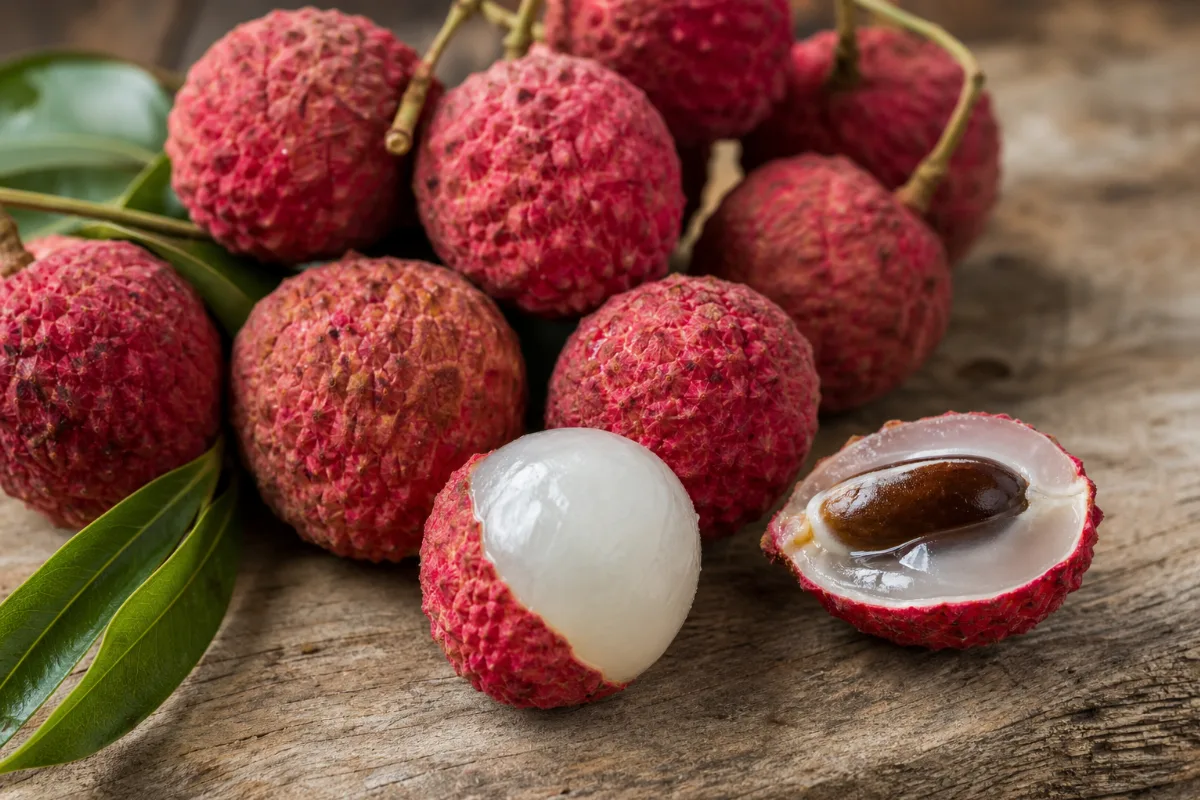
Lychee (Litchi chinensis, soapberry family, Sapindaceae) is a tropical to subtropical fruit with a rough red skin and a sweet, juicy, translucent flesh around one large seed. Only the flesh is eaten. People enjoy it fresh or canned, and many believe it is good for health. This page separates the food from supplements and from hype, and says plainly what is and is not known. [2]
Read this first
- Lychee can cause a true allergic reaction, including anaphylaxis, in some people. For trouble breathing or swelling of the face or throat, call 911. See food allergy basics and emergency signs. [3][4]
- In Muzaffarpur, India, in 2014, a study linked eating lychee, especially on an empty stomach (no evening meal), to a serious brain illness with low blood sugar in children. The authors found two natural toxins in the fruit there. This was a specific outbreak; it does not show that ordinary lychee eating elsewhere is dangerous, but it is a good reason to be careful with children and not to give them lychee in place of a meal. [1]
- Lychee is a good source of vitamin C and copper. We did not find human trials showing that lychee prevents or treats any disease: Proper evidence not found in the sources we read.
What is in it (USDA values)
| Nutrient | Per 100 g | Per typical serving (USDA: 1 cup, 190 g) | % Daily Value per serving |
|---|---|---|---|
| Energy | 66 kcal | 125 kcal | n/a |
| Fiber | 1.3 g | 2.5 g | 9% |
| Total sugars | 15.23 g | 28.9 g | n/a (no Daily Value set) |
| Vitamin C | 71.5 mg | 135.9 mg | 151% |
| Copper | 0.15 mg | 0.29 mg | 32% |
| Vitamin B6 | 0.1 mg | 0.19 mg | 11% |
| Potassium | 171 mg | 325 mg | 7% |
| Folate (DFE) | 14 ug | 27 ug | 7% |
| Riboflavin (B2) | 0.07 mg | 0.13 mg | 10% |
| Vitamin A (RAE) | 0 ug | 0 ug | 0% |
| Vitamin K | 0.4 ug | 0.8 ug | 1% |
Source: USDA FoodData Central, "Litchis, raw" (SR Legacy, FDC 169086). [5] The serving column is our arithmetic from the USDA values and the USDA household portion of 1 cup (190 g); one peeled fruit is listed by USDA as 9.6 g. % Daily Value uses the FDA 2016 Daily Values; values vary with variety, ripeness and storage. Lychee has no vitamin A or carotenoids in the USDA data, so it is not an orange-fruit source of those.
A 2020 review says lychee polysaccharides (long sugar chains) and polyphenols (plant pigments and related compounds) are credited with most of the reported effects. Most of that work was done in laboratory dishes and animals, not in people. [2]
What research says
| Health goal | What the sources found | Strength of evidence | What was studied |
|---|---|---|---|
| Vitamin C intake and scurvy | A lack of vitamin C causes scurvy; the NHS lists citrus and other fruit as sources and gives 40 mg a day for adults 19 to 64. [6] Lychee has 71.5 mg per 100 g (USDA). [5] | Established (for vitamin C itself) | Vitamin C in general, not lychee trials |
| Antioxidant and "anti-inflammatory" effects | A 2020 review reports antioxidant, blood-sugar-lowering, liver-protecting and other effects. [2] | Lab or animal only | In vitro and animal studies |
| Blood sugar and diabetes | Traditional Chinese medicine used lychee for diabetes, and lab studies report blood-sugar effects. [2] No human trial was found. The fruit itself is sweet (15 g sugars per 100 g). [5] | Insufficient evidence | Lab and animal studies |
| Heart, brain, cancer, immunity | Reported in lab studies only. [2] | Lab or animal only | In vitro and animal studies |
| Safety: low blood sugar and brain illness (India, 2014) | 390 children had the illness and 31% died; litchi eating had an odds ratio of 9.6 compared with matched controls. [1] | Documented risk (a case-control study, so association, with toxin evidence) | Children under 16 in one region |
| Safety: allergy | Case reports describe anaphylaxis, linked to a plant protein called profilin and to cross-reactions with other plants. [3][4] | Documented risk | Case reports |
Eaten as food vs taken as a supplement or extract. The studies above are about the fruit or its parts in the lab. We did not find a human trial of lychee fruit, juice or extract for a health goal, so nothing here applies to capsules or seed extracts. Observational links, and a food being rich in a nutrient, do not prove that eating it treats a disease.
How much is a normal serving
The USDA household portion for raw lychee is 1 cup (190 g), or about 20 peeled fruit at 9.6 g each. [5] This is information, not a prescription. We did not read an official MyPlate or Dietary Guidelines figure for lychee in particular, so we do not give one. Canned lychee in syrup and juice were not in our USDA file, so their nutrient values are not shown; syrups and juices usually add sugar and lack the fiber of the whole fruit, so check labels. See fruit juice vs whole fruit. Proper evidence not found on how cooking or canning changes lychee's vitamin C.Safety, allergy and medicines
- Allergy. Eating lychee can cause itching, hives, swelling of lips or throat, trouble breathing or diarrhoea; a soluble protein is probably responsible. [2] Case reports describe anaphylaxis after eating lychee, including at the first ingestion. [3][4] In one case the allergen was profilin, a protein shared by many plants, and the person also reacted to sunflower seeds and some pollen. [3]
- Low blood sugar and brain illness in children (Muzaffarpur, India, 2014). The case-control study of 390 children found that 62% of 327 tested had blood glucose of 70 mg/dL or less on admission. Hypoglycin A and MCPG, two natural toxins that can lower blood sugar, were found in 66% of case urine samples and none of the controls, and in the lychee flesh tested (12.4 to 152.0 micrograms per gram of hypoglycin A). Not eating an evening meal raised the risk further. The authors advised limiting lychee, making sure children eat an evening meal, and treating low glucose quickly. [1] The findings were also discussed in published correspondence, so scientists continued to debate them. [7] The study was in children in one region; we did not find a source about adults elsewhere.
- Diabetes and sugar. A 1-cup serving has about 29 g of sugars. [5] People using insulin or diabetes medicines should ask their care team how fruit fits their plan; see foods for blood sugar control.
- Medicines. We did not find a source we could read describing medicine interactions with lychee as a food, so we make no claim either way. A pharmacist can check.
- Pregnancy. Proper evidence not found in the sources we read. See foods in pregnancy.
- Choking. We did not read a source on lychee choking; the fruit has a large slippery seed and a skin that must be removed, so take care with young children.
- Pesticide residues. Proper evidence not found in the sources we read.
Choosing, storing and food safety
- Skip fruit that is bruised or damaged, and trim damaged areas. [8]
- Keep cut or packaged fruit in a clean refrigerator at or below 40 F (about 4 C). [8]
- Rinse under running water before peeling; do not use soap or produce wash, and dry with a clean towel. Washing reduces bacteria but does not remove all. [8]
Related pages
Health connections for Lychee
What research links to eating or drinking this food, and how strong the evidence is. Many studies are observational or use juice, powder, oil or extracts rather than the food as eaten; each card says which.
Vitamin C intake and scurvy prevention
Deficiency linkLychee is a rich source of vitamin C: USDA lists 71.5 mg per 100 g. Not getting enough vitamin C causes scurvy.
Supplements: Relevant to preventing deficiency; no good evidence of extra benefit when intake is already adequate. No lychee-specific trial found.
Copper and vitamin B6 from the fruit
Established roleOne USDA cup (190 g) gives about 32% of the Daily Value for copper and 11% for vitamin B6.
Supplements: This describes nutrients in food, not a proven treatment.
Fiber and sugars
Established roleLychee has 1.3 g fiber and 15.23 g sugars per 100 g, so it is a sweet fruit with modest fiber.
Supplements: Information about the food; no health claim.
Antioxidant and other reported effects
Lab or animal research onlyA 2020 review reports antioxidant, anticancer, heart and brain effects from lychee polysaccharides and polyphenols in lab and animal studies.
Supplements: Lab or animal research only; no human trial of lychee for these goals was found.
Blood sugar and diabetes
Not enough evidenceLychee was used in traditional Chinese medicine for diabetes and lab studies report blood-sugar effects, but no human trial was found.
Supplements: Insufficient evidence; the fruit itself is sweet.
Medicines, pregnancy and pesticide residues
Not enough evidenceThe sources we read do not describe medicine interactions, pregnancy-specific advice or pesticide residue findings for lychee.
Supplements: Unknown; ask a pharmacist or clinician.
Connected topics
Open a group to see how each topic connects and how strong the evidence is.
Body systems (2)
- Immune SystemDocumented risk
Lychee can trigger allergic reactions, including anaphylaxis, in sensitised people.
- Nervous SystemDocumented risk
The Muzaffarpur outbreak was an acute toxic brain illness in children linked to lychee toxins; it is a regional outbreak, not a general finding.
Body parts (2)
- BrainDocumented risk
Children in the 2014 outbreak had seizures or altered consciousness; hypoglycin A and MCPG were found in fruit and urine.
- Immune SystemDocumented risk
Allergic reactions to a lychee protein (profilin) are described in case reports.
Functional actions (1)
- AntioxidantLab or animal research only
A 2020 review reports antioxidant activity from lychee polyphenols and polysaccharides in lab and animal studies only.
Root causes (2)
- Blood Sugar ImbalanceDocumented risk
In a 2014 outbreak in India, lychee eating, especially without an evening meal, was linked to low blood sugar and brain illness in children.
- Nutrient DeficiencyDeficiency link
Lychee supplies vitamin C (71.5 mg per 100 g), and lack of vitamin C causes scurvy; no lychee-specific trial was found.
Biomarkers (1)
- Blood GlucoseDocumented risk
62% of 327 tested children in the outbreak had blood glucose of 70 mg/dL or less on admission.
Conditions & symptoms (5)
- Food AllergyDocumented risk
Lychee can cause allergic reactions, including anaphylaxis.
- Food AnaphylaxisDocumented risk
Case reports describe anaphylaxis after eating lychee.
- HypoglycemiaDocumented risk
62% of tested children in the outbreak had low blood glucose on admission.
- Hypoglycemic EncephalopathyDocumented risk
Linked to lychee consumption in children in Muzaffarpur, India, 2014 (case-control study).
- ScurvyDeficiency link
Scurvy results from too little vitamin C; lychee is a vitamin C-rich fruit, but no lychee-specific trial was found.
Documented risks and interactions (3)
- Low blood sugar and brain illness in children (India 2014). A case-control study linked lychee eating, especially without an evening meal, to a serious illness with low blood sugar; hypoglycin A and MCPG toxins were found in the fruit and children's urine.
- Food allergy and anaphylaxis. Lychee can cause itching, swelling and breathing trouble, and case reports describe anaphylaxis, in some cases through profilin cross-reacting with other plants.
- Sugar content and diabetes planning. A 1-cup USDA serving has about 29 g of sugars, so people managing blood sugar should ask their care team how it fits.
Frequently asked questions
Is lychee safe to eat?
For most people eating normal amounts of ripe fruit, our sources describe no common problem, but allergy is possible and can be severe. [3][4] A 2014 outbreak in India linked lychee, especially without an evening meal, to low blood sugar and brain illness in children. [1]
Why were children in India ill after eating lychee?
A 2017 case-control study found that affected children were far more likely to have eaten lychee and often skipped an evening meal. Two toxins, hypoglycin A and MCPG, were found in the fruit and in the children's urine. [1] The findings were also discussed in published correspondence. [7]
Is lychee good for you?
It supplies vitamin C (135.9 mg in a USDA 1-cup portion) and copper. [5] Claims about antioxidant, anti-diabetes or other effects come from lab and animal studies, not human trials. [2]
Can people with diabetes eat lychee?
Lychee has about 15 g of sugars per 100 g. [5] We did not find human trials on lychee and blood sugar, so ask your care team how it fits your plan.
Are lychee supplements or seed extracts proven?
No. The sources we read report lab and animal findings only. [2]
References
- Shrivastava A et al. Association of acute toxic encephalopathy with litchi consumption in an outbreak in Muzaffarpur, India, 2014: a case-control study. Lancet Glob Health 2017;5(4):e458-e466. PMID 28153514. Abstract read 2026-10-23.
- Zhao L et al. Nutrient components, health benefits, and safety of litchi (Litchi chinensis Sonn.): A review. Compr Rev Food Sci Food Saf 2020. PMID 33337091. Abstract read 2026-10-23.
- Fah J, Wuthrich B, Vieths S. Anaphylactic reaction to lychee fruit: evidence for sensitization to profilin. Clin Exp Allergy 1995. PMID 8556556. Abstract read 2026-10-23.
- Garrido S et al. Anaphylaxis following the first ingestion of lychee fruit: clinical features and immunological cross-reactivity implications. Allergy 2007. PMID 17484730. Title and indexing read 2026-10-23 (no abstract text available).
- US Department of Agriculture. FoodData Central: Litchis, raw (SR Legacy, FDC 169086). April 2018 release. Read 2026-10-23.
- NHS. Vitamin C. Last reviewed 3 August 2020. Read 2026-10-23.
- Das M, John TJ. Lychee-associated acute hypoglycaemic encephalopathy outbreaks in Muzaffarpur, India. Lancet Glob Health 2017;5(9):e859-e860. PMID 28807176. Citation and title only (no abstract); used only to show the conclusion was discussed in correspondence.
- US Food and Drug Administration. Selecting and Serving Produce Safely. Content dated 2024-03-05. Read 2026-10-23.