Grapes: Nutrients, What Research Shows and Safety
What grapes contain (USDA values), what trials and large cohort studies found, and the safety notes: allergy, choking in young children, medicines and sugar.
Content last updated . This page has not been medically reviewed.
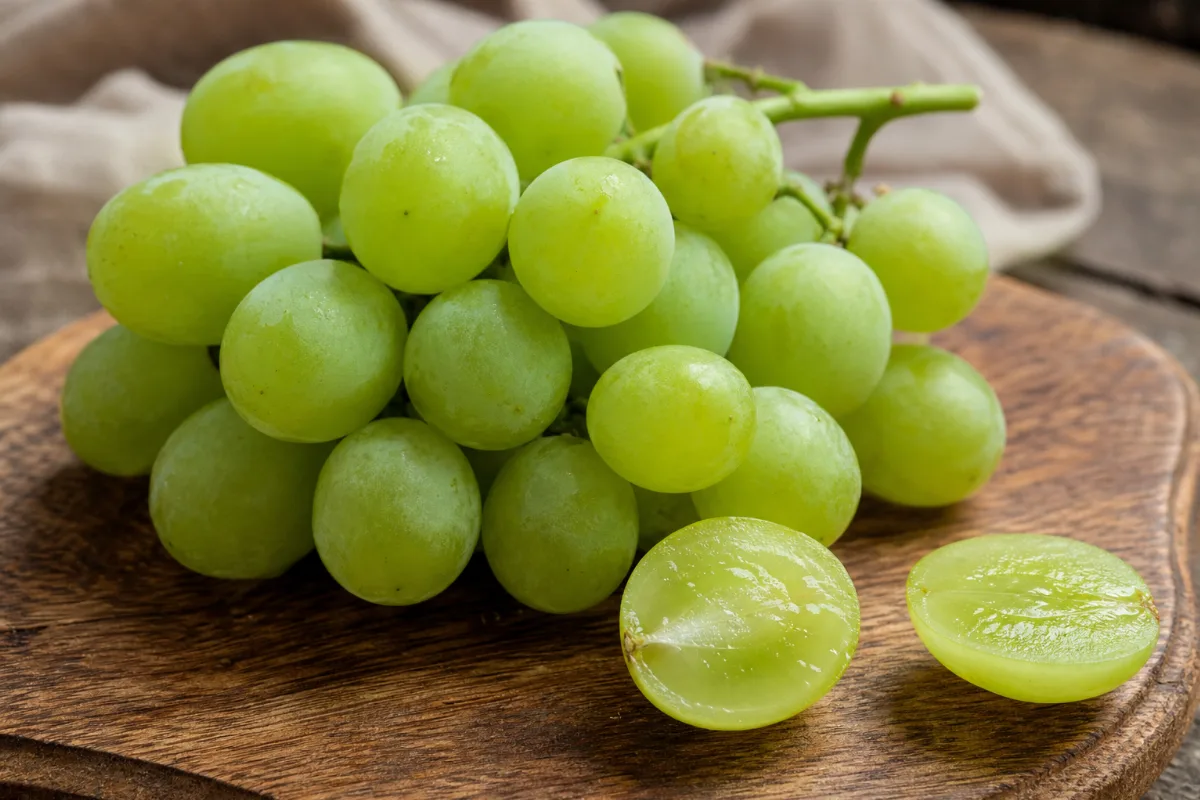
Grapes are the berries of the grapevine, Vitis vinifera, in the grape family (Vitaceae). The whole berry is eaten fresh, dried as raisins, or pressed into juice. People eat grapes for their sweetness, and many ask about the plant pigments in the skin. This page keeps the food apart from supplements (such as grape seed extract or resveratrol pills) and from hype.
Read this first
- A true grape allergy is uncommon but can be severe. Case reports describe anaphylaxis (a sudden, serious allergic reaction) after fresh grapes, raisins or wine. [11] For trouble breathing or swelling of the face or throat, call 911. See food allergy basics and emergency signs.
- Whole grapes are a round, smooth food. The American Academy of Pediatrics describes the shape, size and firmness of some foods as raising choking risk in children aged 3 or younger. [12] Its summary does not name grapes, so ask a pediatrician or your local health service how to prepare them for a small child.
- Grapes contain natural sugar (about 23 g in one cup, USDA). [1] People who count carbohydrates for diabetes should treat the cup as a carbohydrate food.
- Honest summary: large cohort studies link eating grapes with a lower chance of type 2 diabetes, and trials of grape products show small changes in blood pressure and cholesterol. These are weak or low-certainty results, not proof that grapes prevent or treat any disease.
What is in it (USDA values)
| Nutrient | Per 100 g | Per 1 cup (151 g) | % Daily Value per cup |
|---|---|---|---|
| Energy | 69 kcal | 104 kcal | n/a |
| Total sugars | 15.5 g | 23.4 g | n/a |
| Fiber | 0.9 g | 1.4 g | 5% |
| Vitamin K | 14.6 µg | 22.0 µg | 18% |
| Copper | 0.13 mg | 0.20 mg | 22% |
| Thiamin (B1) | 0.07 mg | 0.11 mg | 9% |
| Vitamin B6 | 0.09 mg | 0.14 mg | 8% |
| Potassium | 191 mg | 288 mg | 6% |
| Vitamin C | 3.2 mg | 4.8 mg | 5% |
| Folate (DFE) | 2 µg | 3 µg | 1% |
| Vitamin A (RAE) | 3 µg | 5 µg | 1% |
Values are for European-type grapes such as Thompson seedless, raw, USDA FoodData Central item 174683, with the USDA household portion of 1 cup (151 g). [1] Per-serving figures are our arithmetic from the USDA per-100 g values. % Daily Value uses the FDA 2016 Daily Values; values vary with variety, ripeness and storage. American slip-skin grapes (such as Concord type, item 174682) are listed separately: 1 cup is 92 g and manganese is 0.72 mg per 100 g (31% Daily Value per 100 g), much higher than in European types. [2]
Grapes are known for polyphenols (plant pigments studied for health effects). The sources we read describe polyphenols from grape products in trials, mostly as juice, extracts or powders rather than the plain fruit. [6][4] Resveratrol, a compound in grape skins, has been tested as a capsule; see the table below. USDA also lists small amounts of lutein plus zeaxanthin (72 µg per 100 g). [1] We did not read a source that measures the amounts of polyphenols in a cup of grapes, so we give none.
What research says
| Health goal | What the sources found | Strength of evidence | What was studied |
|---|---|---|---|
| Type 2 diabetes risk | In three US cohorts (about 190,000 health professionals), people who ate more grapes and raisins had a lower risk (hazard ratio 0.88). Fruit juice showed the opposite (1.08). [3] | Promising but limited (observational: it shows an association, not cause) | Whole grapes and raisins, reported in food questionnaires |
| Blood sugar and insulin | A 2021 meta-analysis of 29 trials (1,297 adults) found lower insulin resistance (HOMA-IR) but no change in fasting insulin or HbA1c. [5] | Mixed | Grape products of many kinds (fruit, juice, extracts) |
| Blood pressure | A 2023 meta-analysis of 30 trials found systolic pressure about 3 mmHg lower with grape products, low-certainty evidence. Raisins and grape powder did; grape juice did not. Diastolic pressure did not change. [4] | Promising but limited | Whole grape products (raisins, powder) and juice |
| Cholesterol | A 2020 meta-analysis found LDL about 6.3 mg/dL lower than placebo with grape products, juice or extracts. [6] | Promising but limited | Mixed grape products and extracts |
| Body weight | A 2025 meta-analysis found no meaningful effect on body weight or waist size; the authors rated the studies as low quality. [7] | No good evidence of benefit | Grapes and grape products |
| Resveratrol capsules and heart risk | A meta-analysis of 10 trials found no lowering of CRP, cholesterol, glucose or blood pressure. [9] Another (11 trials) found better glucose control only in people with diabetes. [10] | Mixed (supplement, not the food) | Resveratrol supplements |
| Wound healing, tooth decay (grape seed extract) | NCCIH says experimental models and lab studies hint at effects but human evidence is too limited to judge. [8] | Lab or animal only | Grape seed extract |
Eaten as food vs taken as a supplement or extract. The cohort result is about everyday fruit. Most trial results are for grape products such as powders, juice, extracts and raisins, and the meta-analyses mix them together. [4][5][6] Grape seed extract and resveratrol are supplements and behave differently from the fruit. NCCIH reports that a 2022 review found grape seed extract lowered diastolic but not systolic blood pressure, and a 2020 review suggested effects on LDL and triglycerides, from small studies with products that varied. [8] A result for one form does not transfer to another.
How much is a normal serving
- The USDA household portion for European-type grapes is 1 cup (151 g), about 104 kcal; ten grapes are 49 g. [1] This is information, not a prescription.
- The UK NHS counts 80 g of fresh, canned or frozen fruit as one portion of 5 A Day, and 30 g of dried fruit as one portion. It suggests dried fruit at mealtimes rather than as a between-meal snack because of teeth. [13]
- The NHS limits juice and smoothies to 150 ml a day as one portion and notes even unsweetened juice is sugary. [13] See fruit juice vs whole fruit.
- We did not find a read source on how cooking or drying changes grape nutrients, and the USDA file we used has no raisin values: Proper evidence not found in the sources we read.
Safety, allergy and medicines
- Allergy: a German case report describes severe anaphylaxis after fresh and cooked grapes, raisins and wine, traced to a grape protein called a lipid transfer protein. The authors say this type of allergy can happen without pollen allergy. [11] Anyone who has reacted should see an allergist and not test themselves.
- Choking in young children: the AAP statement on choking says the shape, size and consistency of some foods make them more likely to cause choking, especially in children aged 3 or younger. [12] The abstract we read does not mention grapes by name. Cutting round foods is commonly advised, but we did not read an official source for the exact way to cut grapes, so check with your pediatrician. See foods for babies and toddlers: choking, honey and allergens.
- Sugar and diabetes: about 15.5 g of sugar per 100 g (USDA). [1] The cohort data above do not show harm from whole grapes, but fruit juice was linked to higher risk. [3] See foods for blood sugar control.
- Potassium and kidney disease: a cup has about 288 mg of potassium (6% Daily Value). [1] MedlinePlus notes that with chronic kidney disease the kidneys may not remove extra potassium and that some medicines raise potassium levels. [15] This amount is modest; ask your kidney team what suits you. See foods, kidney disease, potassium and oxalates.
- Medicines: grapes are not grapefruit. We did not find a read source describing a medicine interaction with eating grapes. NCCIH tells people who take medicines to talk to a provider before using grape seed extract; it does not name specific interactions. [8] Grapes contain some vitamin K (18% Daily Value per cup, USDA [1]); we did not read a source on grapes and warfarin, so people on warfarin should ask their prescriber. See foods and medicine interactions.
- Pregnancy and breastfeeding: NCCIH says little is known about grape seed extract in pregnancy or breastfeeding. [8] We did not read a source on eating grapes in pregnancy.
- Dried fruit and teeth: the NHS advises dried fruit at mealtimes to protect teeth. [13]
- Pesticide residues: the USDA Pesticide Data Program reports on residues in grapes, but we could not open the report, so we make no claim. Rinsing is advised by the FDA. [14]
Choosing, storing and food safety
- Rinse grapes under running water before eating; do not use soap or produce wash, and dry with a clean cloth or paper towel. Washing lowers bacteria but does not remove all. [14]
- Keep cut or pre-packaged grapes refrigerated; when buying pre-cut produce choose items that are refrigerated or on ice. [14]
- Throw away grapes that look rotten and cut away bruised parts. [14]
Related pages
Health connections for Grapes
What research links to eating or drinking this food, and how strong the evidence is. Many studies are observational or use juice, powder, oil or extracts rather than the food as eaten; each card says which.
Grape intake and type 2 diabetes risk
Preliminary or mixedIn three large US cohorts, people who ate more grapes and raisins had a somewhat lower chance of type 2 diabetes (hazard ratio 0.88). Fruit juice showed the opposite.
Supplements: Applies to the whole food; no supplement was tested.
Blood sugar and insulin resistance
Preliminary or mixedA meta-analysis of 29 trials found lower insulin resistance (HOMA-IR) with grape products, but no change in fasting insulin or HbA1c.
Supplements: Mixed grape products; larger longer trials still needed.
Blood pressure
Preliminary or mixedA meta-analysis of 30 trials found systolic pressure about 3 mmHg lower with grape products (low-certainty); raisins and grape powder showed it, grape juice did not; diastolic pressure unchanged.
Supplements: Whole-grape forms (raisins, powder) rather than the fresh fruit were mostly tested.
Cholesterol and blood fats
Preliminary or mixedA meta-analysis found LDL cholesterol about 6.3 mg/dL lower than placebo with grape products, juice or extracts.
Supplements: Mixed grape products and extracts.
Body weight
Not enough evidenceA 2025 meta-analysis found no meaningful effect of grapes or grape products on body weight, waist size or fat hormones; included studies were low quality.
Supplements: No meaningful effect found.
Resveratrol capsules (supplement, not the fruit)
Preliminary or mixedMeta-analyses of resveratrol supplements found no overall effect on CRP, cholesterol or blood pressure, and better glucose control only in people with diabetes.
Supplements: Supplement results do not transfer to eating grapes.
Grape seed extract uses (supplement)
Lab or animal research onlyNCCIH reports a 2022 review with lower diastolic but not systolic pressure and a 2020 review suggesting LDL and triglyceride effects, from small varied studies; wound healing and tooth decay ideas rest on lab or experimental work.
Supplements: Small, variable studies; human evidence for wound and dental uses is too limited.
Connected topics
Open a group to see how each topic connects and how strong the evidence is.
Health goals (3)
- Blood Pressure SupportPreliminary or mixed
A meta-analysis found a small systolic fall (about 3 mmHg) with grape products, low-certainty evidence; juice did not show it.
- Blood Sugar BalancePreliminary or mixed
Large cohorts link eating grapes with lower type 2 diabetes risk and trials show lower insulin resistance, but this is observational or mixed evidence.
- Cholesterol BalancePreliminary or mixed
A meta-analysis found LDL about 6 mg/dL lower with grape products; effect is modest.
Body systems (2)
- Blood Sugar SupportPreliminary or mixed
Cohort data link grapes to lower type 2 diabetes risk; trial results on glucose markers are mixed.
- Cardiovascular SystemPreliminary or mixed
Small, low-certainty changes in systolic pressure and LDL cholesterol with grape products.
Biomarkers (1)
- LDL CholesterolPreliminary or mixed
A meta-analysis found LDL about 6.3 mg/dL lower than placebo with grape products, juice or extracts.
Conditions & symptoms (7)
- AnaphylaxisDocumented risk
Case report: anaphylaxis after fresh or cooked grapes, raisins and wine.
- ChokingDocumented risk
AAP: food shape, size and consistency raise choking risk in children aged 3 or younger; grapes not named in the abstract read.
- Food AllergyDocumented risk
Grape allergy is uncommon but can be severe.
- Diabetes Mellitus, Non-Insulin-DependentPreliminary or mixed
Cohort data link more grapes and raisins with lower risk of type 2 diabetes; observational, not proof.
- DyslipidemiasPreliminary or mixed
LDL about 6 mg/dL lower with grape products in a meta-analysis; modest.
- Essential HypertensionPreliminary or mixed
Small systolic fall (about 3 mmHg) with grape products, low-certainty; not a treatment.
- Insulin ResistancePreliminary or mixed
A 2021 meta-analysis found lower HOMA-IR with grape products; fasting insulin and HbA1c did not change.
Documented risks and interactions (4)
- Grape allergy. Case reports describe severe anaphylaxis after fresh or cooked grapes, raisins and wine, linked to a grape lipid transfer protein, even without pollen allergy.
- Choking in young children. The AAP says the shape, size and consistency of some foods raise choking risk, mainly in children aged 3 or younger. Grapes are not named in the abstract we read.
- Natural sugar content. One cup of European-type grapes has about 23 g of total sugars (USDA); the NHS notes even unsweetened juice is sugary.
- Potassium and kidney disease. One cup has about 288 mg potassium (6% Daily Value). MedlinePlus notes that in chronic kidney disease extra potassium may not be removed and some medicines raise potassium.
Frequently asked questions
Do grapes lower the risk of type 2 diabetes?
In three large US cohorts, people who ate more grapes and raisins had a lower risk of type 2 diabetes, while fruit juice was linked to a higher risk. [3] This is an association from food questionnaires and does not prove grapes prevent diabetes.
Do grapes lower blood pressure?
A 2023 meta-analysis found a small fall in systolic pressure (about 3 mmHg) with grape products, with low-certainty evidence, and no change in diastolic pressure. Raisins and grape powder showed it; grape juice did not. [4]
Is resveratrol in grapes a good reason to eat them or to take a supplement?
Meta-analyses of resveratrol capsules found no lowering of cholesterol, blood pressure or CRP overall, and better glucose control only in people with diabetes. [9][10] These are supplement doses, not the amount in fruit, and we did not read a source on resveratrol content in grapes.
Can grapes cause an allergic reaction?
Yes, rarely. Case reports describe severe reactions to fresh grapes, raisins and wine. [11] For trouble breathing or swelling of the face or throat, call 911.
Do grapes help with weight loss?
A 2025 meta-analysis found no meaningful effect of grapes or grape products on body weight, and rated the included studies as low quality. [7]
References
- U.S. Department of Agriculture. Grapes, red or green (European type, such as Thompson seedless), raw. FoodData Central item 174683, SR Legacy. April 2018 release. Values read 2026-10-23.
- U.S. Department of Agriculture. Grapes, american type (slip skin), raw. FoodData Central item 174682, SR Legacy. April 2018 release. Values read 2026-10-23.
- Muraki I et al. Fruit consumption and risk of type 2 diabetes: results from three prospective longitudinal cohort studies. BMJ 2013. PMID 23990623. Abstract read 2026-10-23.
- Ashoori M et al. The effect of whole grape products on blood pressure and vascular function: a systematic review and meta-analysis of randomized controlled trials. Nutr Metab Cardiovasc Dis 2023. PMID 37482483. Abstract read 2026-10-23.
- Moodi V et al. The effect of grapes/grape products on glycemic response: a systematic review and meta-analysis of randomized controlled trials. Phytother Res 2021. PMID 33893683. Abstract read 2026-10-23.
- Lupoli R et al. Impact of grape products on lipid profile: a meta-analysis of randomized controlled studies. J Clin Med 2020. PMID 31979098. Abstract read 2026-10-23.
- Soltani S et al. Whole grapes or grape products on body weight, anthropometrics, and adipokines: systematic review and meta-analysis of randomized controlled trials. Int J Food Sci Nutr 2025. PMID 39800850. Abstract read 2026-10-23.
- National Center for Complementary and Integrative Health. Grape Seed Extract. Updated February 2025. Read 2026-10-23.
- Sahebkar A et al. Lack of efficacy of resveratrol on C-reactive protein and selected cardiovascular risk factors: a systematic review and meta-analysis of randomized controlled trials. Int J Cardiol 2015. PMID 25885871. Abstract read 2026-10-23.
- Liu K et al. Effect of resveratrol on glucose control and insulin sensitivity: a meta-analysis of 11 randomized controlled trials. Am J Clin Nutr 2014. PMID 24695890. Abstract read 2026-10-23.
- Schad SG et al. Wine anaphylaxis in a German patient: IgE-mediated allergy against a lipid transfer protein of grapes. Int Arch Allergy Immunol 2005. PMID 15650314. Abstract read 2026-10-23 via Europe PMC.
- American Academy of Pediatrics, Committee on Injury, Violence, and Poison Prevention. Prevention of choking among children. Pediatrics 2010. PMID 20176668. Abstract read 2026-10-23 via Europe PMC.
- NHS. 5 A Day: what counts?. Page reviewed 9 June 2026. Read 2026-10-23.
- US Food and Drug Administration. Selecting and Serving Produce Safely. Read 2026-10-23.
- MedlinePlus. Potassium. Read 2026-10-23.