Figs: Nutrients, What Research Shows and Safety
Figs (Ficus carica) as a food: USDA nutrients, what trials found on constipation, plus allergy, skin-sap and potassium notes, with weak evidence called out.
Content last updated . This page has not been medically reviewed.
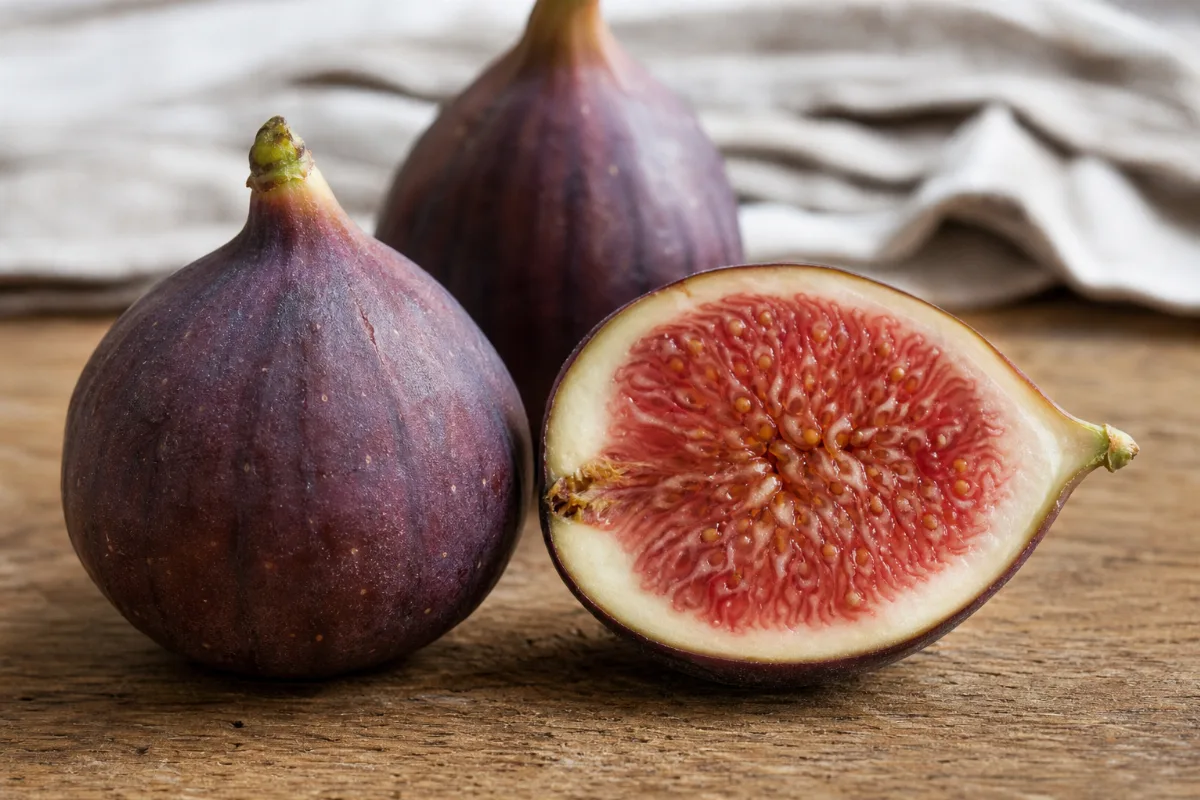
The common fig is the fruit of Ficus carica, a tree in the mulberry family (Moraceae). The soft, seedy fruit is eaten fresh or dried. People eat figs for sweetness, fiber and minerals, and some for bowel regularity. This page keeps the food separate from supplements and from hype, and says plainly where the research is thin.
Read this first
- Figs are a normal food, but any food can cause an allergic reaction. For trouble breathing or swelling of the face or throat, call 911. See food allergy basics and emergency signs. Fig allergy has been described in people sensitised to the weeping fig houseplant (Ficus benjamina). [5]
- The milky sap of the fig tree can cause painful skin burns when skin is then exposed to sunlight. This is about handling the tree, not eating the fruit. [10][11]
- People with kidney disease, or who take medicines that raise blood potassium, should ask their clinician about potassium-rich foods in general. [13]
- Honest summary: small trials of fig syrup or fig paste suggest a possible effect on constipation, but the evidence is limited and the forms differ from fresh figs. No source we read shows that figs prevent or treat a disease.
What is in it (USDA values)
| Nutrient | Per 100 g, raw | Per 1 large fig (64 g) | % Daily Value per large fig |
|---|---|---|---|
| Energy | 74 kcal | 47 kcal | not set |
| Fiber | 2.9 g | 1.9 g | 7% |
| Total sugars | 16.3 g | 10.4 g | not set |
| Potassium | 232 mg | 148 mg | 3% |
| Calcium | 35 mg | 22 mg | 2% |
| Magnesium | 17 mg | 11 mg | 3% |
| Copper | 0.07 mg | 0.04 mg | 5% |
| Manganese | 0.13 mg | 0.08 mg | 4% |
| Vitamin B6 | 0.11 mg | 0.07 mg | 4% |
| Vitamin C | 2.0 mg | 1.3 mg | 1% |
| Folate (DFE) | 6 µg | 4 µg | 1% |
| Vitamin K | 4.7 µg | 3.0 µg | 3% |
| Vitamin A (RAE) | 7 µg | 4 µg | under 1% |
Source: USDA FoodData Central, SR Legacy, "Figs, raw" [1]. The USDA household portion is 1 large fig (2-1/2 inch diameter), 64 g; other USDA portions are 1 medium (50 g) and 1 small (40 g). Per-fig values are our own scaling of the USDA per-100 g figures. % Daily Value uses the FDA 2016 Daily Values; values vary with variety, ripeness and storage. Our USDA data file covers raw figs only, so dried figs are not shown here.
Figs contain plant compounds called polyphenols. In one 2026 lab analysis, anthocyanins (the red-purple pigments) were mainly in the peel, and peel had higher antioxidant capacity than pulp. [8] Another 2026 lab study found leaves and twigs richer in many compounds than the fruit. [9] These are laboratory measurements; none of the studies we read shows that the compounds in figs act this way in the human body.
What research says
| Health goal | What the sources found | Strength of evidence | What was studied |
|---|---|---|---|
| Constipation | A 2025 randomized trial in 90 pregnant women with functional constipation found more bowel movements with fig syrup or fig-walnut syrup than placebo over 14 days. [2] A 2022 meta-analysis of fruit for functional constipation found kiwifruit improved stool consistency better than fig paste in three high-quality studies; it called for larger studies. [3] A 2021 narrative review said fig paste shortened gut transit time. [4] | Promising but limited | Fig syrup and fig paste, not fresh figs |
| Blood sugar and diabetes | Only mouse and rat studies of fig leaf extract were found; one mouse study reported lower blood glucose after sugar loads. [12] | Lab or animal only | Leaf extract in diabetic mice |
| "Antioxidant" or anti-inflammatory effects | Lab measurements of polyphenols and cell tests only. [8][9] | Lab or animal only | Fruit, leaf and twig extracts in the lab |
| Heart health, cholesterol, blood pressure | Proper evidence not found in the sources we read. | Insufficient evidence | Not applicable |
| Cancer prevention | A 2025 review of fig extracts looked at cell studies only. Proper evidence in people not found in the sources we read. | Lab or animal only | Extracts in cell studies |
Eaten as food vs taken as a supplement or extract. The constipation trials used syrup or paste, not whole fresh figs, and some mixed figs with walnut. [2][3] The diabetes work used leaf extract in animals, not the fruit. [12] Results from one form do not carry over to another. We did not read any trial of a fig capsule or powder.
How much is a normal serving
- The USDA household portions in our data are 1 large fig (64 g), 1 medium (50 g) and 1 small (40 g). [1] This is information, not a prescription.
- Official US cup-equivalents for fresh and dried fruit (MyPlate / Dietary Guidelines): Proper evidence not found in the sources we read, because we could not open those pages in full this round.
- Drying concentrates sugars, fiber and minerals: a 2025 lab study of fresh and sun-dried figs found this. [15] Dried figs therefore pack more sugar and energy into a small portion than fresh ones. See fresh, frozen and canned produce and fruit juice vs whole fruit.
- How cooking changes the nutrients in figs: Proper evidence not found in the sources we read.
Safety, allergy and medicines
- Allergy: a study of patients with clinical fig allergy found they reacted through sensitisation to airborne Ficus benjamina allergens, not to rubber latex, and heat destroyed most of the allergenicity of the extracts. [5] A 2020 case report described a child allergic to fresh fig with house dust mite sensitisation and negative latex tests; the authors suggested a link through plant enzymes. [6] Latex-fruit syndrome, in which people allergic to natural rubber react to some fruits, is described in a 2024 review, which does not list figs in its abstract. [7] So we cannot say figs are part of latex-fruit syndrome.
- Skin and sunlight: touching fig leaves or sap and then going into sun can cause blistering, burn-like skin reactions (phytophotodermatitis). Case reports describe this in people picking figs or pruning the tree. [10][11] This is about the tree, not eating the fruit. Wash sap off the skin and keep it out of the sun; a clinician should see a blistering reaction.
- Potassium, kidneys and medicines: MedlinePlus says fruits and vegetables are the richest sources of potassium and that people with poor kidney function should not eat too many potassium-rich foods; ACE inhibitors, ARBs and potassium-sparing diuretics can raise blood potassium. [13] Figs contain 232 mg per 100 g (USDA) [1], which is moderate. Anyone on these medicines or with kidney disease should ask a clinician, especially about dried figs, where potassium is more concentrated. See kidney disease, potassium and oxalates.
- Warfarin: USDA lists 4.7 µg of vitamin K per 100 g of raw figs [1]. We did not read a source that tells people on warfarin what to do about figs, so we make no claim. See foods and medicine interactions.
- Sugar: raw figs have 16.3 g of sugars per 100 g. [1] Dried figs are more concentrated [15]. People managing diabetes should ask their care team about portions.
- Sulphites in dried fruit: Proper evidence not found in the sources we read. Check the label if you are sensitive.
- Pregnancy: the fig-syrup trial was in pregnant women and reported effects on bowel movements only; we read no safety conclusions. [2] See foods in pregnancy.
- Fig leaf teas and sap products: the sap is phototoxic [10][11]; we did not read safety data on leaf teas.
Choosing, storing and food safety
- Choose fruit that is not bruised or damaged, and cut away bruised areas. [14]
- Keep perishable fresh produce in the refrigerator at 40°F or below. [14]
- Rinse under running water; do not use soap or produce wash. [14]
- Keep raw produce away from raw meat, poultry and seafood. [14]
Related pages
Health connections for Figs
What research links to eating or drinking this food, and how strong the evidence is. Many studies are observational or use juice, powder, oil or extracts rather than the food as eaten; each card says which.
Fiber and bowel regularity
Preliminary or mixedSmall trials of fig syrup and fig paste suggest more bowel movements in constipation, but the evidence is limited.
Supplements: Trials used fig syrup or paste, not supplements; a meta-analysis found kiwifruit did better than fig paste on stool consistency.
Everyday nutrients: fiber, potassium and minerals
Established roleFigs give some fiber, potassium, copper, manganese and vitamin B6 per serving, but no nutrient reaches 10% of the Daily Value in one large fig.
Supplements: Normal dietary role only; no source read shows that eating figs treats a disease.
Drying concentrates sugar and minerals
Established roleDried figs carry more sugar, fiber and minerals per bite than fresh ones.
Supplements: Applies to food form, not a supplement.
Plant compounds (polyphenols, anthocyanins)
Lab or animal research onlyLab studies measured polyphenols, with anthocyanins mainly in the peel; no human outcome was shown.
Supplements: No evidence that these compounds benefit people when figs are eaten.
Blood sugar and diabetes
Lab or animal research onlyOnly animal studies of fig leaf extract were found; nothing in people eating figs.
Supplements: Leaf extract is not the fruit; no human evidence found.
Latex-fruit syndrome: not shown for figs
Not enough evidenceA latex-fruit syndrome review does not name figs in its abstract, and the fig allergy patients studied were not sensitised to rubber latex.
Supplements: Unknown.
Connected topics
Open a group to see how each topic connects and how strong the evidence is.
Health goals (1)
- Digestive SupportPreliminary or mixed
Small trials of fig syrup or paste found more bowel movements in constipation; the evidence is limited and used forms other than fresh figs.
Body systems (4)
- Digestive SystemPreliminary or mixed
Fig syrup and paste were studied for constipation; limited evidence.
- Gut HealthPreliminary or mixed
Fig syrup and paste were studied for constipation; limited evidence.
- Immune SystemDocumented risk
Fig allergy has been described, so figs can trigger immune reactions in allergic people.
- Kidney & UrinaryDocumented risk
People with poor kidney function may need to limit potassium-rich foods; figs contain 232 mg per 100 g.
Body parts (4)
- ColonPreliminary or mixed
Fig paste was reported to shorten gut transit time in a narrative review; limited evidence.
- KidneysDocumented risk
Potassium-rich foods in general are a caution in kidney disease.
- Large IntestinePreliminary or mixed
Constipation trials with fig syrup or paste; limited evidence.
- SkinDocumented risk
Contact with fig sap or leaves followed by sunlight can cause blistering skin reactions; this concerns the tree, not the fruit.
Functional actions (1)
- Digestive SupportPreliminary or mixed
Fig syrup and fig paste increased bowel movements in small trials; limited evidence.
Root causes (1)
- Medication Side EffectsDocumented risk
Potassium-rich foods in general matter for people on ACE inhibitors, ARBs or potassium-sparing diuretics, or with kidney disease.
Conditions & symptoms (4)
- ConstipationPreliminary or mixed
A 2025 randomized trial of fig syrup in pregnant women with functional constipation and reviews of fig paste suggest a possible effect; evidence is limited and not for fresh figs.
- Constipation - FunctionalPreliminary or mixed
The trial enrolled pregnant women with functional constipation; fig syrup gave more bowel movements than placebo over 14 days.
- Food AllergyDocumented risk
Fig allergy has been described in people sensitised to Ficus benjamina and in a child with dust mite sensitisation.
- HyperkalemiaDocumented risk
Potassium-rich foods in general matter in kidney disease or with ACE inhibitors, ARBs or potassium-sparing diuretics (MedlinePlus); figs have 232 mg per 100 g.
Documented risks and interactions (4)
- Allergy to fig. Fig allergy has been described in people sensitised to the weeping fig houseplant (Ficus benjamina), and in a child with dust mite sensitisation.
- Skin burns from fig sap and leaves in sunlight. Contact with fig leaves or sap, then sun, can cause blistering (phytophotodermatitis). This is about the tree, not eating the fruit.
- Potassium, kidney disease and some blood pressure medicines. MedlinePlus says fruits are rich in potassium and that people with poor kidney function, or taking ACE inhibitors, ARBs or potassium-sparing diuretics, can have high blood potassium. Figs have 232 mg per 100 g.
- Sugar content. Raw figs have 16.3 g of sugars per 100 g, more concentrated in dried figs.
Frequently asked questions
Do figs help with constipation?
Small trials of fig syrup (in pregnant women) and fig paste suggest a possible effect, but the evidence is limited and used forms other than fresh figs. [2][3][4] A meta-analysis found kiwifruit did better than fig paste on stool consistency. [3]
Are figs good for diabetes?
We found no human trials of figs for blood sugar. Reports of lower glucose come from animal studies of fig leaf extract. [12] Raw figs contain 16.3 g of sugars per 100 g. [1]
Can fig trees burn your skin?
Yes, in a particular way. Fig leaves and sap contain compounds that, with sunlight, can cause blistering skin reactions; cases are reported in people picking figs or pruning trees. [10][11]
Are figs related to latex allergy?
Fig allergy has been linked to sensitisation to the weeping fig (Ficus benjamina), without latex sensitisation in the patients studied. [5] A latex-fruit syndrome review does not name figs in its abstract. [7]
Are dried figs as healthy as fresh?
Drying concentrates sugar, fiber and minerals. [15] That does not make them better or worse; the portion looks smaller but carries more sugar and potassium per bite. [1][13]
References
- U.S. Department of Agriculture. Figs, raw (FDC 173021), SR Legacy. April 2018 release. Read 2026-10-23.
- Valizadeh R et al. The effect of combined fig-walnut syrup on functional constipation in pregnant women: a randomized controlled trial. Nutr Metab 2025. PMID 39825362. Abstract read 2026-10-23.
- Effect of fruit intake on functional constipation: a systematic review and meta-analysis of randomized and crossover studies. Front Nutr 2022. PMID 36276840. Abstract read 2026-10-23.
- Fruits and their impact on the gut microbiota, gut motility and constipation. Food Funct 2021. PMID 34505614. Abstract read 2026-10-23.
- Cross-reactivity between Ficus benjamina latex and fig fruit in patients with clinical fig allergy. Clin Exp Allergy 2003. PMID 12859455. Abstract read 2026-10-23.
- Adverse reaction to Ficus carica: reported case of a possible cross-reactivity with Der p1. Clin Mol Allergy 2020. PMID 32518529. Abstract read 2026-10-23.
- Revisiting latex-fruit syndrome after 30 years of research: a comprehensive literature review and description of two cases. J Clin Med 2024. PMID 39064262. Abstract read 2026-10-23.
- Compositional differences in pulp and peel of brebas and figs (Ficus carica L.). Eur Food Res Technol 2026 (preprint record PPR1238845 read). Read 2026-10-23.
- LC-MS/MS-based phytochemical profiling of fig fruits, leaves and twigs. Food Chem 2026. PMID 42731162. Abstract read 2026-10-23.
- Botanical Briefs: Fig Phytophotodermatitis (Ficus carica). Cutis 2024. PMID 38820103. Abstract read 2026-10-23.
- Fig tree-induced phytophotodermatitis: a case report on the perils of a hobby. Cureus 2023. PMID 37581161. Abstract read 2026-10-23.
- Characterizing the antihyperglycemic activity and underlying mechanisms of the aqueous extract of the leaves from Ficus carica L.. Molecules 2026. PMID 42451577. Abstract read 2026-10-23.
- MedlinePlus. Potassium in diet. Read 2026-10-23.
- US Food and Drug Administration. Selecting and Serving Produce Safely. Read 2026-10-23.
- Nutritional composition, health benefits and quality of fresh and dried figs from Eastern Morocco. Sci Rep 2025. PMID 40118970. Abstract read 2026-10-23.