Bananas: Nutrients, What Research Shows and Safety
What bananas contain (USDA values), what research does and does not show for potassium, gut and exercise, plus allergy and kidney safety notes.
Content last updated . This page has not been medically reviewed.
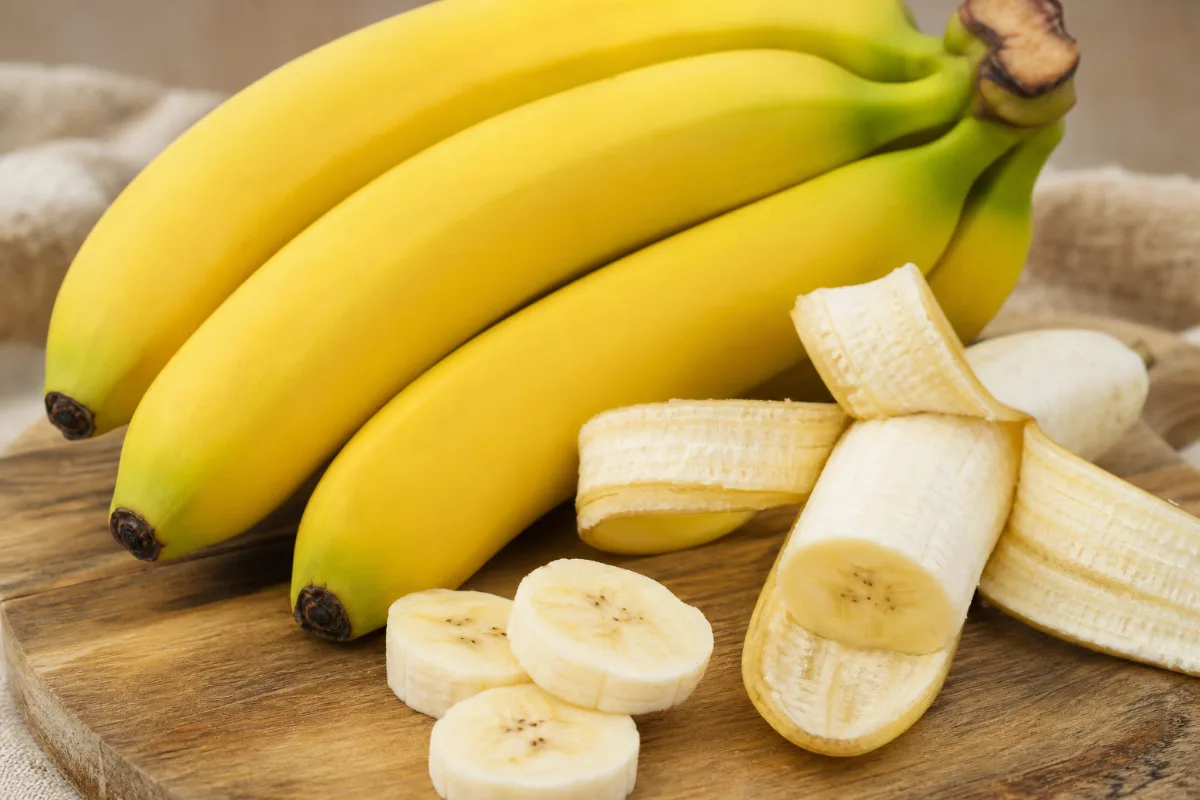
Bananas are the fruit of tall tropical plants in the genus Musa (the common dessert banana is often listed as Musa x paradisiaca), in the banana family (Musaceae). The soft pulp inside the peel is what people eat. People often eat bananas for potassium, fiber and an easy snack. This page keeps the food apart from supplements and from hype, and says plainly what research does and does not show.
Read this first
- Allergy is possible, and bananas are linked to latex-fruit allergy. If someone has trouble breathing or swelling of the face or throat after eating, call 911. See food allergy basics and emergency signs.
- Bananas are a well-known source of potassium. People with advanced kidney disease, or who take medicines that raise potassium, may be told to limit them by their clinician. The kidney charity NKF lists half a banana among its higher-potassium choices for people with kidney disease. [2]
- Eating bananas has not been shown to prevent or treat a disease. The best-studied topics (potassium and blood pressure, green banana and diarrhoea in small children, unripe banana flour and blood sugar) each have limits, explained below.
What is in it (USDA values)
USDA FoodData Central lists "Bananas, raw" (SR Legacy). [1] The serving below is the USDA household portion "1 medium (7 to 7-7/8 inches long)", 118 g. Serving values are the USDA per-100 g numbers scaled to 118 g.
| Nutrient | Per 100 g | Per medium banana (118 g) | % Daily Value per serving |
|---|---|---|---|
| Energy | 89 kcal | about 105 kcal | not set |
| Fiber | 2.6 g | about 3.1 g | about 11% |
| Total sugars | 12.2 g | about 14.4 g | not set |
| Vitamin B6 | 0.37 mg | about 0.44 mg | about 26% |
| Manganese | 0.27 mg | about 0.32 mg | about 14% |
| Vitamin C | 8.7 mg | about 10.3 mg | about 11% |
| Copper | 0.08 mg | about 0.09 mg | about 10% |
| Potassium | 358 mg | about 422 mg | about 9% |
| Magnesium | 27 mg | about 32 mg | about 8% |
| Folate (DFE) | 20 mcg | about 24 mcg | about 6% |
| Vitamin A (RAE) | 3 mcg | about 4 mcg | under 1% |
| Vitamin K | 0.5 mcg | about 0.6 mcg | under 1% |
% Daily Value uses the FDA 2016 Daily Values; values vary with variety, ripeness and storage. [1]
Bananas are low in vitamin K and vitamin A, according to the USDA numbers. Unripe (green) bananas are studied for "resistant starch", a starch that is not fully digested in the small intestine. Our sources for resistant starch are a human review of unripe banana flour (small, short trials) [7] and a mouse study of green banana resistant starch (lab/animal only). [8] We did not find a source we could read that measured other plant compounds in bananas, so we do not list them.
What research says
| Health goal | What the sources found | Strength of evidence | What was studied |
|---|---|---|---|
| Potassium and blood pressure | A 2013 BMJ meta-analysis of 22 trials (1,606 people) found higher potassium intake lowered blood pressure in adults with high blood pressure, but not in those without it. [5] | Promising but limited for bananas (the trials tested potassium intake in general, not banana studies) | Adults; the summary we read does not say how much was food versus supplement |
| Persistent diarrhoea in young children | One 2023 open-label trial in Bangladesh (135 children aged 6 to 35 months) found recovery by day 5 was 58% with green banana mixed into rice suji, 31% with rice suji and 58% with 75% rice suji; relapses were lower with green banana (7%) than with 75% rice suji (24%). [6] | Promising but limited (one trial, not blinded) | Green (unripe) banana cooked in a rice porridge, in children with persistent diarrhoea |
| Blood sugar and weight | A 2026 systematic review (15 studies, 10 to 154 adults, 3 days to 12 weeks) linked unripe banana flour's resistant starch to lower fasting glucose and body weight, but called the trials small and short. [7] | Insufficient evidence | Unripe banana flour, not ripe bananas |
| Muscle soreness after exercise | A 2026 review of 36 trials of plant foods and supplements (banana one of several) found some reduced soreness 24 to 72 hours after exercise, but inconsistent results and no consistent benefit for performance. [9] | Mixed | Physically active people; many different foods |
| Colitis (gut inflammation) | Green banana resistant starch reduced colitis signs in mice. [8] | Lab or animal only | Mice; not people |
| Preventing disease by eating fruit in general | Proper evidence not found in the sources we read for bananas specifically. | No good evidence of benefit shown for bananas alone | Not applicable |
Eaten as food vs taken as a supplement or extract. The potassium and normal nutrition information above applies to eating the fruit. The blood-sugar findings come from unripe banana flour, a processed powder, and the colitis finding comes from a purified starch fed to mice. None of these shows that a ripe banana does the same thing. We did not find a supplement trial that we could read, so we make no claim about banana capsules or extracts.
How much is a normal serving
USDA lists these household portions for raw bananas: one extra small (81 g), small (101 g), medium (118 g), large (136 g), 1 cup sliced (150 g) and 1 cup mashed (225 g). [1] This is information, not a prescription. We could not read the MyPlate fruit page in this round, so we do not state an official "cups of fruit per day" figure here. For potassium, the NHS states that adults aged 19 to 64 need 3,500 mg a day and that this can usually come from a normal diet. [4] MedlinePlus likewise says many people get the potassium they need from what they eat and drink. [3]
We did not find a source we could read that compares ripe, green, frozen, dried or banana-chip forms for health outcomes. Dried banana and chips are more concentrated in sugar and energy per gram than fresh fruit (this follows from water loss; we did not find a USDA figure for them in this round). See fresh, frozen and canned produce and fruit juice vs whole fruit.
Safety, allergy and medicines
- Allergy: Banana allergy is described in people in Thailand and Austria: the Thai adults mostly had whole-body reactions, while the Austrian adults more often had mouth symptoms only (oral allergy syndrome). The authors link reactions to a protein called thaumatin-like protein. [10] Researchers have also reported new possible banana allergens in a small group of allergic Thai adults. [12] For trouble breathing, widespread hives or swelling of the face or throat, call 911. [10]
- Latex-fruit syndrome: A 2024 review says 30 to 50% of people with natural rubber latex allergy also react to plant foods, particularly fresh fruits. [11] The abstract we read does not name bananas, so ask an allergist if you have a latex allergy and have reacted to fruit.
- Kidney disease and potassium: The National Kidney Foundation says people with high blood potassium may be told to limit higher-potassium foods, and lists half a banana among those foods; portion size matters, and a dietitian can help. [2] MedlinePlus says that with chronic kidney disease the kidneys may not remove extra potassium, so a special diet may be needed. [3]
- Medicines that raise potassium: MedlinePlus says some medicines can raise potassium. [3] A 2026 study of people taking renin-angiotensin-aldosterone system (RAAS) inhibitors (a class that includes ACE inhibitors and ARBs) found that adding another potassium-raising drug raised hyperkalaemia rates, with kidney disease and age 75 or older the strongest predictors. [14] We did not find a source we could read that tests bananas themselves with these medicines. Ask a pharmacist or doctor before changing potassium intake while on such medicines. See foods and medicine interactions.
- Too much potassium: The NHS says excess potassium can cause stomach pain, nausea and diarrhoea, and that older people, whose kidneys may clear potassium less well, should not take potassium supplements unless a doctor advises it. [4] This concerns supplements; we did not find a source describing harm from ordinary banana intake in people with healthy kidneys.
- Sugar and diabetes: USDA lists about 12 g of sugars per 100 g. [1] We did not find a source we could read on how banana ripeness affects blood sugar in people with diabetes. Proper evidence not found; a diabetes team can advise.
- Pregnancy and breastfeeding: Proper evidence not found in the sources we read. See foods in pregnancy: what official bodies advise.
- Babies and toddlers: Choking can happen with any firm food pieces; see foods for babies and toddlers.
Choosing, storing and food safety
- Pick fruit that is not bruised or damaged; cut away bruised areas and throw out fruit that looks rotten. [13]
- Rinse produce under running water, including items you peel, and do not use soap or produce wash. Washing reduces bacteria but does not remove all of them. [13]
- Refrigerate cut or peeled fruit, and keep fruit away from raw meat, poultry, seafood and their utensils. [13]
Related pages
Health connections for Bananas
What research links to eating or drinking this food, and how strong the evidence is. Many studies are observational or use juice, powder, oil or extracts rather than the food as eaten; each card says which.
Potassium in the diet
Established roleA medium banana gives about 422 mg of potassium (about 9% of the Daily Value). The NHS lists bananas first among potassium foods and says adults usually get enough from a normal diet.
Supplements: Not a supplement question: this is the normal dietary role of the mineral. Eating bananas is one way, not the only way, to get it.
Potassium intake and blood pressure
Preliminary or mixedA 2013 meta-analysis of 22 trials found higher potassium intake lowered blood pressure in adults with high blood pressure but not in those without it.
Supplements: The summary we read does not say how much of the intake was food versus supplement; it does not show bananas themselves lower blood pressure.
Fiber and vitamin B6 from bananas
Established roleA medium banana gives about 3.1 g of fiber (about 11% DV) and about 26% of the Daily Value for vitamin B6, plus manganese (about 14%) and vitamin C (about 11%).
Supplements: Nutrition information only; it is not proof that eating bananas treats any disease.
Green banana and persistent diarrhoea in young children
Preliminary or mixedOne open-label trial in 135 Bangladeshi children aged 6 to 35 months found 58% recovered by day 5 on green banana mixed into rice suji versus 31% on rice suji alone; relapses were lower than with 75% rice suji.
Supplements: One trial, not blinded; it does not show ripe bananas treat diarrhoea. Diarrhoea in young children needs medical advice.
Unripe banana flour, blood sugar and weight
Preliminary or mixedA 2026 systematic review of 15 small, short studies linked resistant starch in unripe banana flour to lower fasting glucose and body weight.
Supplements: Trials were small and short and the authors call for longer studies; applies to the flour, not ripe bananas.
Muscle soreness after exercise
Preliminary or mixedA 2026 review of 36 trials of plant foods and supplements (banana among several) found inconsistent results, with some less soreness 24 to 72 hours after exercise and no consistent benefit for performance.
Supplements: Results are mixed and not specific to bananas.
Green banana resistant starch and colitis
Lab or animal research onlyGreen banana resistant starch reduced colitis signs in mice.
Supplements: Mouse study; no human evidence read.
Sugar content and diabetes
Not enough evidenceUSDA lists about 12 g of sugars per 100 g. Proper evidence not found in the sources we read on how ripeness affects blood sugar in people with diabetes.
Supplements: Unknown.
Connected topics
Open a group to see how each topic connects and how strong the evidence is.
Health goals (3)
- Blood Pressure SupportPreliminary or mixed
More potassium intake lowered blood pressure in adults with high blood pressure in a 2013 meta-analysis; bananas were not tested directly.
- Digestive SupportPreliminary or mixed
Green banana in rice porridge in one trial of children with persistent diarrhoea.
- Heart HealthPreliminary or mixed
Potassium supports heart muscle function (NHS); no source read shows bananas prevent heart disease.
Body systems (6)
- Kidney & UrinaryDocumented risk
People with kidney disease may be told to limit higher-potassium foods, and the NKF lists half a banana among them.
- Cardiovascular SystemPreliminary or mixed
Potassium supports normal heart muscle function (NHS); the blood pressure trials tested potassium intake, not bananas.
- Digestive SystemPreliminary or mixed
One open-label trial found green banana in rice porridge helped young children with persistent diarrhoea; ripe bananas were not tested.
- Gut HealthPreliminary or mixed
Green banana in porridge helped children with persistent diarrhoea in one trial; resistant starch effects in the gut were seen in mice only.
- Heart & CirculationPreliminary or mixed
Bananas supply potassium; a 2013 meta-analysis found higher potassium intake lowered blood pressure in adults with high blood pressure, but it did not test bananas.
- Urinary SystemDocumented risk
Kidney function determines how well extra potassium is removed; people with kidney disease should follow their care team's advice.
Body parts (3)
- KidneysDocumented risk
Kidneys clear extra potassium; with kidney disease the NKF says higher-potassium foods, including half a banana, may need limiting.
- GutPreliminary or mixed
One trial in children with persistent diarrhoea used green banana in porridge; lab data in mice on green banana starch.
- HeartEstablished role
Potassium supports normal heart muscle function (NHS); bananas are one source.
Root causes (1)
- Medication Side EffectsDocumented risk
MedlinePlus says some medicines can raise potassium, and a 2026 study of RAAS inhibitor users linked adding another potassium-raising drug to more hyperkalaemia. Ask a pharmacist; bananas themselves were not tested.
Conditions & symptoms (3)
- Food AllergyDocumented risk
Banana allergy is described, from mouth symptoms to whole-body reactions; latex-allergic people may also react to some fresh fruits.
- HyperkalemiaDocumented risk
People with kidney disease or on potassium-raising medicines may be told to limit higher-potassium foods; the NKF lists half a banana among them.
- DiarrheaPreliminary or mixed
One open-label trial in children aged 6 to 35 months with persistent diarrhoea used green banana mixed into rice porridge; it does not show ripe bananas treat diarrhoea.
Documented risks and interactions (4)
- Potassium, kidney disease and medicines. People with kidney disease may be told to limit higher-potassium foods; the NKF lists half a banana among them. MedlinePlus says some medicines can raise potassium.
- Banana allergy and latex-fruit syndrome. Banana allergy ranges from mouth symptoms to whole-body reactions. A 2024 review says 30-50% of people with latex allergy also react to plant foods, particularly fresh fruits.
- Too much potassium from supplements. The NHS says excess potassium can cause stomach pain, nausea and diarrhoea and that older people should not take potassium supplements unless a doctor advises.
- Produce food safety. FDA advises rinsing produce under running water without soap and refrigerating cut fruit.
Frequently asked questions
Are bananas the best food for potassium?
Bananas are a well-known source, and the NHS lists them first among potassium foods. [4] USDA shows about 422 mg in a medium banana, around 9% of the Daily Value. [1] Many other foods also contain potassium, and the NHS says it is found in most types of food. [4]
Do bananas lower blood pressure?
Not shown directly. A meta-analysis found more potassium intake lowered blood pressure in adults with high blood pressure, but it tested potassium intake in general, not bananas. [5] Ask your clinician before changing diet for blood pressure.
Are bananas good for diarrhoea?
One open-label trial in Bangladesh found green banana mixed into rice porridge helped small children with persistent diarrhoea recover. [6] This is one trial in a specific group and used unripe banana. Diarrhoea in babies and young children needs medical advice.
Can people with kidney disease eat bananas?
It depends on their blood potassium and treatment. The NKF says a provider may advise limiting higher-potassium foods and lists half a banana among them, and that a dietitian can help. [2]
Are bananas linked to latex allergy?
Latex-fruit syndrome is a recognised pattern in which people with latex allergy react to some fresh fruits. [11] Banana allergy is also described on its own. [10] An allergist can test for this.
References
- U.S. Department of Agriculture. FoodData Central: Bananas, raw (SR Legacy, FDC ID 173944). April 2018 release. Read 2026-10-23.
- National Kidney Foundation. Potassium in Your CKD Diet. Last updated May 5, 2023. Read 2026-10-23.
- MedlinePlus (US National Library of Medicine). Potassium. Last updated September 8, 2025. Read 2026-10-23.
- NHS. Vitamins and minerals: others (potassium). Read 2026-10-23.
- Aburto NJ et al. Effect of increased potassium intake on cardiovascular risk factors and disease: systematic review and meta-analyses. BMJ 2013. PMID 23558164. Abstract summary read via Europe PMC 2026-10-23.
- Sarmin M et al. Open-label, randomised controlled trial found that a green banana mixed rice suji diet was most effective for persistent diarrhoea in children in Bangladesh. Acta Paediatr 2023. PMID 37144517. Abstract read 2026-10-23.
- Isyrofi AN et al. Clinical and mechanistic evidence on metabolic effects of oat beta-glucan, rice bran, and unripe banana flour: a systematic review. J Nutr Sci 2026. PMID 42559073. Abstract read 2026-10-23.
- He X et al. Gut microbiota-derived propionate mediates the protective effects of green banana resistant starch on ulcerative colitis. Food Res Int 2026. PMID 42692662. Abstract read 2026-10-23 (mouse study).
- Nguyen DHN et al. Plant-derived whole foods and food-based supplements on post-exercise recovery in physically active individuals: a systematic review of human intervention trials. Nutrients 2026. PMID 42797032. Abstract read 2026-10-23.
- Sompornrattanaphan M et al. A proposed thaumatin-like protein (TLP) syndrome: sensitization patterns, reaction severity, and multiple-fruit reactivity. Allergol Int 2026. PMID 42595651. Abstract read via Europe PMC 2026-10-23.
- Menon N et al. Latex fruit syndrome and periodontitis: a missing link. J Pharm Bioallied Sci 2024. PMID 40061788. Abstract read via Europe PMC 2026-10-23.
- Sangsuwan P et al. Proteomic and allergenomic profiling of banana (Musa spp.): identification of potential novel allergens in a Thai adult banana allergy cohort. J Asthma Allergy 2025. PMID 41292670. Abstract read via Europe PMC 2026-10-23.
- U.S. Food and Drug Administration. Selecting and Serving Produce Safely. Read 2026-10-23.
- Almalki AH et al. SGLT2 inhibitors and hyperkalemia-related discontinuation of RAAS inhibitors. Pharmacy (Basel) 2026. PMID 42506781. Abstract read via Europe PMC 2026-10-23.