Apricots: Nutrients, What Research Shows and Safety
What apricots contain, what research says about eating them, and the real safety points: apricot kernels and cyanide, pollen-related allergy, and dried apricots.
Content last updated . This page has not been medically reviewed.
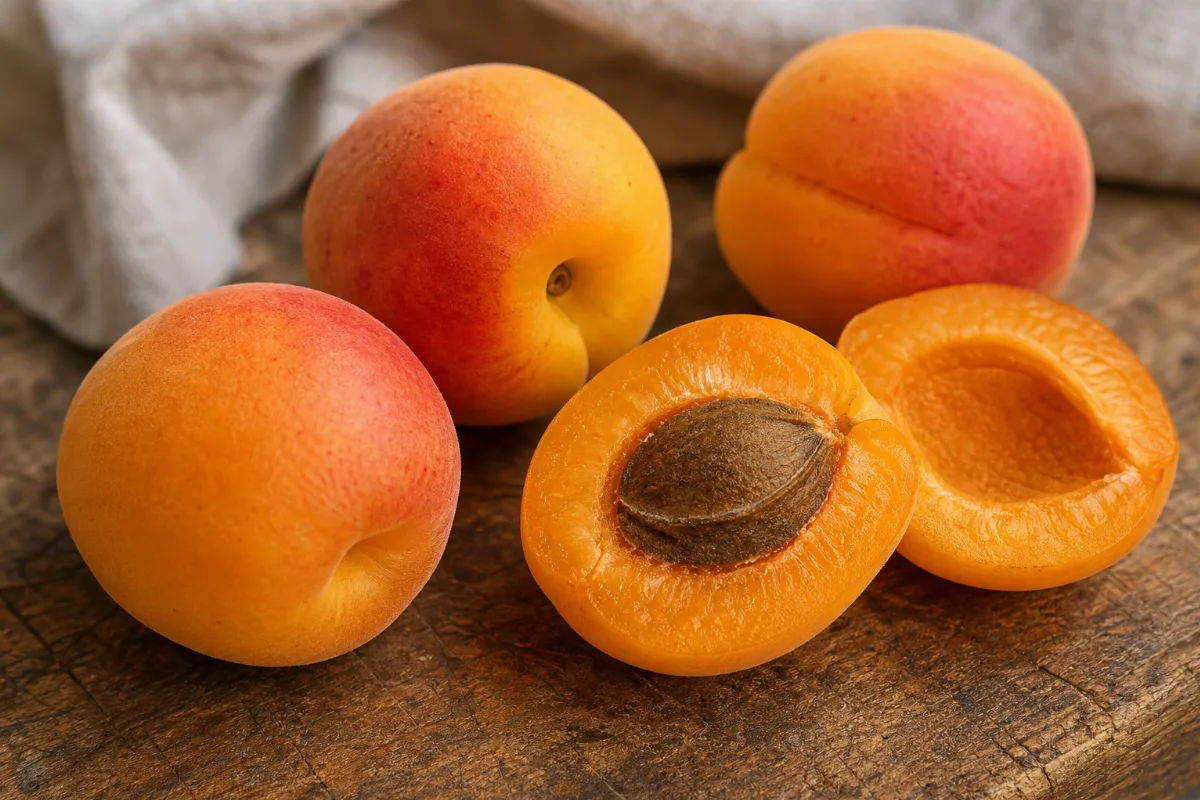
Apricots are the fruit of Prunus armeniaca, a tree in the rose family (Rosaceae), the same family as peaches, plums and cherries. The soft orange flesh is eaten fresh, canned or dried. People eat apricots mainly for their vitamin A content (from carotenoids, the orange plant pigments), fiber and potassium. This page keeps the fruit apart from apricot kernels and from supplements, and it does not use hype words.
Read this first
- Do not eat raw apricot kernels (the seed inside the stone), and do not treat "vitamin B17" or laetrile products as a food or medicine. Kernels contain amygdalin, which can release cyanide. EFSA set a cyanide safety limit of 20 micrograms per kg of body weight for a single sitting; it estimated that a small fraction of one kernel could pass the limit for a toddler. [2][3]
- Allergy is possible. Apricot allergy, usually mouth itching (oral allergy syndrome), has been linked to a protein that also occurs in peach. For trouble breathing or swelling of the face or throat, call 911. See food allergy basics and emergency signs. [4]
- Honest summary: eating more fruit and vegetables overall is linked to lower disease risk in large observational studies, but we found no trials that test apricots alone. [5]
What is in it (USDA values)
| Nutrient | Per 100 g | Per serving (1 cup, sliced, 165 g) | % Daily Value per serving |
|---|---|---|---|
| Energy | 48 kcal | 79 kcal | n/a |
| Fiber | 2.0 g | 3.3 g | 12% |
| Total sugars | 9.24 g | 15.2 g | n/a |
| Vitamin C | 10.0 mg | 16.5 mg | 18% |
| Vitamin A (RAE) | 96 µg | 158 µg | 18% |
| Beta-carotene | 1094 µg | 1805 µg | n/a (USDA lists no %DV) |
| Potassium | 259 mg | 427 mg | 9% |
| Copper | 0.08 mg | 0.13 mg | 15% |
| Vitamin E | 0.89 mg | 1.47 mg | 10% (rounded) |
| Vitamin K | 3.3 µg | 5.4 µg | 5% |
| Folate (DFE) | 9 µg | 15 µg | 4% |
Source: USDA FoodData Central, raw apricots, SR Legacy item 171697 [1]. The serving is the USDA household portion; other USDA portions are 1 cup of halves (155 g) and one apricot (35 g). Serving values are our arithmetic from the USDA per-100 g numbers. % Daily Value uses the FDA 2016 Daily Values; values vary with variety, ripeness and storage.
The orange color comes from carotenoids; USDA measured beta-carotene, alpha-carotene, beta-cryptoxanthin and lutein plus zeaxanthin in raw apricots. [1] We did not find a human trial in the sources we read that tests apricot carotenoids on a health outcome, so treat any further claims as lab-level or unproven.
What research says
| Health goal | What the sources found | Strength of evidence | What was studied |
|---|---|---|---|
| Heart disease, cancer and early death | A 2017 meta-analysis of 95 prospective studies linked higher fruit and vegetable intake with lower risk. It named apples, pears, citrus and some vegetables, not apricots. [5] | Promising but limited (observational; apricots not singled out) | Fruit and vegetables combined, in many countries |
| Vitamin A intake | USDA lists 96 µg RAE per 100 g, 11% of the Daily Value. [1] | Established (nutrient content); no trial of apricots for vitamin A status was read | Raw fruit, laboratory analysis |
| Bowel regularity | Apricots contain fiber (2 g per 100 g). [1] We did not find a trial of apricots for constipation. | Insufficient evidence | Not studied in the sources read |
| Blood sugar control | No trial of apricots was read. | Insufficient evidence | Not applicable |
| Cancer treatment with apricot kernels or laetrile | NCI concludes laetrile has no anticancer activity in human trials and can cause cyanide poisoning. [3][7] | No good evidence of benefit | Laetrile or amygdalin products, not the fruit |
| Anti-cancer effects of amygdalin | A 2023 review describes cell and animal findings and says the evidence does not support amygdalin supplements. [7] | Lab or animal only | Cell and animal studies |
Eaten as food vs taken as a supplement or extract. Everything useful above is about eating the fruit as part of a mixed diet. Kernel products, "B17" and laetrile are a different thing: they are not a vitamin, and the human trial evidence is negative. [3][7]
How much is a normal serving
For information only, not a prescription. The USDA household portion for raw apricots is one apricot (35 g) or 1 cup sliced (165 g). [1] NHS says one portion of fruit and vegetables is 80 g and that fresh, frozen, canned, dried or juiced forms can count. [6] We could not read the USDA MyPlate page, so we give no MyPlate cup figure. Dried and canned forms are different products with different sugar and water content; check the label.Safety, allergy and medicines
- Apricot kernels and cyanide. EFSA's 2016 safety limit for cyanide (acute reference dose, 20 µg per kg of body weight) came from work on apricot kernels, and EFSA's 2019 opinion confirmed it applies whatever the food. [2] Its 2019 list of foods of concern includes apricot kernels and canned stone fruits and stone-fruit spirits. [2] The flesh of the fruit is not named as a concern.
- Laetrile and "vitamin B17". NCI reports that laetrile can release hydrogen cyanide, with symptoms such as nausea, vomiting, liver damage, low blood pressure, coma and death. Eating raw almonds, crushed fruit pits, or high oral doses of vitamin C can raise the risk. It is not approved in the US. [3]
- Allergy. In a 2000 study of 30 people with confirmed apricot allergy, all had antibodies to a lipid transfer protein that is about 94% similar to the one in peach. The authors concluded it is the major apricot allergen and cross-reacts strongly with peach. [4] People allergic to peach may therefore react to apricot. We did not read a source on latex-fruit syndrome for apricot.
- Medicines. We did not find a source we could read describing a medicine interaction with apricots as a food, so we make no claim either way. A pharmacist can check; see foods and medicine interactions.
- Dried apricots and sulphites. Dried apricots are often preserved with sulphur dioxide, and sulphites can trigger asthma in sensitive people. We could not read an official FDA page to cite, so check the label for "sulphites" and ask a clinician if you are sensitive. Proper evidence not found in the sources we read for how much a typical dried apricot contains.
- Potassium and kidney disease. Apricots contain potassium (259 mg per 100 g). [1] People on potassium-restricting medicines or with kidney disease should ask their clinician; see kidney disease, potassium and oxalates.
- Pregnancy. We did not find a source we could read that singles out apricot flesh in pregnancy. General advice is in foods in pregnancy. Kernel products should be avoided by anyone, as above.
- Pesticide residues. We did not read a USDA or EWG source on apricots, so we say nothing here beyond washing (below).
Choosing, storing and food safety
- Pick fruit that is not bruised or damaged; bag it apart from raw meat. [8]
- Keep cut or perishable produce in a fridge at 40°F (4°C) or below. [8]
- Rinse under running water; do not use soap or produce wash; dry with a clean towel; cut away bruised areas. [8]
Related pages
Health connections for Apricots
What research links to eating or drinking this food, and how strong the evidence is. Many studies are observational or use juice, powder, oil or extracts rather than the food as eaten; each card says which.
Vitamin A and vitamin C intake
Established roleRaw apricots provide vitamin A (from carotenoids) and vitamin C; a 165 g cup gives about 18% of the Daily Value of each.
Supplements: Not a supplement question; the vitamins are covered on their own pages. No trial of apricots for vitamin status was read.
Fruit and vegetable pattern and long-term disease risk
Preliminary or mixedHigher total fruit and vegetable intake is linked to lower risk of heart disease, cancer and early death in large observational studies; apricots were not singled out.
Supplements: Not applicable; evidence is about whole foods in the diet.
Fiber and potassium
Preliminary or mixedApricots contain 2.0 g fiber and 259 mg potassium per 100 g.
Supplements: No apricot-specific trial read; insufficient evidence for a health effect.
Carotenoids (orange pigments)
Not enough evidenceUSDA measured beta-carotene, alpha-carotene, beta-cryptoxanthin and lutein plus zeaxanthin in raw apricots.
Supplements: Not applicable.
Dried apricots and sulphites
Not enough evidenceDried apricots may be preserved with sulphites, which can affect sensitive people. We could not read an official source, so this is a label-checking note only.
Supplements: Proper evidence not found in the sources we read.
Potassium and kidney disease or potassium-restricting medicines
Not enough evidenceApricots contain potassium; people told to limit potassium should ask a clinician. No source read quantified the risk for apricots.
Supplements: Not applicable.
Connected topics
Open a group to see how each topic connects and how strong the evidence is.
Body systems (2)
- Digestive SystemPreliminary or mixed
Apricots contain fiber (2 g per 100 g), but no trial of apricots for digestion was read.
- Wellness & PreventionPreliminary or mixed
Large observational studies link higher overall fruit and vegetable intake with lower disease risk; apricots alone were not tested.
Body parts (1)
- EyesEstablished role
Vitamin A is needed for vision and apricots contain it as carotenoids (USDA); no apricot trial on eye outcomes was read.
Functional actions (1)
- AntioxidantLab or animal research only
Apricots contain carotenoids with antioxidant behaviour in the lab; we read no human trial showing a health effect.
Root causes (3)
- Poor DietPreliminary or mixed
Low fruit and vegetable intake is linked to higher disease risk in observational studies; eating more is a diet-pattern question.
- Medication Side EffectsDocumented risk
Raw kernel products and laetrile can cause cyanide toxicity; this is a safety caution, not a medicine interaction with the fruit.
- Nutrient DeficiencyEstablished role
Apricots supply vitamin A and C in food form; they are one of many sources and no apricot-specific deficiency trial was read.
Habits (1)
- Balanced NutritionPreliminary or mixed
NHS says fresh, frozen, canned, dried or juiced fruit can count toward 5 A Day; observational studies link fruit and vegetable intake with lower risk.
Conditions & symptoms (2)
- Food AllergyDocumented risk
Apricot allergy is documented and cross-reacts with peach.
- Vitamin A DeficiencyDeficiency link
Apricots provide vitamin A (from carotenoids); one food among many sources, no apricot trial read.
Documented risks and interactions (4)
- Apricot kernels and cyanide. Raw apricot kernels contain amygdalin that can release cyanide. EFSA set a single-sitting limit of 20 micrograms per kg body weight and its work on kernels showed small amounts can exceed it.
- Laetrile or 'vitamin B17' for cancer. Laetrile (amygdalin) is not a vitamin. NCI found no anticancer activity in human trials, and it can cause cyanide poisoning.
- Apricot allergy and cross-reaction with peach. In 30 people with apricot allergy, all reacted to a lipid transfer protein about 94% similar to peach's, so peach-allergic people may react to apricot.
- Washing and food safety. Rinse fresh produce under running water, no soap; refrigerate cut produce at 40 F or below.
Frequently asked questions
Are apricot kernels safe to eat?
No safe amount is established. EFSA calculated that a small part of one kernel could exceed its cyanide limit for a toddler and under half a large kernel for an adult. [2]
Is "vitamin B17" a real vitamin that helps against cancer?
No. B17 is another name for laetrile or amygdalin. NCI found no anticancer activity in human trials and documents cyanide toxicity. [3]
Why does apricot make my mouth itch?
It may be oral allergy syndrome. A study of 30 people with apricot allergy found a protein that closely matches peach protein, so peach allergy and apricot allergy often go together. [4] Seek urgent help for breathing trouble or swelling.
Do apricots count toward my fruit and vegetables?
Yes, NHS says fresh, frozen, canned, dried or juiced fruit can count. [6] Large studies link higher fruit and vegetable intake with lower risk, but they are observational and do not prove cause. [5]
Are dried apricots as healthy as fresh?
We found no trial comparing them. Dried fruit is more concentrated, and may contain sulphites; read the label. See fresh, frozen and canned produce.
References
- US Department of Agriculture. FoodData Central: Apricots, raw (SR Legacy, FDC 171697). April 2018 release. Read 2026-10-23.
- EFSA CONTAM Panel. Evaluation of the health risks related to the presence of cyanogenic glycosides in foods other than raw apricot kernels. EFSA Journal 2019;17(4). It restates the 2016 apricot-kernel opinion (EFSA Journal 2016;14(4), doi 10.2903/j.efsa.2016.4424, which we could not open directly). Read 2026-10-23.
- National Cancer Institute. Laetrile/Amygdalin (PDQ). Updated 2022-06-14. Read 2026-10-23.
- Pastorello EA et al. Evidence for a lipid transfer protein as the major allergen of apricot. J Allergy Clin Immunol 2000;105:371-377. PMID 10669861. Abstract read 2026-10-23.
- Aune D et al. Fruit and vegetable intake and the risk of cardiovascular disease, total cancer and all-cause mortality: a systematic review and dose-response meta-analysis of prospective studies. Int J Epidemiol 2017;46:1029-1056. PMID 28338764. Abstract read 2026-10-23.
- NHS. Why 5 A Day?. Last reviewed 2026-09-30. Read 2026-10-23.
- Spanoudaki M et al. Amygdalin as a Promising Anticancer Agent: Molecular Mechanisms and Future Perspectives for the Development of New Nanoformulations for Its Delivery. Int J Mol Sci 2023. PMID 37762572. Abstract read 2026-10-23.
- US Food and Drug Administration. Selecting and Serving Produce Safely. Content current as of 2024-03-05. Read 2026-10-23.