Apples: Nutrients, What Research Shows and Safety
What research shows about eating apples: fiber, blood fats, heart and diabetes studies, juice versus whole fruit, pollen allergy and food safety.
Content last updated . This page has not been medically reviewed.
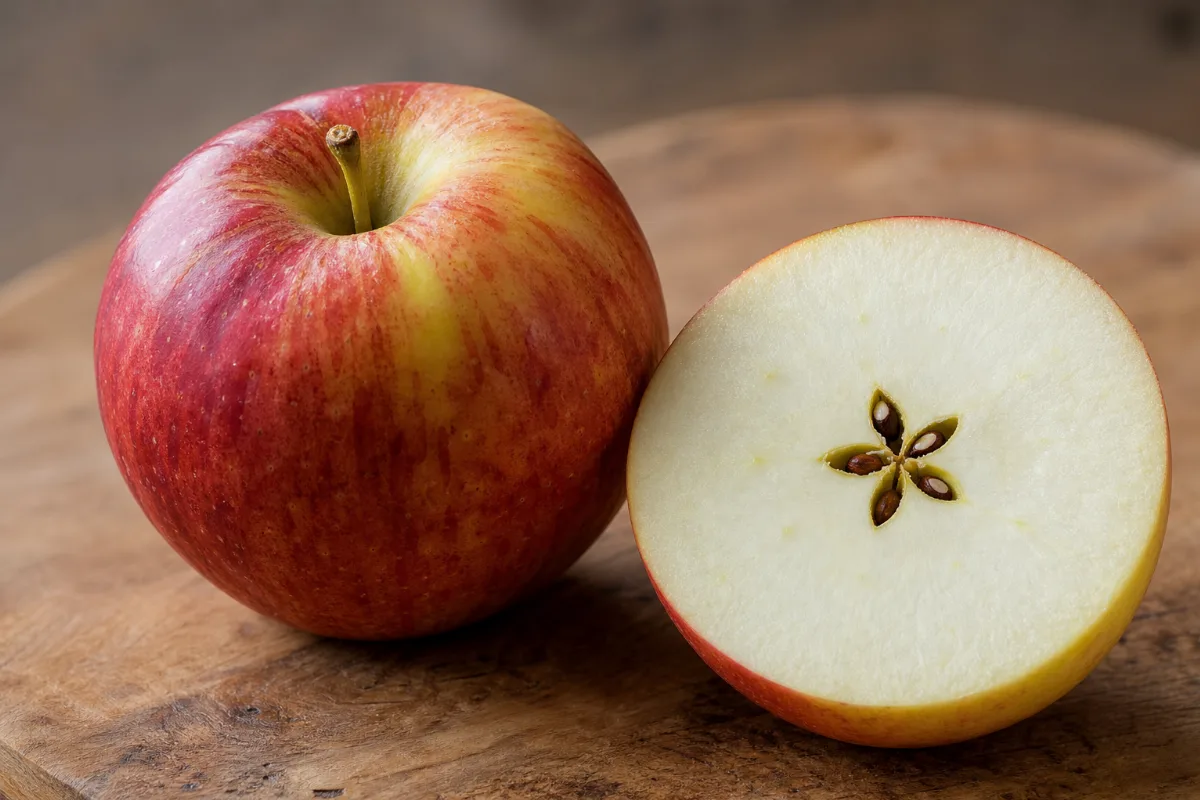
The apple is the fruit of Malus domestica, a tree in the rose family (Rosaceae), and is a "pome" fruit, like the pear. The flesh and usually the skin are eaten. People eat apples for fiber, for everyday nutrition and because large studies link fruit-rich diets with better health. This page keeps the whole food apart from juice, extracts and hype.
Read this first
- Apples are an everyday food. A true food allergy is possible. For trouble breathing or swelling of the face or throat, call 911 (999 in the UK). See food allergy basics and emergency signs. [11]
- An itchy mouth after raw apple, in people with hay fever, is usually pollen-food allergy (oral allergy syndrome), which is often milder; well-cooked fruit may be tolerated. [10][11]
- Studies of whole fruit eating are mostly observational (they show an association, not proof). Trials of apple products on cholesterol show small changes. [2][4]
- We did not find a source we could read describing a medicine interaction with apples as a food.
What is in it (USDA values)
| Nutrient | Per 100 g | Per 1 medium apple (182 g) | % Daily Value per medium apple |
|---|---|---|---|
| Energy | 52 kcal | 95 kcal | n/a |
| Dietary fiber | 2.4 g | 4.4 g | 16% |
| Total sugars | 10.4 g | 18.9 g | n/a |
| Carbohydrate | 13.8 g | 25.1 g | 9% |
| Vitamin C | 4.6 mg | 8.4 mg | 9% |
| Potassium | 107 mg | 195 mg | 4% |
| Copper | 0.03 mg | 0.05 mg | 6% |
| Vitamin K | 2.2 mcg | 4.0 mcg | 3% |
| Vitamin E | 0.18 mg | 0.33 mg | 2% |
| Folate (DFE) | 3 mcg | 5 mcg | 1% |
| Vitamin A (RAE) | 3 mcg | 5 mcg | 1% |
| Water | 85.6 g | 156 g | n/a |
Source: USDA FoodData Central, "Apples, raw, with skin" (SR Legacy). [1] The medium apple is the USDA household portion (3 inch diameter, 182 g); the per-serving figures are calculated from the per-100 g values. % Daily Value uses the FDA 2016 Daily Values; values vary with variety, ripeness and storage.
Apples are best described as a moderate source of fiber and a small source of most vitamins. Apple is rich in plant compounds called polyphenols. Reviews describe antioxidant and other effects of these compounds, but much of that evidence comes from laboratory and animal work, with some human trials. [5][6] Having a compound in a food does not prove that eating the food treats a disease.
What research says
| Health goal | What the sources found | Strength of evidence | What was studied |
|---|---|---|---|
| Heart disease, stroke and early death | A 2017 meta-analysis of 95 studies linked higher fruit and vegetable intake with lower risk, and reported inverse associations for apples and pears with cardiovascular disease and all-cause mortality. [2] | Promising but limited (association, not proof) | Large groups of adults followed over time; apples and pears grouped |
| Blood cholesterol | A 2022 meta-analysis of 18 trials: total and LDL cholesterol fell slightly but not significantly overall (about 2.7 and 2.8 mg/dL); it was significant against a placebo and in people with high starting levels. HDL fell slightly (about 1 mg/dL). [4] | Mixed | Whole apple, apple extract and apple juice trials combined |
| Type 2 diabetes risk | A 2021 meta-analysis of cohort studies found an inverse association for apples (and apples and pears), but said most subtype findings rest on few studies. [3] | Promising but limited (association) | Cohort studies of usual diet |
| Blood sugar, inflammation, blood pressure | The 2022 trial meta-analysis found glucose, insulin, CRP and blood pressure mostly unaffected. [4] | No good evidence of benefit | Apple products in trials of at least a week |
| Feeling full, weight | A 2026 crossover study in 64 children aged 4 to 6 found apple slices, purée and juice (matched for energy) had similar effects on fullness. [8] A review notes that food form can change appetite responses. [9] | Insufficient evidence | Short meal studies |
| Cancer, brain health, asthma and other uses | Reviews list associations and laboratory mechanisms; they are not proof of prevention. [5][6] | Lab or animal only for many mechanisms | Cells, animals and mixed human studies |
Eaten as food vs taken as a supplement or extract. The population studies are about eating apples as part of a diet. The cholesterol trials combined whole apples with extracts and juice, so the results do not tell us what a single apple does on its own. [4] Apple extracts and apple cider vinegar are different products and are not assessed here.
How much is a normal serving
The USDA household portions for raw apple are 1 medium apple (182 g), 1 cup of slices (109 g) or 1 cup quartered or chopped (125 g). [1] This is information, not a prescription. We could not read the current US fruit-group figures in the sources we reached, so we do not quote them here.- Juice: Apple juice has less fiber than the whole fruit. A 2022 review of 20 trials of cloudy apple juice reported better markers of heart disease risk, mainly oxidative stress, in moderate use. [7] See fruit juice vs whole fruit.
- Fresh, frozen, canned, dried: see fresh, frozen and canned produce. We did not find a source we read on how cooking changes apple nutrients: Proper evidence not found.
Safety, allergy and medicines
- Pollen-food allergy (oral allergy syndrome): NHS says it causes an itchy mouth and throat after raw fruit, vegetables or nuts, is usually not serious, and well-cooked fruit and vegetables can help. [11] An international expert consensus (2024) advises avoiding the raw food that caused the reaction, but not all possibly cross-reactive foods, and recommends epinephrine for people with severe symptoms beyond the mouth and throat. [10]
- Serious allergic reaction: swelling of the lips, mouth, throat or tongue, a tight throat, fast breathing or fainting is an emergency; call 911 (999 in the UK). [11]
- Medicines: we did not find a source we could read about an interaction between apples as a food and medicines. A pharmacist can check; see foods and medicine interactions.
- Sugar: a medium apple has about 19 g of natural sugars with 4.4 g of fiber. [1] People with diabetes can see foods for blood sugar control.
- Apple juice and arsenic: the US FDA has an action level of 10 parts per billion for inorganic arsenic in apple juice, to help protect public health. [12]
- Pesticide residues: a 2026 study of Polish monitoring data and a 2026 study of apples in China found residues generally within legal limits. [13][15] A 2025 review found many checks above EU limits in some regions (about 12.5% in North America, higher elsewhere). [14] Washing does not remove everything (see below).
- Pregnancy: we did not find a source we read warning against apples in normal food amounts. See foods in pregnancy.
- Seeds, bloating (FODMAP), tooth effects: not assessed because we did not read a source on them.
Choosing, storing and food safety
- Rinse apples under running water, even if you will peel them; do not use soap or produce wash. Scrub firm produce with a clean brush. [16]
- Refrigerate cut apples and pre-cut or packaged produce at 40 F (about 4 C) or below. [16]
- Washing reduces bacteria but does not remove them entirely. [16]
Related pages
Health connections for Apples
What research links to eating or drinking this food, and how strong the evidence is. Many studies are observational or use juice, powder, oil or extracts rather than the food as eaten; each card says which.
Fruit intake and heart disease risk
Preliminary or mixedLarge studies link higher fruit and vegetable intake, including apples and pears, with lower heart disease and early death. This shows association, not proof.
Supplements: Not applicable to supplements; this concerns eating apples as food.
Blood cholesterol
Preliminary or mixedIn 18 trials of apple products, total and LDL cholesterol fell slightly but not significantly overall; the fall was significant against placebo and in people with high starting levels. HDL fell slightly.
Supplements: Results are for apple products combined, not one apple.
Fiber in a medium apple
Established roleA medium apple has about 4.4 g of fiber, about 16% of the Daily Value.
Supplements: Food source of fiber; not a treatment.
Type 2 diabetes risk
Preliminary or mixedCohort studies show an inverse association for apples, but most fruit-subtype findings rest on few studies.
Supplements: Association, not proof.
Blood sugar, blood pressure and inflammation markers
Not enough evidenceIn the 2022 trial meta-analysis, glucose, insulin, CRP and blood pressure were mostly unaffected by apple products.
Supplements: No good evidence of benefit on these markers.
Fullness and weight
Not enough evidenceIn a children's crossover study, apple slices, purée and juice had similar effects on fullness; the evidence for weight is limited.
Supplements: Insufficient evidence.
Plant compounds (polyphenols) and other claimed effects
Lab or animal research onlyReviews describe antioxidant and other effects of apple polyphenols, with much evidence from lab and animal work.
Supplements: Not tested as a single product in the sources read.
Apple juice versus whole apple
Preliminary or mixedCloudy apple juice trials reported better markers of heart disease risk, mainly oxidative stress; juice has less fiber than whole fruit.
Supplements: Results for juice do not transfer to eating the fruit.
Connected topics
Open a group to see how each topic connects and how strong the evidence is.
Health goals (2)
- Heart HealthPreliminary or mixed
Association with lower cardiovascular risk; small trial changes in cholesterol.
- Cholesterol BalancePreliminary or mixed
Meta-analysis of 18 trials: non-significant overall fall in LDL, significant against placebo and with high starting levels.
Body systems (3)
- Cardiovascular SystemPreliminary or mixed
Observational link with lower cardiovascular risk; not proof.
- Heart & CirculationPreliminary or mixed
Fruit intake including apples is linked with lower heart disease risk in observational studies; trials show only small cholesterol changes.
- Digestive SystemEstablished role
A medium apple provides about 4.4 g of fiber (USDA).
Body parts (1)
- HeartPreliminary or mixed
Linked with lower cardiovascular risk in observational studies.
Functional actions (2)
- AntioxidantLab or animal research only
Reviews describe antioxidant effects of apple polyphenols, largely from lab and animal work.
- Cardiovascular SupportPreliminary or mixed
Observational link and small trial cholesterol changes.
Habits (1)
- Balanced NutritionPreliminary or mixed
Fruit and vegetable intake is linked with lower cardiovascular risk and mortality in observational studies.
Biomarkers (2)
- HDL CholesterolPreliminary or mixed
HDL fell slightly (about 1 mg/dL) in the trial meta-analysis.
- LDL CholesterolPreliminary or mixed
Overall change about -2.8 mg/dL, not significant; significant against placebo.
Conditions & symptoms (3)
- Cardiovascular DiseasesPreliminary or mixed
Observational studies link fruit intake including apples and pears with lower risk; not proof.
- Food AllergyDocumented risk
Pollen-food allergy can cause an itchy mouth after raw apple; severe reactions are rare but need emergency care.
- HypercholesterolemiaPreliminary or mixed
Small, mostly non-significant overall cholesterol falls in trials of apple products; larger in people with high starting levels.
Documented risks and interactions (2)
- Pollen-food allergy (oral allergy syndrome). In people with hay fever, raw apple can cause an itchy mouth and throat; it is usually not serious and well-cooked fruit may be tolerated. Rarely, reactions are more severe.
- Pesticide residues and apple juice arsenic. Studies found residues in apples generally within limits in two 2026 assessments, but a 2025 review found many checks above EU limits in some regions. FDA has a 10 ppb action level for inorganic arsenic in apple juice.
Frequently asked questions
Does an apple a day keep the doctor away?
Not as a promise. Large population studies link fruit-rich diets, including apples and pears, with lower risk of heart disease and early death, but these show association, not proof. [2]
Do apples lower cholesterol?
Trials show small changes. A 2022 meta-analysis found a non-significant overall fall in total and LDL cholesterol, with significant falls against placebo and in people with high starting levels. [4]
Is apple juice as good as a whole apple?
Juice has less fiber. In a small children's study, slices, purée and juice affected fullness similarly, but that is one short study. [1][8]
Why does raw apple make my mouth itch?
This is often pollen-food allergy in people with hay fever. NHS says it is usually not serious and well-cooked fruit can help; swelling of the throat or trouble breathing is an emergency. [11]
Should I peel apples?
We did not find a source that compares peeled and unpeeled apples for health. Rinse under running water either way. [16]
References
- U.S. Department of Agriculture. FoodData Central: Apples, raw, with skin (FDC 171688, SR Legacy). April 2018 release. Read 2026-10-23.
- Aune D et al. Fruit and vegetable intake and the risk of cardiovascular disease, total cancer and all-cause mortality: a systematic review and dose-response meta-analysis of prospective studies. Int J Epidemiol 2017. PMID 28338764. Abstract read 2026-10-23.
- Halvorsen RE et al. Fruit and vegetable consumption and the risk of type 2 diabetes: a systematic review and dose-response meta-analysis of prospective studies. BMJ Nutr Prev Health 2021. PMID 35028521. Abstract read 2026-10-23.
- Kim SJ et al. Metabolic and cardiovascular benefits of apple and apple-derived products: a systematic review and meta-analysis of randomized controlled trials. Front Nutr 2022. PMID 35449537. Abstract read 2026-10-23.
- Hyson DA. A comprehensive review of apples and apple components and their relationship to human health. Adv Nutr 2011. PMID 22332082. Abstract read 2026-10-23.
- Zhang Y et al. Does an apple a day keep away diseases? Evidence and mechanism of action. Food Sci Nutr 2023. PMID 37701204. Abstract read 2026-10-23.
- Vallée Marcotte B et al. Health benefits of apple juice consumption: a review of interventional trials on humans. Nutrients 2022. PMID 35215471. Abstract read 2026-10-23.
- Reigh NA et al. Effects of apple form on satiety in 4-6 year-old children: possible evidence of sex differences. Appetite 2026. PMID 40816534. Abstract read 2026-10-23.
- Gonzalez JT. Are all sugars equal? Role of the food source in physiological responses to sugars with an emphasis on fruit and fruit juice. Eur J Nutr 2024. PMID 38492022. Abstract read 2026-10-23.
- Al-Shaikhly T et al. An international Delphi consensus on the management of pollen-food allergy syndrome. AAAAI Adverse Reactions to Foods Committee, 2024. PMID 39488768. Abstract read 2026-10-23.
- NHS. Food allergy. Read 2026-10-23.
- U.S. Food and Drug Administration. Guidance for industry: action level for inorganic arsenic in apple juice. June 2023. Read 2026-10-23.
- Chmielewski J et al. Pesticide residues in apples and pears: a deterministic assessment of chronic exposure and non-carcinogenic risk for European consumers. Molecules 2026. PMID 41828764. Abstract read (partly) 2026-10-23.
- Noel A et al. A systematic review/meta-analysis of xenobiotics in apple products highlights lack of compliance with EFSA regulation. Compr Rev Food Sci Food Saf 2025. PMID 40091751. Abstract read 2026-10-23.
- Mo Y et al. Multi-pesticide residue occurrence and age-specific dietary exposure risk assessment of apples from major production areas in Xinjiang, China. Foods 2026. PMID 42883599. Abstract read 2026-10-23.
- U.S. Food and Drug Administration. Selecting and serving produce safely. Read 2026-10-23.