Wintergreen Oil: Evidence, Safety and How It Is Used
Wintergreen oil is almost pure methyl salicylate. Learn why tiny swallowed amounts have poisoned children, how it can raise bleeding risk with warfarin, and what to do first.
Content last updated . This page has not been medically reviewed.
Safety first. Natural products can cause side effects and interact with medicines. Read essential oil safety before you use anything on this page.
Urgent first. If a child or anyone may have swallowed wintergreen oil or a rub, liniment or medicated oil that contains methyl salicylate, call Poison Help at 1-800-222-1222 (US) right away; call 911 for collapse, a seizure or trouble breathing. [1] Poison Control says wintergreen oil is very dangerous if more than a tiny amount is swallowed, and that swallowing it is roughly equivalent to swallowing a large number of adult aspirin tablets. [1] A review of methyl salicylate poisoning found that in children under 6, a teaspoon (5 mL) or less of oil of wintergreen has been implicated in several well-documented deaths. [2] See Poisoning: what to do first. We do not advise swallowing wintergreen oil or any essential oil.
What wintergreen oil is
Wintergreen oil is a strong-smelling oil that is mostly methyl salicylate, a chemical related to aspirin. A review describes oil of wintergreen as 98% methyl salicylate and says methyl salicylate is also a component of many over-the-counter creams, ointments, lotions, liniments and medicated oils meant for aches and pains, including products marketed as Asian herbal remedies. [2] Poison Control says wintergreen is used in some over-the-counter skin products to relieve pain and creates a feeling of warmth. [1] Because the chemical is in so many products, the danger is not limited to bottled oil. Check the label of any pain rub.Which plant, which part
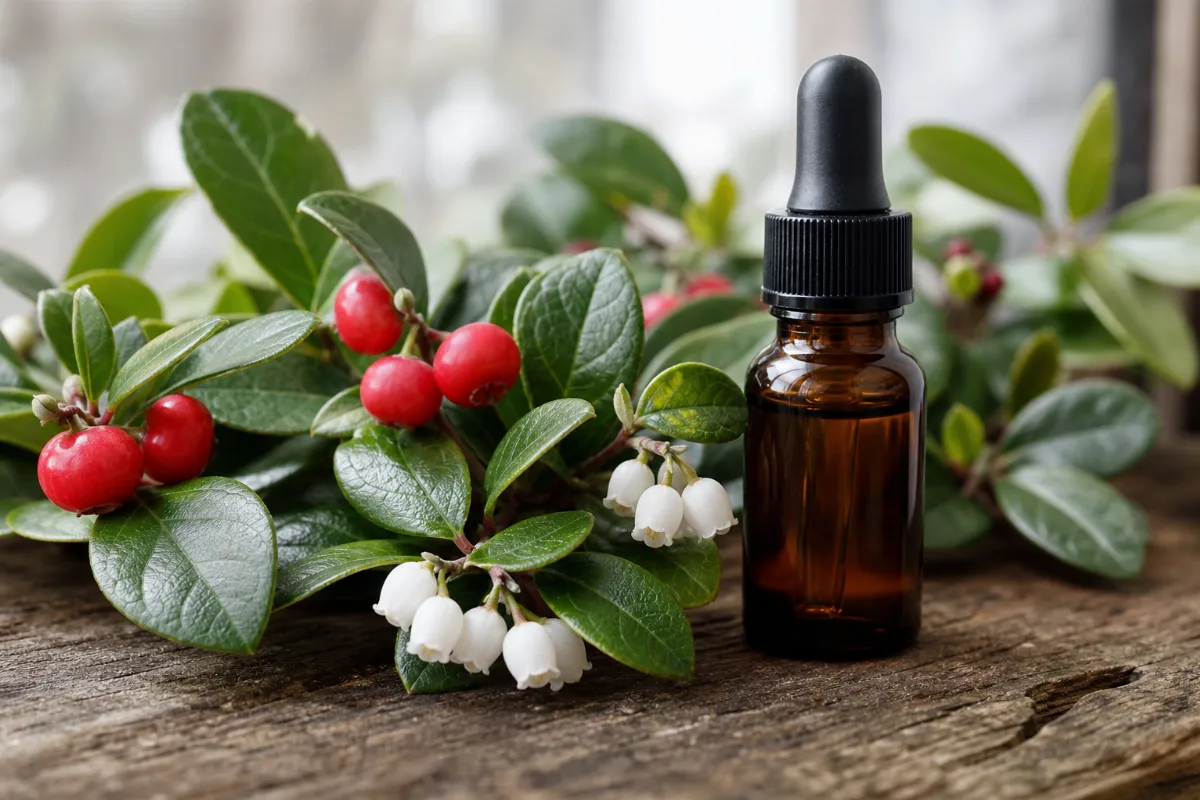
The accepted name on GBIF is Gaultheria procumbens L., in the heath family (Ericaceae). [3] The sources we read for this page describe "oil of wintergreen" and methyl salicylate but do not say which plant part or species a given product or case involved.Traditional use
Traditional use only, not proof: the sources we read did not describe the traditional use of wintergreen oil, so we do not describe it.What research shows
| Question | What the source found | Strength of evidence | Population and form studied |
|---|---|---|---|
| Does wintergreen oil relieve pain? | Proper evidence not found. We searched PubMed for wintergreen oil trials and found no trial of the essential oil for pain. Poison Control says wintergreen is used in some over-the-counter skin products for pain, which describes use, not proof. [1] | Insufficient evidence | Not applicable |
| How much salicylate gets into the body from a cream compared with the oil? | In four adult volunteers, plasma salicylate after swallowing a 15% methyl salicylate cream was not equal to that after oil of wintergreen; the lower-dose cream had about half the relative bioavailability. [4] | Small pharmacology study; not a test of benefit | 4 adult volunteers; swallowed products measured under supervision [4] |
Safety
- Poisoning, especially in children. Methyl salicylate continues to be a relatively common source of pediatric exposures, with persistent reports of life-threatening and fatal toxicity. [2] Keep every product containing it locked away.
- Warfarin and other blood thinners. A study of 11 patients taking warfarin found raised INR (a blood clotting measure) after significant use of topical methyl salicylate ointment, with bruising in 2 and gastrointestinal bleeding in 1. [5] A case report describes an INR of 12.2 in a woman whose INR had been stable on warfarin, after she used a topical pain gel on her knees daily for eight days. [6] Anyone on warfarin or another blood thinner should ask a pharmacist or prescriber before using any methyl salicylate product. Never stop or change a prescribed medicine without asking. See supplements and blood thinners and how interactions work.
- Skin absorption. Methyl salicylate is absorbed through the skin in measurable amounts. [6] A case report describes salicylate poisoning after a herbal skin cream containing methyl salicylate was used on abnormal skin under an occlusive dressing. [7] Another describes full-thickness skin and muscle necrosis and persistent kidney inflammation after topical methyl salicylate and menthol followed by a heating pad. [8] This is why product directions about covering skin and heat matter.
- Skin and allergy. Poison Control says many essential oils can cause rashes and advises not using them on damaged skin. [1]
- Pregnancy. Pregnancy and breastfeeding safety are not described in the sources we read; ask a clinician. See pregnancy and breastfeeding.
- Liver and kidney. One case above involved persistent interstitial nephritis (kidney inflammation). [8] People with kidney or liver disease should ask a clinician.
- Surgery: tell the surgical team about any methyl salicylate product, because of the bleeding reports.
Official statements
- Poison Control (US): wintergreen oil is very dangerous if more than a tiny amount is swallowed. [1]
Uses studied and safety checks for Wintergreen Oil
Read the safety checks first. Each card says whether a finding comes from people or only from the lab, which way the oil was used (scent, on skin or swallowed) and how strong the evidence is. A finding for one way of using an oil does not carry over to another.
Check before you use (7)
- Swallowing: methyl salicylate poisoning (the main hazard). Wintergreen oil is about 98% methyl salicylate. In children under 6, a teaspoon (5 mL) or less has been implicated in several well-documented deaths. A hospital report states one teaspoon equals roughly 21.7 adult aspirin tablets of salicylate. Poison Control calls it very dangerous if more than a tiny amount is swallowed.
- Children: small amounts, locked away. Poison Control says children have thin skin and immature livers and may be more vulnerable; the toddler review reports persistent life-threatening and fatal cases. A case report describes laryngeal swelling after accidental swallowing.
- Warfarin and other blood thinners. A series of 11 patients on warfarin had raised INR after significant use of topical methyl salicylate ointment, with bruising in 2 and gastrointestinal bleeding in 1. A case report describes an INR of 12.2 after a methyl salicylate gel was used on the knees daily for eight days.
- Skin absorption, covered skin and heat. Methyl salicylate is absorbed through skin in measurable amounts. One case report describes salicylate poisoning after a herbal cream was used on abnormal skin under an occlusive dressing; another describes skin and muscle death and kidney inflammation after methyl salicylate and menthol followed by a heating pad.
- Skin reactions and allergy (general essential-oil advice). Poison Control says many essential oils can cause rashes, advises not using them on damaged skin, and says to stop and wash off if a rash appears. No wintergreen-specific patch-test data were found.
- Cats, dogs and birds. Pet Poison Helpline lists wintergreen birch among oils that can cause poisoning and says toxicosis can affect all species, with cats and birds at greatest risk from essential oils generally.
- Kidney inflammation reported after topical use. One case report describes persistent interstitial nephritis after topical methyl salicylate and menthol with a heating pad.
Wintergreen oil for pain
Not enough evidenceNo trial of wintergreen essential oil for pain was found. Poison Control only says wintergreen is used in some over-the-counter skin products for pain and creates warmth.
Supplements: Proper evidence not found in the sources we read.
How much salicylate swallowed cream gives versus oil
Lab or animal research onlyIn four adult volunteers, plasma salicylate from a 15% methyl salicylate cream was lower than from oil of wintergreen (relative bioavailability about 0.5 for the low dose).
Supplements: Not advice to swallow any product.
Connected topics
Open a group to see how each topic connects and how strong the evidence is.
Body systems (5)
- Digestive SystemDocumented risk
Swallowing is very dangerous; poisoning cases in children.
- Heart & CirculationDocumented risk
Raised INR and bleeding with warfarin after topical methyl salicylate.
- Integumentary SystemDocumented risk
Skin absorption, reactions, and tissue damage when covered or heated (case reports).
- Kidney & UrinaryDocumented risk
One case report of interstitial nephritis after topical methyl salicylate and menthol with heat.
- Respiratory SystemDocumented risk
Laryngeal swelling reported after accidental swallowing; salicylate poisoning can include fast breathing (case report).
Body parts (3)
Root causes (1)
- Medication Side EffectsDocumented risk
Case reports and a patient series describe raised INR and bleeding with topical methyl salicylate in people taking warfarin.
Conditions & symptoms (1)
- Laryngeal EdemaDocumented risk
Case report of laryngeal swelling after accidental swallowing of oil of wintergreen.
Frequently asked questions
Why is wintergreen oil so dangerous to children?
It is almost pure methyl salicylate, and a review reports that a teaspoon or less has been implicated in several deaths of children under 6. [2]
Can wintergreen rubs interact with warfarin?
Yes, case reports and a patient series describe raised INR and bleeding with topical methyl salicylate. [5][6] Ask a pharmacist or prescriber.
Does wintergreen oil work for pain?
Proper evidence not found for the essential oil. We searched PubMed for trials of wintergreen oil and found none for pain.
Is it safe to use with a heating pad?
A case report describes severe tissue damage after methyl salicylate and menthol were followed by a heating pad. [8] Follow product directions and ask a pharmacist.
What should I do after a swallowing incident?
Call Poison Help at 1-800-222-1222 (US) right away; call 911 for collapse, a seizure or trouble breathing. [1]
References
- Essential oils: Poisonous when misused (Poison Control). Read 2026-10-23.
- Are one or two dangerous? Methyl salicylate exposure in toddlers. J Emerg Med 2007. Read 2026-10-23.
- Gaultheria procumbens L. (GBIF Backbone Taxonomy). Read 2026-10-23.
- Plasma salicylate from methyl salicylate cream compared to oil of wintergreen. J Toxicol Clin Toxicol 2003. Read 2026-10-23.
- Adverse effect of topical methylsalicylate ointment on warfarin anticoagulation: an unrecognized potential hazard. Postgrad Med J 1990. Read 2026-10-23.
- Potentiation of warfarin anticoagulation associated with topical methyl salicylate. Ann Pharmacother 2000. Read 2026-10-23.
- Acute methyl salicylate toxicity complicating herbal skin treatment for psoriasis. Emerg Med (Fremantle) 2002. Read 2026-10-23.
- Local necrosis and interstitial nephritis due to topical methyl salicylate and menthol. Cutis 1987. Read 2026-10-23.