He Shou Wu (Fo-Ti) (Reynoutria multiflora (Polygonum multiflorum)): Evidence, Safety and How It Is Used
He shou wu (fo-ti, Reynoutria multiflora) is a Chinese root linked to documented liver injury. What the sources found, why processing is discussed, and who should be most careful.
Content last updated . This page has not been medically reviewed.
Safety first. Natural products can cause side effects and interact with medicines. Read who should be careful, by situation before you use anything on this page.
What is He shou wu good for?
What the body uses it for, and how strong the evidence is. A normal job in the body is not proof that extra supplements add benefit; each card says which.
Traditional use in Chinese herbal medicine
Not enough evidenceThe root and its processed products have been used in Chinese herbal medicine for centuries, including in hair and longevity tonics. Traditional use is not evidence of benefit.
Supplements: No trial of the root alone for hair colour, aging or energy was found; the only trial record found used it within a multi-herb formula.
Connected topics
Open a group to see how each topic connects and how strong the evidence is.
Body systems (2)
- Hepatic / Liver SystemDocumented risk
Reports and case series link this root to liver injury, so it is a liver risk rather than a liver aid.
- Liver & DetoxDocumented risk
Reports and case series link this root to liver injury, so it is a liver risk rather than a liver aid. No evidence was found that it supports detox.
Body parts (1)
- LiverDocumented risk
Reports and case series link this root to liver injury, so it is a liver risk rather than a liver aid.
Biomarkers (2)
Conditions & symptoms (2)
- Drug-Induced Liver DiseaseDocumented risk
Case series and reviews document herb-induced liver injury from this root; all 18 people in one series improved after stopping it.
- Hepatocellular JaundiceDocumented risk
Jaundice was a common symptom in the case series of liver injury after this root.
Documented risks and interactions (4)
- Liver injury (documented risk). Reports and case series link he shou wu to liver-cell damage, with tiredness, poor appetite and yellowing of the skin or eyes. In one 18-person series all improved after stopping the herb.
- Onset and pattern of the injury. In the case series, symptoms began a median of 27 days after starting (range 1 to 120 days), mostly as hepatocellular injury with raised liver enzymes.
- Genetic susceptibility (HLA-B*35:01). In Han Chinese patients, carrying the HLA-B*35:01 gene variant was strongly linked to liver injury from this root. Most people are not tested for it.
- Processing and quality questions. A review says processing can lower the root's toxicity, but the mechanism is unclear and there is no established way to control quality of processed material. The case series found injury whether or not the herb was processed.
Safety first: liver injury is documented
He shou wu is one of the herbs most often named in reports of herb-induced liver injury. A systematic review of liver-injury case cohorts listed Polygonum multiflorum among the main herbs causing it [1]. A Chinese review calls it one of the leading causes of herb-induced liver injury in China [2].
In an 18-person case series, the most common symptoms were fatigue, loss of appetite and jaundice (yellowing of the skin or eyes) [3]. Symptoms began a median of 27 days after starting, with a range of 1 to 120 days [3].
If you take or have taken a product containing this root and notice those signs, contact a clinician promptly; for severe symptoms call 911. Ask the prescriber or pharmacist before changing any prescribed medicine. Our guide to liver safety and supplements lists the warning signs.
What it is
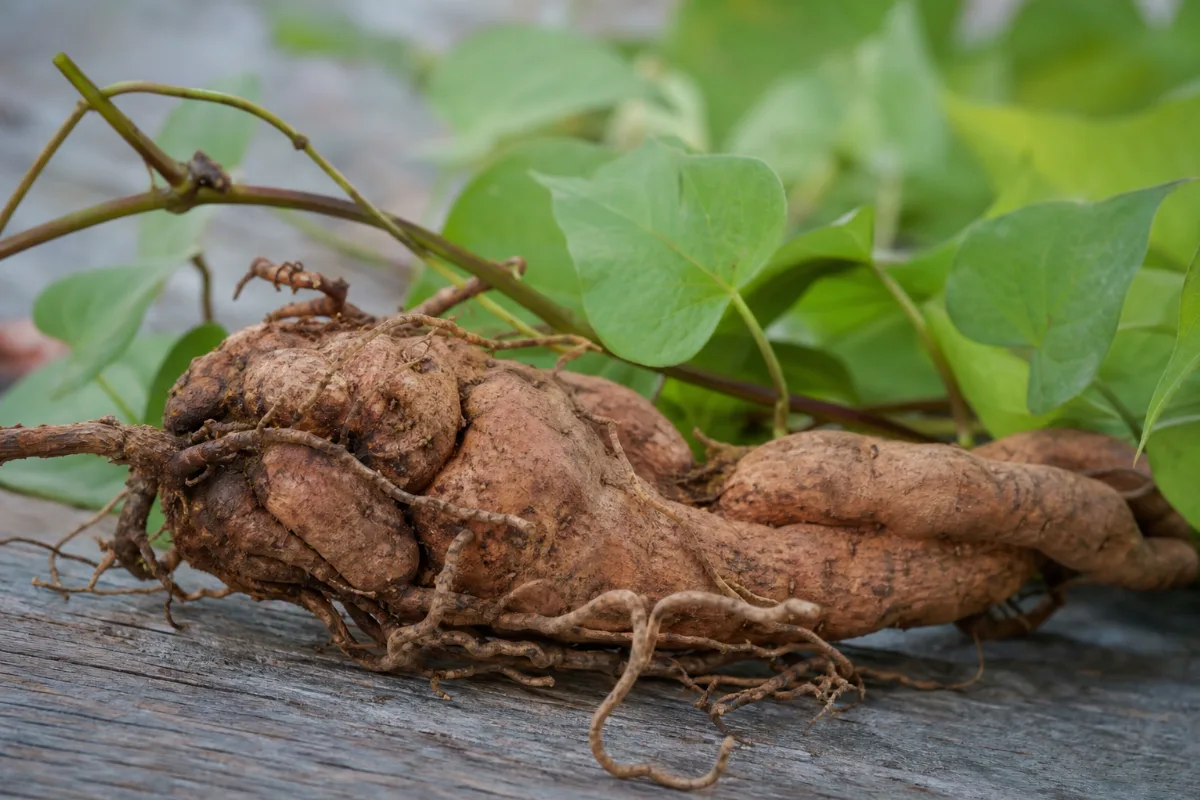
He shou wu is the Chinese name of the root of Reynoutria multiflora (Thunb.) Moldenke, family Polygonaceae. GBIF lists Polygonum multiflorum Thunb. as a synonym of this accepted name [4]. "Fo-ti" is a common English trade name. The root is the part used; its pharmacopoeial Latin name is Polygoni Multiflori Radix [5].
Is it an "adaptogen"? The sources we read about this plant do not call it one, and "adaptogen" is a contested term whose use varies between researchers and regulators [6]. Read what the word means before relying on any label. This page covers it because supplements and "longevity" blends sometimes group it with adaptogens.
Traditional use
In Chinese herbal medicine, the plant and its processed products have been used in China for centuries [7]. The traditional-use page in our Therapies section describes this context. Traditional use is not evidence that a product is safe or effective.
What research shows
| Question | What the source found | Strength of evidence | Population and form |
|---|---|---|---|
| Does it cause liver injury? | Case series and reviews link it to hepatocellular injury, which means damage to liver cells [3] | Evidence of harm (reports, not trials) | Adults with liver injury after use, China |
| Does processing remove the risk? | A review says processing could significantly decrease the toxicity of the raw root [7]; the case series found injury "regardless of herbal processing" [3] | Mixed | Laboratory and clinical reports |
| Is there a genetic risk marker? | The HLA-B*35:01 gene variant was a risk factor in Han Chinese patients [8] | Promising but limited (one population) | Han Chinese |
| Does it help hair, aging or energy? | Proper evidence not found | None found | None found |
On the last row: we searched PubMed for randomized controlled trials of the plant under both its names. The only trial record returned used prepared Polygonum multiflorum as one ingredient in a multi-herb formula for kidney disease [9], so its effect cannot be separated. We found no trial of the root alone for hair color, aging or stress.
Why processing is discussed
A review distinguishes raw P. multiflorum from its processed products. It reports that processing can lower toxicity, yet notes a lack of a scientific approach to control the quality of the processed product [7]. The sources we read do not describe how supplement labels handle this, so ask a pharmacist. We do not give preparation instructions: this is a plant with a documented harm, and home processing is not a safe workaround.
Who should be most careful
- Anyone with liver disease, or who takes other medicines handled by the liver. Ask a pharmacist before combining; see how interactions are classified.
- People with a family or personal history of drug-induced liver injury. An immune mechanism is proposed: one review describes the injury as considered immune-mediated and idiosyncratic, meaning it happens in a few susceptible people and not predictably [10].
- Pregnancy, breastfeeding and children. Proper evidence not found in the sources we read. Because of the liver reports, ask a clinician; see pregnancy and breastfeeding.
- Before surgery. Tell the surgical team about every supplement; see supplements before surgery.
Quality and regulation
Product contents may differ from the label; see quality testing and certifications. Statements from the UK MHRA, the European Medicines Agency and other regulators about this plant could not be read for this page, so we do not summarize them. For adaptogen-wide cautions, see adaptogen safety essentials.
Frequently asked questions
Is he shou wu the same as fo-ti?
Yes. Fo-ti is a common English trade name for the root of Reynoutria multiflora, also written Polygonum multiflorum [4].
Can he shou wu harm the liver?
Yes, cases are documented. A case series of 18 people reported liver injury after using the herb [3], and reviews rank it among the leading herbal causes of liver injury [1].
Does processing make it safe?
Not reliably. A review says processing can reduce toxicity of the raw root [7], but the case series found injury regardless of processing [3].
Does he shou wu prevent gray hair or aging?
Proper evidence not found. We searched PubMed for randomized trials and found none testing the root alone for these uses [9].
Is it an adaptogen?
The term is contested, and the sources we read on this plant do not classify it that way [6]. See what adaptogens are.
References
- Journal of ethnopharmacology, 2019. Systematic review of published data on herb induced liver injury.. Read 2026-10-22.
- World journal of gastroenterology, 2020. Single-nucleotide polymorphisms of HLA and Polygonum multiflorum-induced liver injury in the Han Chinese population.. Read 2026-10-22.
- Complementary therapies in medicine, 2014. Eighteen cases of liver injury following ingestion of Polygonum multiflorum.. Read 2026-10-22.
- GBIF Backbone Taxonomy: Reynoutria multiflora (Thunb.) Moldenke (accepted; synonym Polygonum multiflorum Thunb.). GBIF record. Read 2026-10-22.
- Metabolites, 2026. Polygoni Multiflori Radix Improves Dyslipidemia by Regulating Hepatocyte Lipid Metabolism Mediated via the AMPK/SREBP-2/PCSK9/LDLR Signaling Pathway.. Read 2026-10-22.
- Pharmaceuticals (Basel, Switzerland), 2025. Two Sides of the Same Coin for Health: Adaptogenic Botanicals as Nutraceuticals for Nutrition and Pharmaceuticals in Medicine.. Read 2026-10-22.
- Frontiers in pharmacology, 2018. Polygonum multiflorum Thunb.: A Review on Chemical Analysis, Processing Mechanism, Quality Evaluation, and Hepatotoxicity.. Read 2026-10-22.
- Hepatology (Baltimore, Md.), 2019. HLA-B*35:01 Allele Is a Potential Biomarker for Predicting Polygonum multiflorum-Induced Liver Injury in Humans.. Read 2026-10-22.
- Zhongguo Zhong xi yi jie he za zhi Zhongguo Zhongxiyi jiehe zazhi = Chinese journal of integrated traditional and Western medicine, 2013. [[Treatment of chronic primary glomerulopathy patients of Shen deficiency and dampness heat syndrome by yishen qingli granule combined low-dose Tripterygium wilfordii multiglycoside tablet: a clinical efficacy observation].](https://pubmed.ncbi.nlm.nih.gov/24517060/). Read 2026-10-22.
- Acta pharmacologica Sinica, 2021. The hepatotoxicity of Polygonum multiflorum: The emerging role of the immune-mediated liver injury.. Read 2026-10-22.