Spearmint (Mentha spicata): Uses, Evidence and Safety
Spearmint (Mentha spicata): what two small tea trials found for hormone levels in women with excess hair growth, what is unknown, and how it differs from peppermint.
Content last updated . This page has not been medically reviewed.
Safety first. Supplements can cause side effects and interact with medicines. Read mushroom safety and interactions before you use any mushroom product.
What is Spearmint good for?
What the body uses it for, and how strong the evidence is. A normal job in the body is not proof that extra supplements add benefit; each card says which.
Androgen (male-type hormone) levels in women with hirsutism
Preliminary or mixedIn a 5-day Turkish study of 21 women with excess hair growth, spearmint tea twice a day lowered free testosterone and raised luteinizing hormone, follicle-stimulating hormone and estradiol. Total testosterone and DHEA-S did not fall significantly.
Supplements: Small, short, uncontrolled study of hormone levels (biomarkers). It does not show a better clinical outcome.
Hirsutism in PCOS (randomized trial)
Preliminary or mixedIn a 30-day trial of 42 volunteers with PCOS, spearmint tea lowered free and total testosterone compared with placebo herbal tea, and women rated their own hirsutism as improved. The doctor-rated Ferriman-Galwey score did not differ between groups.
Supplements: Hormone and self-rated changes only; the objective score did not improve, and the study was short.
Safety of a dried water-based extract (90 days)
Preliminary or mixedIn a double-blind trial in healthy older adults with age-associated memory impairment, 90 days of a dried aqueous spearmint extract standardized to rosmarinic acid did not change FSH, LH or TSH, and no severe adverse events were reported.
Supplements: Safety finding only. It does not show a benefit and does not cover pregnancy, children or medicines.
Memory in older adults (extract)
Not enough evidenceThe 90-day extract trial enrolled adults with age-associated memory impairment, but the abstract we read reports safety results only, not memory results.
Supplements: Proper evidence of a memory benefit was not found in the sources we read.
Aromatic oil components (carvone and others)
Lab or animal research onlySpearmint essential oil contains aromatic molecules such as carvone and carveol that have been studied in laboratory settings. Oil findings do not transfer to tea.
Supplements: Lab and animal findings only; no human benefit shown from this.
Digestive use (traditional)
Not enough evidenceMint-family plants are widely used for digestion in folk practice, but the spearmint sources we read tested no digestive outcome in people.
Supplements: No human trial of spearmint for digestion was found in the sources we read.
Pregnancy, breastfeeding, children and medicine interactions: not described
Not enough evidenceThe sources we read do not describe pregnancy, breastfeeding, child use or drug interactions for spearmint. Lack of information is not proof of safety.
Supplements: Ask a clinician or pharmacist.
Connected topics
Open a group to see how each topic connects and how strong the evidence is.
Body systems (2)
- Endocrine SystemPreliminary or mixed
In small tea studies in women with hirsutism, hormone levels changed, but a better clinical outcome was not shown.
- Hormone HealthPreliminary or mixed
In small tea studies in women with hirsutism, hormone levels changed, but a better clinical outcome was not shown.
Body parts (1)
- HairPreliminary or mixed
Studied for excess hair growth (hirsutism) in women. Self-rated hirsutism improved in one trial, but the doctor-rated hair score did not.
Functional actions (1)
- Hormone BalancePreliminary or mixed
Tea lowered free testosterone in small studies. This is a hormone change, not proof of better balance or health.
Biomarkers (2)
- TestosteronePreliminary or mixed
Free testosterone fell in two small tea studies in women with hirsutism; total testosterone fell in one trial but not in the 5-day study.
- EstrogenPreliminary or mixed
Estradiol rose in the 5-day tea study; the 2010 trial abstract does not report it. One small study only.
Conditions & symptoms (2)
- HirsutismPreliminary or mixed
Two small tea studies found lower free testosterone and, in one trial, better self-rated hirsutism; the doctor-rated score did not improve.
- Polycystic Ovary SyndromePreliminary or mixed
A 42-person trial in PCOS found hormone changes without an objective hair improvement. Spearmint is not a treatment for PCOS.
Documented risks and interactions (2)
- Possible hormone effects: caution with hormone-related conditions. Because spearmint tea changed sex-hormone and gonadotropin levels in trials, people with hormone-related conditions or on hormone medicines should ask a clinician before regular use.
- Mixed older toxicity data; flavoring status. Spearmint and its extracts are described as generally recognized as safe (GRAS) as a flavoring, but older studies in humans and animals reported conflicting results on toxicity, and the extracts in them were not well described.
Know the limits. Most human research on spearmint is a few small studies of spearmint tea and androgen (male-type hormone) levels in women with hirsutism, which means excess hair growth. [1][2] It is not a treatment for polycystic ovary syndrome (PCOS), and a clinician should assess hormone or hair problems. The sources we read do not describe pregnancy, breastfeeding, children or medicine interactions for spearmint, and lack of information is not proof of safety.
What spearmint is
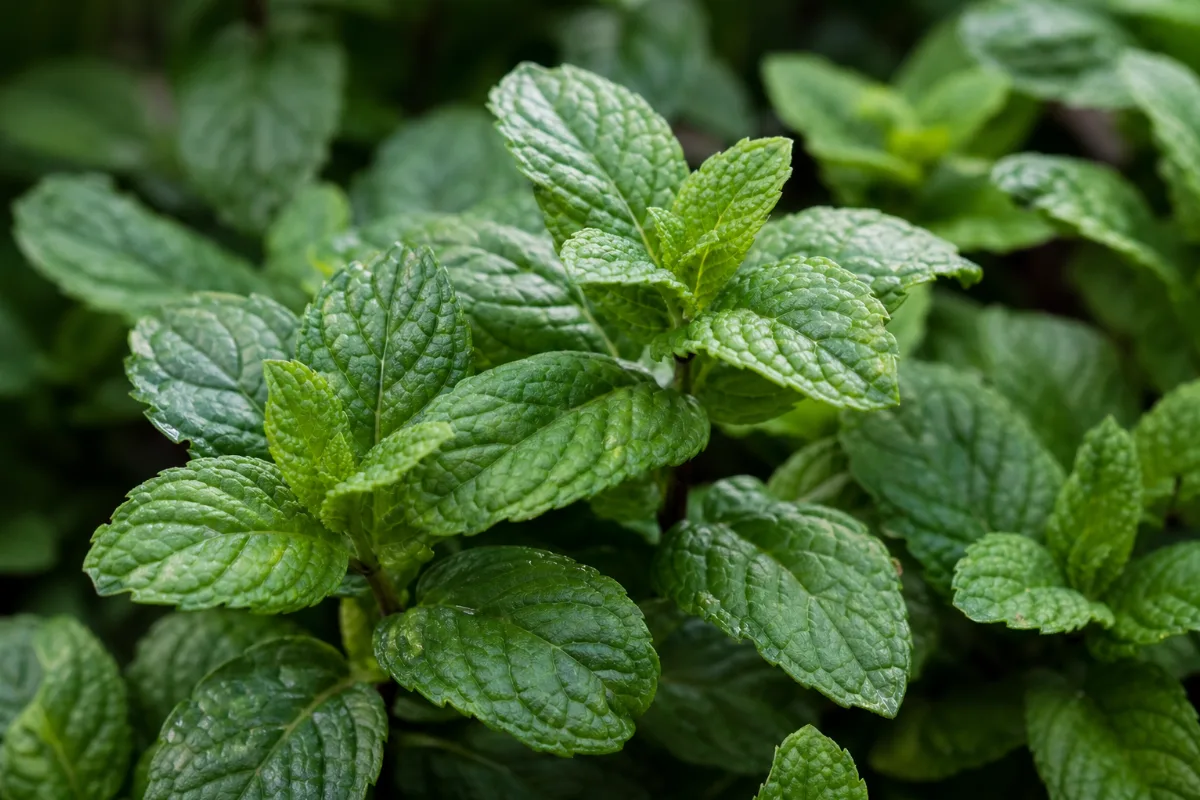
Spearmint is Mentha spicata L., a mint-family (Lamiaceae) plant according to GBIF. [3] The studies below used spearmint tea or a dried water-based extract; the abstracts we read do not name the plant part. [1][4] It is a different plant from peppermint; see peppermint vs spearmint and the peppermint profile. The tea as a drink is covered in spearmint tea, and the oil in spearmint oil. A review of the oil describes aromatic molecules such as carvone and carveol. [5] Oil results do not transfer to tea.Traditional use
Proper evidence not found: the sources we read do not describe a traditional medicinal use of spearmint by a named people or region. The 2007 Turkish study says local clinicians thought that tea steeped with spearmint or peppermint caused a diminished libido, which prompted the research. [1] That is a local observation, not proof.What research shows
| Use | What the source found | Strength of evidence | Form and people studied |
|---|---|---|---|
| Androgen hormones in women with hirsutism (Turkey, 2007) | 21 women (12 with PCOS, 9 with idiopathic hirsutism) took spearmint tea twice a day for 5 days. [1] Free testosterone fell and luteinizing hormone, follicle-stimulating hormone and estradiol rose, but total testosterone and DHEA-S did not drop significantly. [1] The authors said more studies are needed. [1] | Insufficient evidence (small, short; biomarkers) | Spearmint tea; 21 women |
| Hirsutism in PCOS (UK, 2010) | 42 volunteers were randomized to spearmint tea or a placebo herbal tea for a month. Free and total testosterone fell in the spearmint group, and women's own ratings of hirsutism improved, but the objective hair-growth score did not differ between groups. [2] | Mixed (hormone change, little clinical change) | Spearmint tea; 42 volunteers (trial in PCOS) |
| Memory, mood, skin, digestion, weight | Proper evidence not found for tea in the sources we read. | Insufficient evidence | Not applicable |
Note that a changed hormone level (biomarker) is not the same as a better clinical outcome, and the 2010 trial's own objective score did not improve. [2]
Forms
The hormone trials used tea. [1][2] A separate safety study used a dried aqueous (water-based) extract standardized to rosmarinic acid. [4] These are different products, and a result for one does not carry over to another. We give no amounts for a reader.Safety
- Safety study of an extract: in a double-blind, randomized, placebo-controlled trial in healthy adults with age-associated memory impairment, 90 days of a dried aqueous extract standardized to rosmarinic acid (two amounts, 600 and 900 mg/day) had no effect on FSH, luteinizing hormone or thyroid-stimulating hormone, and no severe adverse events were reported. [4]
- Mixed older data: the same paper notes that earlier studies of spearmint extracts in humans and animals reported conflicting results on toxicity, and that spearmint is described as generally recognized as safe (GRAS) for use as a flavoring. [4]
- Hormones: because tea changed hormone levels in the trials above, ask a clinician before using spearmint tea regularly if you have a hormone-related condition or take hormone medicines. [2]
- Pregnancy, breastfeeding, children, medicines, liver, kidney, surgery, allergy: not described in the sources we read. See pregnancy and breastfeeding, how interactions work and herbal allergy and cross-reactivity (mint family).
Quality
Mint products are sometimes blended; check the botanical name on the label (herb quality).Frequently asked questions
Does spearmint tea lower testosterone?
In two small trials, it lowered free testosterone in women with hirsutism, but the 2010 trial's objective hair score did not improve. [1][2]
Is spearmint good for PCOS?
Proper evidence of clinical benefit not found; one 42-person trial in PCOS found hormone changes and better self-rated hirsutism but not a better objective score. [2]
Is spearmint the same as peppermint?
No. They are different mints. Studies of one do not apply to the other.
Is spearmint safe in pregnancy?
Not described in the sources we read. Ask a clinician.
Is spearmint safe long term?
A 90-day trial of an extract in healthy adults reported no severe adverse events. [4] Long-term tea safety is not described in the sources we read.
References
- Akdogan M, Tamer MN, Cure E, et al. Effect of spearmint (Mentha spicata Labiatae) teas on androgen levels in women with hirsutism. Phytother Res. 2007. Read 2026-10-23.
- Grant P. Spearmint herbal tea has significant anti-androgen effects in polycystic ovarian syndrome: a randomized controlled trial. Phytother Res. 2010. Read 2026-10-23.
- GBIF Backbone Taxonomy, Mentha spicata match record. Read 2026-10-23.
- Lasrado JA, Nieman KM, Fonseca BA, et al. Safety and tolerability of a dried aqueous spearmint extract. Regul Toxicol Pharmacol. 2017. Read 2026-10-23.
- Zhang LL, Chen Y, Li ZJ, et al. Bioactive properties of the aromatic molecules of spearmint (Mentha spicata L.) essential oil: a review. Food Funct. 2022. Read 2026-10-23.