Artichoke Leaf (Cynara cardunculus): Uses, Evidence and Safety
Artichoke leaf (Cynara cardunculus): what Cochrane and meta-analyses found for indigestion and cholesterol, and EU contraindications for bile-duct, gallstone and liver disease.
Content last updated . This page has not been medically reviewed.
Safety first. Supplements can cause side effects and interact with medicines. Read mushroom safety and interactions before you use any mushroom product.
What is Artichoke leaf good for?
What the body uses it for, and how strong the evidence is. A normal job in the body is not proof that extra supplements add benefit; each card says which.
Traditional use for indigestion
Preliminary or mixedLeaf preparations are used traditionally for indigestion with a feeling of fullness, bloating and gas. The EU says this rests only on long-standing use.
Supplements: Traditional use is not proof of benefit; see the trial entry below.
Functional dyspepsia (trial evidence)
Preliminary or mixedA 2023 Cochrane review found low-certainty evidence from one study of 244 people that artichoke may improve dyspepsia symptoms. An older open study of 516 people without a placebo group reported symptom reduction.
Supplements: Possible modest benefit, low certainty.
Cholesterol markers
Preliminary or mixedA 2018 meta-analysis of 9 trials (702 people) reported lower total cholesterol, LDL and triglycerides and no change in HDL. The 2009 Cochrane review (3 trials) found the evidence not yet convincing.
Supplements: Mixed; trials were small and products differed.
Fatty liver (pilot trial)
Not enough evidenceOne pilot double-blind trial in 100 people with ultrasound-diagnosed fatty liver reported better liver tests and ultrasound findings after 2 months.
Supplements: Insufficient evidence.
Connected topics
Open a group to see how each topic connects and how strong the evidence is.
Health goals (2)
- Cholesterol BalancePreliminary or mixed
A 2018 meta-analysis of 9 trials reported lower total and LDL cholesterol, but the older Cochrane review called the evidence not yet convincing. These are blood-test markers, not heart-attack outcomes.
- Digestive SupportPreliminary or mixed
A 2023 Cochrane review found low-certainty evidence from one study that artichoke may ease indigestion symptoms. The EU recognises it only as a traditional use.
Body systems (2)
- Digestive SystemPreliminary or mixed
A 2023 Cochrane review found low-certainty evidence from one study that artichoke may ease indigestion symptoms. The EU recognises it only as a traditional use.
- Hepatic / Liver SystemDocumented risk
The EU herbal committee lists liver disease and other biliary disorders as contraindications that need medical supervision. One small trial in fatty liver is not enough to show benefit.
Body parts (3)
- GallbladderDocumented risk
The EU monograph lists gallstones and other biliary disorders as contraindications that need medical advice.
- GutPreliminary or mixed
Used for indigestion, fullness, bloating and gas. The research is limited (one placebo-controlled study in a Cochrane review).
- LiverDocumented risk
The EU monograph excludes people with liver disease from self-use. A small pilot trial in fatty liver reported better liver tests but is not confirmed.
Functional actions (1)
- Digestive SupportPreliminary or mixed
A 2023 Cochrane review found low-certainty evidence from one study that artichoke may ease indigestion symptoms. The EU recognises it only as a traditional use.
Root causes (1)
- Digestive DysfunctionPreliminary or mixed
Indigestion (dyspepsia) is the use with the most support, and that support is limited.
Biomarkers (2)
- LDL CholesterolPreliminary or mixed
A 2018 meta-analysis of 9 trials reported a lower LDL cholesterol; the 2009 Cochrane review found the evidence not yet convincing.
- TriglyceridesPreliminary or mixed
The 2018 meta-analysis reported a modest fall in triglycerides across 9 trials.
Conditions & symptoms (5)
- Bile Duct DiseasesDocumented risk
Bile-duct obstruction and other biliary disorders are EU contraindications.
- CholangitisDocumented risk
Cholangitis is an EU contraindication.
- CholelithiasisDocumented risk
Gallstones are an EU contraindication needing medical advice.
- DyspepsiaPreliminary or mixed
A 2023 Cochrane review found low-certainty evidence from one study that artichoke may ease indigestion symptoms. The EU recognises it only as a traditional use.
- HypercholesterolemiaPreliminary or mixed
Meta-analysis reports lower cholesterol markers; the older Cochrane review found the evidence not yet convincing.
Documented risks and interactions (5)
- Bile duct, gallstone and liver disease contraindication. The EU monograph lists bile-duct obstruction, cholangitis, liver disease, gallstones and other biliary disorders as contraindications needing medical supervision.
- Daisy-family allergy. The EU monograph lists hypersensitivity to plants of the Asteraceae (daisy) family as a contraindication, and allergic reactions may occur.
- Pregnancy and breastfeeding. Safety in pregnancy and breastfeeding has not been established, and use is not recommended without enough data.
- Side effects. Slight diarrhoea with abdominal cramps, nausea, heartburn and allergic reactions have been reported (frequency not known). Cochrane trials reported mild, transient, infrequent adverse events.
- Children and drug interactions. Use under 12 years is not recommended for lack of data. The monograph lists no reported interactions, which does not prove there are none.
Safety first: bile ducts, gallstones, liver disease and daisy-family allergy
The European Medicines Agency (EMA) herbal committee lists obstruction of the bile duct, cholangitis (inflamed bile ducts), liver disease, gallstones and any other biliary disorders as contraindications for artichoke leaf, and says such conditions require medical supervision and advice. [1] It also lists hypersensitivity to plants of the Asteraceae (daisy) family. [1] Artichoke is in that family: GBIF places Cynara cardunculus in the Asteraceae. [2] See herbal allergy and cross-reactivity. Safety in pregnancy and breastfeeding has not been established and use is not recommended in the absence of sufficient data. [1]Overview
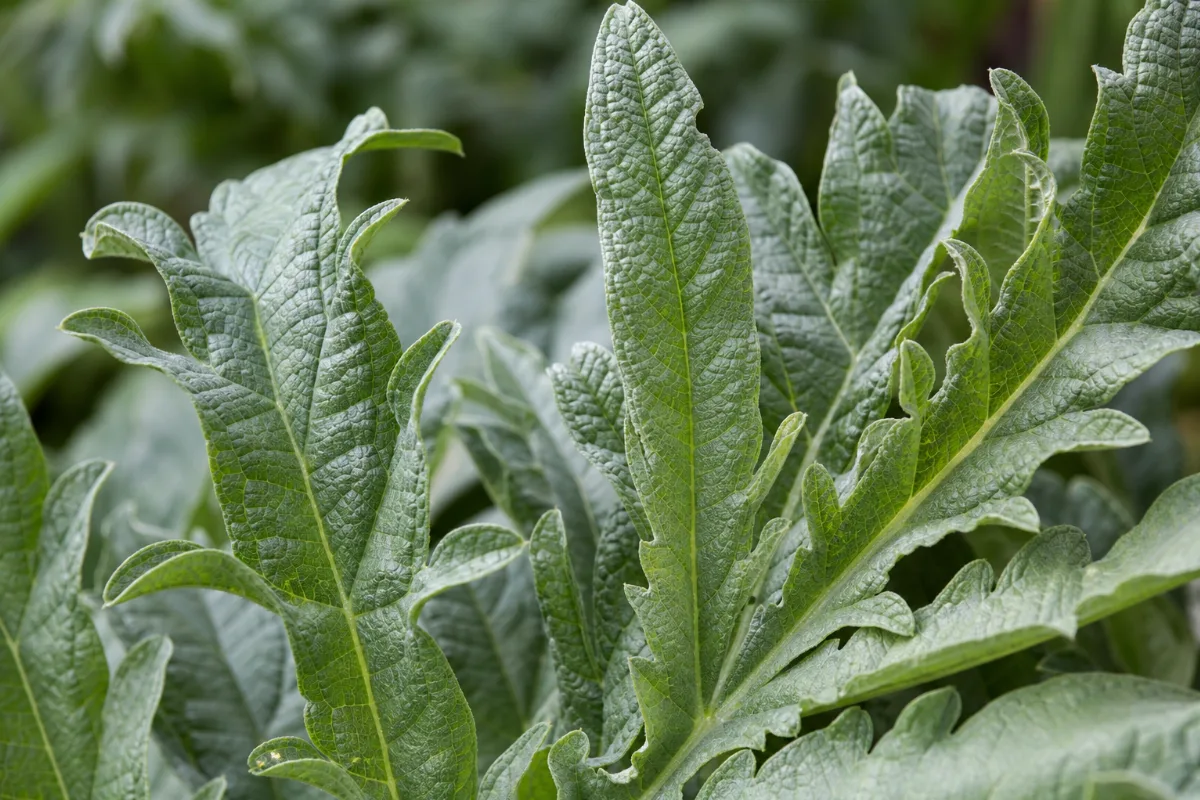
The artichoke leaf used in herbal products comes from Cynara cardunculus L. The EU monograph names Cynara scolymus L. as a synonym, while GBIF lists both names as accepted, so product labels may carry either. [1][2] The edible flower bud sold as a vegetable is a food; this page is about the leaf, usually as an extract or dried leaf product.Traditional use (not proof of benefit)
The EU classifies artichoke leaf as a traditional herbal medicinal product for the symptomatic relief of digestive disorders such as dyspepsia (indigestion) with a sensation of fullness, bloating and flatulence. [1] The monograph says this is exclusively based upon long-standing use. [1] The sources we read do not describe particular regions or peoples associated with this use, so none are named here.What research shows
| Use | What the sources found | Strength of evidence | Form and population |
|---|---|---|---|
| Indigestion (functional dyspepsia) | The 2023 Cochrane review of non-Chinese herbal medicines found artichoke may improve dyspepsia symptoms compared with placebo, from one study of 244 people (low certainty). [3] An older open study (no placebo group) of 516 people reported symptom reduction. [4] | Promising but limited | Leaf extract; adults |
| High cholesterol | The 2009 Cochrane review said there is an indication that the extract has potential, but the evidence was not yet convincing. [5] A later meta-analysis of 9 trials (702 people) reported a significant decrease in total cholesterol. [6] | Mixed to promising (lab markers, not heart outcomes) | Leaf extract; adults with raised cholesterol |
| Fatty liver disease | A pilot double-blind trial randomized 100 people with ultrasound-diagnosed fatty liver (NAFLD) and 90 completed it. [7] It is a single small pilot trial. | Insufficient evidence | Leaf extract; adults |
| Anything else (liver protection, weight) | Proper evidence not found in the sources we relied on (we searched Cochrane, EMA documents and PubMed). | Insufficient evidence | - |
Tests like cholesterol and liver enzymes are markers, not proof of fewer heart attacks or better liver outcomes. Some of the studied products combine artichoke with other ingredients, which are not the same as artichoke alone; we left those out.
Forms and why the form matters
The EU monograph covers several forms: dried leaf for tea, powder, and dry or soft extracts, each with its own preparation details. [1] Because extract types differ in strength, a result in one trial does not transfer to a different product. The monograph does not recommend use under 12 years. [1]Safety in more detail
- Side effects: the monograph reports slight diarrhea with abdominal spasm, nausea and heartburn (frequency not known), and allergic reactions. [1] The 2009 Cochrane review's limited safety data suggested mild, transient and infrequent adverse events in short-term use. [5]
- Medicines: the monograph's interactions section says "None reported". [1] Other interactions are not described in the sources we read, and that does not prove there are none. See how interactions work.
- Liver: the EU monograph excludes people with liver disease and bile-duct disorders. [1] We could not read NIH's LiverTox entry for artichoke. See liver safety and supplements for warning signs.
- Pregnancy and breastfeeding: not recommended in the absence of sufficient data. [1] See pregnancy and breastfeeding safety.
- Duration: the monograph says to consult a doctor or qualified practitioner if symptoms persist longer than 2 weeks. [1] The sources we read do not say what happens with long-term use.
- Bleeding, surgery, kidney: not described in the sources we read; tell the surgical team about any extract (supplements before surgery).
- Quality: adulteration is not discussed in the sources we read. See quality testing and certifications.
Official statements
- EMA (EU), 2018: EU herbal monograph on Cynara cardunculus L. (syn. Cynara scolymus L.), folium: traditional use for dyspepsia with fullness, bloating and flatulence. [1]
Related pages
Frequently asked questions
Does artichoke leaf help indigestion?
Cochrane found a possible benefit from one study, with low certainty. [3] The EU recognizes it only as a traditional use. [1]
Does artichoke leaf lower cholesterol?
An older Cochrane review found the evidence not yet convincing, and a later meta-analysis of 9 trials reported lower total cholesterol. [5][6] Ask a clinician; do not stop prescribed cholesterol medicine.
Who should not use artichoke leaf?
People with bile-duct obstruction, gallstones, liver disease or allergy to daisy-family plants, according to the EU monograph. [1]
Is artichoke leaf safe in pregnancy?
Safety has not been established, and use is not recommended. [1]
Is artichoke leaf the same as eating artichokes?
No, studies and monographs describe leaf extracts or dried leaf preparations. The sources we read do not cover eating the vegetable.
References
- European Medicines Agency, HMPC. European Union herbal monograph on Cynara cardunculus L. (syn. Cynara scolymus L.), folium (EMA/HMPC/194014/2017), adopted 27 March 2018. Read 2026-10-23.
- GBIF Secretariat. GBIF Backbone Taxonomy species match. Names checked through the GBIF species match service. Read 2026-10-23.
- Non-Chinese herbal medicines for functional dyspepsia (Cochrane review). Cochrane Database of Systematic Reviews, 2023. PubMed record PMID 37323050. Read 2026-10-23.
- Artichoke leaf extract reduces mild dyspepsia in an open study. Phytomedicine, 2002. PubMed record PMID 12587688. Read 2026-10-23.
- Artichoke leaf extract for treating hypercholesterolaemia (Cochrane review). Cochrane Database of Systematic Reviews, 2009. PubMed record PMID 19821306. Read 2026-10-23.
- Lipid-lowering activity of artichoke extracts: A systematic review and meta-analysis. Critical Reviews in Food Science and Nutrition, 2018. PubMed record PMID 28609140. Read 2026-10-23.
- Efficacy of artichoke leaf extract in non-alcoholic fatty liver disease: A pilot double-blind randomized controlled trial. Phytotherapy Research, 2018. PubMed record PMID 29520889. Read 2026-10-23.