Arnica (Arnica montana): Uses, Evidence and Safety
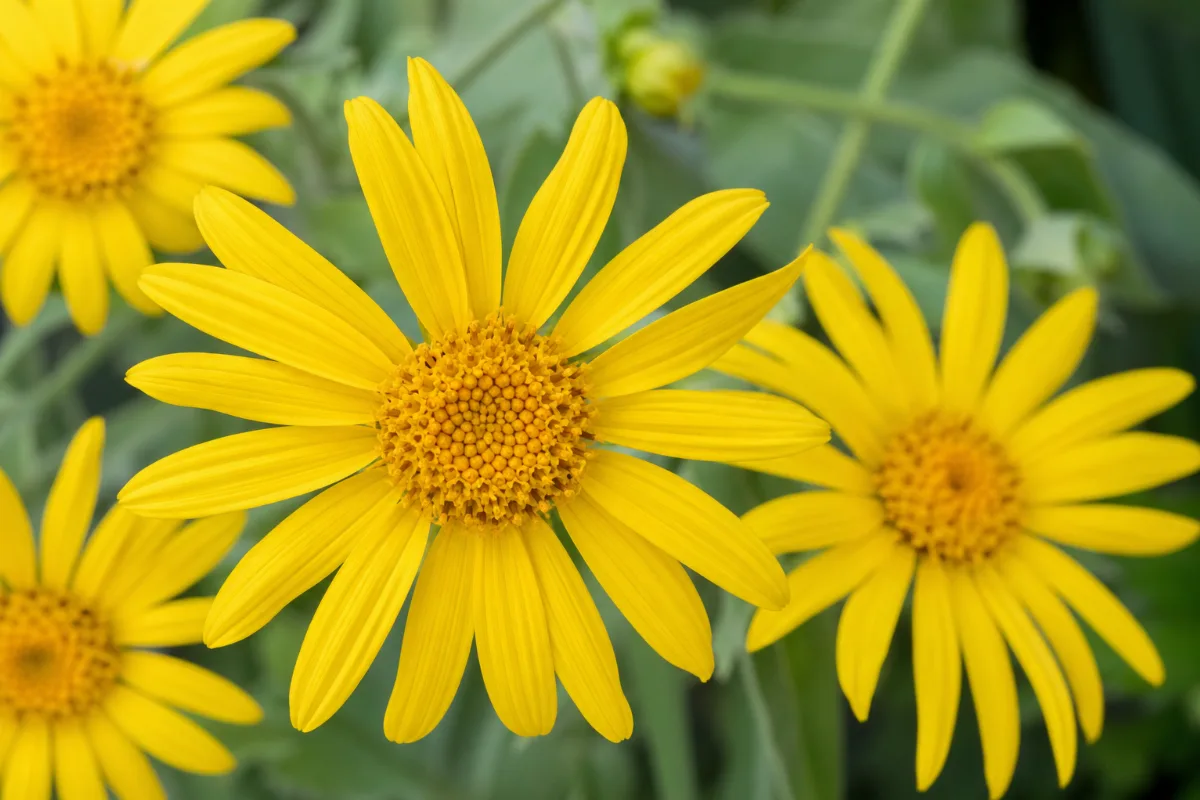
Arnica (Arnica montana) flower: skin use for bruises and sore joints, what trials found, why swallowing it is unsafe, and the daisy-family allergy, blood thinner and homeopathic cautions.
Content last updated . This page has not been medically reviewed.
Safety first. Supplements can cause side effects and interact with medicines. Read mushroom safety and interactions before you use any mushroom product.
What is Arnica good for?
What the body uses it for, and how strong the evidence is. A normal job in the body is not proof that extra supplements add benefit; each card says which.
Skin use for bruises, sprains and localized muscle pain (traditional use)
Preliminary or mixedThe EU herbal committee accepts arnica flower skin products for bruises, sprains and localized muscle pain on the basis of at least 30 years of traditional use, not on trial proof.
Supplements: Traditional-use status only; firm conclusions could not be drawn from the studies reviewed.
Hand osteoarthritis pain (arnica gel)
Preliminary or mixedIn a 21-day double-blind trial of 204 people, arnica gel was not worse than 5% ibuprofen gel for pain and hand function. Cochrane rates this as moderate evidence from a single study.
Supplements: Promising but limited to one trial of one gel preparation; results may not apply to other products.
Bruising and swelling after skin procedures
Not enough evidenceA systematic review found mixed results and judged there was insufficient data to support arnica after skin procedures. MSK also reports mixed surgical results.
Supplements: Insufficient evidence.
Muscle soreness after exercise
Not enough evidenceMSK mentions one small study in which topical arnica increased muscle pain 24 hours after calf exercise; there is no reliable evidence of benefit.
Supplements: No reliable evidence of benefit.
Anti-inflammatory and antimicrobial activity in the laboratory
Lab or animal research onlyMSK notes laboratory studies showing anti-inflammatory and antimicrobial properties. This does not show benefit in people.
Supplements: Laboratory research only.
Connected topics
Open a group to see how each topic connects and how strong the evidence is.
Health goals (1)
- Joint SupportPreliminary or mixed
Arnica gel was not worse than ibuprofen gel in one 21-day hand osteoarthritis trial; the evidence is a single study and the EU accepts skin use mainly on traditional grounds.
Body systems (4)
- Bones, Joints & MusclesPreliminary or mixed
Applied to the skin over sore joints and muscles; evidence is limited to one hand osteoarthritis trial plus traditional use.
- Integumentary SystemDocumented risk
The skin is where arnica is used, and it can cause irritation and contact allergy; it should not be applied to broken skin.
- Musculoskeletal SystemPreliminary or mixed
Applied to the skin over sore joints and muscles; evidence is limited to one hand osteoarthritis trial plus traditional use.
- Pain & InflammationPreliminary or mixed
Used on the skin for bruises, sprains and aches; one trial found pain relief similar to ibuprofen gel in hand osteoarthritis, otherwise traditional use.
Body parts (2)
Functional actions (2)
- Joint SupportPreliminary or mixed
Arnica gel was not worse than ibuprofen gel in one 21-day hand osteoarthritis trial; the evidence is a single study and the EU accepts skin use mainly on traditional grounds.
- Pain ReliefPreliminary or mixed
Skin use is accepted in the EU for localized muscle pain on traditional grounds; one trial found pain relief similar to ibuprofen gel in hand osteoarthritis.
Root causes (1)
- Medication Side EffectsDocumented risk
Arnica may increase the effects of warfarin and other blood thinners and inhibits platelets in the lab; clinical importance is unknown, so ask a pharmacist.
Conditions & symptoms (2)
- Dermatitis, Allergic ContactDocumented risk
Arnica on the skin can cause allergic contact dermatitis, especially in people allergic to daisy-family plants.
- Osteoarthritis of The HandPreliminary or mixed
One 21-day double-blind trial found arnica gel similar to ibuprofen gel for hand osteoarthritis pain; Cochrane calls it moderate evidence from a single study.
Documented risks and interactions (7)
- Platelet inhibition and blood-thinner interaction. Arnica inhibited platelet clumping in the laboratory, and MSK warns it may increase the effect of warfarin and other blood thinners; clinical relevance is not known.
- Serious harm if swallowed. Case reports describe stomach and bowel distress, internal bleeding, fast heartbeat, breathing difficulty and coma after eating the raw herb. Arnica plant products should not be swallowed.
- Highly diluted homeopathic arnica: overdose case reports. MSK describes accidental overdose of a homeopathic arnica product with severe vomiting and sudden loss of vision in both eyes. Homeopathic dilutions are a different product from plant extracts.
- Skin irritation and contact allergy. Skin use can cause itching, redness, swelling, eczema and contact dermatitis. In a patch test study 5 of 443 patients (about 1.1%) reacted to arnica.
- Daisy-family (Asteraceae) allergy cross-reactivity. MSK advises avoiding arnica if allergic to sunflowers, marigolds, ragweed or other Asteraceae plants.
- Pregnancy and breastfeeding. MSK lists arnica as contraindicated in pregnancy and breastfeeding, based on a case of a newborn with hemolytic anemia whose mother drank arnica flower tea.
- Children under 12. The EU product is intended for adults and adolescents from 12 years. See a doctor if symptoms last more than 3 to 4 days or get worse.
Arnica is for unbroken skin only. Do not swallow arnica plant products, and keep them away from children. Memorial Sloan Kettering lists case reports of gastrointestinal distress, internal bleeding, fast heartbeat, breathing difficulty and coma after eating the raw herb, and of a newborn with hemolytic anemia after the mother drank arnica flower tea. [1] If someone has swallowed arnica, call Poison Help at 1-800-222-1222 (US); other countries are on Poison Help by Country. In an emergency call 911.
Overview
Arnica is a plant in the sunflower (daisy) family. Memorial Sloan Kettering says its flowers and roots are used for bruises, sprains, muscle pain and osteoarthritis, and that it comes as tablets, gels, ointments and creams. [1] This page is about arnica plant extracts applied to the skin. Highly diluted homeopathic arnica is a different product; see homeopathy and herbalism. This page gives no preparation instructions.Scientific name, plant part and family
Arnica montana L. is the accepted name, family Asteraceae. [2] EMA says arnica flower is the flower heads of Arnica montana. [3] Another plant called "Brazilian arnica" (Solidago chilensis) has been tested in a back pain trial and has a different scientific name; do not assume results transfer. [4]Traditional use
This is tradition, not proof. Memorial Sloan Kettering says arnica's medicinal history dates back several centuries and flowers and roots have been used for bruises, sprains, arthritic pain and muscle aches. [1] The EU committee accepts arnica flower skin products for bruises, sprains and localized muscle pain based on traditional use of at least 30 years. [3]What research shows
| Use | What the source found | Strength of evidence | Form and population |
|---|---|---|---|
| Hand osteoarthritis | A 21-day double-blind trial of 204 people found arnica tincture gel not inferior to 5% ibuprofen gel for pain and hand function. [5] The Cochrane review of topical herbs rates this as moderate evidence from a single study of 174 people, with similar benefits to ibuprofen gel. [6] | Promising but limited | Topical arnica extract gel, adults |
| Bruising and swelling after skin procedures | A systematic review found mixed results and insufficient data to support arnica or bromelain after procedures. [7] | Insufficient evidence | Oral and topical arnica, post-procedure |
| Bruises, sprains, muscle pain (EU assessment) | Studies suggested possible improvement but had small numbers and no controls, so firm conclusions could not be drawn. [3] | Traditional use only | Skin products, adults and adolescents 12+ |
| Postoperative recovery (homeopathic arnica) | Memorial Sloan Kettering says studies are mixed and rigorous research on homeopathic arnica is needed. [1] | Mixed | Homeopathic dilutions, a different product |
Forms and why the form matters
The EU assessment covers only arnica flower preparations made with a solvent, in semi-solid or liquid forms for the skin. [3] Homeopathic products are highly diluted and are not the same as plant extracts. [1] A case report describes severe vision loss after someone consumed a large quantity of a homeopathic arnica product by mistake. [8] It is a single case report.Safety
- Skin reactions: itching, redness and eczema may occur; frequency unknown. [3] A patch test study found 1.13% of 443 tested patients reacted to arnica. [9]
- Daisy-family allergy: the EU monograph contraindicates arnica for anyone allergic to arnica or other Asteraceae (Compositae) plants. [10] Memorial Sloan Kettering names sunflowers, marigolds and ragweed. [1] See herbal allergy and cross-reactivity.
- Broken skin: the monograph says the preparation should not be used on broken skin. [10]
- Swallowing: see the warning above. The Cochrane review notes that topical herbal products are in part counterirritants or are toxic when given orally. [6]
- Medicines: Memorial Sloan Kettering says warfarin or other anticoagulants may have increased effects and that arnica inhibits platelet aggregation in the lab, with clinical relevance not known. [1] A 2000 review also listed arnica flower among products that may raise bleeding risk, mostly from lab or case data. [11] The EU monograph lists interactions as none reported. [10] See how interactions work.
- Pregnancy and breastfeeding: safety has not been established and use in pregnancy is not recommended. [10] See pregnancy and breastfeeding.
- Children: the monograph says use under 12 has not been established. [10]
- Before surgery: sources we read do not give a stop date; arnica may affect platelets in the lab, so tell the surgical team. See supplements before surgery.
- Liver and kidney: not described in the sources we read.
- See a doctor if symptoms last longer than 3 to 4 days or get worse. [3]
Quality notes
Check the label for plant species, part and whether the product is a plant extract or a homeopathic dilution. See quality testing and certifications.Official statements
EMA/HMPC (European Union, 2014): traditional herbal medicine for relief of bruises, sprains and localized muscle pain, for skin use in adults and adolescents 12 and over. [3] [10]A clinician or pharmacist decides what is right for a particular person.
Frequently asked questions
Does arnica gel help bruises?
The EU committee accepts it on traditional use; trials are mixed and small. [3] [7]
Is arnica safe to swallow?
No. Case reports describe serious harm from the raw herb and homeopathic overdose. [1]
Can I put arnica on broken skin?
The EU monograph says not to use the preparation on broken skin. [10]
Who should avoid arnica?
People allergic to daisy-family plants, and people on blood thinners should ask first. [10] [1]
Is homeopathic arnica the same?
No. It is a highly diluted product and a different thing from plant extracts. [1]
References
- Memorial Sloan Kettering Cancer Center. Arnica: purported benefits, side effects and more. Read 2026-10-23.
- GBIF Secretariat. Arnica montana L., GBIF Backbone Taxonomy (accepted name). Read 2026-10-23.
- European Medicines Agency (EMA), HMPC. Arnica flower: herbal medicinal product, summary for the public, 2016. Read 2026-10-23.
- Herbal medicine for low back pain. Cochrane Database Syst Rev. 2014. PMID 25536022. Read 2026-10-23.
- Choosing between NSAID and arnica for topical treatment of hand osteoarthritis in a randomised, double-blind study. Rheumatol Int. 2007. PMID 17318618. Read 2026-10-23.
- Topical herbal therapies for treating osteoarthritis. Cochrane Database Syst Rev. 2013. PMID 23728701. Read 2026-10-23.
- Is there a role for arnica and bromelain in prevention of post-procedure ecchymosis or edema? A systematic review of the literature. Dermatol Surg. 2016. PMID 27035499. Read 2026-10-23.
- Toxic optic neuropathy following ingestion of homeopathic medication Arnica-30. Cutan Ocul Toxicol. 2013. PMID 22877081. Read 2026-10-23.
- The seamy side of natural medicines: contact sensitization to arnica (Arnica montana L.) and marigold (Calendula officinalis L.). Contact Dermatitis. 2001. PMID 11722485. Read 2026-10-23.
- European Medicines Agency (EMA), HMPC. Community herbal monograph on Arnica montana L., flos, final, 6 May 2014. Read 2026-10-23.
- Heck AM, DeWitt BA, Lukes AL. Potential interactions between alternative therapies and warfarin. Am J Health Syst Pharm. 2000. PMID 10902065. Read 2026-10-23.